Lessons from Jazz/World to 20 Century Classical Music Harmony Rhythm and Theory
Category: Jazz fusion guitar music theory lessons, guitar technique and improvisation.
How to improvise over altered dominant chords. How to employ chromatic jazz and fusion harmony. Apply twentieth century classical composition techniques to modern jazz music and improv. How to exploit modes of the major. minor and diminished scales. Lesson in alternate picking guitar techniques as used by John Mclaughlin and Al di Meola. How to do metal rock and all styles of alternate picking on the guitar. Plectrum pick technique for electric and acoustic guitarists. alternate guitar style of picking lessons.
Just a quick blog today, But a great one with a great backing track for improvisers!
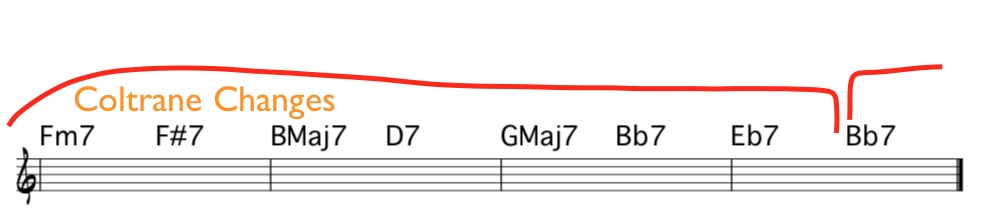
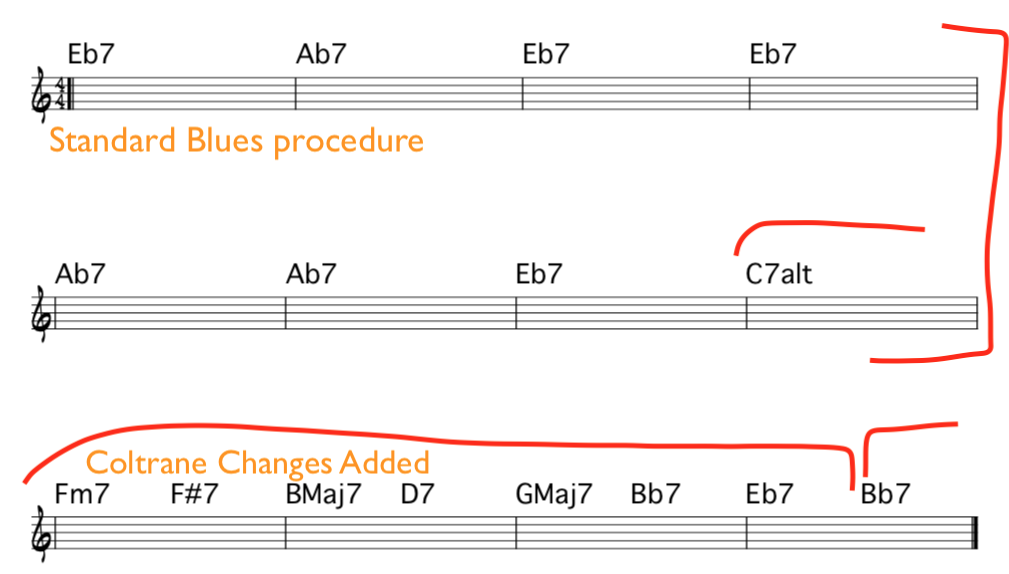
This starts as a common blues, but it adds interest by employing “Coltrane Changes” to the last 4 bars. A great compositional device that adds extra interest to a blues. It’s also a cool improvisational concept for the improviser whilst adding colour as a turnaround.
Coltrane changes to blues chart and track and analysis
Coltrane Chord chart analysis: Notice the C7alt [Alt Dom] for the Fm7 as the Coltrane changes set-up!
Coltrane changes to blues chart and track and analysis
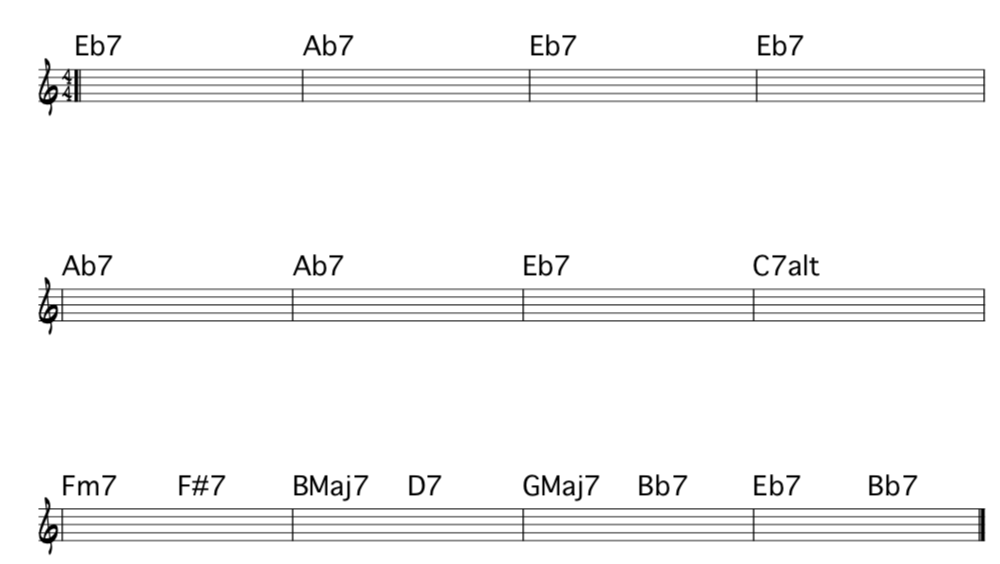
Finally, here is the 12 Bar “Coltrane Blues” Chord Chart for jazz improvisation: 140 Bpm.
140 BPM
Coltrane changes to blues chart and track and analysis for improvisation
Thanks for viewing this blog! Please Subscribe to us on Youtube below!
SUPER-ULTRA-HYPER-MEGA-META-meets 12 tone and polychords
Going forward with our Jacob Collier SUPER-ULTRA-HYPER-MEGA-META blogs/pages it is a good idea to look at other relevant concepts within the ideal of extension. In this blog we will look at how 12 tone, 23rd chords, tertian harmony and polytonality play a fascinating part.
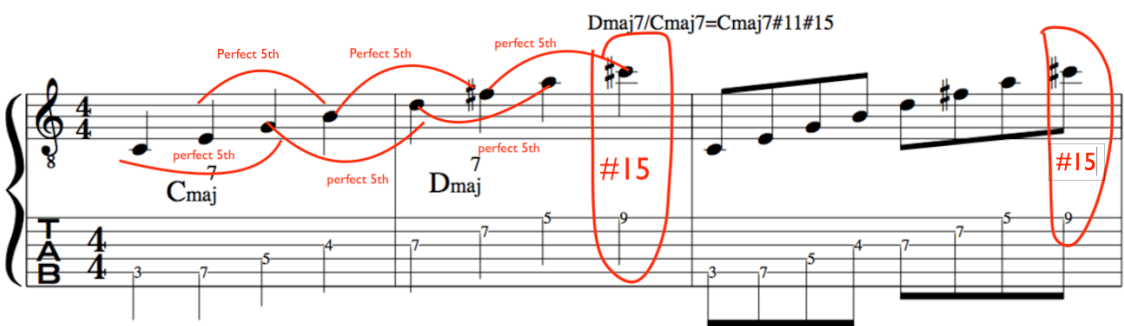
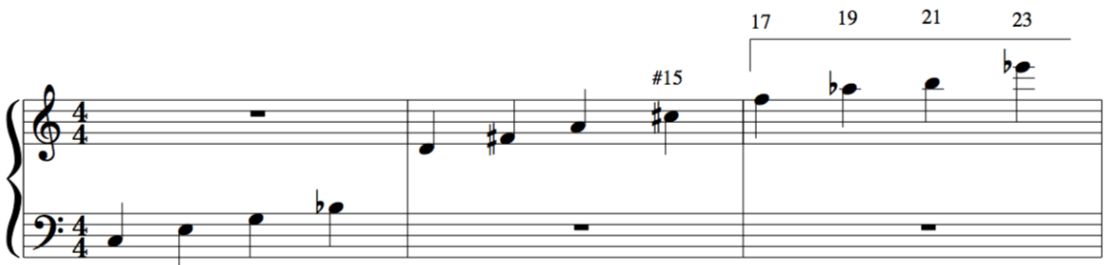
We will start with the #15 Arpeggio [Superimposition as used by Lennie Tristano]. Below you will see this in action with a Cma7 and a Dmaj7 arpeggio combined. This creates a sharpened 15th [or Augmented 15th arpeggio].
SUPER-ULTRA-HYPER-MEGA-META-meets 12 tone and polychords
Below, you will see the full extension of this with a full 23rd chord [The largest chord in music]. This can be viewed as polytonal, polychordal, 12 tone row, or “Tertian” harmony as a full 23rd chord.
SUPER-ULTRA-HYPER-MEGA-META-meets 12 tone and polychords
All 12 notes of the chromatic scale are used, so, the following occurs [in this case in 3rds as Tertian harmony]
1 3 5 7 9 11 13 15 17 19 21 23
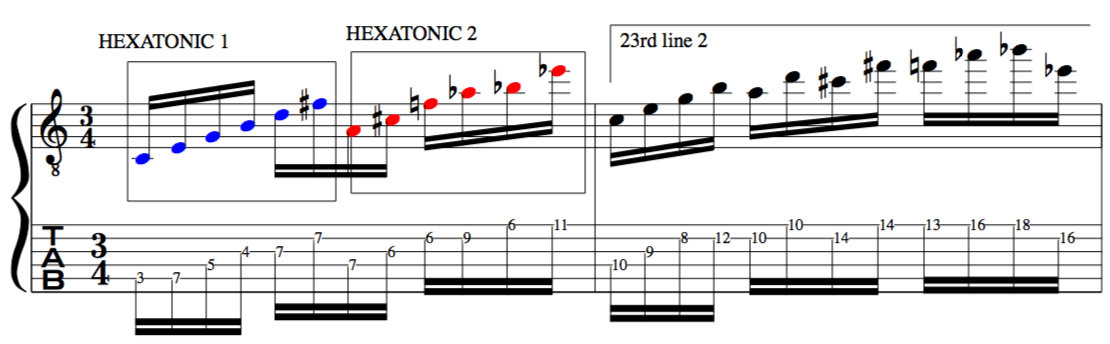
In terms of improvisation it can be easier on the guitar to break up 4×3 semiquaver tetrachord lines into two HEXATONIC [2×6] lines as shown below.
SUPER-ULTRA-HYPER-MEGA-META-meets 12 tone and polychords
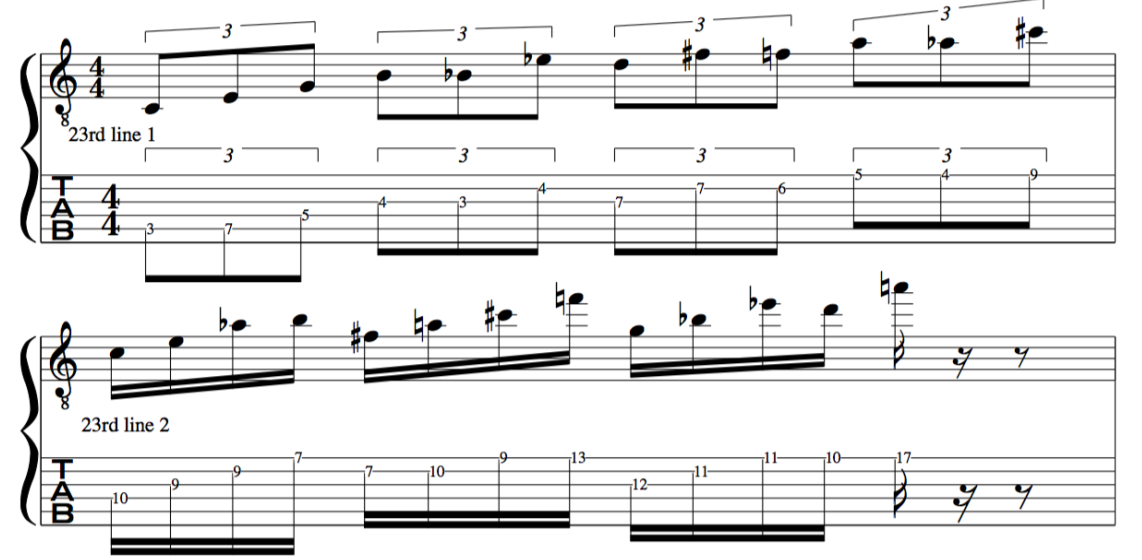
Below we have the employment of triplets and the commonly used 4 note groupings of tetrachords.
SUPER-ULTRA-HYPER-MEGA-META-meets 12 tone and polychords
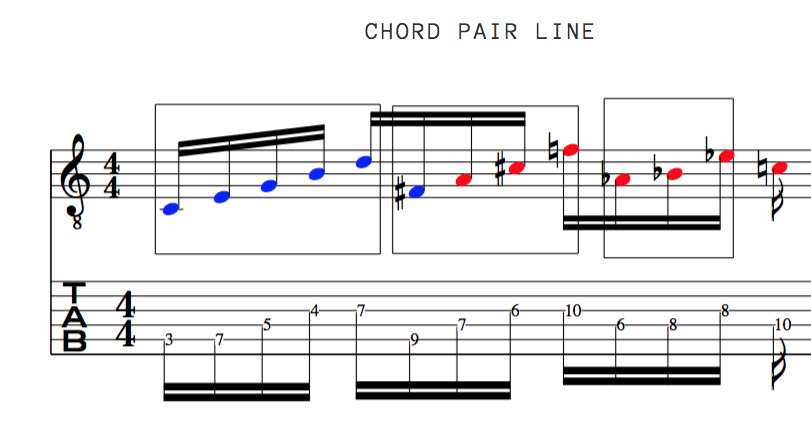
Below is an example of employing the jazz improvisation concept of “Chord Pairs”
SUPER-ULTRA-HYPER-MEGA-META-meets 12 tone and polychords chord pairs