Mastering John McLaughlin’s Guitar Motif Techniques Part 2:

Hi Guys,

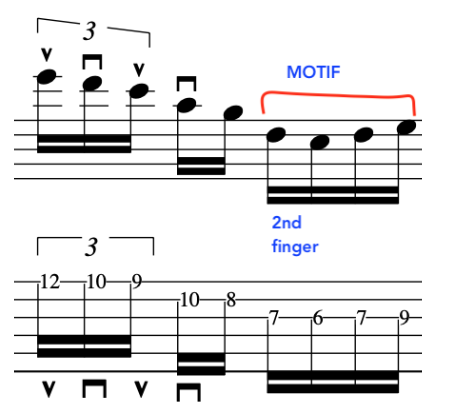
Here, is the extended version for the 2nd finger John McLaughlin motif:

The motif is a 4 note [Tetrachord] in 16th notes- D C# D E
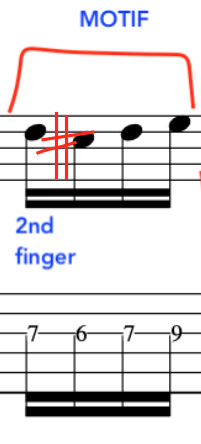
John McLaughlin shakti guitar lesson with music notation and guitar tab example

Notice that this starts with the 2nd finger on the first note:

Now, let’s extend this and add a “set up” by employing the Mixo-lydian mode to create a more Indian/Shakti flavour to the phrase:

John McLaughlin shakti guitar lesson with music notation and guitar tab example

This time, we will replicate/imitate the 4 note motif and use it as material to create/extend the phrase into a longer line.
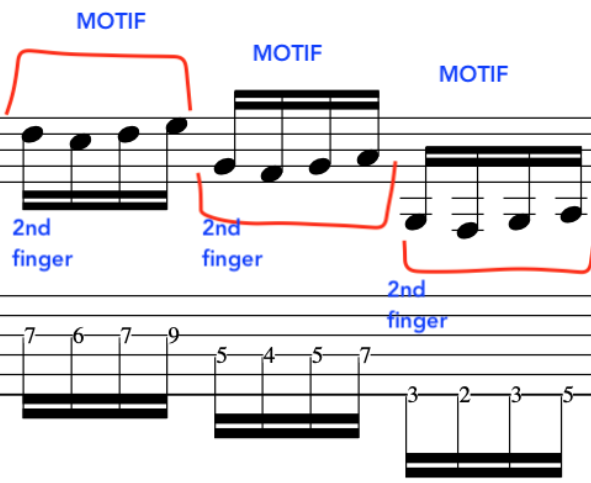
John McLaughlin shakti guitar lesson with music notation and guitar tab example for guitar fingering

Below, is the full line/lick:

John McLaughlin shakti guitar motif and fingering lesson with music notation and guitar tab example

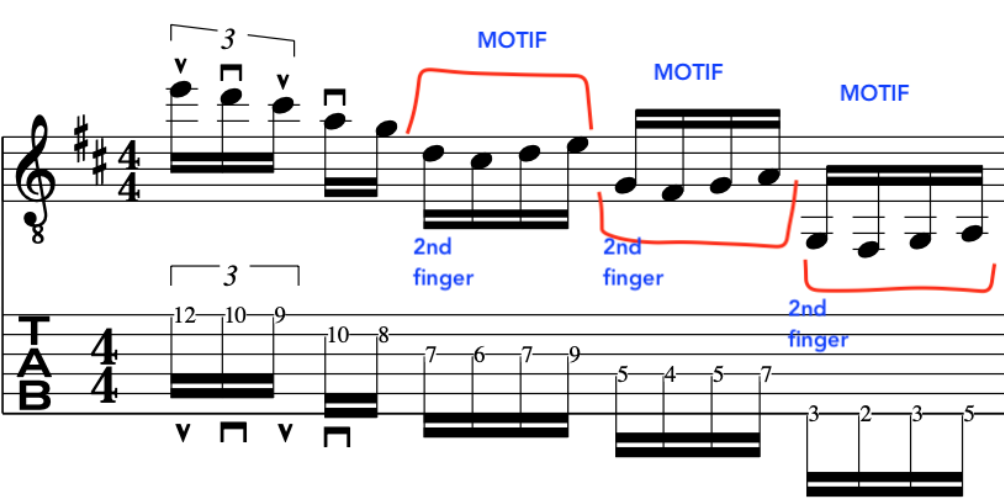
Let’s now, extend the motif and descend as far as we can down the fingerboard with the motif:
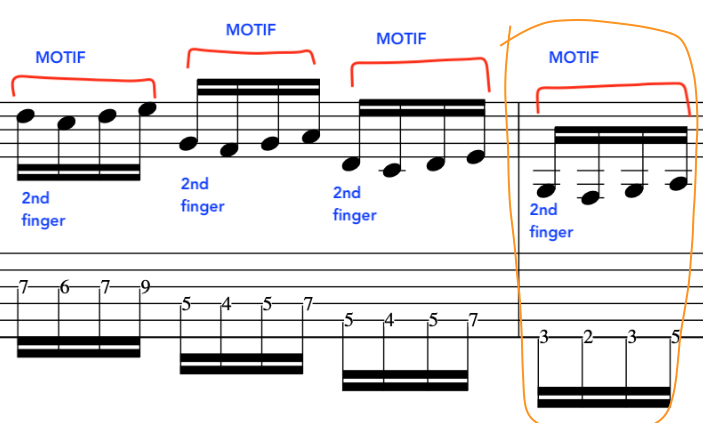
John McLaughlin shakti guitar lesson with music notation and guitar tab example

Finally, we will add our little set-up and create a full phrase:
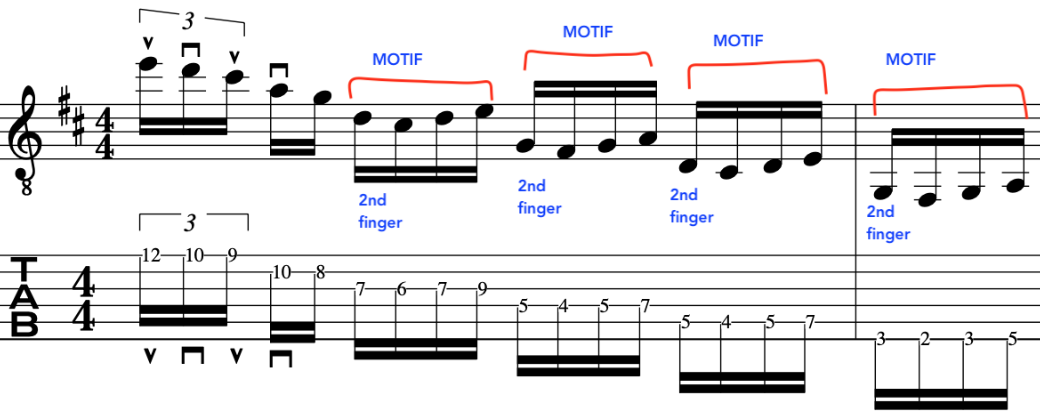
John McLaughlin shakti guitar lesson with music notation and guitar tab example

We can also start on a downstroke. This works best and is most natural when picked/phrased in triplets/sextuplets like this:
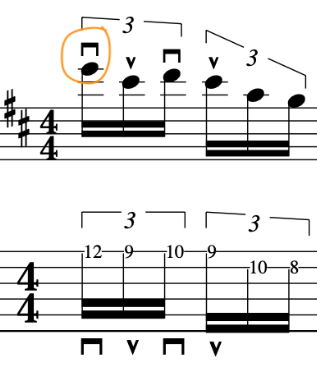
John McLaughlin alternate picking guitar lesson with music notation and guitar tab example

Full Phrase starting on a downstroke:
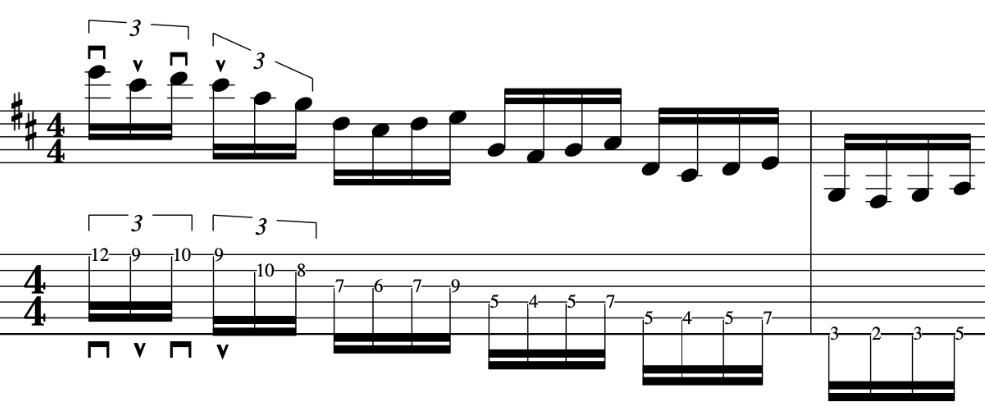
John McLaughlin shakti alternate picking guitar lesson with music notation and guitar tab example

This little motif/concept is only a small detail, but, it is a good representation of how a lot of material can be created/repeated or imitated from such a small cell. It is like a little hinge that can swing a big door.

This way of building solid lines is really useful for the alternate picking guitar technique as it means that we can unfold material quite easily and if we ever do get lost we can slot back in with simple motif material and rebuild our phrases and keep our lines going.

Mastering Chromatic Guitar Techniques Inspired by John McLaughlin

Hi Guys,

Today, a quick look at adding colourful chromatics to your playing.

I am employing the concepts/style of guitar great John McLaughlin.

For many guitar players that employ the pick, ascending chromatics seem to be more awkward and rhythmically difficult to phrase and play than descending.

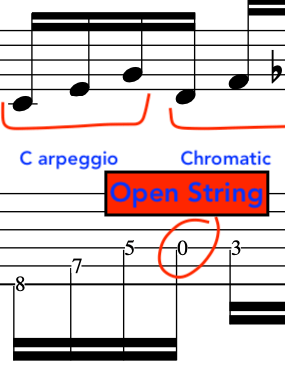
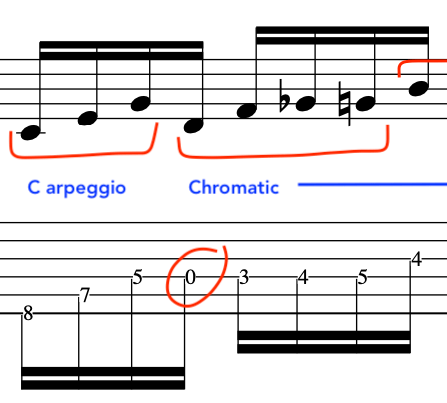
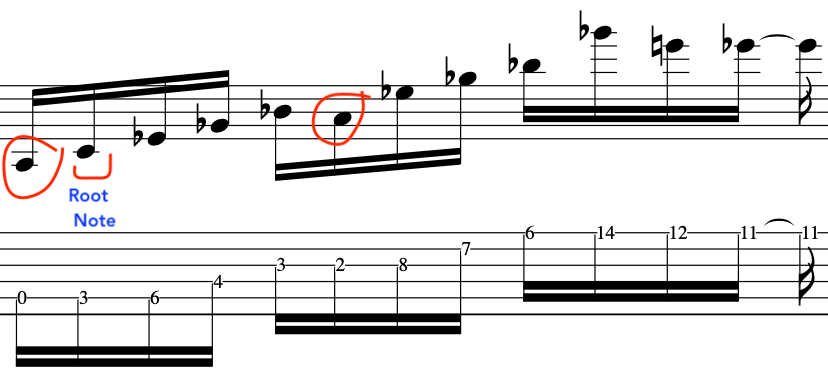
One, of the great secrets, that John exploits, is the use of the open string to connect everything together smoothly.

john_mclaughlin_chromatic_guitar_improvising_techniques

This, is unbelievably useful at up-beat tempos and with odd time signatures.

Because, the open string gives the fretting hand a fraction of a second to get into position…. and so, the picking right hand doesn’t have to rush or fight against the fretting hand and interrupt the synchronisation.

This makes it easy, to count time and play in a natural and fluent manner.

john_mclaughlin_chromatic_guitar_improvising_techniques

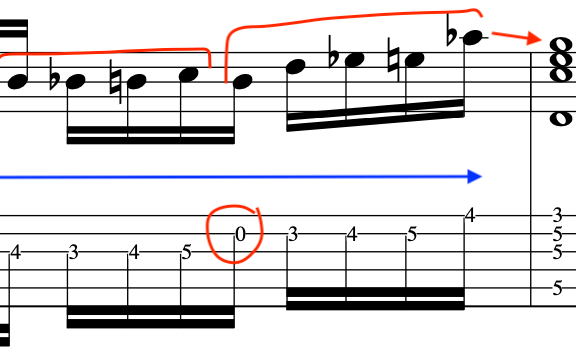
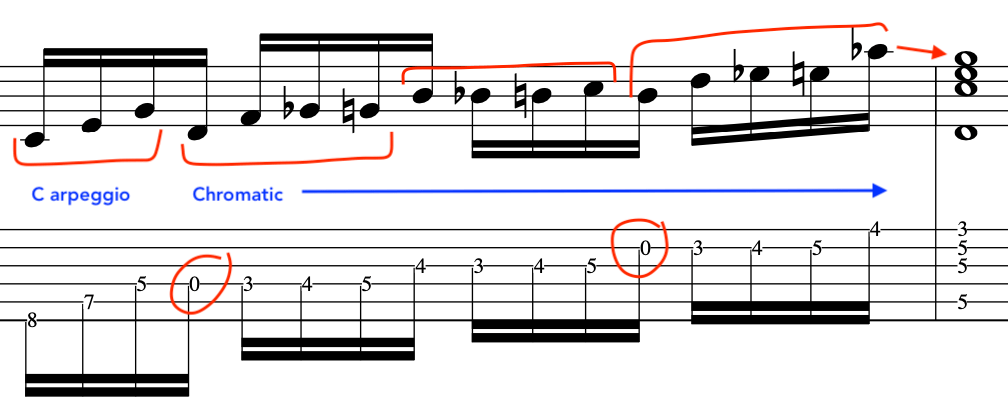
Let’s, now complete the ascending phrase by employing another open string:

Notice: The way the pick brings out the chromatics naturally in this way.

john_mclaughlin_chromatic_guitar_improvising_techniques

[Although, these can be classed as synthetic or symmetrical scales and some may deem them “Unemotional” or “Un-melodic” they serve an important purpose and weave beautifully in the improvised line].

john_mclaughlin_chromatic_guitar_improvising_techniques

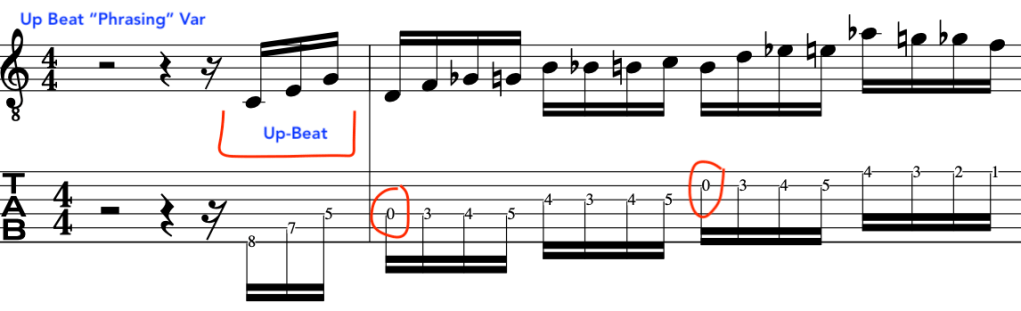
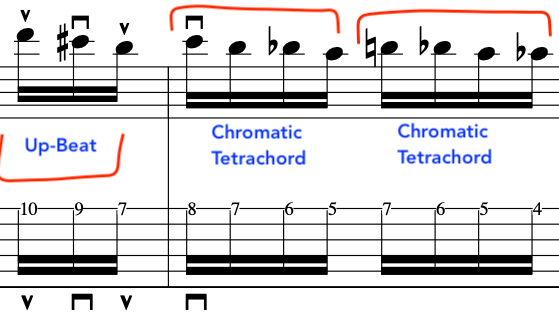
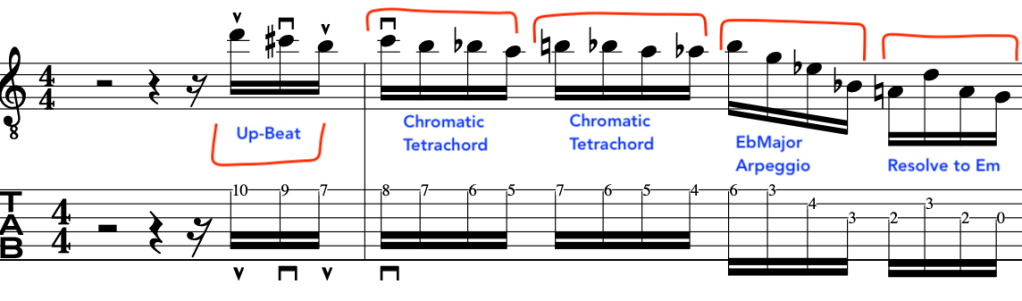
VARIATION: [With Up-Beat]

In the answering phrase we will employ Target Tones [Enclosure/Approach notes].

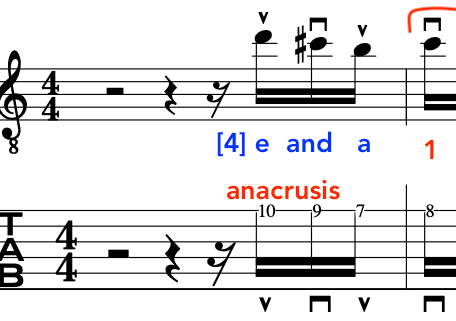
We will set up the phrase with an anacrusis, this being [4] e and a

john_mclaughlin_chromatic_guitar_improvising_techniques

NOTE: I am starting this on an “Up” stroke, so that when I start on the beat of the first bar I can employ the “Down” stroke” for “Even” tetrachord [4 note] groupings.

john_mclaughlin_chromatic_guitar_improvising_techniques

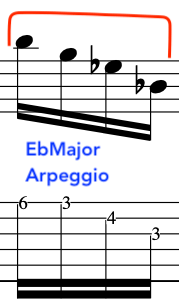
On the third beat, I am exploiting the use of the EbMajor arpeggio to get out of the key.

john_mclaughlin_chromatic_guitar_improvising_techniques

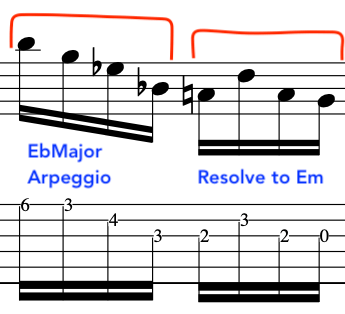
But, this then resolves nicely, back to Em. [Notice, the Bb resolves a half step down to the note A]

john_mclaughlin_chromatic_guitar_improvising_techniques

john_mclaughlin_chromatic_guitar_improvising_techniques

This was just a brief, but informative look at how easy chromatics can be brought into anyone’s guitar playing.

The key, is not the notes themselves so much, but, “How” they are done.

McLaughlin’s chromatic guitar techniques are actually quite simple and amazingly effective as they work at any tempo with the crafted alternate picking guitar technique.

Exploring John McLaughlin’s Unique Guitar Chordal Harmony

Hi Guys,

Today, a quick look at some of John McLaughlin’s amazing altered, slash and ambiguous guitar chords.

Johns harmony is a very rich palette indeed.

In the little example above in the video, I play about with some of Johns harmonic movement and colour.

Although, I could employ diminished harmony, I am instead aiming at “Implication”….Why?…This is in order to bring out the big “Rich” resonance of the guitar.

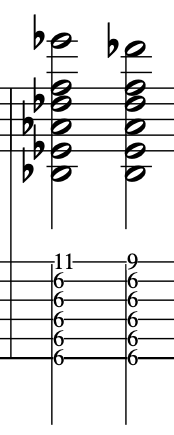
john_mclaughlin_guitar_chord_example_lesson

It is an ethereal sound where the natural harmonics and overtones can ring out of the guitars sound hole harmoniously.

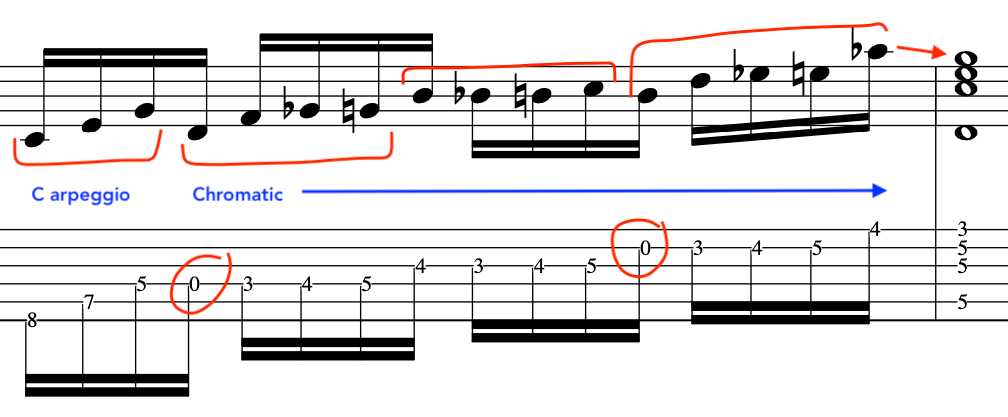
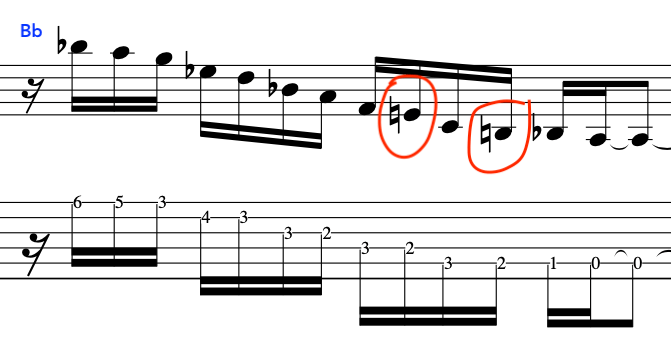
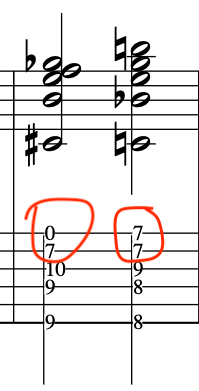
Next, we employ a Bb Major run with a few chromatic notes. These being, the B natural and the E natural chordal tones.

john_mclaughlin_guitar_chord_example_lesson

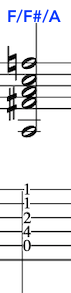
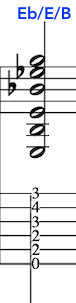
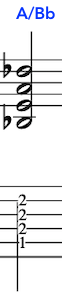
Now, let’s add two more resonant chords,

john_mclaughlin_guitar_chord_example_lesson

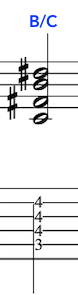
We will now connect to the next part together.

This will be with an arpeggio of Ebm mostly [or D#m] implying BMaj7. [Although there is an implied resolution to B7 also].

This juxtaposition, creates another ambiguous move that opens up a fresh and unique sounding harmony.

john_mclaughlin_guitar_arpeggio_example_lesson

From here, we can manipulate and resolve into the Bb minor full barre harmony:

john_mclaughlin_guitar_chord_example_lesson

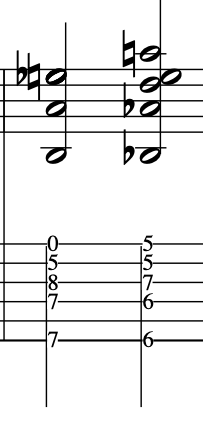
Now, let’s create a sequence. This will be, C#7sus4 to C7 with a sharpened 4th and a Maj7th.

Notice, the chromatic movement in the bass as we sequence this.

john_mclaughlin_guitar_chord_example_lesson

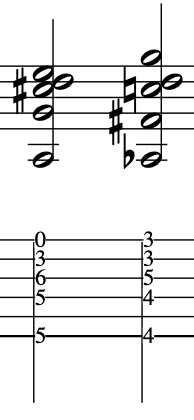
Finally, this resolves from CMaj7#11 to CMaj7 with open string guitar chords.

john_mclaughlin_guitar_chord_example_lesson

In conclusion, this was just a quick look at Johns unique take on harmony and how to apply some scale and arpeggio movement to connect it all together.

John’s harmony is a lovely combination of ambiguity and resonance with a sense of calm.

The magical ethereal tone opens doors to really interesting solo applications that exploit implied harmonies and dissonances. These I find are met with with lingering resolutions that are never quite met.

It’s a sort of pairing of opposites that you can’t quite put your finger on that give it that alluring yet elusive quality.