Mastering Slash Chords: The B/C Explained

B/C GUITAR SLASH CHORDS GUITAR LESSON AND EXAMPLES

Hi guys,

Today, a quick look at the idea of employing slash chords.

To do this we will focus on one specific chord that of B/C.

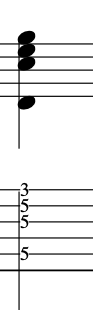
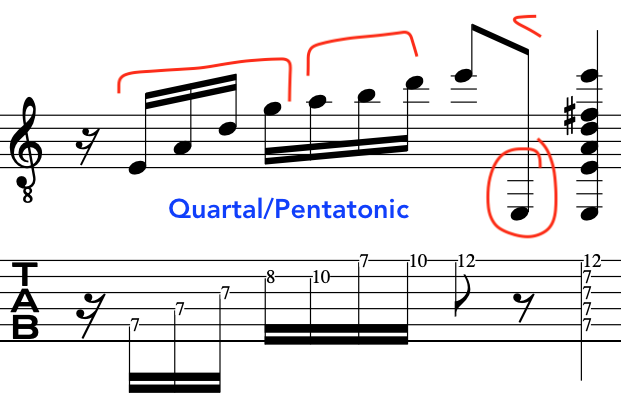
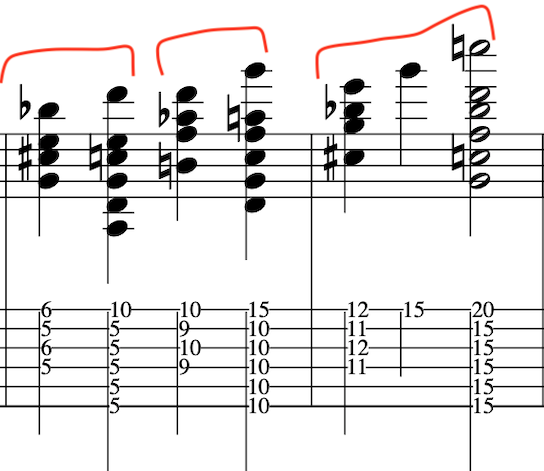
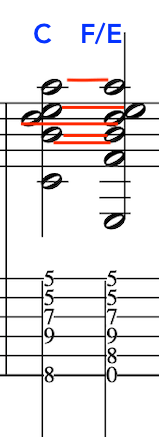
In the notation/tablature below, notice the use of a B Major triad over a C bass:

John McLaughlin guitar Slash Chord B/C Example in TAB and music notation

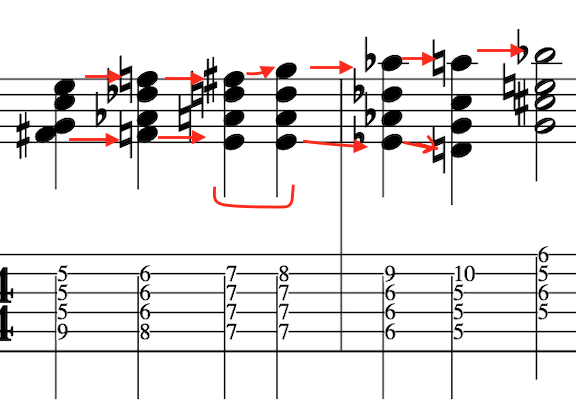
Here, are a few more voicing’s:

1]

2]

3]

4]

This chord works well with the diminished scale. But, in order to come up with something unique we are going to take a different approach.

Because, we have the B Major chord we can exploit Pat Martino’s minor conversion technique.

In this case, we will employ the minor a Major 3rd up. This will be D#/Eb as the minor key:

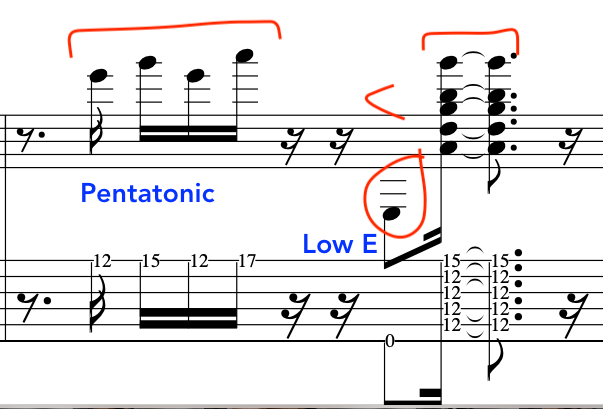
Here, we will employ the simple Eb minor arpeggio:

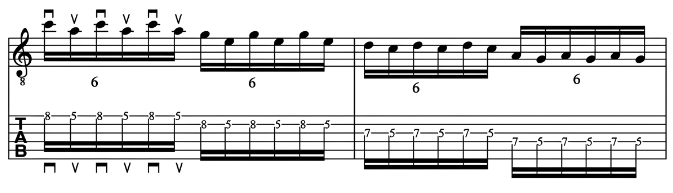
This time, we will employ scale movement inside of the Eb minor arpeggio shape in a horizontal form.

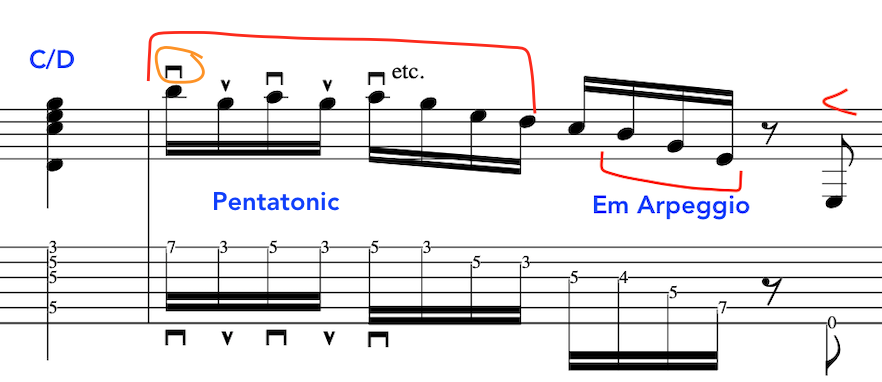
diagram depicting guitarist John McLaughlin improvisation over Slash Chord B/C Example in music notation and guitar tablature

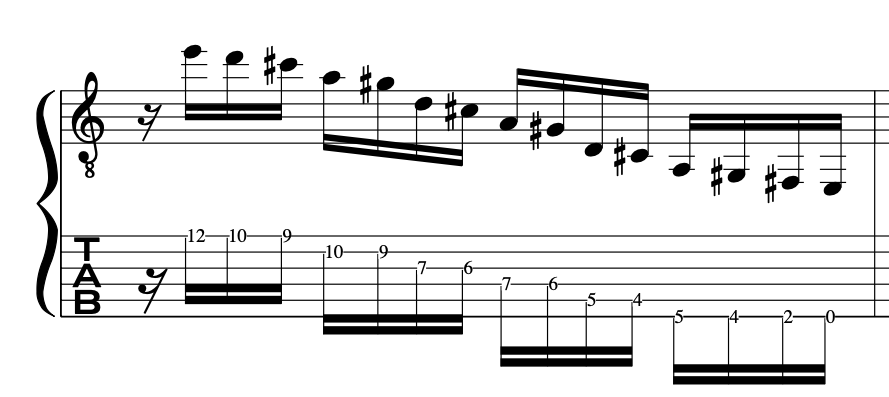
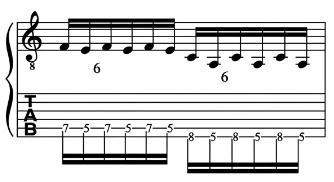
Let’s do the same, but, play with the notation and give it a diminished flavour:

Now, let’s take a B Major arpeggio and ascend it by making sure our C bass note is within it.

NOTE: There are also two open string notes of D natural [minor 3rd] and the open E. I used these as they make the arpeggio flow easily when alternate picking.

How to play a John McLaughlin guitar arpeggio example for altered slash chord of B/C

We can also add some chromaticism for smooth movement.

Finally, let’s see how composition can be exploited with our slash chord.

To do this, we will create a ii V7 I cadence:

diagram depicting guitarist John McLaughlin cadence and jazz composition

NOTICE: In the example above, we can see that the minor becomes diminished and the Dominant becomes 13b9 and the I chord becomes our slash chord that resolves yet hangs in the air.

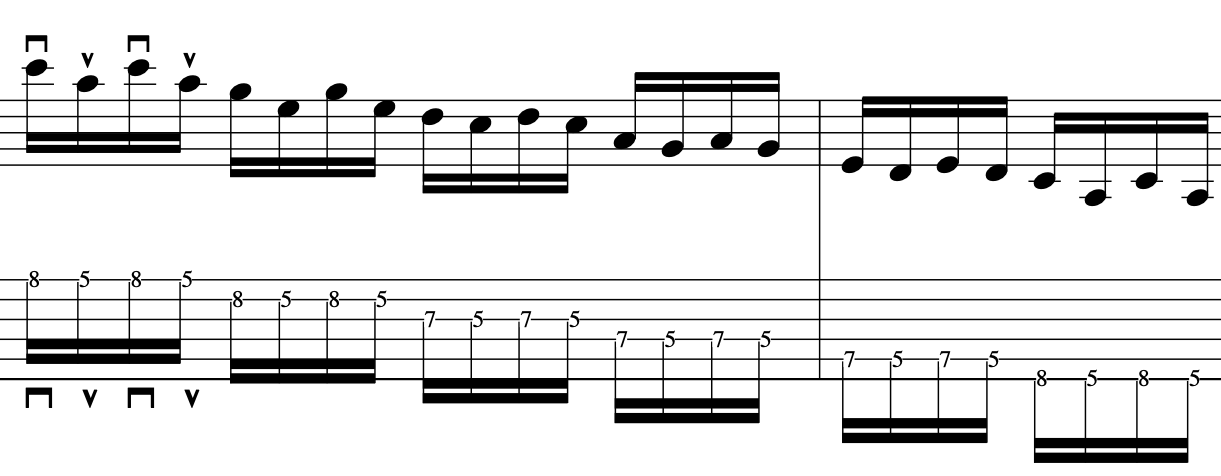
Mastering John McLaughlin’s Guitar Motif Techniques Part 2:

Hi Guys,

Here, is the extended version for the 2nd finger John McLaughlin motif:

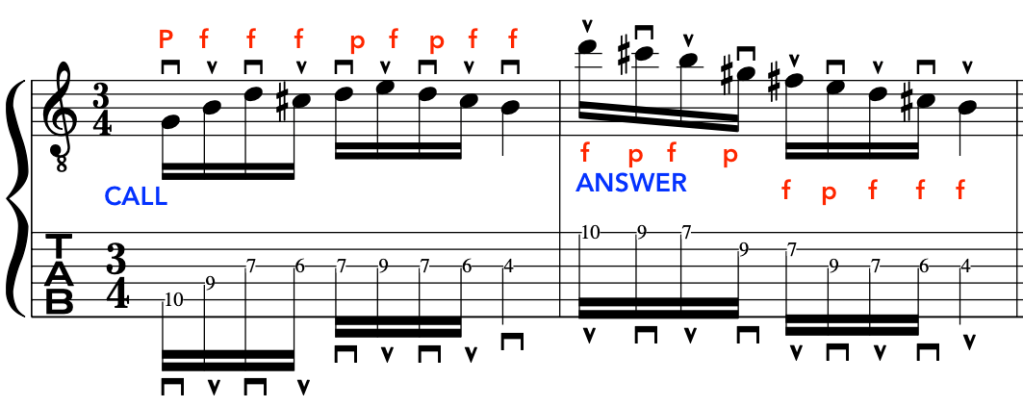
The motif is a 4 note [Tetrachord] in 16th notes- D C# D E

John McLaughlin shakti guitar lesson with music notation and guitar tab example

Notice that this starts with the 2nd finger on the first note:

Now, let’s extend this and add a “set up” by employing the Mixo-lydian mode to create a more Indian/Shakti flavour to the phrase:

John McLaughlin shakti guitar lesson with music notation and guitar tab example

This time, we will replicate/imitate the 4 note motif and use it as material to create/extend the phrase into a longer line.

John McLaughlin shakti guitar lesson with music notation and guitar tab example for guitar fingering

Below, is the full line/lick:

John McLaughlin shakti guitar motif and fingering lesson with music notation and guitar tab example

Let’s now, extend the motif and descend as far as we can down the fingerboard with the motif:

John McLaughlin shakti guitar lesson with music notation and guitar tab example

Finally, we will add our little set-up and create a full phrase:

John McLaughlin shakti guitar lesson with music notation and guitar tab example

We can also start on a downstroke. This works best and is most natural when picked/phrased in triplets/sextuplets like this:

John McLaughlin alternate picking guitar lesson with music notation and guitar tab example

Full Phrase starting on a downstroke:

John McLaughlin shakti alternate picking guitar lesson with music notation and guitar tab example

This little motif/concept is only a small detail, but, it is a good representation of how a lot of material can be created/repeated or imitated from such a small cell. It is like a little hinge that can swing a big door.

This way of building solid lines is really useful for the alternate picking guitar technique as it means that we can unfold material quite easily and if we ever do get lost we can slot back in with simple motif material and rebuild our phrases and keep our lines going.

Frank Zappa:Octave Displacement Composition/Improvisation Techniques

Frank Zappa Octave Displacement Composition/Improvisation Concepts

Hi Guys,

Today, a quick look at the way Frank Zappa exploits octave displacement.

This, is a really useful compositional device especially when writing for a string quartet or stringed instruments.

In this example we can see the use of the displaced octave [or Maj7th interval].

Musical notation showing a Frank Zappa transition between Maj7th chords, octave displacement with notes and annotations indicating 'O/D' and direction arrows.
Musical notation illustrating Frank Zappa’s octave displacement used in string instrument compositions.

With further analysis, we will notice the employment of the minor 3rd interval as a means of connection and predictive avoidance.

Musical notation displaying a Frank Zappa melody with highlighted minor third intervals, with annotations indicating their locations on the staff with octave displacement.
Musical notation illustrating frank Zappa minor 3rd intervals in a compositional example.

Although, this phrase/motif descends a minor 3rd it is actually, [quite cleverly] copied up a semitone:

Music notation displaying two Frank Zappa motifs with labels indicating connections and copy relationships, by employing octave displacement.
Musical notation illustrating Frank Zappa’s octave displacement and minor 3rd connections
Sheet music showing a Frank Zappa guitar piece in 4/4 time signature, including standard notation and tablature for performance with octave displacement.
Musical notation illustrating octave displacement for string instruments, highlighting the use of minor 3rd intervals.

This example is the same as that found in Pat Martino’s 12 chromatic forms:

This amazing shape creates a really nice resonance/blend on the guitar. It’s also useful for various inversions and shifting positions around on the fingerboard.

Here, once again we see the exploitation of the minor 3rd interval to move and connect the shape.

A musical notation image displaying Guitarist Frank Zappa's use of octave displacement.
Musical notation demonstrating frank Zappa’s minor 3rd interval and octave displacement

This application employs everything that we have looked at so far in one short example.

Notice, the minor 3rd connection, the open string, the shape, etc. It all becomes familiar.

A segment of sheet music displaying Frank Zappa's musical notes in standard notation and tablature, labeled with annotations including 'M3rd' and 'Shape.' The time signature is 4/4.
Example illustrating the application of minor 3rd intervals and octave displacement shape.

The final example is similar in concept to our first one.

It has a motif/phrase which is connected by the minor 3rd interval, that, then copies it up a half step.

Sheet music showing Frank Zappa's  musical notation with labeled sections indicating a phrase or motif, a minor third connection, and a directive to copy up a step, along with the corresponding tablature for guitar.
Frank Zappa illustrating the connection of phrase/motif using a minor 3rd interval, copied up a half step.

Full Example:

Sheet music featuring musical notes and tablature for guitar octave displacement in 4/4 time signature.
Frank Zappa illustrating a composition example using octave displacement and minor third intervals.