Master the Whole Tone Scale with Simple Fingering

Hi Guys,

If there are two scales that I am always asked about, these are the whole tone scale and the diminished scale.

But, out of the two, it’s the whole tone scale especially!…And it’s due to the general textbook cumbersome and awkward fingering that puts guitarists off.

So, today let’s take a look at how to play the Whole Tone Scale with a simple fingering like that which we would employ for the pentatonic scale.

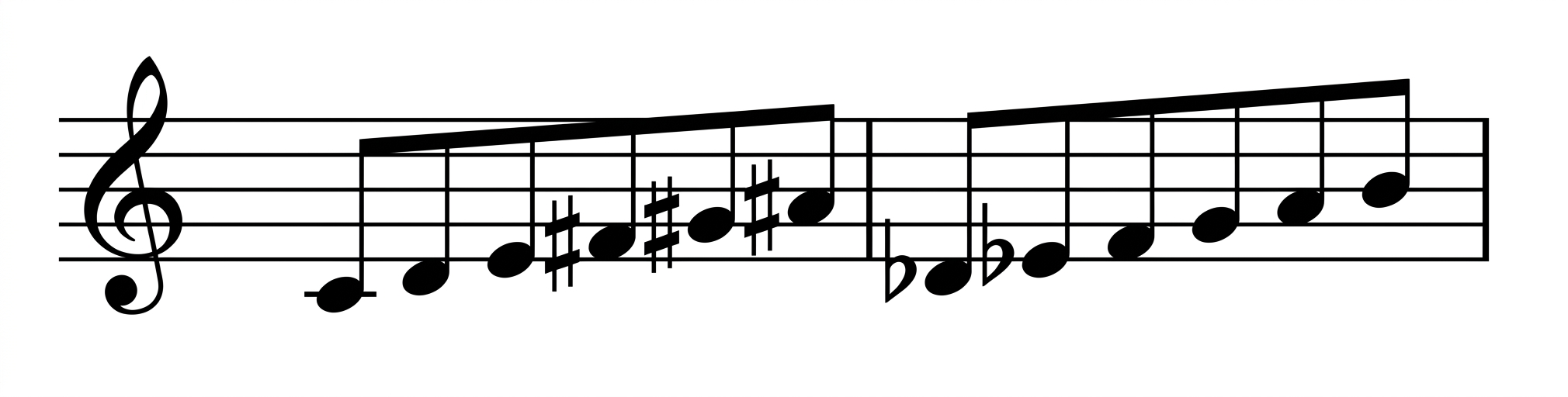
Standard textbook guitar fingering:

This, 3 note per string example above is a pretty uncomfortable and awkward affair that dosen’t flow and isn’t especially fluent for quick passages or phrases.

Well, the answer is to approach it like we would the pentatonic scale, so that we can move the SHAPE about and at the same time we can VISUALISE it.

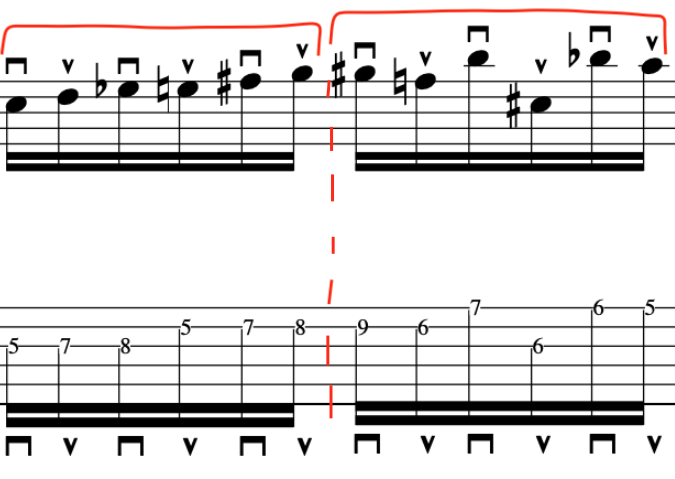
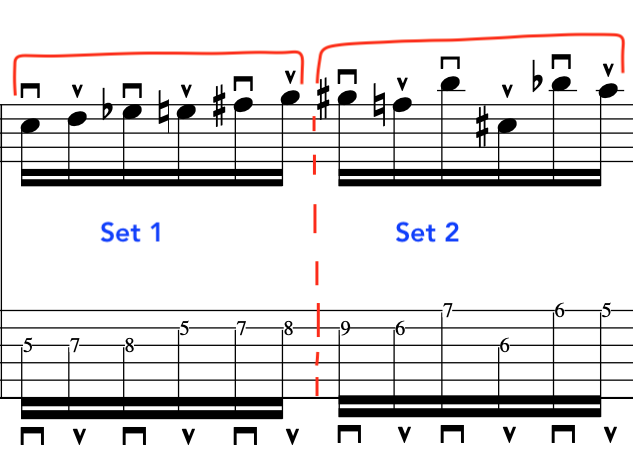
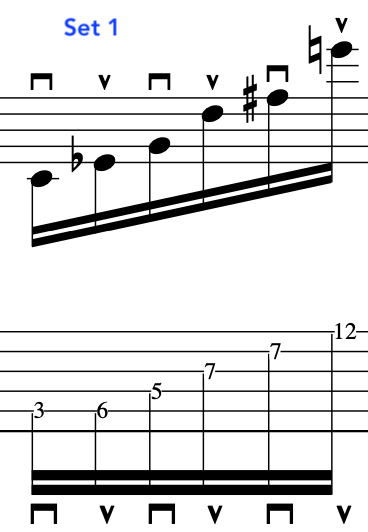
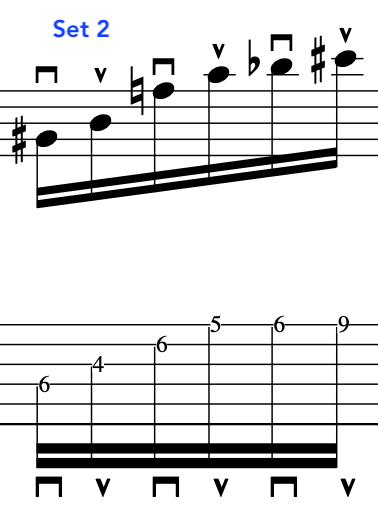
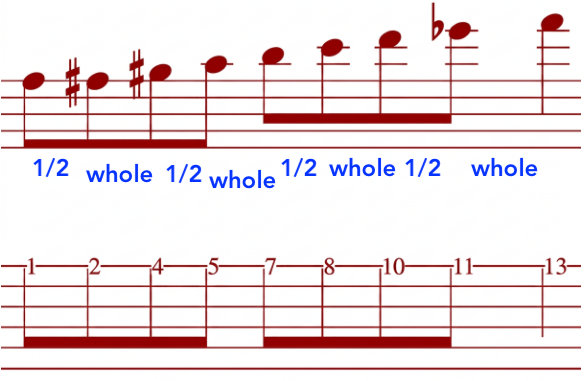
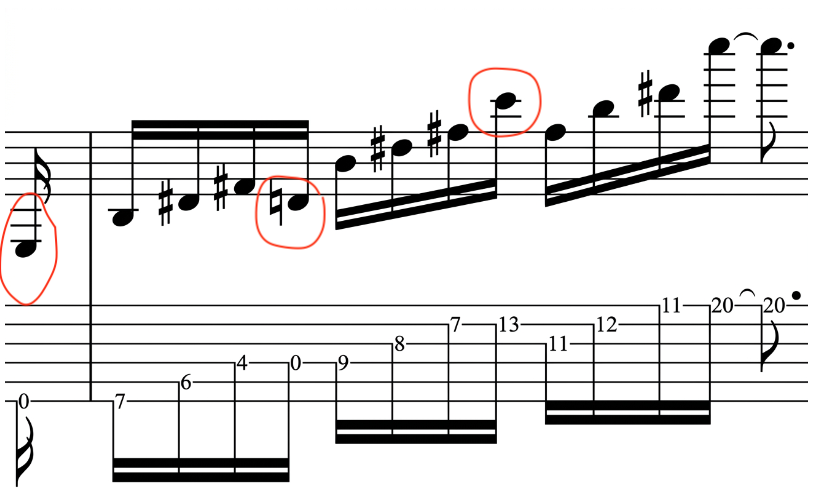
Here, is a preferred fingering that uses mainly 2 fingers: This, like the pentatonic means that we can move about quickly.

Musical staff and guitar tablature showing notes and finger positions of the whole tone scale in pentatonic form with red slur and bend markings

What’s truly great about this fingering is that we can copy and repeat it exactly “Down 1 Tone or Up 1 Tone” each time right along the guitar fingerboard.

This means that we can easily exploit the scale, play it fluently and see it visually which in turn gives us complete command of it.

Now, that we can see and hear what we are doing and have a fluent fingering let’s make use of the scale harmonically.

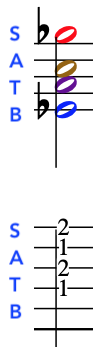
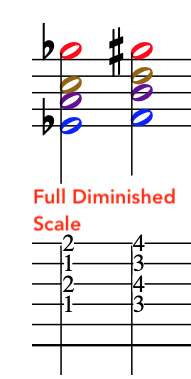
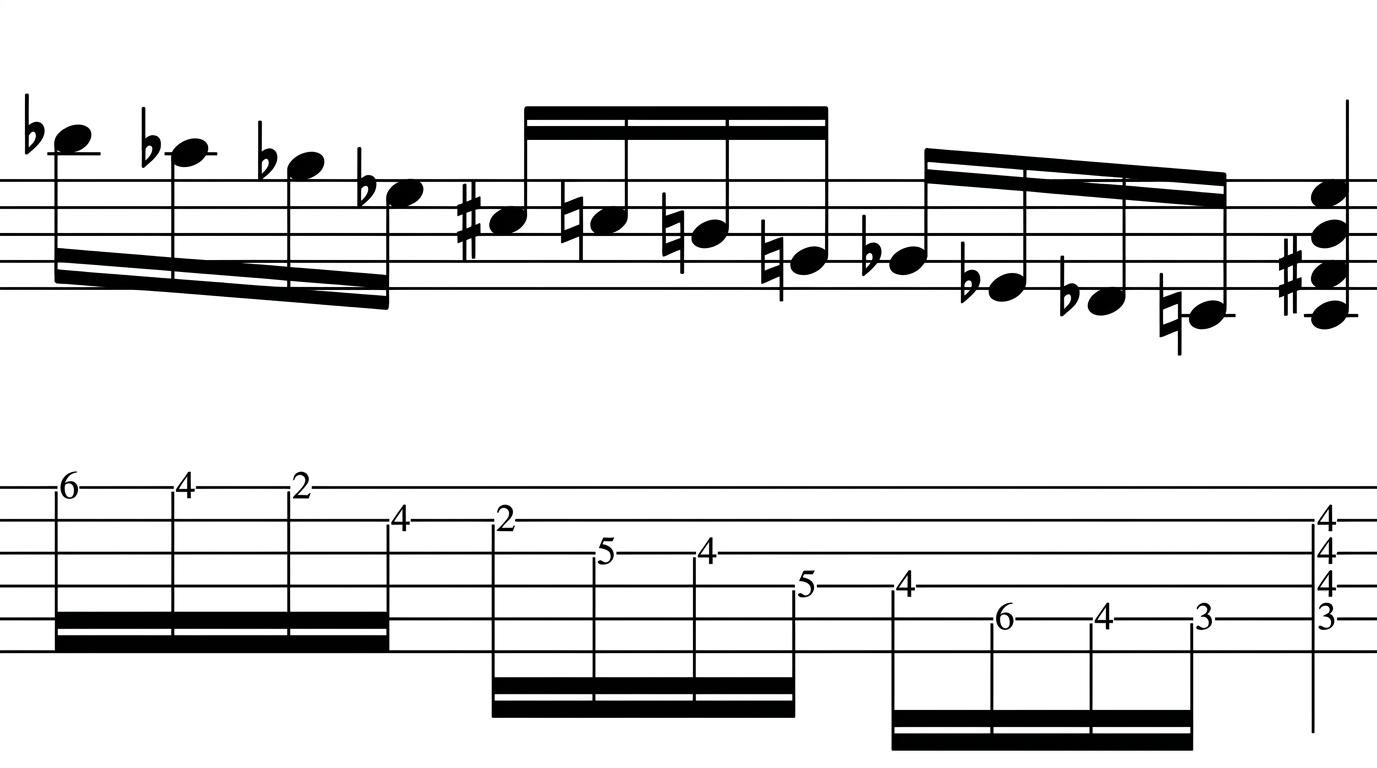
To begin with, let’s use a flattened 5th interval [and Bb7] over a moving bass. [See video at the top of the page].

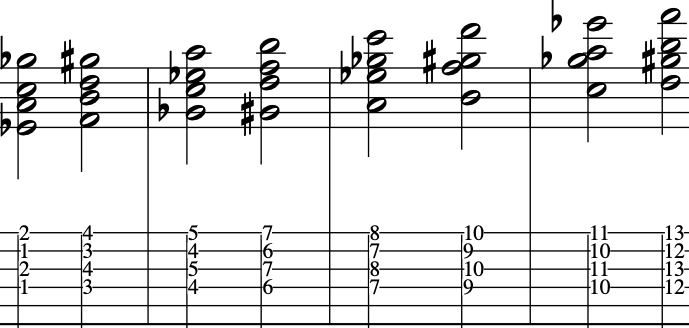
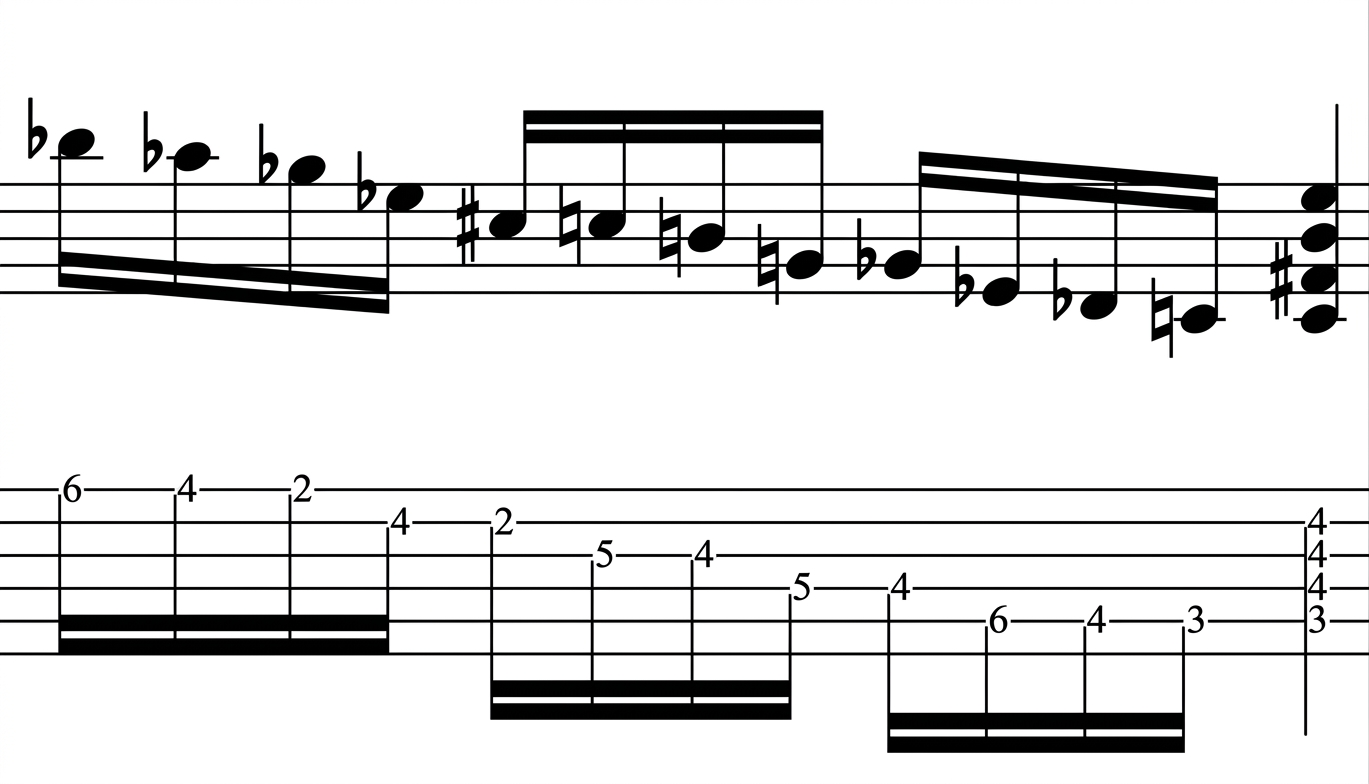
Now, let’s use this same harmony and create an [arpeggiated] chordal picking vamp:

Sheet music and guitar tablature showing a repeating whole tone scale triplet pattern with flat notes and finger positions on the 5th, 7th, 9th, and 10th frets

Again, it’s easy to see and hear how we can quickly create composition now that we can visualise a simple shape all across the guitar fingerboard.

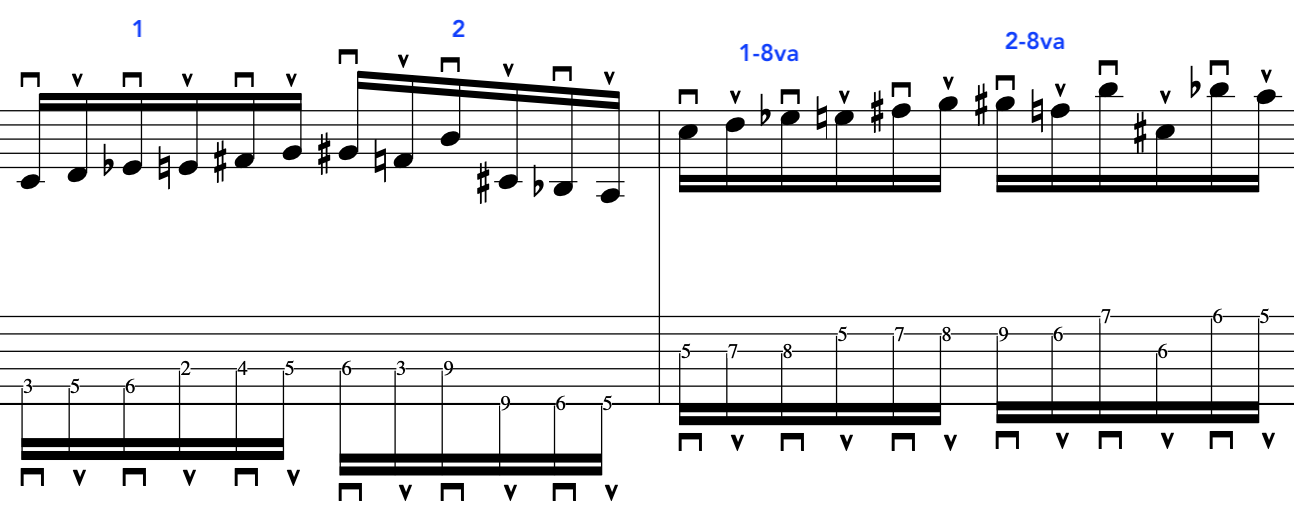
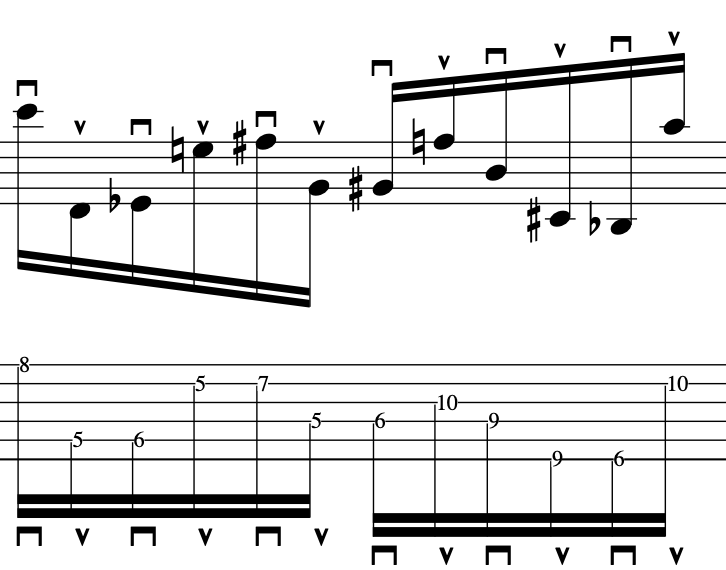
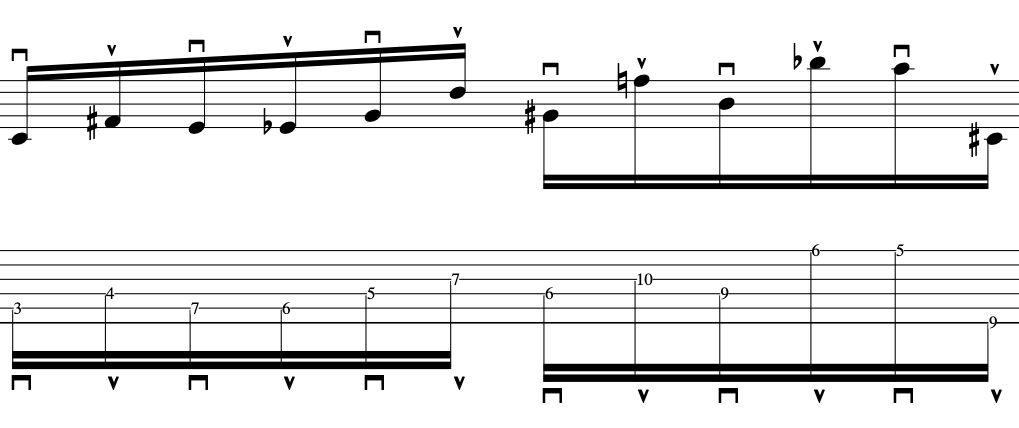
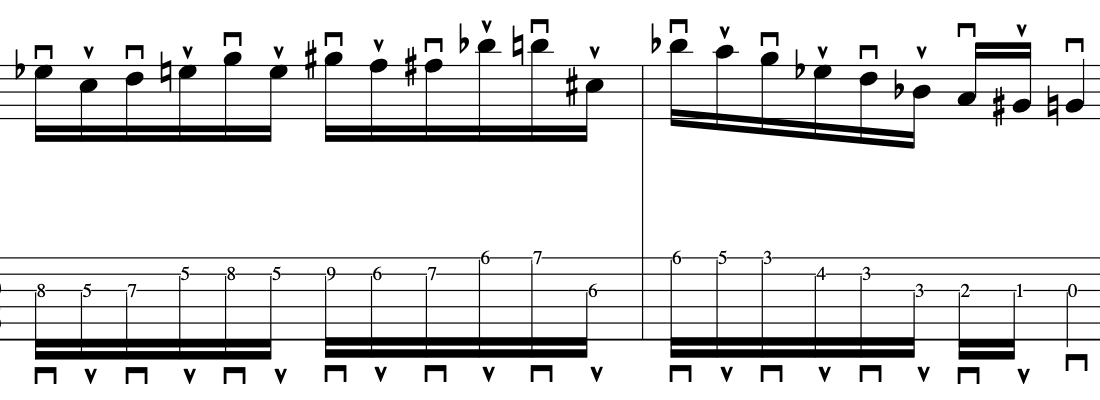
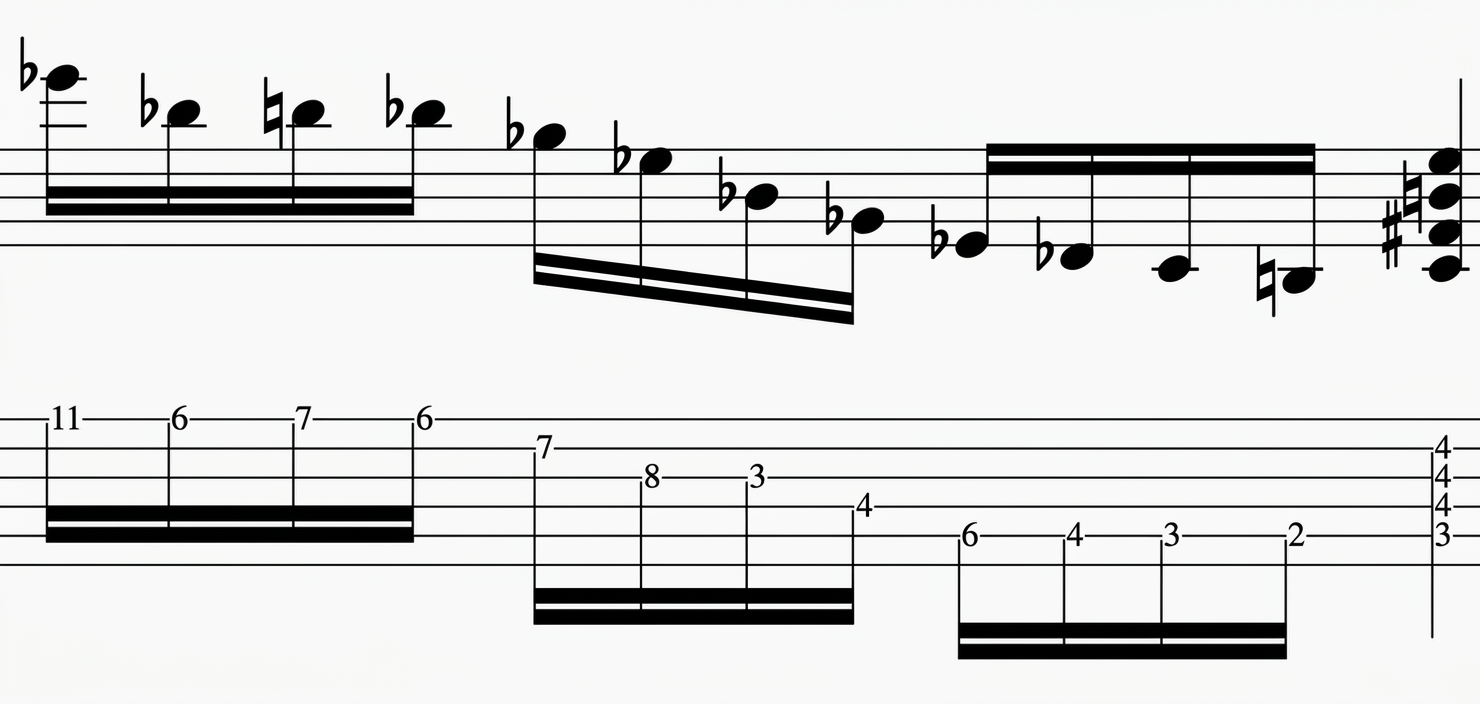
What, also works really well from this visual whole tone approach is the exploitation of the high low high [or mirroring] effect.

EXAMPLE 1: High to Low

Sheet music with treble clef and tablature showing whole tone scale musical notes and finger positions on a guitar fretboard

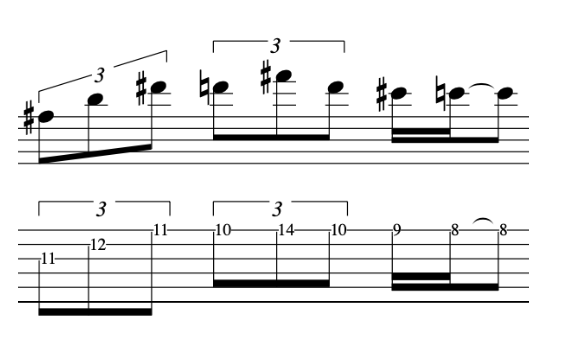
Here, we will create a little phrase that’s going back and forth between the low and high registers.

EXAMPLE 2: Back and Forth

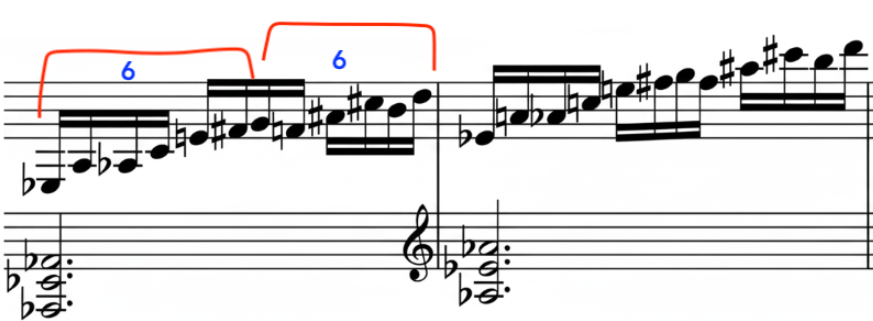
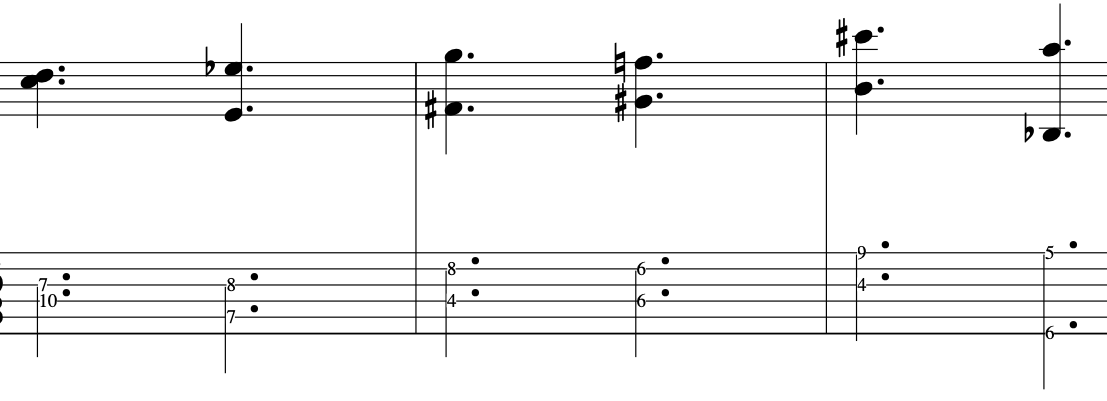
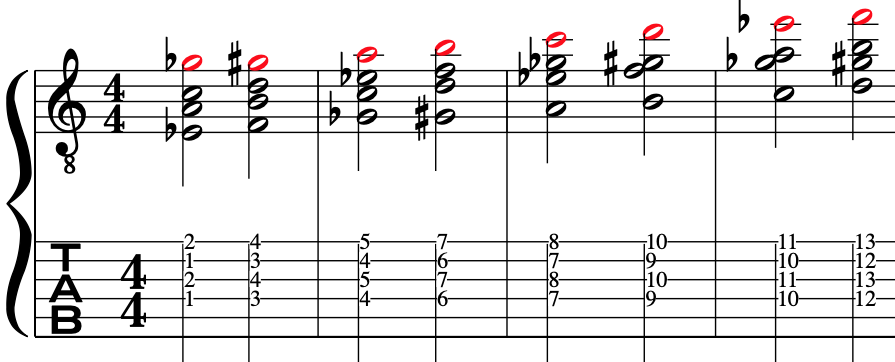
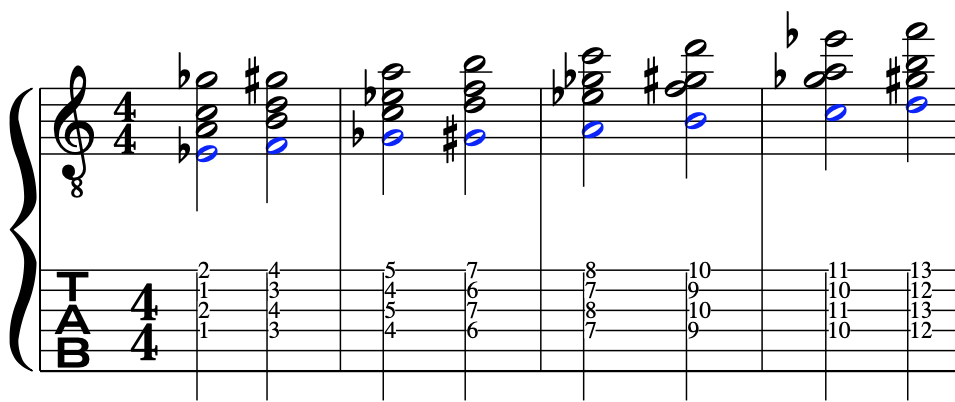
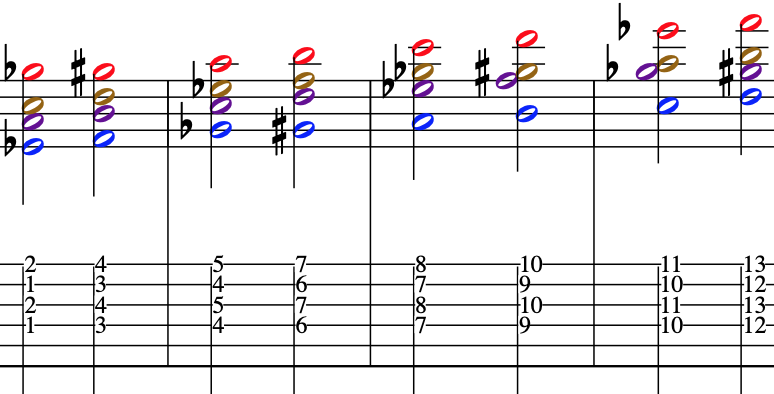
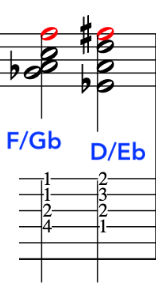
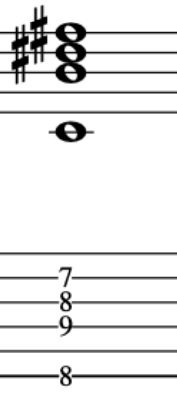
We will now apply this simple scale fingering to a classic Messiaen chord

Application and example:

Sheet music and guitar tablature for a Messiaen piece in Gb9b5/E chord showing notes and finger positions

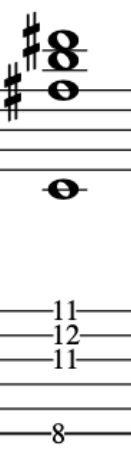
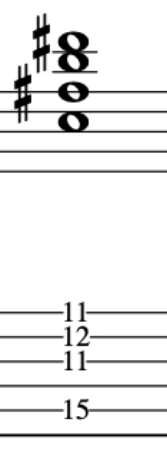
Finally, we can come out of the shape and move up and down the fingerboard connecting the whole tone [1 step] movements.

So, let’s take a chord of C augmented with a 9th:

As we can see, it’s easy to move down the fingerboard shifting through scale and arpeggio along the way. [See, video above]

This was just a quick look at how essential it is to have simple fluid guitar fingering and simple 1 step connection for creating whole tone scale lines/phrases.

Having a “Visual” as well as harmonic understanding makes improvisation and composition so much easier with this scale.

And, as I have reiterated throughout this post, having a repeated shape only 1 tone apart makes the scale very user-friendly.

Frank Zappa:Octave Displacement Composition/Improvisation Techniques

Frank Zappa Octave Displacement Composition/Improvisation Concepts

Hi Guys,

Today, a quick look at the way Frank Zappa exploits octave displacement.

This, is a really useful compositional device especially when writing for a string quartet or stringed instruments.

In this example we can see the use of the displaced octave [or Maj7th interval].

Musical notation showing a Frank Zappa transition between Maj7th chords, octave displacement with notes and annotations indicating 'O/D' and direction arrows.
Musical notation illustrating Frank Zappa’s octave displacement used in string instrument compositions.

With further analysis, we will notice the employment of the minor 3rd interval as a means of connection and predictive avoidance.

Musical notation displaying a Frank Zappa melody with highlighted minor third intervals, with annotations indicating their locations on the staff with octave displacement.
Musical notation illustrating frank Zappa minor 3rd intervals in a compositional example.

Although, this phrase/motif descends a minor 3rd it is actually, [quite cleverly] copied up a semitone:

Music notation displaying two Frank Zappa motifs with labels indicating connections and copy relationships, by employing octave displacement.
Musical notation illustrating Frank Zappa’s octave displacement and minor 3rd connections
Sheet music showing a Frank Zappa guitar piece in 4/4 time signature, including standard notation and tablature for performance with octave displacement.
Musical notation illustrating octave displacement for string instruments, highlighting the use of minor 3rd intervals.

This example is the same as that found in Pat Martino’s 12 chromatic forms:

This amazing shape creates a really nice resonance/blend on the guitar. It’s also useful for various inversions and shifting positions around on the fingerboard.

Here, once again we see the exploitation of the minor 3rd interval to move and connect the shape.

A musical notation image displaying Guitarist Frank Zappa's use of octave displacement.
Musical notation demonstrating frank Zappa’s minor 3rd interval and octave displacement

This application employs everything that we have looked at so far in one short example.

Notice, the minor 3rd connection, the open string, the shape, etc. It all becomes familiar.

A segment of sheet music displaying Frank Zappa's musical notes in standard notation and tablature, labeled with annotations including 'M3rd' and 'Shape.' The time signature is 4/4.
Example illustrating the application of minor 3rd intervals and octave displacement shape.

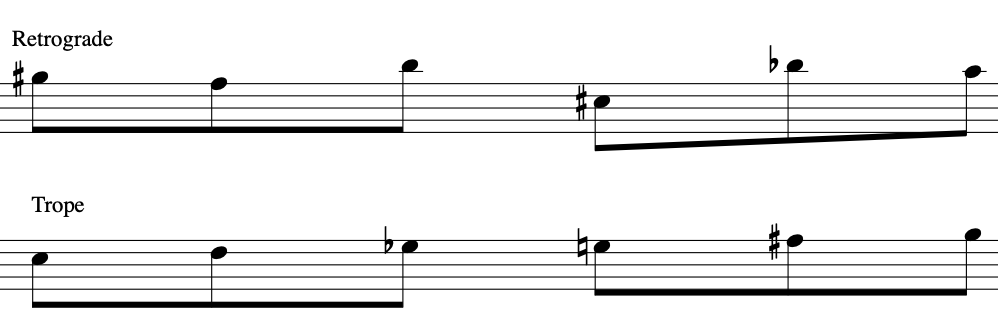
The final example is similar in concept to our first one.

It has a motif/phrase which is connected by the minor 3rd interval, that, then copies it up a half step.

Sheet music showing Frank Zappa's  musical notation with labeled sections indicating a phrase or motif, a minor third connection, and a directive to copy up a step, along with the corresponding tablature for guitar.
Frank Zappa illustrating the connection of phrase/motif using a minor 3rd interval, copied up a half step.

Full Example:

Sheet music featuring musical notes and tablature for guitar octave displacement in 4/4 time signature.
Frank Zappa illustrating a composition example using octave displacement and minor third intervals.

Guitar Techniques: Safe Fretting for Better Performance

Hi Guys,

Today, a quick look at the fretting hand and fretting notes “Safely”and easily on the guitar.

This is essential to ensure a relaxed hand, relaxed elbow and relaxed shoulders that are aligned and in sync with the right alternate picking hand at uptempo BPM’s.

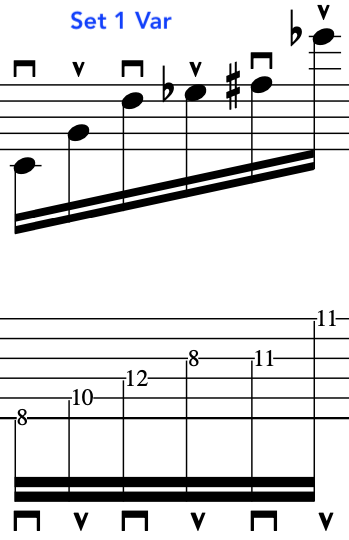
To begin with, let’s take a simple 5 note prime number pattern and alternate pick it.

This will be done starting on an upstroke.

Musical notation featuring alternate picking guitar technique notes on a staff, with markings indicating measures and guitar tablature below, highlighting certain fret positions.
A guitar sheet music notation featuring a simple 5 note prime number pattern with for alternate picking.

From this simple 5 note pattern, we can move the fretting hand quickly avoiding pressure on the tendons.

Now that we have this let’s add another 3 note prime number pattern.

When these are connected together we have a “Smooth” little phrase of picking and fretting in sync.

Sheet music showing guitar alternate picking tablature with notes and finger placements, including various symbols and measures.
Standard music notation for a combined 5 note and 3 note alt pick pattern on guitar.

Now, let’s turn the 2 prime number patterns into “Standard” music notation – as 16ths.

Sheet music featuring Shakti McLaughlin guitar tablature with notations and finger positions, including a section labeled '4 + 4'.
Standard music notation for a 5-note prime number pattern as 16ths.

From here, let’s add a chord, so that what we have starts to become/sound like music:

Musical notation with a staff displaying notes, rhythmic values, and a guitar tab indicating specific frets and strings for fretting hand when alternate picking technique is employed.
Shakti/McLaughlin style alternate picking technique on guitar

In this example, we will start with a chord and then comfortably play off of that chord ascending and descending into the next chord.

As you can see we have what looks like a bit of a stretch.

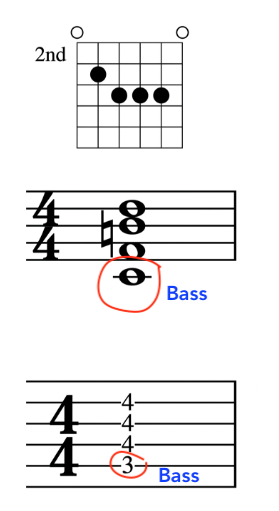
But, it is only a barred 2nd inversion C Major triad, with an F# note in the bass on the 4th finger.

The point here is that from that F# note we will start the alternate picking line from that 4th finger as it is already in position.

This makes it easy to do and connect to the next chord as the 1st finger will be in position to play the next chord.

The second part then descends nicely into the last chord of F#+7

Here, is another group of 5 + 3. Again, this is easy to fret and pick, and as before we will start on an upstroke.

Musical notation with standard staff lines showing notes and tablature for guitar, including finger positions indicated by numbers.

The beauty of this is that when we finish the chord on the downstroke it is natural to then go into the opposite direction and descend into another chord connection.

A sheet of music notation featuring notes on a staff and guitar tab indicating finger positions on the guitar.

Finally, let’s finish with a much favoured guitar picking pattern that encapsulates 6 notes [Sextuplets]

We will employ our 5 note prime number pattern and add 1 note.

This will give us a nice and quick 6 note sextuplet pattern to execute.

Sheet music showing musical notes, including key signatures and bar lines, along with corresponding tablature for string instruments.

Now, we will shift this up the fretboard as we repeat it.

Sheet music showing John McLaughlin and Al Di Meola guitar tablature and notation with various notes and techniques.
Standard music notation for John McLaughlin/Al Di Meola style alternate picking pattern/exercise

I