Master the Whole Tone Scale with Simple Fingering

Hi Guys,

If there are two scales that I am always asked about, these are the whole tone scale and the diminished scale.

But, out of the two, it’s the whole tone scale especially!…And it’s due to the general textbook cumbersome and awkward fingering that puts guitarists off.

So, today let’s take a look at how to play the Whole Tone Scale with a simple fingering like that which we would employ for the pentatonic scale.

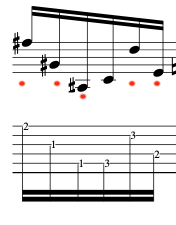
Standard textbook guitar fingering:

This, 3 note per string example above is a pretty uncomfortable and awkward affair that dosen’t flow and isn’t especially fluent for quick passages or phrases.

Well, the answer is to approach it like we would the pentatonic scale, so that we can move the SHAPE about and at the same time we can VISUALISE it.

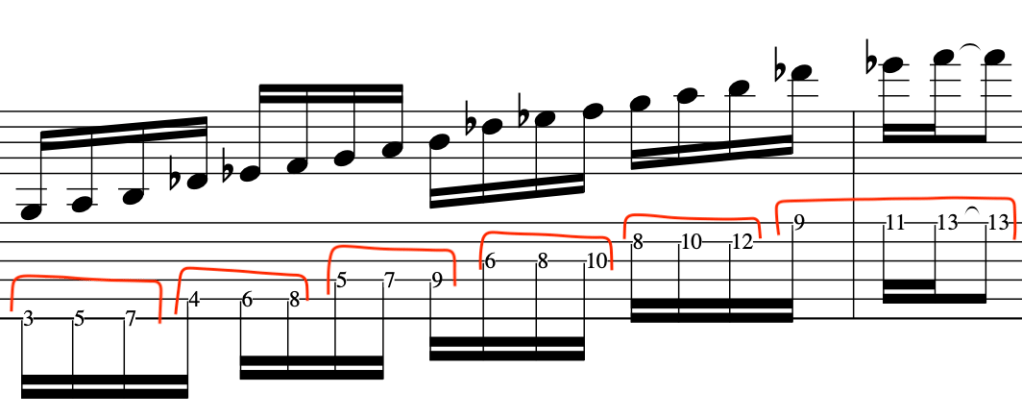
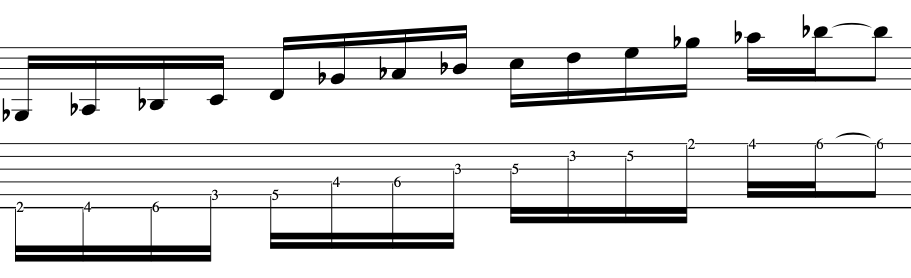
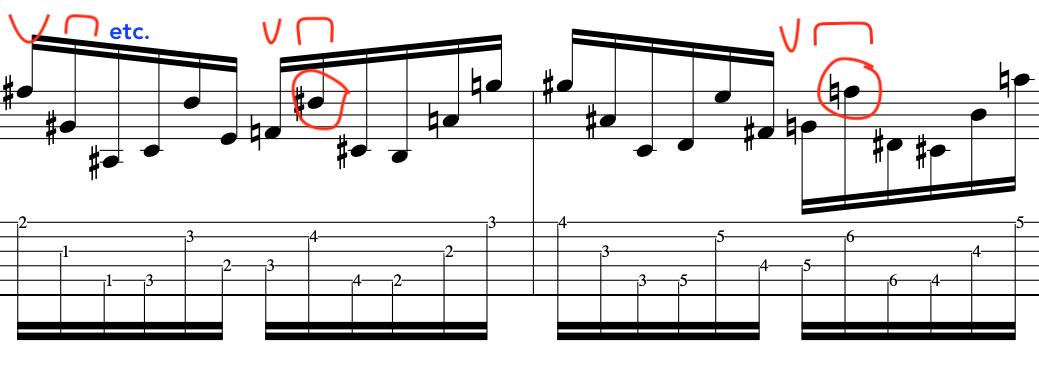
Here, is a preferred fingering that uses mainly 2 fingers: This, like the pentatonic means that we can move about quickly.
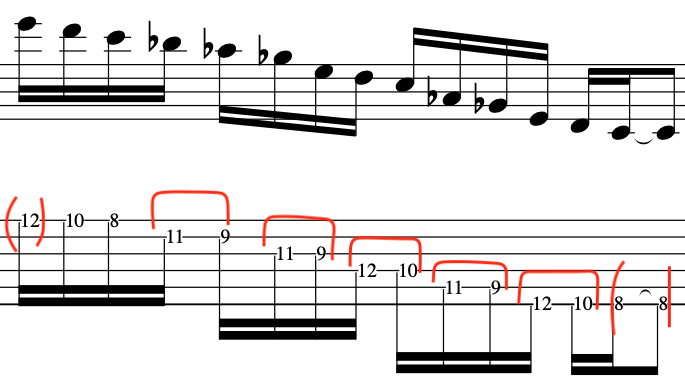
Musical staff and guitar tablature showing notes and finger positions of the whole tone scale in pentatonic form with red slur and bend markings

What’s truly great about this fingering is that we can copy and repeat it exactly “Down 1 Tone or Up 1 Tone” each time right along the guitar fingerboard.

This means that we can easily exploit the scale, play it fluently and see it visually which in turn gives us complete command of it.

Now, that we can see and hear what we are doing and have a fluent fingering let’s make use of the scale harmonically.

To begin with, let’s use a flattened 5th interval [and Bb7] over a moving bass. [See video at the top of the page].
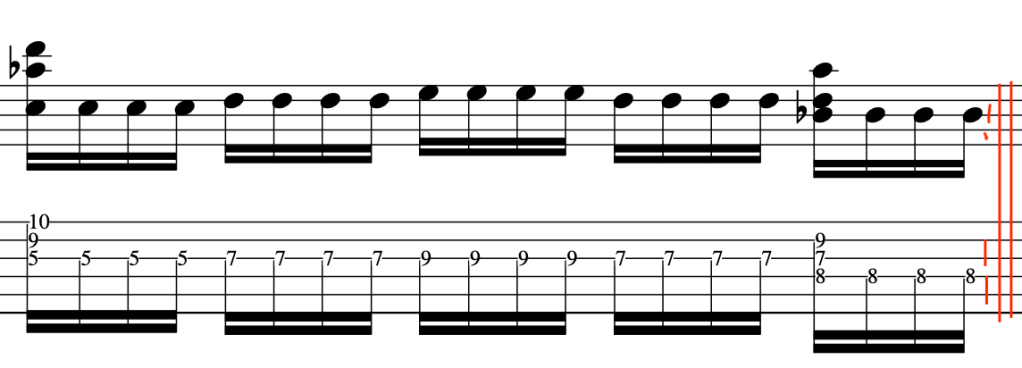
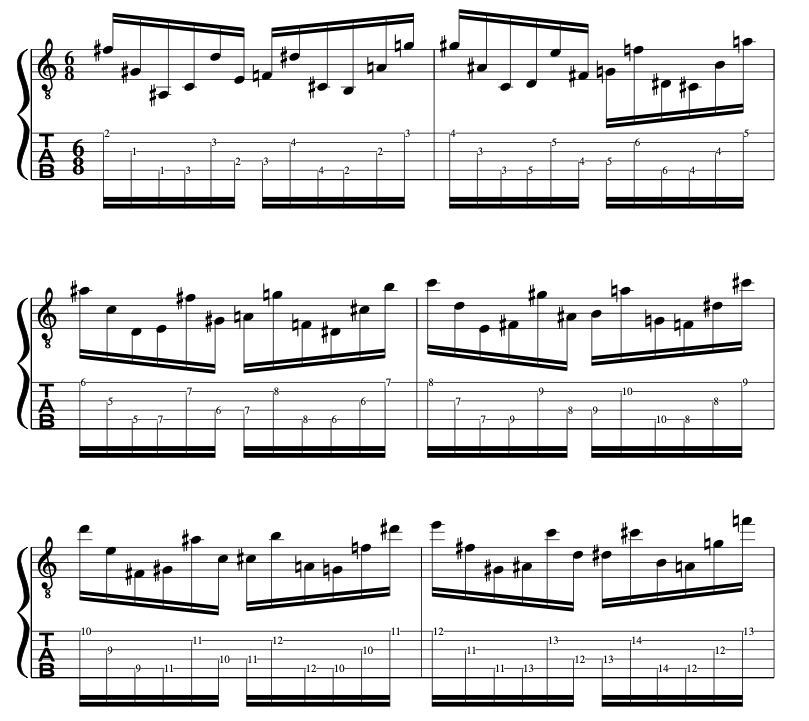
Now, let’s use this same harmony and create an [arpeggiated] chordal picking vamp:
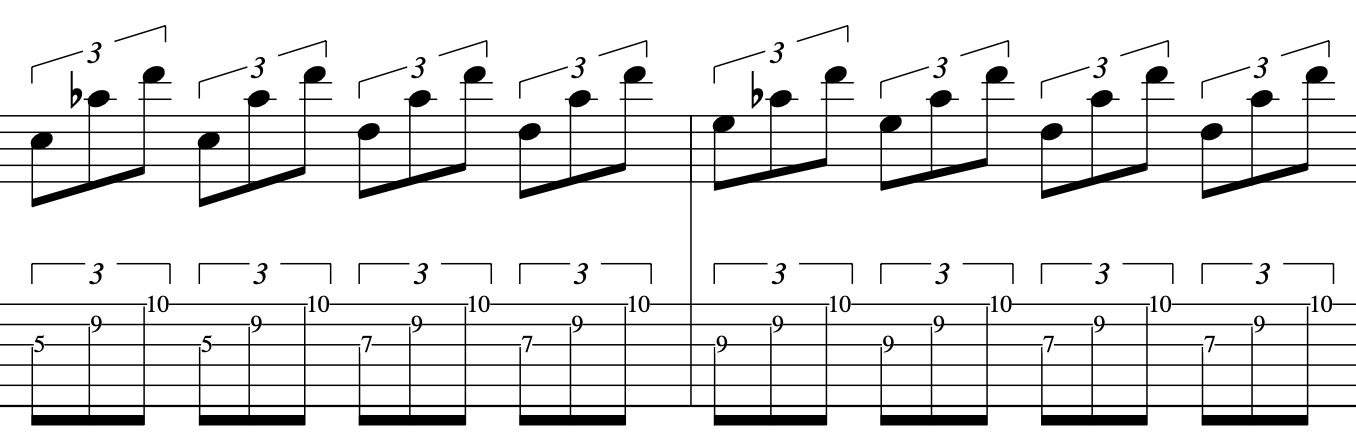
Sheet music and guitar tablature showing a repeating whole tone scale triplet pattern with flat notes and finger positions on the 5th, 7th, 9th, and 10th frets

Again, it’s easy to see and hear how we can quickly create composition now that we can visualise a simple shape all across the guitar fingerboard.

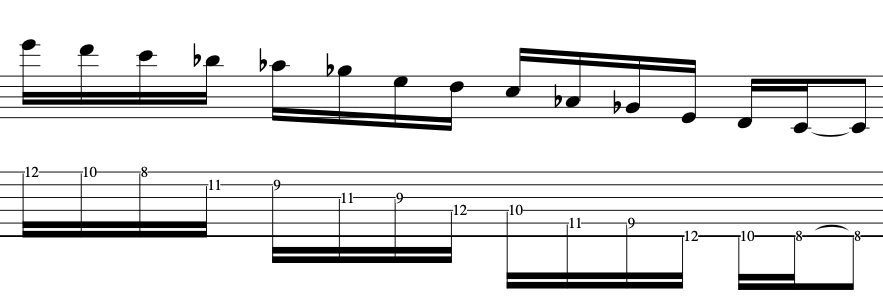
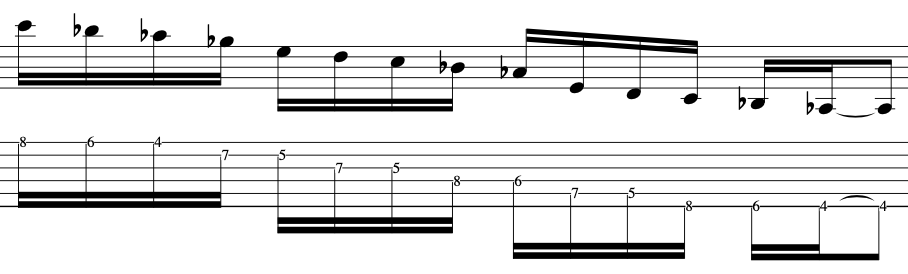
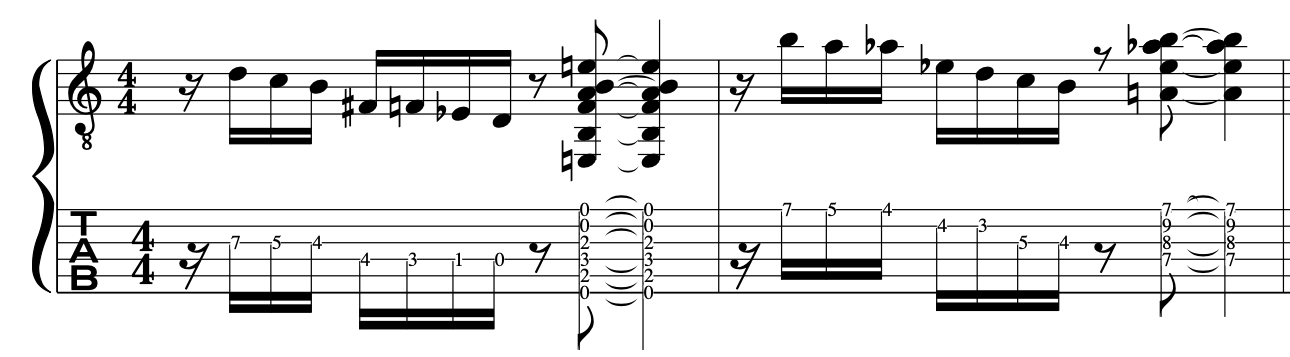
What, also works really well from this visual whole tone approach is the exploitation of the high low high [or mirroring] effect.

EXAMPLE 1: High to Low
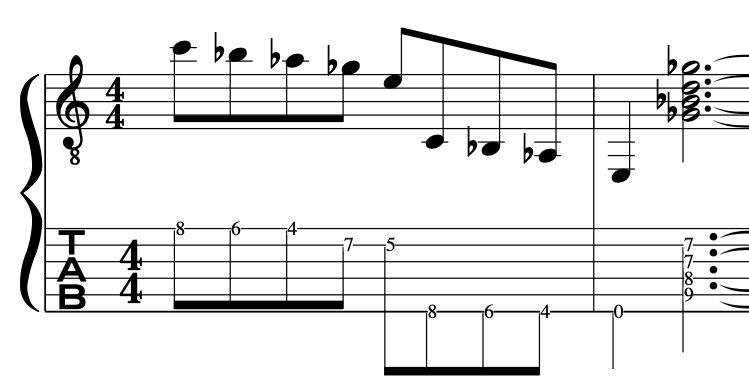
Sheet music with treble clef and tablature showing whole tone scale musical notes and finger positions on a guitar fretboard

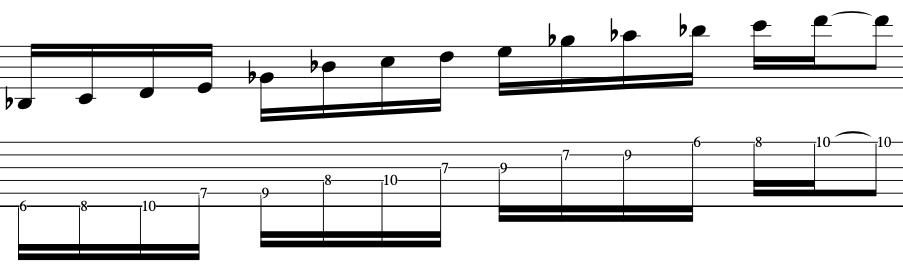
Here, we will create a little phrase that’s going back and forth between the low and high registers.

EXAMPLE 2: Back and Forth
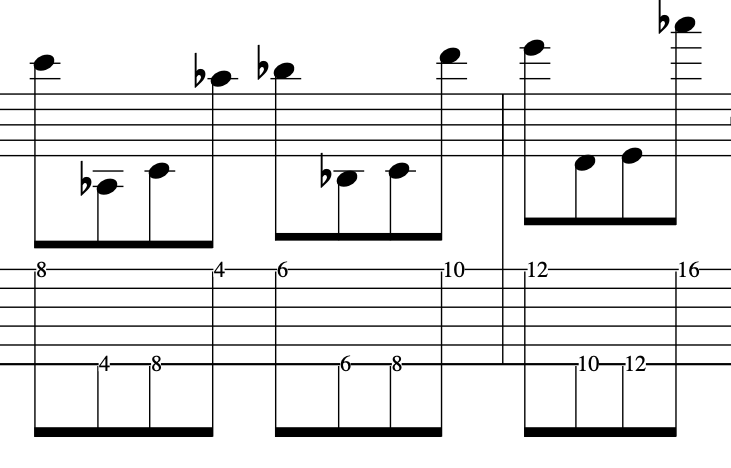
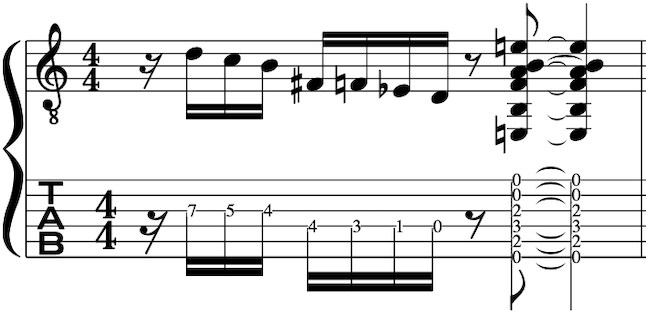
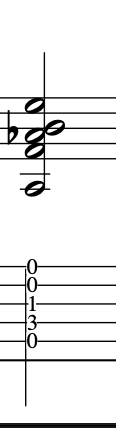
We will now apply this simple scale fingering to a classic Messiaen chord
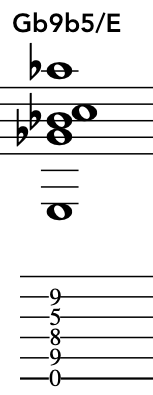
Application and example:
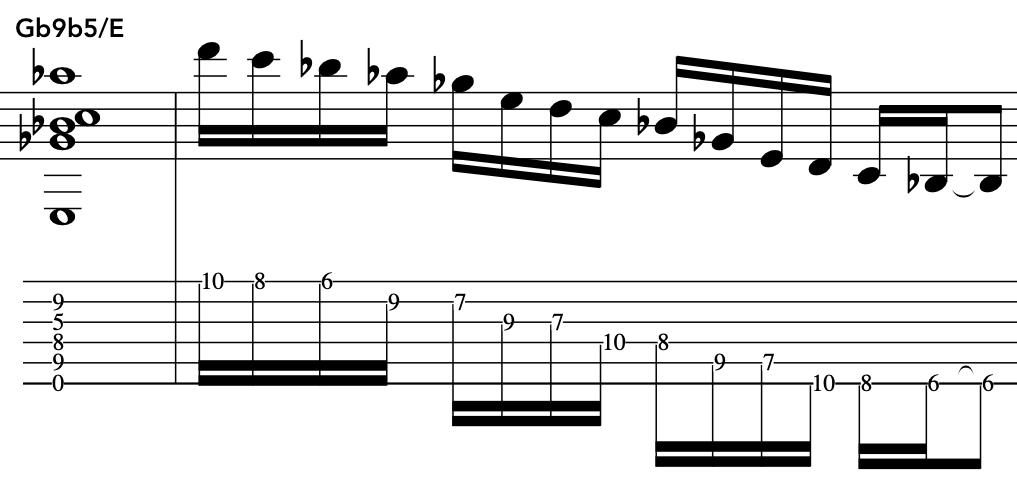
Sheet music and guitar tablature for a Messiaen piece in Gb9b5/E chord showing notes and finger positions

Finally, we can come out of the shape and move up and down the fingerboard connecting the whole tone [1 step] movements.

So, let’s take a chord of C augmented with a 9th:
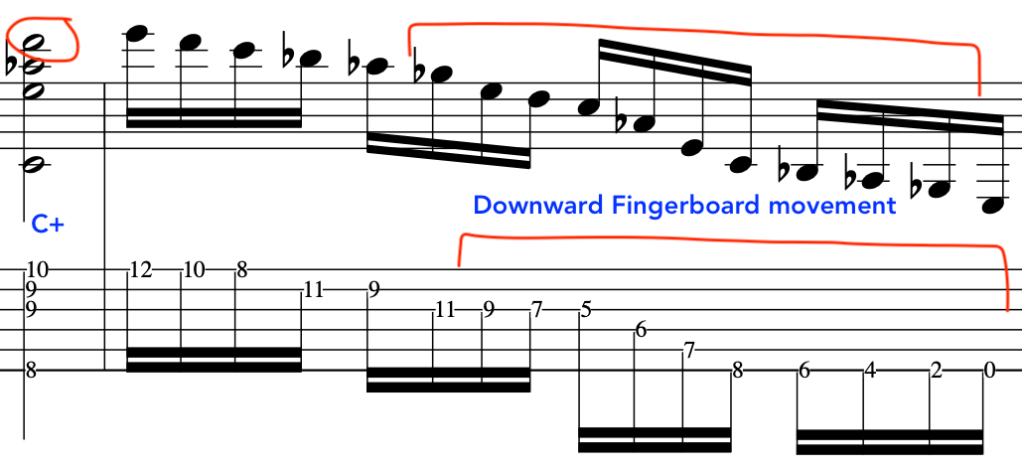
As we can see, it’s easy to move down the fingerboard shifting through scale and arpeggio along the way. [See, video above]

This was just a quick look at how essential it is to have simple fluid guitar fingering and simple 1 step connection for creating whole tone scale lines/phrases.

Having a “Visual” as well as harmonic understanding makes improvisation and composition so much easier with this scale.

And, as I have reiterated throughout this post, having a repeated shape only 1 tone apart makes the scale very user-friendly.

Exploring John McLaughlin’s Jazz/Fusion Chords [Re/Edit]

CLICK SUBSCRIBE!

The Chords of Guitarist John McLaughlin

IMPORTANT: Please watch video above for detailed info:

Hi Guys,

Welcome to part 2 of the John McLaughlin Modern Jazz Chords series.

First we will have a look at making chords from the whole step half step diminished scale:

The Diminished Scale

A sheet of music notation showing the diminished scale, including a combination of clefs, note values, ledger lines, and guitar tablature.
Musical notation displaying the diminished scale starting on the note C, for creating modern jazz chords.

Within this scale are lots of Triads: [for instance]

diminished-scale-guitar-theroy-music

From these Triads we can add different Bass Notes and produce “Slash chords

Musical score displaying slash chords of the diminished scale, including  B/C, Dm7b5, F/F# and Ab/A with corresponding tablature.
Chord progression showcasing slash chords derived from the diminished scale.

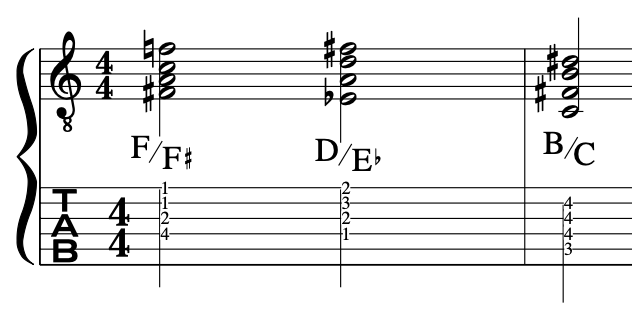
Okay, let’s take three triads with different bass notes and join them together:

Sheet music excerpt showing modern guitar slash chords for F/F#, D/Eb, and B/C from the diminished scale in standard notation and tablature.
Triads with different bass notes from the diminished scale, essential for creating ‘slash chords’ in jazz harmony.

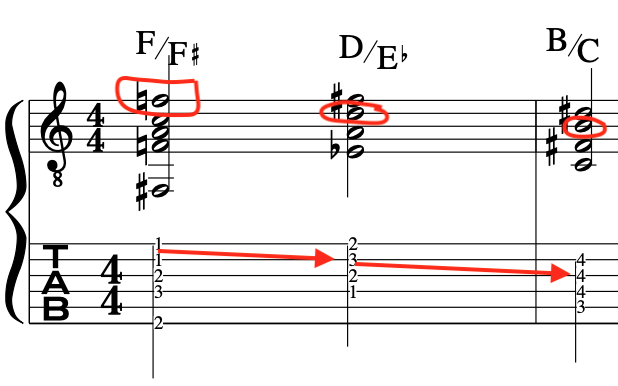
It’s important to realise that because we are employing chords form the diminished scale we have minor 3rd movement.

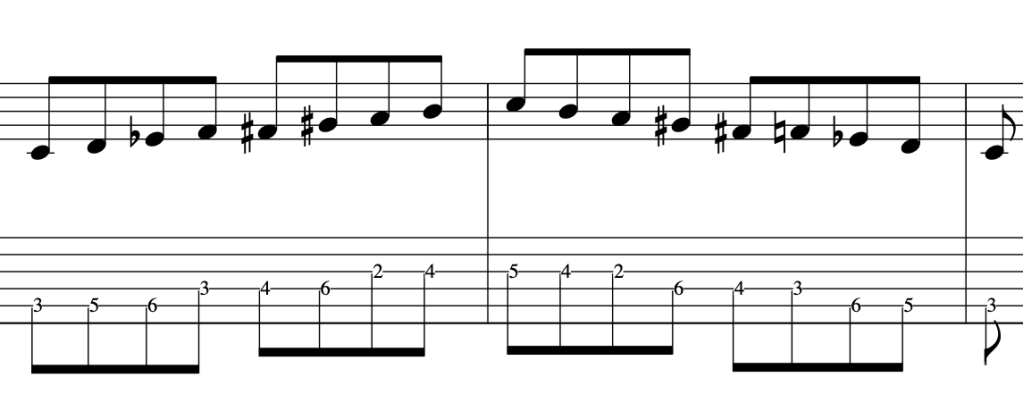
So, let’s add a little melody within the chords: This is the way that John McLaughlin gets that lovely Bluesy feel within the harmony. Again, this is due to the way that the minor 3rd’s work within diminshed scale harmony.

A musical sheet displaying three slash chords from the diminished scale: F/F#, D/Eb, and B/C, with marked notes and a tablature section showing finger placement on a guitar.
Musical notation showing triad slash chords F/F#, D/Eb, and B/C with finger positions on a guitar tab.

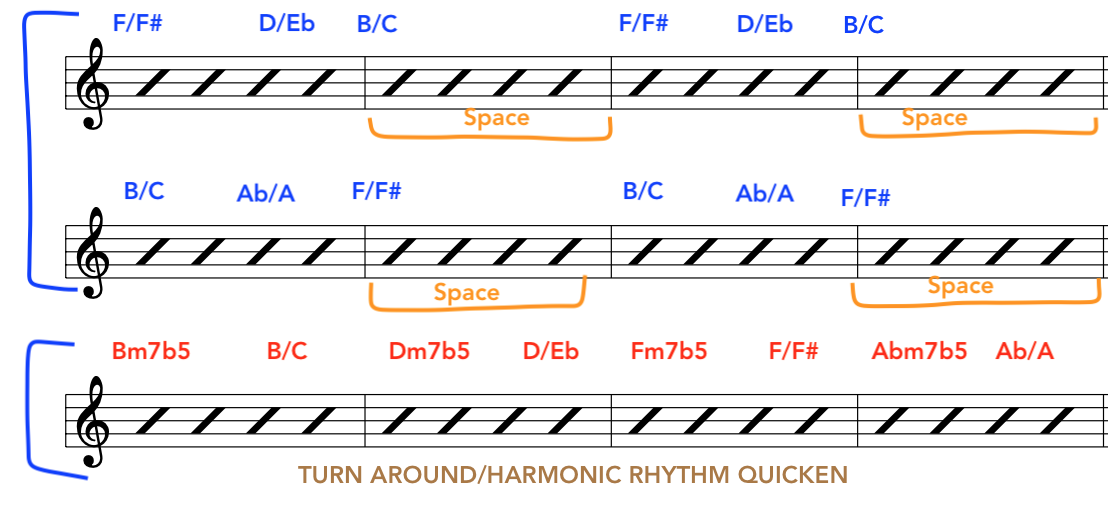
Now let’s create a Blues Composition from this diminished scale.

Musical notation sheet displaying various diminished scale slash chords including F#/F#, D/Eb, B/C, Bm7b5, and more, with labeled sections for harmonic rhythm.
Chord sequence with diminished scale harmonies for a blues composition.

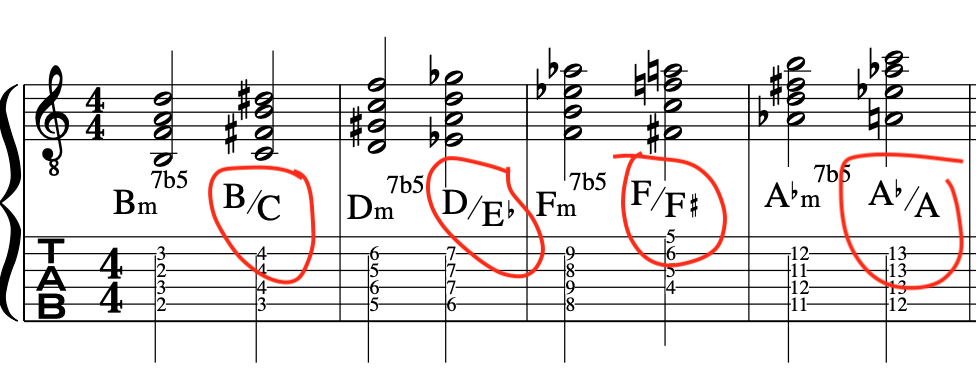
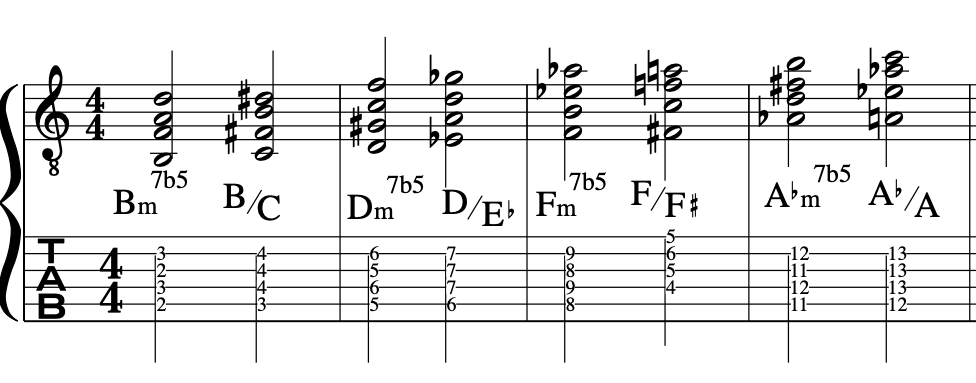
For the last 4 bars we will make the Harmonic Rhythm Quicker by adding a new chord sequence that employs minor7 flat 5’s with slash chords.

Sheet music notation featuring various chords from the diminished scale including Bm7b5, B/C, Dm, and others, along with guitar tablature.
Chord progression using diminished scale triads creating slash chords

JOING CHORDS WITH SCALIC FRAGMENTS

It’s a good idea to join chords together with fragments of the diminished scale: This is also extremely useful when creating composition;

Musical sheet showing John McLaughlin's chord scale in a diminished scale context.
Musical notation illustrating John McLaughlin’s chord scale in a diminished scale context.

2x scale to chords:

Musical sheet showing John McLaughlin's chord scale guitar approach to the diminished scale.

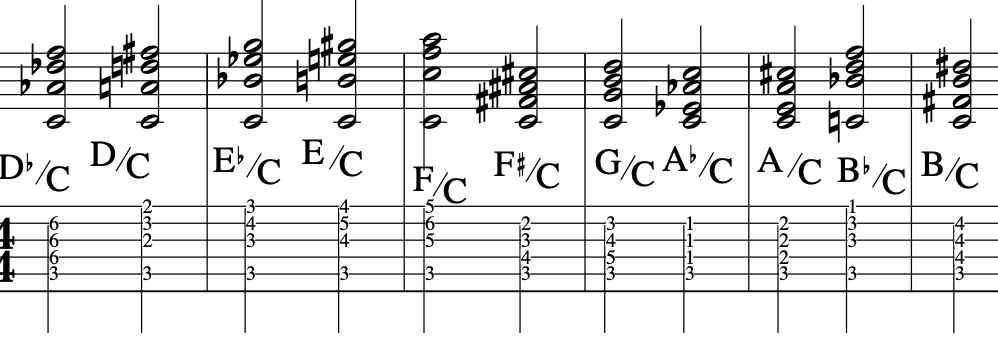
All 12 Major Triads over One Note [C]

Here is an excellent exercise for hearing how all 12 major triads sound over the same single note;

Musical sheet displaying the 12 Major music triads over a C pedal note.  D/C, E/C, F/C, G/C, A/C, and B/C, including finger positions for various instruments.
Exercise showcasing all 12 major triads over the pedal note of C.

Lastly, here are some misellaneous John McLaughlin guitar chords:

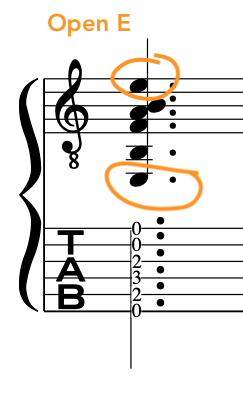
Shakti Chord:

shakti-guitar-chord-john-mclaughlin
Diagram showing guitar tablature and notation for the Open E “Shakti” McLaughlin chord

Harmonic minor scale chords:

Music notation showing John McLaughlin's guitar chords from the Harmonic minor scale.
Example of harmonic minor scale chords for guitar, showcasing the E/A chord.

E/A

Sheet music notation showing John McLaughlin's guitar chords from the Harmonic minor scale.
Guitar chord diagram for slash chord E/A, illustrating finger positioning and fret numbers.

E/C

john-mclaughlin-harmonic-minor-slash-chord
Sheet music notation displaying John McLaughlin's guitar slash chords from the Harmonic minor scale.
Musical notation for slash chord taken from the harmonic minor scale.

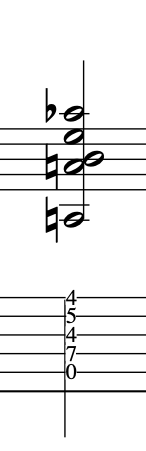
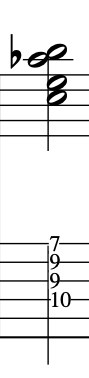
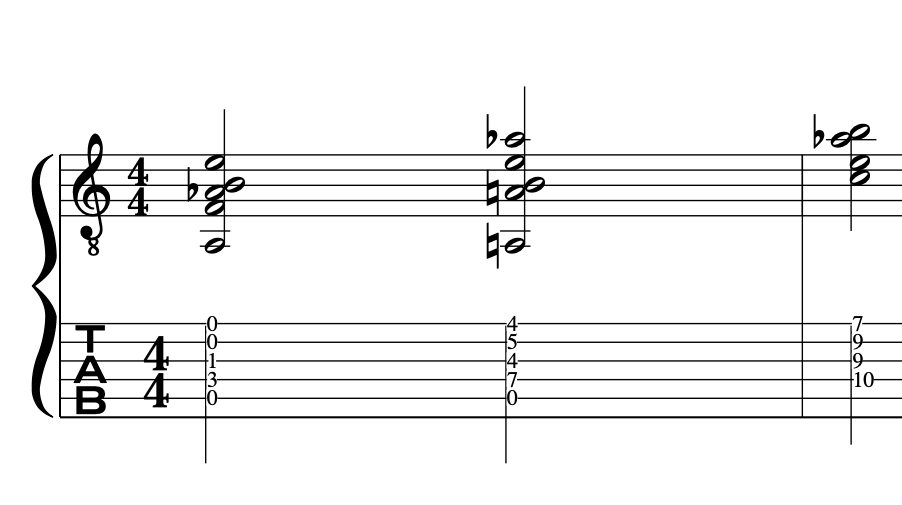
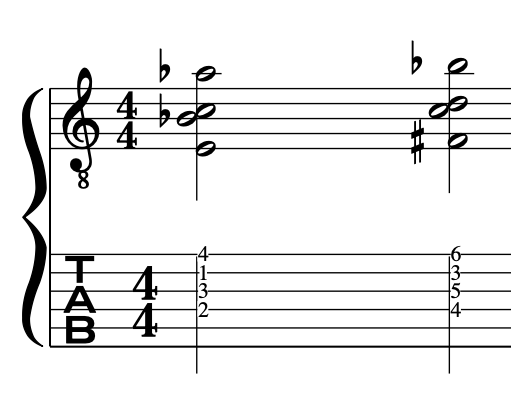
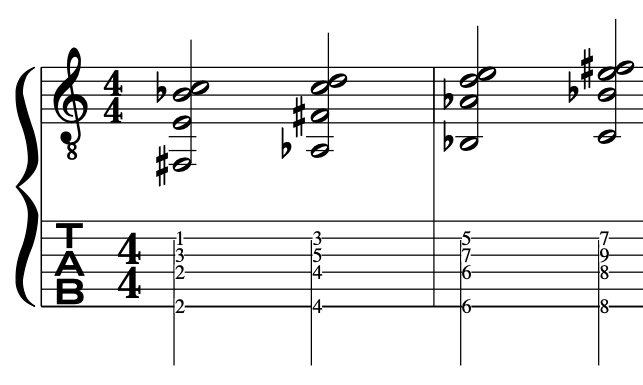
Lastly, From the Whole Tone scale [Notice: 1 tone movement]

Sheet music featuring a treble clef, time signature of 4/4 displaying chords from the whole tone scale.
Musical notation example featuring chords from the whole tone scale..
Sheet music featuring a treble clef, time signature of 4/4 displaying John McLaughlin's guitar slash chords from the whole tone scale.
Musical notation demonstrating John McLaughlin’s slash chord sequences

PDF DOWNLOAD:

IF THIS LESSON WAS OF USE TO YOU THEN PLEASE SUBSCRIBE TO US BELOW ON YOUTUBE, THANKS!

#Johnmclaughlinchordslesson #Mclaughlinguitarchords #Mclaughlinslashchordsguitar #JohnMcLaughlinguitarchords #McLaughlinscaleguitarchords

Pat Martino Intervallic Studies: Un-Published Book Lesson

Pat Martino Intervallic Studies: Un-Published Book Lesson

Hi Guys!

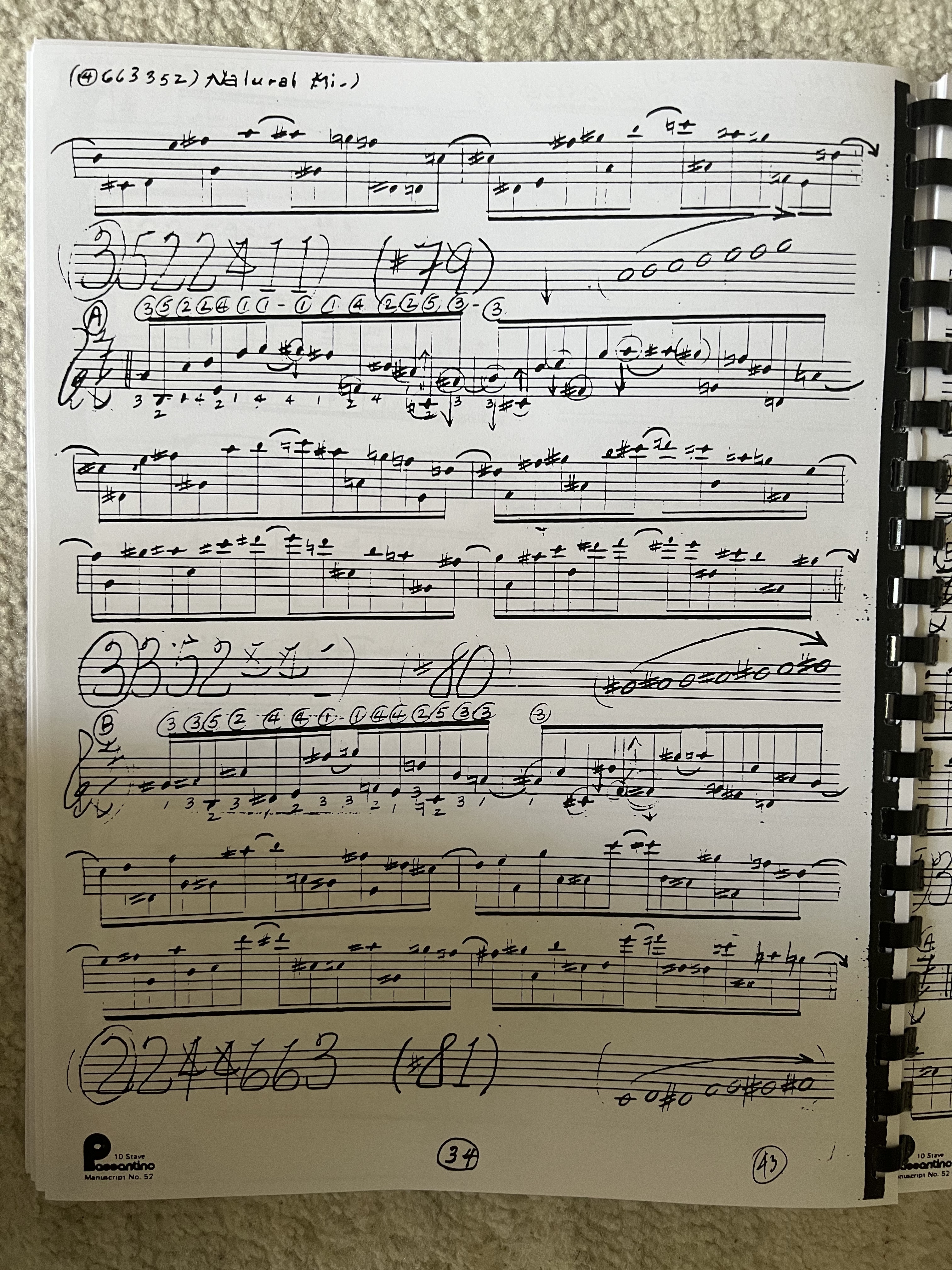
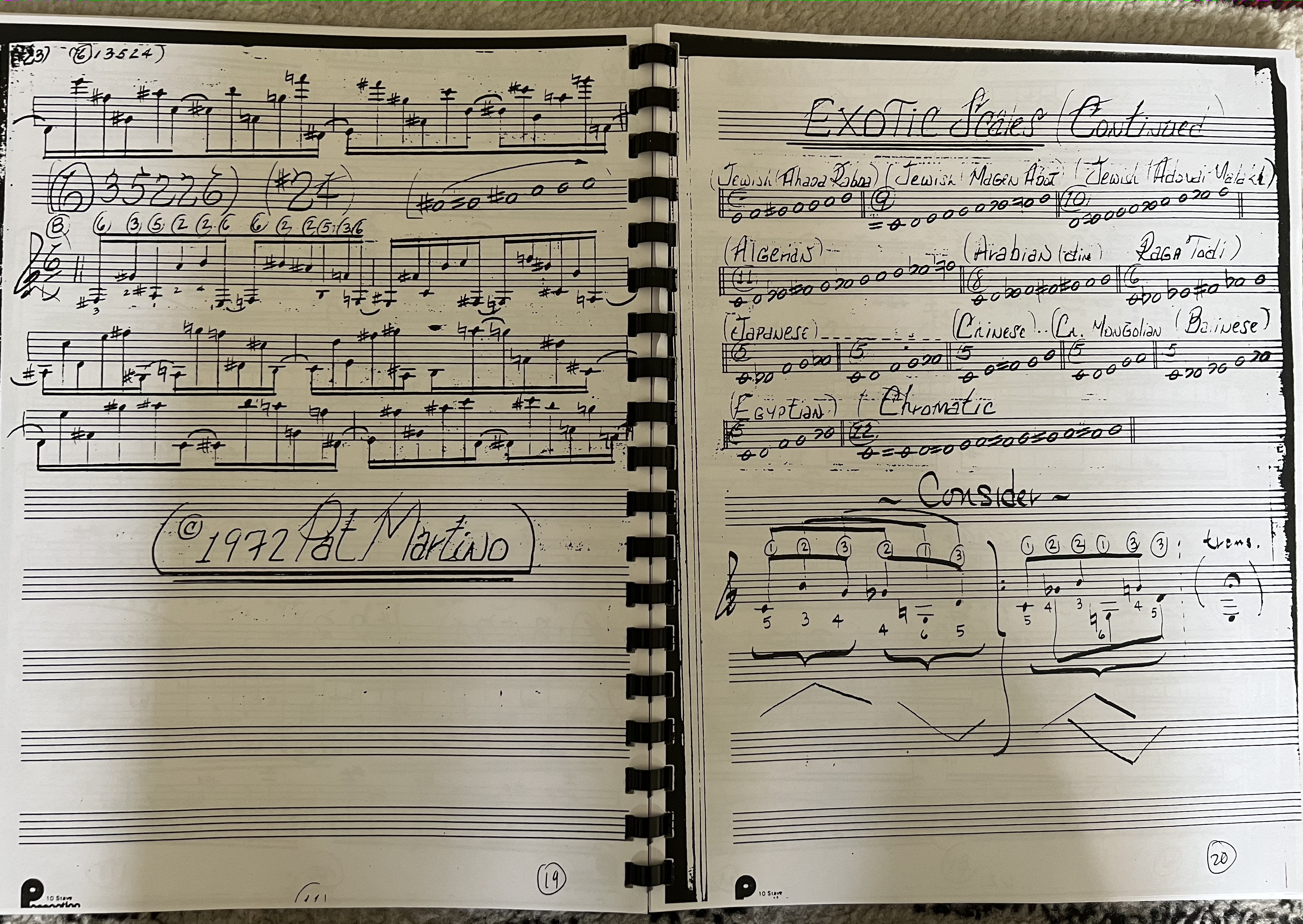
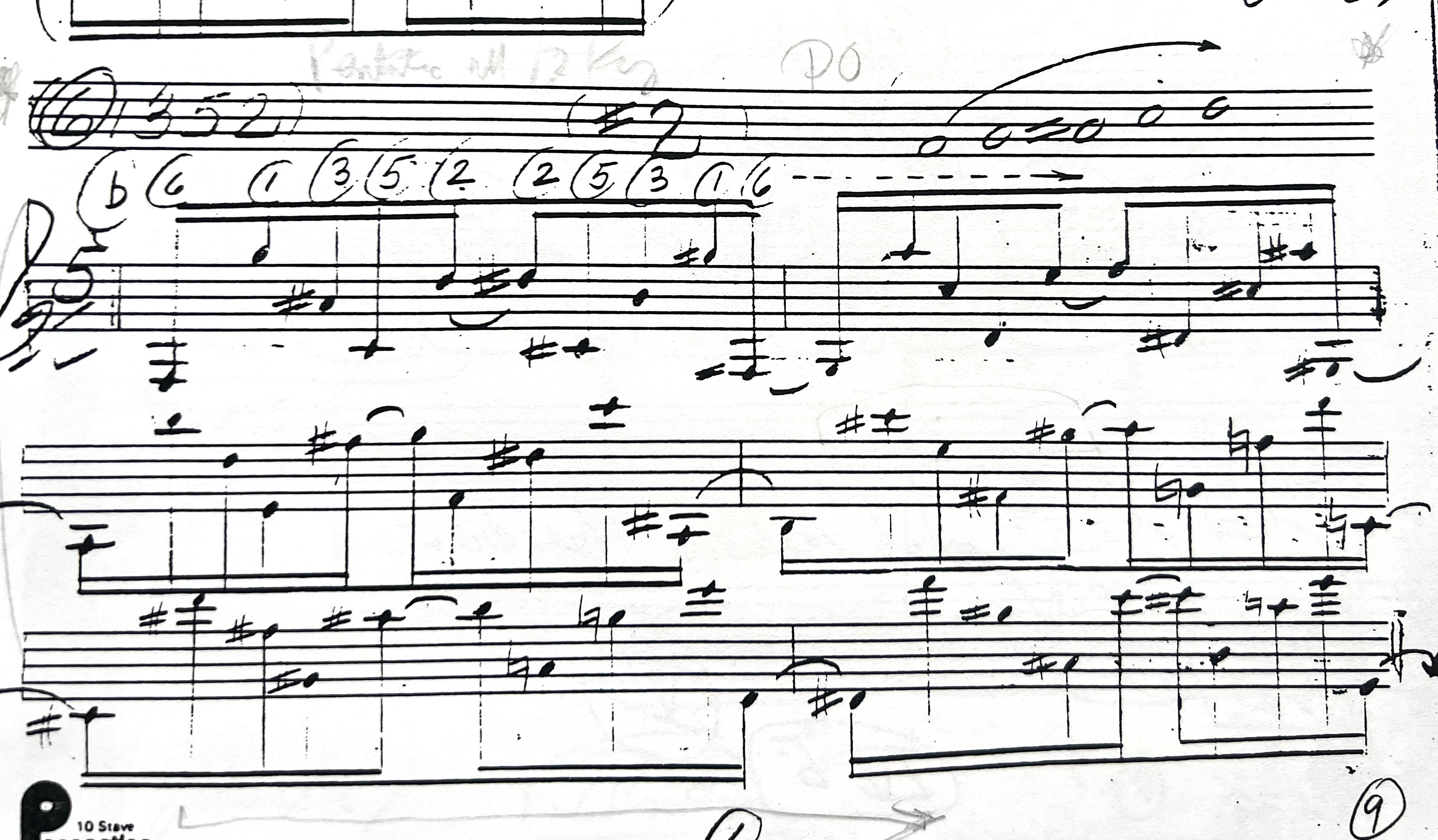
Guitarist Mark Koch one of Pat’s students kindly sent me a copy of Pat’s un-published book on “Intervallic studies“.

pat-martino-intervallic-studies-umpinlished-book

It’s a fascinating look at the imaginative thought process and creative concepts that Pat was investigating for the development of the improvising guitarist.

pat-martino-intervallic-studies-unpublished-book

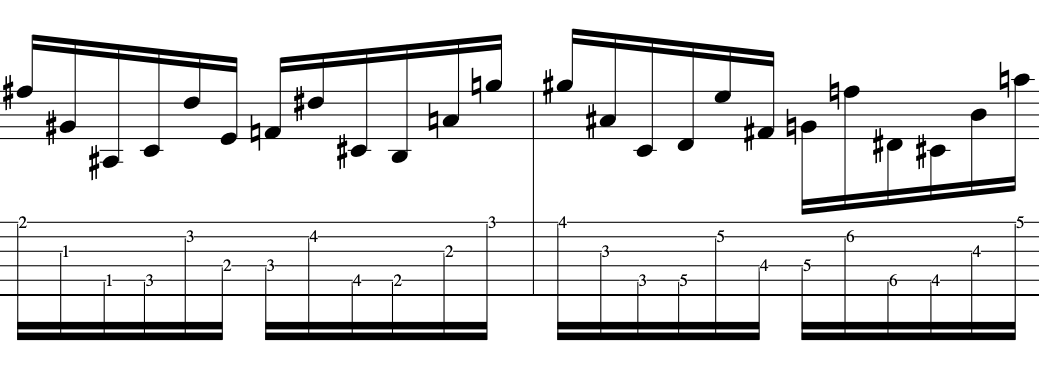
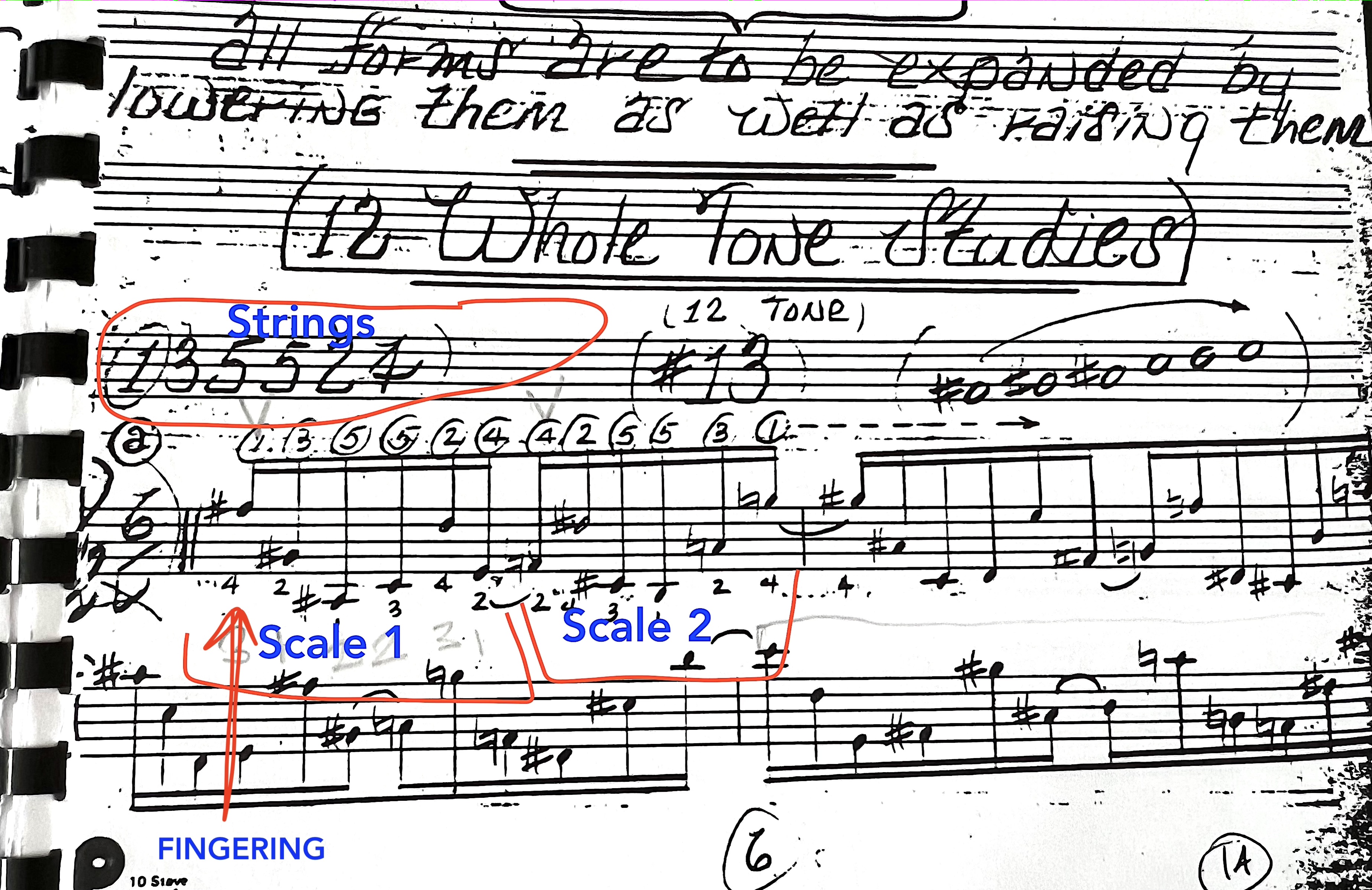
In this first example we will look at the “Whole Tone Scale” Study:

pat-martino-intervallic-studies-unpublished-book

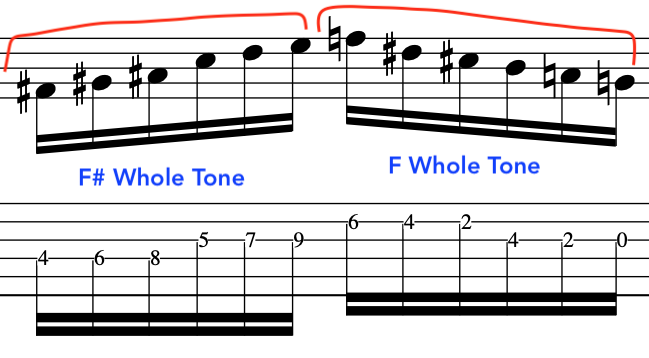
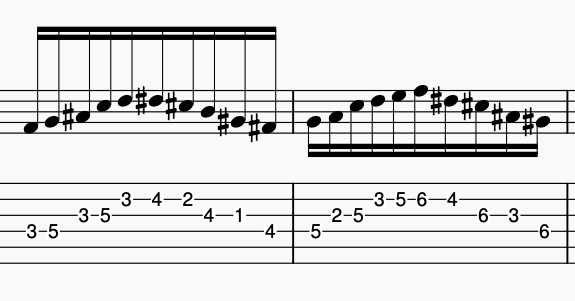
From a music theory perspective if we take away the intervallic approach and place the notes in order we will get a whole tone scale ascending followed by a whole tone scale descending:

pat-martino-intervallic-studies-unpublished-book

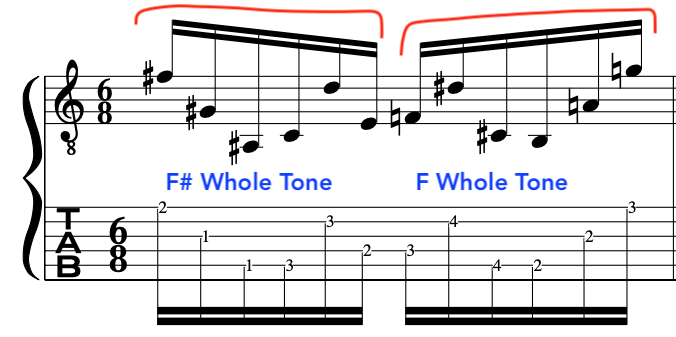
Now, we will put them back into the “Disguised” form with the clever approach of the intervallic design:

pat-martino-intervallic-guitar-studies

The key to playing these studies on the guitar is to decide on a methodical fingering and stick to it. [Below=Pat’s Fingering]

pat-martino's-unpublished-book-intervallic-guitar-studies

pat-martino-intervallic-studies-unpublished-book

I am employing strict alternate picking for this study starting on an upstroke:

pat-martino-intervallic-studies-unpublished-book

pat-martino-intervallic-studies-unpublished-book

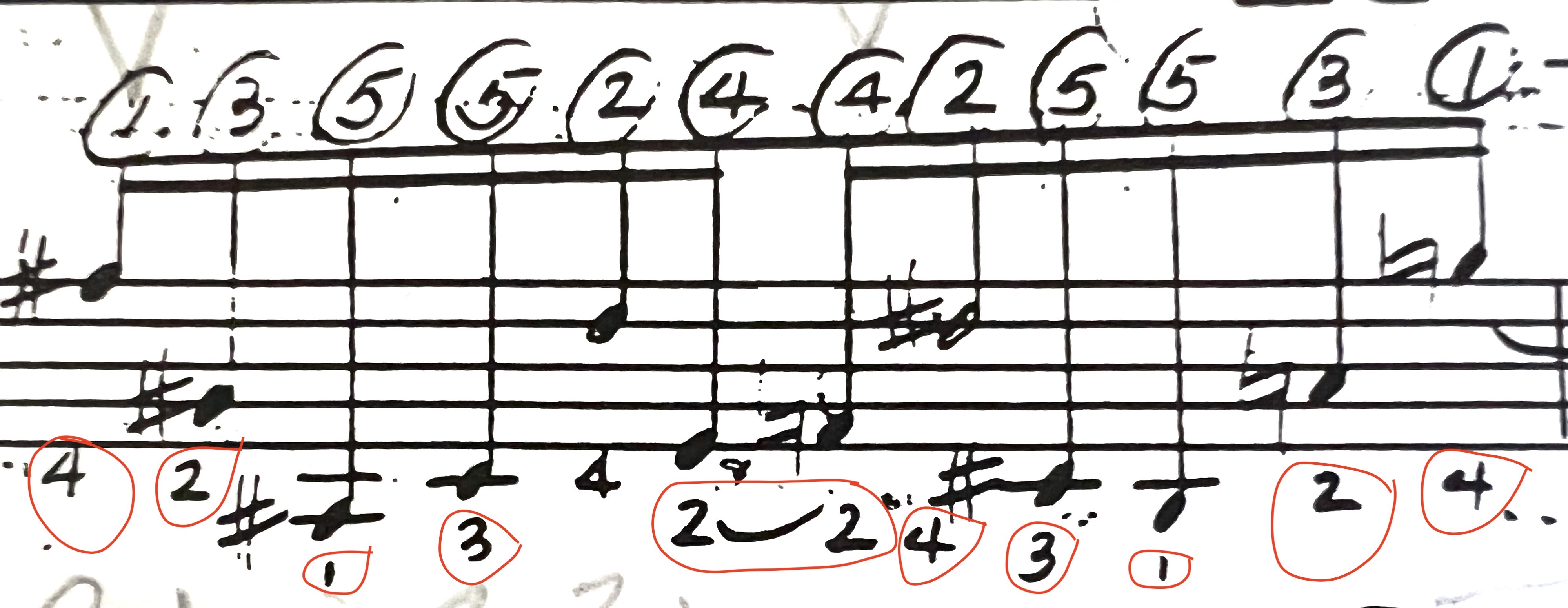
Same Study: From Pat’s book with fingering examples:

pat-martino-intervallic-studies-unpublished-book-whole-tone-scale

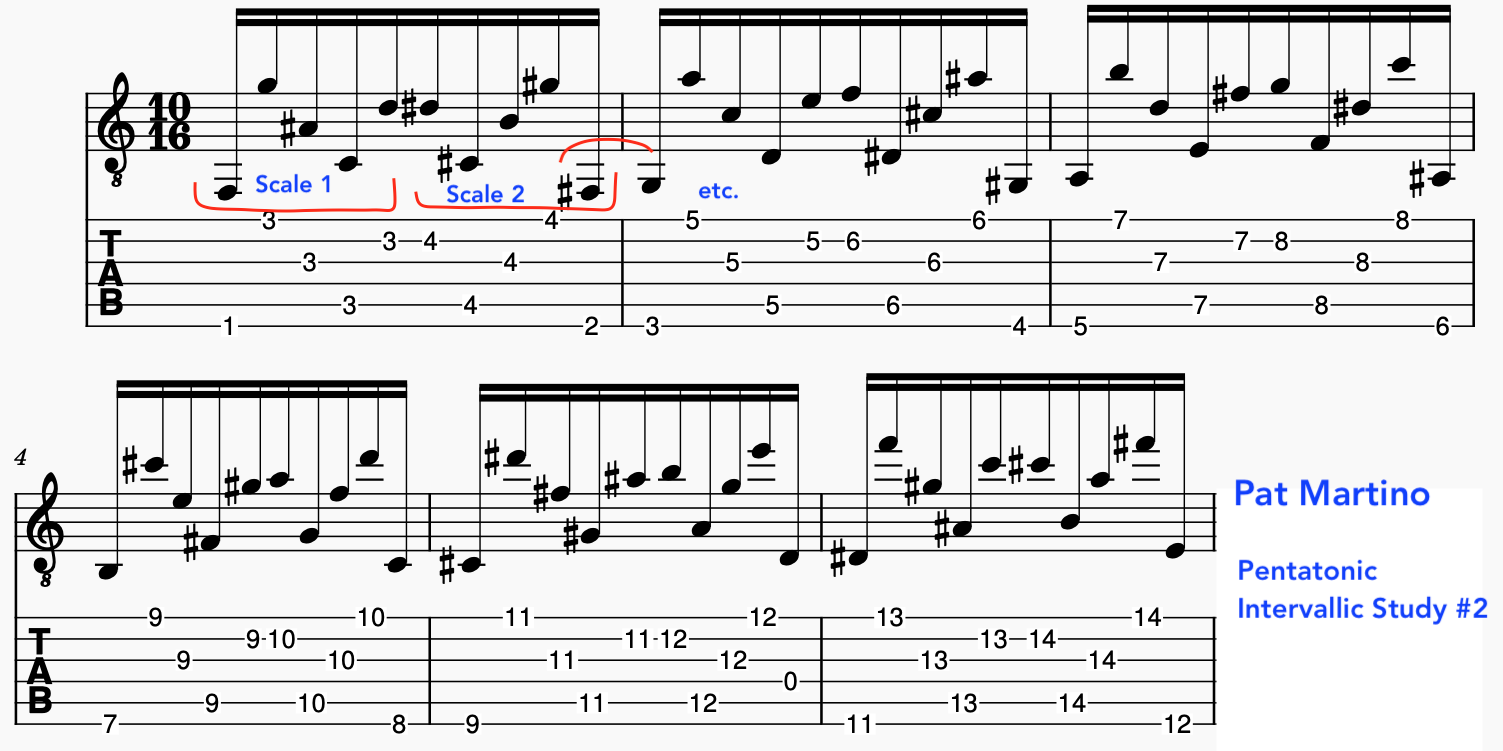
Now we will look at how Pat breathes life into the pentatonic scale:

pat-martino-intervallic-studies-unpublished-book

As before we will take this from a music theory perspective and remove the intervallic approach:

pat-martino-pentatonic-scale-guitar-lesson

Now, let’s disguise this with the use of intervallic exploitation and alternate picking starting on a “Downstroke”:

pat-martino-intervallic-studies-unpublished-book

Same Study from Pat’s unpublished book:

pat-martino-intervallic-studies-unpublished-book

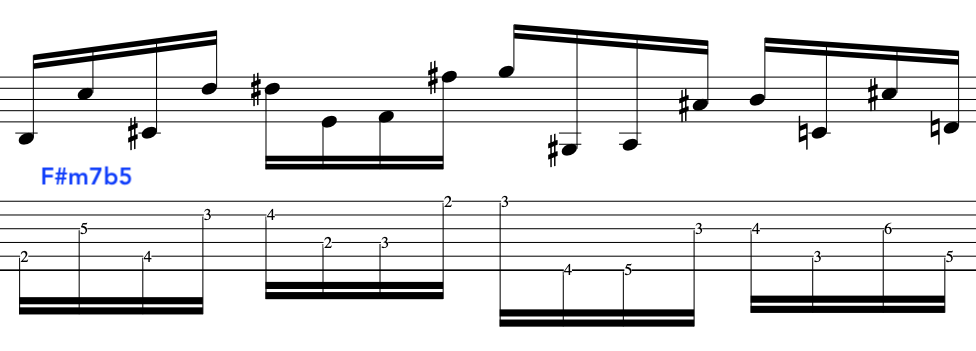
Finally, we will employ these intervallic concepts through a iim7b5 V7 i cadence.

Once again, we see the intervallic set up:

pat-martino-intervallic-improvisation-example

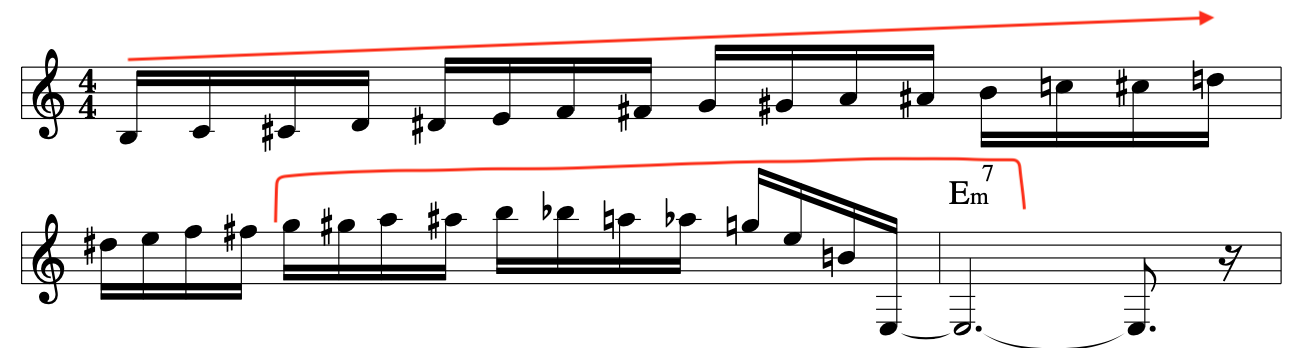
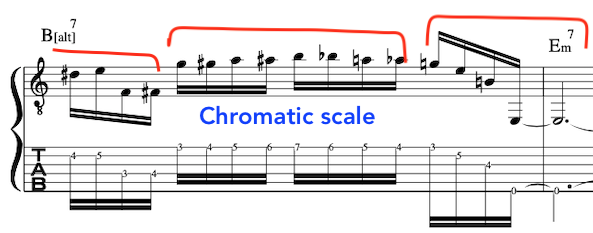
Now, let’s employ our music theory and place the intervallic notes in order. Here we find that we have the exploitation of the chromatic scale.

pat-martinochromatic-scale-guitar-lesson

This clever approach is really effective because in the second bar beats 2 and 3 we have a literal chromatic scale that then anticipates the coming minor tonic chord of Em with an Em arpeggio.

pat-martino-intervallic-improvisation-example

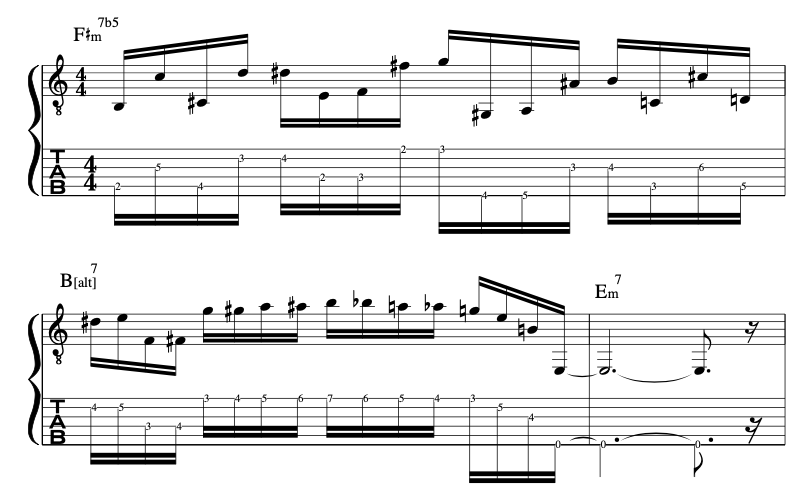
Full Example:

pat-martino-intervallic-improvisation-example

This was just a quick look at the creative thought process and unique approach of Pat Martino, resulting in the application of this material into a minor iim7b5 V7 i improvised line to hear how they work and sound.

This approach to scales and improvising [and composing] with them is highly original and extremely useful when there is a need to bust out of cliches and seek colour and creativity in our playing.