Mastering John McLaughlin’s Guitar Motif Techniques Part 2:

Hi Guys,

Here, is the extended version for the 2nd finger John McLaughlin motif:

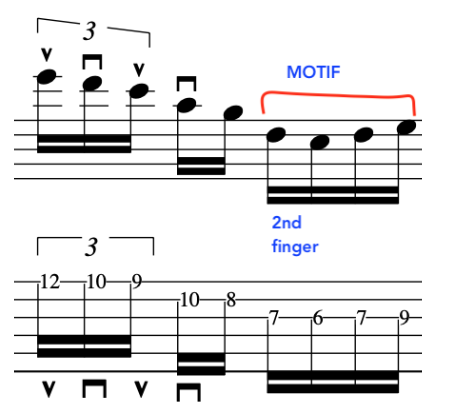
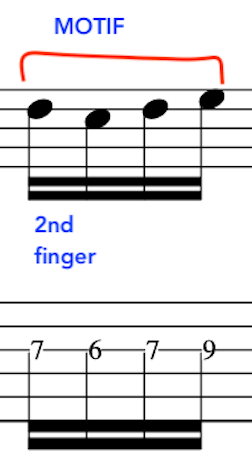
The motif is a 4 note [Tetrachord] in 16th notes- D C# D E
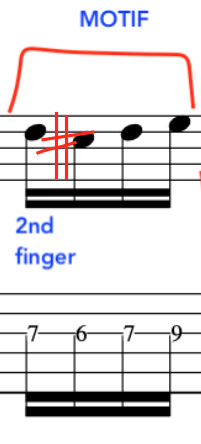
John McLaughlin shakti guitar lesson with music notation and guitar tab example

Notice that this starts with the 2nd finger on the first note:

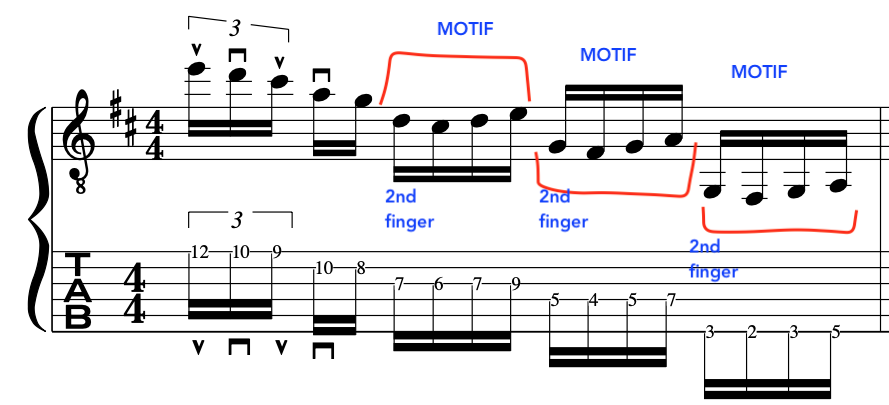
Now, let’s extend this and add a “set up” by employing the Mixo-lydian mode to create a more Indian/Shakti flavour to the phrase:

John McLaughlin shakti guitar lesson with music notation and guitar tab example

This time, we will replicate/imitate the 4 note motif and use it as material to create/extend the phrase into a longer line.
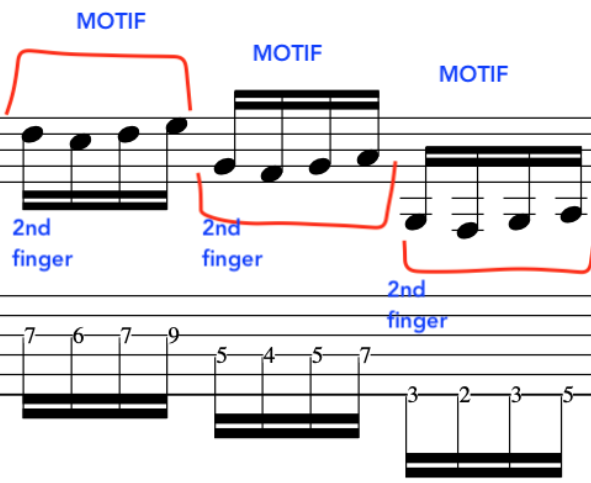
John McLaughlin shakti guitar lesson with music notation and guitar tab example for guitar fingering

Below, is the full line/lick:

John McLaughlin shakti guitar motif and fingering lesson with music notation and guitar tab example

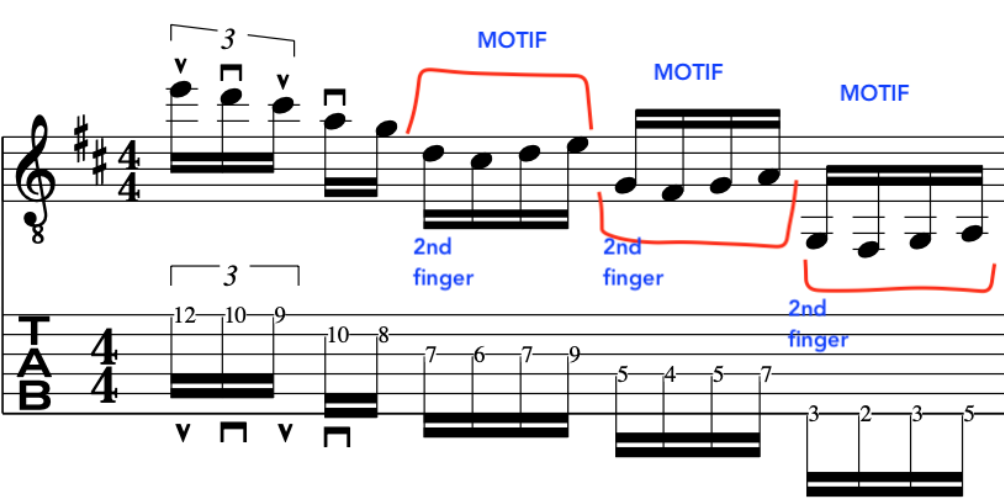
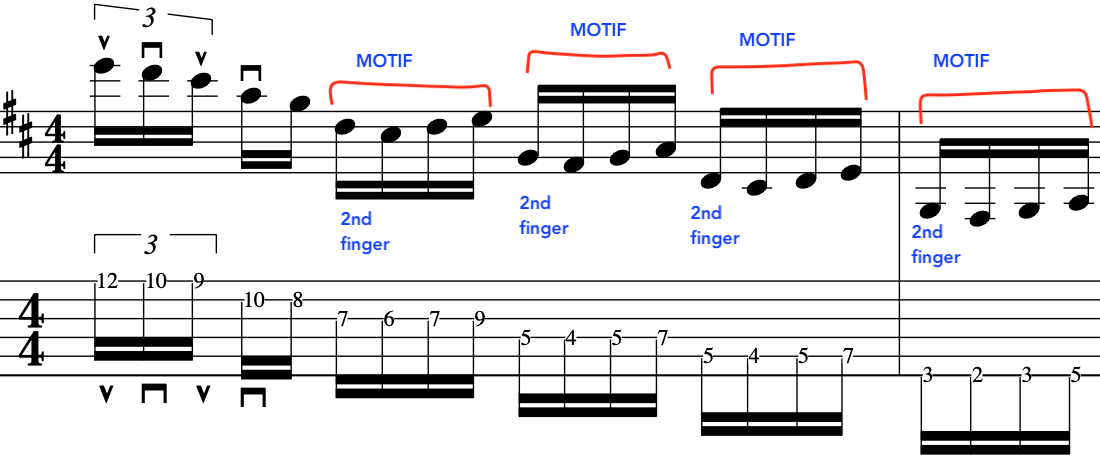
Let’s now, extend the motif and descend as far as we can down the fingerboard with the motif:
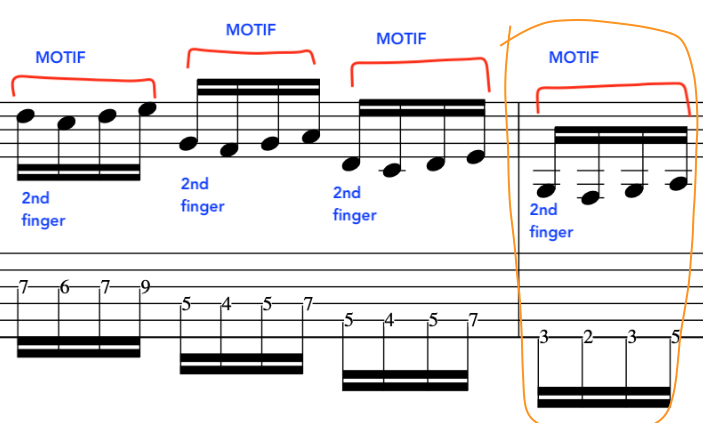
John McLaughlin shakti guitar lesson with music notation and guitar tab example

Finally, we will add our little set-up and create a full phrase:
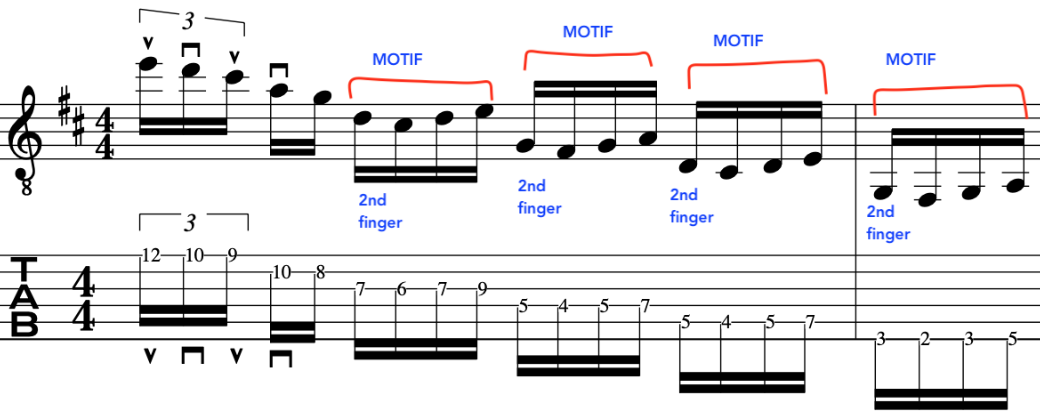
John McLaughlin shakti guitar lesson with music notation and guitar tab example

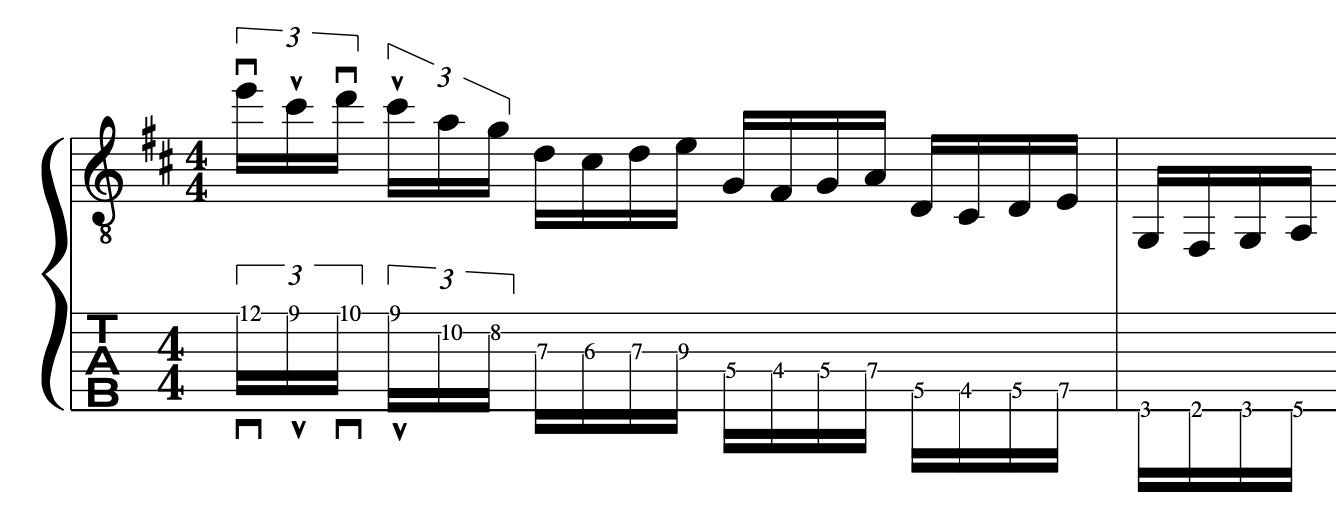
We can also start on a downstroke. This works best and is most natural when picked/phrased in triplets/sextuplets like this:
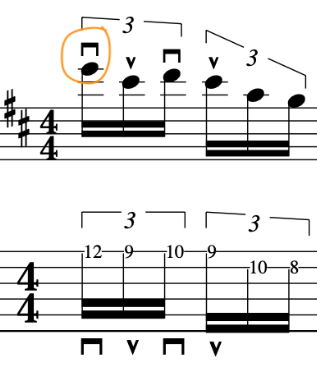
John McLaughlin alternate picking guitar lesson with music notation and guitar tab example

Full Phrase starting on a downstroke:
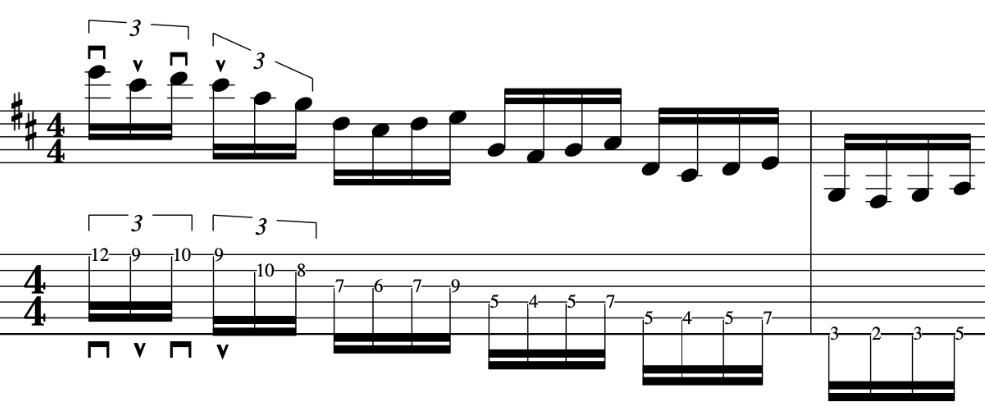
John McLaughlin shakti alternate picking guitar lesson with music notation and guitar tab example

This little motif/concept is only a small detail, but, it is a good representation of how a lot of material can be created/repeated or imitated from such a small cell. It is like a little hinge that can swing a big door.

This way of building solid lines is really useful for the alternate picking guitar technique as it means that we can unfold material quite easily and if we ever do get lost we can slot back in with simple motif material and rebuild our phrases and keep our lines going.

Shakti Guitar Motif/Fingering “Essential” Scale Connections

Hi Guys,

This John McLaughlin guitar motif/fingering made famous from his video “This is the way I do it” is something I get asked about a lot.

The reason being, is that it is unique in the way that the alternate picking and the fretting hand can produce really fast/quick compositional and improvisational lines.

For this blog, I am going to exploit the use of imitation/repetition to get the fingering and concept across.

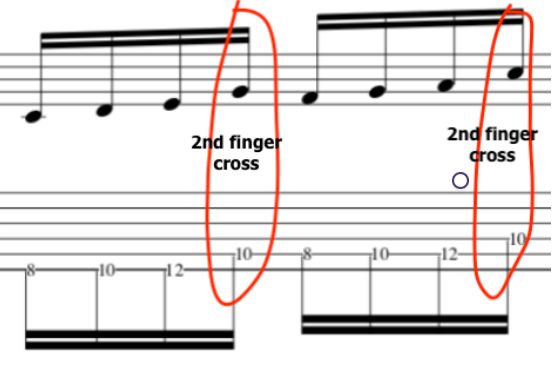
The second finger [Yes, that one] is the one that crosses and falls into position and interrupts scale cliches and creates all sorts of odd timing and fluid raga-esque phrases.

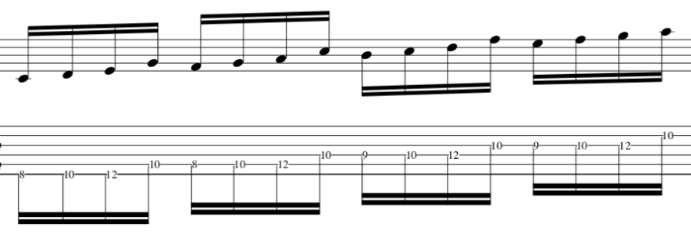
EXAMPLE: As employed in the John Mclaughlin scale:

Ascending:

Here, is the simple 4 note 16th grouping that we will exploit:

In this first example we will start a simple phrase with a five note pattern. Rather than carry the scale on, we will interrupt it with a 4 note scale motif that we will repeat/imitate:

Starting on an Upstroke:

Sheet music displaying John McLaughlin Guitar Fingering Lesson for Indian Shakti style guitar

As you can tell, the 2nd finger makes it really easy to cross over the strings and connect to the next repeated motif:

In the next example, we will take this even further and keep extending it.

Extended further:

Sheet music displaying John McLaughlin Guitar Fingering Lesson for Indian Shakti style guitar

Now, let’s start the alternate picking and pick the phrase starting on a down stroke:

Sheet music showingJohn McLaughlin guitar fingering and alternate picking guitar Shakti Indian Mixolydain example in tab and notation

Although, this is only a short blog, there is a wealth of information contained within this simple concept as it means that the fretting hand can create/sustain long [as John calls them] fluidity lines.

Of course, the notation/intervals can be changed, these are only examples. But, when the fretting hand is comfortable then the picking becomes a lot easier and feels natural.

This idea can also be applied to the other fingers in various ways, BUT, the second finger is magical in the way that it opens up lots of lines that would otherwise be difficult to play.

Counting Rhythms for Alternate Picking Guitar “Right Hand” Technique:

Hi Guys,

Here are a few of the Rhythms that I like to count and/or practice when alternate picking:

These are based around Indian Konokol: But: I am using them to INTERNALISE patterns. This could be Ta ka di mi but felt/internalised as du du du du

These, I find help me enormously with the right hand picking, as I can connect phrases together from the internalised beats/syllables.

These are NOT cast in stone and are only a few ideas that I use personally, and are not aiming at strict Indian classical music technique, but, are employed as reference points/patterns/beats in the way that they are enunciated.

1] Ta ka di mi [1 2 3 4]

2] Ta ki ta Ta [more as 123 1]

1] Ta ka di mi thom [1 2 3 4 5]

2] Ta ka di mi Ta [1 2 3 4+1]

3] Ta ki ta Ta ka [1 2 3 1 2]

1] Ta ka di mi Ta ki ta [4+3]

2] Ta ka di mi thom Ta ka [5+3]

1] Ta ka di mi Ta ka di mi [4+4]

1] Ta ki ta Ta ki ta Ta ki ta [3×3]

2] Ta ka di mi Ta ka di mi Ta [4+4+1]

1] Ta ka di mi Ta ka di mi Ta ki ta [4+4+3]

1] Ta ka di mi Ta ka di mi Ta ka di mi Ta [4+4+4+1]

1] Ta ka di mi Ta ka di mi Ta ka di mi Ta ka di mi [4×4]

These are only ideas that I personally find useful, and, as I say they are not for strict Indian classical music. But, they do function well as reference points and a way of enunciating beats for the picking hand to pluck at a fast [alternate picking] tempo.