Mastering Slash Chords: The B/C Explained

B/C GUITAR SLASH CHORDS GUITAR LESSON AND EXAMPLES

Hi guys,

Today, a quick look at the idea of employing slash chords.

To do this we will focus on one specific chord that of B/C.

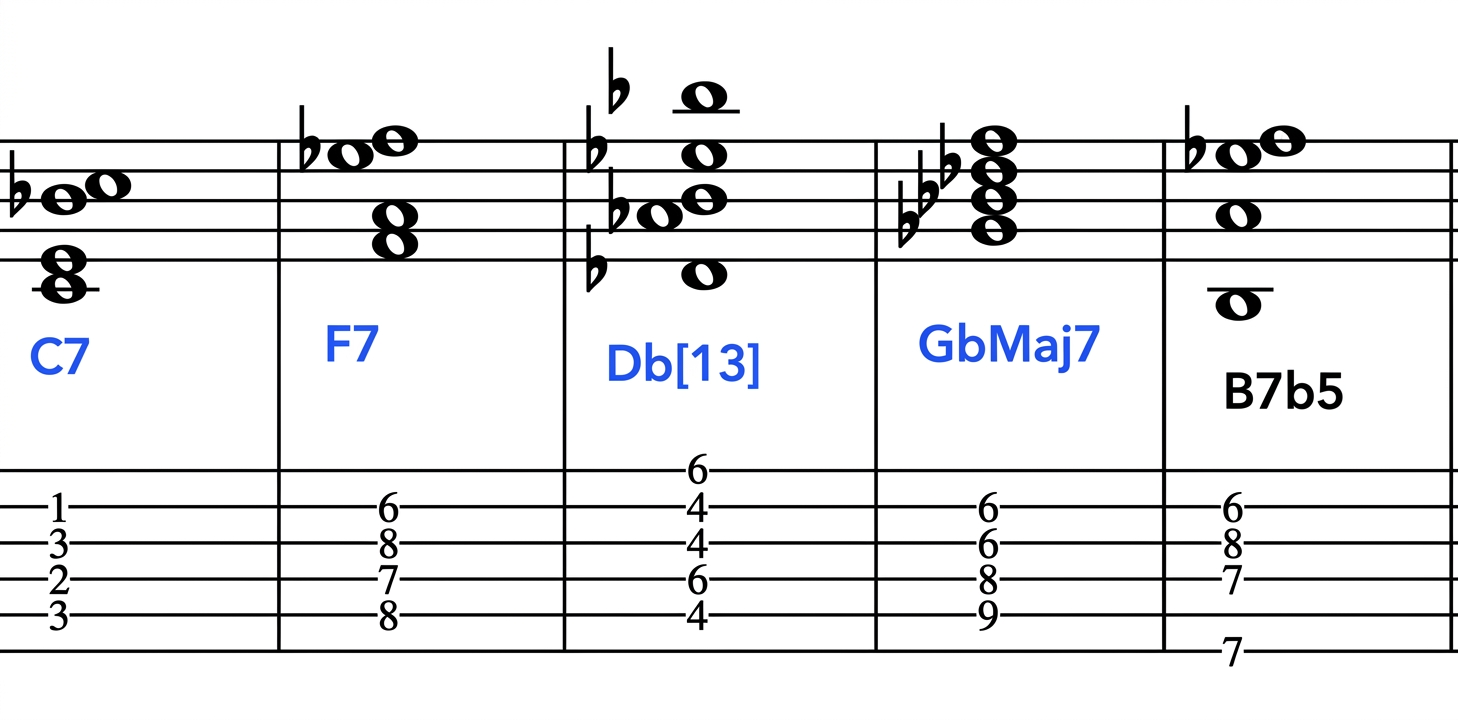
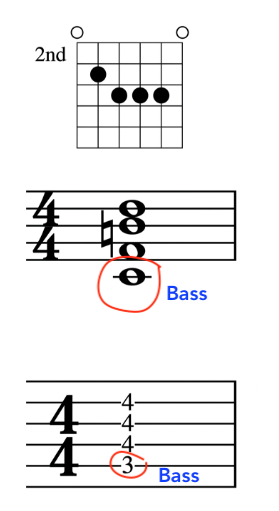
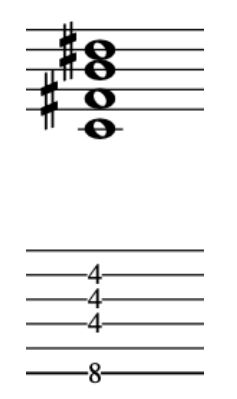
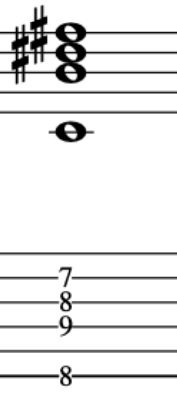
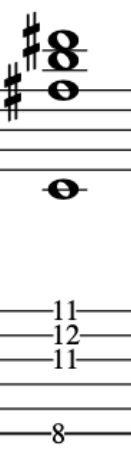
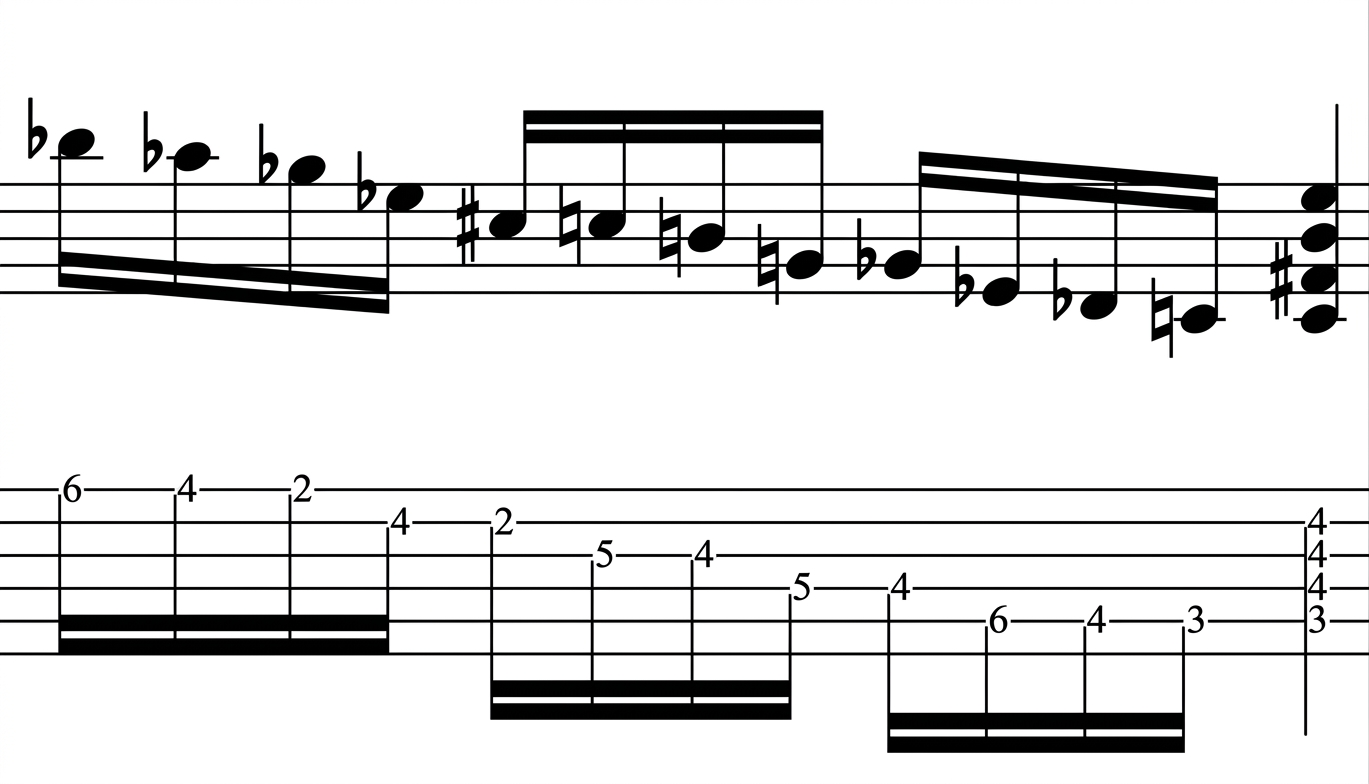
In the notation/tablature below, notice the use of a B Major triad over a C bass:

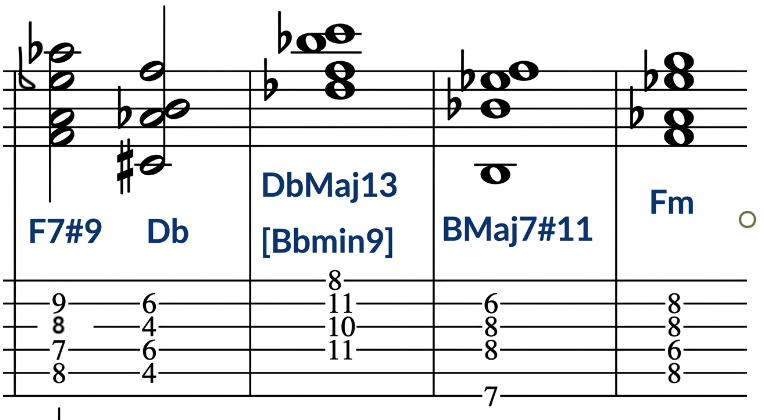
John McLaughlin guitar Slash Chord B/C Example in TAB and music notation

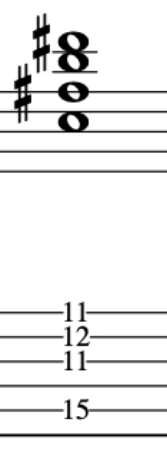
Here, are a few more voicing’s:

1]

2]

3]

4]

This chord works well with the diminished scale. But, in order to come up with something unique we are going to take a different approach.

Because, we have the B Major chord we can exploit Pat Martino’s minor conversion technique.

In this case, we will employ the minor a Major 3rd up. This will be D#/Eb as the minor key:

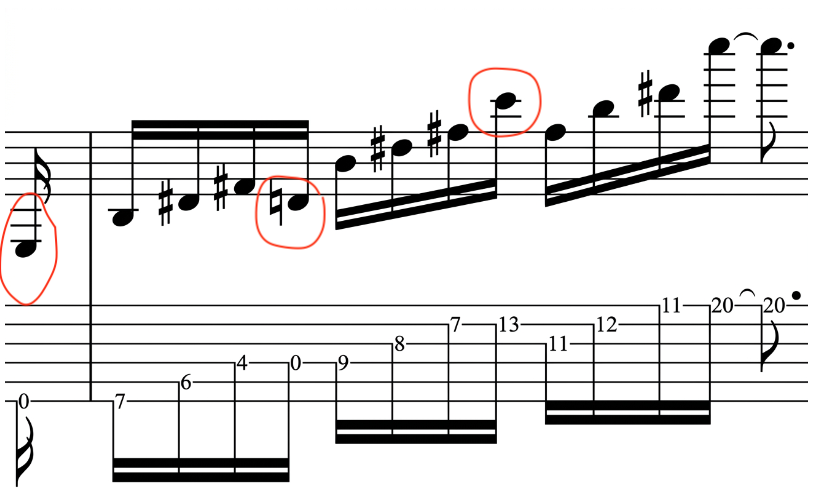
Here, we will employ the simple Eb minor arpeggio:

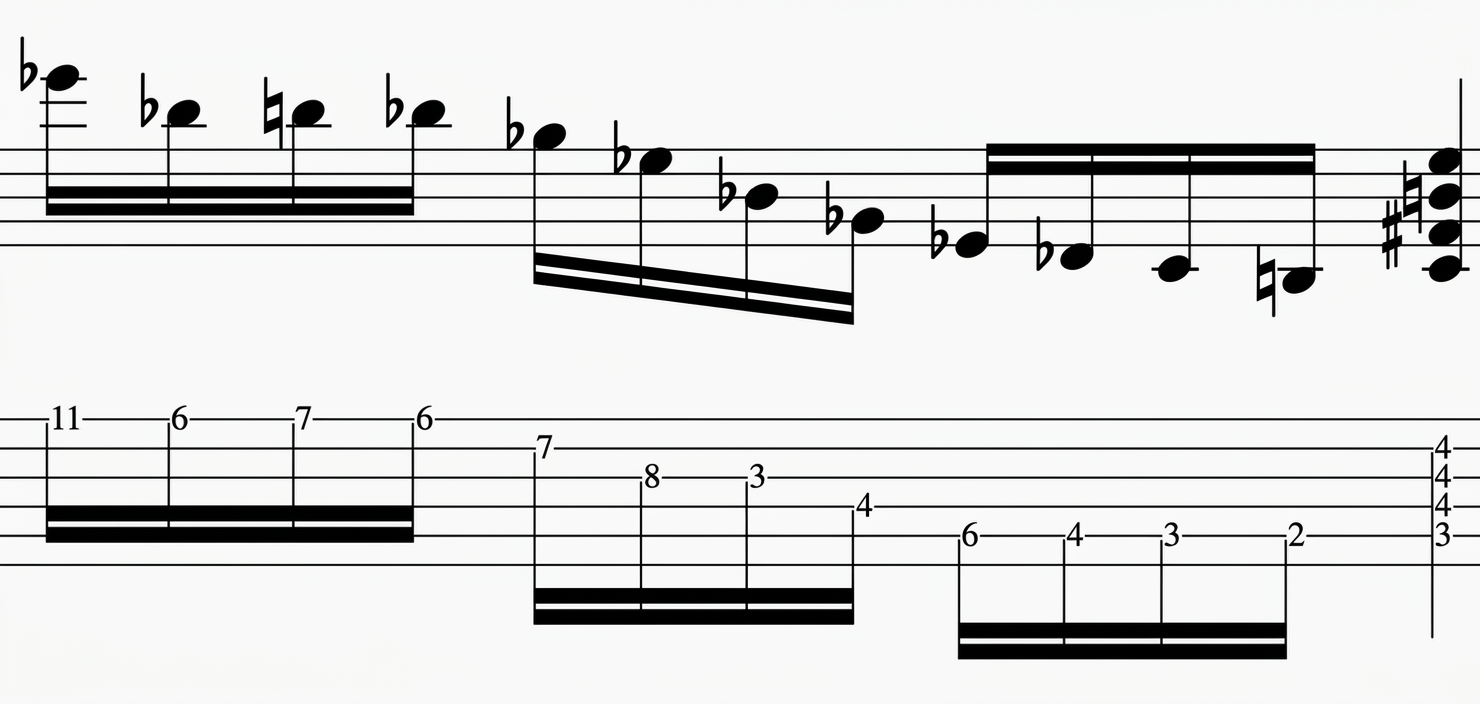
This time, we will employ scale movement inside of the Eb minor arpeggio shape in a horizontal form.

diagram depicting guitarist John McLaughlin improvisation over Slash Chord B/C Example in music notation and guitar tablature

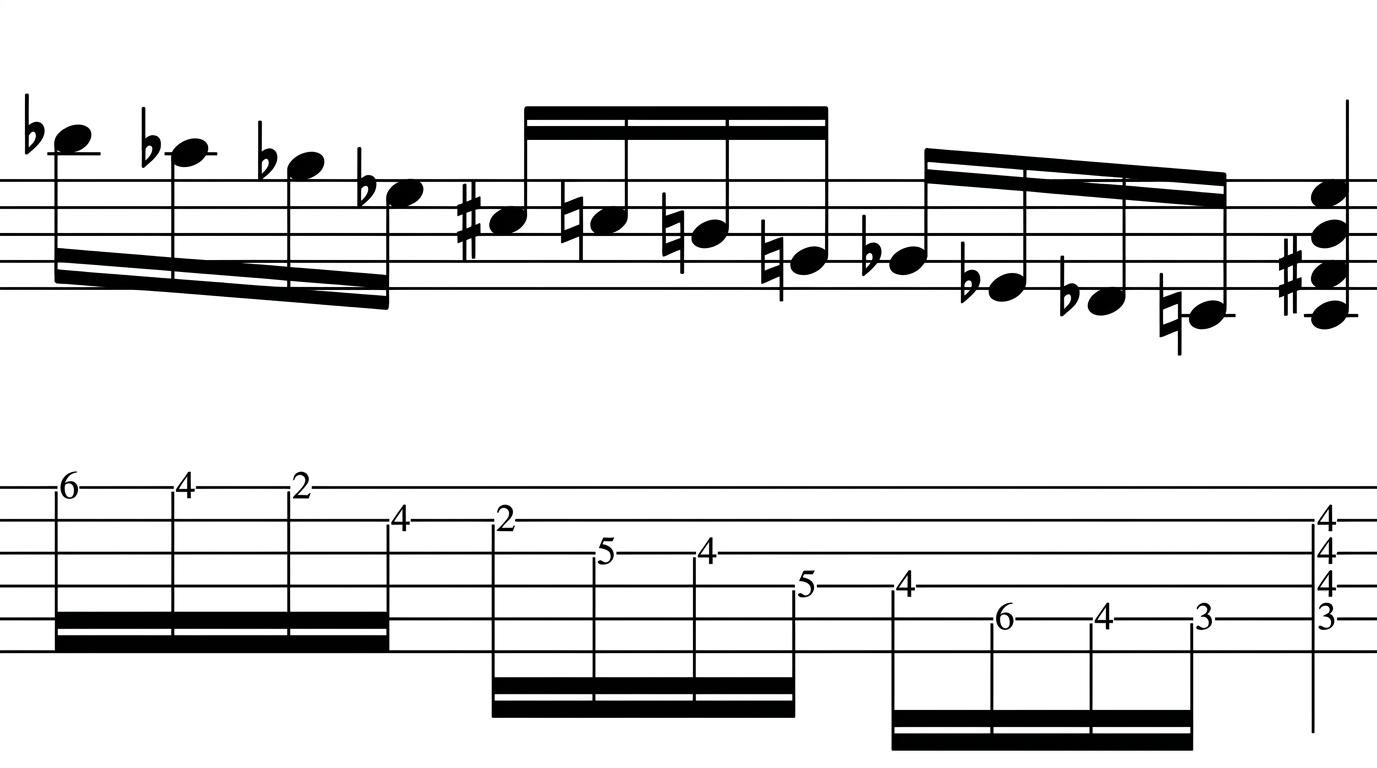
Let’s do the same, but, play with the notation and give it a diminished flavour:

Now, let’s take a B Major arpeggio and ascend it by making sure our C bass note is within it.

NOTE: There are also two open string notes of D natural [minor 3rd] and the open E. I used these as they make the arpeggio flow easily when alternate picking.

How to play a John McLaughlin guitar arpeggio example for altered slash chord of B/C

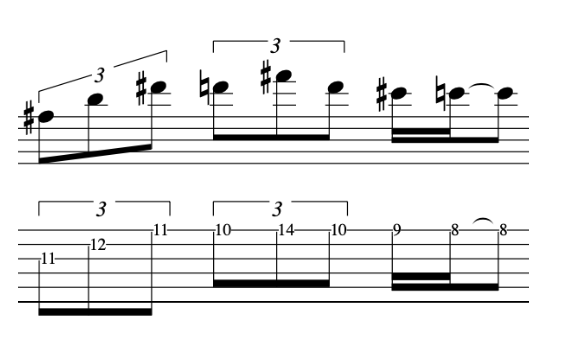
We can also add some chromaticism for smooth movement.

Finally, let’s see how composition can be exploited with our slash chord.

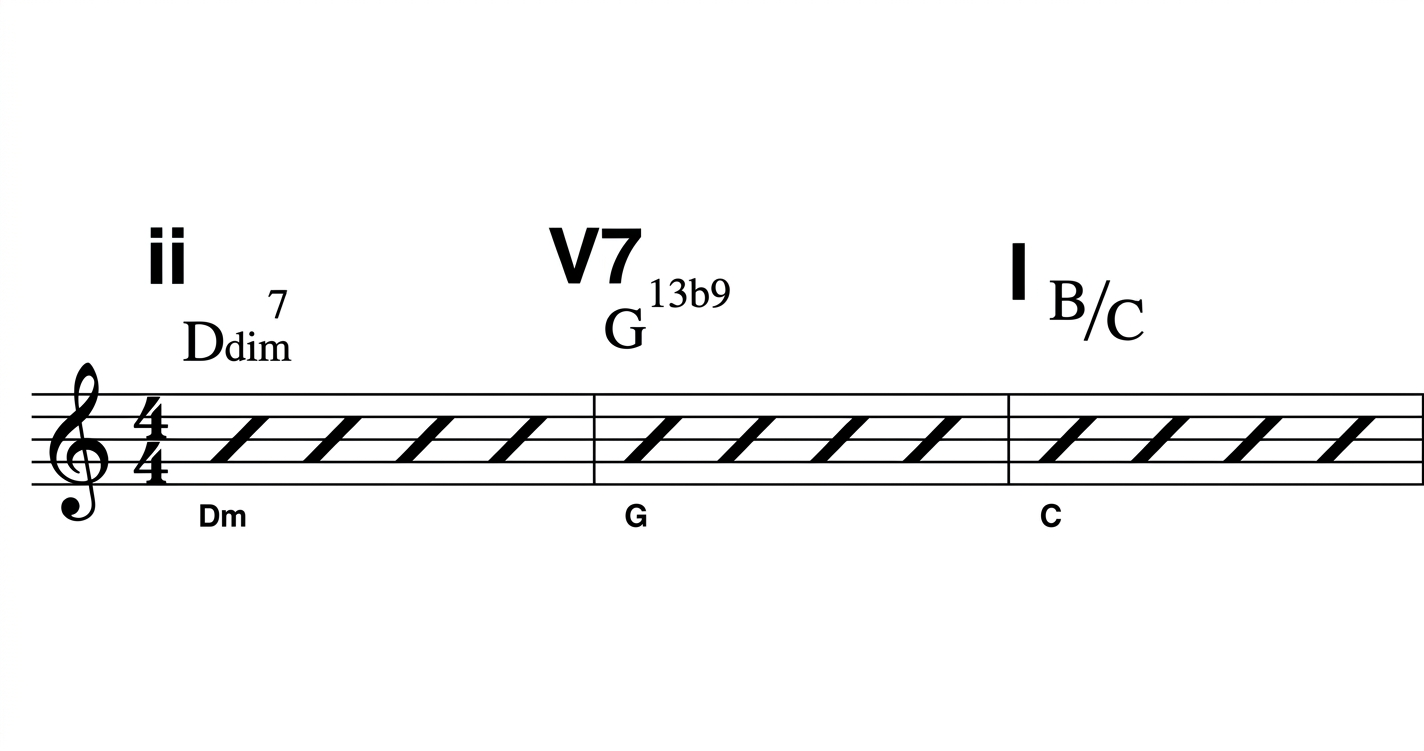
To do this, we will create a ii V7 I cadence:

diagram depicting guitarist John McLaughlin cadence and jazz composition

NOTICE: In the example above, we can see that the minor becomes diminished and the Dominant becomes 13b9 and the I chord becomes our slash chord that resolves yet hangs in the air.

Exploring the Minor Flat 6th Chord in Modern Music:Jobim/Piazolla

Hi Guys,

Today, a look at the amazing minor flat 6th chord as used in the compositional styles of Carlos Jobim, John McLaughlin, Astor Piazolla and Al Di Meola.

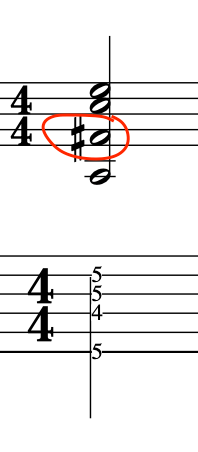
Most people seem to have a preference for the minor 6th chord, [which in this case has the F# or the Major 6th].

Musical notation showing a chord structure of A minor 6th, highlighting the major 6th note in red.

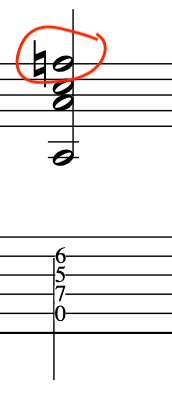
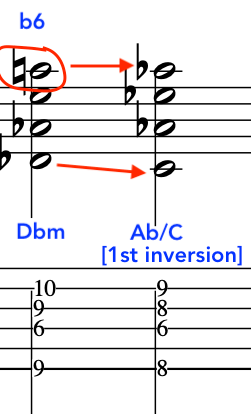
But, the minor flattened 6th chord [F natural in this case] has an amazing character of its own, [especially when it resolves to the first inversion, as we will see].

Musical notation showing a minor chord with a highlighted flattened 6th note.
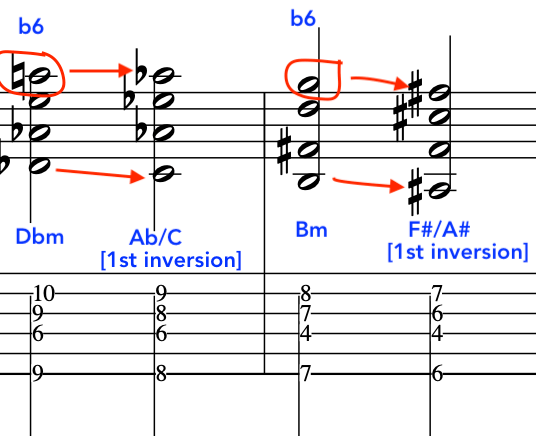
Musical notation showing a Db minor flat 6th chord resolving to an Ab Major chord in first inversion, highlighting the flattened 6th note.
Illustration of the Db minor flat 6th chord to 1st inversion Ab Major chord, highlighting the flattened 6th note.
Sheet music showing a D flat minor flat 6th chord resolving to a first inversion A flat major chord, and B minor chord, with annotations indicating flattened sixth notes and first inversions.
Diagram illustrating the transition from Db minor to Ab major first inversion, highlighting the flattened 6th note.

Let’s now add some more first inversion chords:

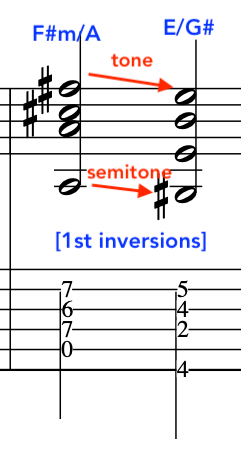
Here, we employ F#m/A with the bass resolving a half step down to the G # note.

Once again, we have a wonderful melodic transition, this time going to the E first inversion chord.

Musical notation showing first inversion chords F#m/A and E/G# with indicators for 'tone' and 'semitone' resolutions
Illustration of F#m/A and E/G# first inversion chords highlighting tone and semitone relationships.

In order to move away from cliche-dom we will now alter the harmony a bit.

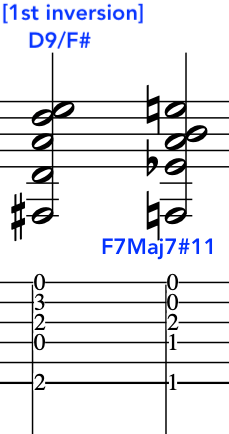
Here, we will add a chord of D9/F# [1st inversion] and let the bass move down a semitone to a chord of F7 [but with a Maj7th also and a #11th].

Musical notation showing D9/F# chord in first inversion and F7Maj7#11 chord for altered  harmonic cadence
Chord diagram illustrating the first inversion D9/F# and F7Maj7#11 chords

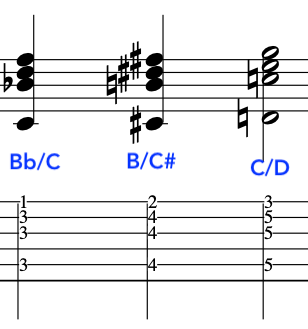
To complete this example, we will exploit chains of 7 Sus4 chords: Here, are the first three chords moving up in semitones.

Music notation showing how to use 7sus4 chords  Bb/C, B/C#, and C/D chords.
Illustration of 7sus4 chord transitions in semitones, featuring Bb/C, B/C#, and C/D for musical composition.

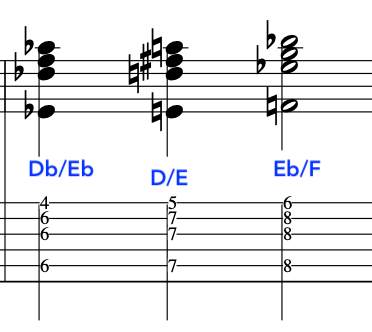
Here are the next three chords moving up in semitones :

Musical notation showing 7sus4 chords Db/Eb, D/E, and Eb/F with corresponding finger positions.
Chord progression analysis showcasing 7sus4 chords Db/Eb D/E Eb/F

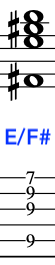
Finally, we come to a conclusion and rest on an E/F# Chord, up a semitone once again.

Musical notation displaying the 7sus4 chord E/F# with labeled fret positions on a guitar neck.

Enhance Your Compositions with Polytonality Techniques

Modern Jazz Fusion Chords part 2. Steely Dan, Dan Chord and Slash Chords

CLICK SUBSCRIBE!

Polytonality: For Concerto/OrchestralWriting lesson

Hi Guys,

This is the Re-Post that you requested.

Polytonality is the use of two or more keys at the same time:

poly-tonality-orchestral-composing-chords-example

In this first example we have 4 bars of Polytonality with Eminor/DbMajor and EbMajor/CMajor

Sheet music showing a polytonal example with E minor/Db Major and Eb Major/C Major labels.
Musical notation illustrating polytonality with E minor/Db Major and Eb Major/C Major.

This then resolves itself with a “Tonal” diatonic cadence of B7/D# to Em:

Polytonality-Orchestral Example

This example explores “Implication”. In this case it is implying the melodic minor but avoiding the cliche by employing the richness of Polytonality:

Sheet music showing C# minor, Fm7, A minor, Ab Major, and Gm6/A chords with annotations as examples for polytonality.
Musical notation illustrating chord progressions in polytonality, featuring C# minor, Fm7, Aminor, Ab Major, and Gm6/A.

From here, we will again employ diatonic harmony for a cadence.

To complete this short orchestral example we will go back into Polytonality with another melodic minor implication by employing Dminor/DbMajor:

Sheet music showing the chord labels 'D minor' and 'Db Major' in red text to demonstrate polytonality.
Musical chart depicting D minor and Db Major for a polytonal music example.

Here is the chart:

poly-tonality-orchestral-composing-example

Polytonality-Orchestral Example

In this final example we will just “Reverse” the chords. This time it is DbMajor/Cmajor which is then played the other way around with CMajor/DbMajor.

polytonality-orchestral-composing-chords-example

finally, we will employ a slash chord for an “Implied” cadence: This will also lighten the harmony:

Musical notation of a slash chord labeled 'G/C' with staff lines and symbols.
Illustration of a G/C slash chord as notated in music theory.

Here is the Chart:

polytonality-orchestral-composing-example

FREE PDF DOWNLOAD:

Modern Jazz Fusion Chords part 2. Steely Dan, Dan Chord and Slash Chords