Lessons from Jazz/World to 20 Century Classical Music Harmony Rhythm and Theory
Author: Modern Music Theory and Application
Clifford Martin is a trained classical musician and composer. His 1st study being piano and composition and a deep study in the application of modern music theory. He also studied jazz piano and jazz drums privately.
This website is a catalogue of ideas and musical concepts for improvisation and composition.
In the video above I look at how I write 20th century classical atonal music at the piano. Although this video touches on the basics it does point out the essential compositional elements and emotional make up needed for successful atonal compositions. Regardless of the atonal style which could be, 12 tone serial music, Messiaen modes or Boulez atonality, for the composer/writer the building blocks and perception remain the same.
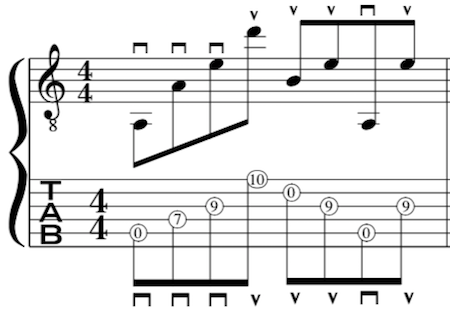
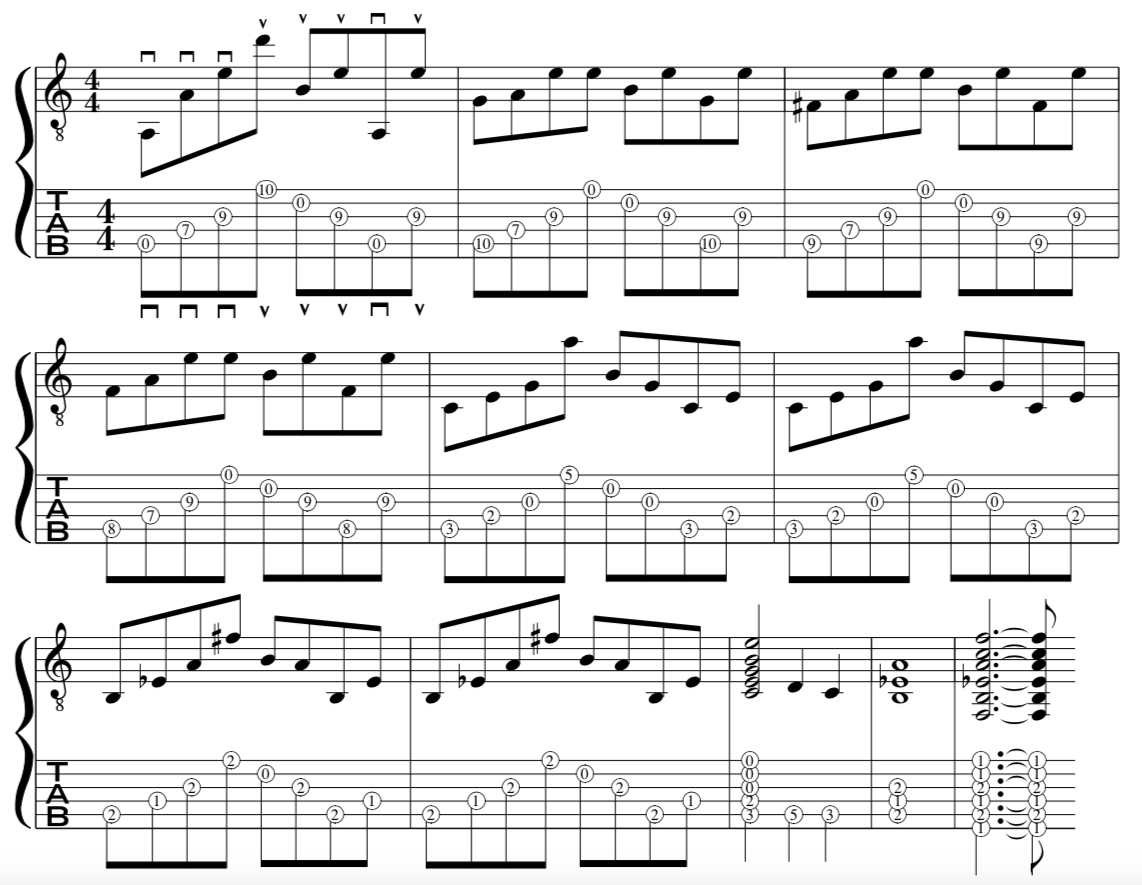
This lick requires a bit of patience because the fingering is quite finickety due to the un- guitarist nature of the quartal set up, pentatonics and the nature of the intervals and their positioning on the guitar fingerboard.
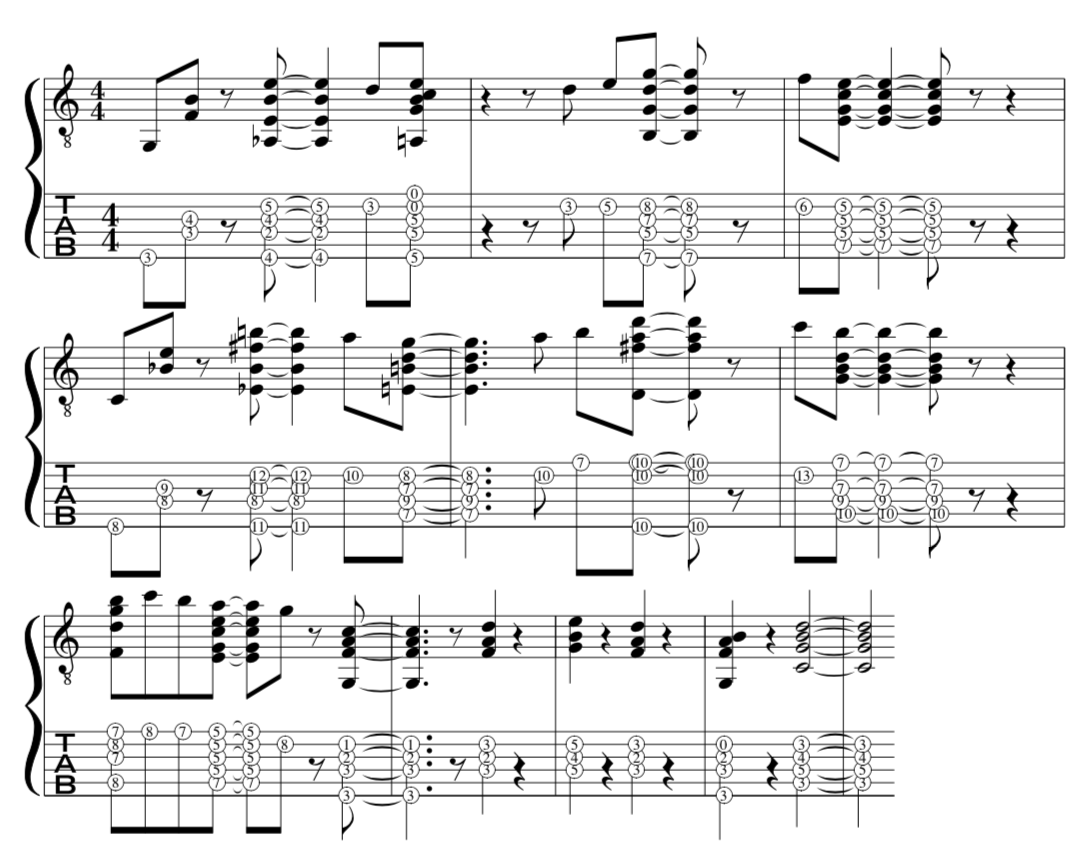
McCoy Tyner Piano Lick employing alternate guitar picking for rhythmic fluency.
Below are the Modes of the Melodic Minor Ascending Scale:
Mode of the Ascending Melodic Minor Scale
This is all good and well but what happens when we want to transpose them or employ them with a different parent key.
The ANSWER= count down from the Tonic note of the new parent key. So, for example we will take C. So, if it’s the second mode then count down a 2nd and use that melodic minor scale [Bb Melodic Minor] or if it’s the 4th mode then count down a 4th [G Melodic Minor Scale] etc.
Let’s look at the melodic minor modes transposed to a new parent key of C:
C Melodic Minor “Ascending”. Note: 1st half of the scale is minor whilst the second half is major.
C Melodic Minor ScaleC melodic “Jazz” Minor
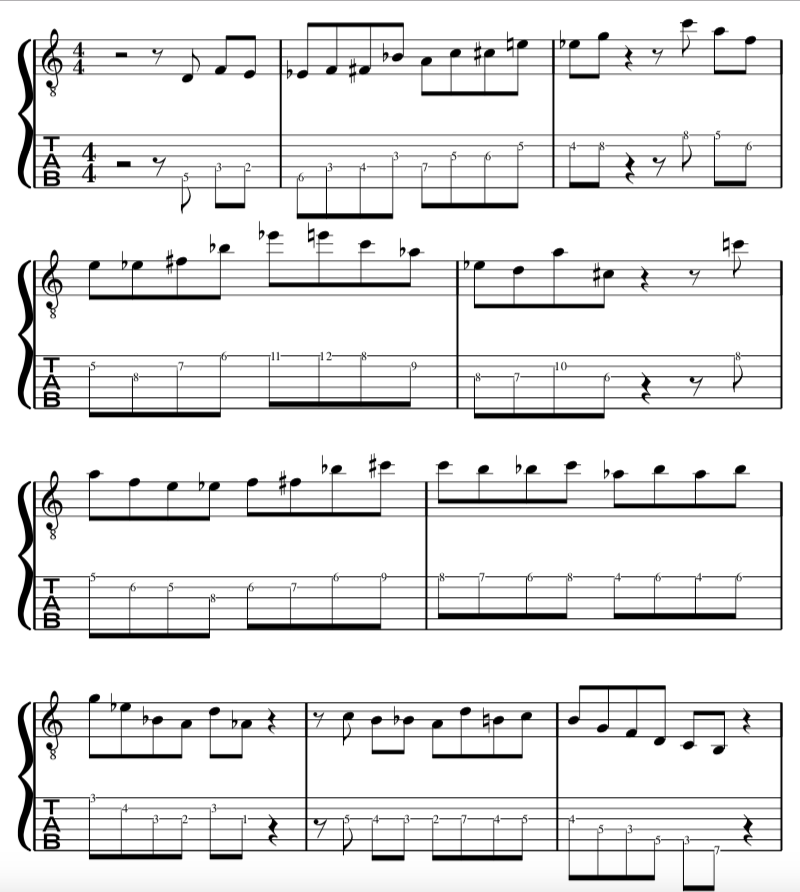
The C melodic Minor 2nd Mode transposed with C as the parent key root note. We now have “Dorian b2” this being the same as Bb melodic minor but starting on the parent key root note of C.
2 Octaves Notation and Tablature:
DORIAN b2 MELODIC MINOR MODE
The 3rd Mode: Starting from the parent key root note of C this becomes C Lydian Augmented. We have the F# for the Lydian and the G# that augments/raises up the 5th note. This is also A Melodic Minor.
F# for Lydian and G# for augmented
2 Octaves Notation and Tablature:
LYDIAN AUGMENTED MODE
The 4th mode. We have the F# making Lydian and the Bb as the flattened 7th. [Starting on G this will make the G Melodic Minor Scale].
2 Octaves Notation and Tablature:
LYDIAN b7 MODE
The 5th Mode. Notice the Ab note creating the flattened 6th. Also we have the flattened 7th with the Bb note for the Mixolydian. This mode is also the same as the F Melodic Minor scale.
2 Octaves Notation and Tablature:
MIXOLYDIAN b6 MODE
The 6th Mode. This mode has a raised 2nd with the D natural note. This is also the same as the Eb Melodic Minor Scale.
2 Octaves Notation and Tablature:
LOCRIAN #2 MODE
The 7th Mode. Notice that the F note is flattened [or E natural]. This is the same as Db Melodic Minor Scale.
2 Octaves Notation and Tablature:
SUPER LOCRIAN MODE
If this post was of use to you then please subscribe to us below at youtube!