Lessons from Jazz/World to 20 Century Classical Music Harmony Rhythm and Theory
Author: Modern Music Theory and Application
Clifford Martin is a trained classical musician and composer. His 1st study being piano and composition and a deep study in the application of modern music theory. He also studied jazz piano and jazz drums privately.
This website is a catalogue of ideas and musical concepts for improvisation and composition.
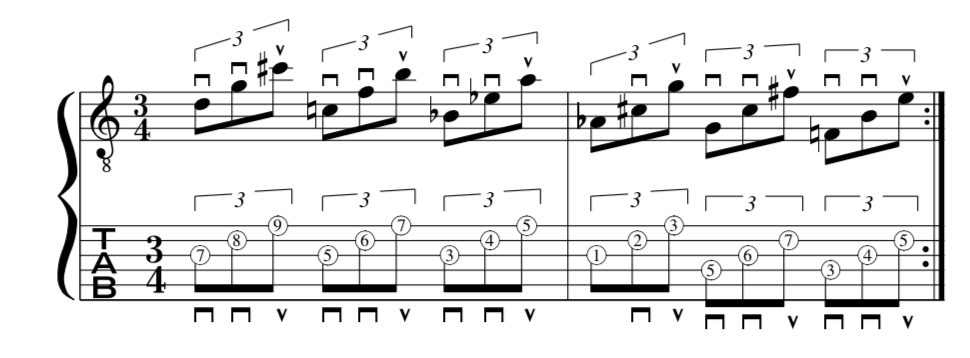
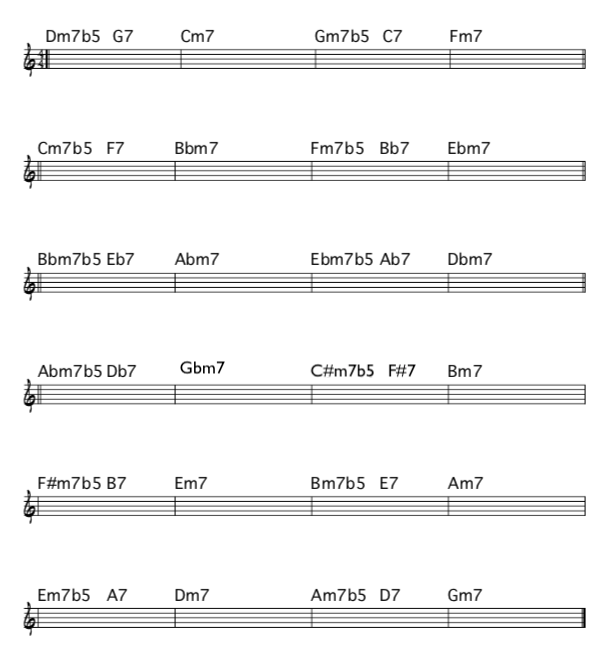
John Mclaughlin Chromatic Guitar alternate picking Jazz Fusion Licks Lesson
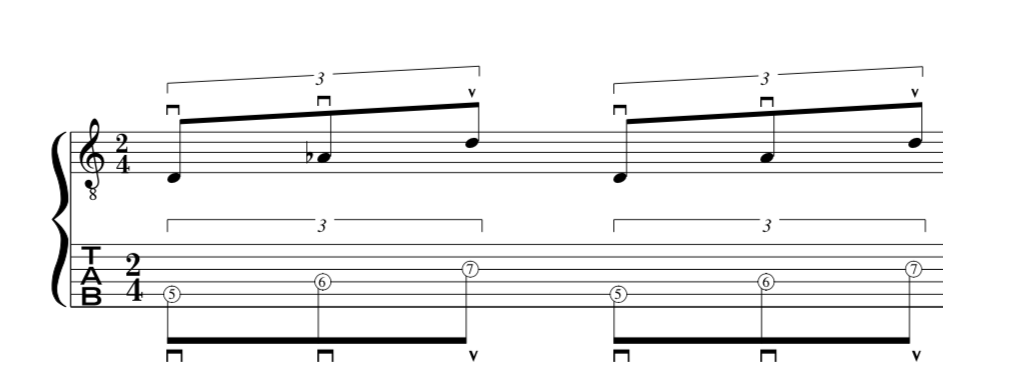
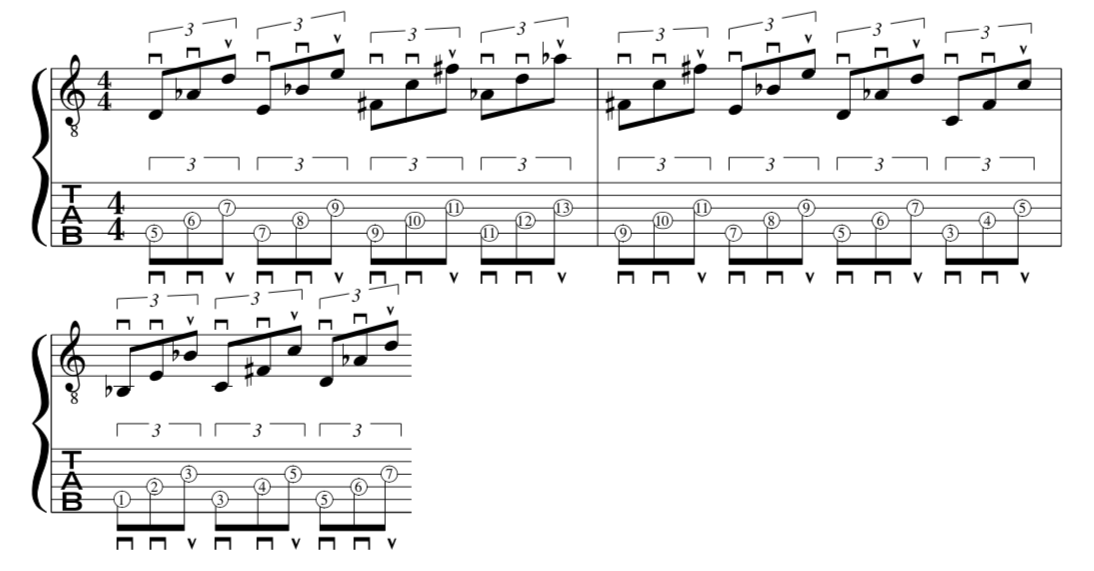
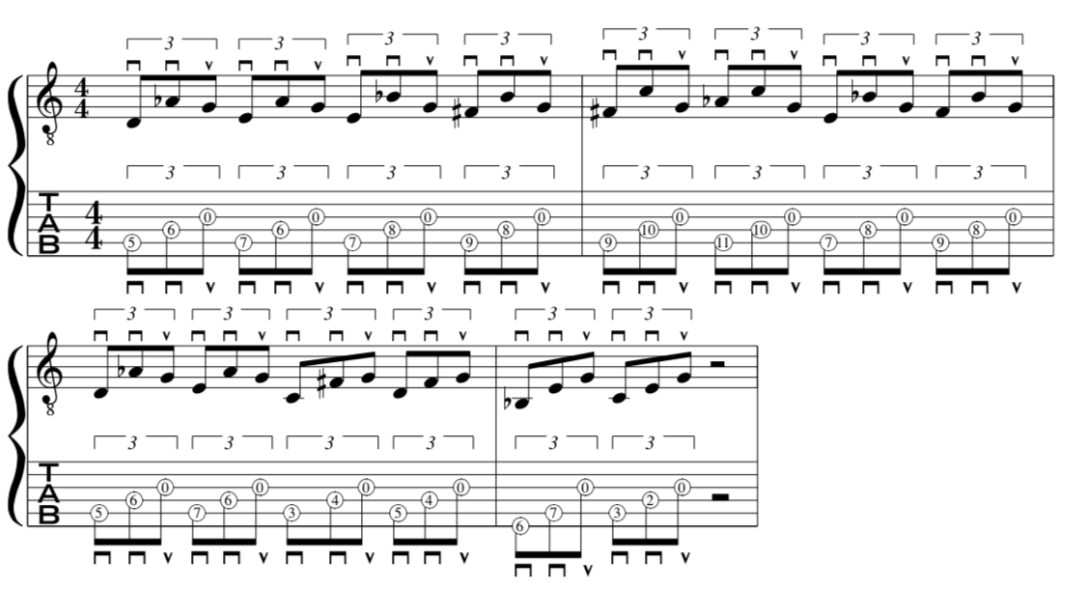
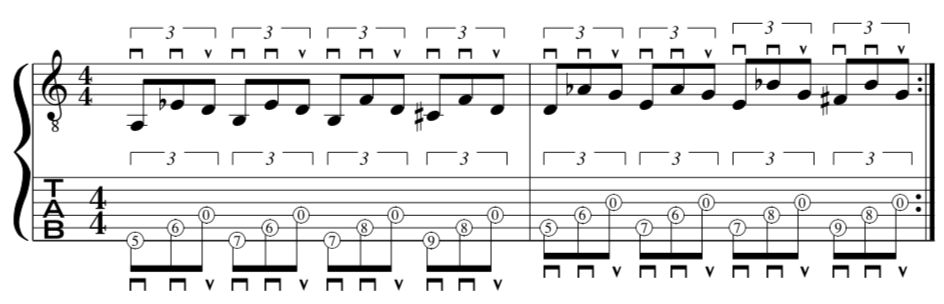
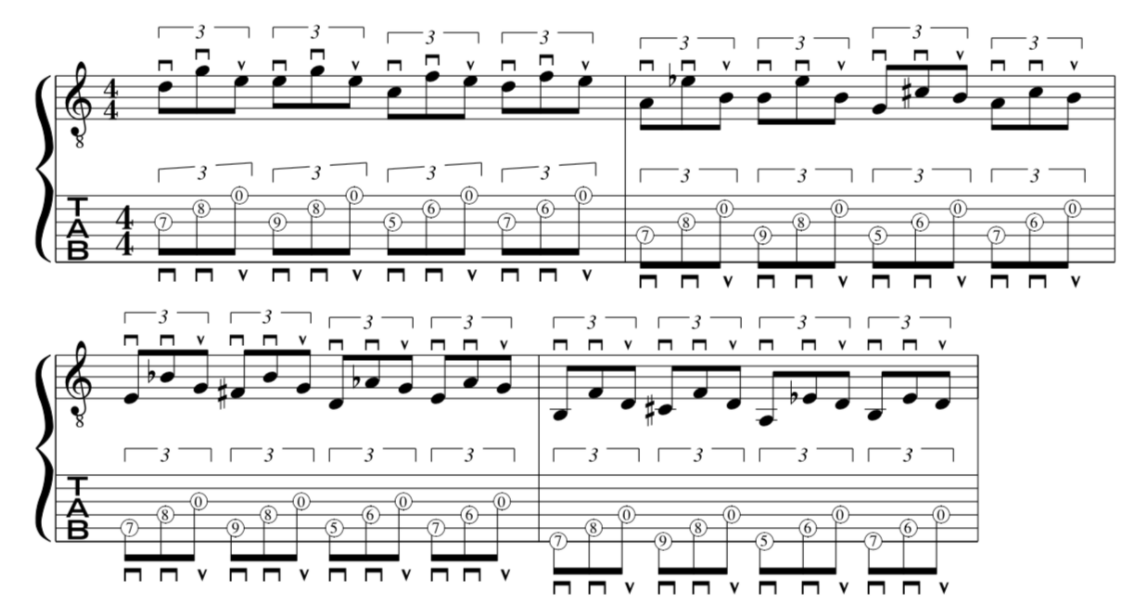
This blog takes a brief look at John Mclaughlin’s use of Chromaticism in regards to Jazz Fusion Guitar lines. The 2 licks are also from a video I did on Dave Liebman’s Chromatic approach to jazz. They both share the same concepts. The licks are riffs doubled up with piano.
It’s a good idea to watch the video before or along with this blog as it will emphasise many of the key points in this blog.
In the notation diagram below you will see the Whole note called the “Semibreve” this is worth four beats or four 1/4 notes.
How to read music
We will now cut this in half and have two “Minims” or two half notes per semibreve.
How to read music
Now we will have four 1/4 notes called “Crotchets” per Semibreve
How to Read Music
The next rhythmic division is the 1/8th note called a “Quaver”
How to Read Music
They are more commonly grouped and counted like this
How to Read Music
The doubling of the 1/8th note gives us the 16th note called a “Semiquaver”
How to Read Music
Semiquavers [16ths] are more commonly seen and counted like this
How to Read MusicHow to Read Music
Lastly we will add “Triplets” to our Basic Rhythms. These are 3 notes played over one 1/4 note beat
How to Read Music
More commonly counted as:
How to Read Music
When setting out to write down music we apply a “Time Signature” in order to acknowledge how many beats there are per bar.
How to Read Music
Here we have “Three” 1/4 note beats per bar
How to Rea Music
Now we have ‘Six Eighth” notes per bar displayed by the 6/8 time signature
How to Read Music
Now let’s apply this to the Scale that we learnt in the previous blog/video “How to read music part 1”
How to Read Music
SYNCOPATION: Syncopated Common Rhythms
Some rhythms are tied as we see below: This makes them syncopated as we start “On” the beat and then accent the “Off-beat”.
How to Read Music
The above rhythm is more commonly written like this:
How to Read Music
SYNCOPATED RHYTHM NUMBER 2:
The other very common syncopated rhythm is this:
How to Read Music
Again, notice the tied notes. This means that the 2nd “On” beat is not played but the “And” Off-Beat is played. It is more commonly written like this:
How to Read Music
Now let’s apply these two common syncopated rhythms to our “Triads” from our previous blog/video lesson on how to read music
The first Rhythm with triad melody:
How to Read Music
The second Rhythm with triad melody:
How to Read Music
Okay, that’s the end of part 2 on “How to Read Music Rhythms and Notation”.
If you found this useful then it is a good idea to look at “How to Read Music” part 1 Blog and Video.[ Also, the Video is on Youtube and it covers the Scale/Triads notation].
Thanks for viewing this blog please SUBSCRIBE to us on youtube below!