
Please watch video above for detailed info:
Hi Guys,
Today, a look at using the guitar pick/plectrum to create contrapuntal/counterpoint ideas.
In this first part, [This lesson] we will look at treble to bass and bass to treble and how to make the non consecutive 3rds, 5ths and octaves and harmony work.
In the next part [next lesson] we will look at how to create “Resonance”, especially in regards to scales.
PART 1: Etude/Prelude
At the beginning of the video above, you will see/hear a little prelude that I composed for the contrapuntal plectrum/picking ideas.
This demonstration concepts piece will be the lesson of today.
SMOOTH “CLEAR” HARMONY=Key
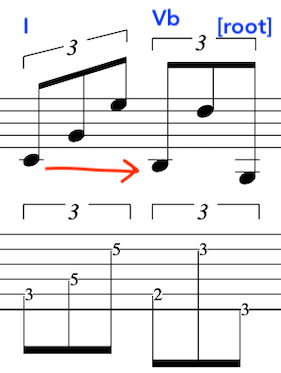
In the first bar we have chord I to Vb. This, could also be seen as, C to G/B or chord I to chord V first inversion: [Landing on the root]
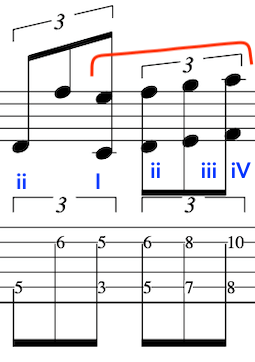
From here we have chord ii and then chords moving up the scale – I ii iii iV
Here, I am also employing the second finger with the pick in order to pluck both strings at once [see video].
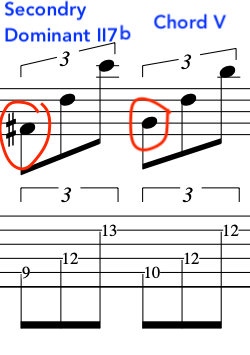
In order to keep the harmony ascending with clear movement, we will now take the F natural up a semitone to F# and create a secondary dominant first inversion-II7b
This chord ii [Dm] is now, made Major with the added seventh [D7].
This in turn, resolves up another semitone to G for the dominant chord of G Major.
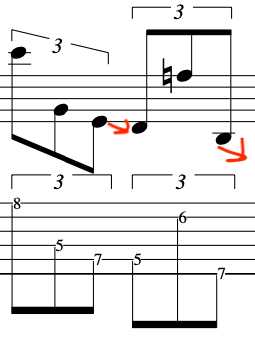
We will now, exploit a perfect cadence of I V I to complete this section of the composition:
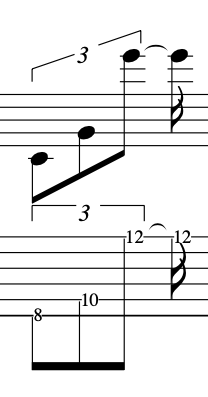
PART 2:
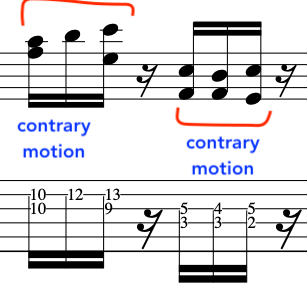
Now, to create contrast, we will employ scale movement, double stops and imitation:
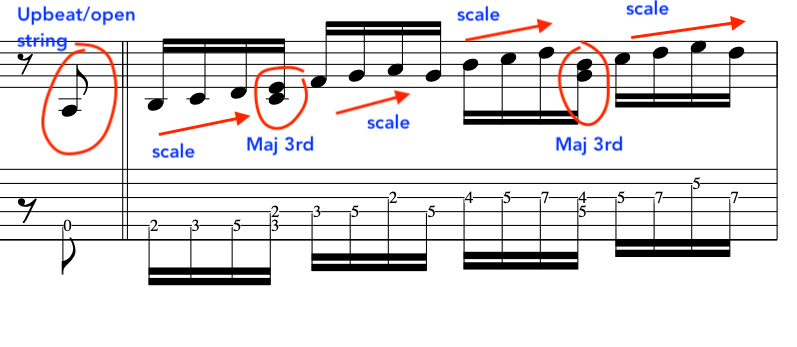
The technique to keep this ascending is “Imitation”, using and implying what we have already played up an octave.
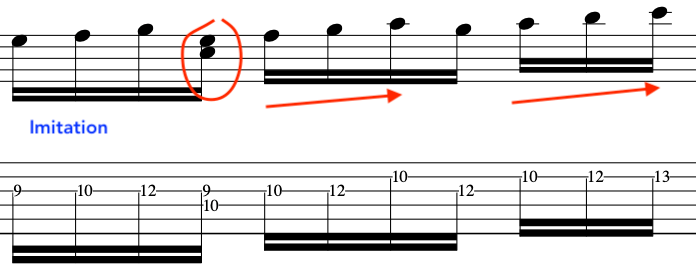
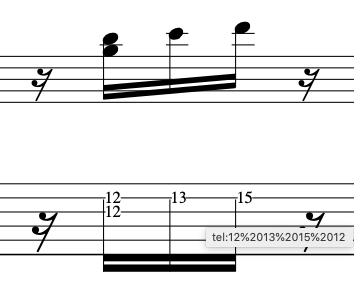
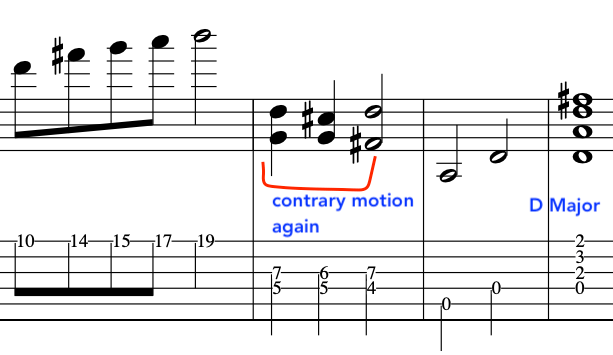
Finally, the cadence is created with “Contrary Motion” technique. And, once again we will imitate this, but, an octave lower this time, to complete the cadence.
PART 3:
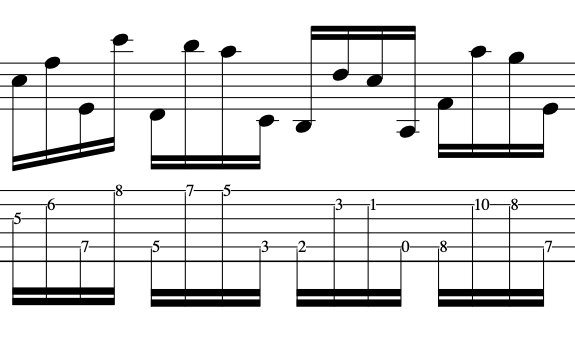
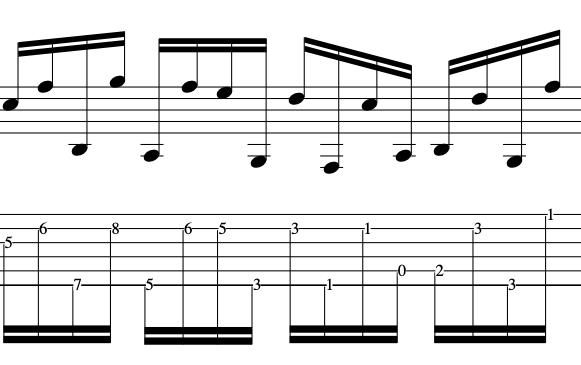
In the coming part, we will exploit much string skipping and intervallic movement.
This technique is great for Low High Low with the Bass to Treble or Treble to bass.
This is an amazing way, to perform a contrapuntal effect and map out and perform crystalline clear harmony that resonates beautifully when fretted on the guitar. [See Video Above].
Second Part:
PART 4: Recapitulation:
The last part employs our original little tune, but will change key at the finale.
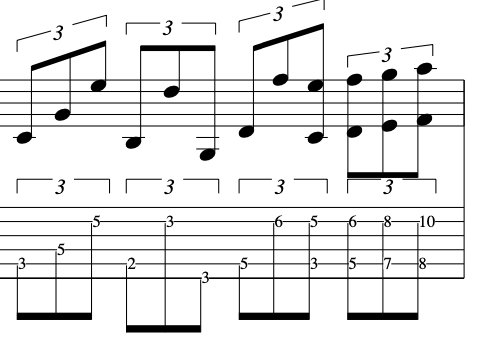
In order to change the key and “Uplift” the end, we will exploit two secondary dominants: The first being chord ii as II7b [D7 to G].
And the second being Chord iii. So, we have III7b [E7 to A Major]
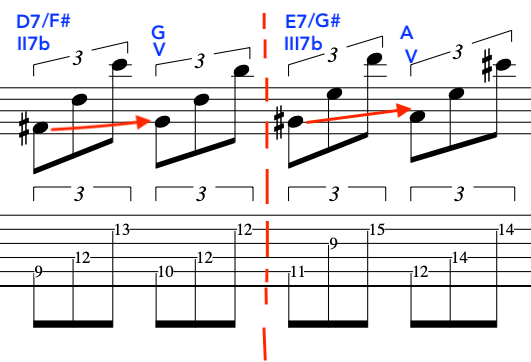
This, means that we now have to cadence with D Major as the new tonic key.
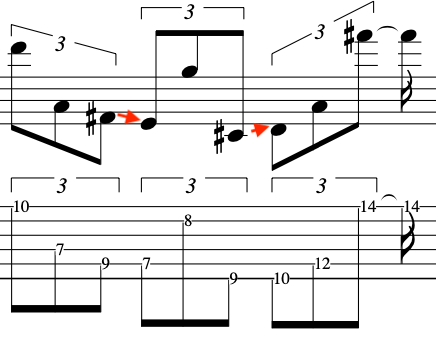
To wind down the composition we will outline a D Major [13/sus4] arpeggio and cadence with some simple contrary motion emphasising the new key and chord of D Major.
Conclusion:
This, was just a quick look at the fretting side of plectrum contrapuntal guitar writing and playing.
This style, encompasses the no consecutive 3rds, 5ths and octaves approach, taken from the Bach’s chorales.
In the next part, we will look at how to create resonance and a much bigger sound with more colourful plectrum techniques.
FREE PDF DOWNLOAD:
If this lesson was of use to you, then, Please SUBSCRIBE to us on YOUTUBE below, Thanks!