
Please watch video above for detailed info:
Hi Guys,
Today, a look at the amazing 12 chromatic forms for guitar by jazz legend and music theoretician extrodinaire Pat Martino!
These 12 forms for the chromatic scale were written and I believe taught by Pat Martino in the 70’s and 80’s. They are a unique idea that connect through the concept of octave displacement.
Although they can be employed over dominant alt chords for improv [As covered previously https://jazzimproviser.com/2024/05/21/pat-martino-intervallic-studies-un-published-book-lesson/] I am going to dig at little bit deeper and create a compositional 12 tone approach where extra fresh material can be created from any one form.
But, to begin with:
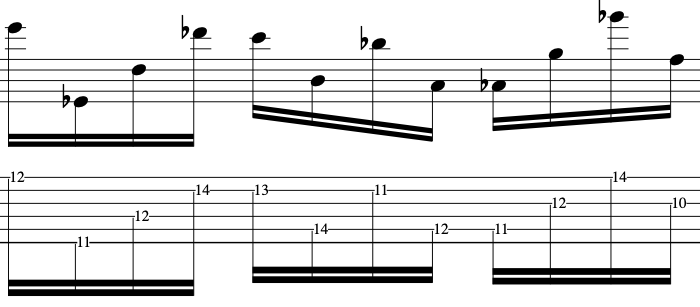
Here is the first form I:
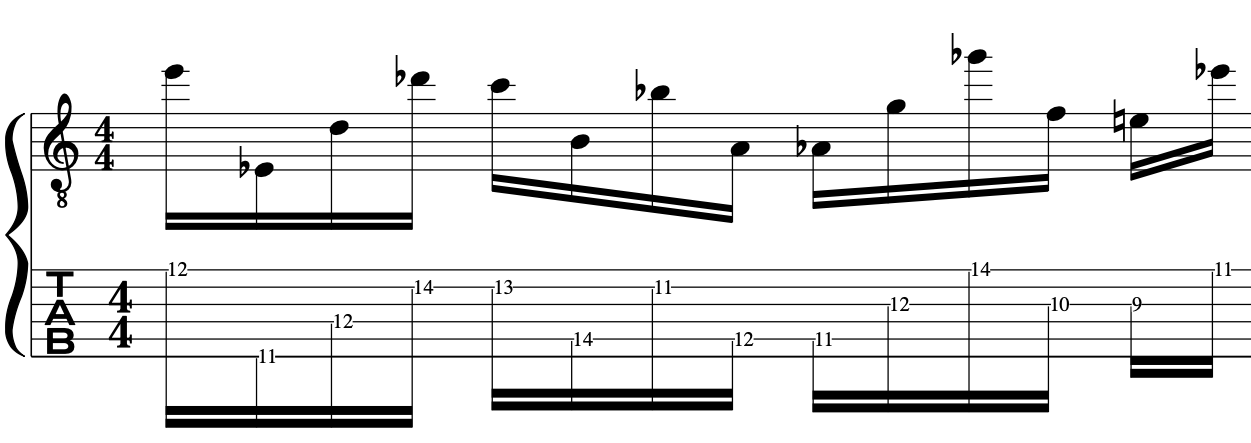
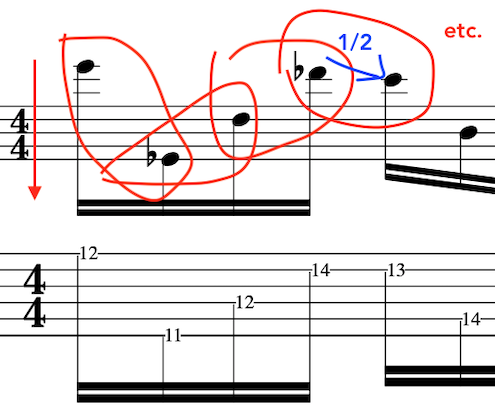
Notice: The semitones and octave displacement: E to Eb to D to Db [Db to C semitone] etc.
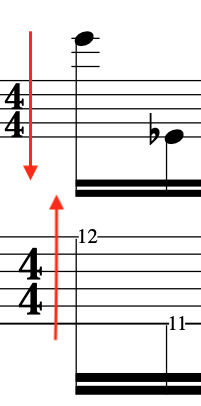
The arrow pointing up or down tells us whether it is an ascending or descending chromatic scale:
So, for instance “Form I” without octave displacement is:
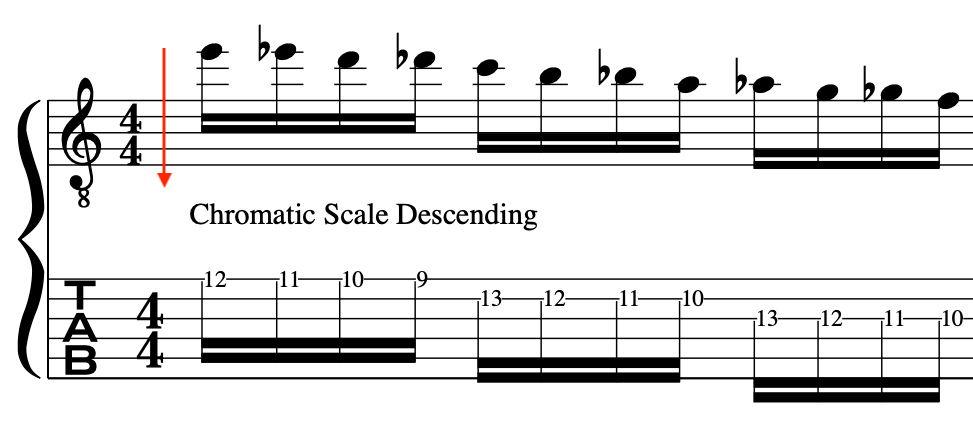
With octave displacement is:
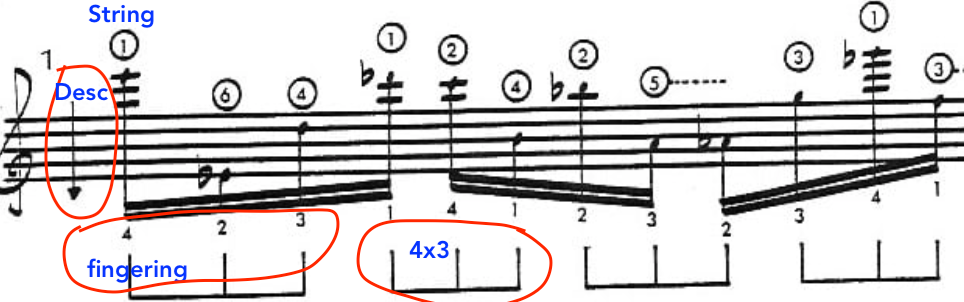
Here, is Form I written by Pat’s own hand showing his fingerings and string preference.
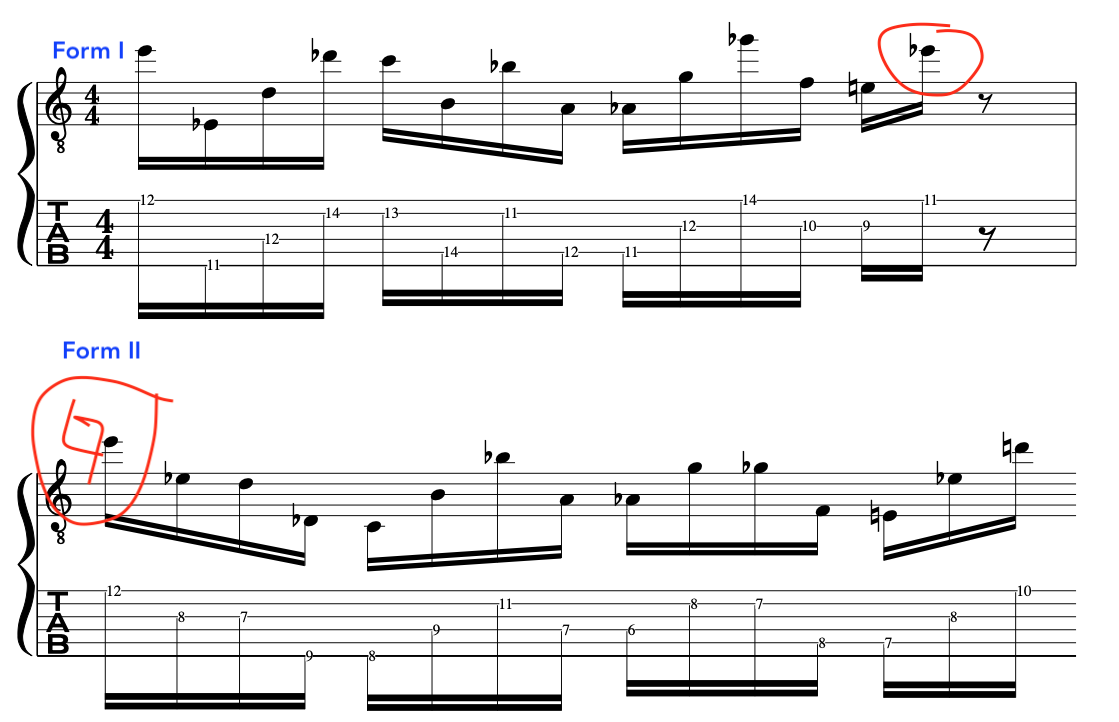
Now, let’s add the second form for guitar and notice Pat’s connection for the two: Eb to E
Also, notice that Form I and II have the same notes but mostly in different octaves.
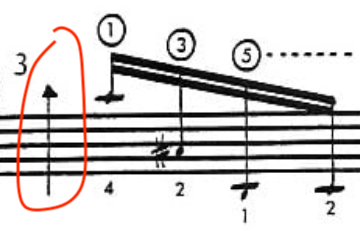
Lastly, if we look at form III we will see the arrow pointing upwards showing that it is an Ascending chromatic scale:
Here, is the basic ascending chromatic scale:
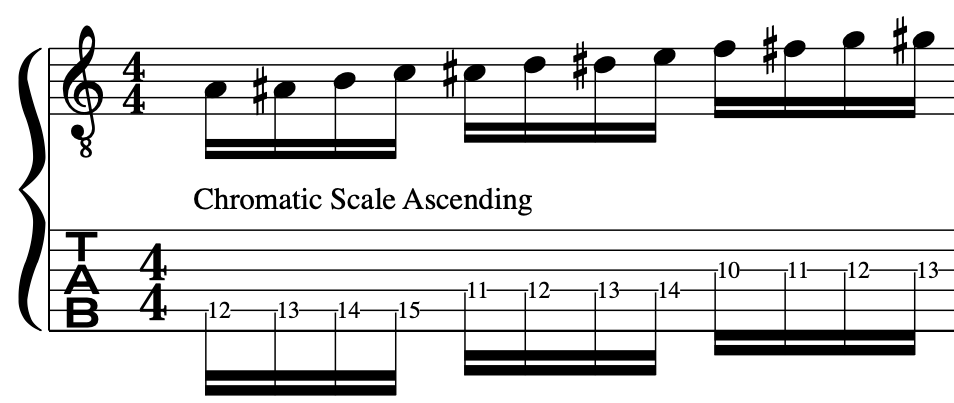
Here, it is with octave displacement
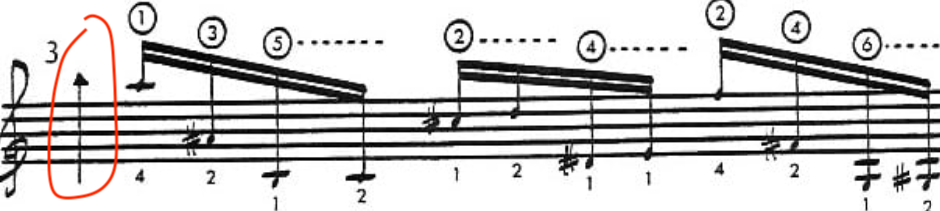
For all of the other chromatic forms please go to the downloadable Pdf at the bottom of this page for a free download of Pat’s actual notations.
COMPOSITIONAL AND DEVOLPMENTAL IDEAS:
Due to being the chromatic scale and 12 forms we can manipulate this by taking a 12 tone approach:
So let’s take the first Form and make 3 sets of 4 note chords from it.
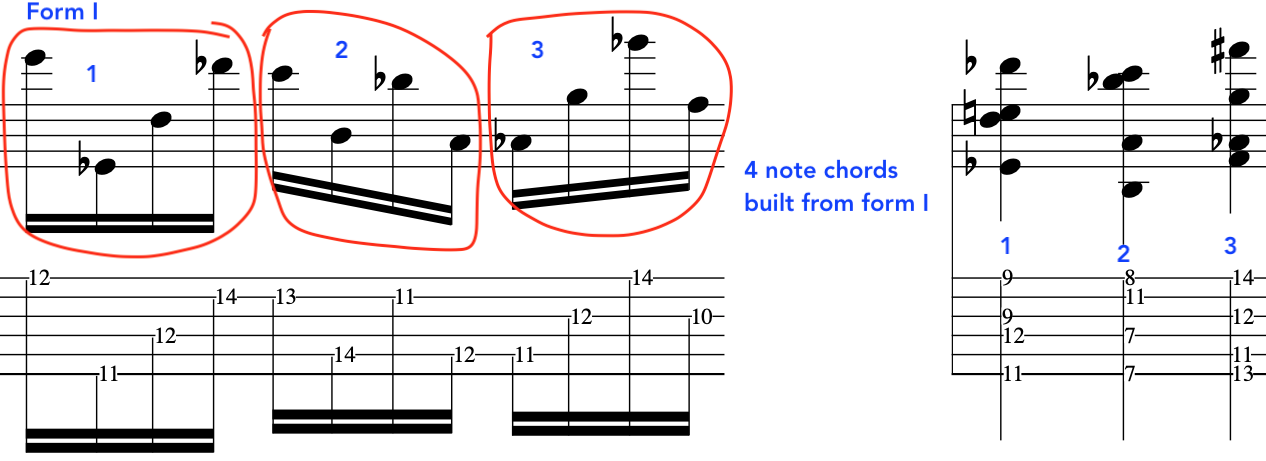
Here, we can see and hear how easy it is to create some very original and unique chords from these forms:
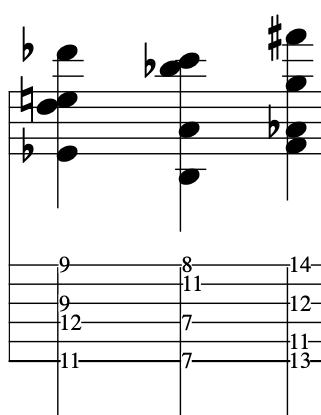
We can now make some lovely voicing’s and chords from the following, so, let’s structure some sophisticated composition.
How will we do this?
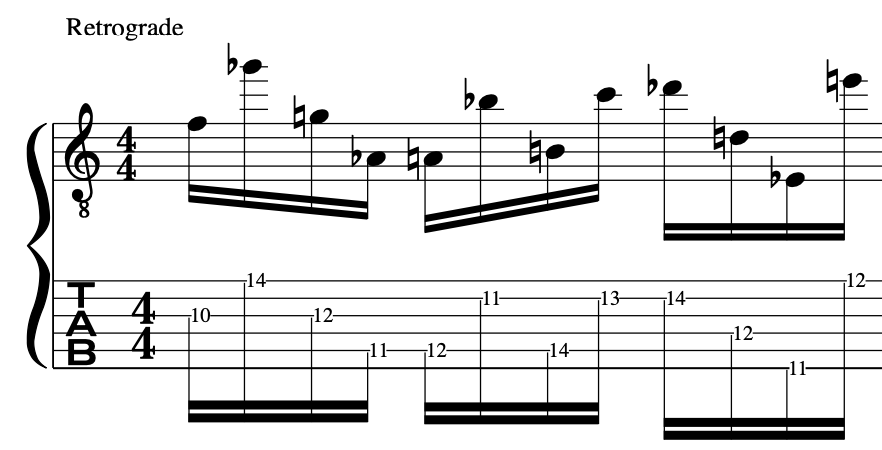
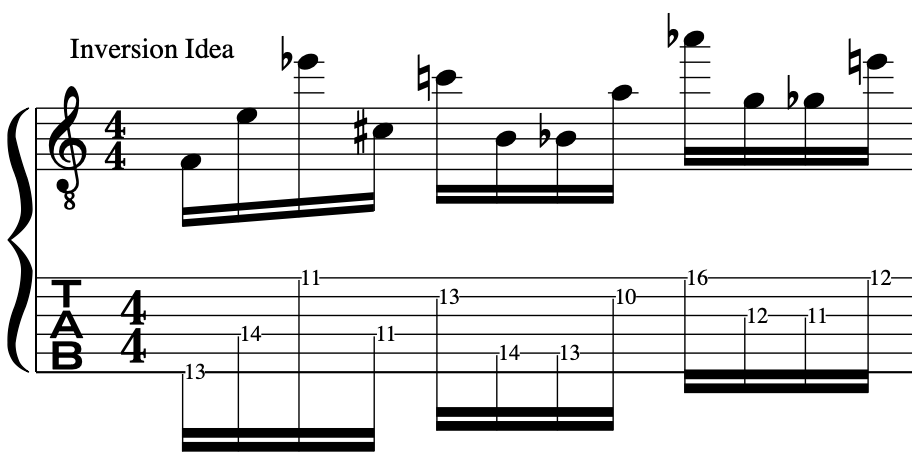
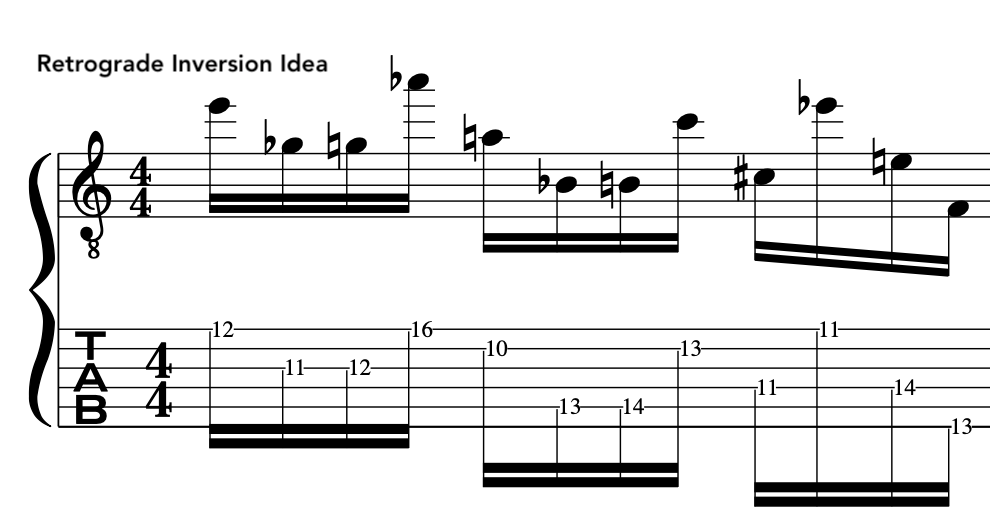
We will employ, “Retrograde” and “Inversion” and then “Retrograde Inversion”
RETROGRADE IDEA:
INVERSION IDEA:
RETROGRADE INVERSION IDEA:
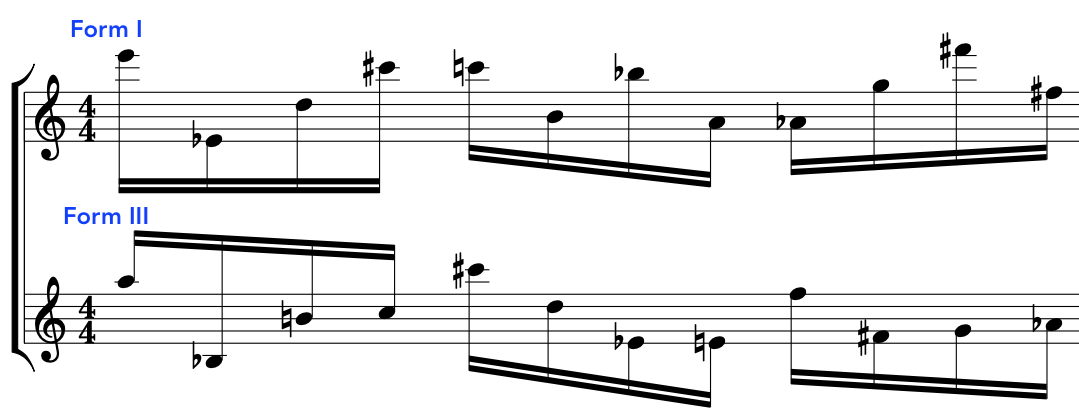
One last idea is to “Stack” one on top of the other creating a colourful superimposition bi tonal tool.
In this case it is Form I and III:
In conclusion
These 12 Forms offer brilliant possibilities for string writing or 20C classical orchestral style composing.
The octave displacement and the flow of semitones creates a fluid and quite natural way of performing on stringed instruments wether it be the guitar, violin, cello, double bass etc.
As guitar players this gives us some great possibilities for altered dominant lines [https://jazzimproviser.com/2024/05/21/pat-martino-intervallic-studies-un-published-book-lesson/] and original chord voicings. These are also great as rut busters too.
This blog has just touched on the subject but as you can see the possibilities for the 12 forms gives way to unlimited fresh new music, and for the imaginiative and creative guitarist/composer the possibilities are endless.
FREE PDF DOWNLOAD:
Below is a free pdf download of all of Pat’s 12 chromatic forms for guitar written out by Pat himself.
Forms I and II TAB:
If this Lesson was of use to you then please SUBSCRIBE to us on YOUTUBE below , Thanks!
