Lessons from Jazz/World to 20 Century Classical Music Harmony Rhythm and Theory
Category: Jazz fusion guitar music theory lessons, guitar technique and improvisation.
How to improvise over altered dominant chords. How to employ chromatic jazz and fusion harmony. Apply twentieth century classical composition techniques to modern jazz music and improv. How to exploit modes of the major. minor and diminished scales. Lesson in alternate picking guitar techniques as used by John Mclaughlin and Al di Meola. How to do metal rock and all styles of alternate picking on the guitar. Plectrum pick technique for electric and acoustic guitarists. alternate guitar style of picking lessons.
Today is a live stream podcast and video log only discussing the immortal question: “Does musical talent account for anything or does hard work, obsession clear vision and a demanding ambition pave the way to musical success”?
If you enjoyed this Podcast/Vlog then Please Subscribe to us on Youtube below!
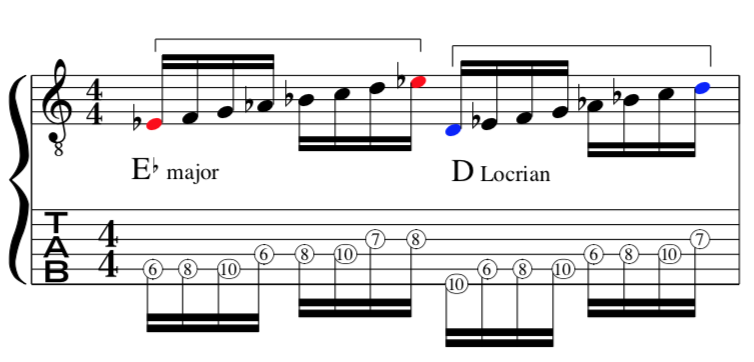
The Locrian mode is the 7th mode of the major scale. In the following examples it will be D Locrian built from the 7th degree [leading note] of the Eb Major Scale.
D Locrian 7th Mode of Eb MajorLocrian v Dom Substitution reharmonisation
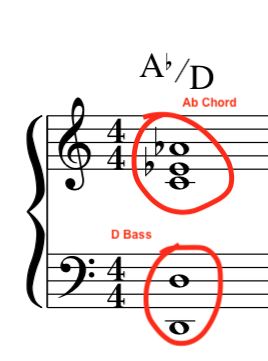
If we look at the diagram above and below we will see the Sub-Dominant chord of Eb Major [Ab Major] played over the 7th degree note[ D ] as the bass note or more commonly seen as a slash chord Ab/D resolving to the new key [or implied key] G Major.
Locrian v Dom Substitution Improv Chord
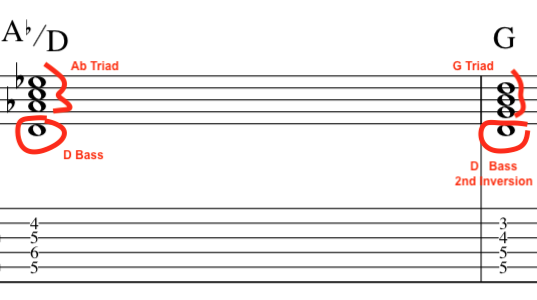
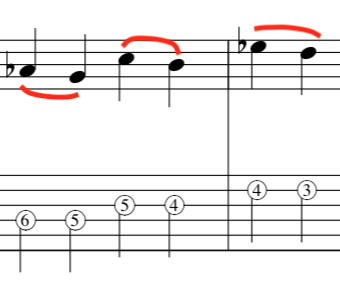
In the example below you will see that all of the notes of Ab Major resolve in semitones to the new [or implied] tonic G major. Although we employ the Locrian Mode this also gives a very Phrygian flavour because of the semitone resolution. Also the bass D can also be used in both chords with Ab/D to D in the bass of G for a second inversion chord.
Locrian v Dom Substitution RESOLVES to Tonic in Semitones
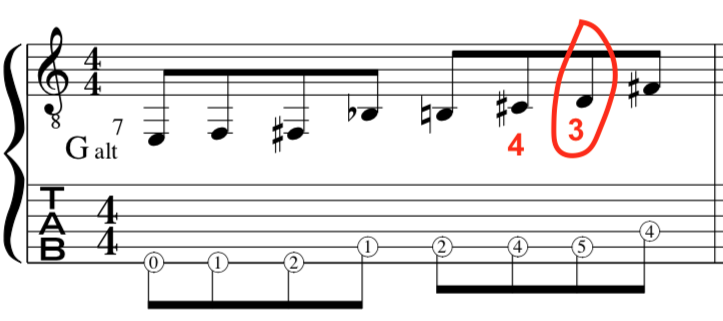
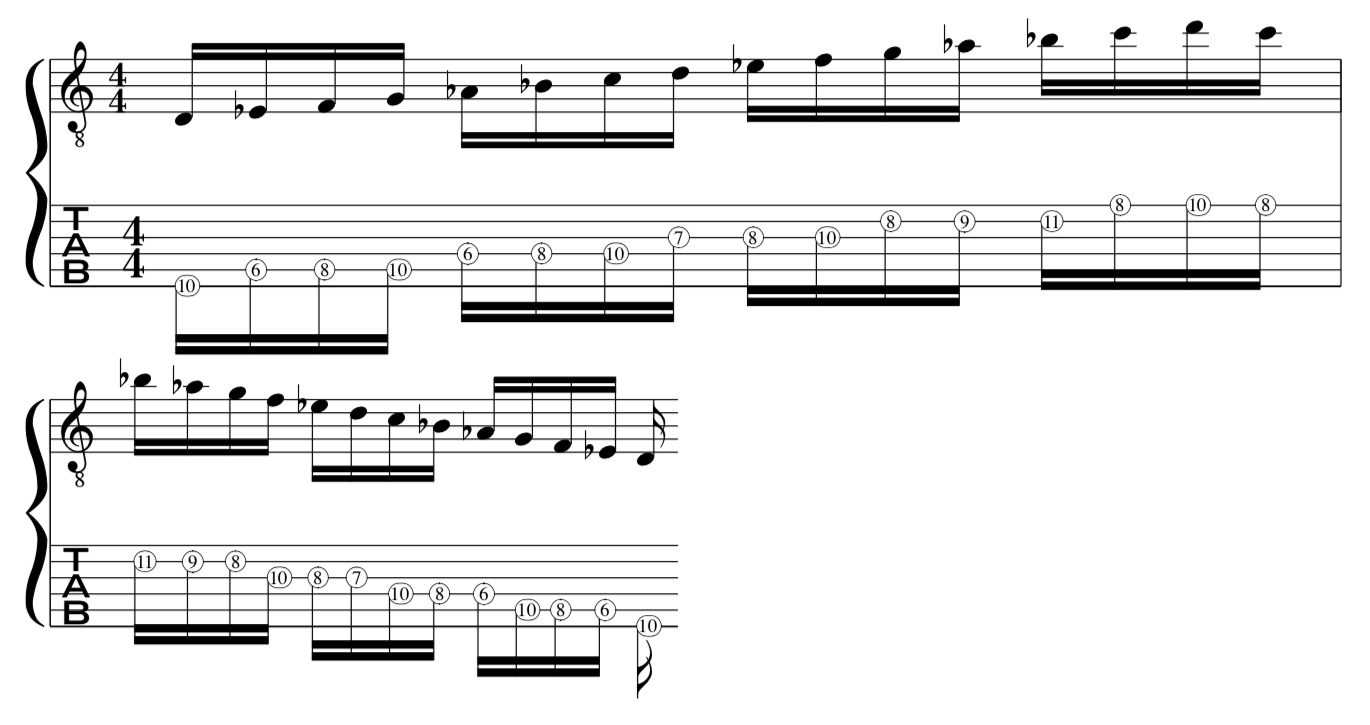
The Locrian Mode 2 Octaves
D Locrian mode 2 octaves
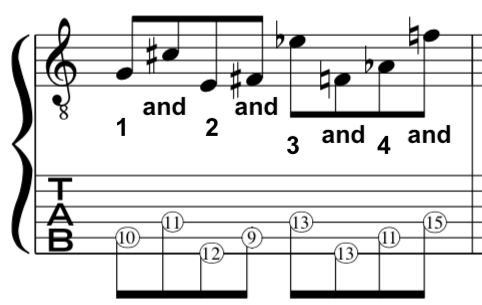
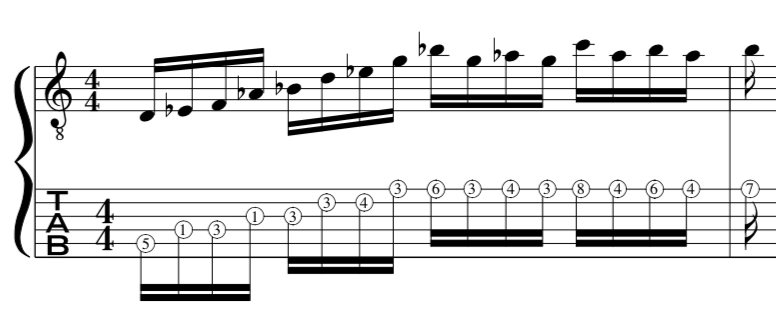
The Locrian Mode can be broken up. This approach creates better fingering, fluency and a less cliched sound.
Breaking up the Locrian Mode [D Locrian]
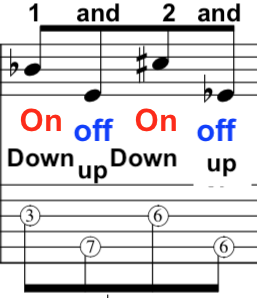
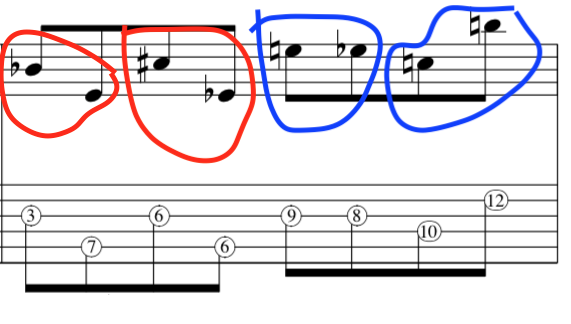
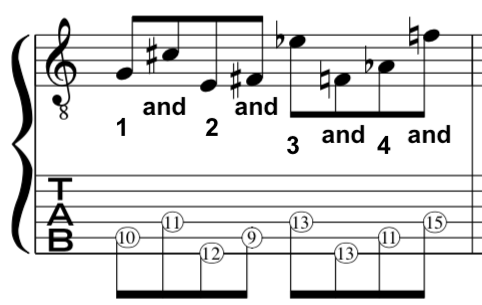
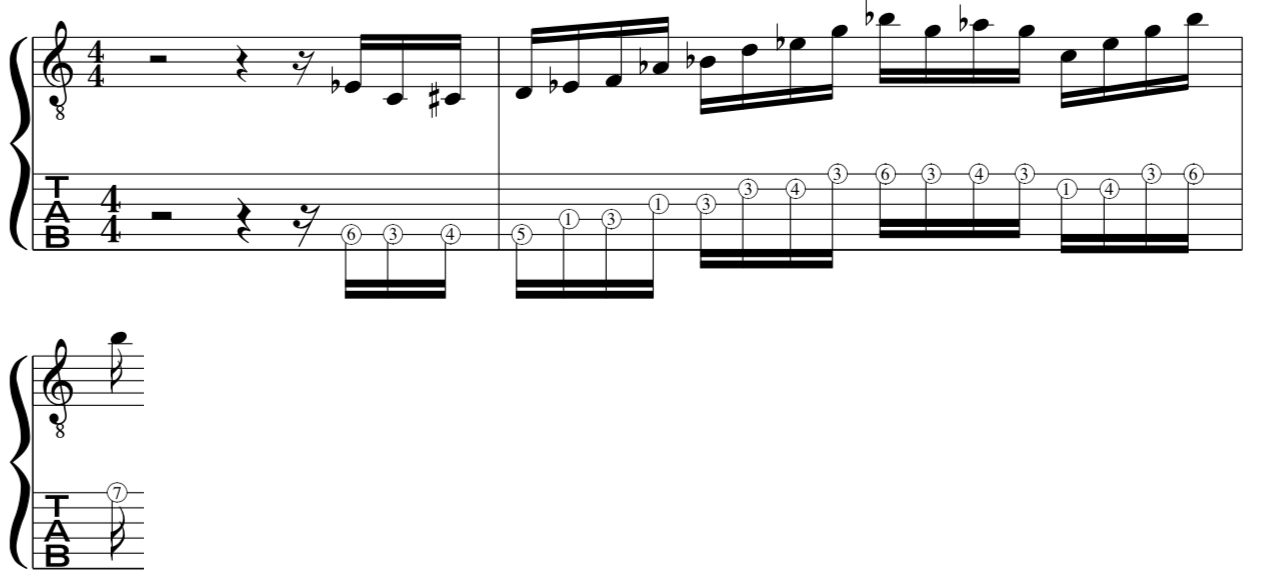
In this example there is an up beat added to create a more colourful character to the line. This up beat is built using a chromatic set up from target tones.
Adding Target Tones-Breaking up the Locrian Mode [D Locrian]
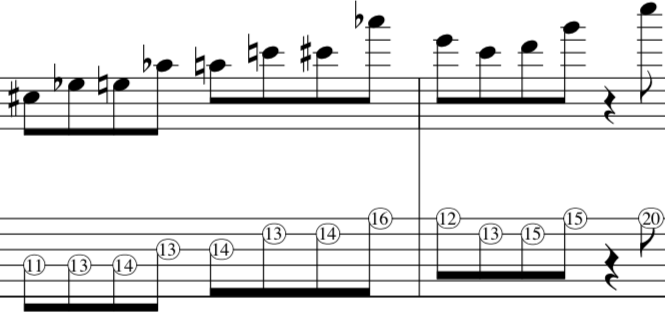
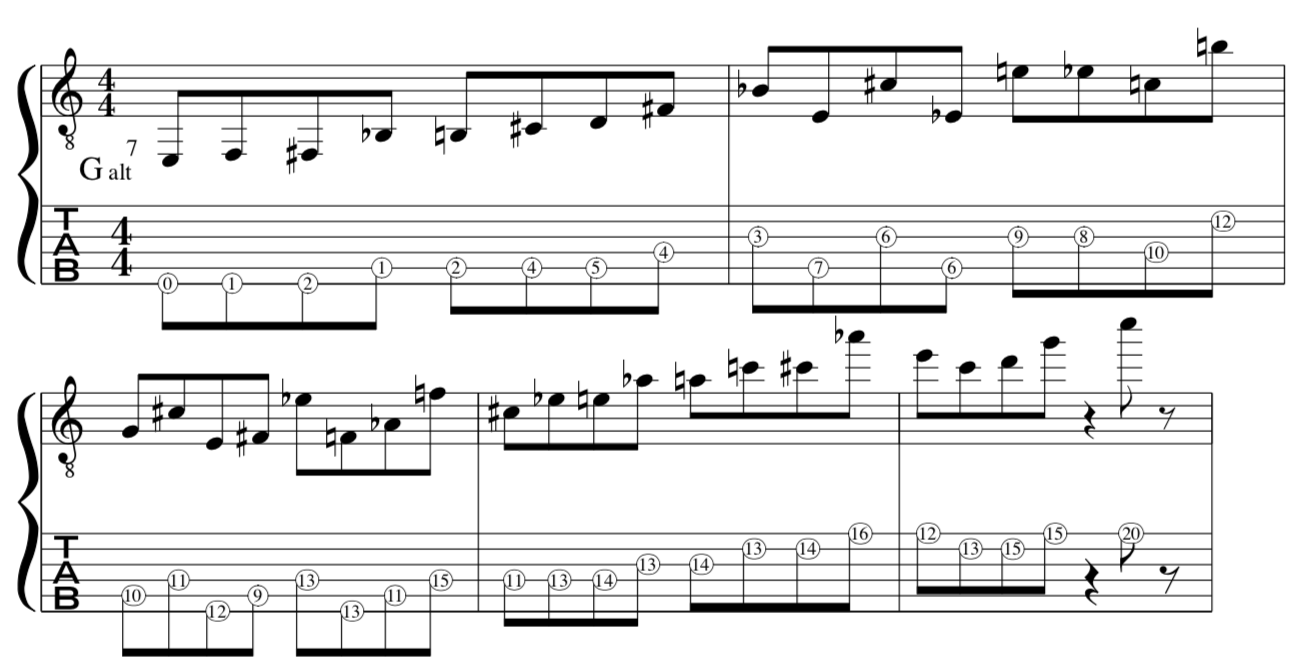
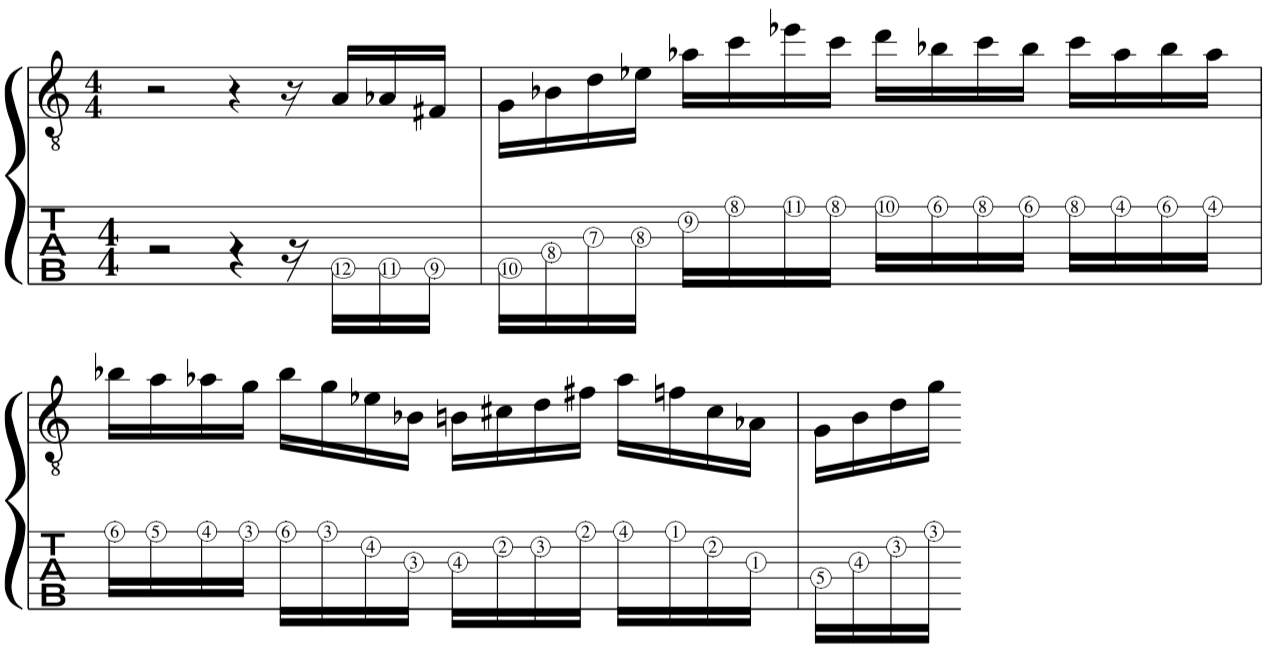
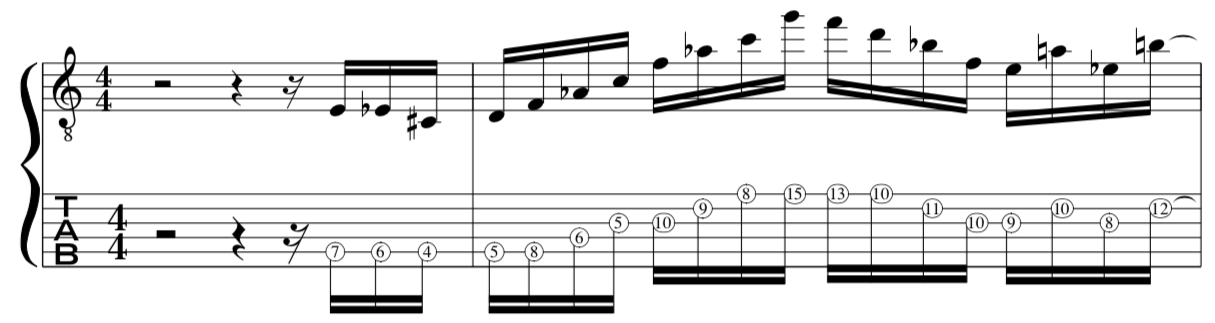
Below is an example employing target tones and arpeggios that weave through the harmonic texture of the Locrian V harmony.
Target Tones/Arpeggios through Locrian V Substitution
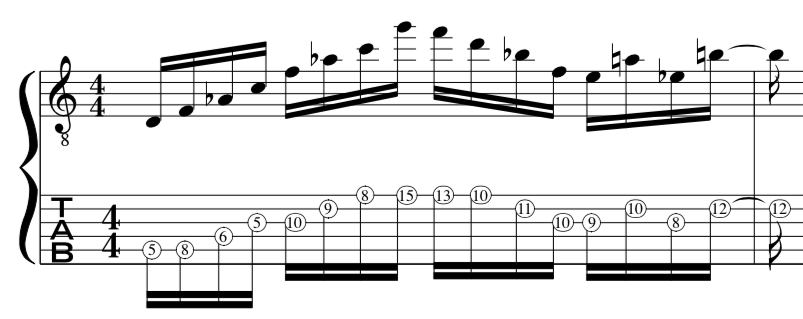
Next we have an Fm arpeggio [Chord ii of Eb] a Bb arpeggio and a couple of chromatic notes.
Fm9 Arpeggio idea [Locrian V]
This time we have our old friends target tones to add colour and rhythmic forward momentum to the Fm9 arpeggio line
Approach notes to Fm9 Arpeggio idea [Locrian V]
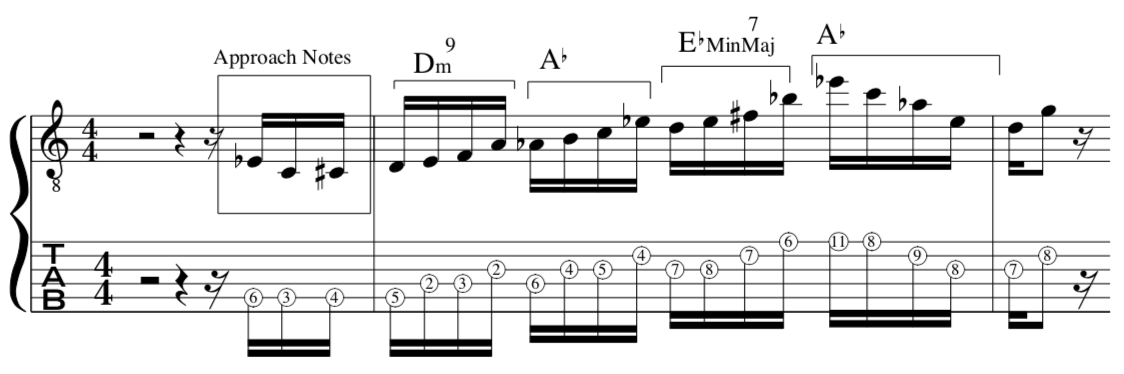
In this next example we employ superimposition for a chromatic triadic approach, that again weaves through the Locrian V chord.
Locrian V Triad Ideas
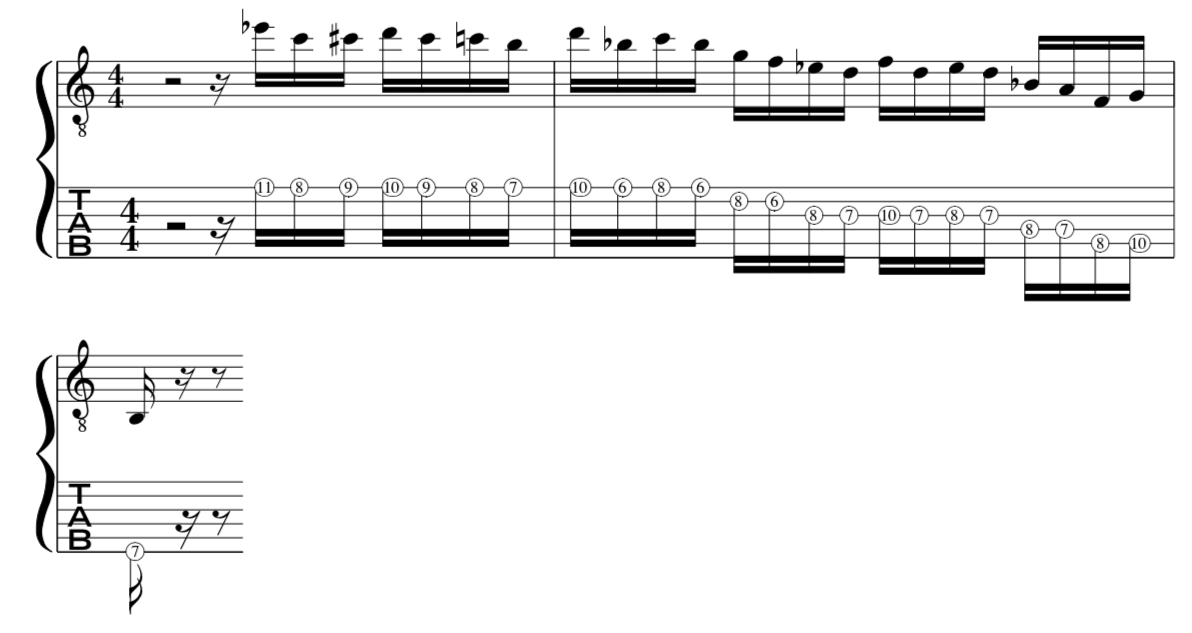
In this last example we exploit G Minor [chord iii of Eb ]
Locrian V Triad Ideas
If you found this post useful then please Subscribe to us on Youtube! Please Click Below!