
Please watch video above for detailed info:
Hi Guys,
Today, a quick look at how JohnMcLaughlin creates interesting time signatures with his rhythm guitar playing by employing the open E string as a pedal note.
This unique approach to rhythm guitar makes it easy to play in odd time signatures and create alternate time signatures.
Okay, so what is this E Pedal Note?
This is the open E string that is plucked as the time keeper.
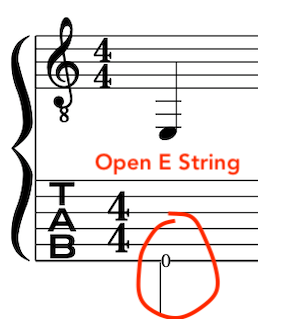
[It can also play rhythms and add rhythmic drive of its own as we will see later on].
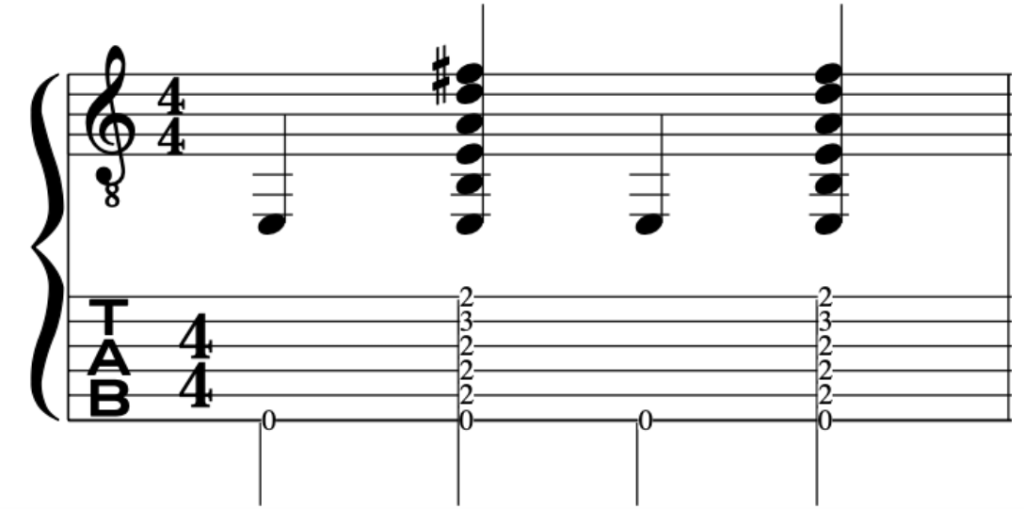
Let’s begin with simple quarter notes: Here, will will add chords on beats 2 and 4.
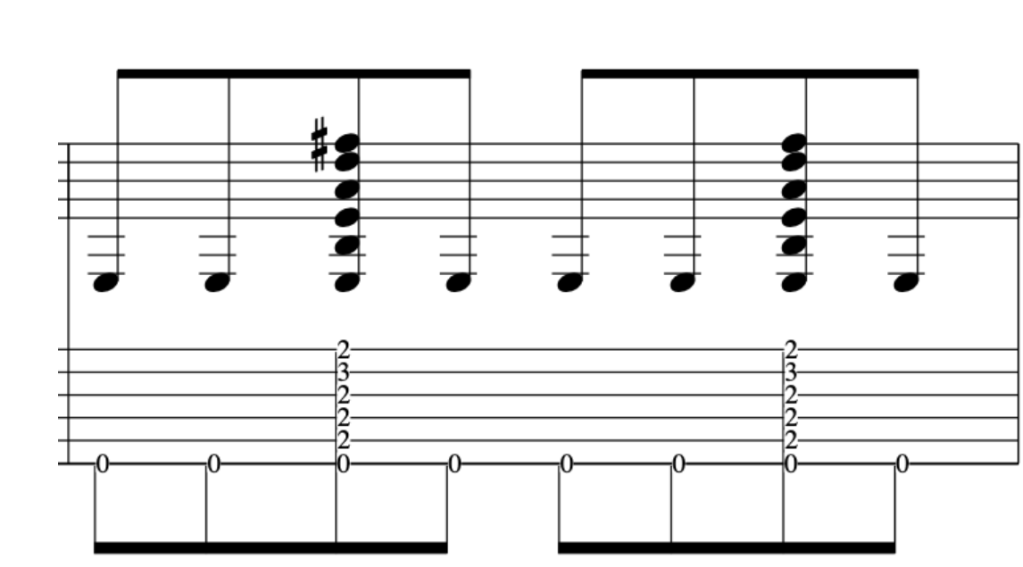
Now, we will do the same thing but with 8th notes as the pedal bass:
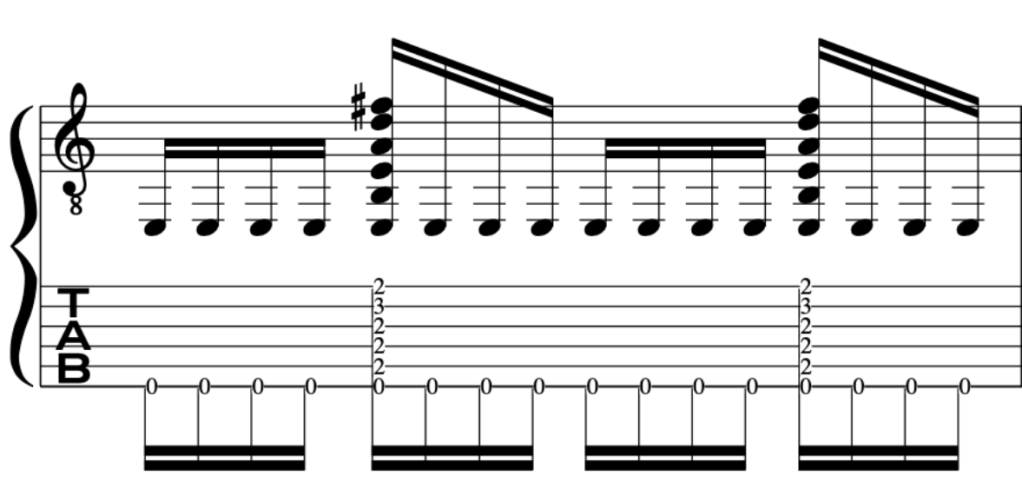
Let’s take this further with 16th notes creating that rhythmic drive:
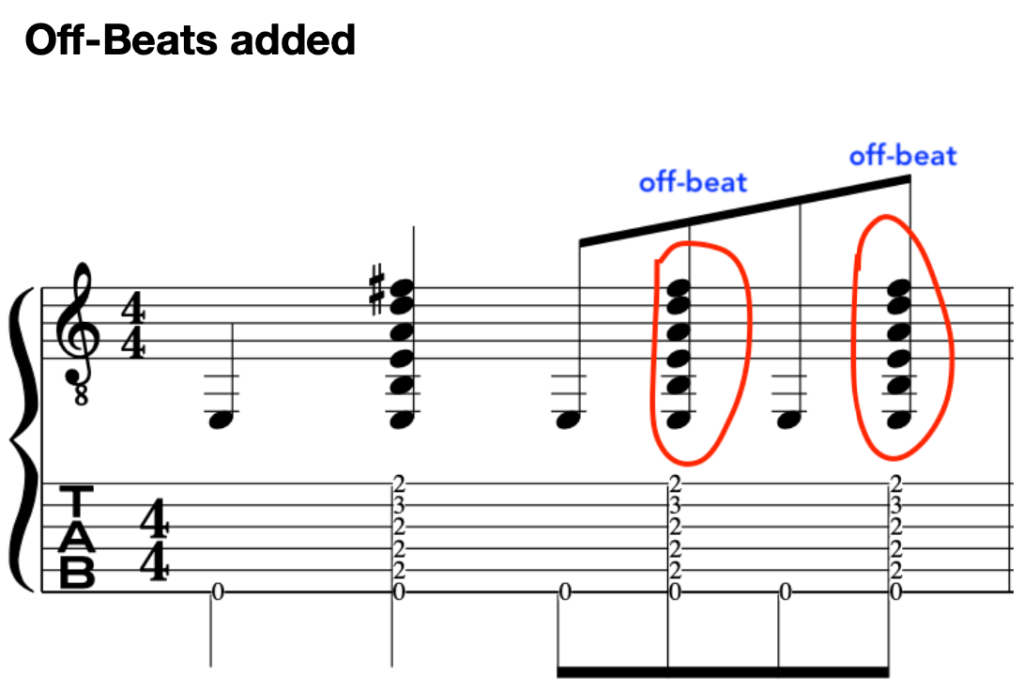
To create another useful effect we will play the chords on the off-beat:
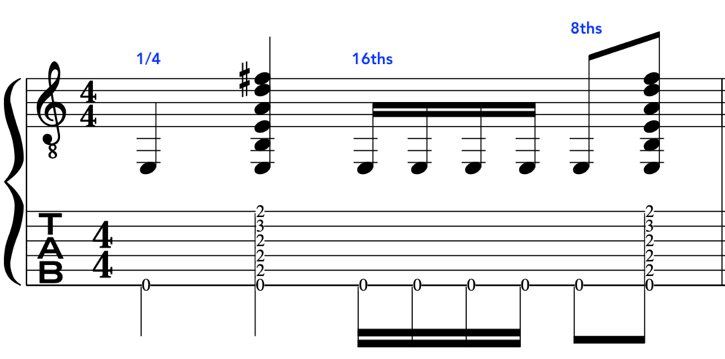
Now, let’s mix it all together by applying all of the 1/4 1/8th and 16th notes in the E pedal bass!
MANIPULATING THE 16 BEAT CYCLE:
This is really useful because we can play odd/ uncommon time signatures and also alternate time signatures.
Let’s start by exploiting Indian “‘Teen Taal” or a 16 beat cycle and then alter it.
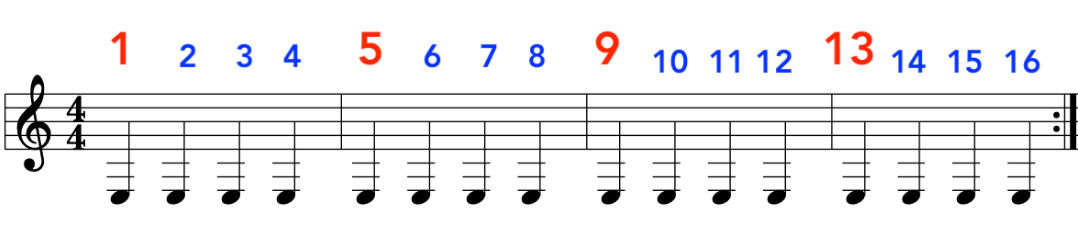
Above, we can see the 16 beat cycle with the accented red numbers/Beats 1 5 9 13
Now, we will count this and accent the numbers/beats 1 5 9 13 and repeat the cycle until it is effortless to do.
Next, we will break this cycle up, and only count to 11. From here, we will create a loop with our E pedal note holding time in quarter notes. So we have, 1 5 9 [11] REPEAT.
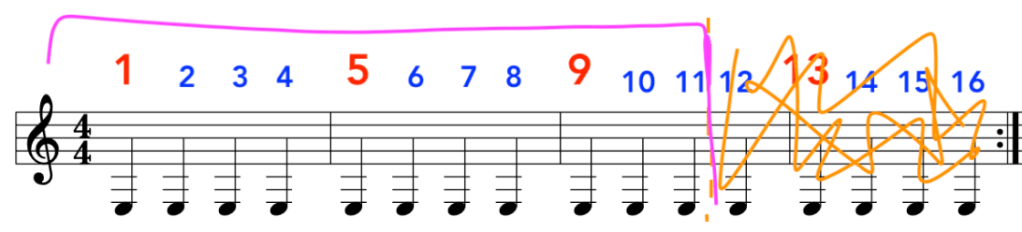
This in turn gives us an 11/4 time signature:
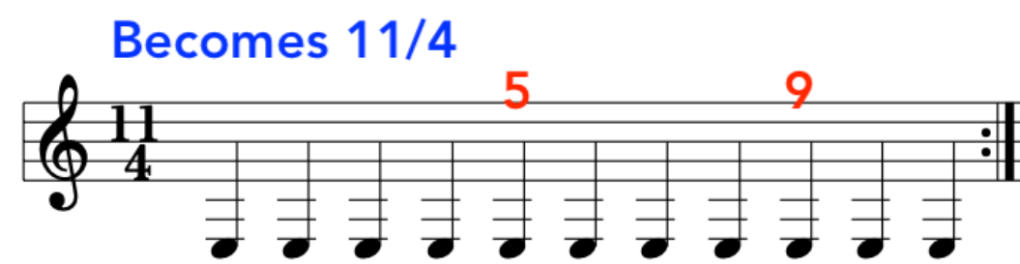
From this point on we can see how easy it is to create interesting odd time signatures and rhythmic patterns with the E pedal as our base and time keeper.
Our understanding of beats 5 and 9 tells us where we are in the bar or beat cycle and hence what might sound complex in theory is actually pretty easy to do and exploit.
ALTERNATE TIME SIGNATURES:
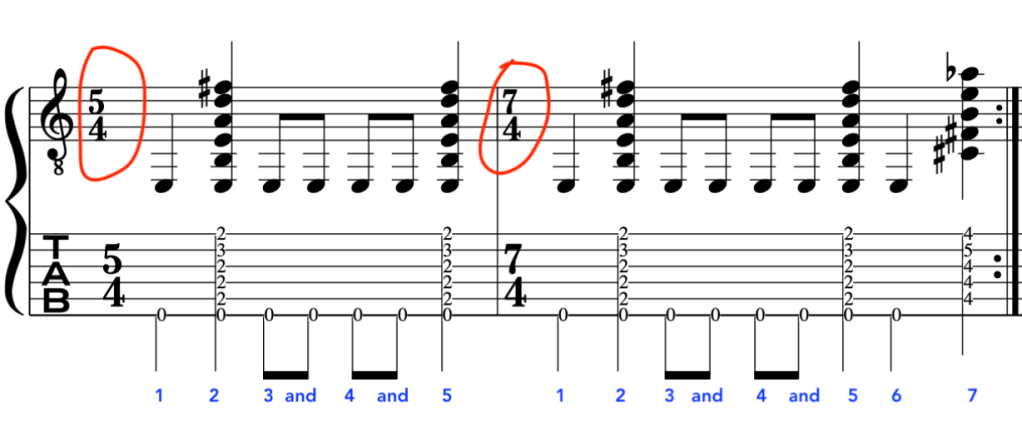
These, are the combing of two or more different time signatures.
Here we employ a bar of 5/4 and a bar of 7/4. We will highlight the E pedal bass note with some quarter and eighth notes for good measure.
CONCLUSION:
This was just a brief look at this concept, but, exploiting just one of these techniques can lead to lots of interesting and useful guitar rhythms and time signature manipulations.
The E Pedal note as the time keeper is so useful because it means that we are in control of the timing/signatures and can accent chords off of it.
Lastly, these techniques are incredible for composition/songwriting. We hear this a lot with John McLaughlin’s Shakti, especially the great albums from the 1970’s where the rhythm of the acoustic guitar is prominent.
FREE PDF DOWNLOAD:
If this blog was of use to you, then, please SUBSCRIBE to us on YOUTUBE, below, Thanks!