In this blog we will take a look at how to read the music lines and spaces of the treble clef.
In order to identify the notes on the 5 staff Lines we must first decide on an clef. In this case this will be the Treble Clef
The “TREBLE CLEF”
Now we can look/identify the names of the notes on the 5 lines of the treble clef.
How to read Music/Learning to read music Notation
Next, we will look at the notes in the 4 spaces of the staff lines: F A C E
How to read Music/Learning to read music Notation
If we look at the notation below we will see the C major scale and the names of the different degrees of the scale in order.
How to read Music/Learning to read music Notation
We can now add thirds to the scale notes and notate the “Triads” of the C major scale
How to read Music/Learning to read music Notation
Although we will look at this in another video/blog we can clearly see the time signature. This is 4/4, meaning that there are 4 Quarter note beats to the bar.
How to Read Music/Learn to read music
One last thing to take into consideration is Key Signature. Again we will look at these in detail in the next video, but it is a good idea to be aware of them. They move in the cycle of 5ths. So a fifth up from C major is G major. This has an F# as the key signature. This means that every F note in the key is sharpened. Unless of course there is an natural sign.
Learn to read music/How to read music
So the key signature is for us to acknowledge that specific notes will be sharpened or flattened as we play our way through the music.
This is just the basics and beginnings for learning to notate, create and read the treble clef.
If this Blog was of use to you then please Subscribe to us on Youtube below, Thanks1
SUPER-ULTRA-HYPER-MEGA-META-meets 12 tone and polychords
Going forward with our Jacob Collier SUPER-ULTRA-HYPER-MEGA-META blogs/pages it is a good idea to look at other relevant concepts within the ideal of extension. In this blog we will look at how 12 tone, 23rd chords, tertian harmony and polytonality play a fascinating part.
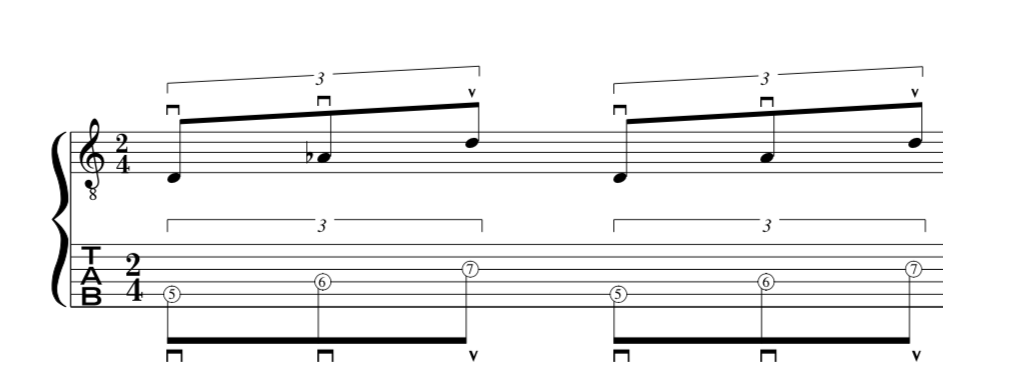
We will start with the #15 Arpeggio [Superimposition as used by Lennie Tristano]. Below you will see this in action with a Cma7 and a Dmaj7 arpeggio combined. This creates a sharpened 15th [or Augmented 15th arpeggio].
SUPER-ULTRA-HYPER-MEGA-META-meets 12 tone and polychords
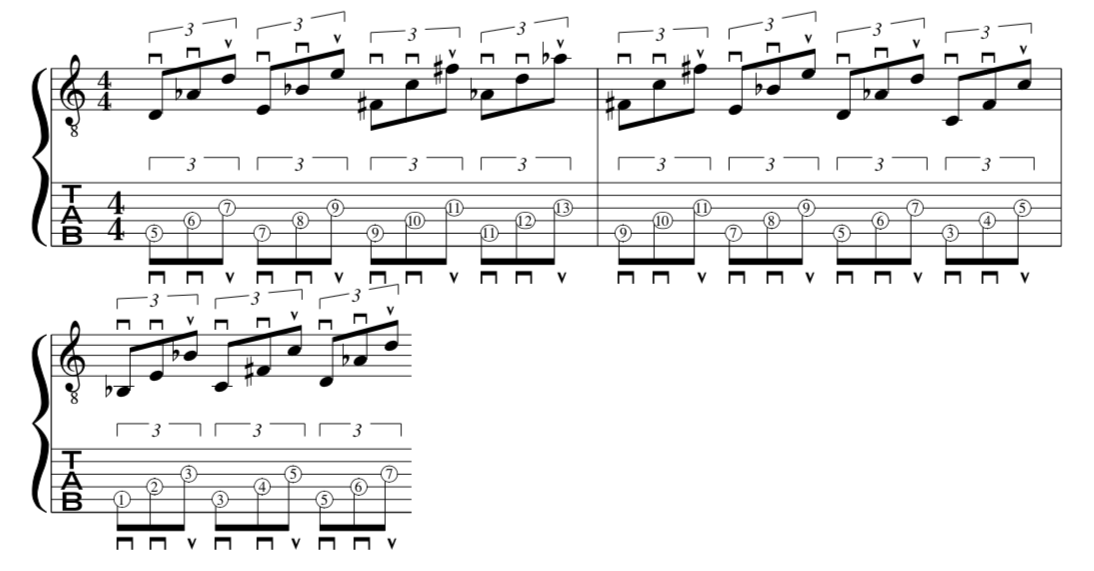
Below, you will see the full extension of this with a full 23rd chord [The largest chord in music]. This can be viewed as polytonal, polychordal, 12 tone row, or “Tertian” harmony as a full 23rd chord.
SUPER-ULTRA-HYPER-MEGA-META-meets 12 tone and polychords
All 12 notes of the chromatic scale are used, so, the following occurs [in this case in 3rds as Tertian harmony]
1 3 5 7 9 11 13 15 17 19 21 23
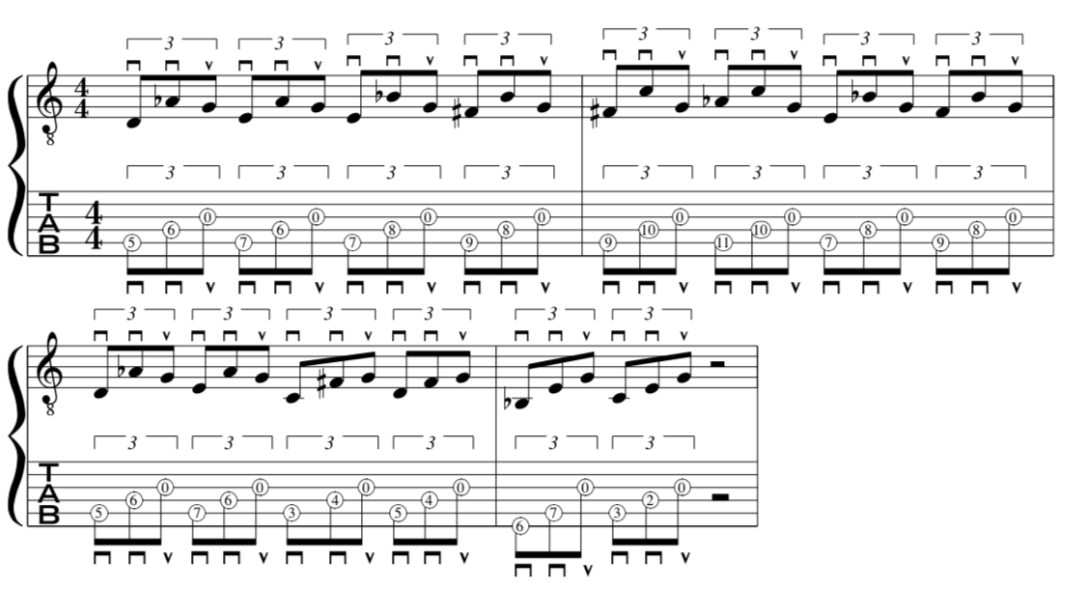
In terms of improvisation it can be easier on the guitar to break up 4×3 semiquaver tetrachord lines into two HEXATONIC [2×6] lines as shown below.
SUPER-ULTRA-HYPER-MEGA-META-meets 12 tone and polychords
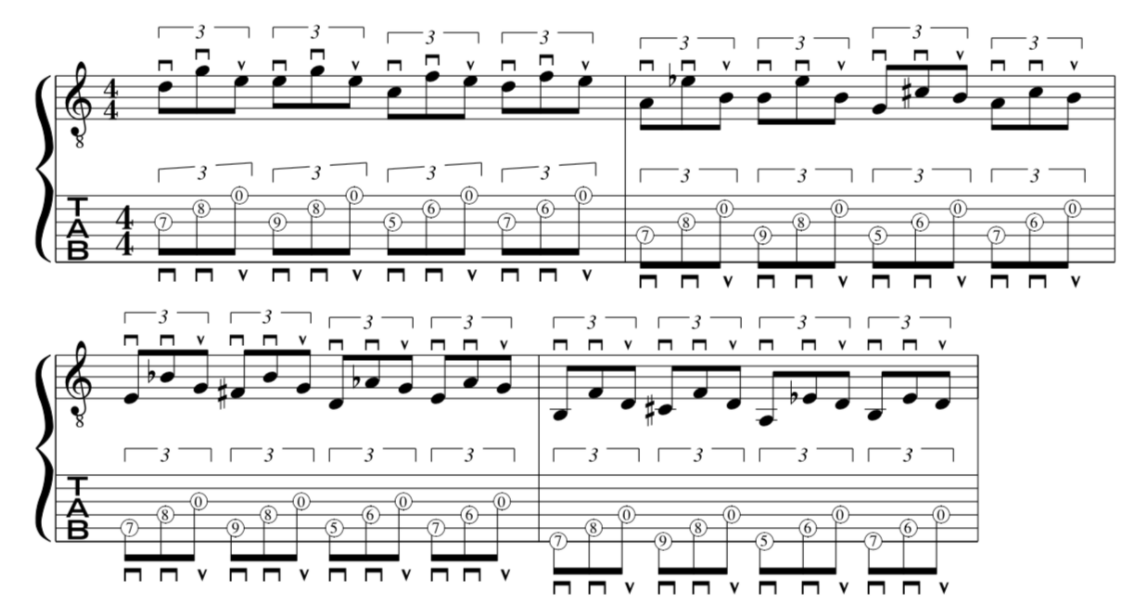
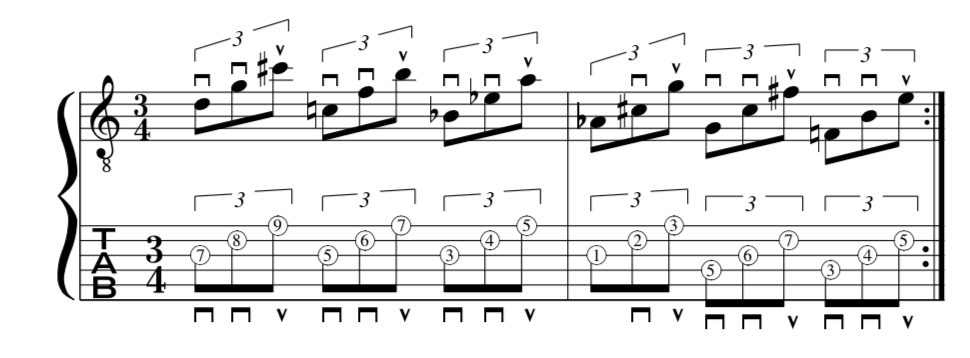
Below we have the employment of triplets and the commonly used 4 note groupings of tetrachords.
SUPER-ULTRA-HYPER-MEGA-META-meets 12 tone and polychords
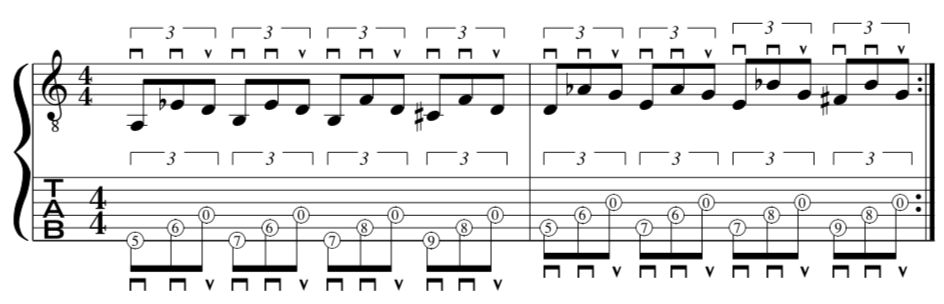
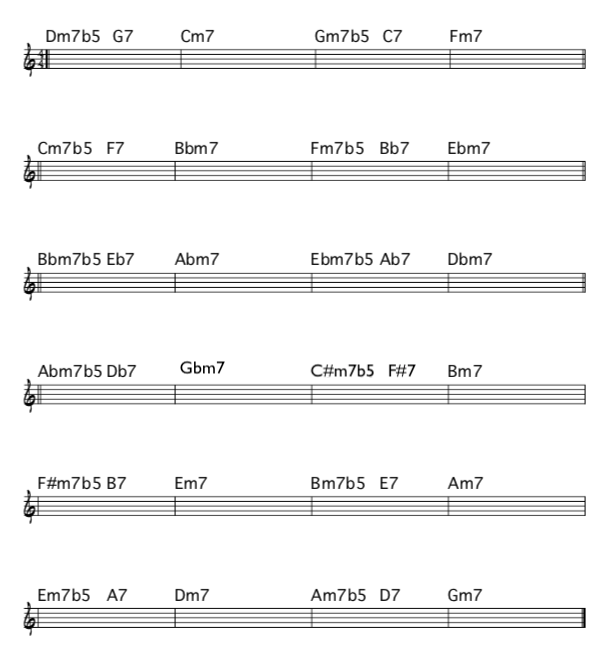
Below is an example of employing the jazz improvisation concept of “Chord Pairs”
SUPER-ULTRA-HYPER-MEGA-META-meets 12 tone and polychords chord pairs