Exploring Pat Martino’s 12 Chromatic Forms for Guitar:

Hi Guys,

Today, a look at the amazing 12 chromatic forms for guitar by jazz legend and music theoretician extrodinaire Pat Martino!

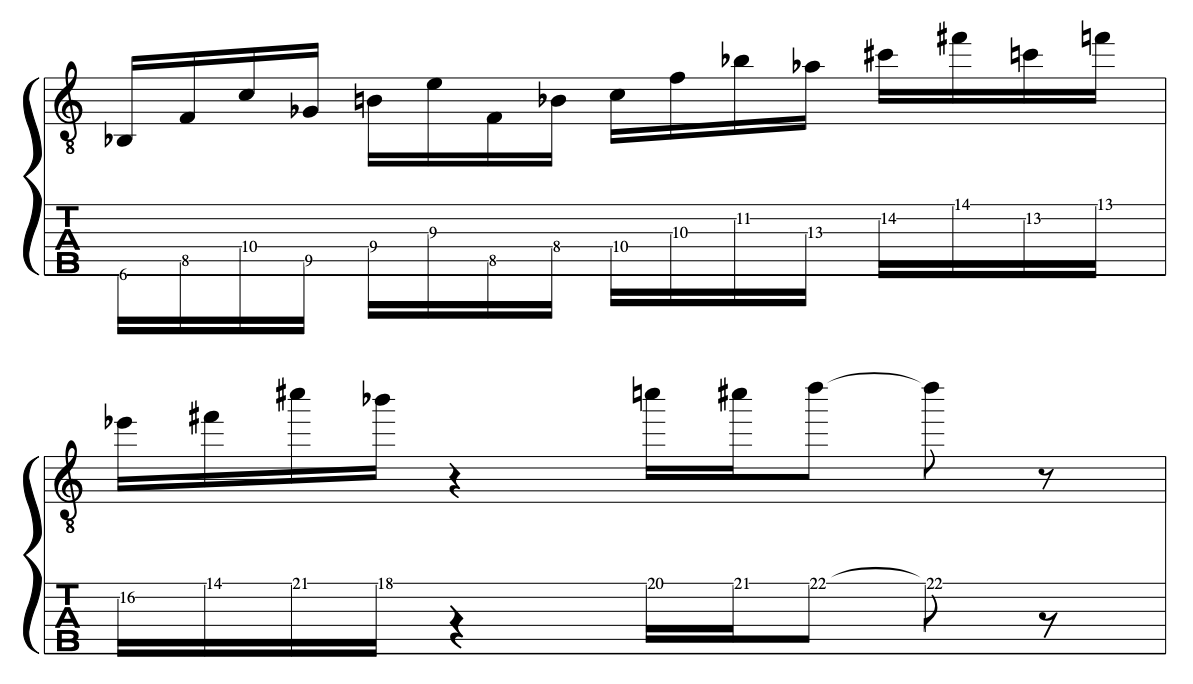
These 12 forms for the chromatic scale were written and I believe taught by Pat Martino in the 70’s and 80’s. They are a unique idea that connect through the concept of octave displacement.

Although they can be employed over dominant alt chords for improv [As covered previously https://jazzimproviser.com/2024/05/21/pat-martino-intervallic-studies-un-published-book-lesson/] I am going to dig at little bit deeper and create a compositional 12 tone approach where extra fresh material can be created from any one form.

But, to begin with:

12-chromatic-forms-for-the-guitar-pat-martino

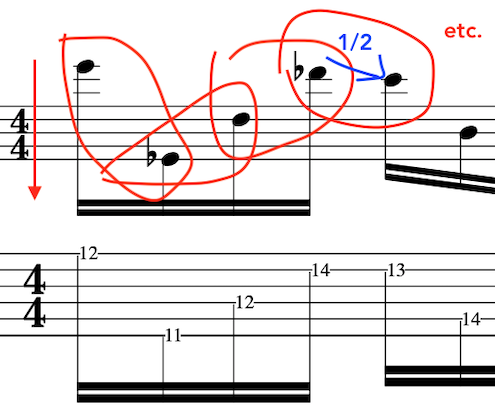
Notice: The semitones and octave displacement: E to Eb to D to Db [Db to C semitone] etc.
12-chromatic-forms-for-the-guitar-pat-martino

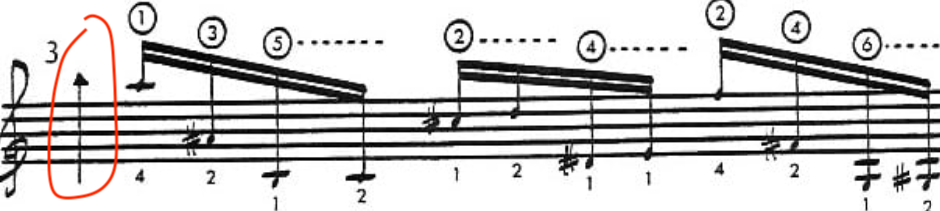
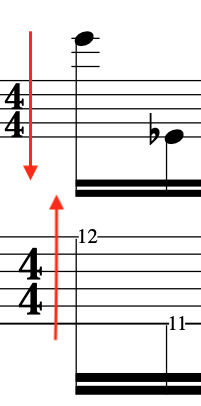
The arrow pointing up or down tells us whether it is an ascending or descending chromatic scale:
12-chromatic-forms-for-the-guitar-pat-martino

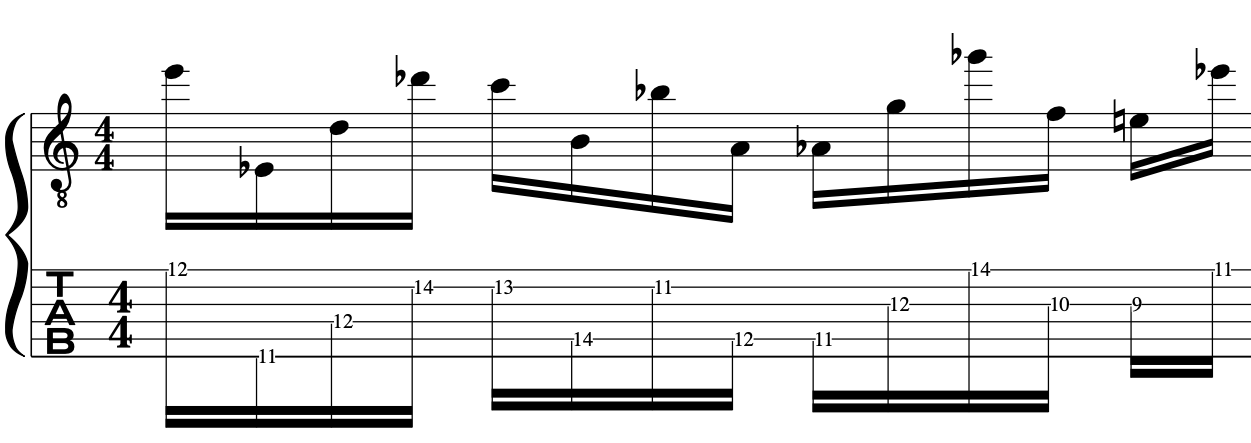
So, for instance “Form I” without octave displacement is:
With octave displacement is:
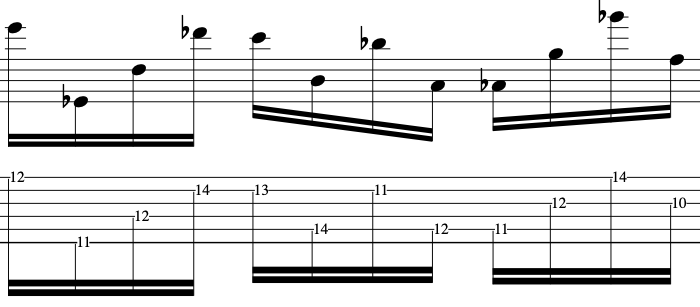
12-chromatic-forms-for-the-guitar-pat-martino

Here, is Form I written by Pat’s own hand showing his fingerings and string preference.
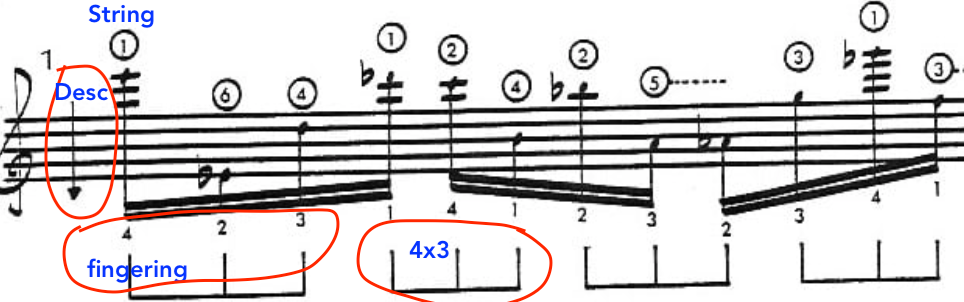
12-chromatic-forms-for-the-guitar-pat-martino

Now, let’s add the second form for guitar and notice Pat’s connection for the two: Eb to E

Also, notice that Form I and II have the same notes but mostly in different octaves.
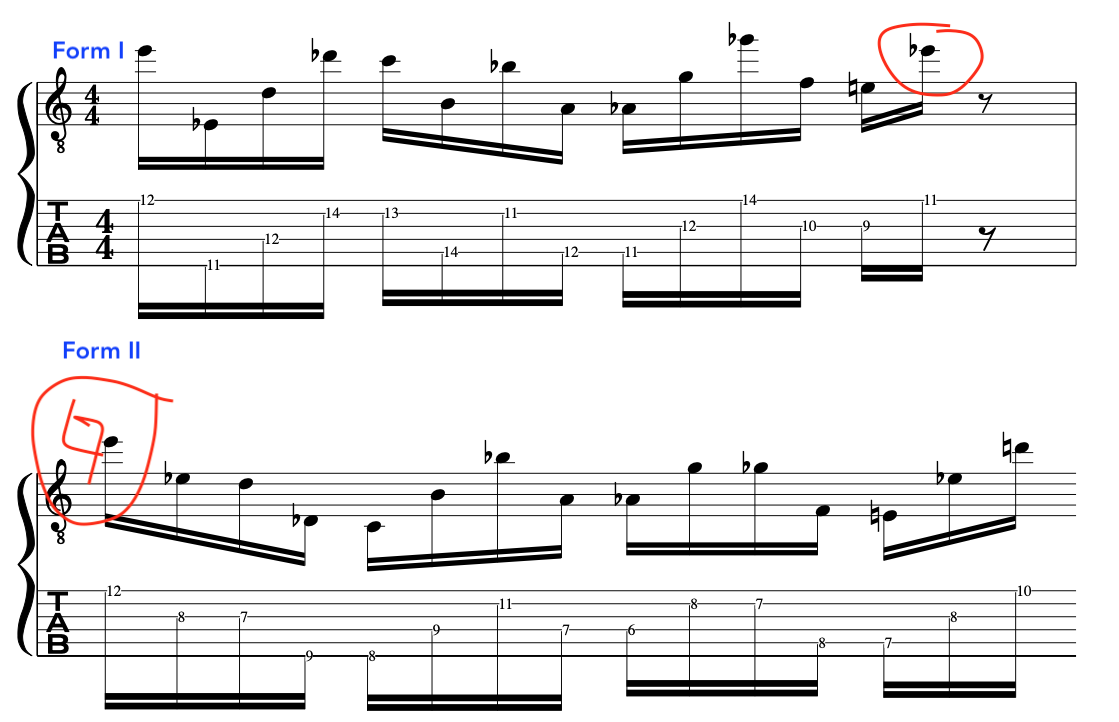
12-chromatic-forms-for-the-guitar-pat-martino

Lastly, if we look at form III we will see the arrow pointing upwards showing that it is an Ascending chromatic scale:
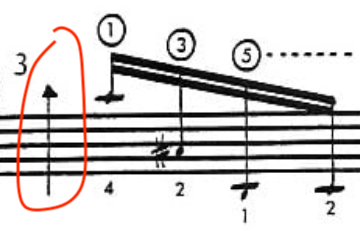
12-chromatic-forms-for-the-guitar-pat-martino-explained

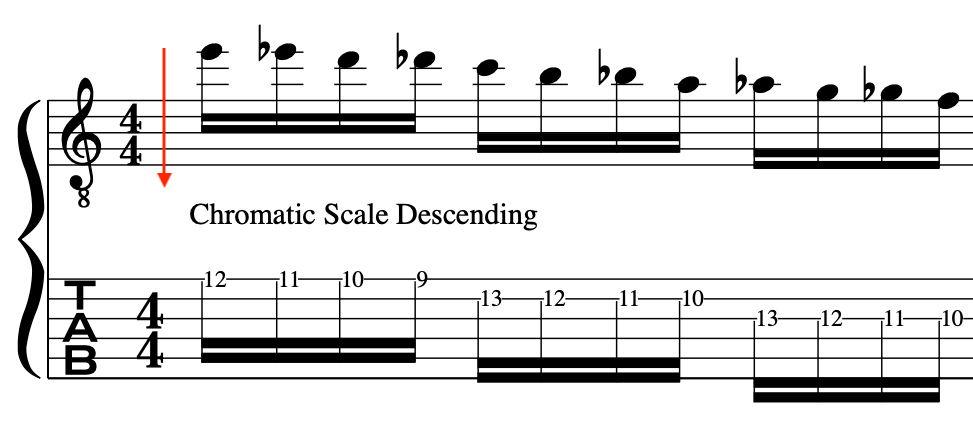
Here, is the basic ascending chromatic scale:
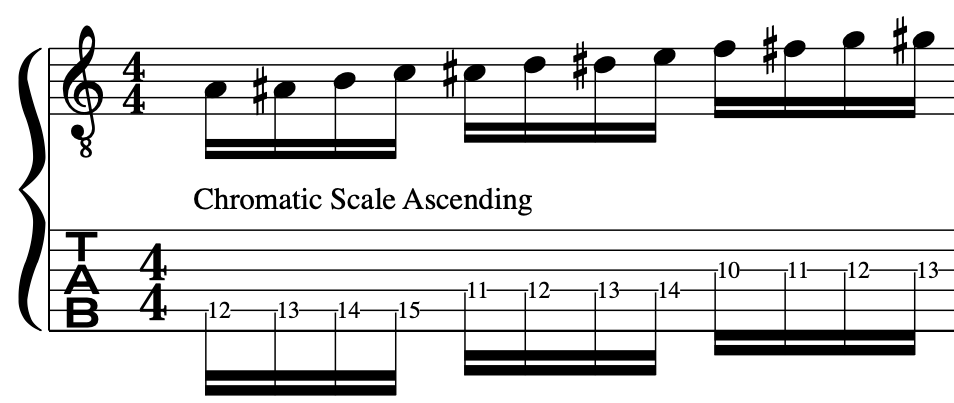
chromatic-scale-ascending

Here, it is with octave displacement

12-chromatic-forms-for-the-guitar-pat-martino

For all of the other chromatic forms please go to the downloadable Pdf at the bottom of this page for a free download of Pat’s actual notations.

Due to being the chromatic scale and 12 forms we can manipulate this by taking a 12 tone approach:

So let’s take the first Form and make 3 sets of 4 note chords from it.
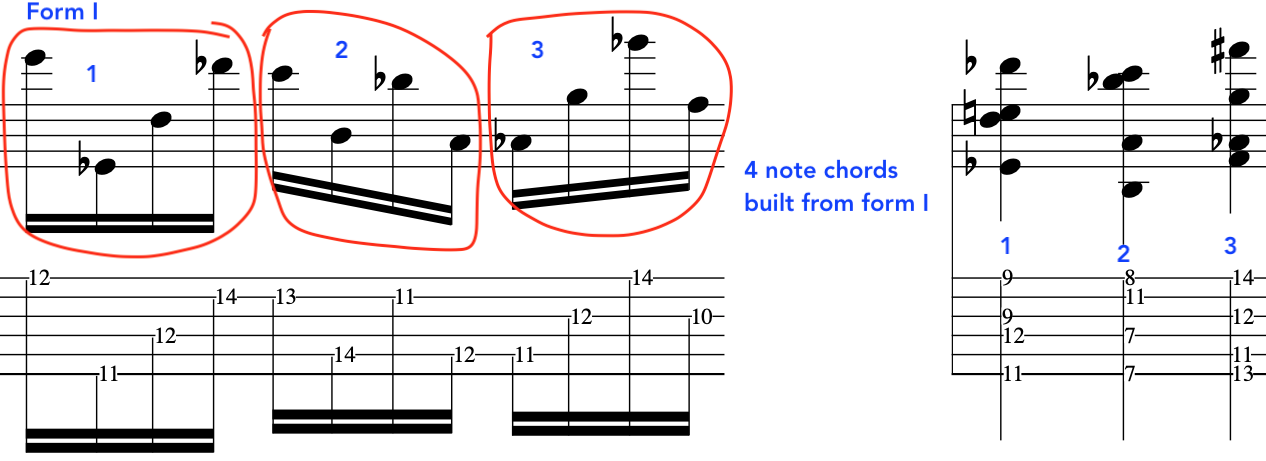
pat-martino-12-tone-jazz-guitar-lesson-example

Here, we can see and hear how easy it is to create some very original and unique chords from these forms:
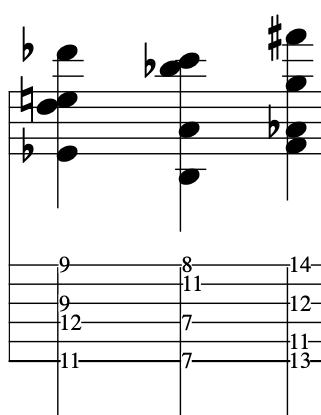
12-chromatic-forms-pat-martino-guitar-chords-lesson

We can now make some lovely voicing’s and chords from the following, so, let’s structure some sophisticated composition.

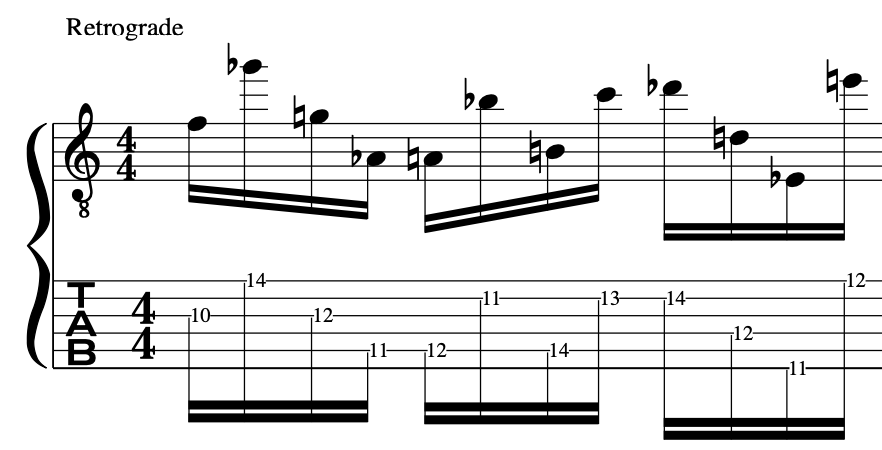
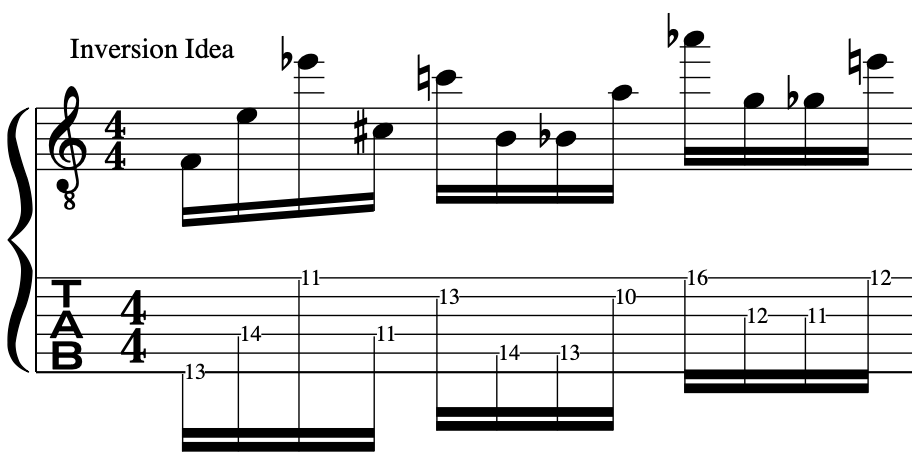
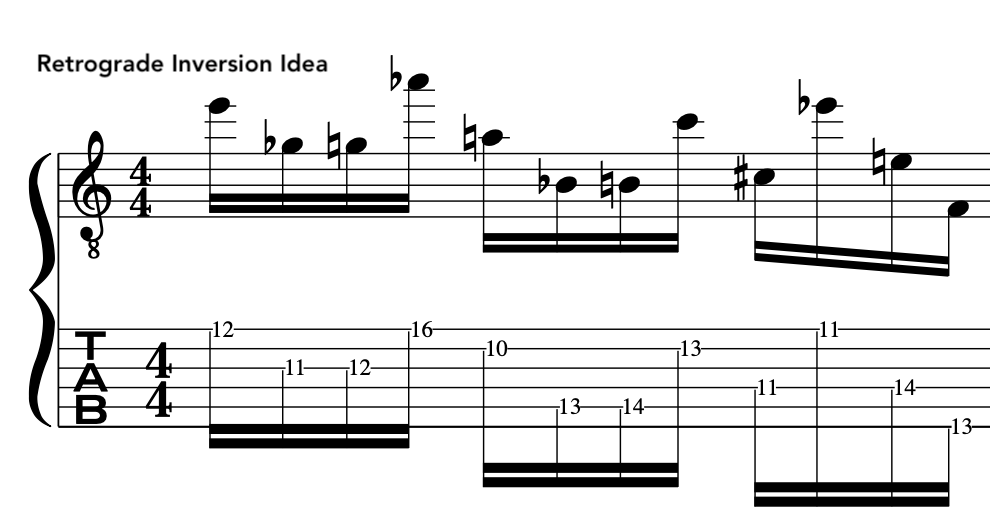
We will employ, “Retrograde” and “Inversion” and then “Retrograde Inversion”

12-tone-pat-martino-jazz-guitar

12-tone-pat-martino-jazz-guitar

12-tone-pat-martino-jazz-guitar

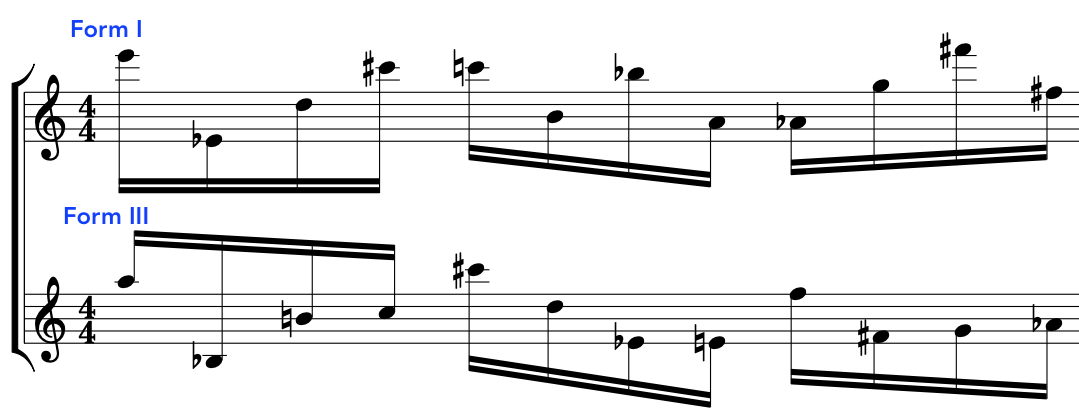
In this case it is Form I and III:

pat-martino-12-tone-guitar-jazz

These 12 Forms offer brilliant possibilities for string writing or 20C classical orchestral style composing.

The octave displacement and the flow of semitones creates a fluid and quite natural way of performing on stringed instruments wether it be the guitar, violin, cello, double bass etc.

As guitar players this gives us some great possibilities for altered dominant lines [https://jazzimproviser.com/2024/05/21/pat-martino-intervallic-studies-un-published-book-lesson/] and original chord voicings. These are also great as rut busters too.

This blog has just touched on the subject but as you can see the possibilities for the 12 forms gives way to unlimited fresh new music, and for the imaginiative and creative guitarist/composer the possibilities are endless.

Below is a free pdf download of all of Pat’s 12 chromatic forms for guitar written out by Pat himself.

Master John McLaughlin’s Guitar Chord Techniques:

Hi Guys,

Today, a look at the late 60’s early 70’s John McLaughlin guitar chord/riff style of “My goals beyond” and “Extrapolation”.

This is a great compositional vamp style that really brings out the resonance of the guitar. It has a sort of loose swing feel to it, that sort of gritty London soho jazz sound of the time.

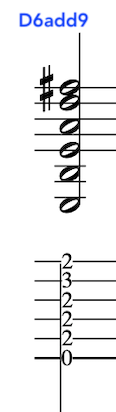
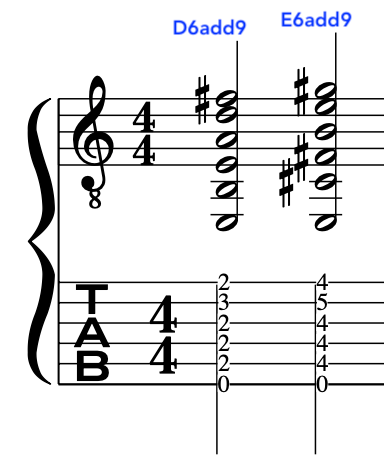
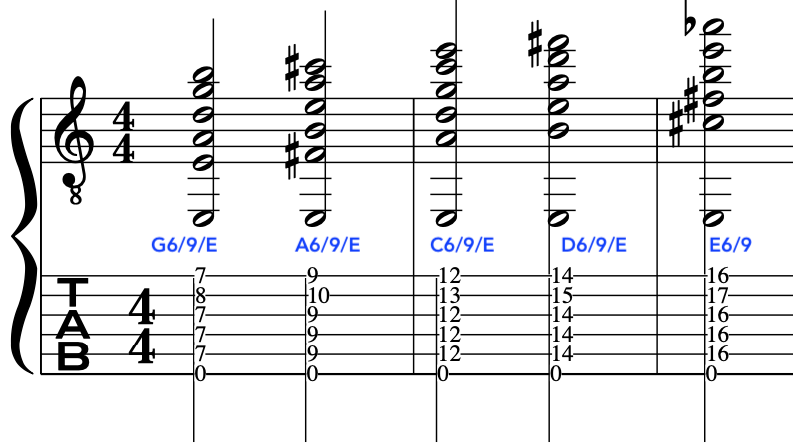
The vamp is based around the D6add9 guitar chord shape, with the open E note as a pedal.

john-mclaughlin-chords-lesson

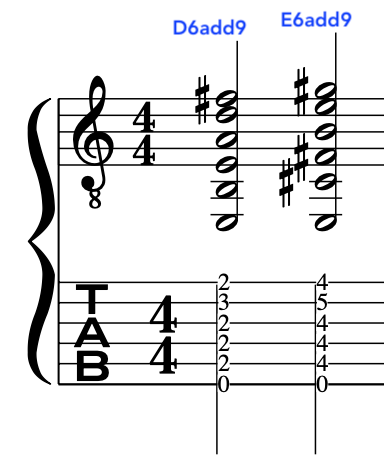
To begin with, we will play the D6add9 chord and then move it up a tone to E6add9 and then back again to D6add9. [see video above]

john-mclaughlin-chords-lesson

As in the video above you will hear/see that I am syncopating/weaving in and out of the bass notes displayed below plucked on the low E string.

john-mclaughlin-bass-lesson

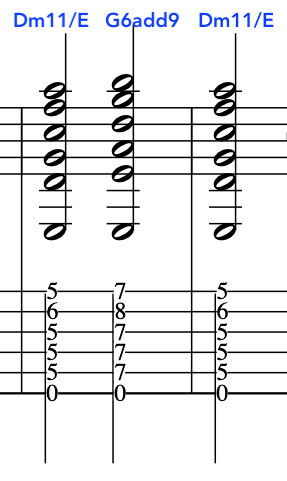
To create colour and contrast we then change the chord in the third bar by moving the shape up to create Dm11/E to G6add9 and back to Dm11/E.

john-mclaughlin-chords-lesson

We then move back to D6add9 and E6add9:

john-mclaughlin-chords-lesson

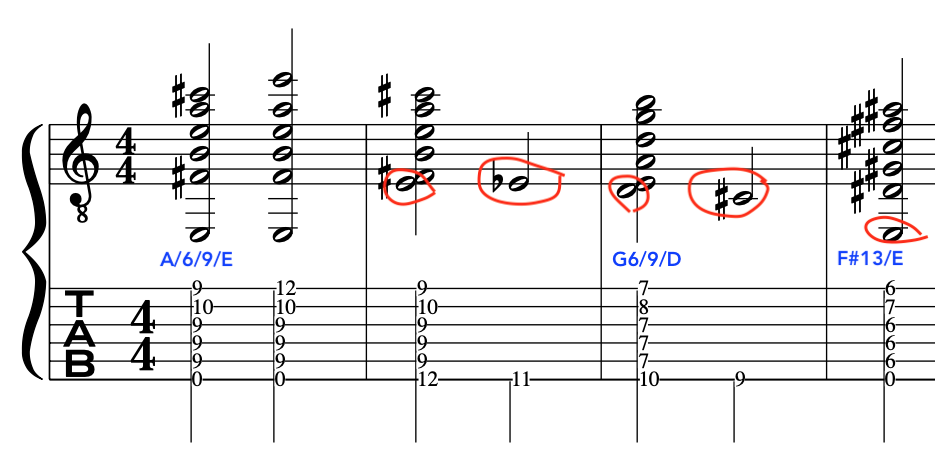
From here, we move the shape up to A6/9/E to G6/9/D and finally resolving to F#13/E.

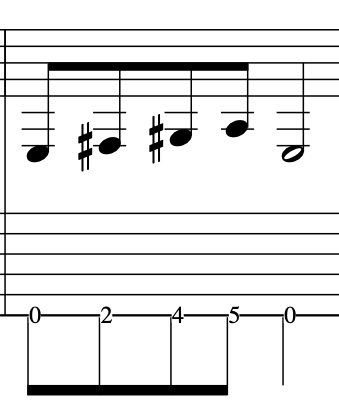
The Bass moves down in half steps, E Eb D C#

john-mclaughlin-chords-lesson

We repeat the first part and then end with the chord shape on G A C D E D: strummed over the E pedal bass.

john-mclaughlin-chords-lesson

To conclude, this was just a quick look into strumming extended chords in and out of a melodic bass line. Simple as this is it works really well for creating compositions, wether in a blues form or a verse/chorus structure.

This style excels on the guitar because the bass can be doubled in unison with another instrument, [for example, piano or sax or double bass].

Lastly, the chord shape of the added 6th and 9th [as well as the 11th] resonate sympathetically on the guitar both as a strummed attack or mellowly plucked with the fingers.

FREE PDF DOWNLOAD:

John Coltrane and McCoy Tyner Style Quartal Guitar Line | Jazz Improvisation Lesson

Hi Guys,

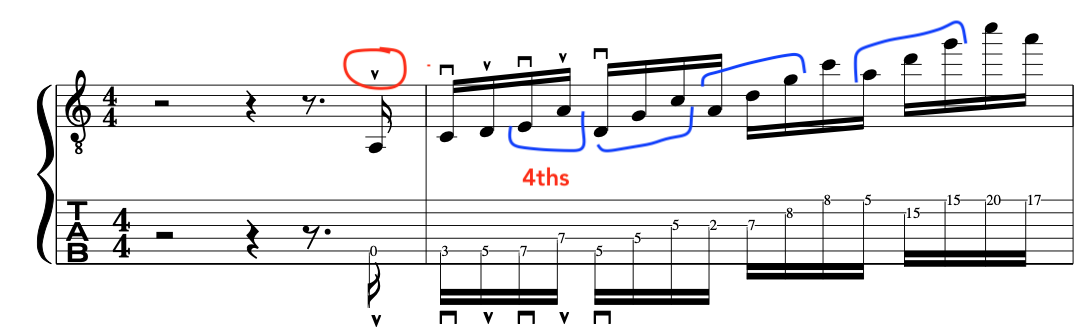
Today, a short John Coltrane/McCoy Tyner Style unison jazz quartal guitar line/ jazz head/riff.

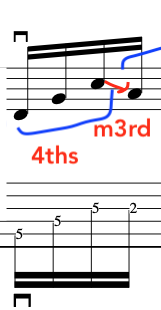
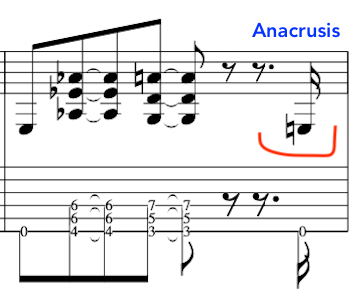
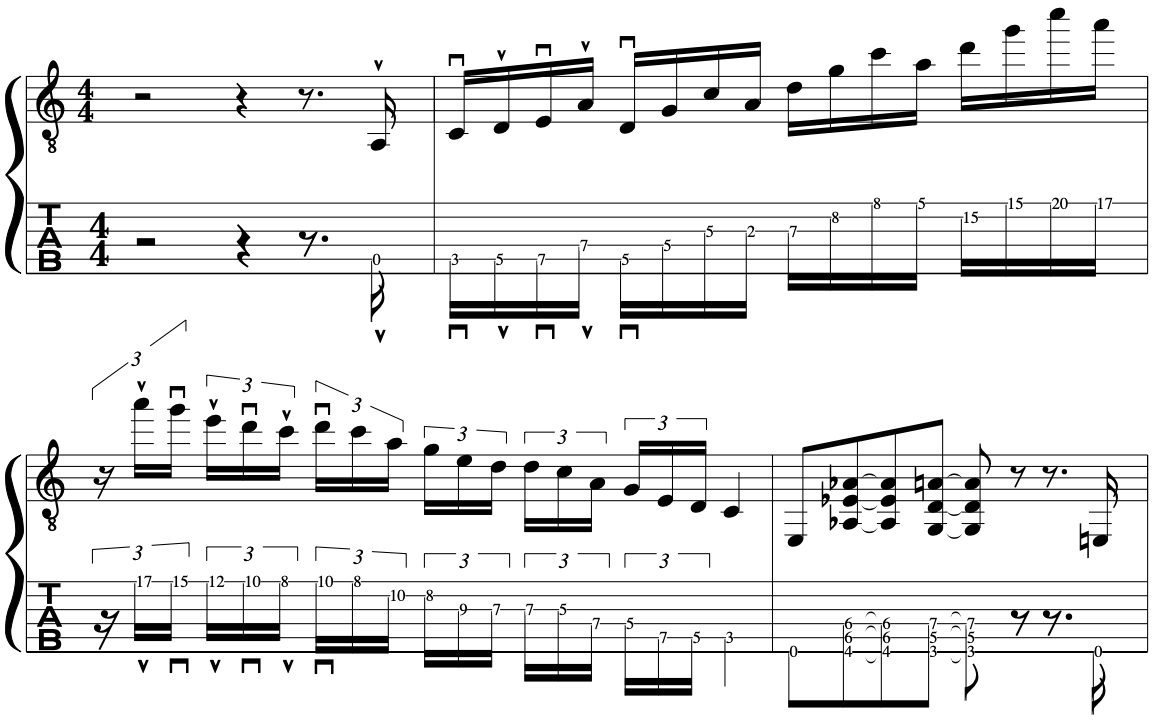
This line starts with an anacrusis/upbeat. From here we employ a short pentatonic scale phrase that leads to quartal harmony that resolves down a minor 3rd interval.

I am starting this on an upstroke with strict alternate picking guitar technique.

coltrane-jazz-guitar-lick-lesson

The key to the first phrase is that it plays upon this “Motif” as it gets imitated up the octaves:

coltrane-jazz-guitar-lick-lesson-example

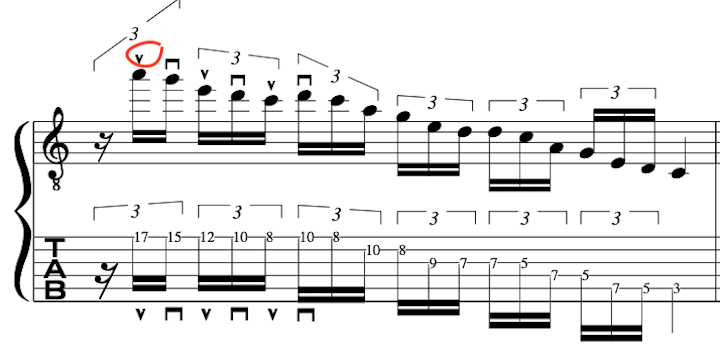
From here, we create contrast by descending with a pentatonic scale and push hard on a sextuplets feel for rhythmic colour and drive.

coltrane-jazz-guitar-lick-lesson

To complete the first part of this phrase, we round it off with two chords of Ab and G9

coltrane-jazz-guitar-lick-lesson

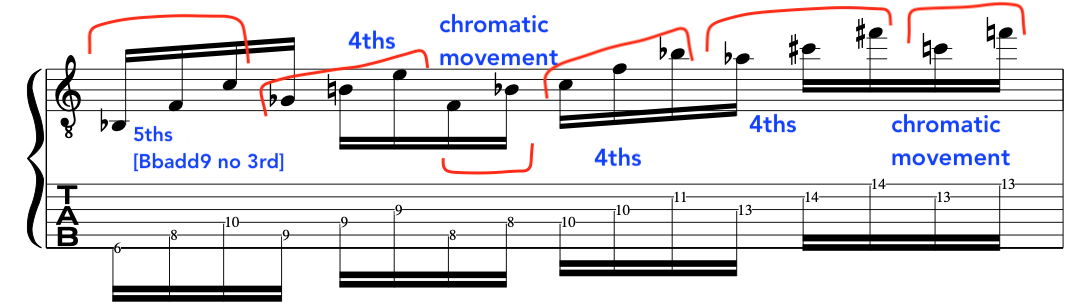
We, will now ascend and frame some interesting intervallic sounds: Opening with 5ths to 4ths with chromatic movement:

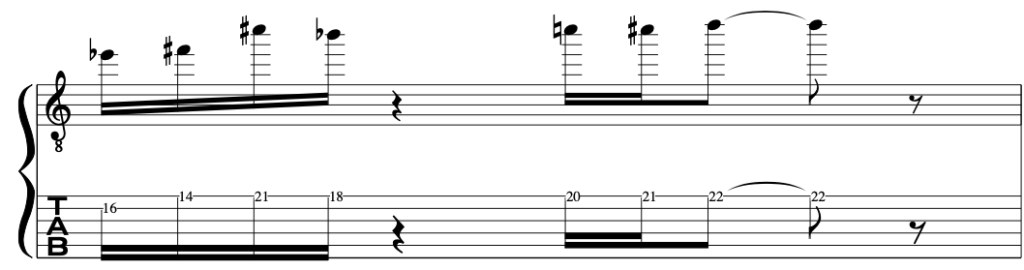
Finally, we will play the motif up a semitone one more time and ascend up in semitones to complete the phrase:

coltrane-jazz-guitar-lick-lesson

coltrane-jazz-guitar-lick-lesson

This was just a brief look at what can be done with this modal pentatonic quartal jazz style.

It’s a style very well suited to the guitar in terms of fretting and picking and it’s amazing what interesting music you can easily make from this even just by means of imitation.