
Please watch video above for detailed info:
Hi Guys,
Today, a look at the unique scale formations/superimpositions of Dennis Sandole.
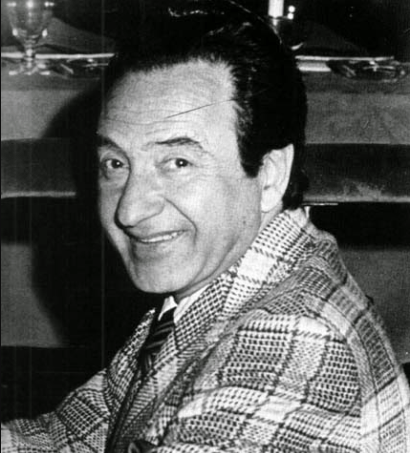
Dennis Sandole
We will take three examples from a handwritten page of polytonal scales by Dennis Sandole and apply them to the guitar:
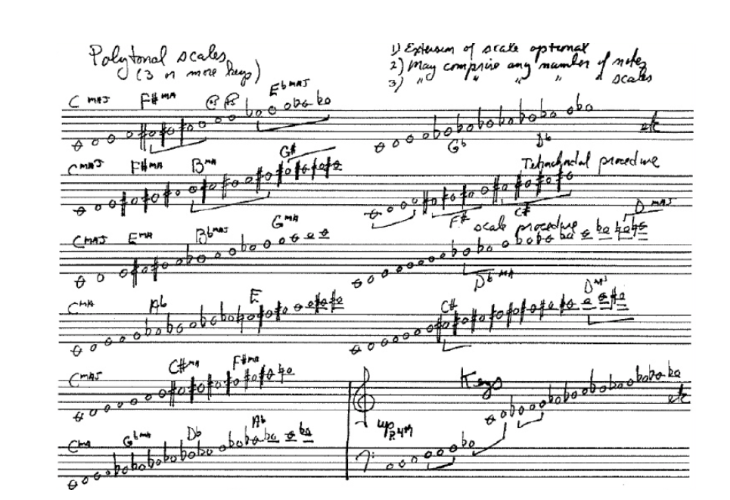
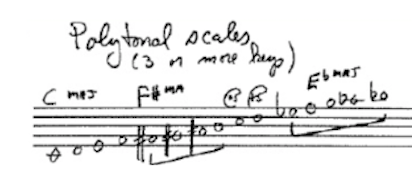
SCALE 1:
Dennis Sandole’s Handwritten Polytonal Scale:
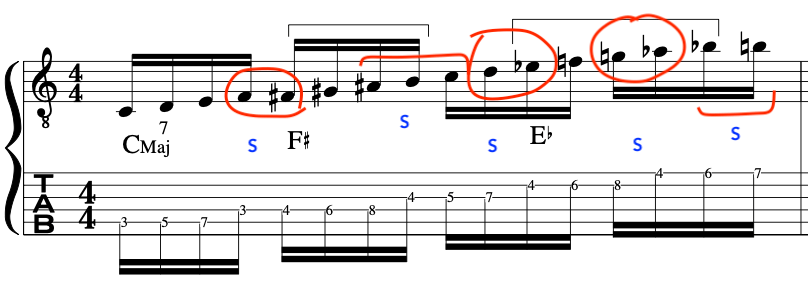
Same scale applied to the Guitar:
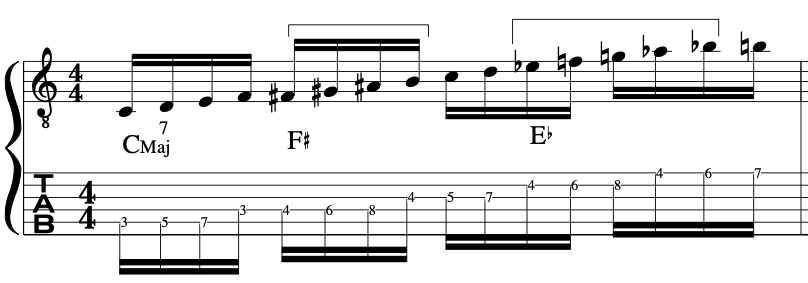
In this example notice how the different major scales connect via semitones creating a unique chromatic connection.
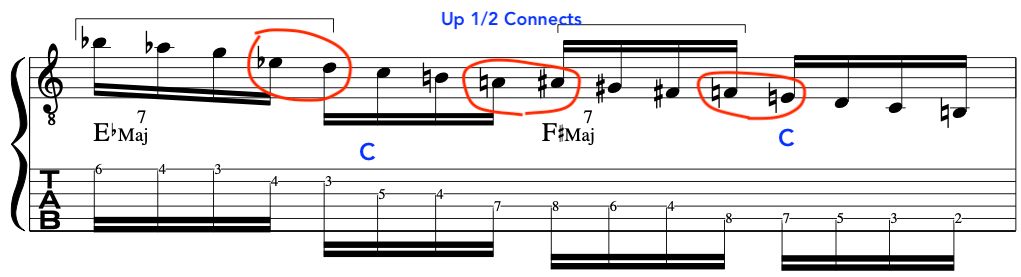
Now, let’s apply a descending version with a more pentatonic/fingering guitar format:
Again, notice the half step chromatic connections that make this run smoothly.
SCALE 2:
Dennis Sandole’s Handwritten Polytonal Scale:
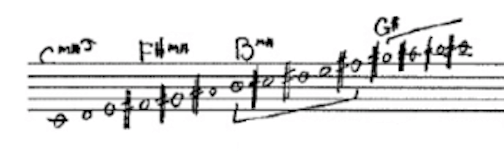
Same scale applied to the Guitar:
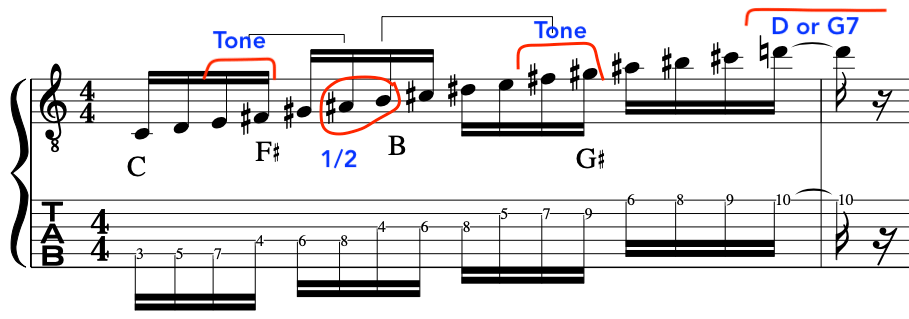
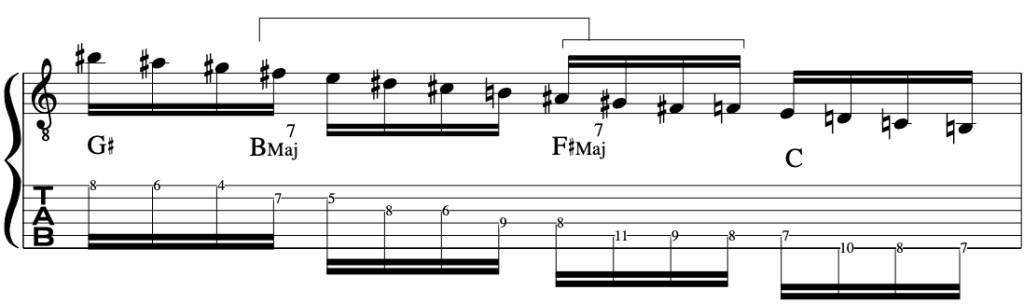
Here, we have whole tone connections as well as half step connections creating a colourful set of sounds:
Let’s now create a descending version:
SCALE 3:
Dennis Sandole’s Handwritten Polytonal Scale:
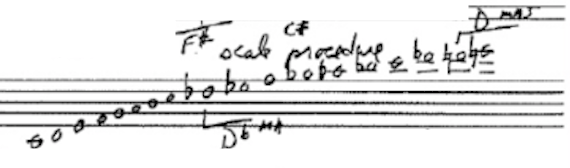
Same scale applied to the Guitar:
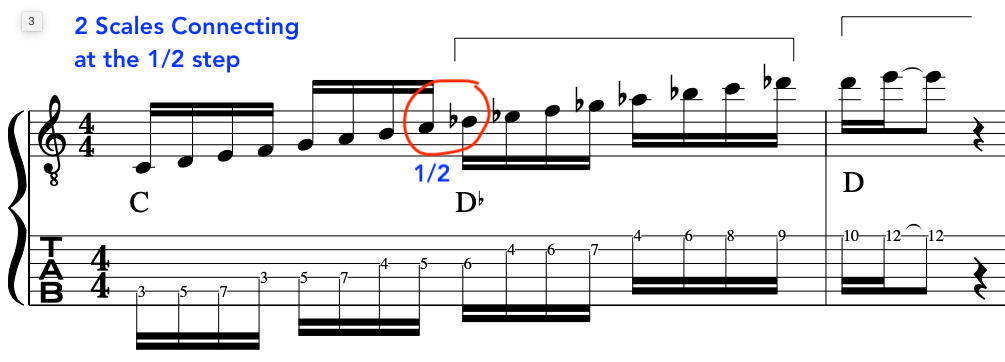
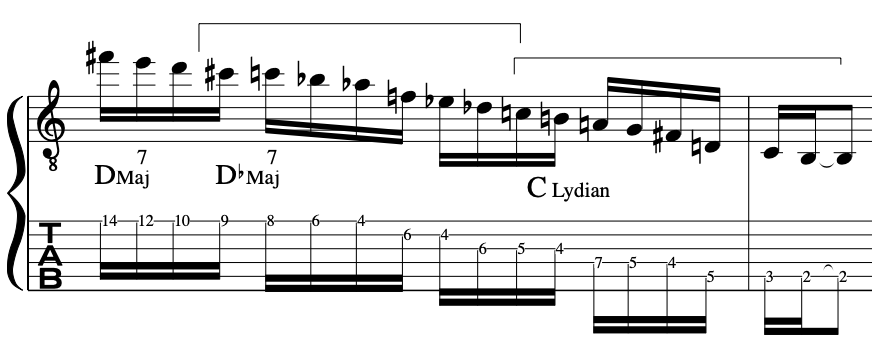
In this example we have a full C major scale connecting to a full Db major scale via the halfstep of C to Db. And finally, up another half step to the note D.
Finally, let’s descend:
Arpeggio/Motifs from Polytonal Scales:
There are also many concepts that you can make out of these polytonal scales:
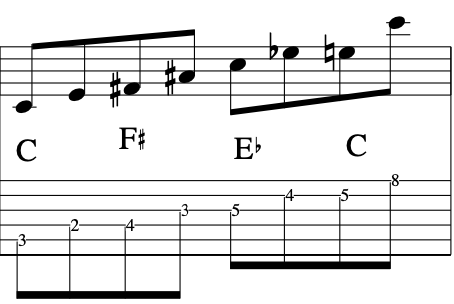
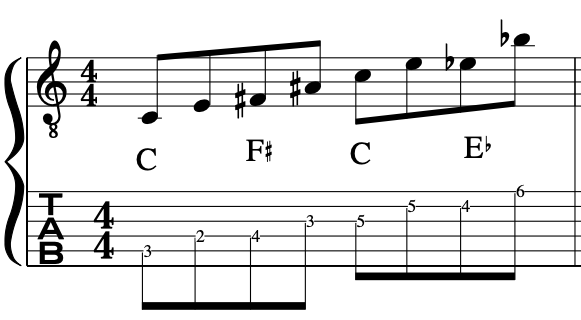
For instance, we can imply triads/arpeggios with dyads and create little licks, motifs and hook lines.
EXAMPLE:
Slight Var:
IN CONCLUSION
This was just a very brief look at Dennis Sandole’s concept of polytonal scales.
In terms of the guitar these are very useful for creating a mixed harmonic palette and creating seamless lines where any scale can connect to any other scale regardless of non diatonicism and ambiguity.
FREE PDF DOWNLOAD:
If this lesson was of use to you then please Subscribe to us on Youtube below, Thanks,

thank you!!!
LikeLiked by 1 person
Thanks mate!
LikeLike