
PDF OF FRIPP/CRIMSON EXAMPLE:
Below is the longer non “YouTube Shorts” video analysis:
IF THIS LESSON WAS OF USE TO YOU THEN PLEASE SUBSCRIBE TO US BELOW ON YOUTUBE, THANKS!
Modern Music Theory Improvisation and Application
Lessons from Jazz/World to 20 Century Classical Music Harmony Rhythm and Theory
How to improvise over altered dominant chords. How to employ chromatic jazz and fusion harmony. Apply twentieth century classical composition techniques to modern jazz music and improv. How to exploit modes of the major. minor and diminished scales. Lesson in alternate picking guitar techniques as used by John Mclaughlin and Al di Meola. How to do metal rock and all styles of alternate picking on the guitar. Plectrum pick technique for electric and acoustic guitarists. alternate guitar style of picking lessons.
PDF OF FRIPP/CRIMSON EXAMPLE:
Below is the longer non “YouTube Shorts” video analysis:
IF THIS LESSON WAS OF USE TO YOU THEN PLEASE SUBSCRIBE TO US BELOW ON YOUTUBE, THANKS!
PLEASE WATCH VIDEO FOR IN DEPTH ANALYSIS:
Before starting it is important to note that these principles are to be applied to major, minor, diminished and augmented: In this overview we will use “Major”only.
PART 1: Triadic
First we will take a simple C major root position triad. We can move DOWN a 1/2 step or UP a half step from the last note to connect the next triad:
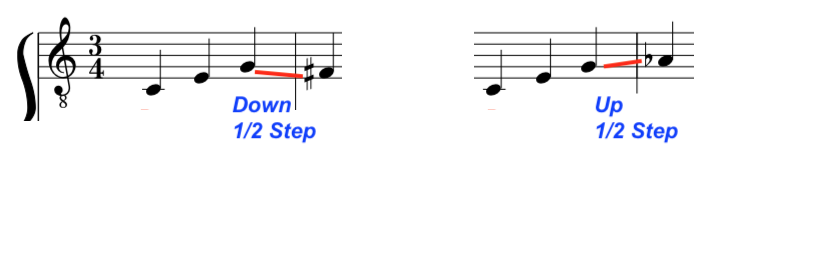
Predictable Example:
Here we can see that just adding another root position triad creates a non random and predictable sound.
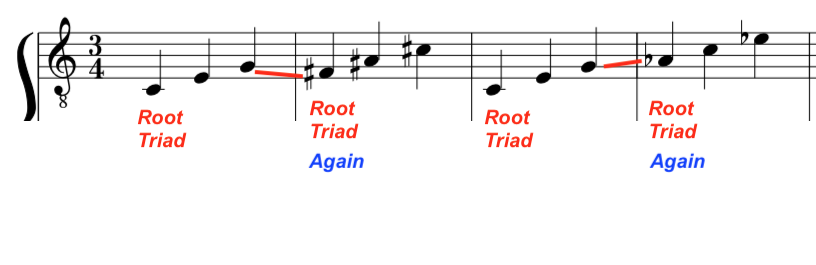
Correct Approach Example:
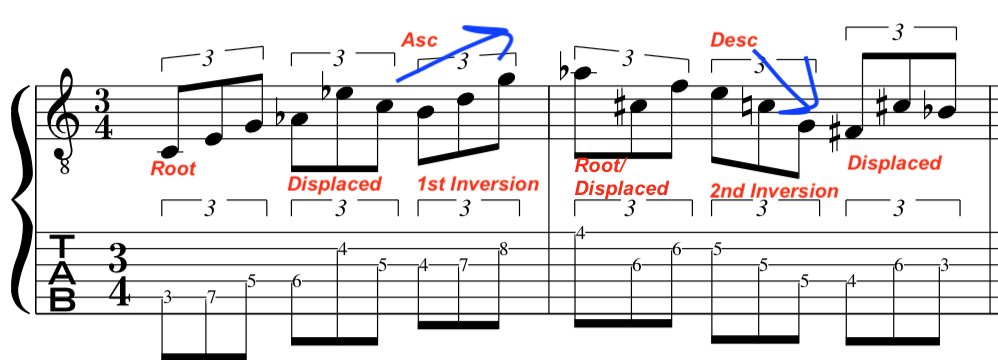
Here we create freshness by employing “Inversion” and “Displaced Permutations”.
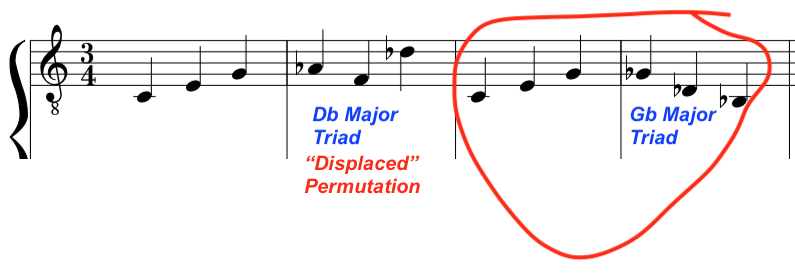
What are Displaced Permutations?
This means that we change the order of the notes. In this case although they are both in root position the order of the notes has been changed in the second triad. Hence this moves away from a more traditional sound/approach.
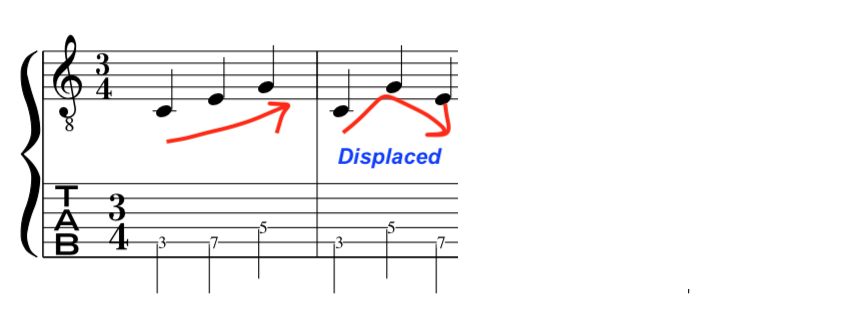
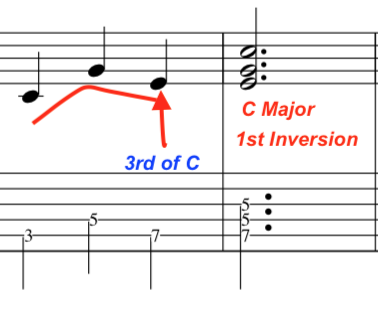
Also, because the last note is the 3rd of C Major it is considered a 1st Inversion:
Now lets add another triad to this:
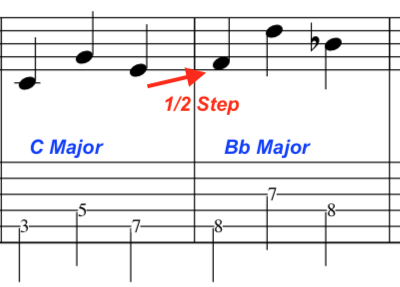
Predictable “Improper” application:
Below is an example of predictable repeated connections/patterns:
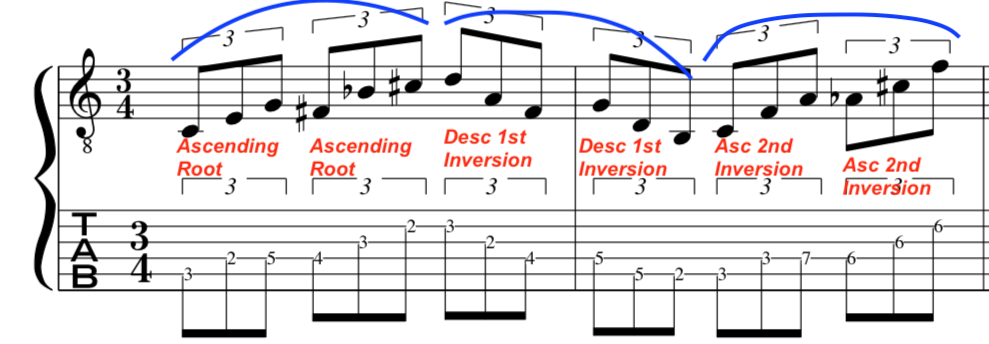
Correct Application Example:
Here we have an imaginative less predictable and more random sounding line.
PART 2: A Chromatic Approach:
Within the interval of a Major 3rd there are five 1/2 steps. [We will use C to E as an example]
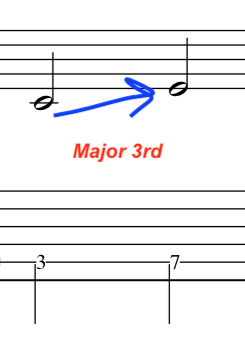
These five 1/2 steps cannot be used in a consecutive manner and must stay within the interval of a major 3rd.
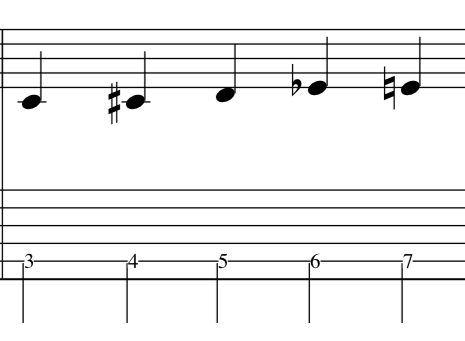
RANDOM Chromatic Method: EXAMPLES
Here are some example of how this works
Example:1
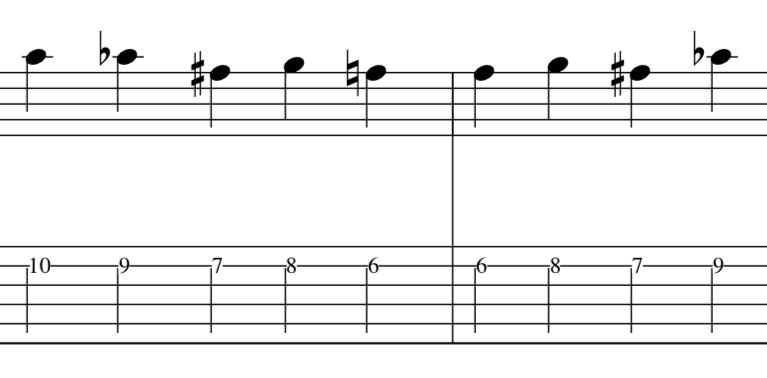
Example 2:
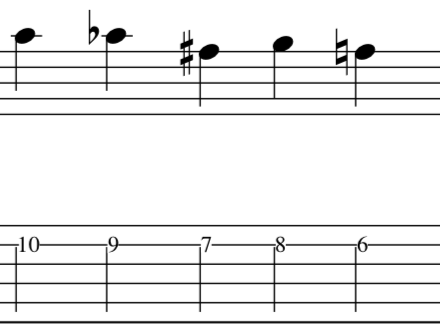
Example: 3
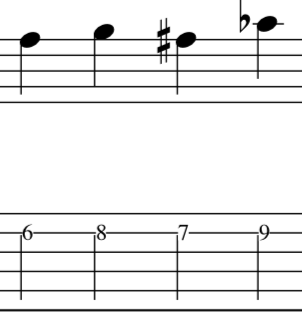
ii V7 I’s with applied Chromatic Approach:
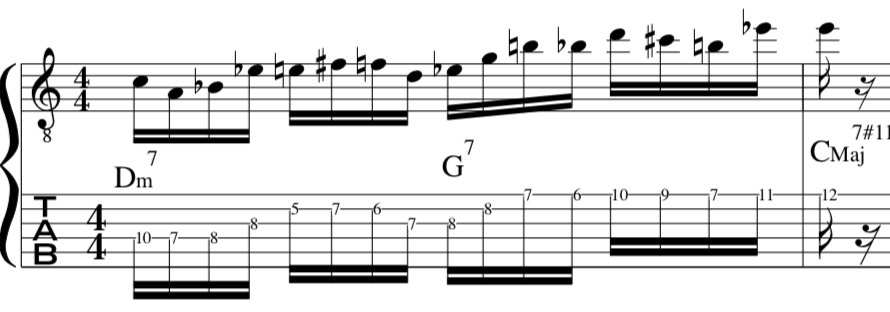
Here are two examples where the George Garzone approach is applied
Example 1
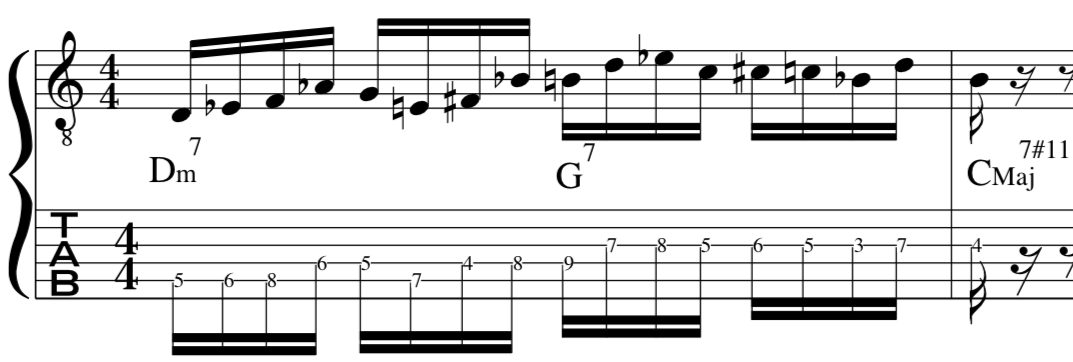
Example 2
PART 3:
Finally, here are a few ideas with the principles applied to harmony:
Idea 1
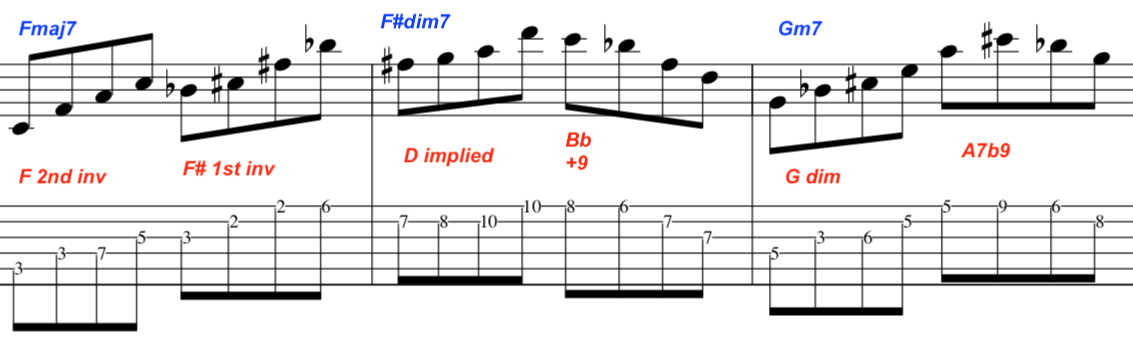
Idea 2
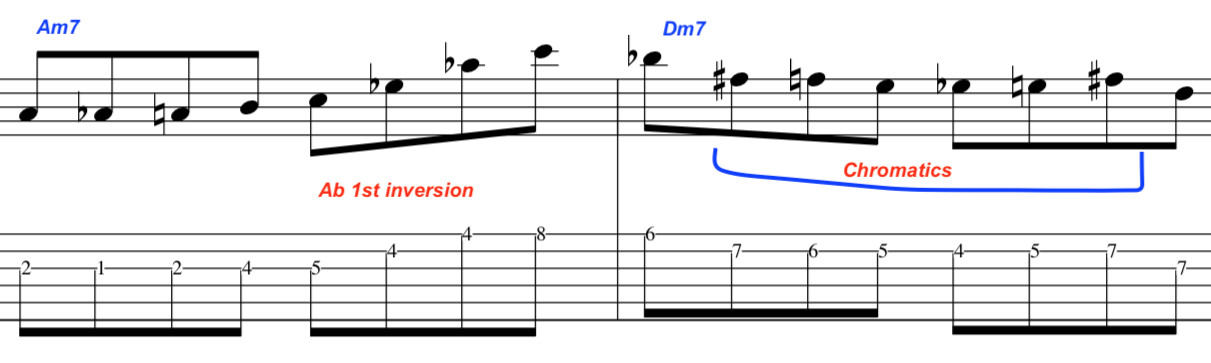
Idea 3
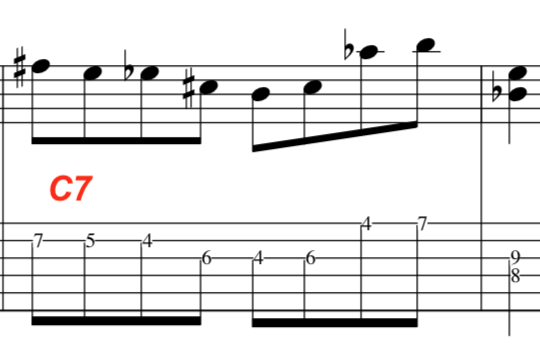
IF THIS LESSON WAS OF USE TO YOU THEN PLEASE SUBSCRIBE TO US BELOW ON YOUTUBE, THANKS!
PLEASE WATCH VIDEO ABOVE FOR IN DEPTH ANALYSIS:
Hi Guys!
Just a simple idea of building longer pentatonic lines with more of a modal flavour by employing alternate picking guitar technique [John Mclaughlin Style].
These are built from a very simple fingering in order to give a “Solid” foundation to fall back on.
Here is the simple finger and scale:
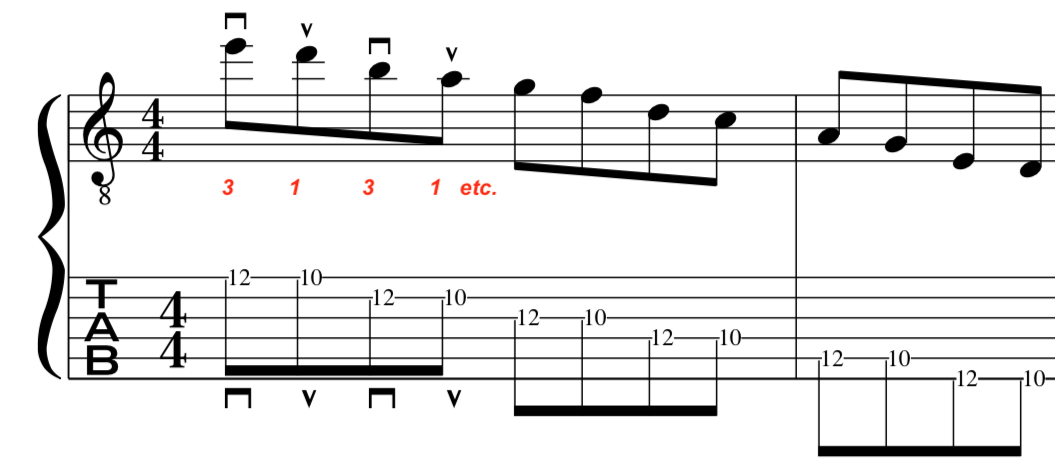
Ascending:
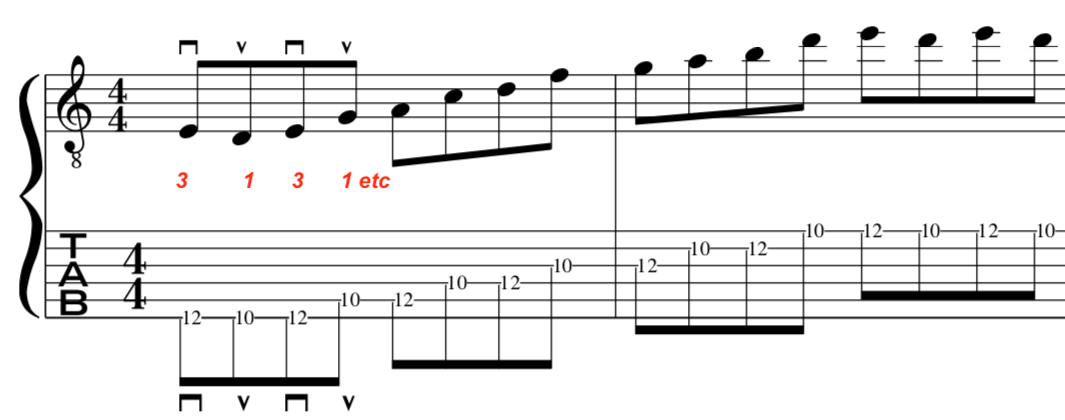
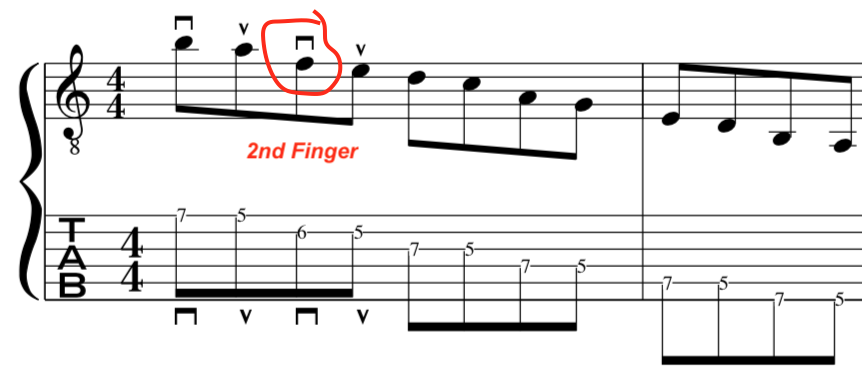
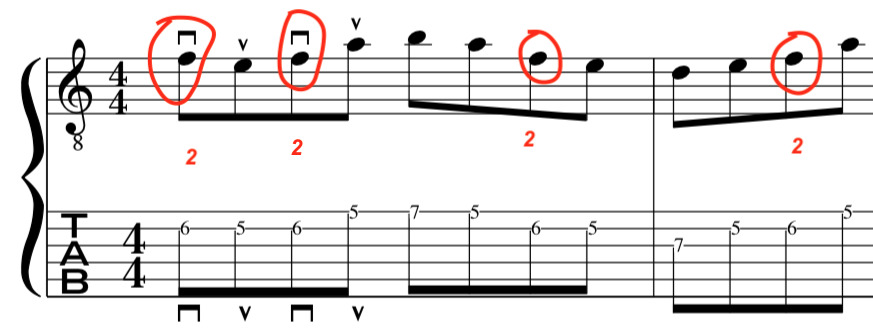
Here is a change of position and the one change with the 2nd finger.
For this blog it is essential to watch the video for a full in depth analysis and explanation as there is a lot of material to get through in this concept.
IF THIS LESSON WAS OF USE TO YOU THEN PLEASE SUBSCRIBE TO US BELOW ON YOUTUBE, THANKS!