Lessons from Jazz/World to 20 Century Classical Music Harmony Rhythm and Theory
Category: Jazz fusion guitar music theory lessons, guitar technique and improvisation.
How to improvise over altered dominant chords. How to employ chromatic jazz and fusion harmony. Apply twentieth century classical composition techniques to modern jazz music and improv. How to exploit modes of the major. minor and diminished scales. Lesson in alternate picking guitar techniques as used by John Mclaughlin and Al di Meola. How to do metal rock and all styles of alternate picking on the guitar. Plectrum pick technique for electric and acoustic guitarists. alternate guitar style of picking lessons.
Al Di Meola/John McLaughlin-Strumming Guitar Lesson
Please watch video above for a detailed analysis:
Hi Guys,
The key to learning percussive guitar strumming is to be able to shift through the rhythmic gears. When you can do this then you can double the time and add percussive flourishes [al la Al di Meola] to your right hand strumming.
Start by counting the quarter note and then move to the eighth note and then up to the 16th note.
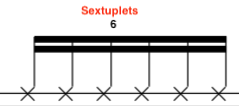
SEXTUPLETS:
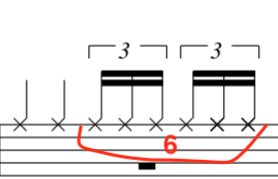
The next grouping to contend with is the group of 6 notes called sextuplets.
You can count 1 2 3 4 5 6
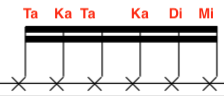
or you could break it up into 16th’s as in,
I prefer to employ Konokol and use this as my count for the rhythm. This is because it is easy to say quickly and will register with my brain and produce lightning reflexes with my right strumming hand
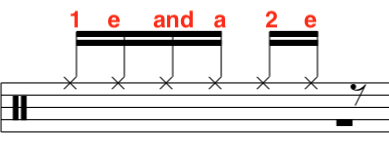
In order to get 16th notes in quick succession it is essential to count them as:
1 e and a 2 e and a 3 e and a 4 e and a
Mixing Rhythmic values:
The next concept is where it all falls into place. This consists of mixing up the rhythms and creating double timing patterns for percussive effect.
Example 1:
Example 2:
Example 3:
IF THIS LESSON WAS OF USE TO YOU THEN PLEASE SUBSCRIBE TO US BELOW ON YOUTUBE, THANKS
Today we will have a look at re harmonising with extra dominant substitutions and a chord ii variant…..
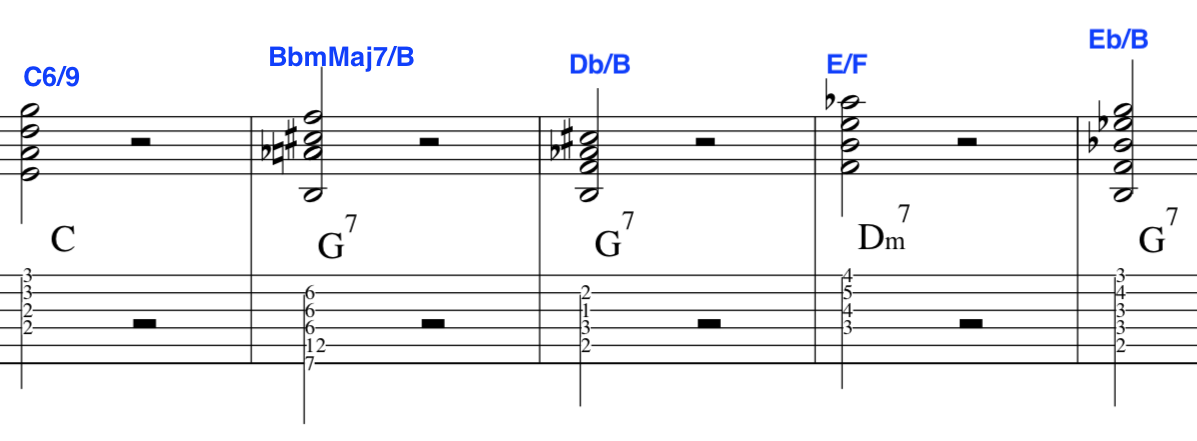
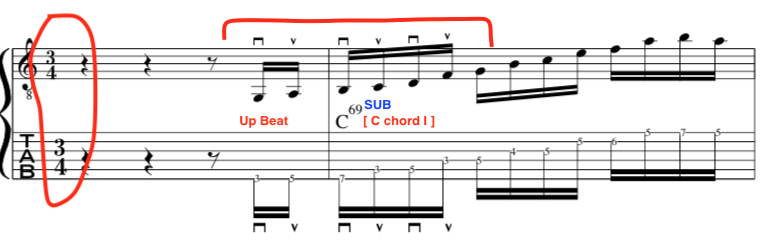
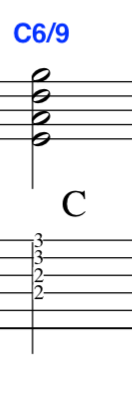
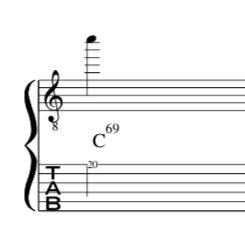
The first bar employs a C6/9 in place of the basic tonic chord of C major.
Also, note that this has a 3/4 time signature and starts with an up beat.
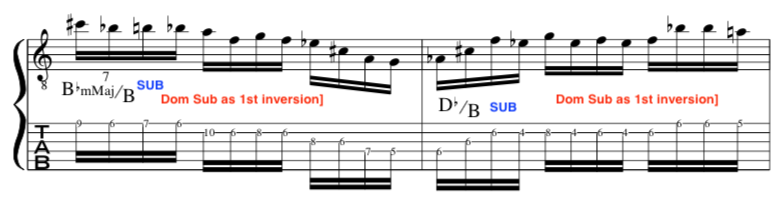
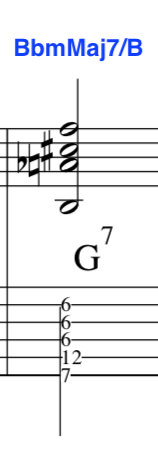
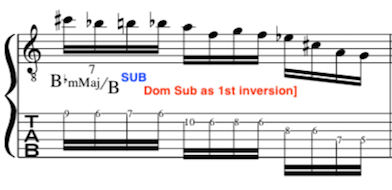
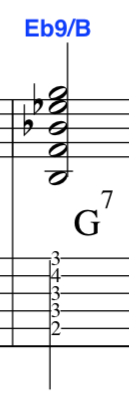
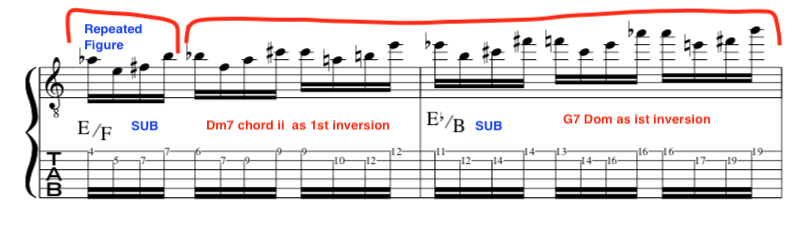
The next two bars alter the Dominant chord of G7. This is achieved by thinking of G as a 1st inversion and changing the harmony on top.
The BbmMaj7/B has the flattened 3rd like a #9 a flattened 5th [altered] but has the 9th and the 7th of G7. The first 4 notes of the improvised line establishes the BbmMaj7/B harmony whilst the next eight notes employ the A whole tone scale.
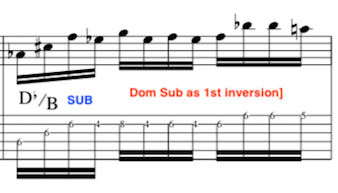
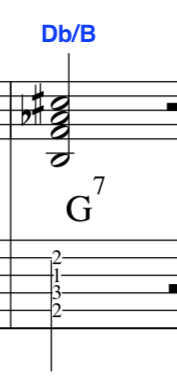
The next substitution is a Db chord over the B bass establishing the flattened 5th and a flattened 9th. But, what is really happening is that we are taking a triad a tritone away form the dominant chord G7 and superimposing that on the B [as a 1st inversion] bass note.
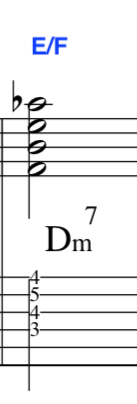
Next, we use a chord ii substitution. Again, thinking of F as the bass [1st inversion] we play an E triad over the top. This has the raised 6th and the flattened 5th as a sort of m7b5/Dorian mix.
The final Dominant substitution employs another triad from G altered. This time we use the Eb triad over the B [as 1st inversion] bass. [This has an added 9th acting as the 7th note of G]