Schoenberg’s chord of the 15th-Music Examples and Analysis

Hi Guys,

Today, a look at the final chord of Arnold Schoenberg’s “Sechs Kleine Klavierstucke” 2nd movement.  In thirds this reads as: C–E–G–B–D♯–F♯–A♯–Cx.

schoenberg_chord_music_analysis_extended_15th_in_music

This extended chord of a 15th, can also be viewed and heard as a bi-tonal construction of C Major 7th with Eb minorMajor 7th superimposed on top

schoenberg_chord_music_analysis_extended_15th_in_music

This can also, be thought of [especially in terms of the guitar] as an arpeggio of CMaj7 and an Arpeggio of EbmMaj7.

schoenberg_chord_music_analysis_explained_15th_in_music

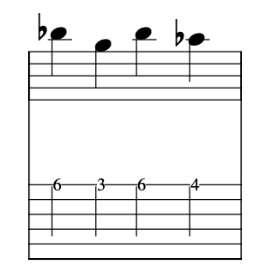
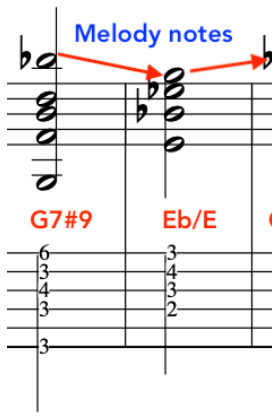
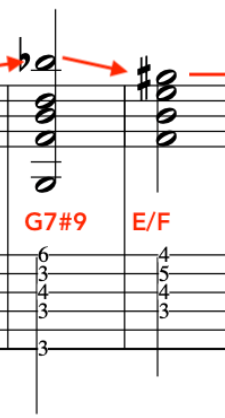
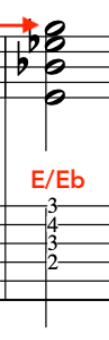
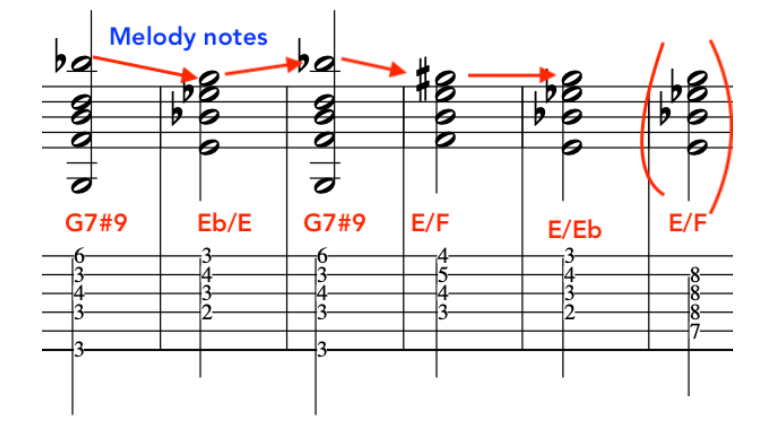
Due, to the nature of its sound and collection of notes, it can produce some interesting counterpoint. Especially, as the Eb to E natural resolution creates colour and drama. [view video at top of page].

schoenberg_chord_music_analysis_extended_15th_in_music_guitar

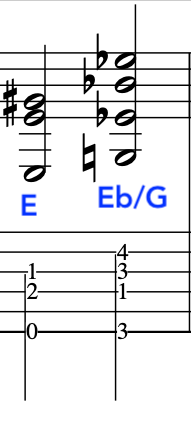
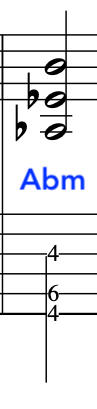
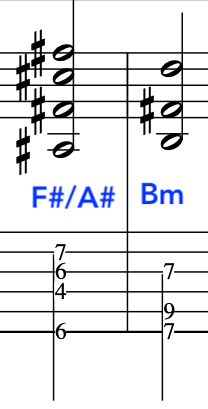
Being, a Bi-Tonal chord it is useful as it gives us triad pairs.

schoenberg_chord_music_analysis_extended_15th_in_music_guitar

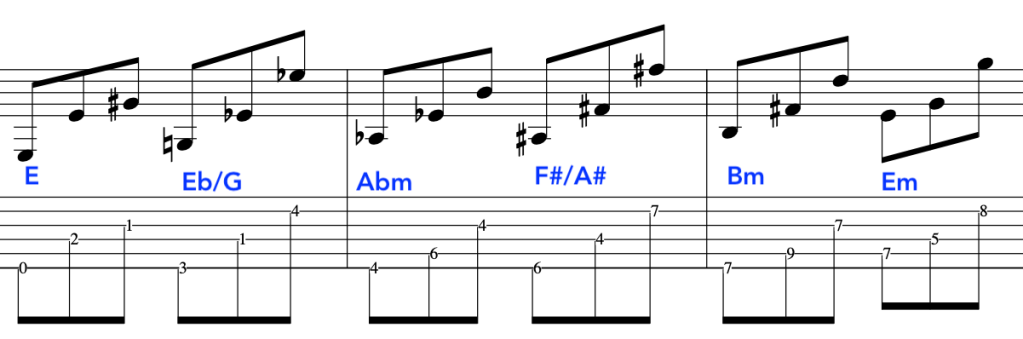
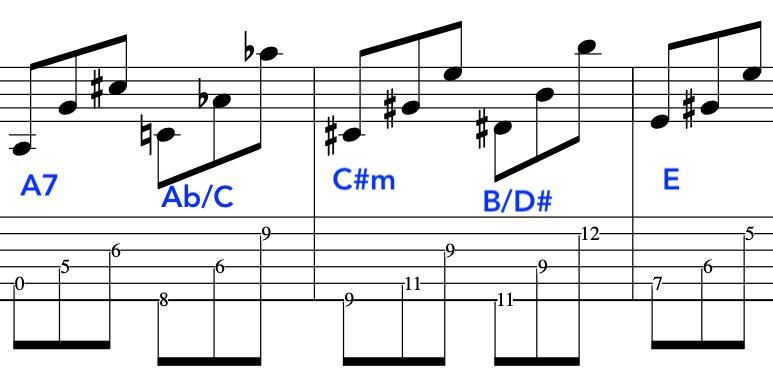
Ascending Line:

schoenberg_chord_music_analysis_chord_pairs_guitar

Now, we will take this a stage further by adding more chords/triads available.

D+ to C to EbmMaj7 to CmMaj7 to Em7 to Bmaj7

schoenberg_chord_music_analysis_chord_pairs

Let’s now, re voice the chord. Here we will make the chord of C a minMaj7 and add D Augmented [9th] on top.

schoenberg_chord_music_analysis_extended_15th_in_music

In the video/audio [a quick demo I created] below, we can hear the dramatic sound of this voicing in the orchestra.

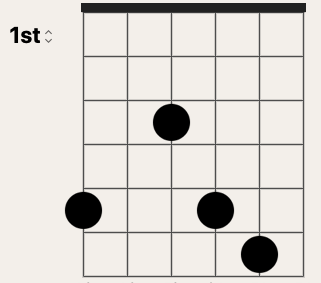
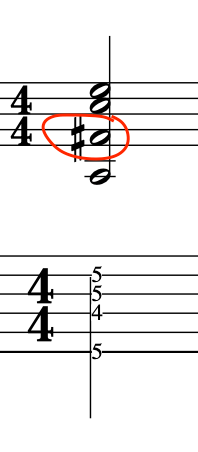
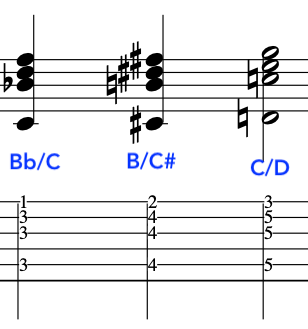
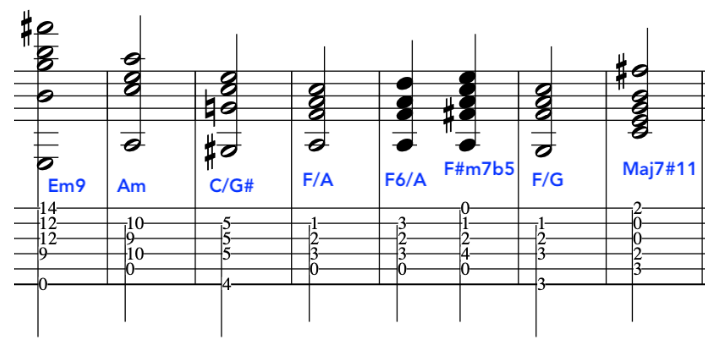
Next, we have two guitar voicing’s. Firstly we have a Bsus/C [or plain B/C] as a typical McLaughlin guitar voicing.

schoenberg_chord_music_analysis_extended_15th_in_music_mclaughlin_guitar

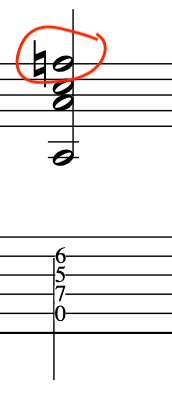
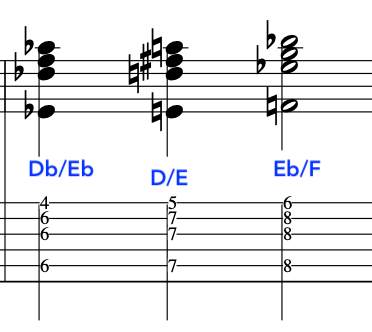
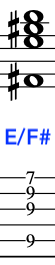
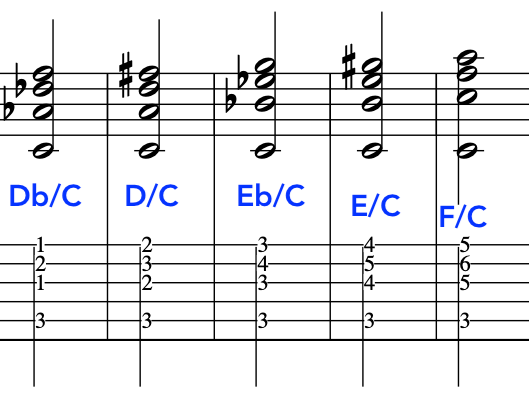
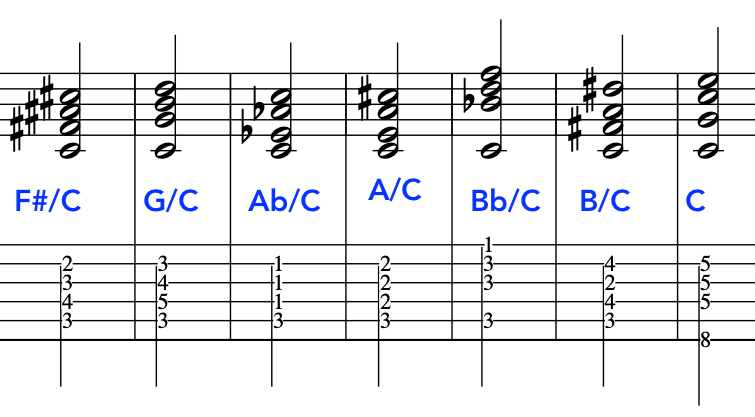
Secondly, we have the same voicing but with a changing bass.

schoenberg_chord_music_analysis_extended_15th_in_music_guitar

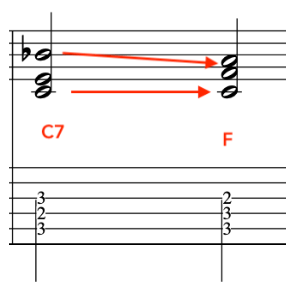
Lastly, another guitar voicing that is useful for chordal picking:

schoenberg_chord_music_analysis_extended_15th_in_music_guitar

From here, we will add a partial scale descending that is formed from the chord: This chord voicing has a flattened 5th and a sharpened 9th.

schoenberg_chord_music_analysis_extended_15th_in_music_guitar

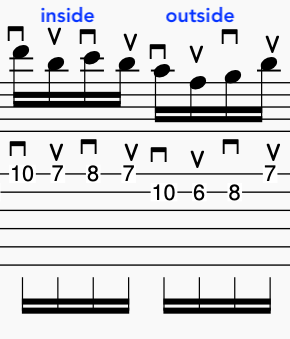
Lastly, we can create some interesting and colourful passages by exploiting the intervals inherent within this 15th chord.

schoenberg_chord_music_analysis_extended_15th_in_music_intervals

Arnold_Schoenberg's_chord-of-the 15th_analysis_music_theory

Alternate Picking Leverage:Open String Concept:

Hi Guys,

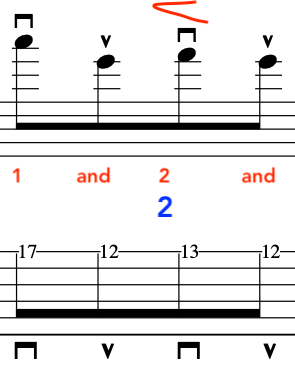
Just, a quick response Blog to a video I made about employing the “Open” [2nd] string ascending with alternate picking guitar technique.

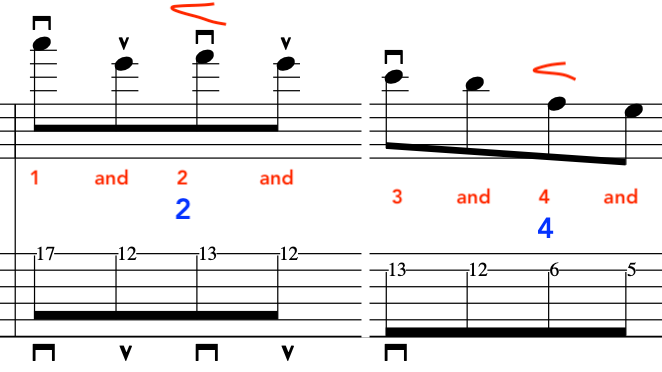
The main reason that this works, is because it is an “Even” grouping, and, by plucking the open 2nd string it gives the fretting hand a fraction of a second to relax and get into position.

This in turn gives us some natural and excellent leverage. This also, means that we have the “Up” stroke to descend with.

This technique works really well for the precise picking passages both in Fusion and World Music, like, for example the precise lines of McLaughlin’s “Shakti” compositions.

This extra note, or even pattern, works in principle like a Be bop scale in that the extra note creates a smooth picking line for the right hand.

alternate_picking_guitar_technique_expalained

This gives us, the 4 note “Even” grouping.

alternate_picking_guitar_technique_expalained

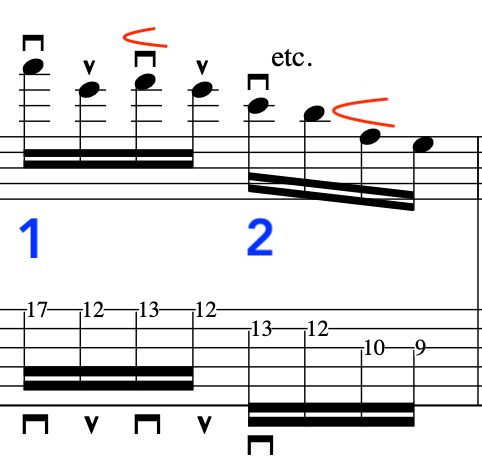
In this example, we can see where the “Up” stroke occurs, which, sets us up nicely to descend:

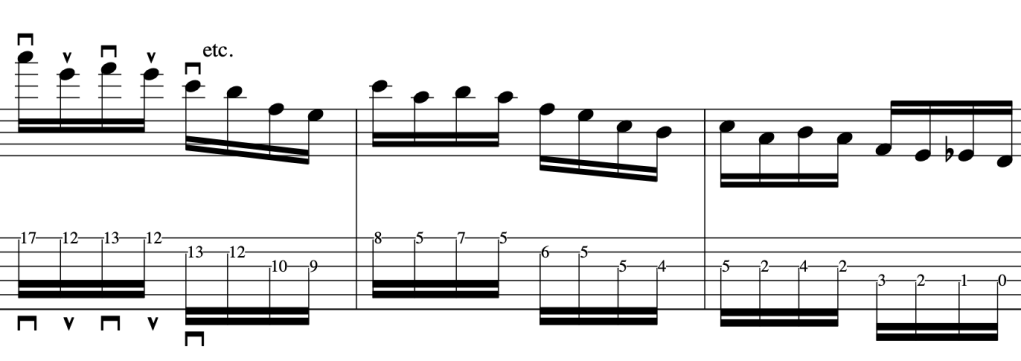
Here, is the whole scale passage.

Also, notice that the open B string is “Off” the beat.

alternate_picking_guitar_technique_expalained

There are, other open strings that we can exploit. But, for the sake of a quick response blog we will just look at one more idea and that is for descending:

Here, will will pluck the open G string and then add a chord. [Again, notice the the open string is off the beat]

alternate_picking_guitar_technique_expalained

Finally, let’s extend this:

alternate_picking_guitar_technique_expalained

This is only touching the surface. There are many variations on this and any string can be employed both ascending and descending.

Now, you might say what if the open B note isn’t in the key? Well, this doesn’t matter as it is only one note and can add colour. John McLaughlin does this to great effect. Also, due to the picking and the velocity the ear of the listener is not really affected, it’s very difficult to tell.

Lastly, this is not a shred gimmick or a means of tremolo picking and trying to play fast. It is a concept for really precise picking awkward lines, when, for instance you are doubling with a Sax or Piano or as a Rhythmic “Shakti” style line with a tight drum/drummer/percussionist.

Guitar Imitation: Effective Octave Shifting Exercises with Alternate Picking:

Hi Guys,

Today, a quick look at employing imitation, through the registers of the guitar fingerboard.

This is a useful device for imitating bits of scale by shifting the fingering [[the same fingering in a lot of cases] up an octave each time.

In the first example we will take a 3 note triplet figure and “Copy/Imitate” it up an octave each time.

The key is to hold the shape/fingering and slide the hand up without taking it off the guitar fingerboard onto the next position [up an octave].

So, here we have the pitches E F G and we take that fingering and slide it up to the next position.

Sheet music notation displaying downstroke and finger positions for alternate picking guitar playing.

Here, is the next position, an octave higher:

Musical notation showing a 3-note triplet figure on the guitar fingerboard.

Now, we copy/imitate it again, up another octave higher:

Sheet music showing guitar fingerings and notes, with a focus on triplet figures and octave transpositions.

Finally, I don’t have enough notes on the guitar to copy it exactly, so, I play something similar to finish the phrase.

Here, is a variation of the above, but, with an upbeat on the open D string. This, also starts on an“Up” stroke.

Sheet music diagram illustrating a guitar lesson with notations for triplet figures and up-beat alternate picking technique sequences.
Musical notation example illustrating an upbeat and open string technique for guitar playing.

Finally, we have another variation but this time we do this by employing 16th notes and two open string connections.

Musical notation example showing 16th notes with arrows pointing to specific notes for alternate picking guitar technique.
Example of 16th note guitar technique, showcasing notes and finger placement.

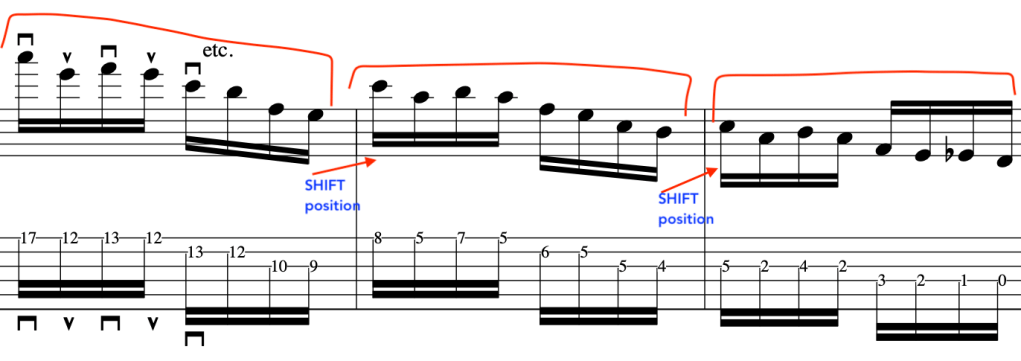
In this last example, we will go the other way.

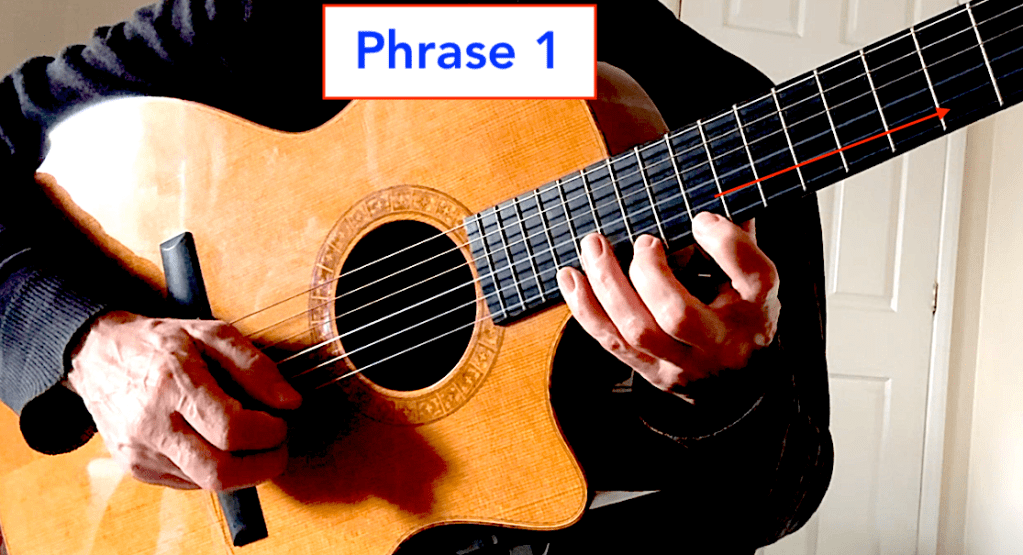
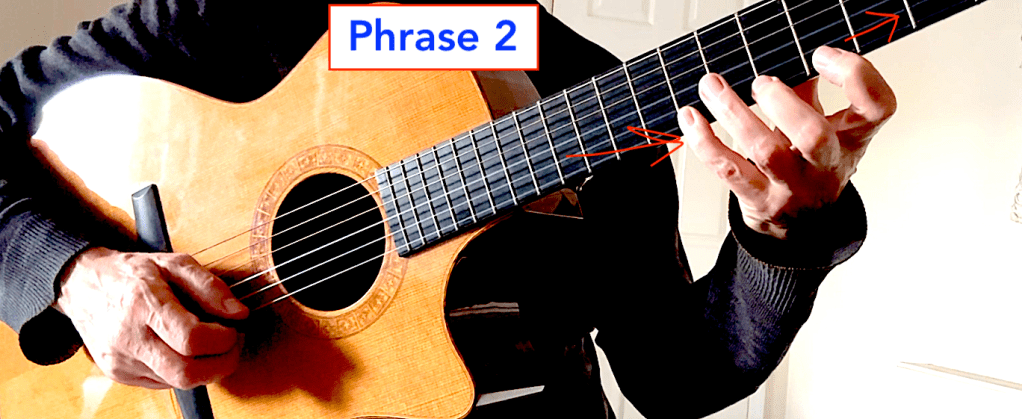
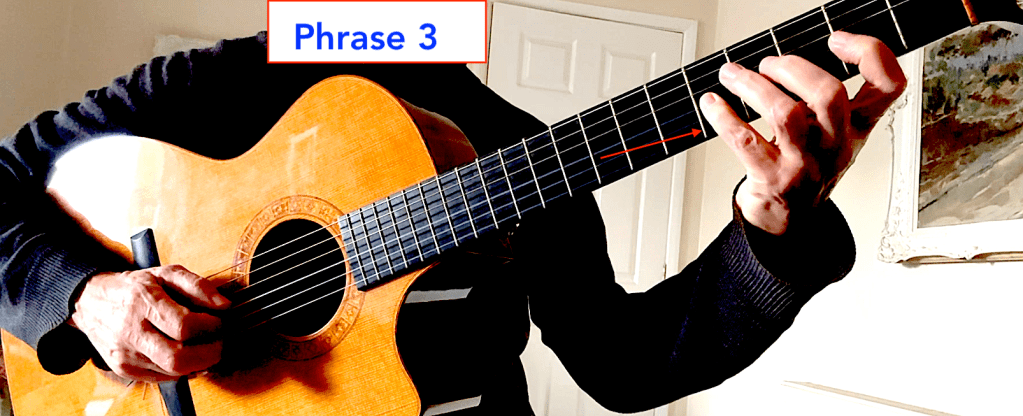
This time, we will start high and descend lowering the phrase.

Guitar sheet music showing a descending phrase notation, with labeled sections indicating 'Descending'.