McLaughlin: Rhythm Guitar Revisited: Part 2

CLICK SUBSCRIBE!

Hi Guys,

Today, the second part of the John McLaughlin style rhythmic guitar essentials.

If we look at a composition like “Face to Face” by Shakti, we will find interesting rhythmic strumming patterns:

It’s unique how John creates interesting rhythmic riffs with just a couple of chords by employing a bar of 7 to a bar of 8:
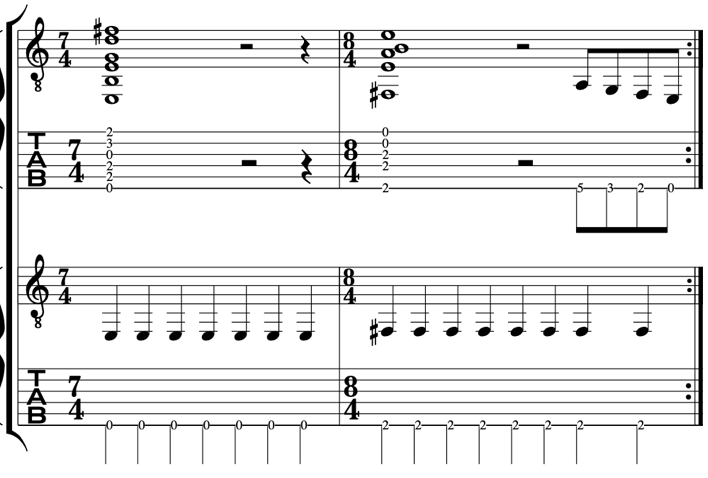
shakti-face-to-face-rhythm-guitar-lesson

You may wish to count this in different ways. For Example, you could count this as: 15/16 to 16/16 [in groups of 3 to groups of 4 in the next bar]:
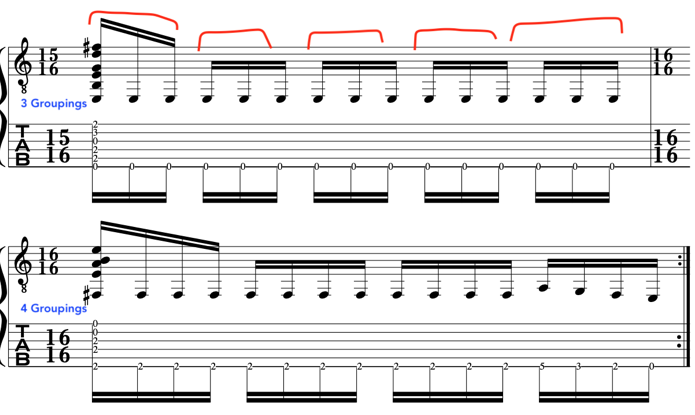
shakti-face-to-face-rhythm-guitar-lesson

And, also, Groups of 4 with the last being a grouping of 3 [or one note removed in a bar of 4/4 time]
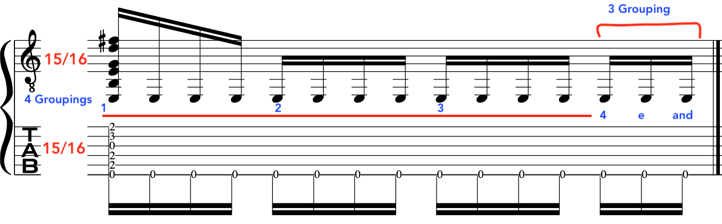
shakti-face-to-face-rhythm-guitar-lesson

Here, are the two chords that I have used.

These being similar to McLaughlin’s “Face to Face” composition with Shakti.
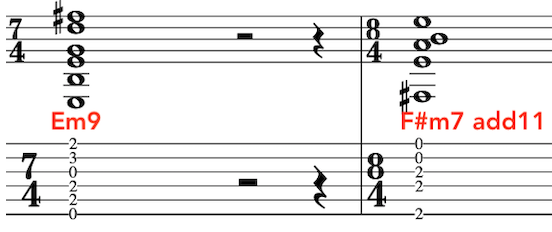
shakti-face-to-face-rhythm-guitar-lesson

To complete this vamp I employ a little “Turn around” in the bass with a 4 note descending scale motif.
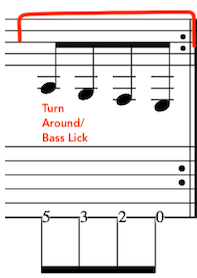
shakti-face-to-face-rhythm-guitar-lesson

Here, is the full 2 Bar Sequence with the turn around motif:
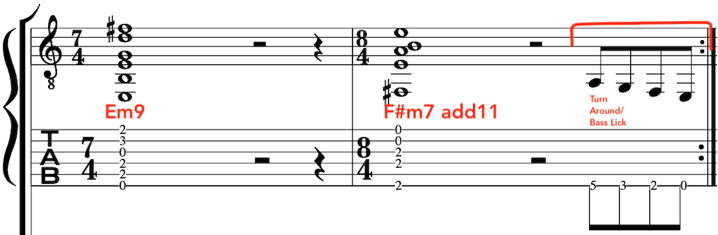
shakti-face-to-face-rhythm-guitar-lesson

In this variation we have the previous bass scale notes played in the treble on the first string of the guitar.

We also have changed the first chord with a “Quartal” E minor voicing.
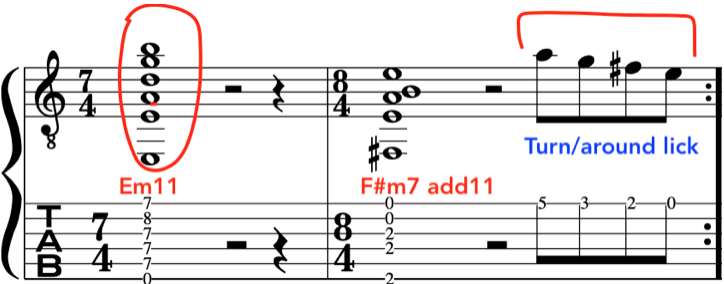
shakti-face-to-face-rhythm-guitar-lesson

John McLaughlin sometimes strums quickly between two chords and the open strings. Here are a couple of examples.

Firstly, we can see how John exploits 2 simple chords of A Major and D Major between the open strings:
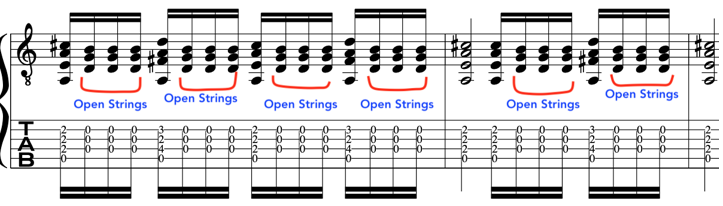
john-mclaughlin-strumming-guitar-lesson

[This is strummed at a very quick pace by alternate strumming “Down Up“] etc

To finish, we will look at one last alternate strumming McLaughlin favourite.

This again follows the same principle with the quick “Down Up” fast wrist movement in the strumming hand.
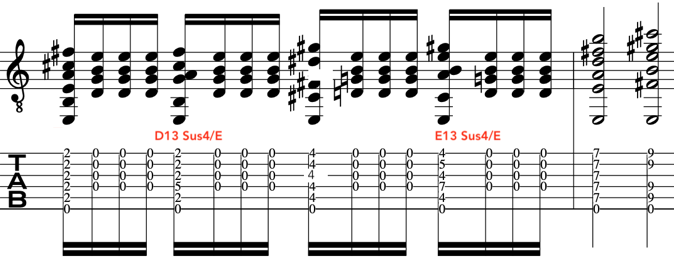
john-mclaughlin-strumming-guitar-lesson

E Pedal Note Rhythm Guitar Alternate Time Signatures

CLICK SUBSCRIBE!

Hi Guys,

Today, a response video to my previous blog in regards to employing a pedal note.

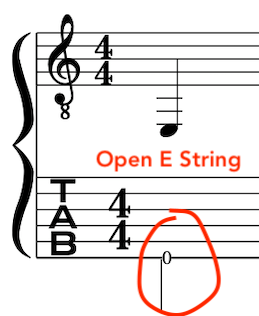
This is just an open E string that can be plucked as the basis for holding time.

john-mclaughlin-pedal-note-guitar-technique-diagram

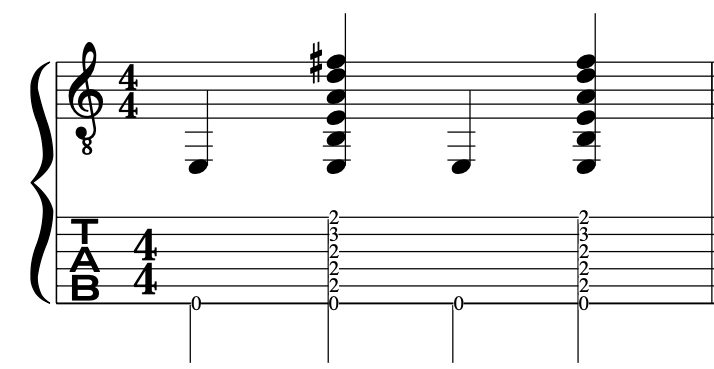
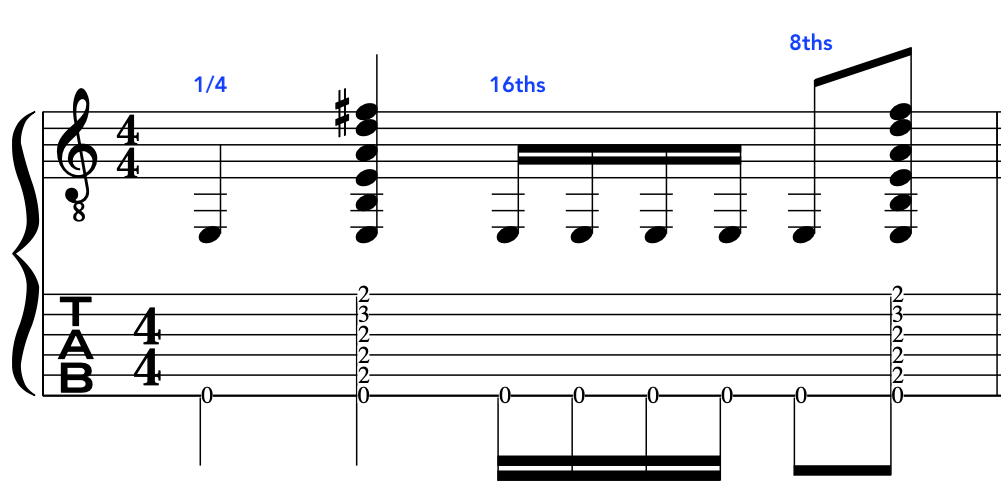
We can use simple quarter notes as our base and syncopate chords between them or play chords on different beats.

john-mclaughlin-pedal-note-guitar-technique-diagram

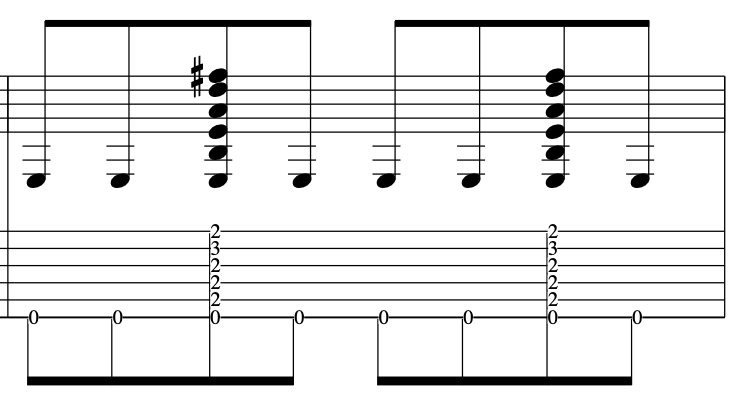
We can also double this with 8th notes

john-mclaughlin-pedal-note-guitar-technique-diagram

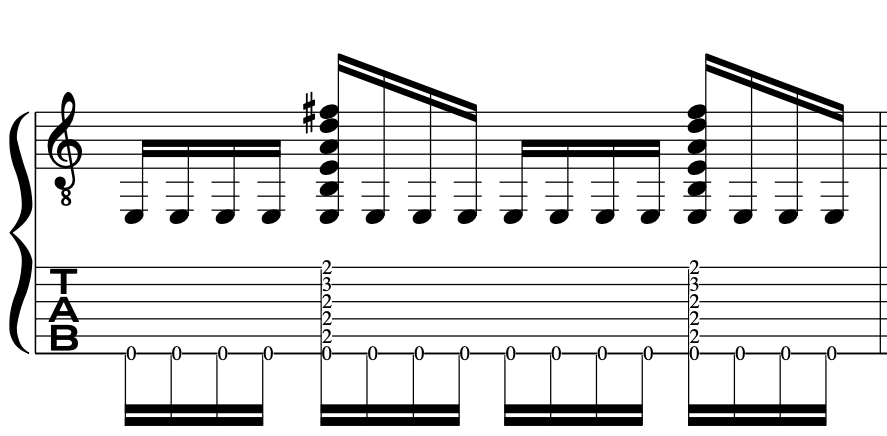
And of course taking it further with 16th notes:

john-mclaughlin-pedal-note-guitar-technique-diagram

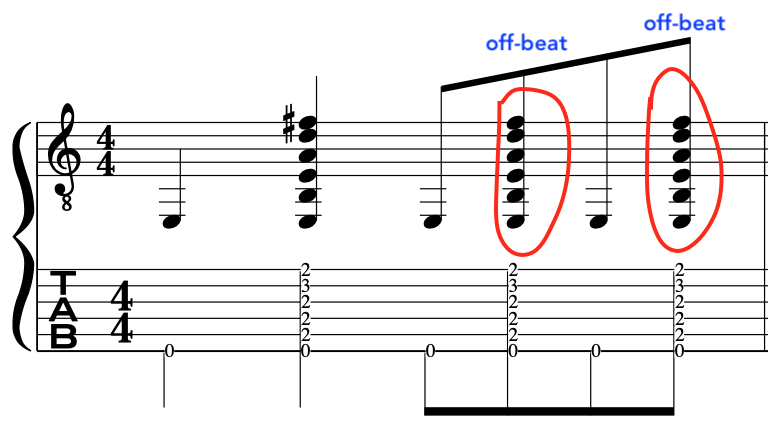
To make this more interesting we can play on the off-beat:

john-mclaughlin-pedal-note-guitar-technique-diagram

And finally, “Mix” the Pedal note rhythms for rhythmic drive:

john-mclaughlin-pedal-note-guitar-technique-diagram

This is all good and well and extremely useful, but there is more………..

What makes this really useful is that we can play odd time signatures or uncommon time signatures along with alternate time signatures.

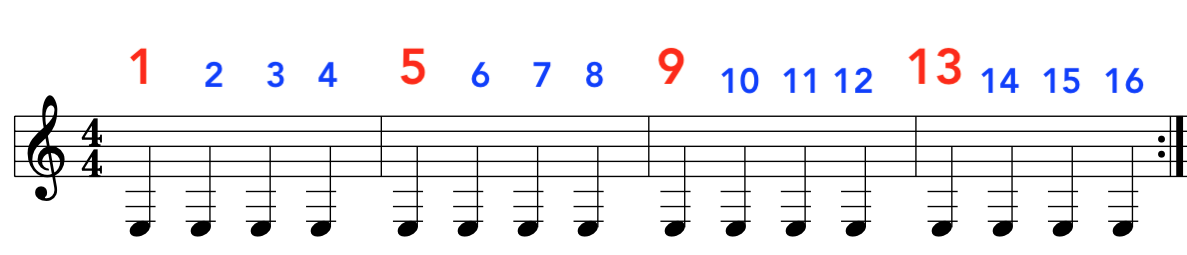
For this I am going to employ Indian “‘Teen Taal” and then break it up.

john-mclaughlin-pedal-note-guitar-technique-diagram

So, above we see the 16 beat cycle with the accented red numbers 1 5 9 13

Next, count this and accent those numbers and get a feel for the repeated cycle.

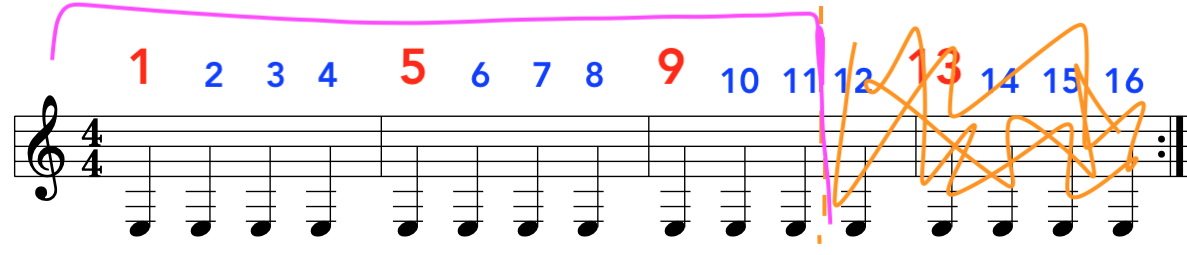
Now we will break this up:

john-mclaughlin-pedal-note-guitar-technique-diagram

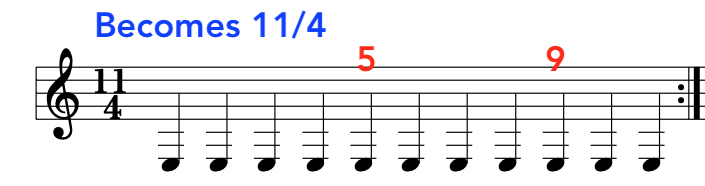
We will only count up to 11 and then create a loop with our E pedal holding time in quarter notes. Remember the accents on 1 and 5 and 9.

This now gives us 11/4

john-mclaughlin-pedal-note-guitar-technique-diagram

From here we can develop and create our own patterns in 11/4 with the E pedal note holding time and our accents of 5 and 9 which tell us where we are in the bar or beat cycle.

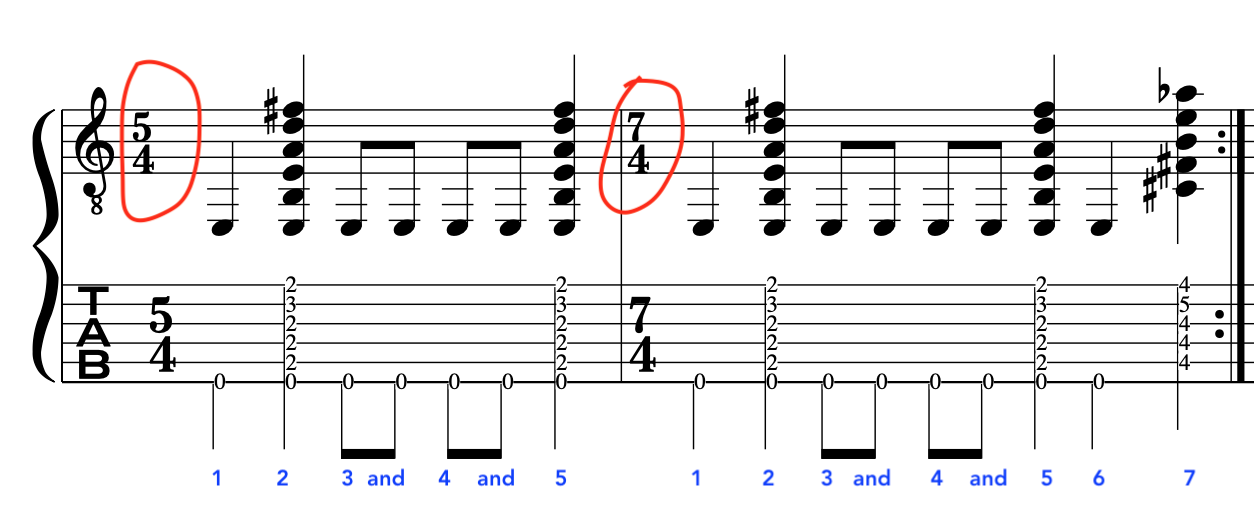
Lastly, let’s mix two different time signatures together.

john-mclaughlin-pedal-note-guitar-technique-diagram

Here we have a group of 5 and a group of 7. Also, notice the rhythm in the bass with the E Pedal note.

From here you can create and develop easily what you want as this concept works really for the guitar and alternate time signatures and uncommon time signatures.

FREE PDF DOWNLOAD:

CLICK SUBSCRIBE!

Al Di Meola/John McLaughlin-Strumming Guitar Lesson

yt_logo_rgb_light

CLICK SUBSCRIBE!

Al Di Meola/John McLaughlin-Strumming Guitar Lesson

Please watch video above for a detailed analysis:

Hi Guys,

The key to learning percussive guitar strumming is to be able to shift through the rhythmic gears. When you can do this then you can double the time and add percussive flourishes [al la Al di Meola] to your right hand strumming.

Meola-McLaughlin-rhythm-guitar

Start by counting the quarter note and then move to the eighth note and then up to the 16th note.

SEXTUPLETS:

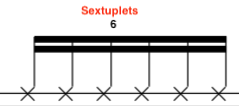
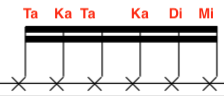
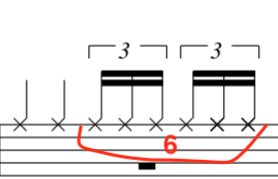
The next grouping to contend with is the group of 6 notes called sextuplets.

Meola-McLaughlin-rhythm-guitar

You can count 1 2 3 4 5 6

or you could break it up into 16th’s as in,

Meola-McLaughlin-rhythm-guitar

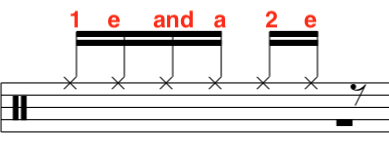
I prefer to employ Konokol and use this as my count for the rhythm. This is because it is easy to say quickly and will register with my brain and produce lightning reflexes with my right strumming hand

Meola-McLaughlin-rhythm-guitar

In order to get 16th notes in quick succession it is essential to count them as:

1 e and a 2 e and a 3 e and a 4 e and a

Meola-McLaughlin-rhythm-guitar

Mixing Rhythmic values:

The next concept is where it all falls into place. This consists of mixing up the rhythms and creating double timing patterns for percussive effect.

Example 1:

Meola-McLaughlin-rhythm-guitar

Example 2:

Meola-McLaughlin-rhythm-guitar

Example 3:

Meola-McLaughlin-rhythm-guitar

IF THIS LESSON WAS OF USE TO YOU THEN PLEASE SUBSCRIBE TO US BELOW ON YOUTUBE, THANKS