How to Anticipate/syncopate and use anacrusis at the guitar in Music
OFF-BEAT PLAYING
In order to play “Off” the beat you must first establish the “On” beat. This way you can anticipate or push the music/melody/riff or motif along and then return to the established “On” beat.
How to play on the beat and off the beat in music with chords.
When beat one is established we can then push any beat from there on. The key is then to return to the “On” beat to start the next phrase or vamp or piece of music.
If you play “Off” the beat continuously the syncopation/anticipation will be lost.
In order to fully comprehend off-beat playing it is an extremely good idea to learn and practice the two most common essential rhythms in every way possible, both in the bar and across the bar line. But, always coming back to the “On” beat for the start of the new phrase.
Rhythm 1
How to play on the beat and off the beat in music with chords.
Rhythm 2
How to play on the beat and off the beat in music with chords.
You can change the harmonic rhythm or join the rhythms together and create vamps or phrases.
Example:
How to play on the beat and off the beat in music with chords.
Example:
How to play on the beat and off the beat in music with chords.
Mixing Both Rhythms Together:
How to play on the beat and off the beat in music with chords.
Now we will add a bass push/anticipation: [Notice the BASS note is “Tied” across the bar line].
How to play on the beat and off the beat in music with chords. [Anticipation]
In this example we will add a short “Melody” to a chord:
How to play on the beat and off the beat in music with chords/Melody
Here are a set of variations on a chord change:
Variation 1:
How to play on the beat and off the beat in music with chords.
Variation 2:
On the beat
Variation 3:
How to play on the beat and off the beat in music with chords.
IF THIS LESSON WAS OF VALUE TO YOU THEN PLEASE SUBSCRIBE TO US ON YOUTUBE BELOW, THANKS!
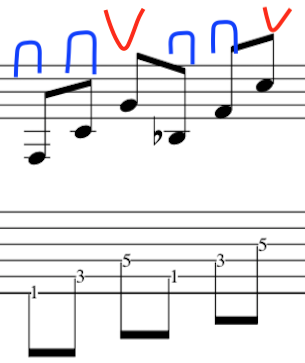
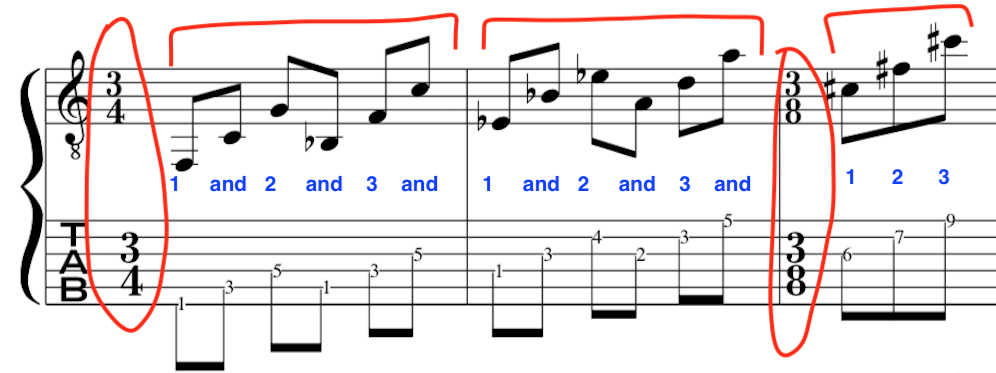
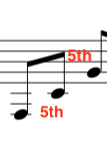
In the first example we see a minor pentatonic pattern moving in groups of three notes that displaces the rhythm. This creates a unique fresh sound to the most used scale on the guitar. The rhythmic displacement also pushes the rhythm along. Also notice the use of the interval of a perfect 5th.
Eric Johnson 3 note Guitar Pattern lesson example:
Eric Johnson 3 note pentatonic guitar patterns. How he does it Lesson
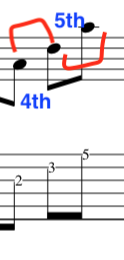
In the next example we can see how Eric Johnson uses 4 note guitar patterns. He also uses the interval of a perfect 4th which creates motivic movement.
Eric Johnson 4 note Guitar Pattern lesson example
Eric Johnson 4 note pentatonic guitar patterns. How he does it Lesson. Modern approach to pentatonics
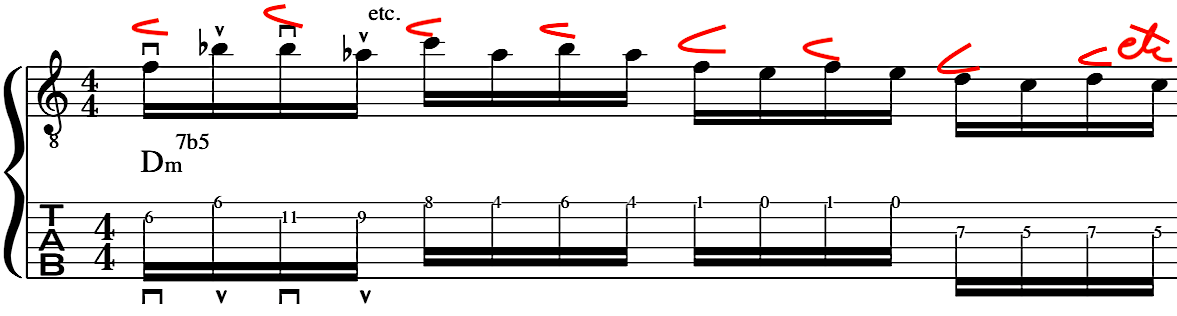
This next example shows how Eric Johnson takes the most overused cliche on the guitar [the minor pentatonic] and exploits the intervals to create a fresh and unique sound.
Eric Johnson intervallic manipulation:
Eric Johnson intervallic pentatonic guitar patterns. How he does it Lesson.
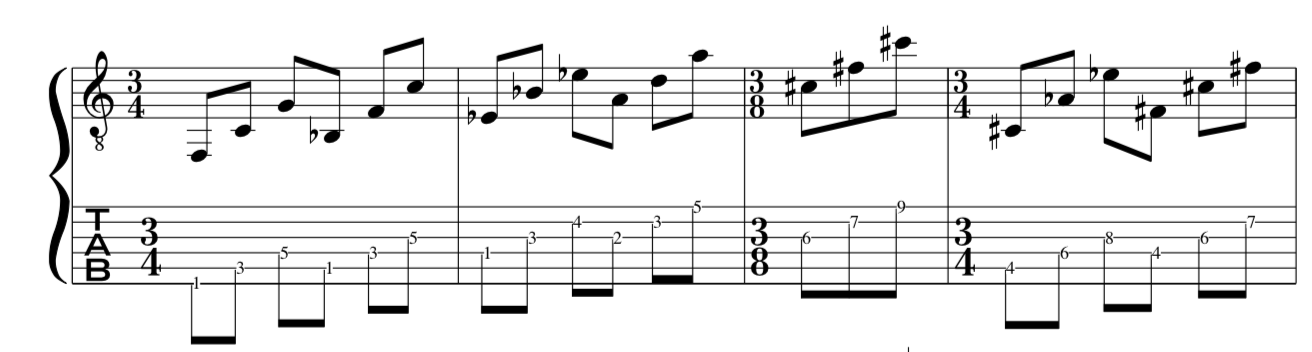
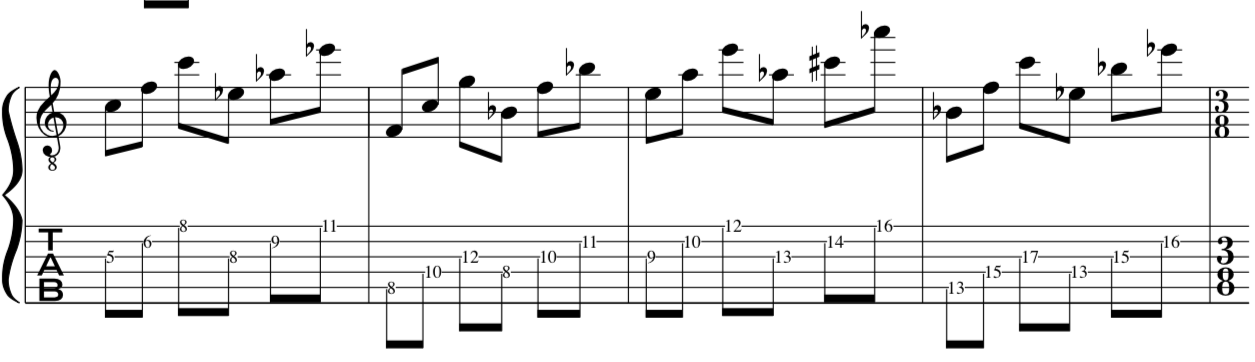
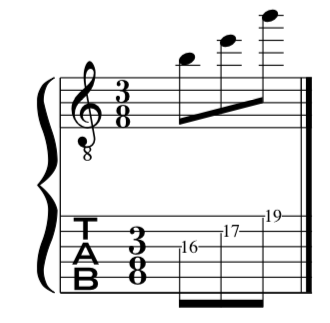
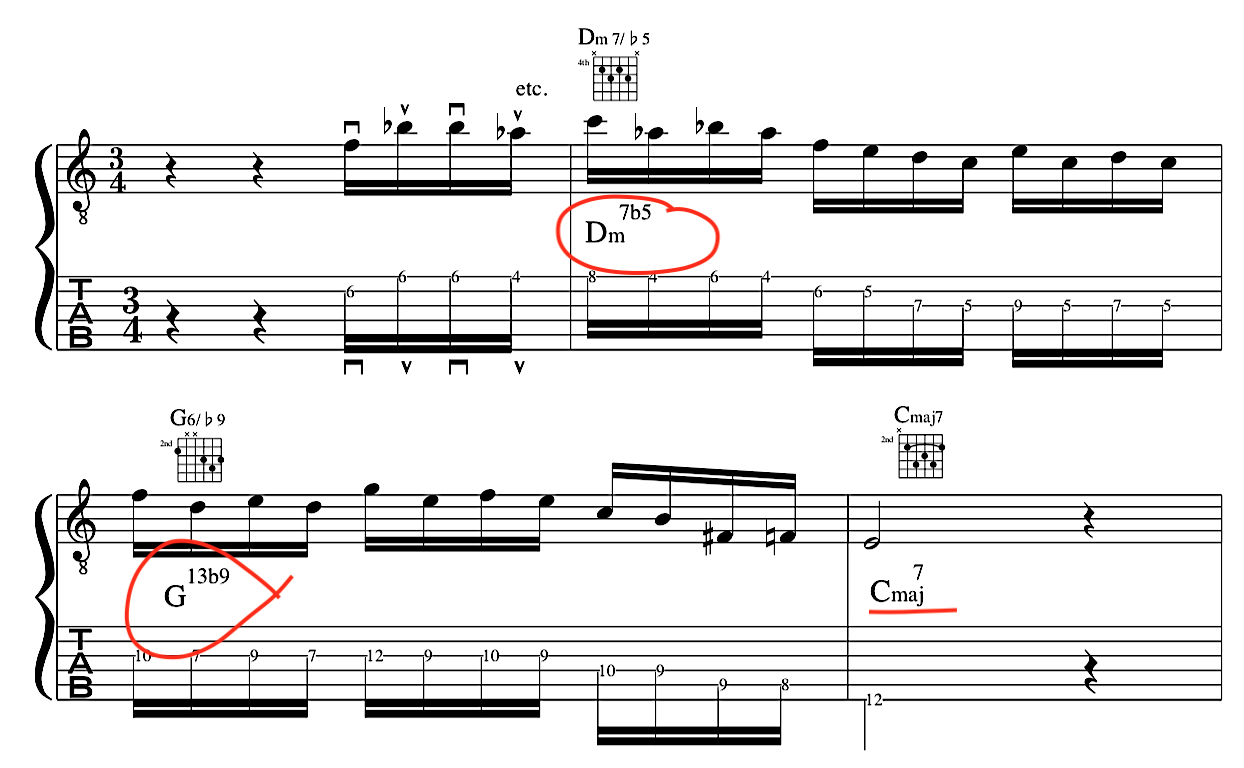
In this last example we can see how Eric Johnson employs the interval of a perfect 4th again, but, this time with arpeggios and inversion that creates a melodic sound to the ear. Again this moves us far away from the minor pentatonic cliches.
Eric Johnson 4ths and arpeggios guitar pattern
Eric Johnson’s Guitar PATTERNS: LEARN THE SECRET TO HIS STYLE!
IF THIS LESSON WAS OF USE TO YOU THEN PLEASE SUBSCRIBE TO US BELOW ON YOUTUBE, THANKS!