Lessons from Jazz/World to 20 Century Classical Music Harmony Rhythm and Theory
Author: Modern Music Theory and Application
Clifford Martin is a trained classical musician and composer. His 1st study being piano and composition and a deep study in the application of modern music theory. He also studied jazz piano and jazz drums privately.
This website is a catalogue of ideas and musical concepts for improvisation and composition.
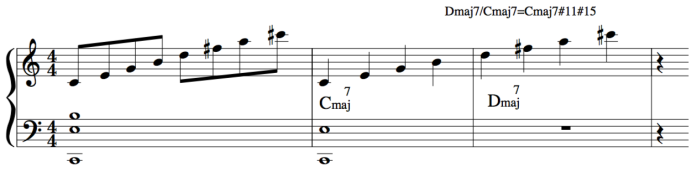
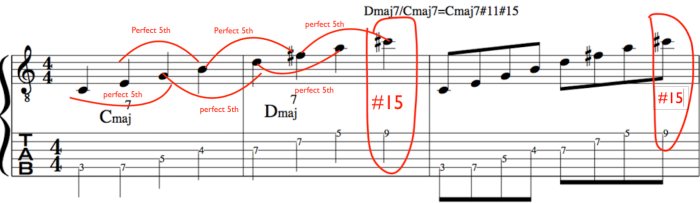
Above is the “Classic’ Lennie Tristano superimposed #15 arpeggio for C Major7. The #15 sounds “Correct” because all of the 5ths in the arpeggio are PERFECT 5THS.
EXTENDING AN ARPEGGIO TO THE 23RD
TERTIAN HARMONY
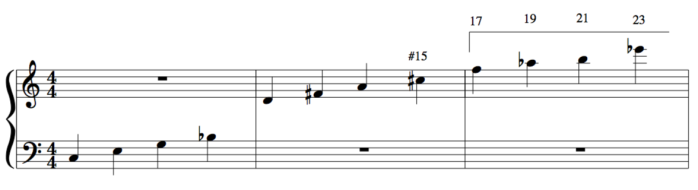
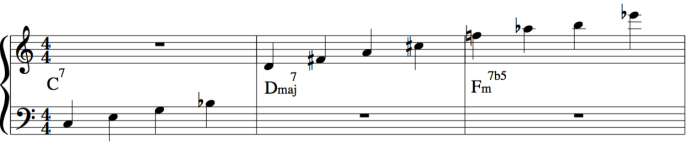
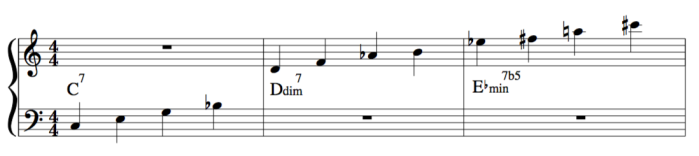
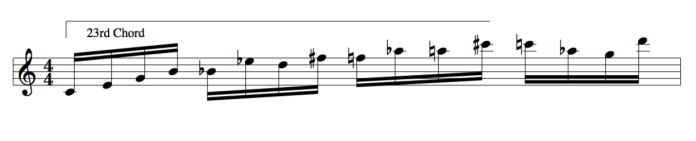
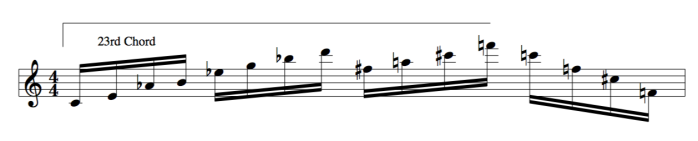
If we keep stacking 3rds with superimposition and extension we create “Tertian” harmony. So, above a 15th we have a 17th, above that a 19th, above that a 21st and above that a 23rd. Hence a 23rd chord will use all 12 notes.
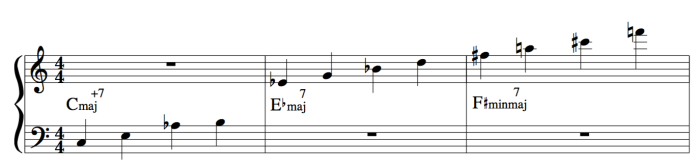
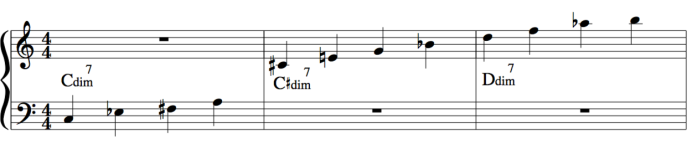
The 23rd chord example below has a major leaning
This example provides a 23rd chord with a minor leaning
Here we have a 23rd chord with an augmented leaning
Lastly we have a 23rd chord with a diminished leaning
Going back to our old friend George Russell and the Lydian Chromatic Concept we become aware of the shifting of tonal gravity and what is available with a 23rd chord that shifts out and how we can manipulate it to create new ideas and avoid cliches. Also going back to our 1st example of Lennie Tritano’s #15th arpeggio we hear how we can exploit the perfect 5ths to make something not right “Sound” right but fresh and new.
How to create music and improvisation with the 23rd chord
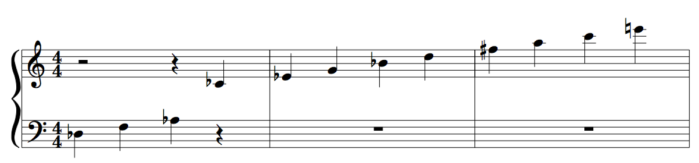
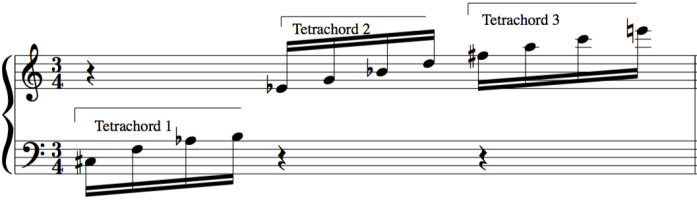
Below is a great example of my personal favourite 23rd chord creating a lovely Tertian Stack.
This example also reverts back to our 12 tone blog for improvisation and jazz heads/tunes. There are 3 sets of TETRACHORDS. Or 3 sets of 4 note groupings.
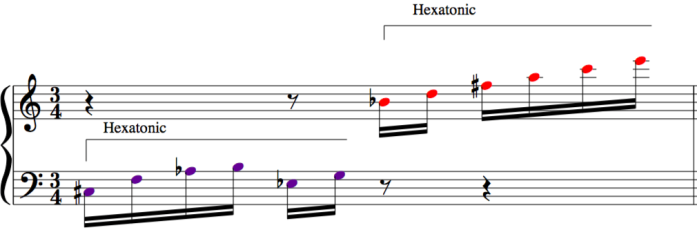
Next we can take the same 23rd chord pitches and make Hexatonic or 2 groups of 6 from the 23rd chord tertian superimposition.
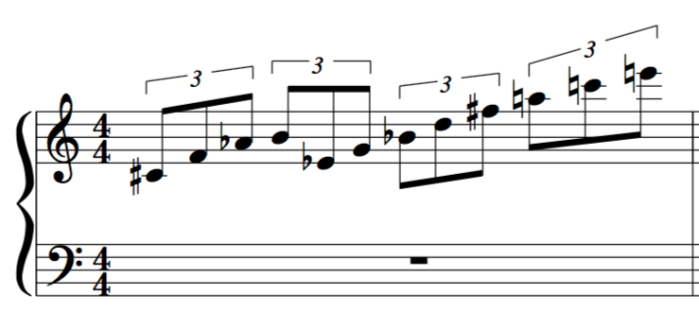
Finally we can make 3 note cells to form a 12 tone line from the same tertian 23rd chord extension.
23rd chord Improvised line ideas:
Employing 23rd chord outlines in Major, minor, diminished augmented.
THE LCC BY GEORGE RUSSEL: “Lydian chromatic concept of tonal gravity”.
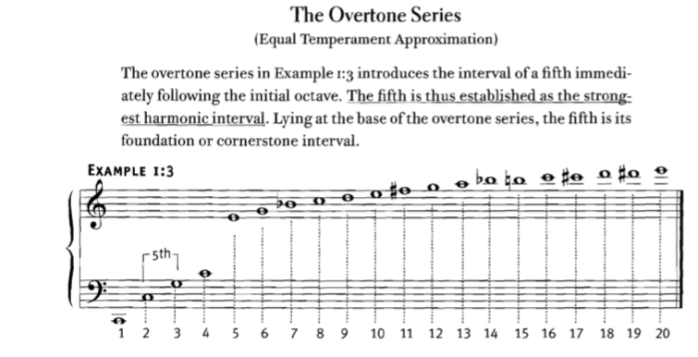
If we look at the diagram below we see the “Overtone Series” The perfect octave and the perfect 5th. If you can think in terms of perfect 5ths then the LCC will be much easier to understand.
First we start with C Ionian [C Major in Classical western tradition].
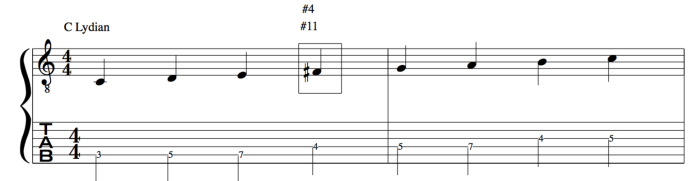
Next George raises the 4th forming C Lydian [Raised 4th or#11]
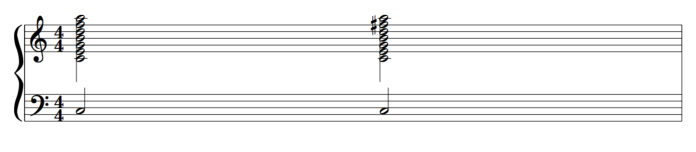
Below we see Stacked 3rds in C major [Ionian] and then in C LYDIAN [Hence the f sharp at the top below the a note]
C ionian C Lydian [13TH]
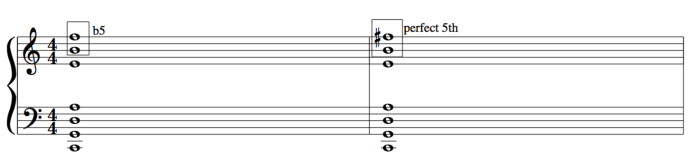
Below we see George Russel’s TONAL GRAVITY of Stacked 5ths. Notice the flattened 5th in the first bar but the “Perfect 5th” in the second bar. [The second bar creating C Lydian].
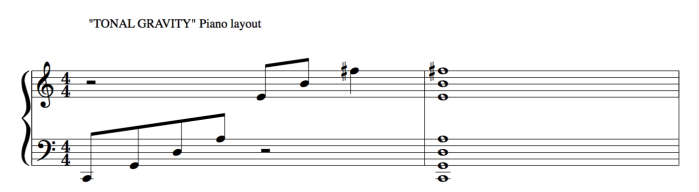
Below is the piano layout which one can easily hear tonal gravity across the long span of the piano keyboard. We have the #11 [F#] to create stacked “PERFECT” 5THS” [which again results in C Lydian]
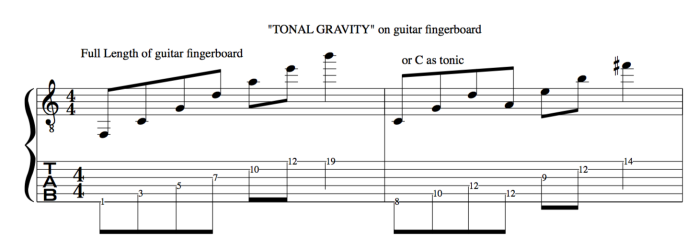
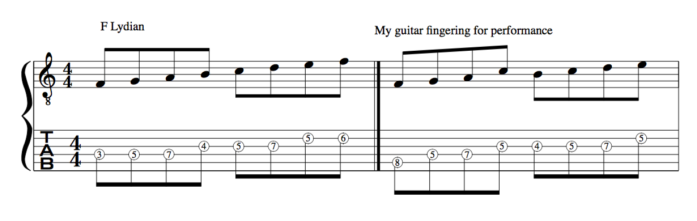
Below is a layout starting on the lowest F note in order to hear it all in full along the guitar fingerboard. There is also a version in the second bar that moves around with C as the tonic due to lack of span on the guitar fingerboard.
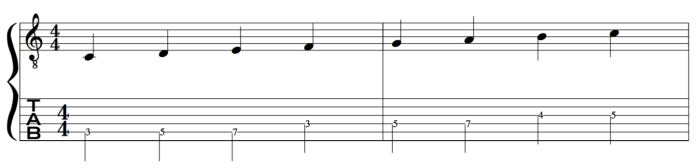
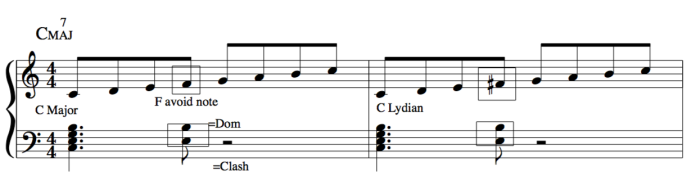
If we take the C major 7th chord and look at the C major scale we can see the “Avoid” note. The E note clashes with the F note and the B natural and the F natural produce a Dominant sound. By adding the Perfect fifth F# there isn’t any “Avoid” notes as displayed in the second bar below.
"The interval of a fifth is the building block of tonal gravity, a seven-tone scale created by successive fifths
establishes the most vertically unified harmonic order whereby the gravity falls down each fifth back to the singular
Lydian tonic". "Andy Wasserman"

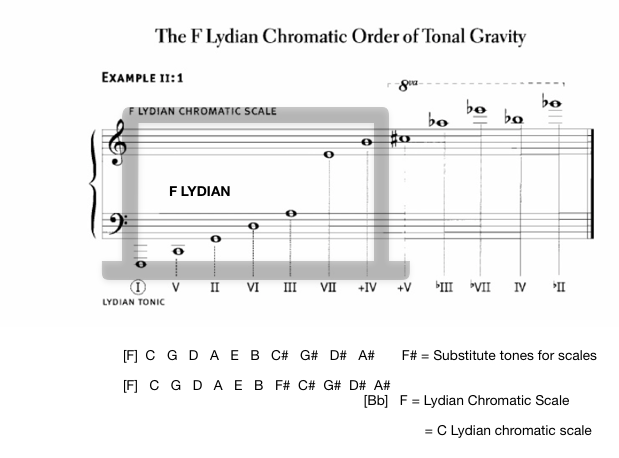
F C G D A E B = ALL PERFECT 5THS = F LYDIAN
“The Lydian Chromatic Scale” The ANSWER TO ANYONE CONFUSED!
By stacking PERFECT 5ths George Russel creates a chromatic scale
[F] C, G, D, A, E, B, F♯,C♯, G♯, D♯(E♭), A♯(B♭), E♯(F), [B♯(C) = a 12 tone scale.
The Confusion?
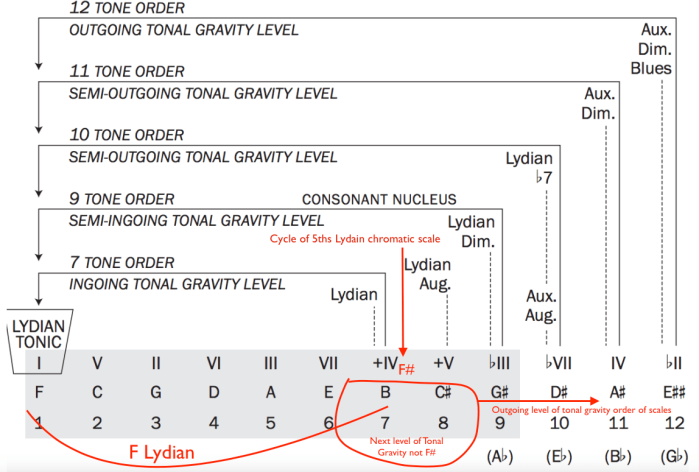
But “why” does he skip the interval between the Seventh and Eighth notes in the diagram in his book with the outgoing tonal gravity?
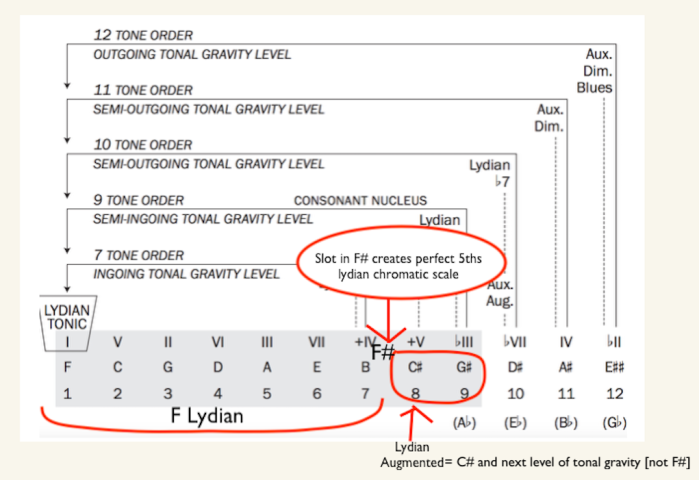
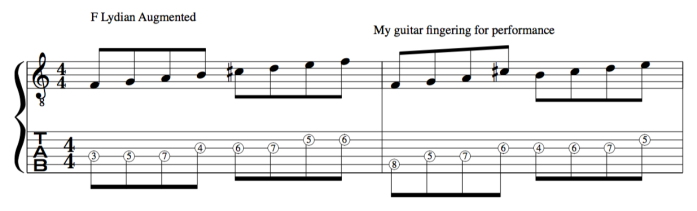
2] The answer is because the outgoing tonal gravity level goes to C# next [not F# for perfect 5ths]. Hence the 1st “Lydian scale” then goes to the 2nd scale “Lydian Augmented” with the raised 5th.
ANSWER BELOW IN DIAGRAM FORM
BELOW: AS SHOWN IN GEROGE RUSSELLS LCC BOOK
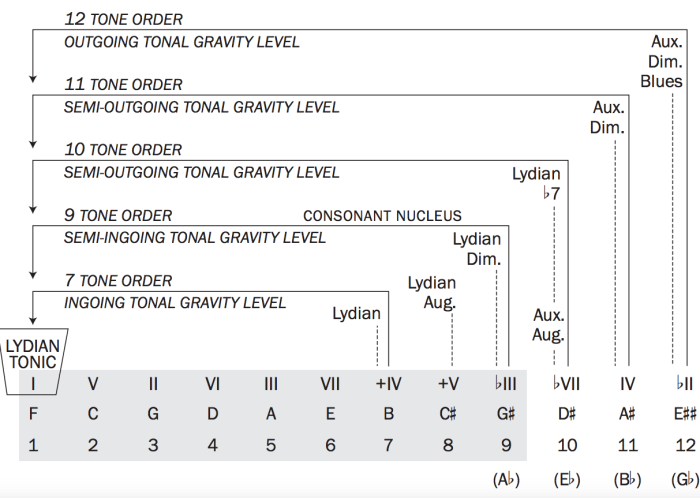
In the example diagram above we see George Russels “Tonal order” going from numbers 1 to 12. Numbers 1 to 7 being the Lydian mode.
When we go beyond the 7 notes of the lydian scale and further up the cycle of 5ths things increase in terms of dissonance.
George Russell terms the scales as”Ingoing” “Semi ingoing” “Semi outgoing” and “Outgoing” . The more we move to the right of the diagram the more “Outgoing/Dissonant” the scale will sound.
In terms of scale substitution we see a C# and not a D flat as this would be a raised 5th [Augmented 5th] and it would make no sense reading it enharmonically as a D flat as we see in the diagram above and in Georges scales.
GEORGE RUSSEL “VERTICAL” SCALES:
Basic Lydian [#11]
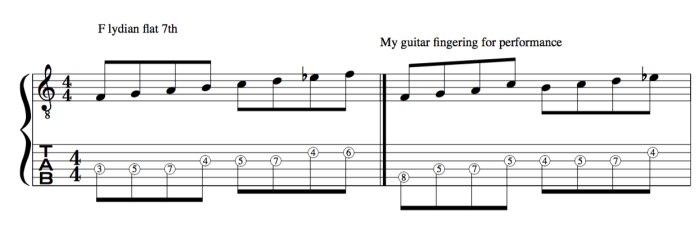
This could also be seen as 3rd mode of Melodic Minor
This could also be seen as 4th mode of the Harmonic Major
This could also be seen as the 4th mode of the Melodic Minor
This could also be seen as the Whole Tone Scale
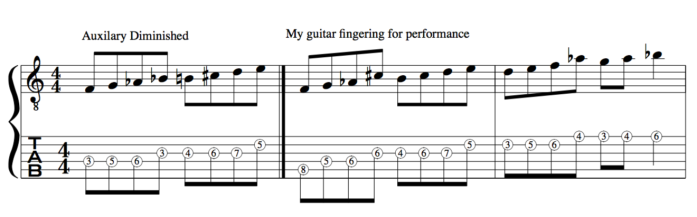
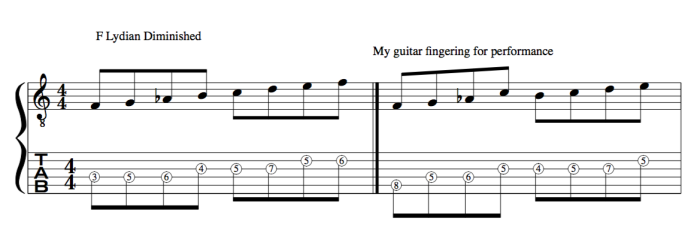
This could also be seen as Octatonic Whole Half Diminished
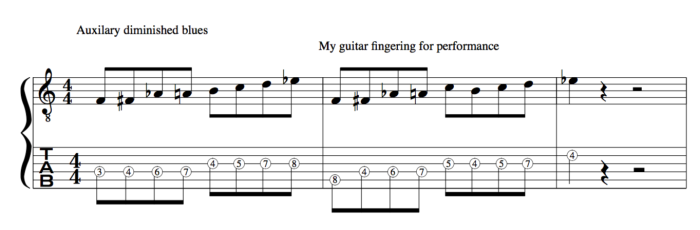
This could also be seen as Octatonic Half Whole Diminished
Finally, Horizontal Scales. Notice the B FLAT hence the Major.
Finding a parent scale,
From E Flat 7 going to A Flat major 7th we would employ the D Flat Lydian mode due to the G natural or #11 of the D FLAT LYDIAN to modulate to A flat major 7th.
PART 2 Final Analysis
The Lydian Chromatic Scale and best explanation from “Wikipedia”
Russell builds a prototype chromatic scale starting on the Lydian Tonic by stacking fifths, skipping the interval between the seventh and eighth tones. Using C as the Lydian Tonic yields the following 12-note scale with enharmonic respellings:
C, G, D, A, E, B, F♯,C♯, G♯, D♯(E♭), A♯(B♭), E♯(F), B♯(C). Thus the Lydian Chromatic Scale and all its derivatives contain only Pythagorean intervals.
OR
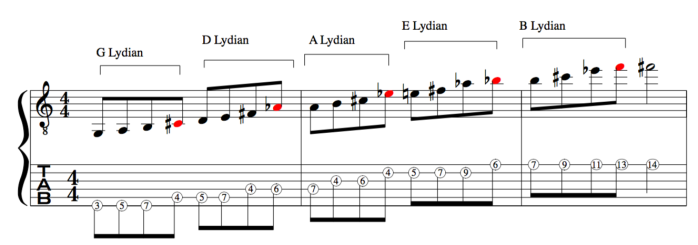
LYDIAN PENTATONIC ASCENDING SCALE THROUGH THE CYCLE OF 5THS.
FOR GUITARISTS
As an “Afterthought” for any guitarists here is my fingering always leading with the 1st finger on George Russell “Vertical” scales.
IN CONCLUSION
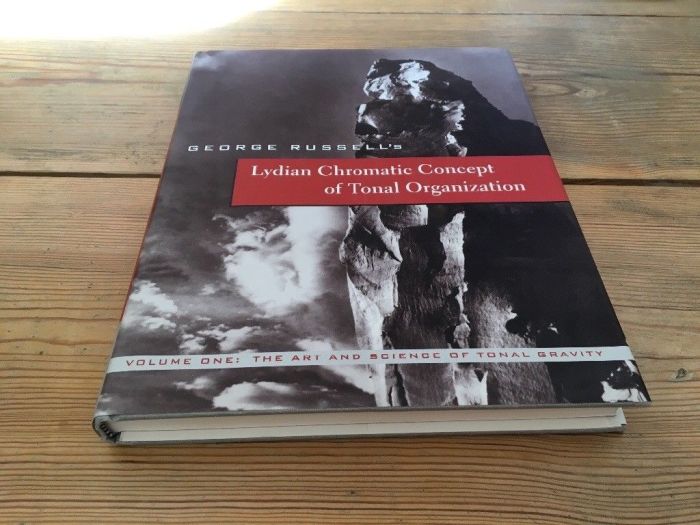
It is a good idea to read George Russels most up to date book either from a reference library or purchase. It is a very expensive book to buy though so be warned.
LINKS
Wiki LCClcc
INDIAN HARMONIC MINOR GUITAR SCALE RAGA. TEEN TAAL John Mclaughlin “Shakti” Lesson
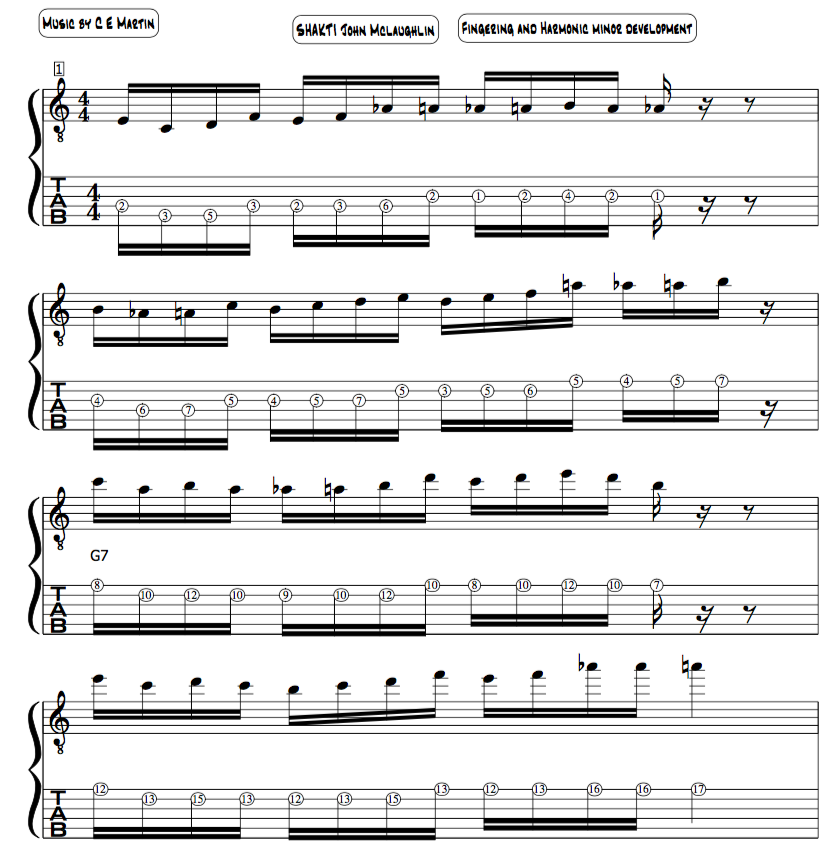
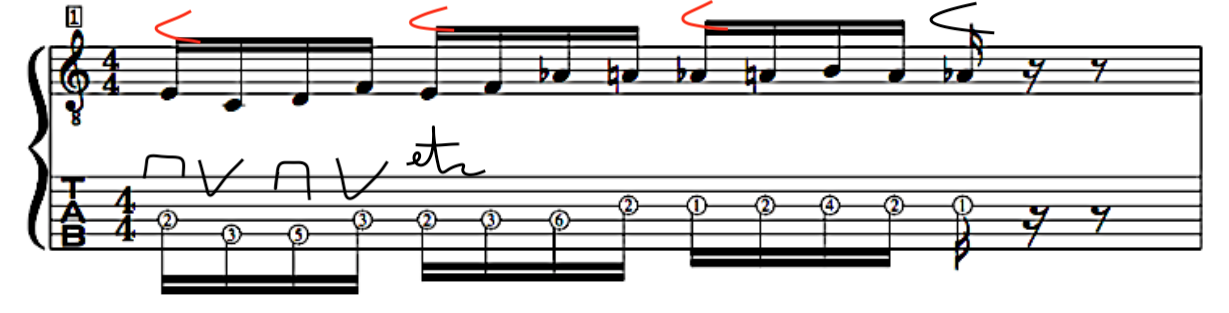
jazz/fusion guitarist John Mclaughlin builds this Indian “Raga” through the harmonic minor scale creating a “Fusion” style of music. The key to this style and lesson is to build 4 note groupings of 16th notes called “Tetrachords”. In this lesson we use the A harmonic minor Scale and employ strict alternate picking starting on a “Down” stroke.
INDIAN HARMONIC MINOR GUITAR SCALE RAGA. TEEN TAAL John Mclaughlin “Shakti” Lesson
Keep the alternate picking rhythmical and tight by accenting the first note of each 4 note grouping. This way you will know where you are in the bar or rhythmic cycle as for example in Teen Taal.
INDIAN HARMONIC MINOR GUITAR SCALE RAGA. TEEN TAAL John Mclaughlin “Shakti” Lesson
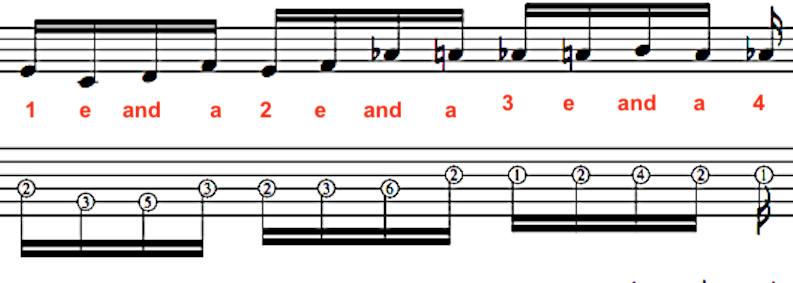
Also, tap your foot and count time:
INDIAN HARMONIC MINOR GUITAR SCALE RAGA. TEEN TAAL John Mclaughlin “Shakti” Lesson
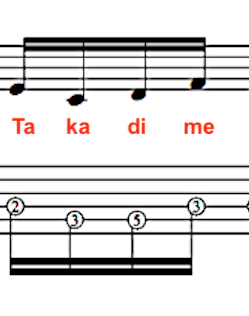
Indian Konokol:
INDIAN HARMONIC MINOR GUITAR SCALE RAGA. TEEN TAAL John Mclaughlin “Shakti” Lesson
IF THIS LESSON WAS OF USE TO YOU THEN PLEASE SUBSCRIBE TO US BELOW ON YOUTUBE, THANKS!









![Auxilary augmented scale [Whole tone scale]](https://jazzimproviser.com/wp-content/uploads/2019/02/whole-tone-today.png?w=700)


![Whole tone scale guitar fingering [Auxilary augmented]](https://jazzimproviser.com/wp-content/uploads/2019/02/5.png?w=700)