Lessons from Jazz/World to 20 Century Classical Music Harmony Rhythm and Theory
Author: Modern Music Theory and Application
Clifford Martin is a trained classical musician and composer. His 1st study being piano and composition and a deep study in the application of modern music theory. He also studied jazz piano and jazz drums privately.
This website is a catalogue of ideas and musical concepts for improvisation and composition.
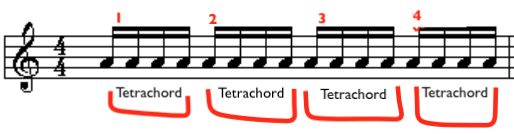
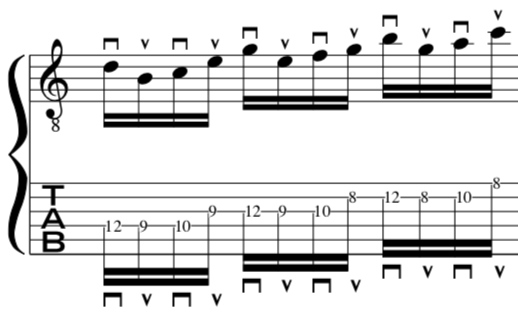
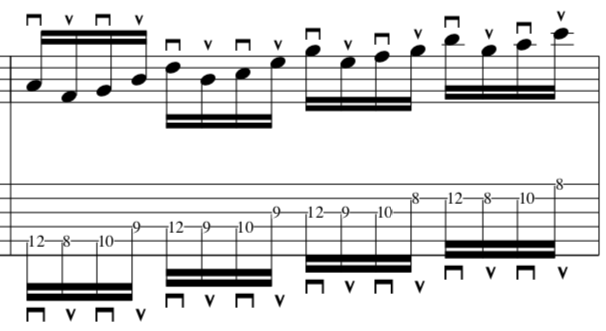
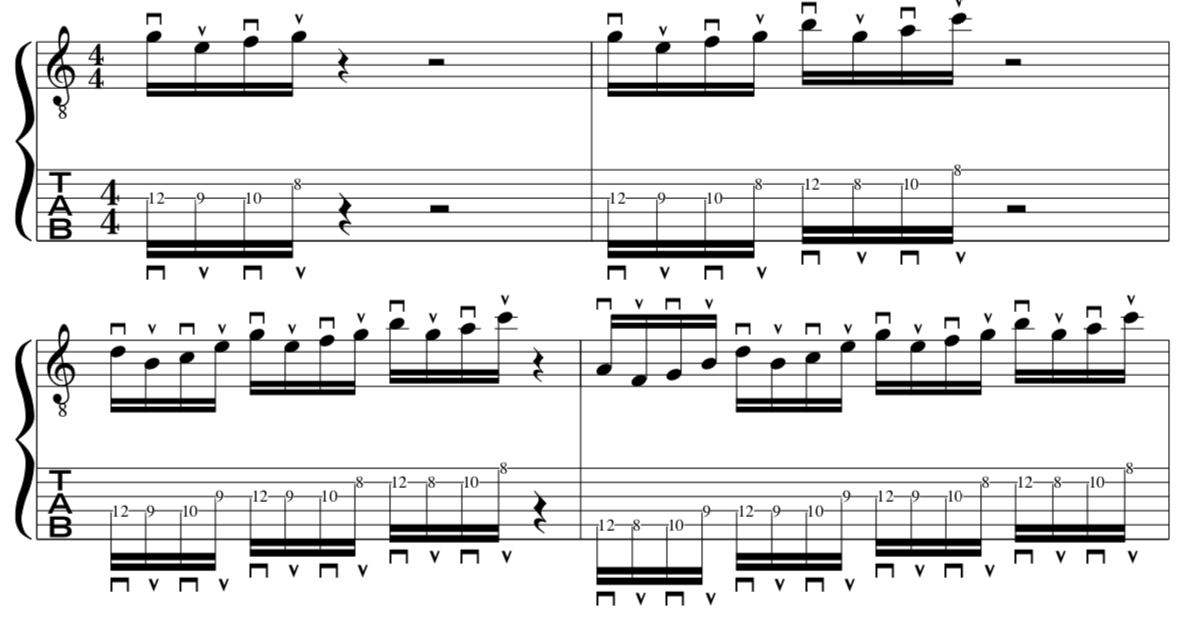
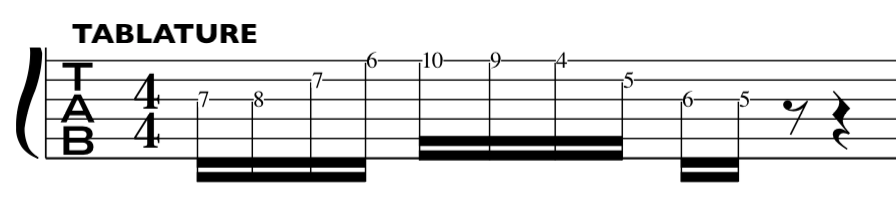
In this final part of alternate picking guitar techniques for jazz fusion improvisation. We again look at the style of John Mclaughlin in order to play through the changes with 4 groups of 4, or 4 tetrachords per bar.
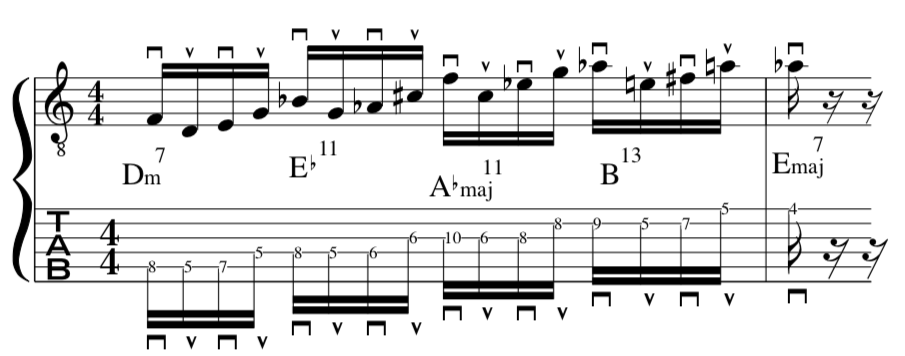
We can now apply this to playing through complex chord changes at a fast tempo. In the example below we will take John Coltrane’s “Countdown” and play one chord per beat as an example for setting up these 4 x 4 note groupings [Tetrachords]for quick rapid improvisation at a super fast tempo.
Messiaen, Fripp, Mclaughlin, Schoenberg, 21st century harmonic concepts
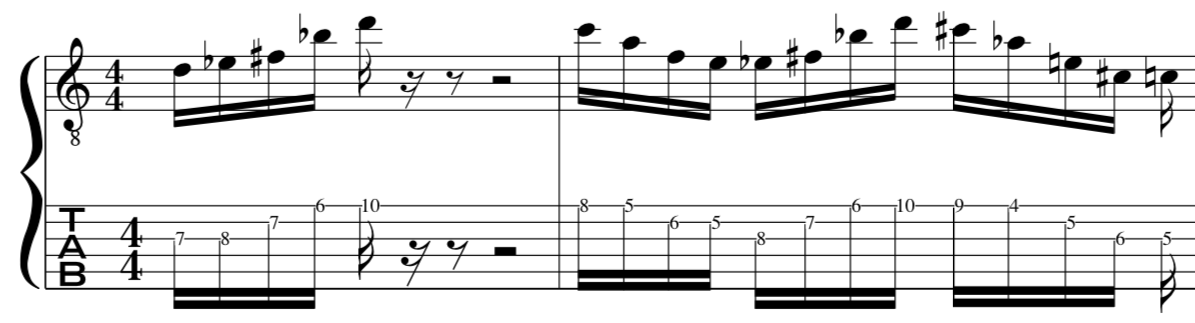
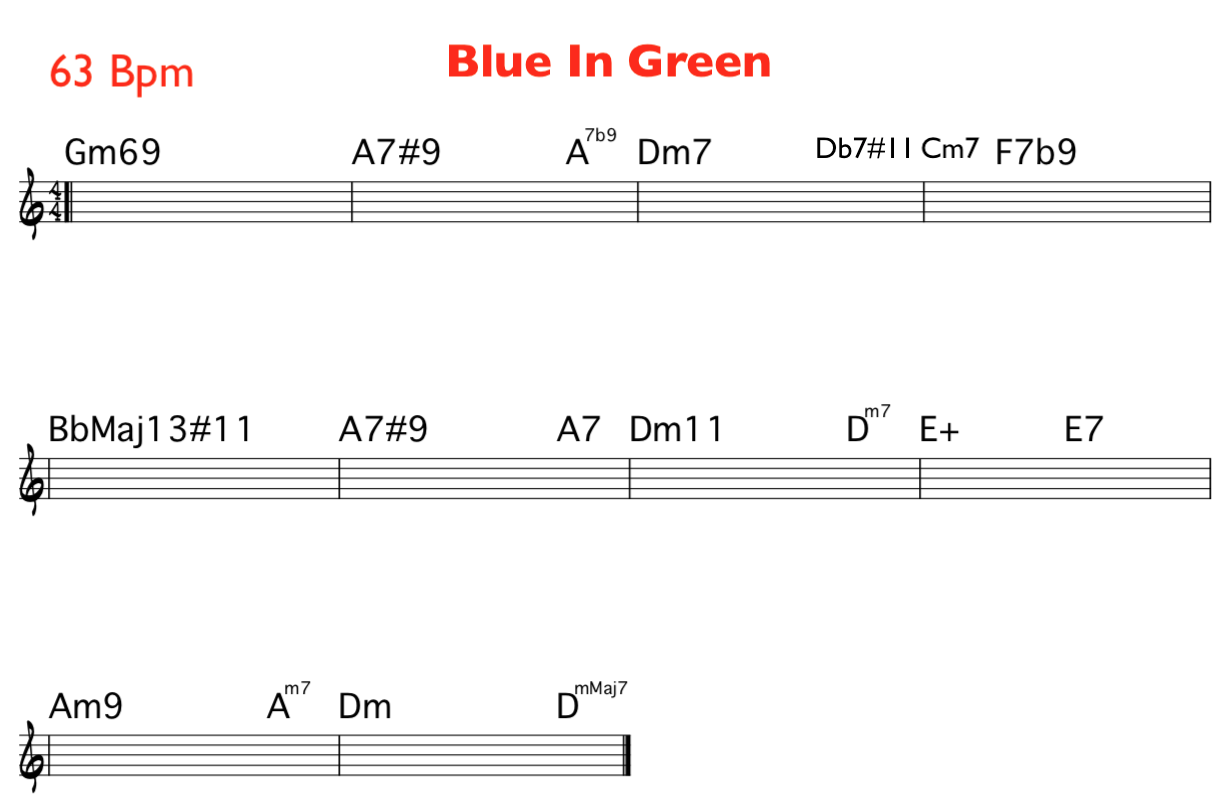
In this blog we will look at improvising over one chord. This will be D minor [D Dorian].
Messiaen, Fripp, Mclaughlin, Schoenberg, 21st century harmonic concepts
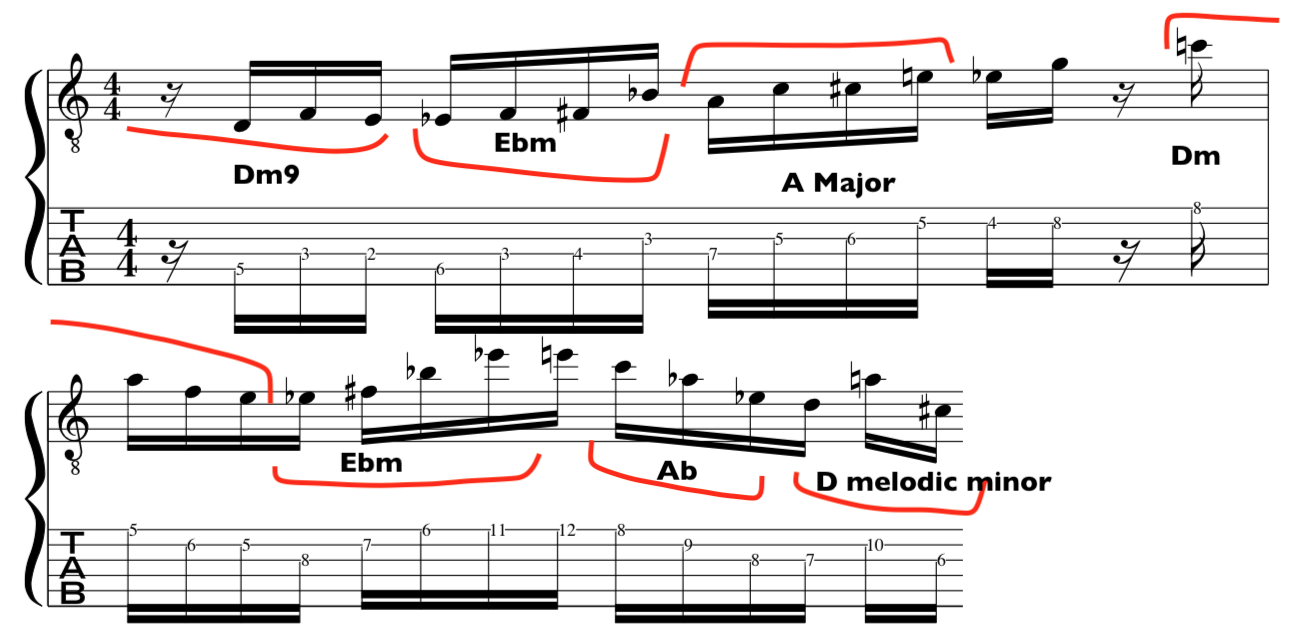
The key is to use chromaticism, tertian harmony, superimposition and outside harmonic content in order to create interesting improvised lines and move away from the cliches of scales and modes to create originality.
For example:
Messiaen, Fripp, Mclaughlin, Schoenberg, 21st century harmonic concepts
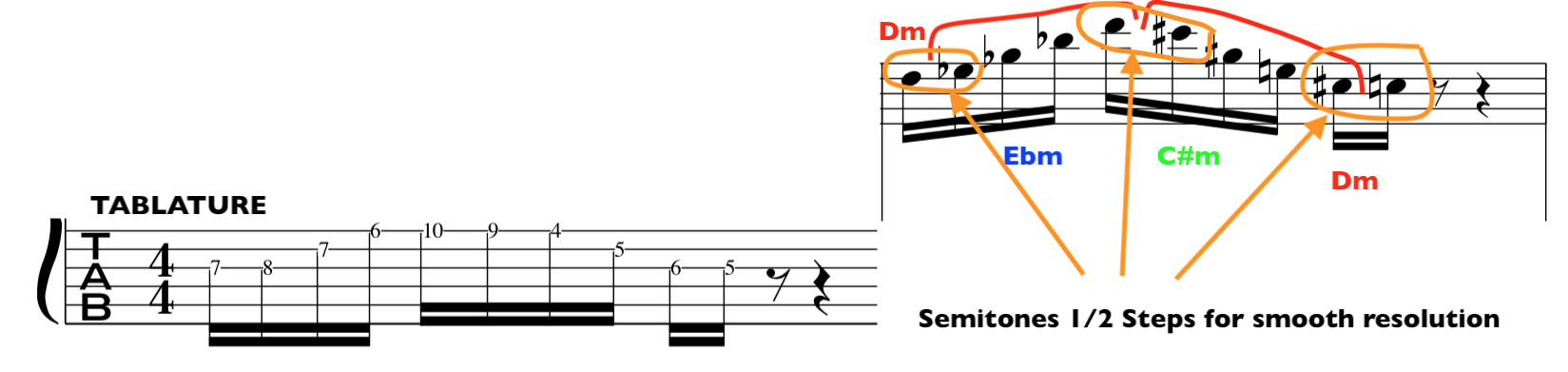
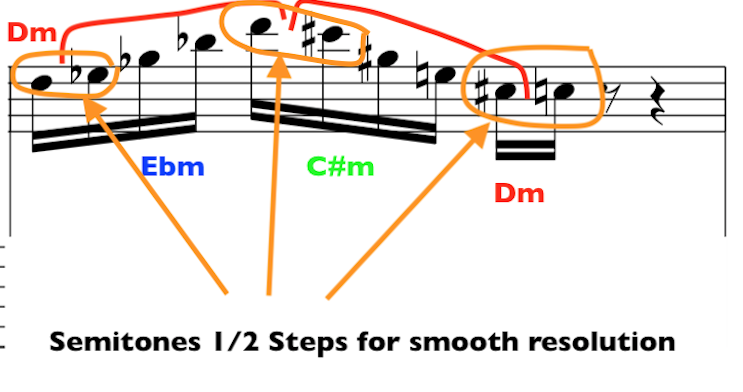
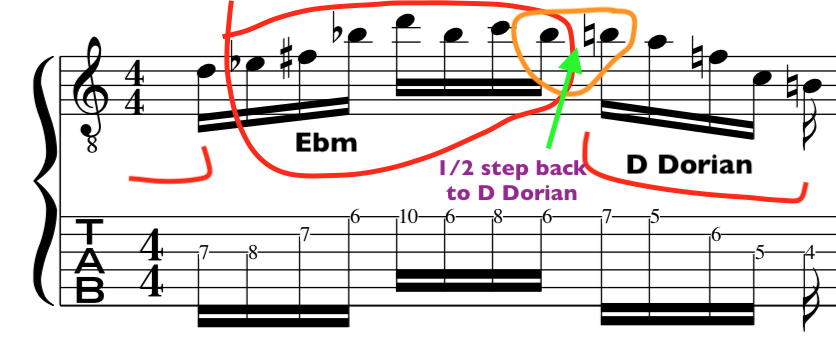
The key for smoothness is to be aware of where the 1/2 steps [Semitones]are in the “Connections”.
If we look below we can see where the 1/2 steps connect and how to play off of the tonic note with this. In this case we play off of the tonic D note resolving straight into the Eb note for Eb melodic minor. We can then resolve down a half step to C#m and back down into D Dorian
Messiaen, Fripp, Mclaughlin, Schoenberg, 21st century harmonic conceptsFripp ,Brecker, Mclaughlin chromatic Improvising method for jazz fusion improvisationChromatic jazz improvisation Brecker, Mclaughlin and creative Fripp improvising concepts
So as you can see it is easy to weave in and out of the harmony and get back to D Dorian via the 1/2 step.
Fripp ,Brecker, Mclaughlin chromatic Improvising method for jazz fusion improvisation
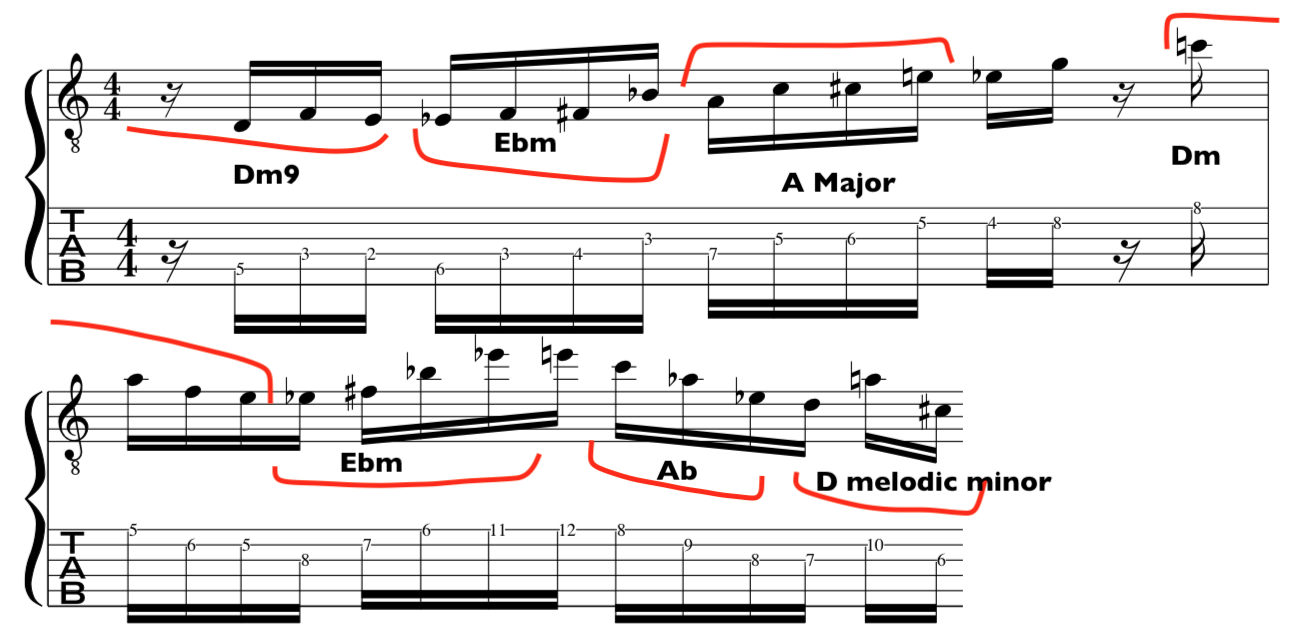
Below is a line that beautifully weaves in and out of D minor
Messiaen, Fripp, Mclaughlin, Schoenberg, 21st century harmonic concepts
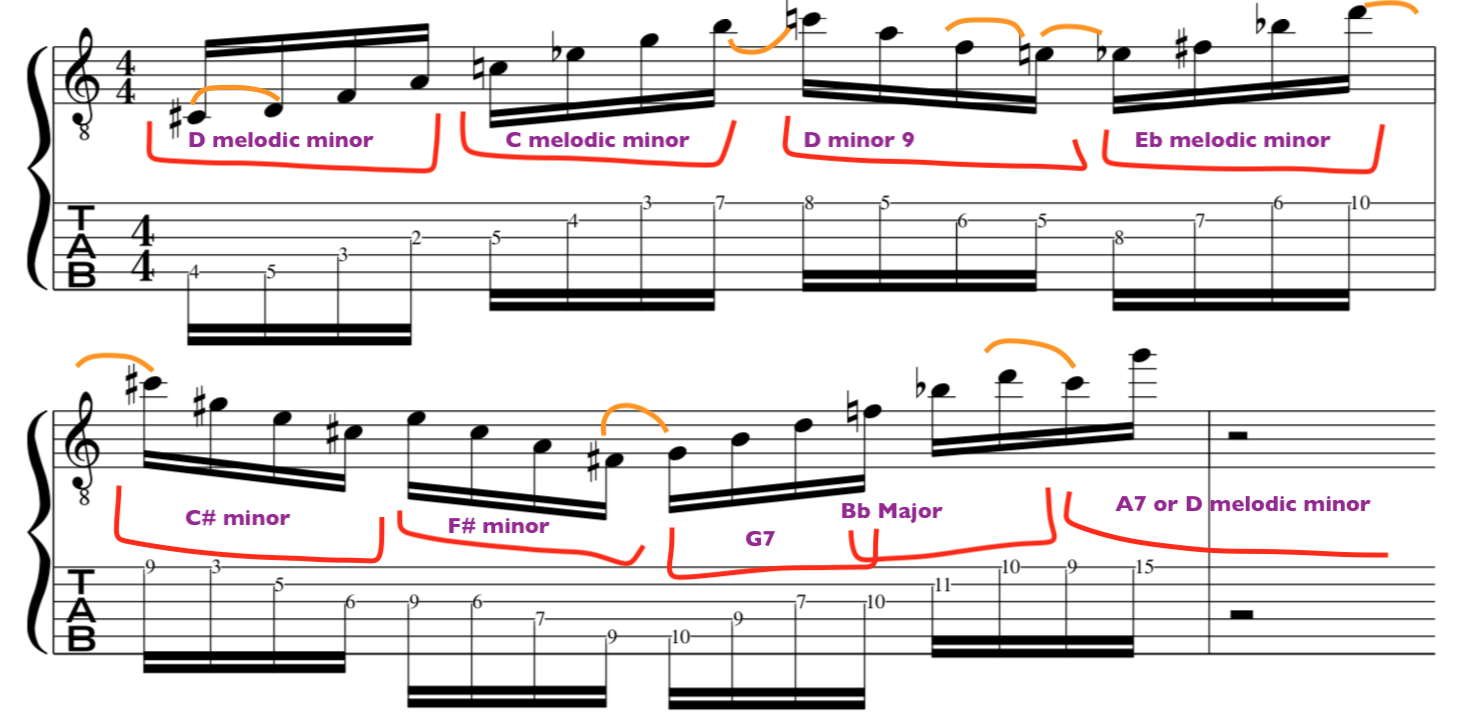
In this next example we will use tertian harmony and exploit superimposition. We will employ D melodic minor and and keep extending via C melodic minor.
Fripp ,Brecker, Mclaughlin chromatic Improvising method for jazz fusion improvisation
Now we will extend the whole line:
Fripp ,Brecker, Mclaughlin chromatic Improvising method for jazz fusion improvisation
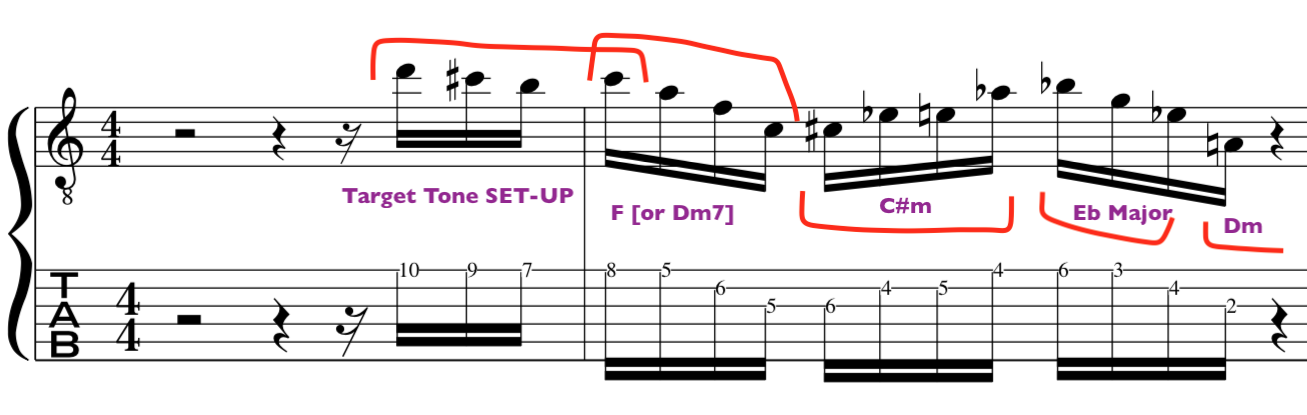
As another idea, there are still useful concepts like “Target Tones”. These can be manipulated without resorting to cliches.
Fripp ,Brecker, Mclaughlin chromatic Improvising method for jazz fusion improvisation
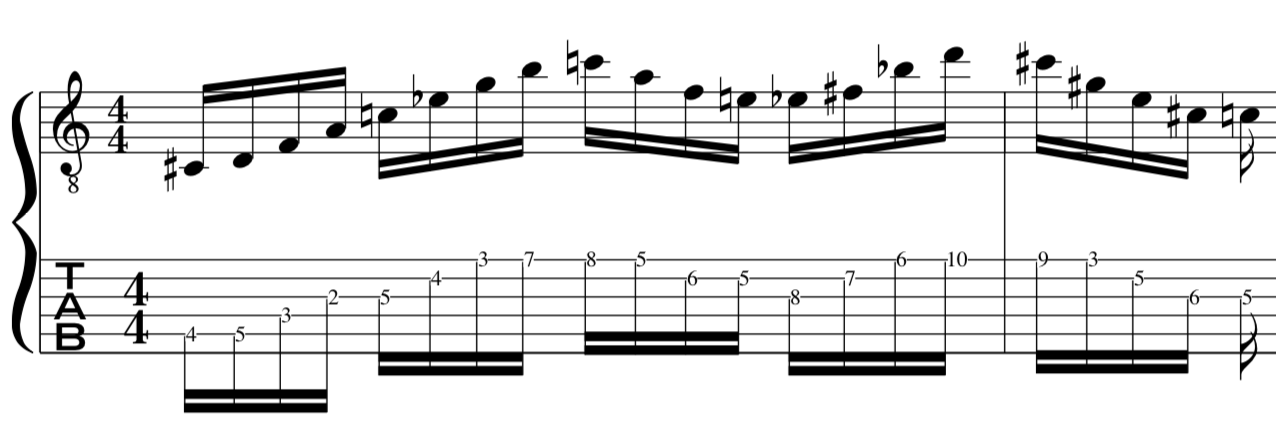
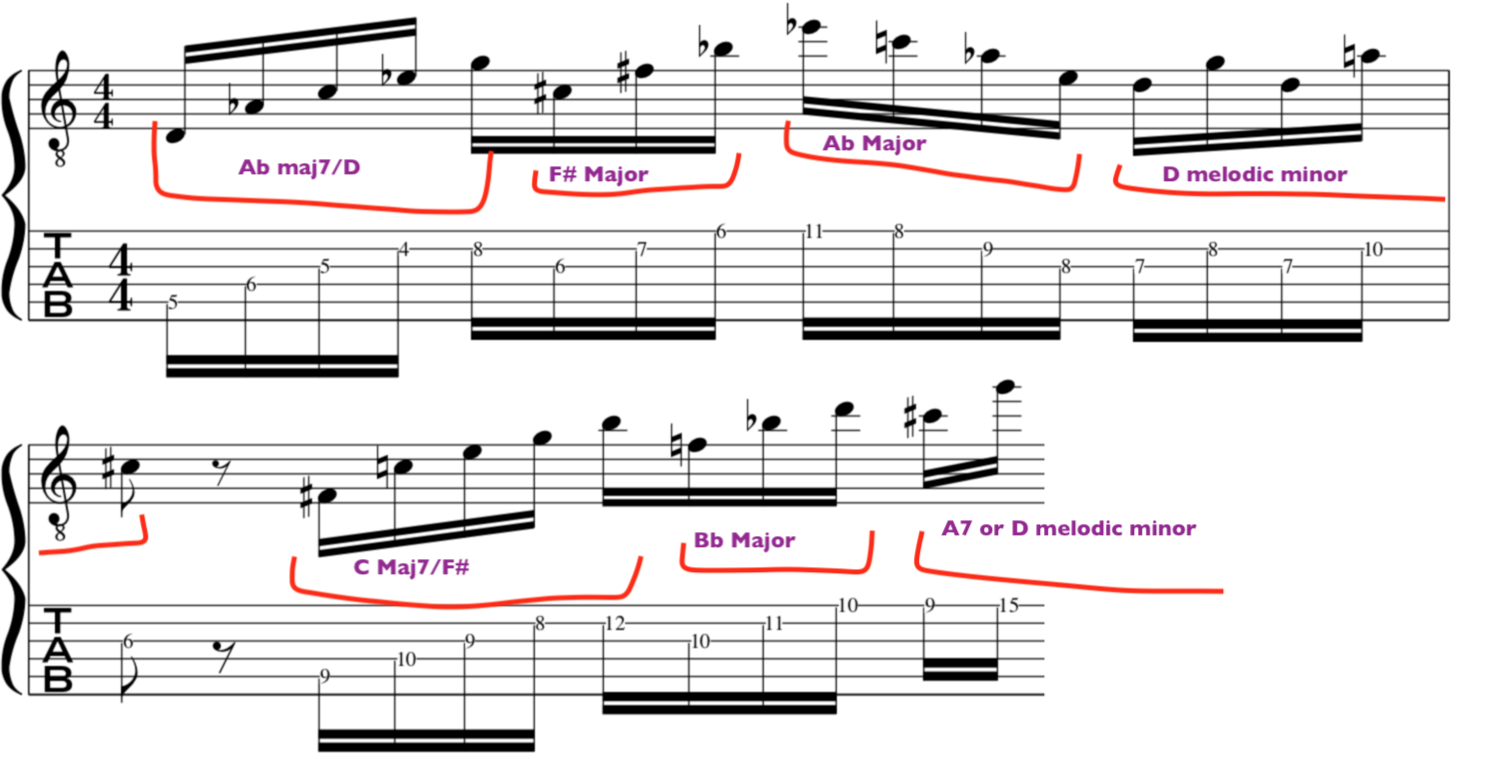
Lastly we will exploit the use flat 5 concepts. In this case there is an Abmaj7/D and a Cmaj7/F# with which we can be creative.
Fripp ,Brecker, Mclaughlin chromatic Improvising method for jazz fusion improvisation
Thanks for viewing this blog. Please SUBSCRIBE to us on Youtube below!