Lessons from Jazz/World to 20 Century Classical Music Harmony Rhythm and Theory
Category: Jazz fusion guitar music theory lessons, guitar technique and improvisation.
How to improvise over altered dominant chords. How to employ chromatic jazz and fusion harmony. Apply twentieth century classical composition techniques to modern jazz music and improv. How to exploit modes of the major. minor and diminished scales. Lesson in alternate picking guitar techniques as used by John Mclaughlin and Al di Meola. How to do metal rock and all styles of alternate picking on the guitar. Plectrum pick technique for electric and acoustic guitarists. alternate guitar style of picking lessons.
Please watch video above for a more detailed analysis:
Hi Guys,
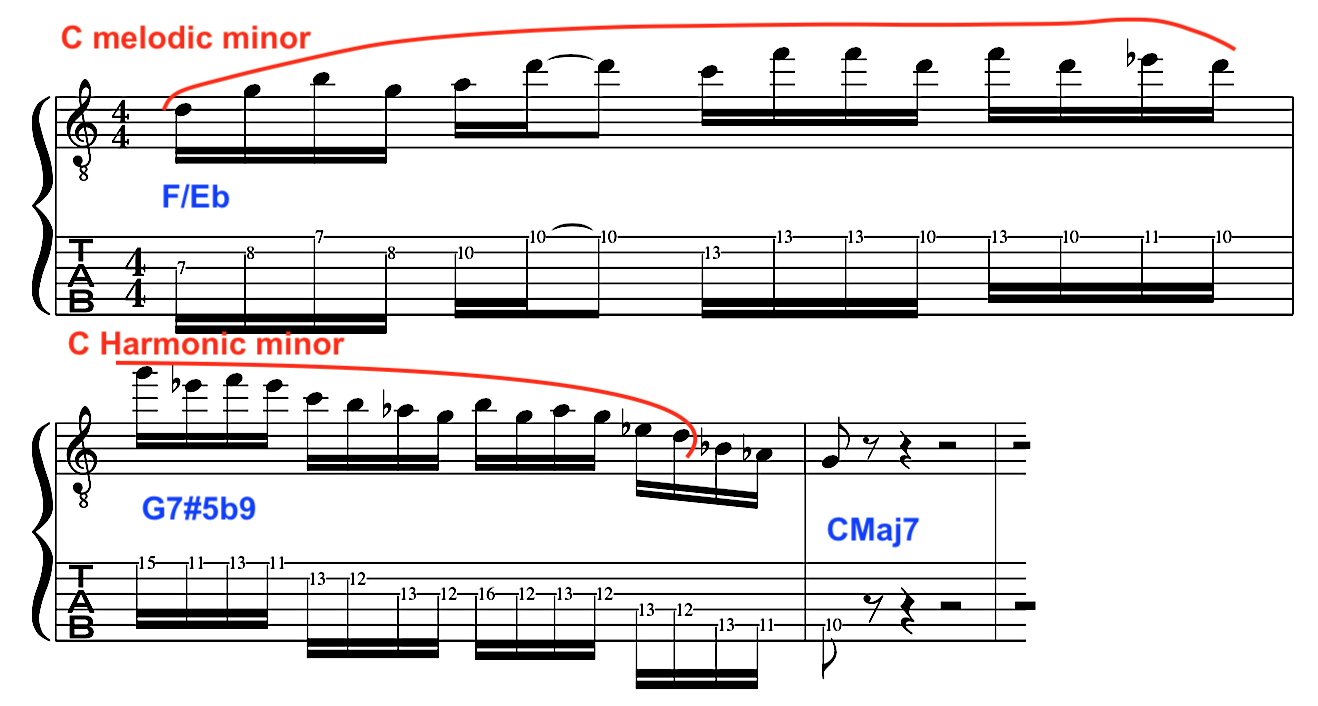
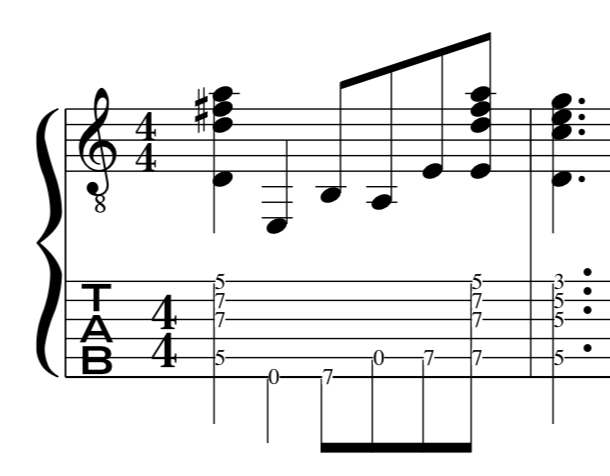
Here is another Alternate Picking John Mclaughlin jazz/fusion guitar lick. This is based on a variation of a 2 5 1 with F/Eb substituted for Dm7 going to G7#5b9 to CMaj7.
John McLaughlin Guitar Lesson
As you can see above the first part employs the C melodic minor scale whilst the second part employs the C Harmonic minor scale.
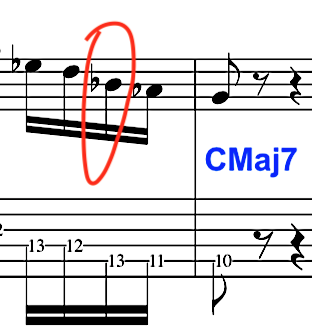
The only odd note being a Bb [Not of C Harmonic minor scale] for colour and because the B natural has already been heard.
John McLaughlin Guitar Lesson
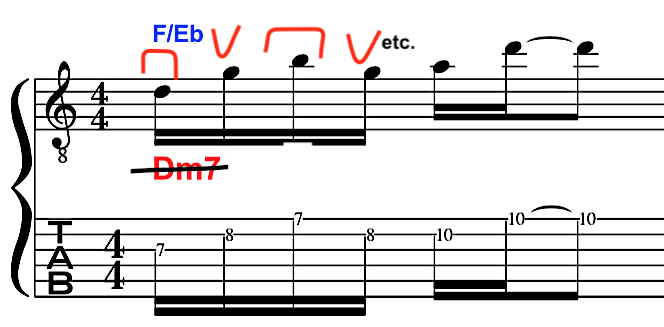
The lick starts on a downstroke for strict alternate picking.
John Mclaughlin analysis of how to improvise over Dominant chords example
Hi Guys,
Just another “Quick” fire lick today from legendary guitar great John Mclaughlin!
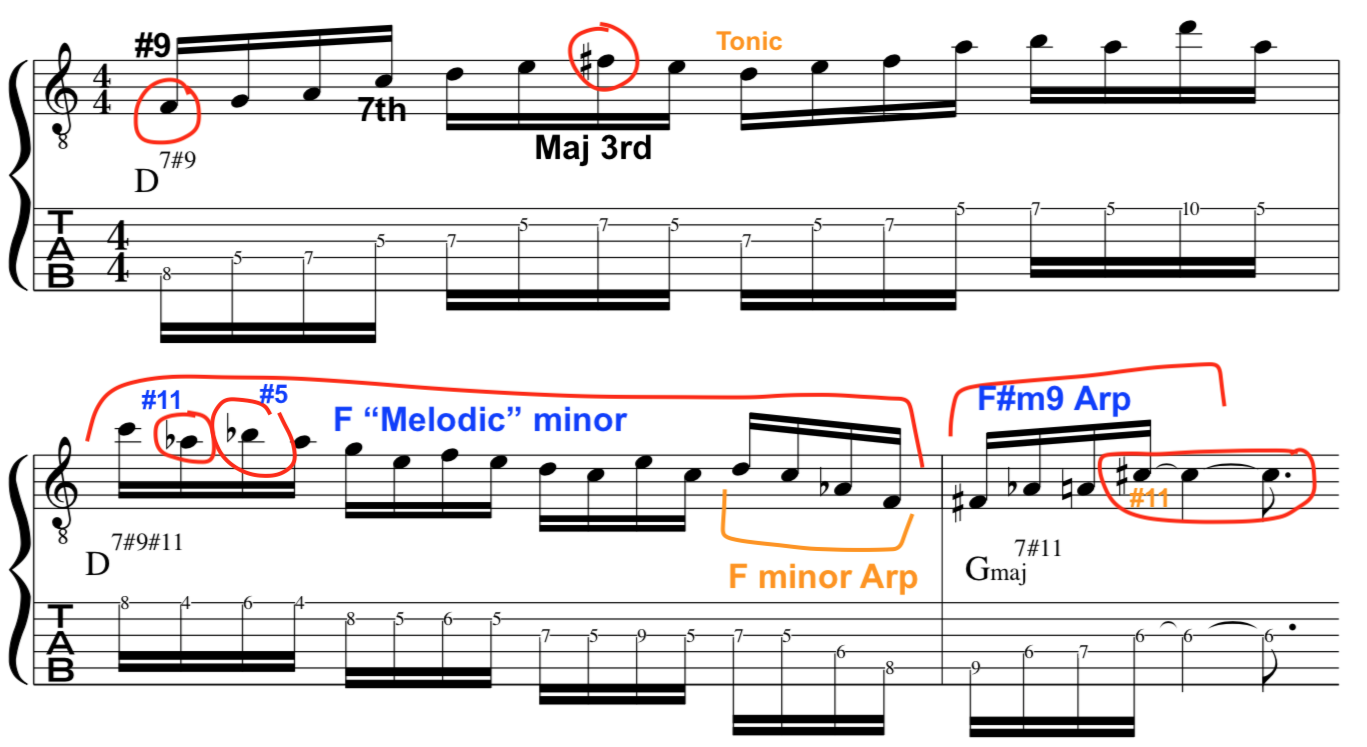
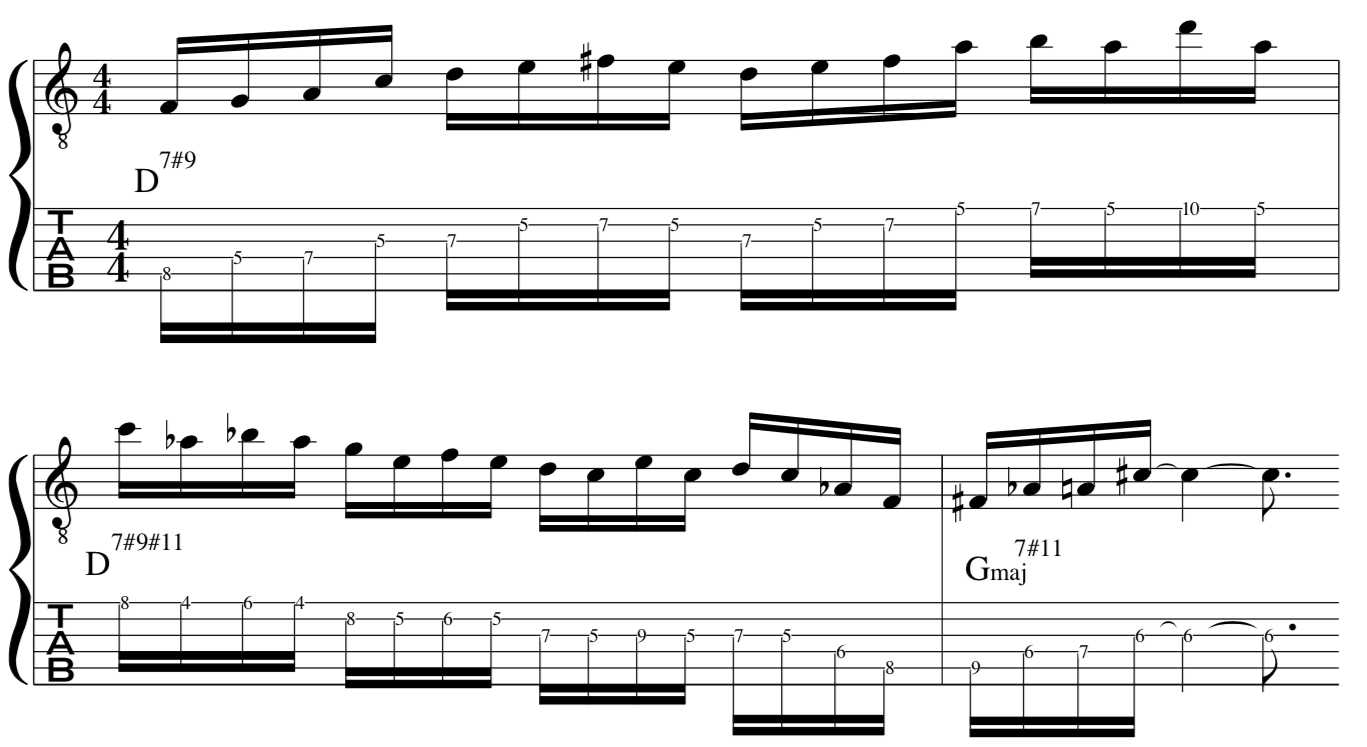
This is a short lick doubled in unison with strings [or synth] and played in double time. It employs strict alternate picking starting on a down stroke. The lick exploits two “Dominant” chords, D7#9 and D7#9#11.
John Mclaughlin Guitar Lick:
John Mclaughlin analysis of how to improvise over Dominant chords example
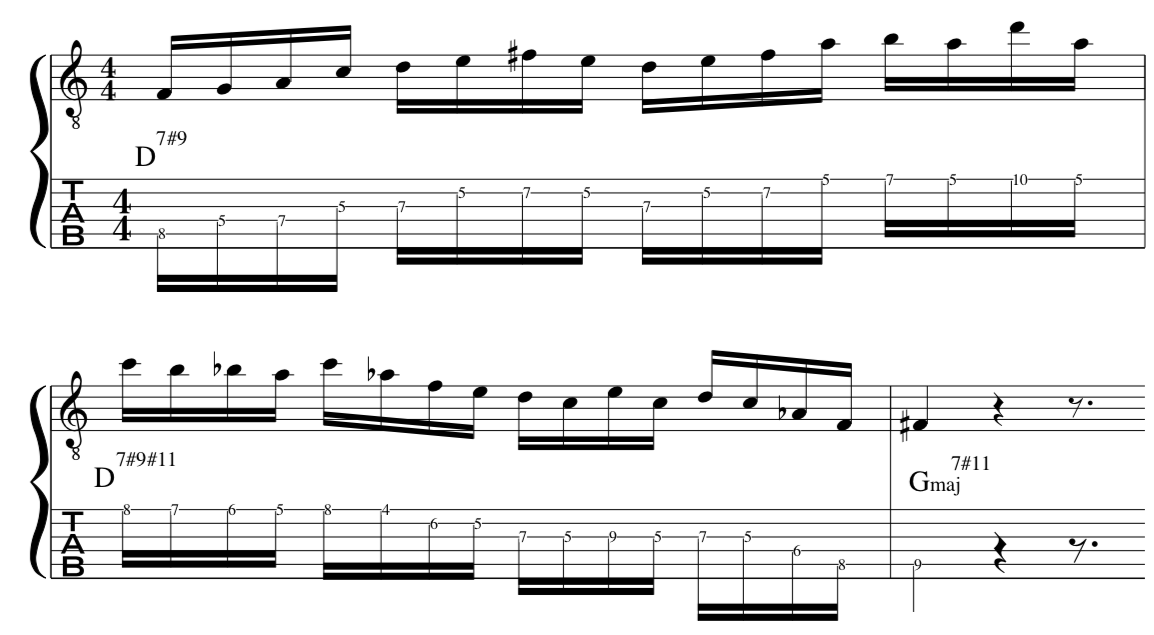
Ascending John employs a simple pentatonic scale that exploits both the #9 [F natural] and the Major 3rd [F#]. Descending he employs the F melodic [jazz] minor scale.This is because the second dominant chord exploits the #11 [Ab]. It also creates an augmented flavour with the #5 [Bb] note]. This finally resolves to GMaj7#11 with an F#m9 arpeggio that finishes on the C# note [#11 of Gmaj7#11].
Although this line follows musical logic it is also slightly ambiguous which in turn creates an interesting and more original sound:
LICK:
John Mclaughlin “Dominant” Double Time Fusion Guitar Lick
VARIATION with Chromaticism:
John Mclaughlin “Dominant” Double Time Fusion Guitar Lick
How to Anticipate/syncopate and use anacrusis at the guitar in Music
OFF-BEAT PLAYING
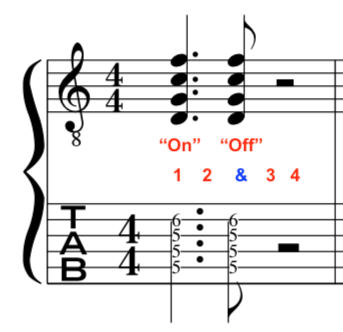
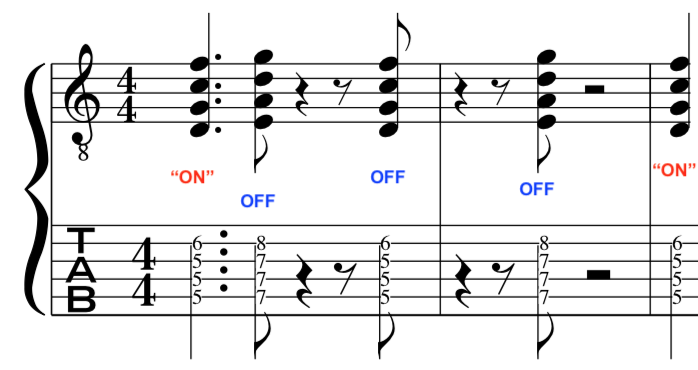
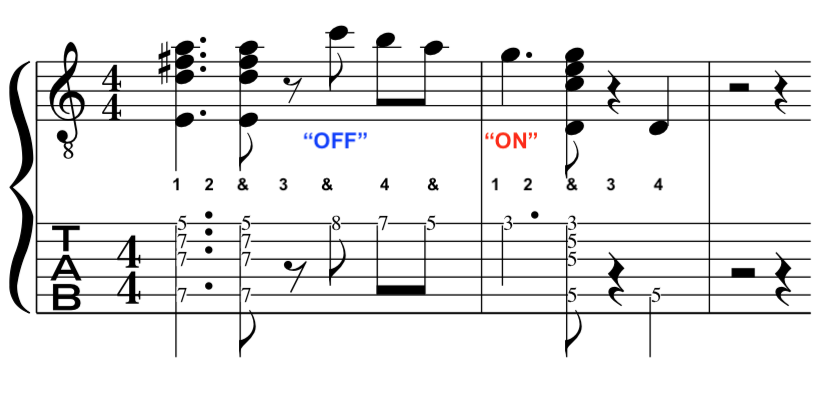
In order to play “Off” the beat you must first establish the “On” beat. This way you can anticipate or push the music/melody/riff or motif along and then return to the established “On” beat.
How to play on the beat and off the beat in music with chords.
When beat one is established we can then push any beat from there on. The key is then to return to the “On” beat to start the next phrase or vamp or piece of music.
If you play “Off” the beat continuously the syncopation/anticipation will be lost.
In order to fully comprehend off-beat playing it is an extremely good idea to learn and practice the two most common essential rhythms in every way possible, both in the bar and across the bar line. But, always coming back to the “On” beat for the start of the new phrase.
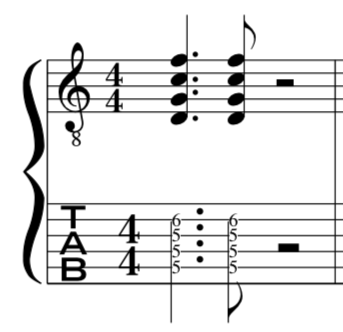
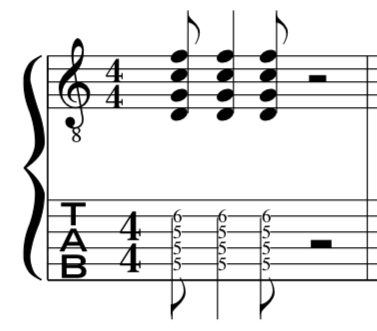
Rhythm 1
How to play on the beat and off the beat in music with chords.
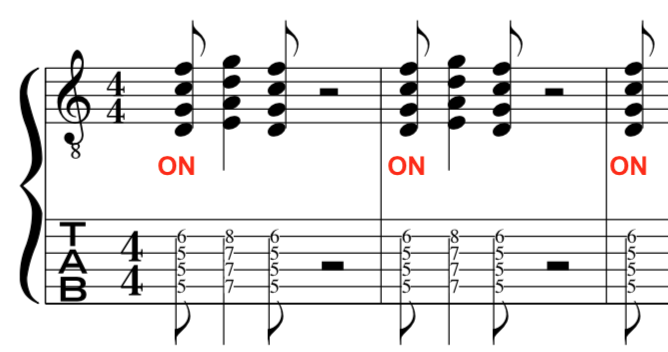
Rhythm 2
How to play on the beat and off the beat in music with chords.
You can change the harmonic rhythm or join the rhythms together and create vamps or phrases.
Example:
How to play on the beat and off the beat in music with chords.
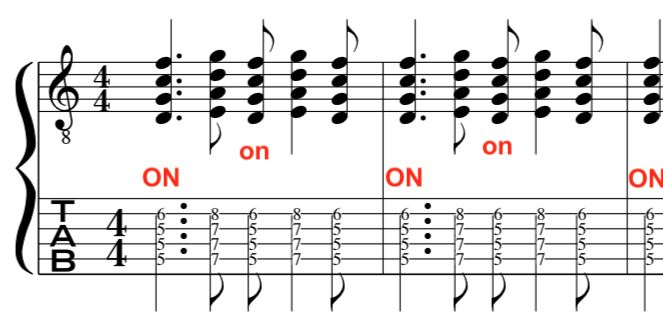
Example:
How to play on the beat and off the beat in music with chords.
Mixing Both Rhythms Together:
How to play on the beat and off the beat in music with chords.
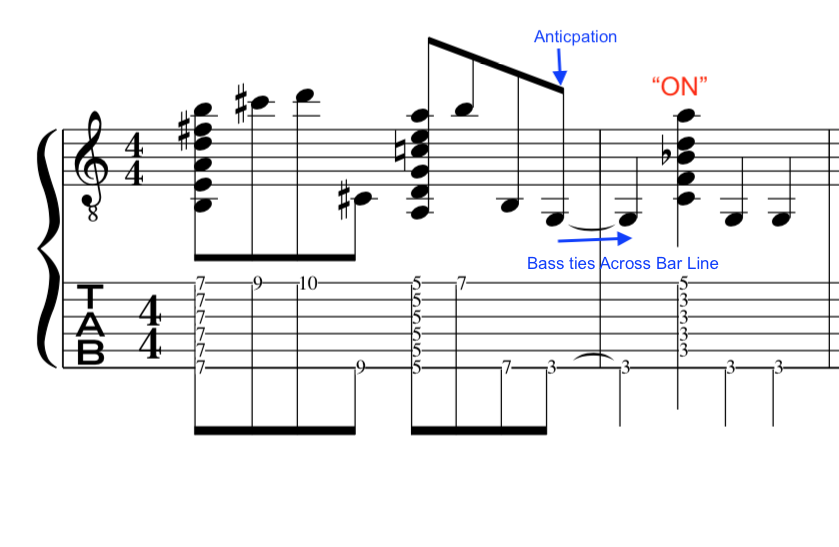
Now we will add a bass push/anticipation: [Notice the BASS note is “Tied” across the bar line].
How to play on the beat and off the beat in music with chords. [Anticipation]
In this example we will add a short “Melody” to a chord:
How to play on the beat and off the beat in music with chords/Melody
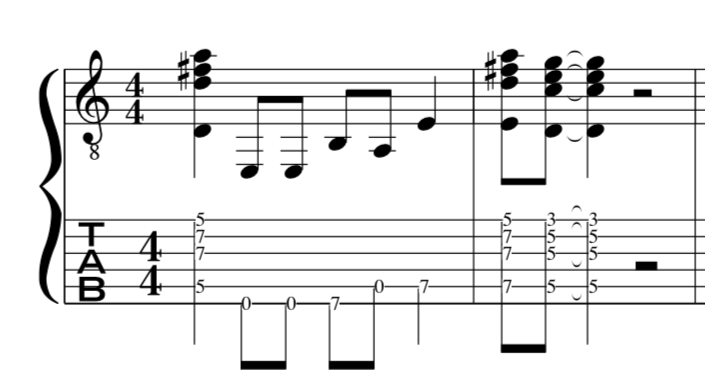
Here are a set of variations on a chord change:
Variation 1:
How to play on the beat and off the beat in music with chords.
Variation 2:
On the beat
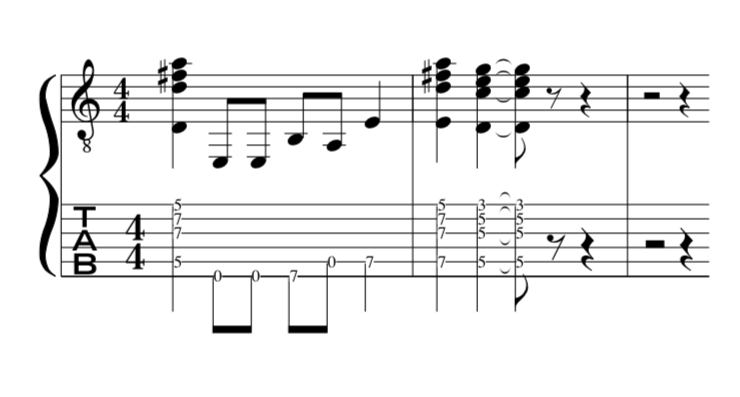
Variation 3:
How to play on the beat and off the beat in music with chords.
IF THIS LESSON WAS OF VALUE TO YOU THEN PLEASE SUBSCRIBE TO US ON YOUTUBE BELOW, THANKS!