Harmonising Melodies with Diminished Chords: [Chord Melody]

Hi Guys,

Following on from our previous lesson, we will now exploit the diminished 7th chord from our harmonised diminished scale examples.

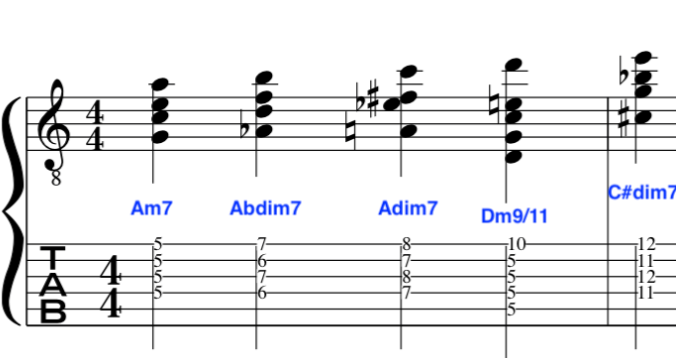
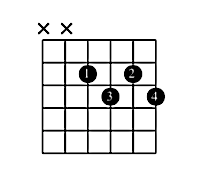
To recap, here, is our basic shape:
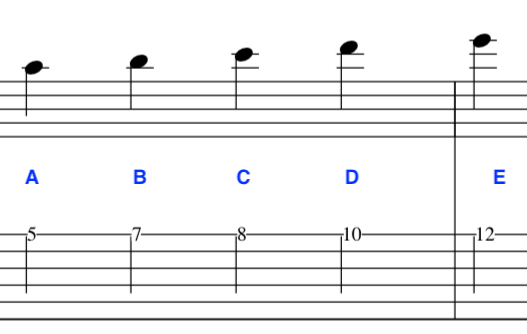
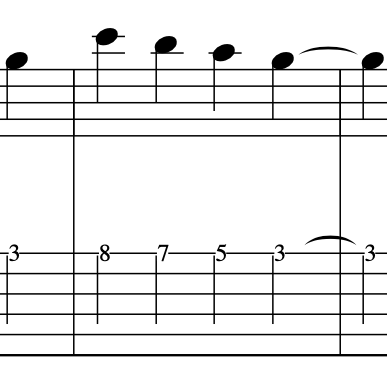
To begin with, let’s take a very basic fragment of melody:
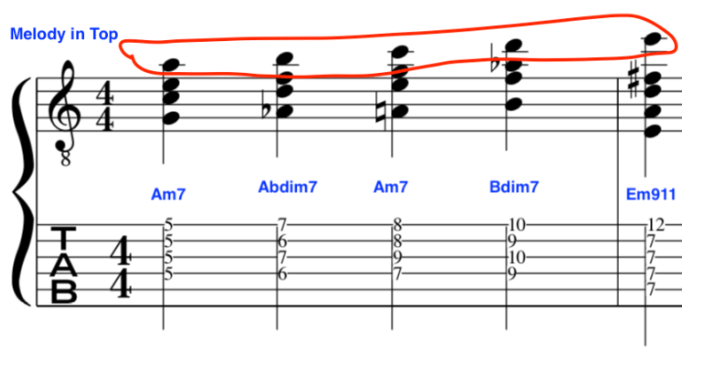
Now, we will simply harmonise this with our diminished 7th shape:
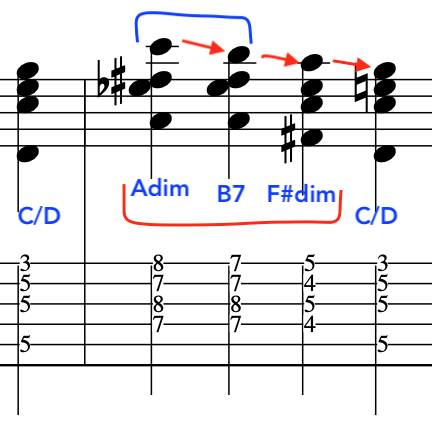
Guitar tab displaying example of how harmonising melodies with Diminished Chords is so easy on guitar. Brilliant lessonthta's easy to understand

Notice, that straight away we have a sophisticated harmonic Palate and accompanying chord melody.

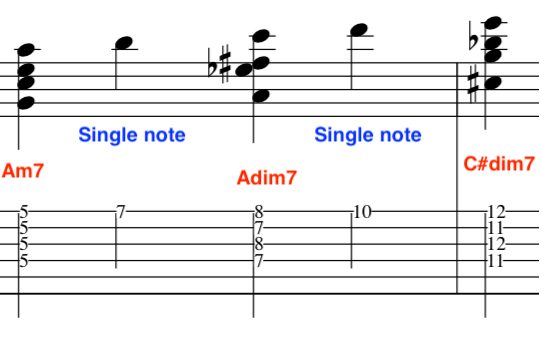
Let’s now stretch this further and broaden out on our diminished 7th chord shape by adding a couple of extra melodic notes:
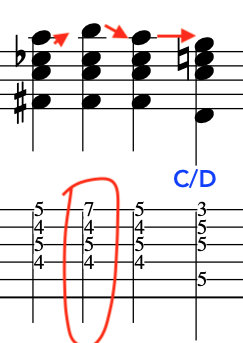
Lesson in harmonising melodies with Diminished Chords for easy on guitar and all musical instruments

From here, we will now harmonise the same piece of melody with slash chords from our previous lesson/video [on harmonising the diminished scale]:
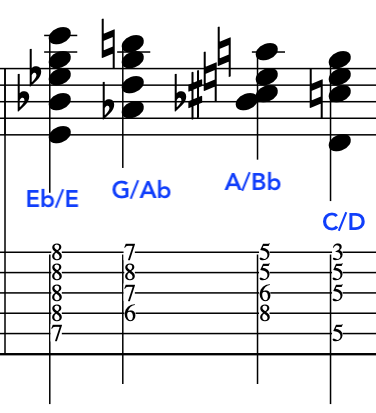
Guitar tablature displaying how to harmonise melody with slash chords from the diminished scale.

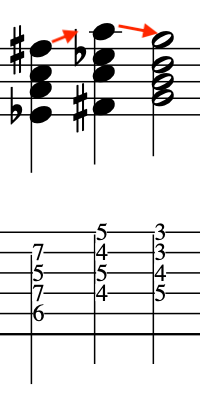
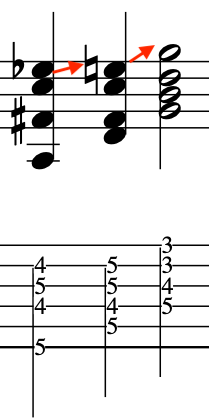
Lastly, here are two examples with diminished 7th chords from the 5th and 6th strings. Both harmonising perfect cadences.

Below, we have an example from “Stella” where we have both the minor7b5 and the diminished 7th [also Dominant7th].
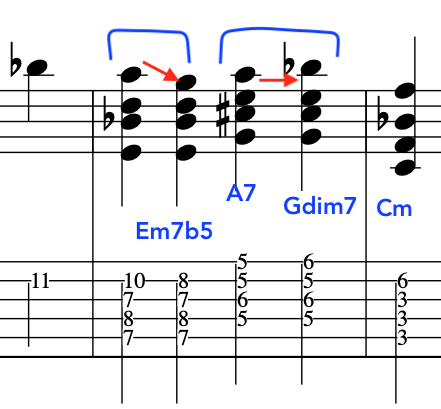
Music notation and guitar tab displaying example how harmonising melodies with Diminished Chords on jazz standards is easy.

In the next example, we have lots of colourful diminished 7th movement from the Gershwin classic “Someone to watch over me”.
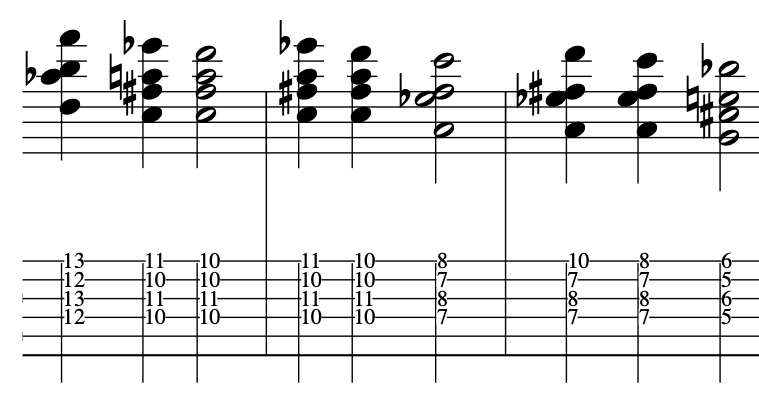
Guitar tab displaying jazz standard example how harmonising melodies with Diminished Chords is so easy on guitar and all musical instruments

Here, is the same but with the original Ab13 chord
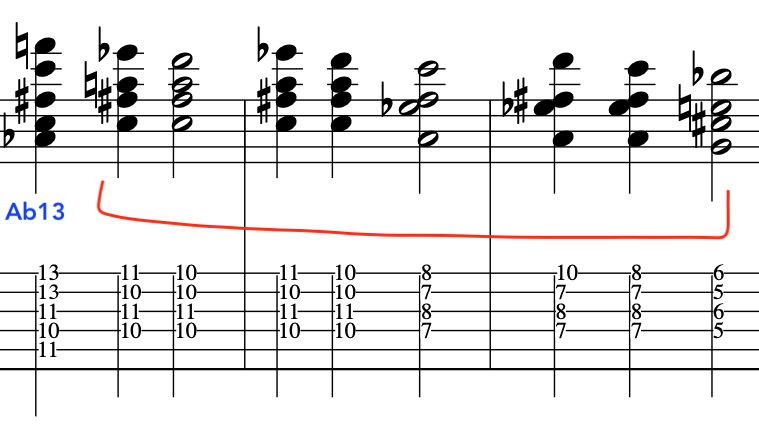
Guitar tab displaying jazz standard example how harmonising melodies with Diminished Chords is so easy on guitar and all musical instruments

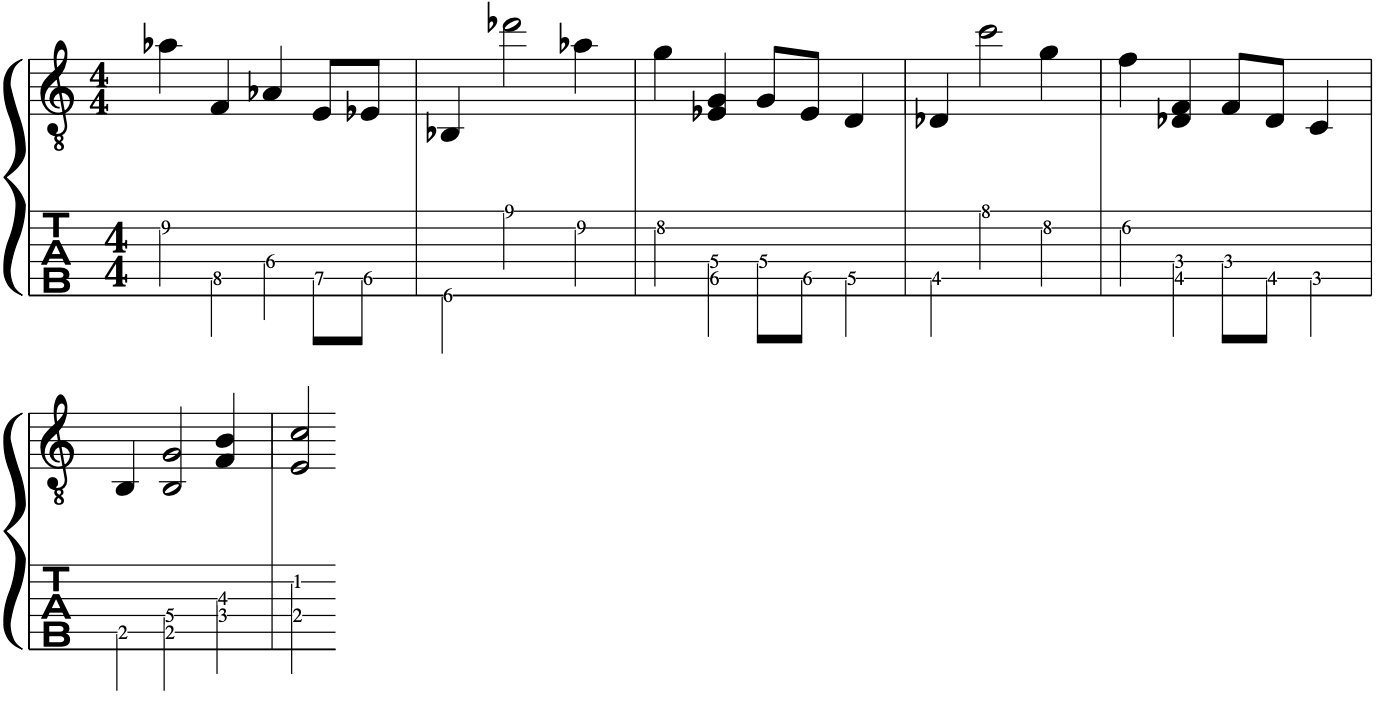
To conclude, we will harmonise a simple ascending melody and add passing diminished 7th chords and vary it:

This was just a quick look at how to exploit melodies with the diminished 7th shape from our lesson on harmonising the diminished scale.

What you will notice, is how easily we can apply them as passing chords and colourful harmonic decorations to create really sophisticated accompaniments and chord melody functions.

For a really in depth take on this, it is a good idea to take a look at some Barry Harris material as this contains a huge wealth of possibilities. Also, for guitarists, Pat Martino’s approach to chords.

Julian Lage’s Approach to Jazz Guitar Improvisation: 2Note Chord Voicing’s

Hi Guys,

Today, a look at how jazz guitar master Julian Lage harmonises, creates and improvises on jazz standards with simple 2 note chord voicing’s:

Many guitarists, and many instructional manuals display what are commonly called jazz chords as big block barre chords with overbearing resonance and no resolution to the movement.

But, the reality is that someone really good at comping in jazz will distill big block chords into simple 2 note voicing’s that don’t intrude and that pierce through the band or ensemble.

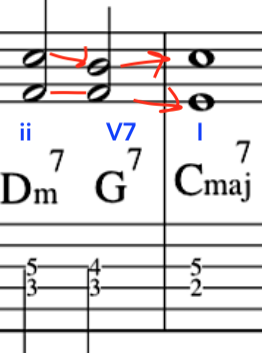
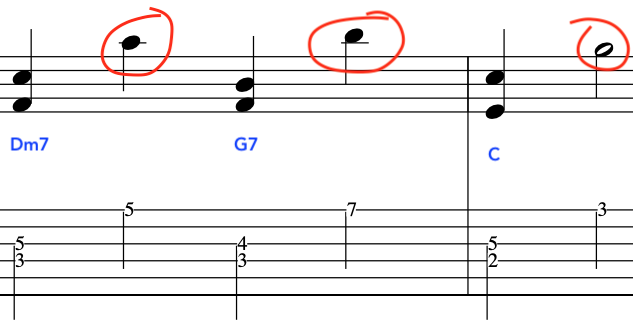
To begin with, let’s take a ii V I [Example below]. Notice that the C moves down a semitone to the note B and and then back up the semitone to C. The F note is played in both chords and then resolves down a semitone to the note E.

julian_lage_guitar_jazz_chords_lesson_example

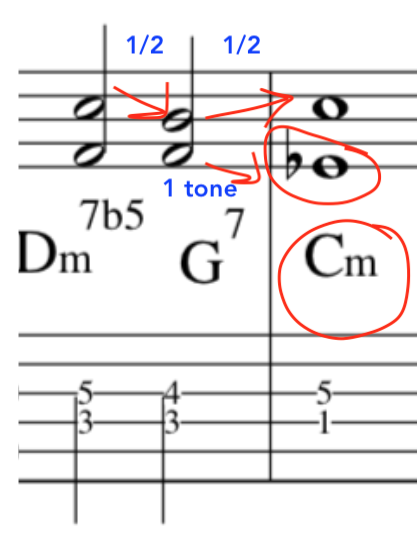
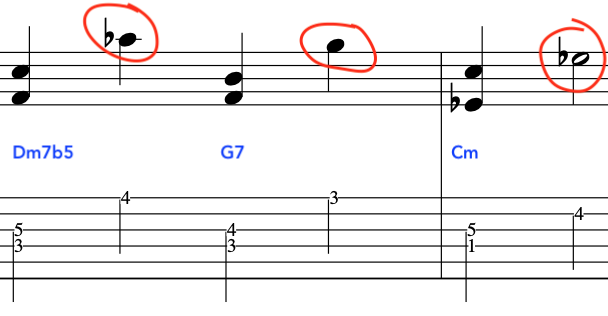
Now, let’s apply this to the minor key. Here we have iim7b5 V7 i [note the 1 tone movement from the F to the Eb]

julian_lage_guitar_jazz_chords_lesson_example

Below, is an example of how to add a little melody to our 2 note voicing’s of our ii V I[notice that it creates a clear and uncluttered sound].

julian-lage-jazz-guitar-chords-melody-example-lesson

We, will now apply this same concept to the minor key.

julian-lage-jazz-chords-chord-melody-example-guitar

Applying, what we have learnt so far let’s look at the first few bars of the standard “All the things you are”

First of all let’s take the basic harmony and see how the chords connect.

julian-lage-jazz-chords-melody-guitar-example

From here, we will now add the melody to this skeletal structure.

julian_lage_guitar_jazz_chords_lesson_example

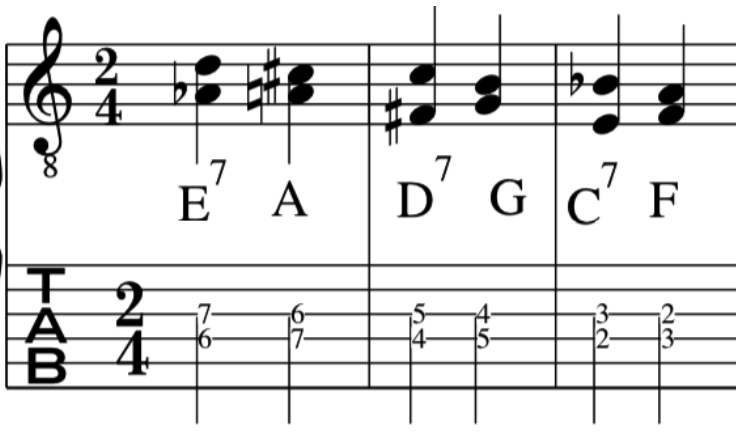
Here, is a nice easy way to string some V I’s together on the guitar fingerboard.

julian-lage-jazz-chords-voicings-guitar-example

Below, is a great way to modulate. Here, we have V7 I with I becoming the new V7 [third inversion] that modulates/resolvess to the new I chord [1st inversion] This works so well on the guitar with simple 2 note voicing’s.

julian_lage_jazz_guitar_chords_lesson-tab-

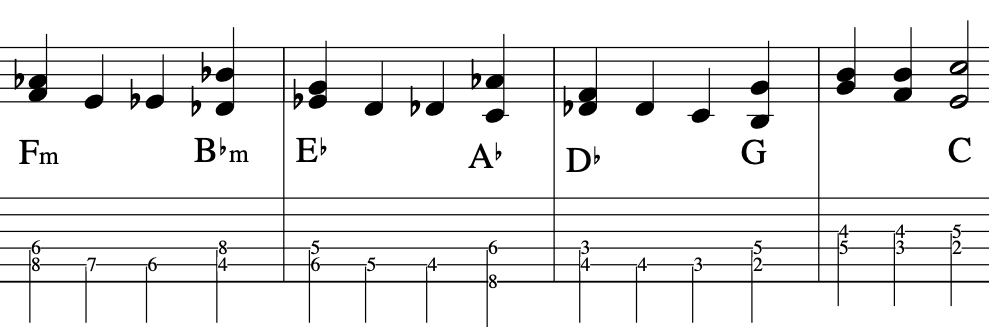
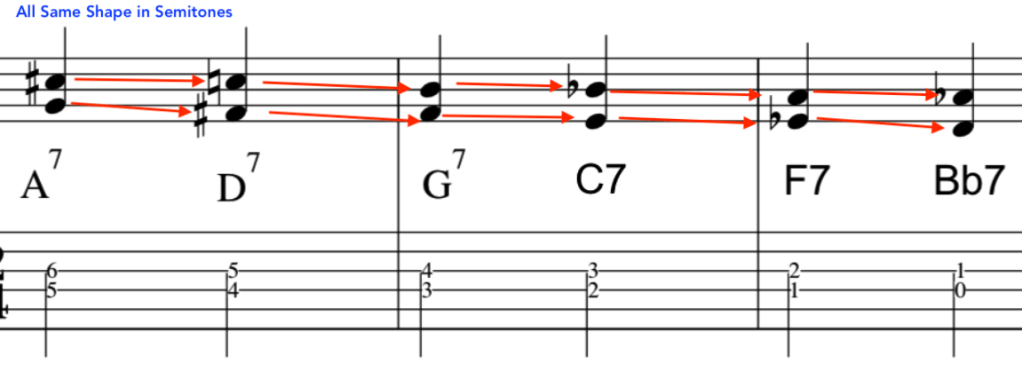
This last example, is super easy and is a great case in point as the same shape just moves down in semitones through the cycle 4ths/5ths.

julian-lage-jazz-chords-voicings-example-cycle-of-5ths
julian-lage-jazz-chords-voicings-example

ADDING COLOUR NOTES:

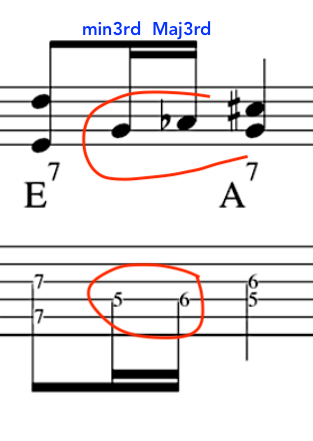
Although, 2 note voicing’s cut through, it can still be okay to add colour notes. For instance, below we have the use of a Major 3rd and minor 3rd to create a bluesy sound on the dominant chord.

julian-lage-jazz-chords-voicings-example

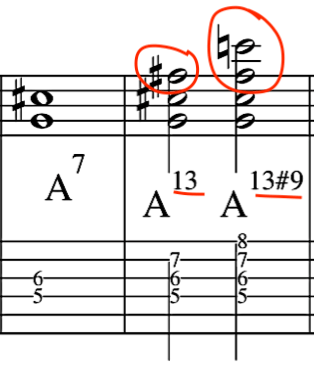
In the next example let’s add the 13th [F#] and the #9th [C]. This again, works well and creates colour when used sparingly.

julian-lage-jazz-chords-voicings-example-lesson

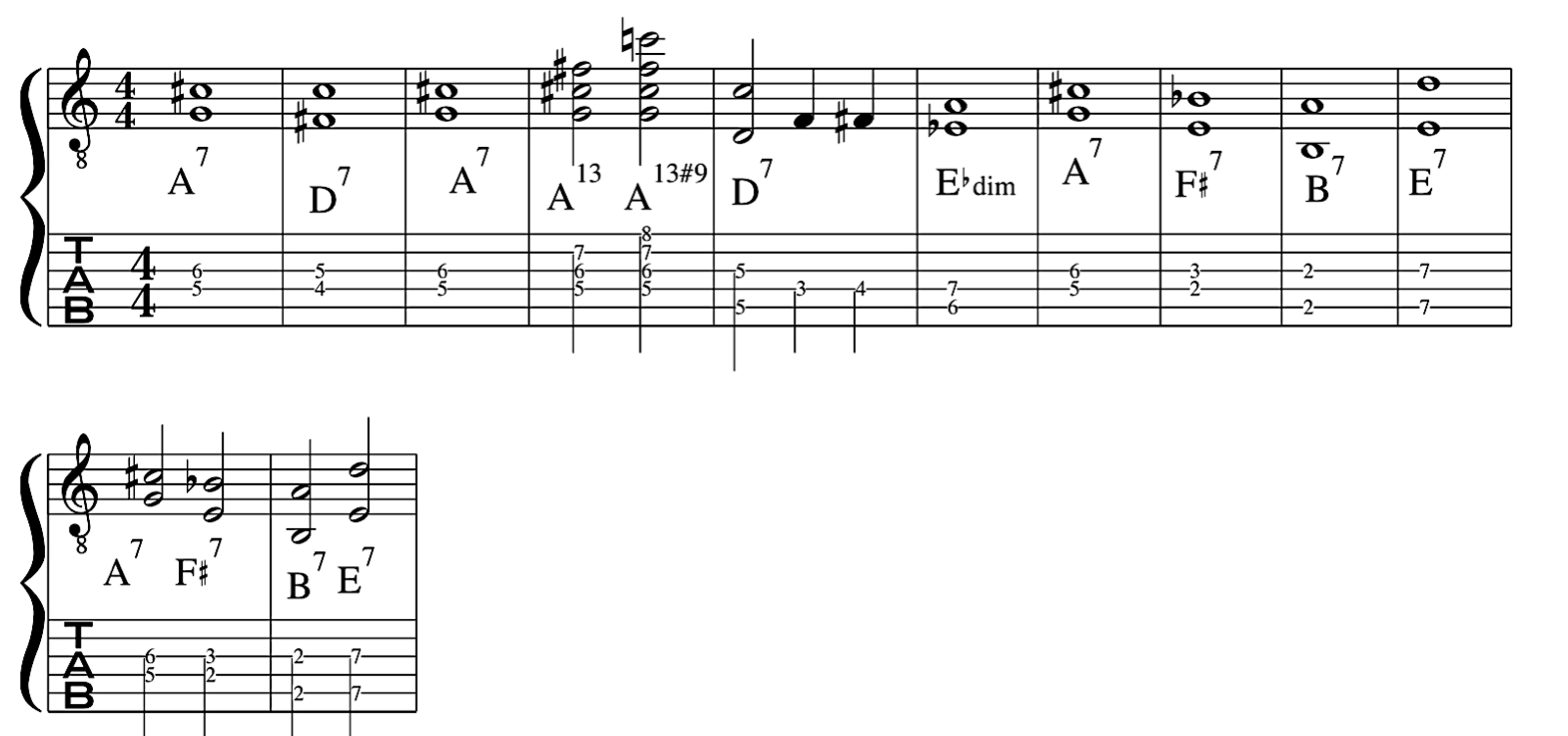
Here, is a simple Blues structure example exploiting these voicing’s:

julian-lage-jazz-chords-voicings-blues-example