Please watch video above for detailed info:
Hi Guys,
Today, a quick look at John McLaughlin’s use of the pentatonic scale.
PART 1:
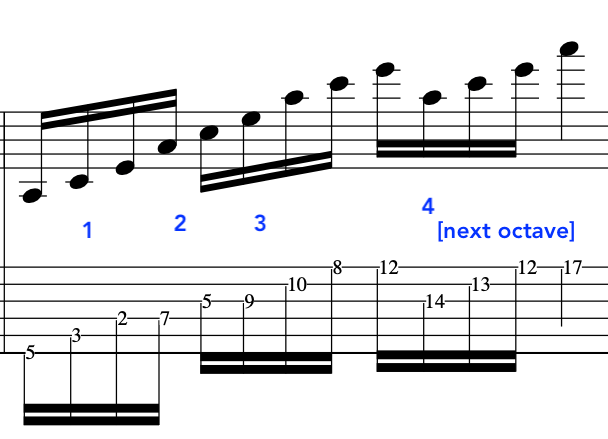
To begin with, it is a good idea to map out the fretboard of the guitar with an arpeggio.
This way we can ascertain where the different positions are.
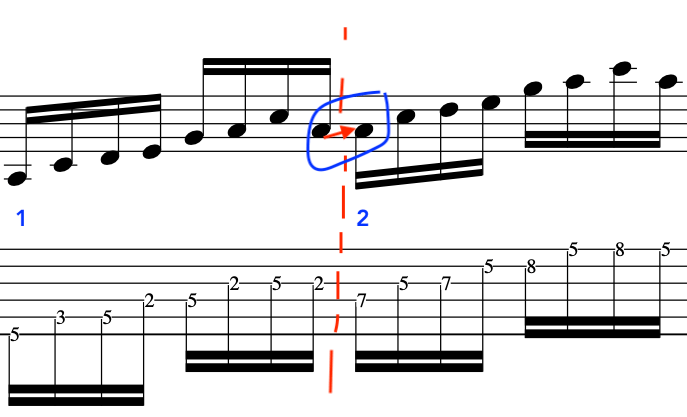
Now that we have this, let’s connect two positions together:
Moving up, we have this interesting scale combination:
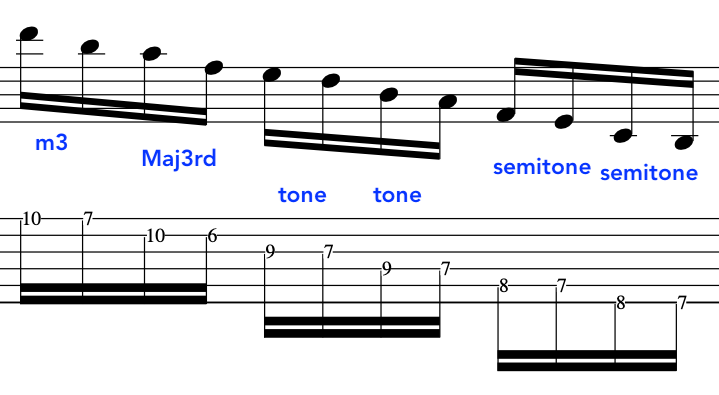
Finally, we have another pentatonic combination at the end of the octave:
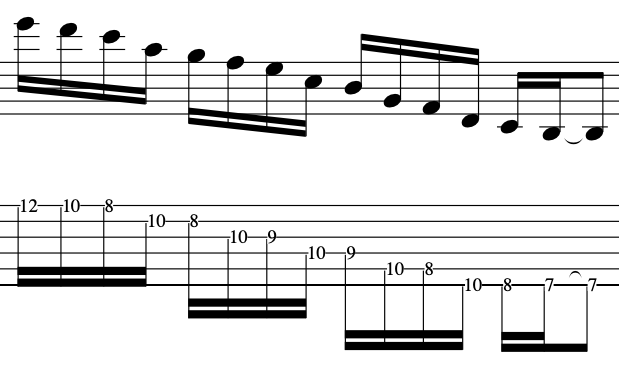
PART 2: CREATING COLOUR:
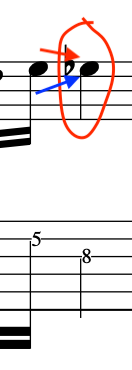
In order to create some magic, John McLaughlin naturally colours the phrase by adding a magic note.
In this example it is the E natural sliding down a semitone to E flat.
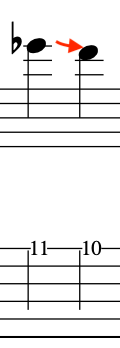
Also, the Eb moving down a semitone again, an octave up to D natural.
CREATING A LINE:
To see/hear this in action,let’s create a phrase/line.
We will do this by starting with an A minor arpeggio and an open D string. This has a triad pair inflection.
This open D string also gives our fretting hand a fraction of a second to get into the next position:
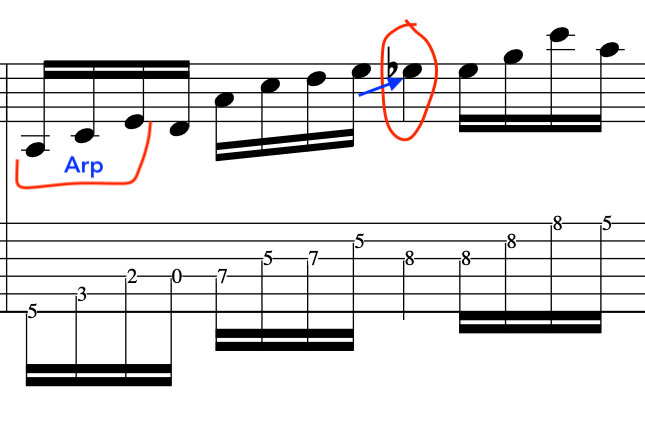
Another important point-John creates interest, by manipulating the 1st inversion minor chords on the first three strings of the guitar: In this case Cm and Am.
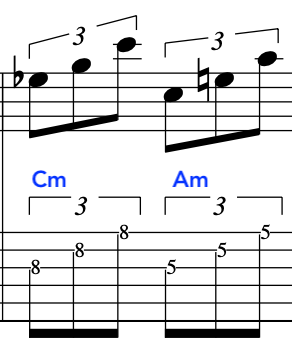
This gives us that spiritual or ethereal sound John is known for. It also, creates flavour and colour out of the basic minor pentatonic scale sound, yielding a more original result. [Please watch video above for demo performance]
Another great idea, is to employ the minor 7th arpeggio to the pentatonic scale:
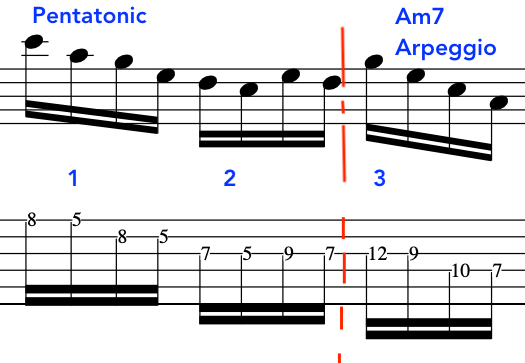
Lastly, John is a master at exploiting quartal harmony to create smooth pentatonic lines.
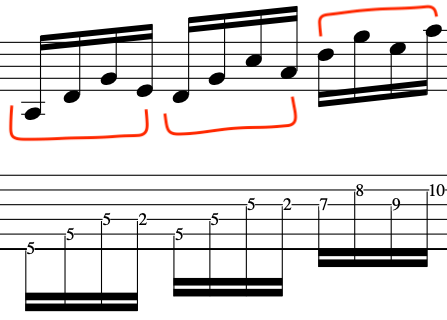
PART 3:
What’s great about using the minor arpeggio as a mapping tool, is that we can add notes of the pentatonic scale in between it. [Resulting in long fluid lines].
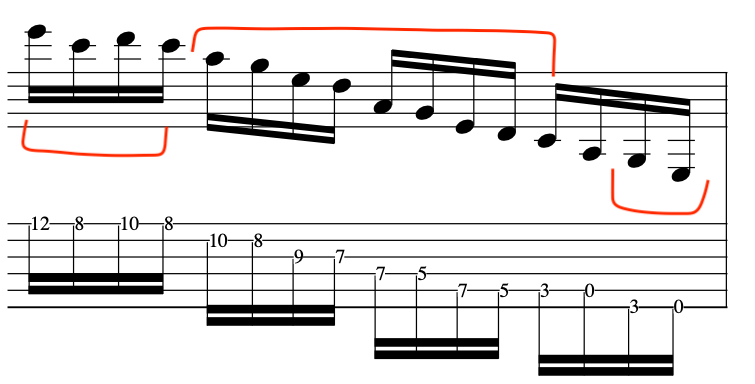
To conclude, we will take the first exercise from this blog and connect it to the pentatonic exercise above.
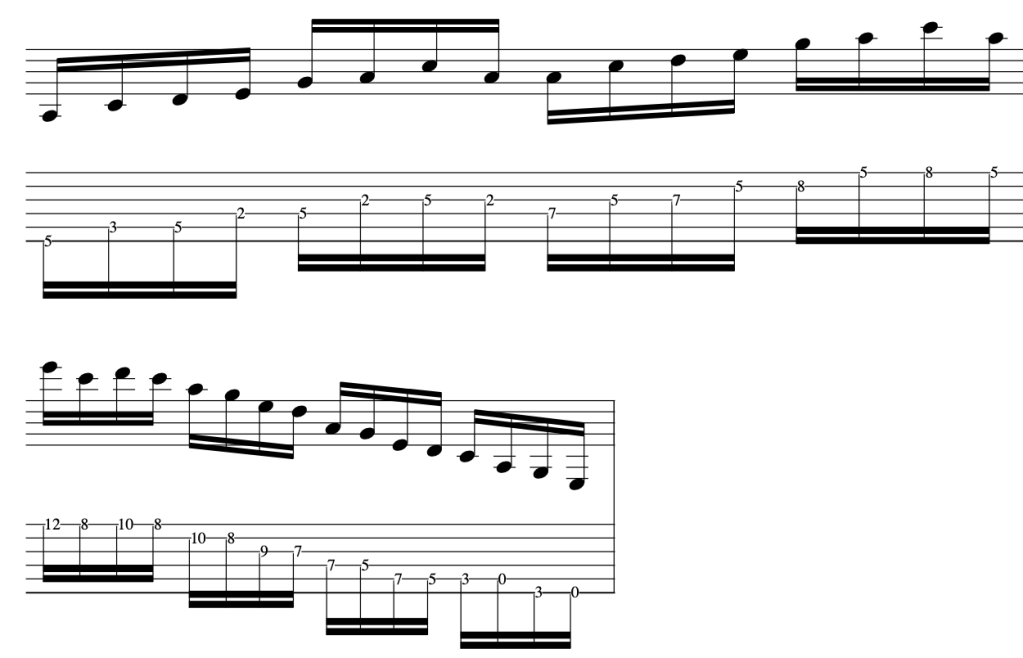
IN CONCLUSION:
This was just a quick look at how John McLaughlin exploits the common pentatonic scale.
There are many other approaches to this like those found in John McLaughlin’s educational video “This is the way I do it”.
But, the concepts detailed in this blog/lesson work really well as a primer for John’s live performances/improvisations.
FREE PDF DOWNLOAD:
If this lesson was of use to you then please SUBSCRIBE to us on YOUTUBE below, Thanks!