
Please watch video above for detailed info:
Hi Guys,
Today, a quick look at “Atonal improvisation and jazz” book by Jared E Davis.
Please note: This Blog won’t contain a Pdf download due to any copyright infringement.
PART 1:
Jared’s book, is similar in some ways to John ‘O’ Gallagher’s book 12 tone improvisation
But, also differs due to being atonal [interval pairs] and not 12 tone.
BASIC PROCEDURE:
This concept works with the 12 chromatic notes.
So, for example if we were to start on the note C it would be,
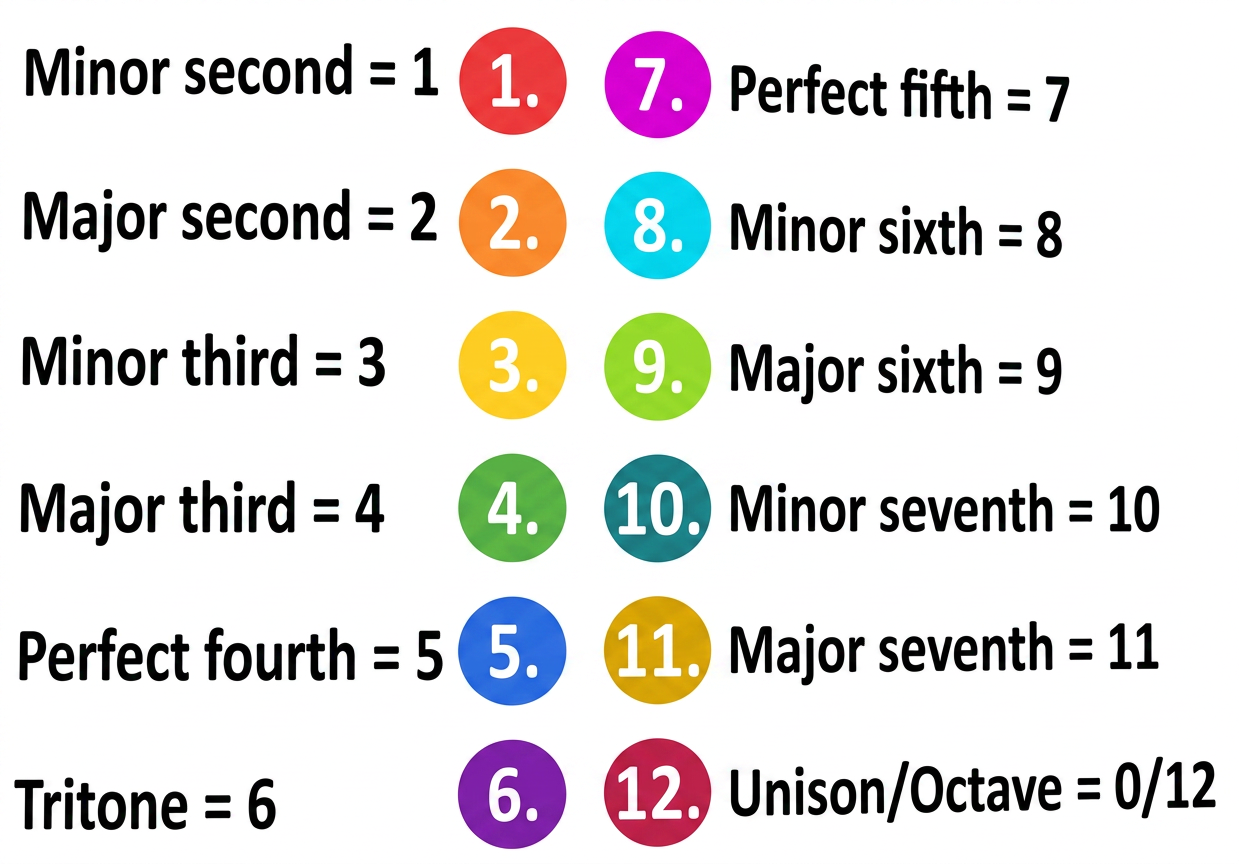
C=O C#=1 D=2 D#/Eb=3 E=4 F=5 etc.
Resulting in a minor 3rd =3 or a Major 7th = 11 or Unison = 0 etc.
We are just counting the minor 2nds/semitones as in the chart below:
CHART:
What to be aware of:
If we were to have singular intervals like 11111 etc, we would end up with a chromatic scale:
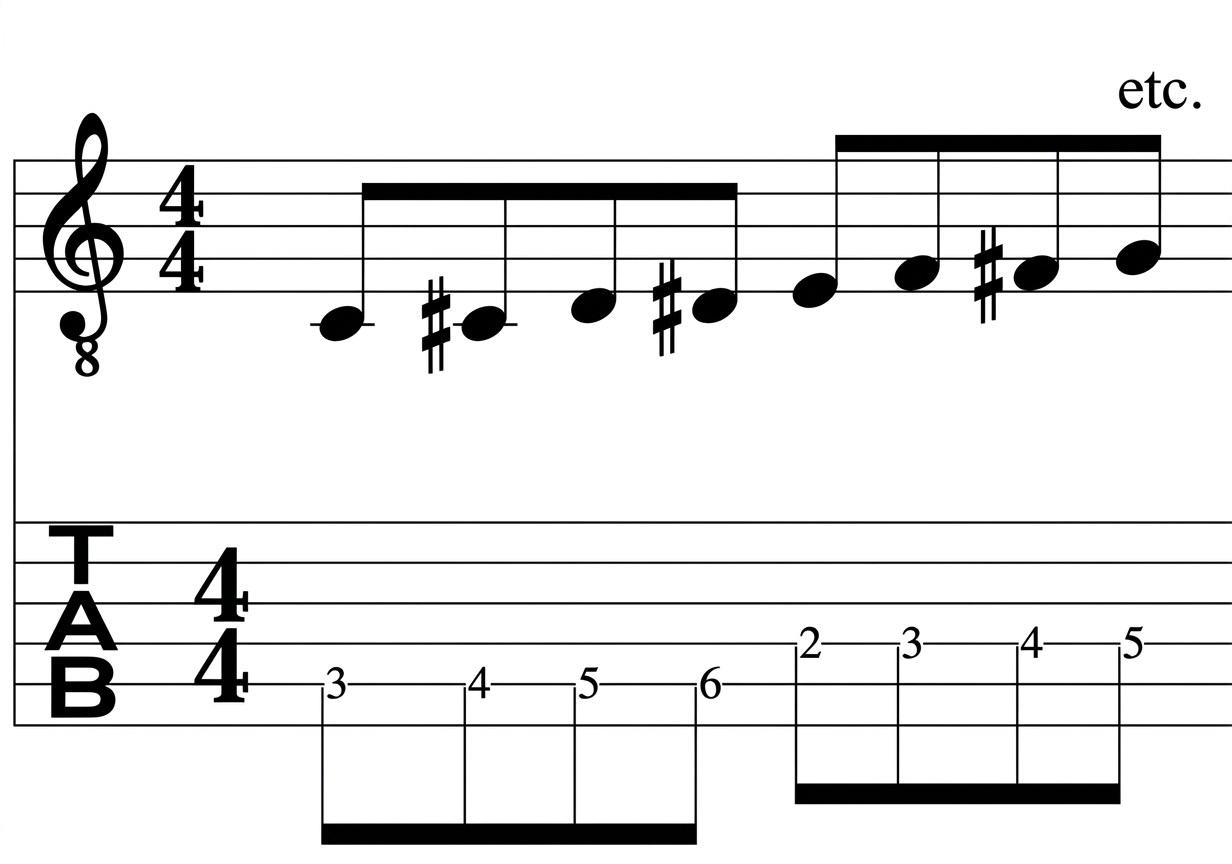
Or, for example, 3333 we would end up with Diminished 7ths:
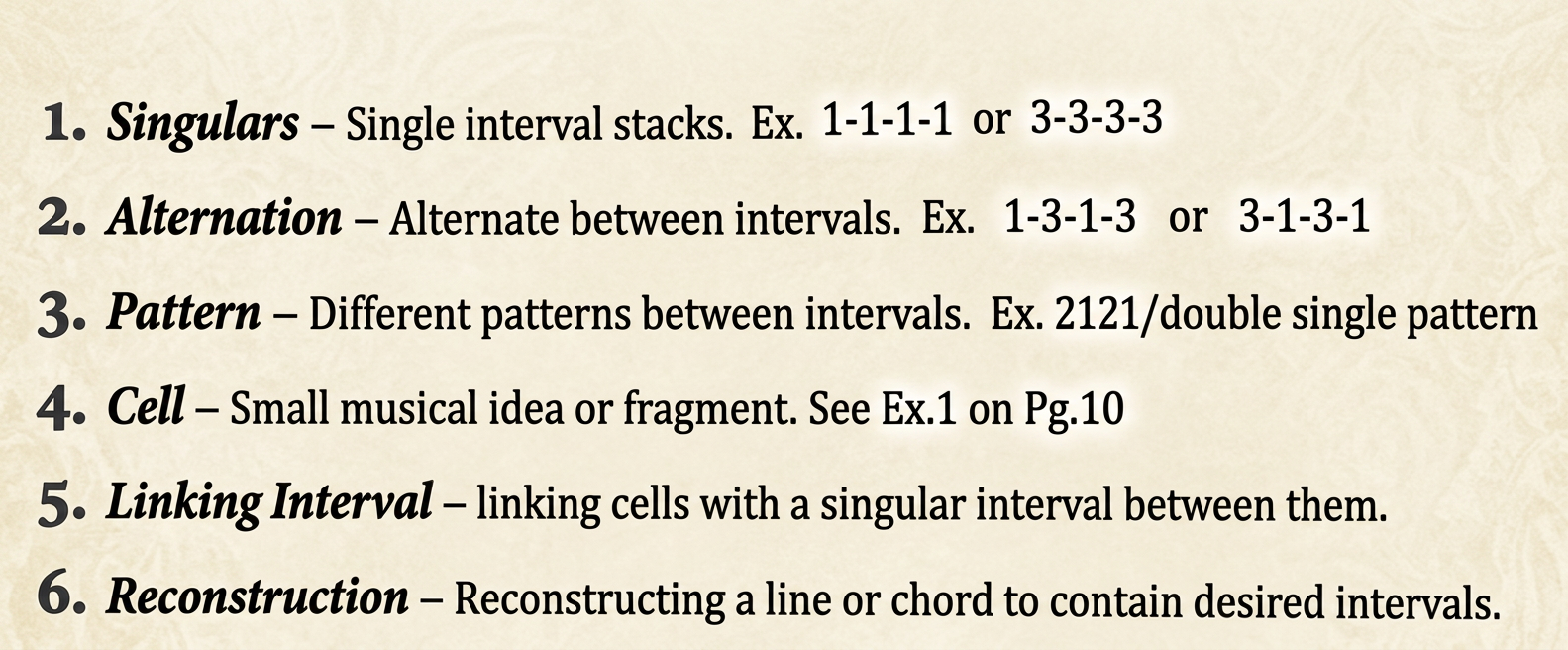
Below, is a list of techniques explained:
In this blog in order to avoid any copyright infringements I am going to look at interval pairs in the main.
Etude 1-6
Exercise in “Interval Pairs”
In order to get really fluid with this it’s a great idea to write an etude.
But, before we can do this we need to learn/practice an etude already prepared.
So, in this case I am going to take one from the book which consists of the interval pair 1-6
In this example we will master 1= minor 2nd and 6= Tritone
EXAMPLE:
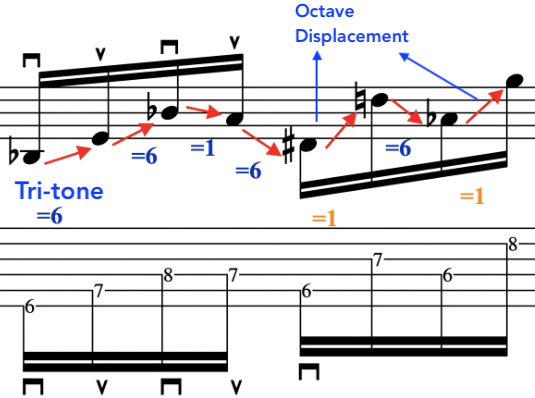
From the example above we can see our interval pair of 1-6 in action.
Notice also, where there =1 it can be inverted to/create octave displacement.
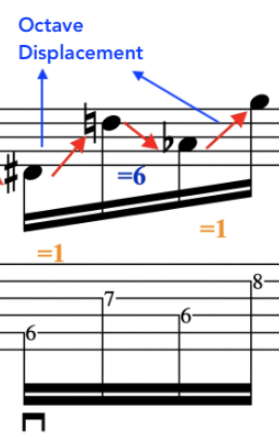
Below, is the full etude that I have starting on a down stroke for strict alternate picking.
Full Etude:
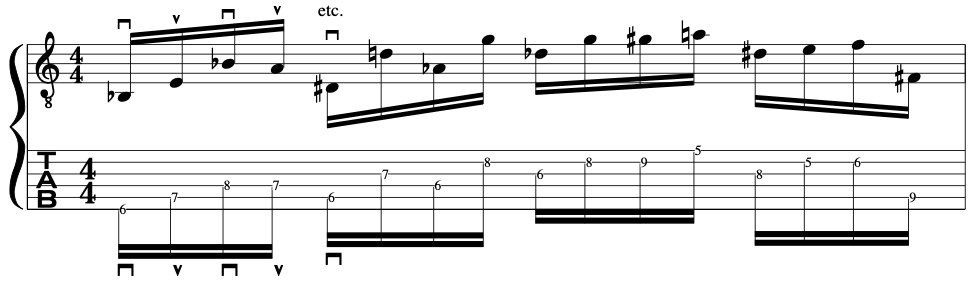
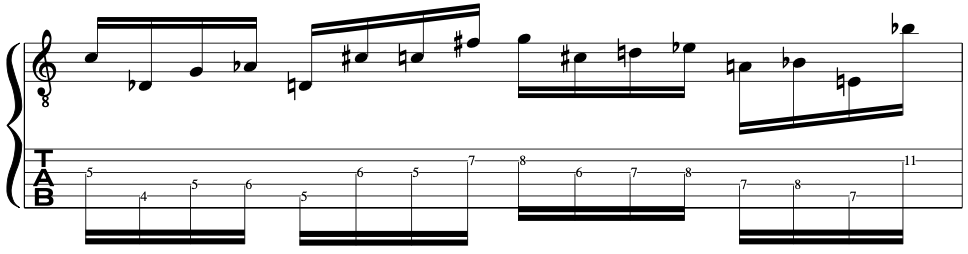
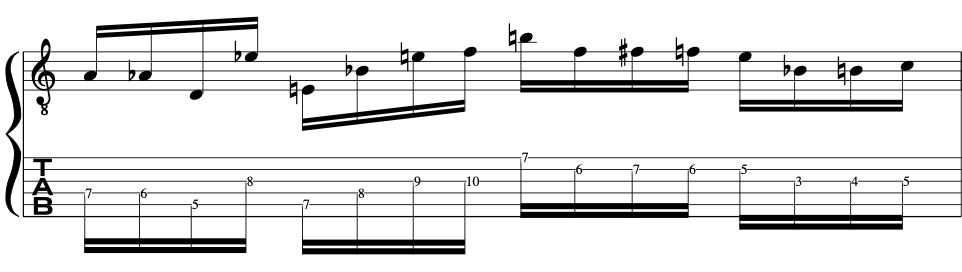
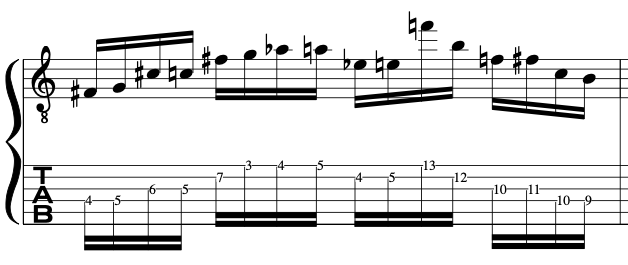
TRI-CHORDS
We can also build some amazing chords from atonal techniques.
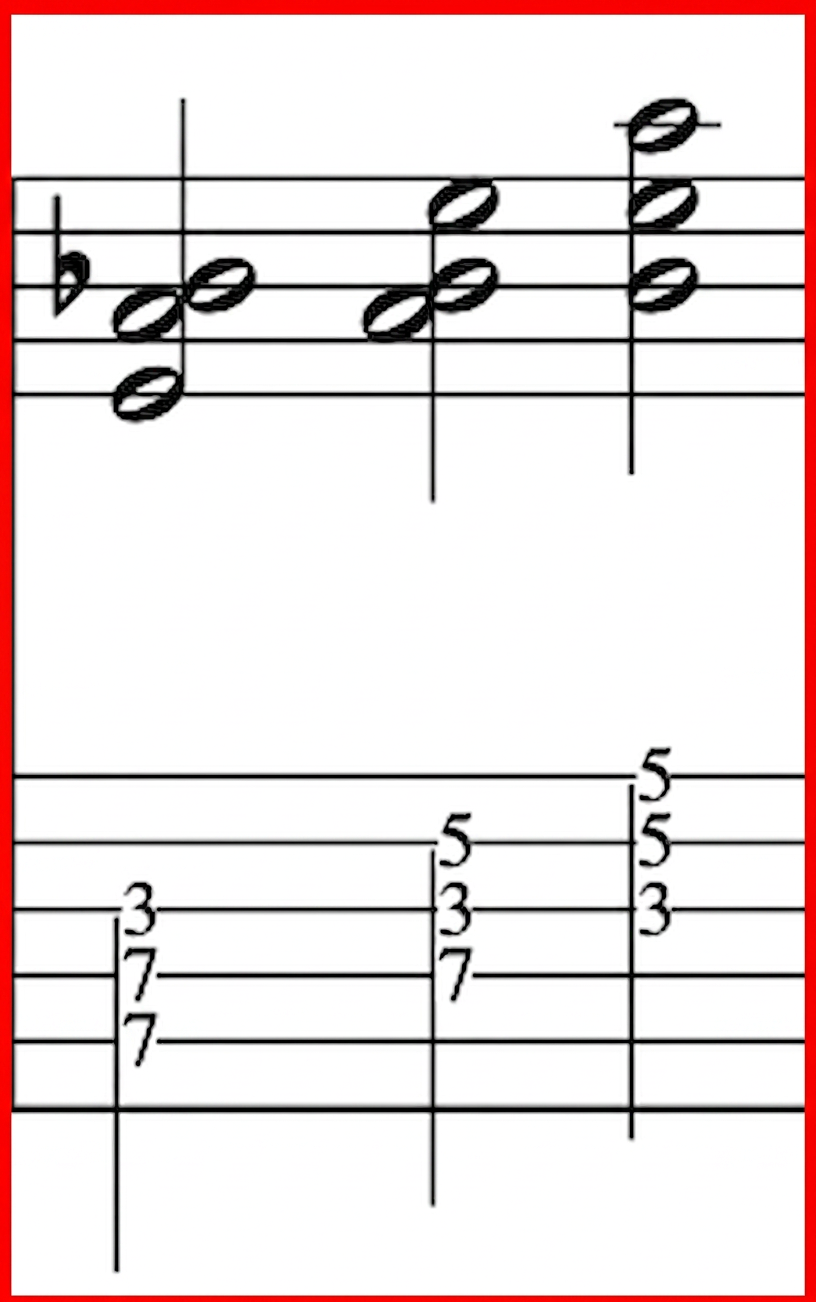
I am going to look at a couple of Tri-Chords. [Although, we can create, tetrachords and pentachords etc].
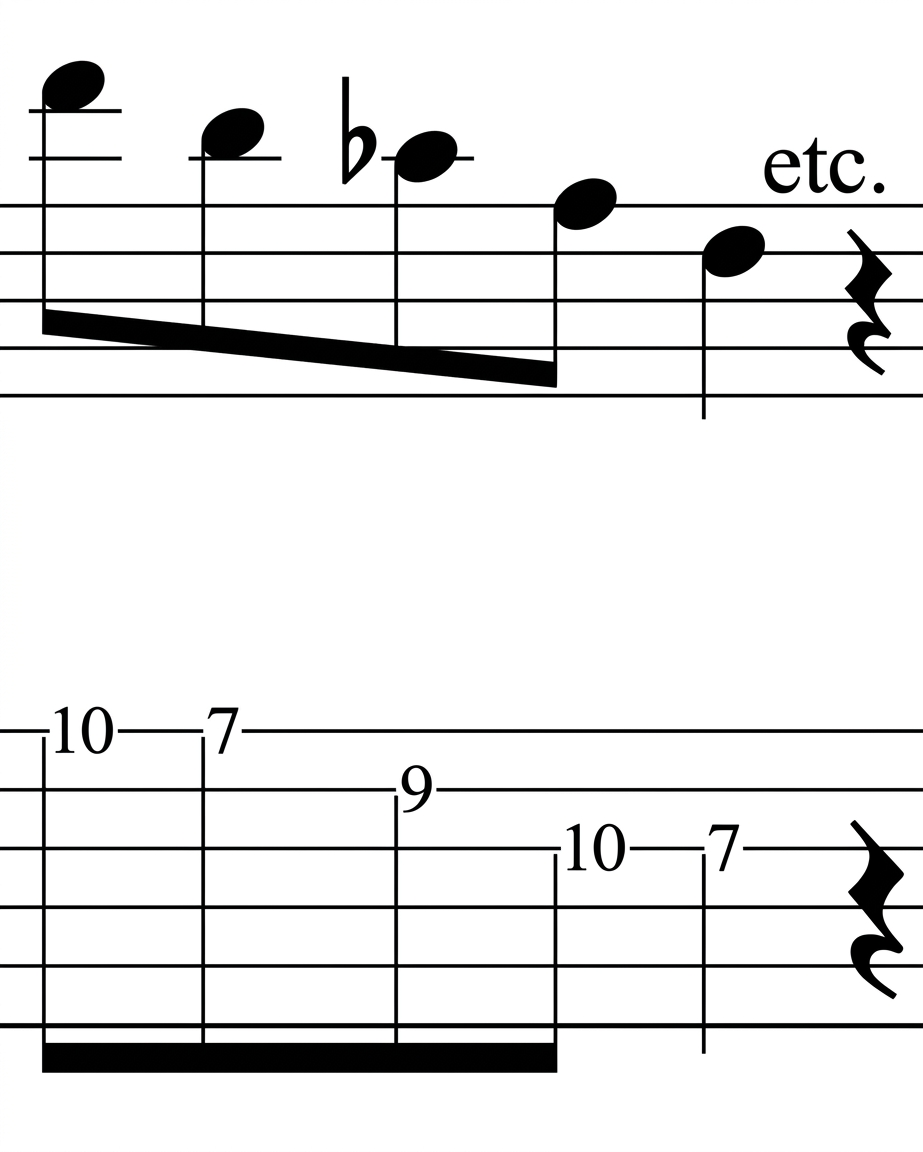
EXAMPLE 1: “016“
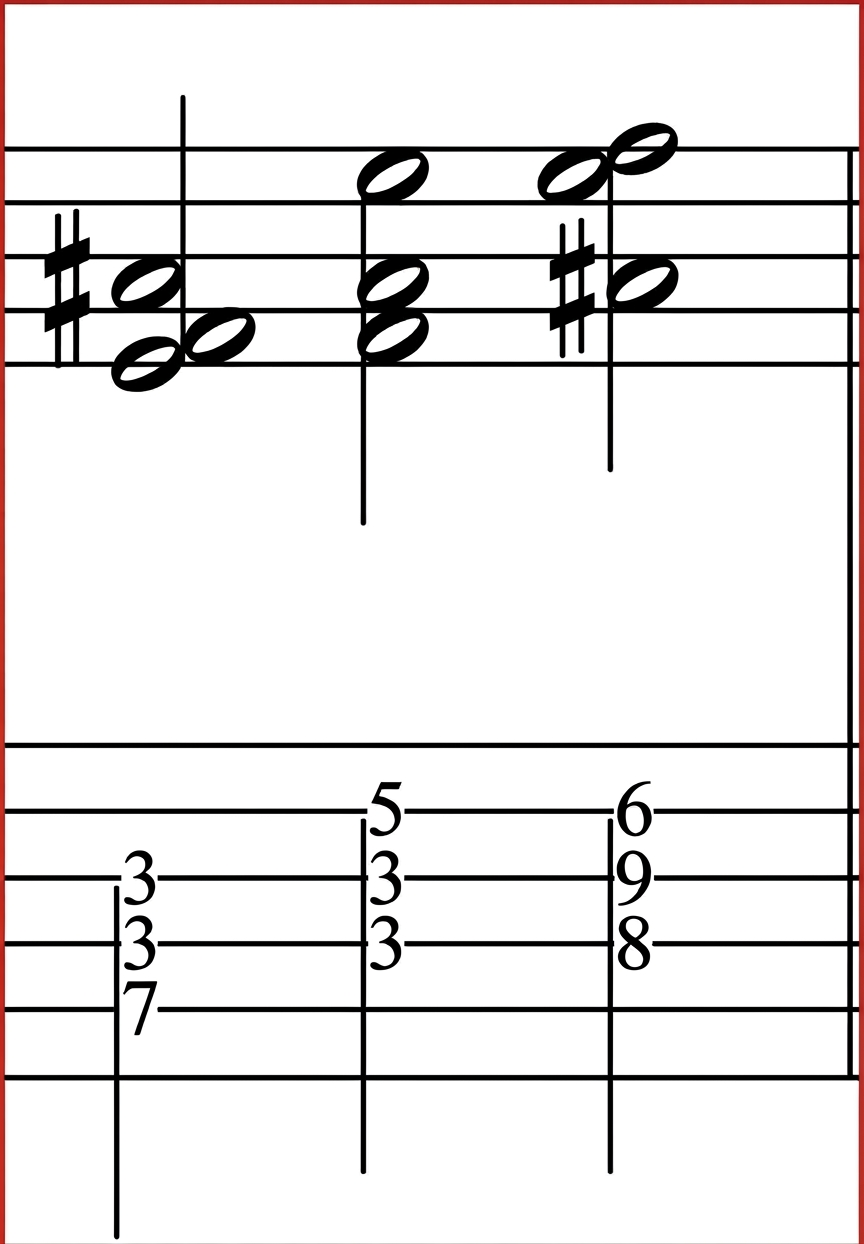
Below we have the “Retrograde” of the above: “056”
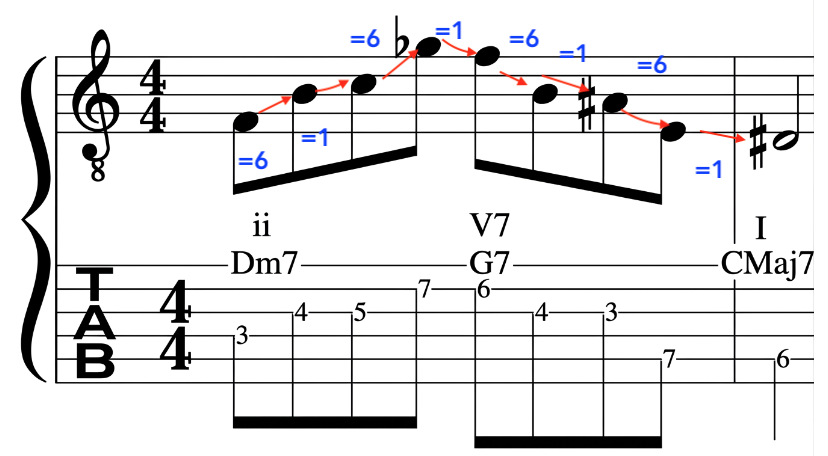
ii V7 I Example
Let’s now apply this to a ii V7 I cadence:
Again, sticking to our minor 2nd and tritone 1-6 interval pairs from our Etude:
2 SCHOENBERG EXAMPLES
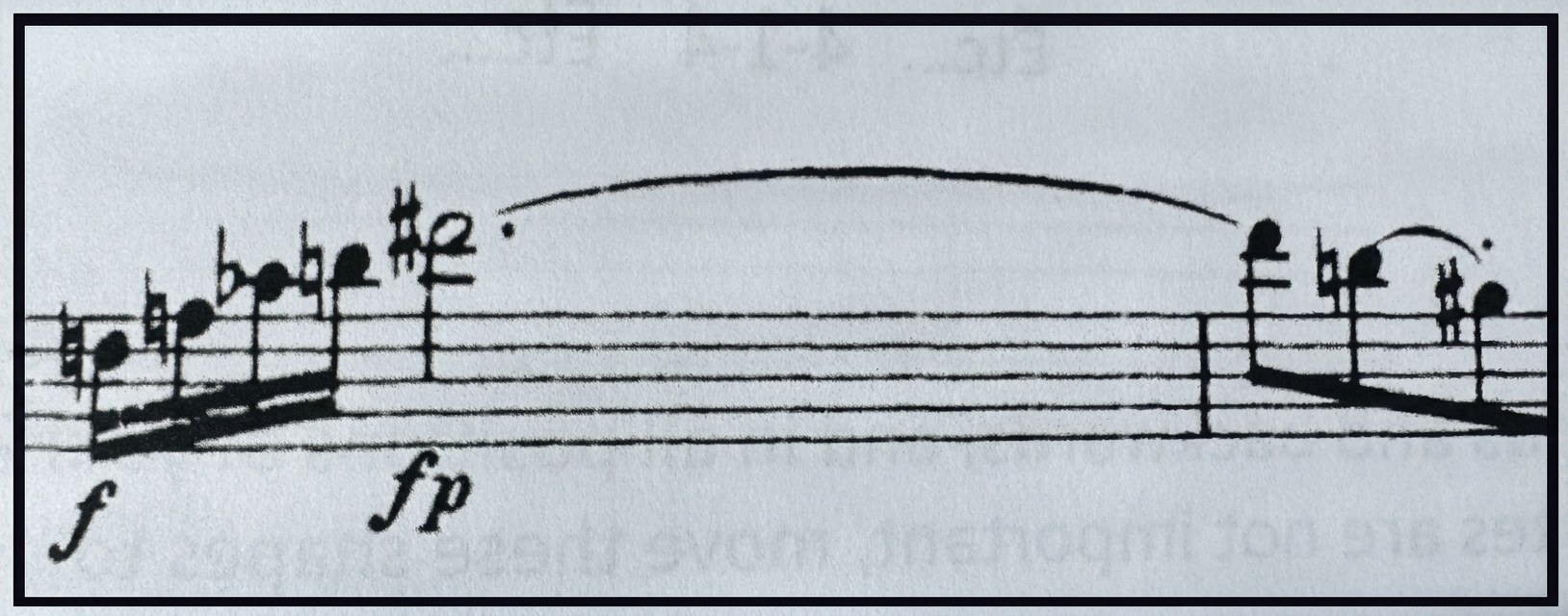
Lastly, here is a couple of real life examples by the great composer Arnold Schoenberg.
Interval Pair 1-5 [Perfect 4th and minor 2nd]:
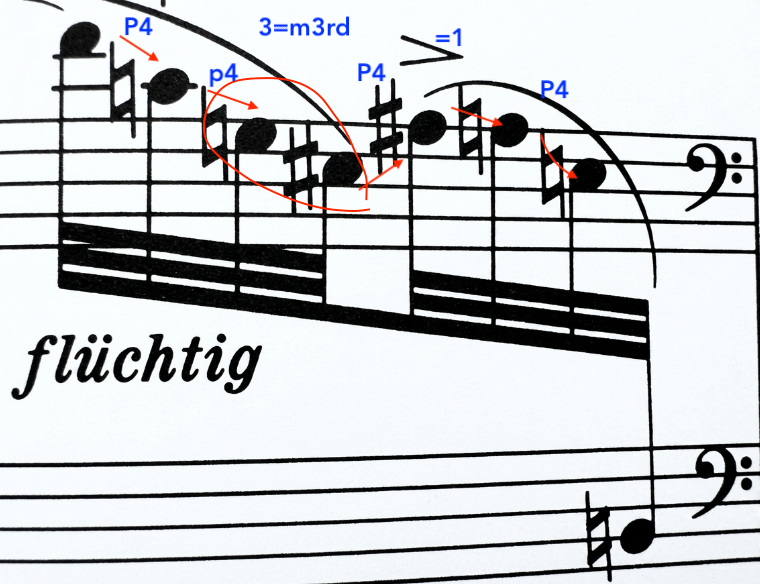
Finally, we have interval pairs 3-4
If this lesson was of use to you then please SUBSCRIBE to us below on YOUTUBE, Thanks!