Jared E Davis: “Atonal Improvisation and Jazz” Techniques Explained

Jared E Davis Atonal Improvisation and Jazz music examples and analysis

Hi Guys,

Today, a quick look at “Atonal improvisation and jazz” book by Jared E Davis.
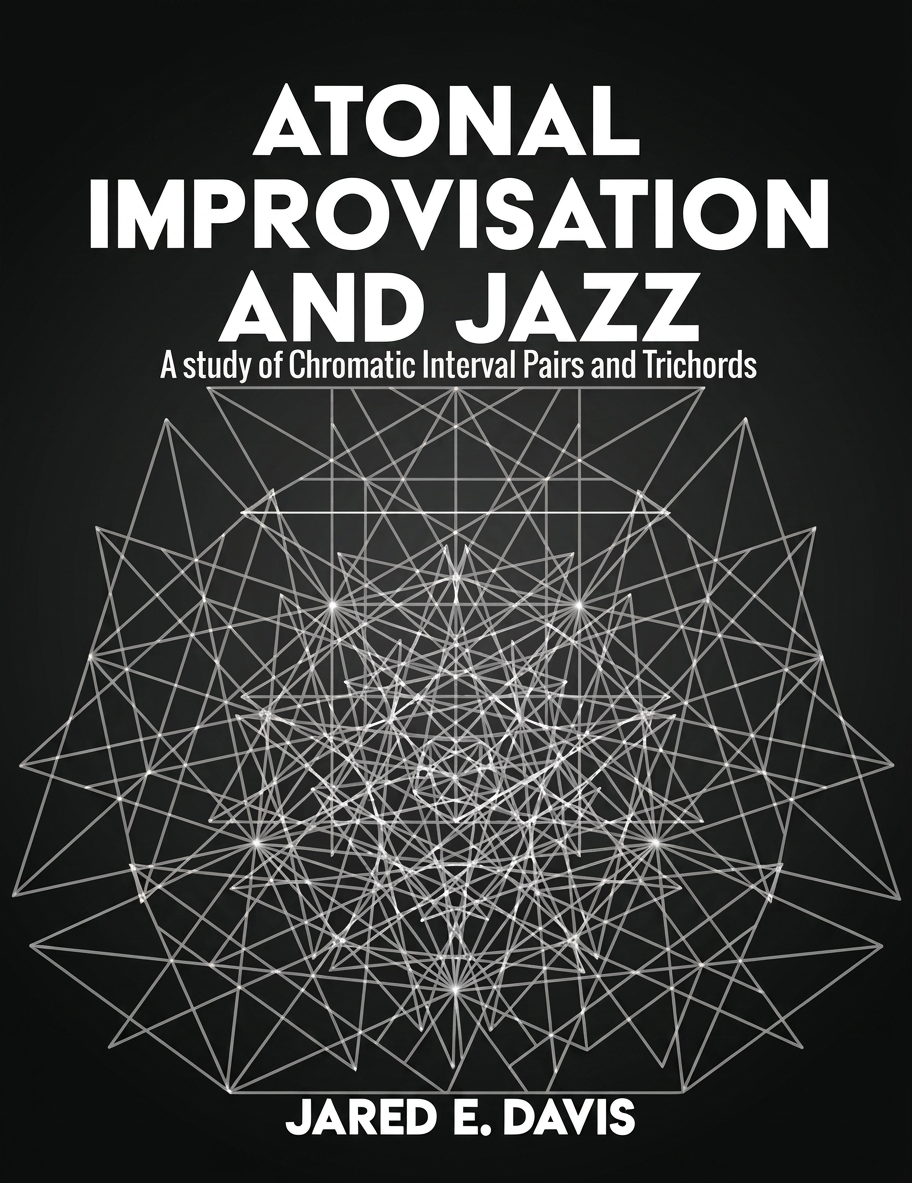
Atonal Jazz analysis with examples from webpage
Jared E Davis Atonal Improvisation and Jazz

Please note: This Blog won’t contain a Pdf download due to any copyright infringement.

Jared’s book, is similar in some ways to John ‘O’ Gallagher’s book 12 tone improvisation
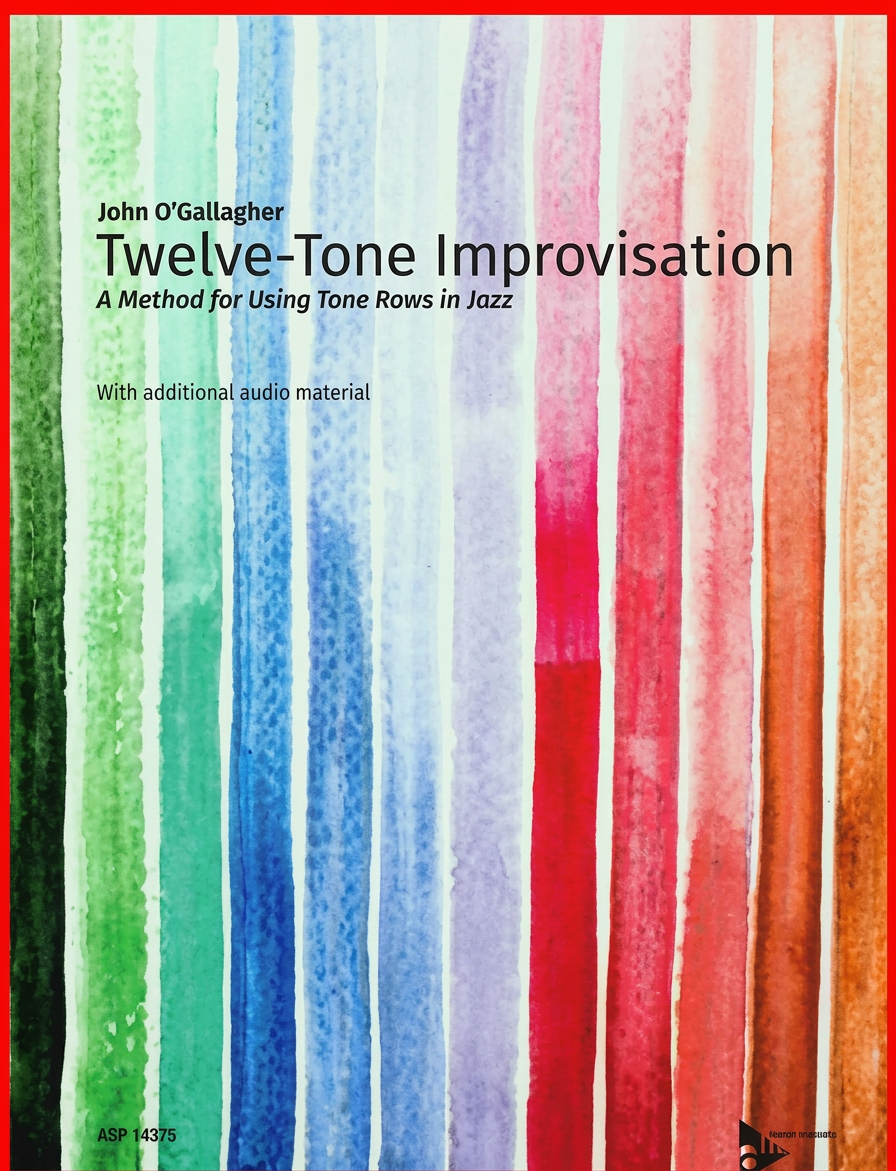
12 tone improvisation book John ‘O’ Gallagher

But, also differs due to being atonal [interval pairs] and not 12 tone.

This concept works with the 12 chromatic notes.

So, for example if we were to start on the note C it would be,

C=O C#=1 D=2 D#/Eb=3 E=4 F=5 etc.

Resulting in a minor 3rd =3 or a Major 7th = 11 or Unison = 0 etc.

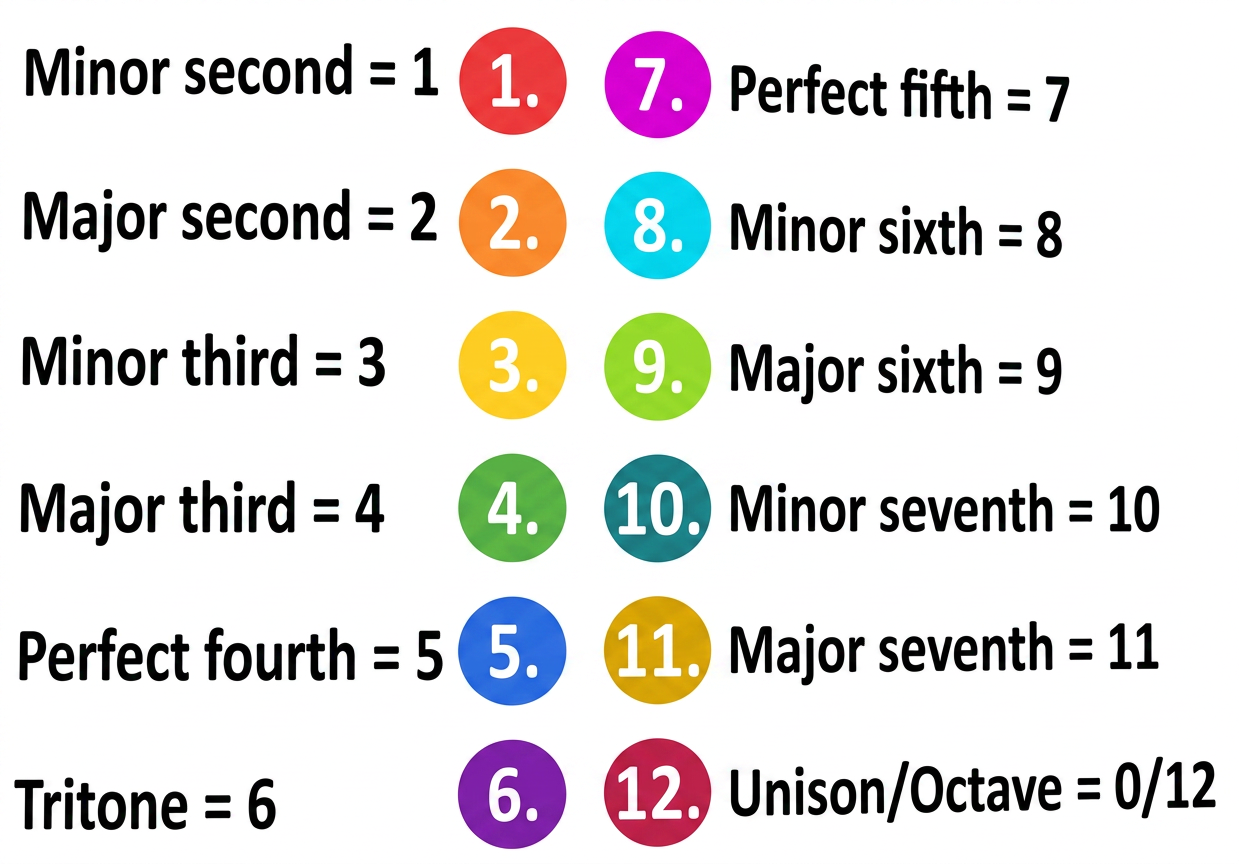
We are just counting the minor 2nds/semitones as in the chart below:

Jared E Davis Atonal Improvisation and Jazz

If we were to have singular intervals like 11111 etc, we would end up with a chromatic scale:
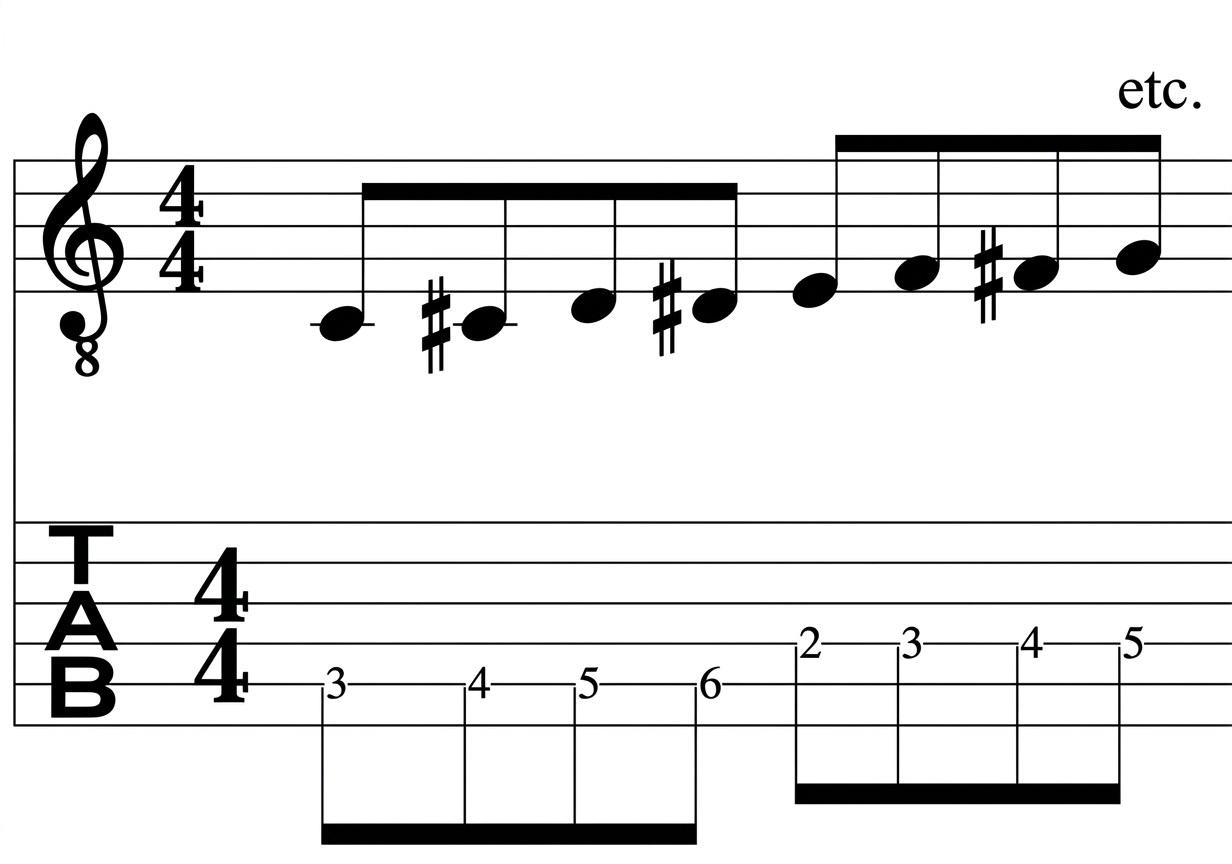
Jared E Davis Atonal Improvisation and Jazz

Or, for example, 3333 we would end up with Diminished 7ths:
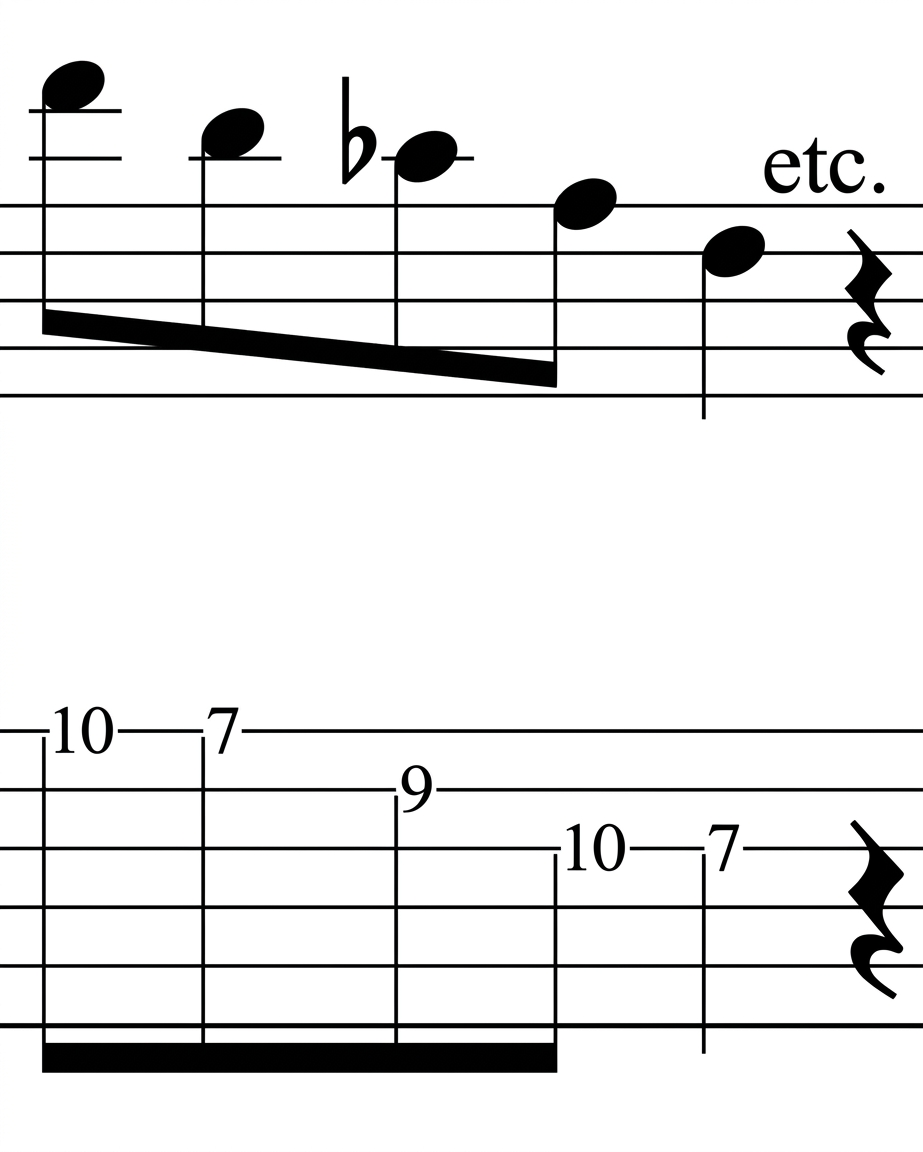
Jared E Davis Atonal Improvisation and Jazz

Below, is a list of techniques explained:
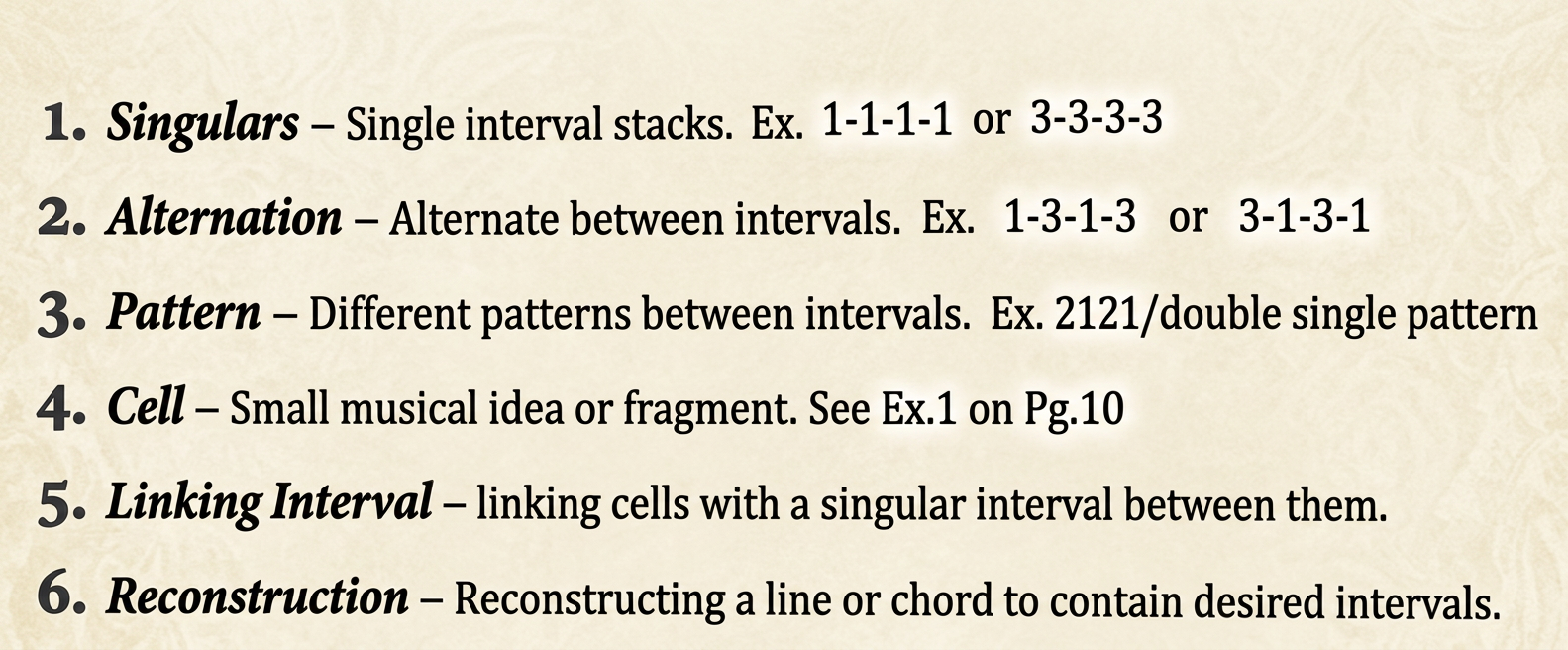
Jared E Davis Atonal Improvisation and Jazz

In this blog in order to avoid any copyright infringements I am going to look at interval pairs in the main.

In order to get really fluid with this it’s a great idea to write an etude.

But, before we can do this we need to learn/practice an etude already prepared.

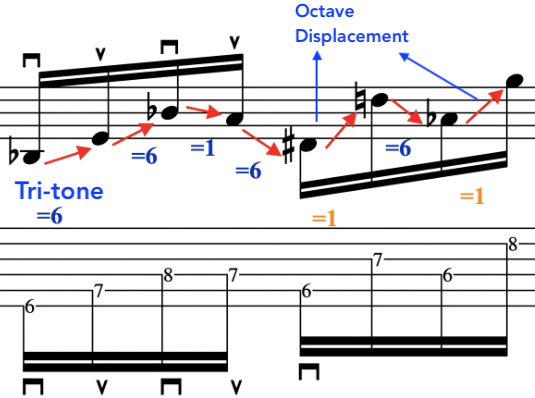
So, in this case I am going to take one from the book which consists of the interval pair 1-6

In this example we will master 1= minor 2nd and 6= Tritone

Music notation depicting Atonal Improvisation and jazz book by Jared E Davis. Musical examples and demos with music theory analysis. Complete lesson for atonal improvisational music techniques.

From the example above we can see our interval pair of 1-6 in action.

Notice also, where there =1 it can be inverted to/create octave displacement.
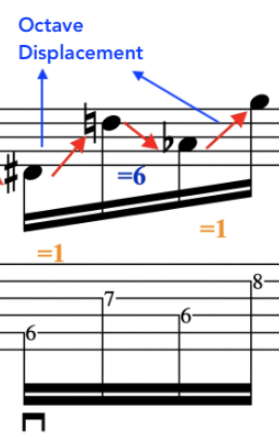
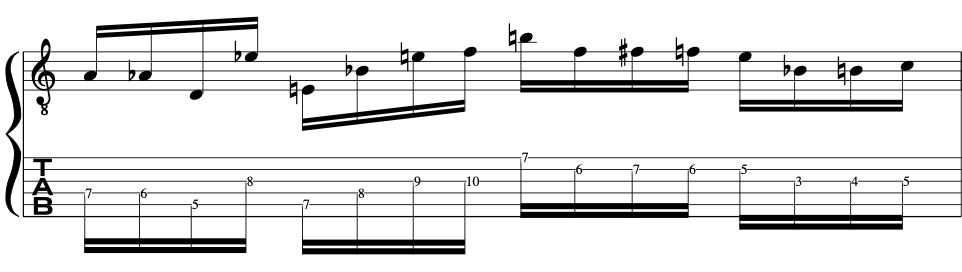
Example of Atonal Improvisation and jazz book by Jared E Davis. Musical examples and demos with music theory analysis. Complete lesson for atonal improvisational music techniques.

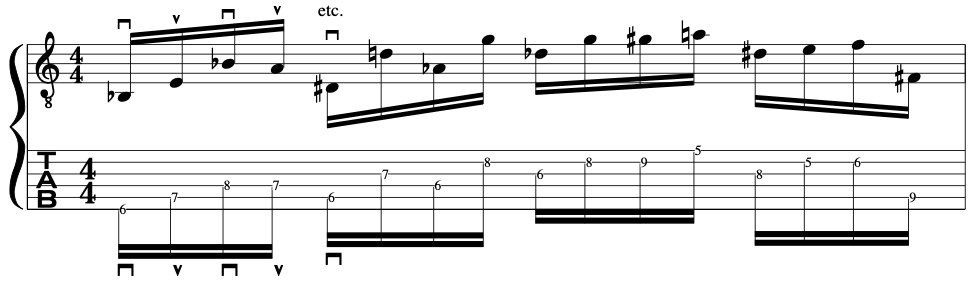
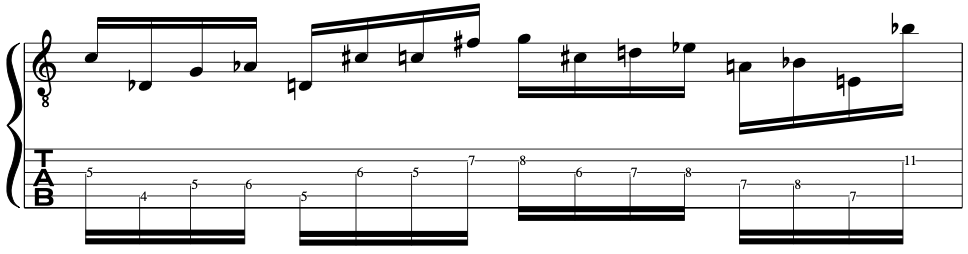
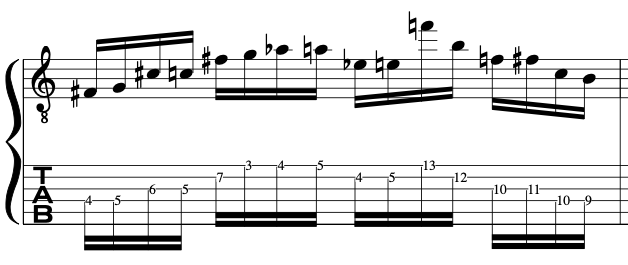
Below, is the full etude that I have starting on a down stroke for strict alternate picking.

An example of tonal Improvisation and jazz book by Jared E Davis. Musical examples and demos with music theory analysis. Complete lesson for atonal improvisational music techniques.
Example of Atonal Improvisation and jazz book by Jared E Davis. Musical examples and demos with music theory analysis. Complete lesson for atonal improvisational music techniques.
Atonal Improvisation and jazz book by Jared E Davis. Musical examples and demos with music theory analysis. Complete lesson for atonal improvisational music techniques.

We can also build some amazing chords from atonal techniques.

I am going to look at a couple of Tri-Chords. [Although, we can create, tetrachords and pentachords etc].

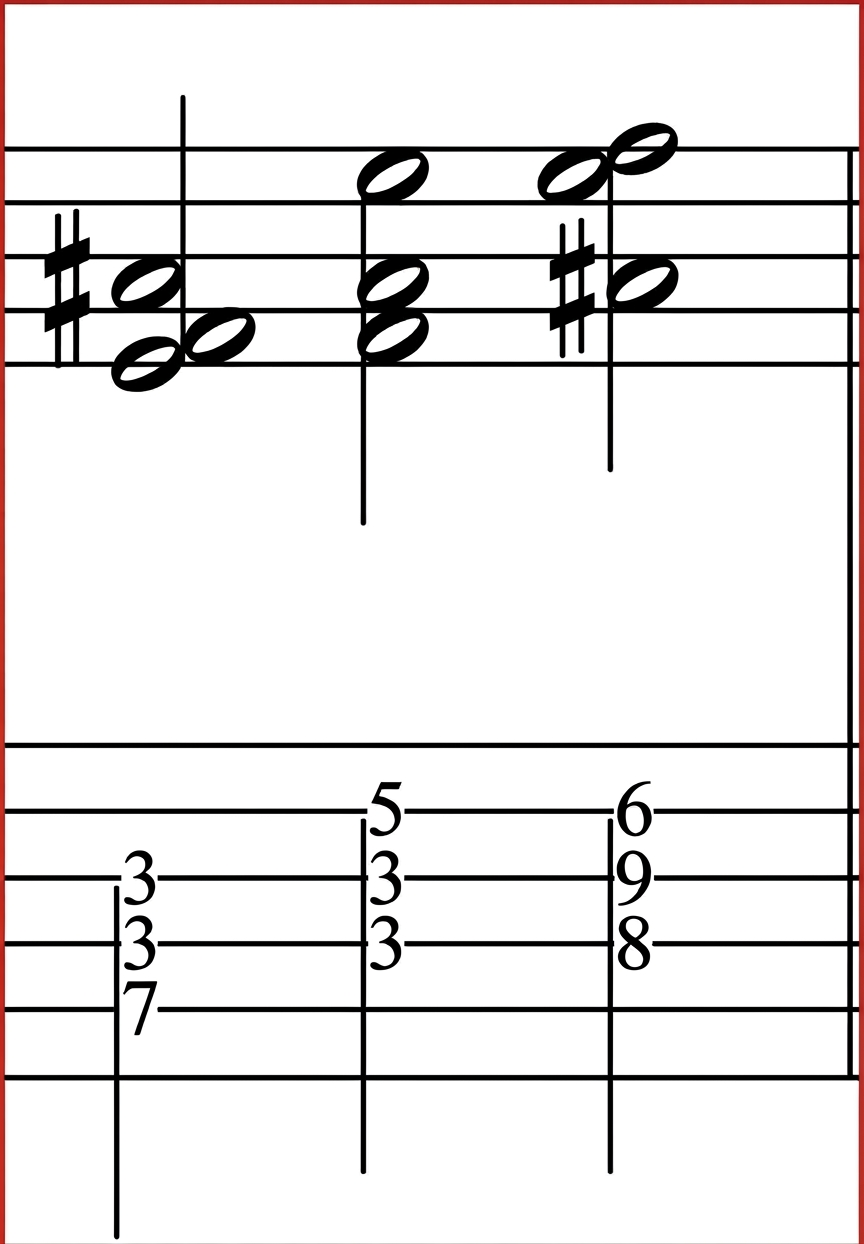
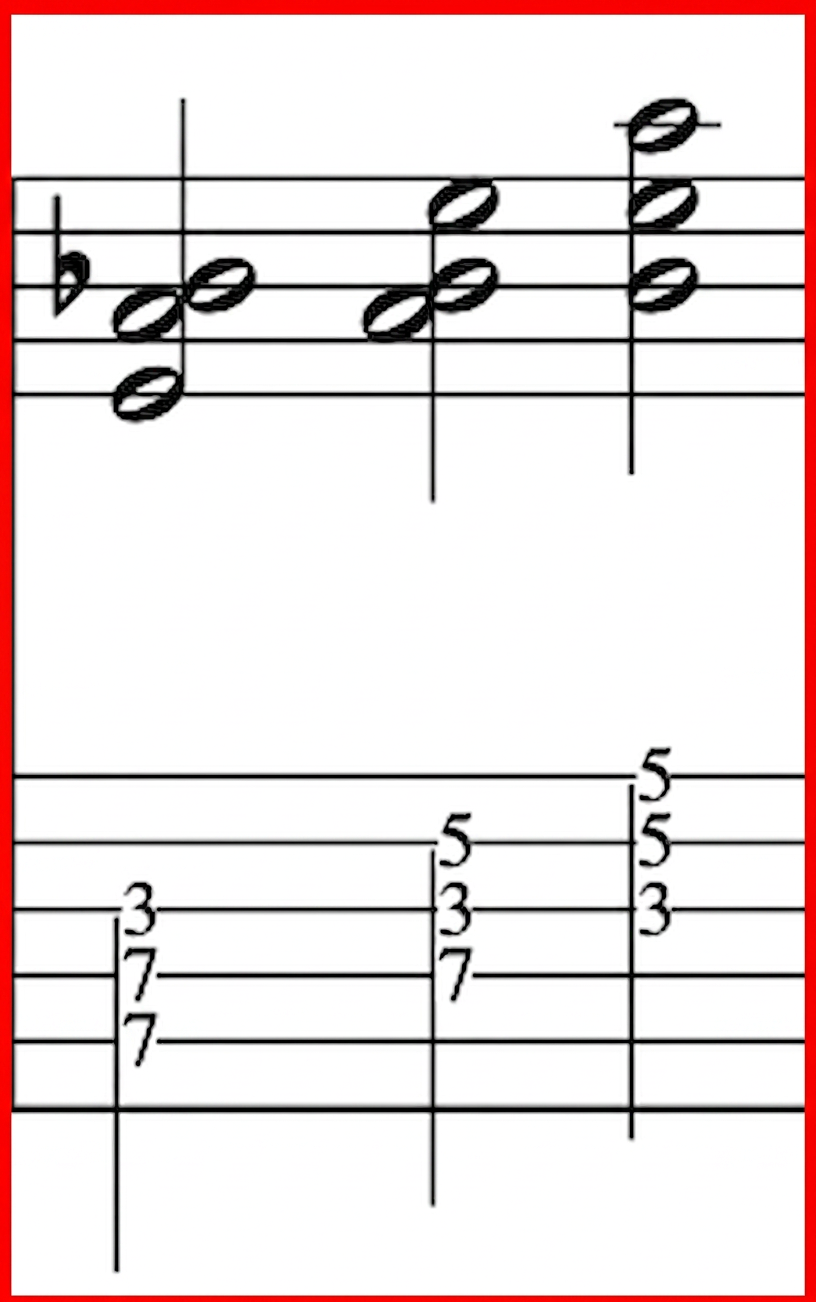
Let’s now apply this to a ii V7 I cadence:

Again, sticking to our minor 2nd and tritone 1-6 interval pairs from our Etude:
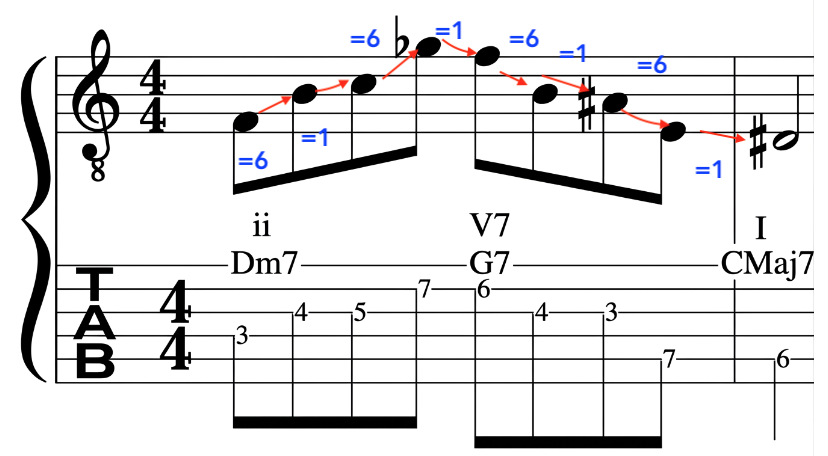
ii V7 I Atonal Improvisation and jazz book by Jared E Davis. Musical examples and demos with music theory analysis. Complete lesson for atonal improvisational music techniques.
Jared E Davis Atonal Improvisation and Jazz ii V7 I 1-6 Cadence Example

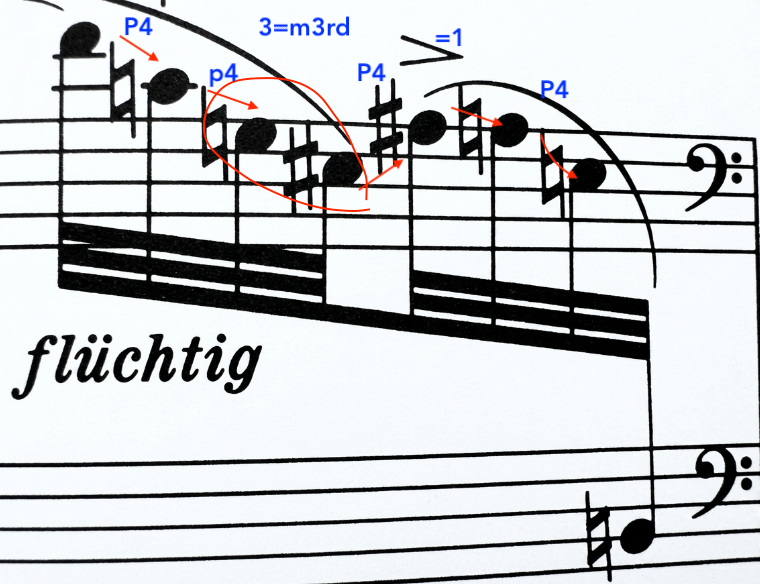
Lastly, here is a couple of real life examples by the great composer Arnold Schoenberg.

Interval Pair 1-5 [Perfect 4th and minor 2nd]:
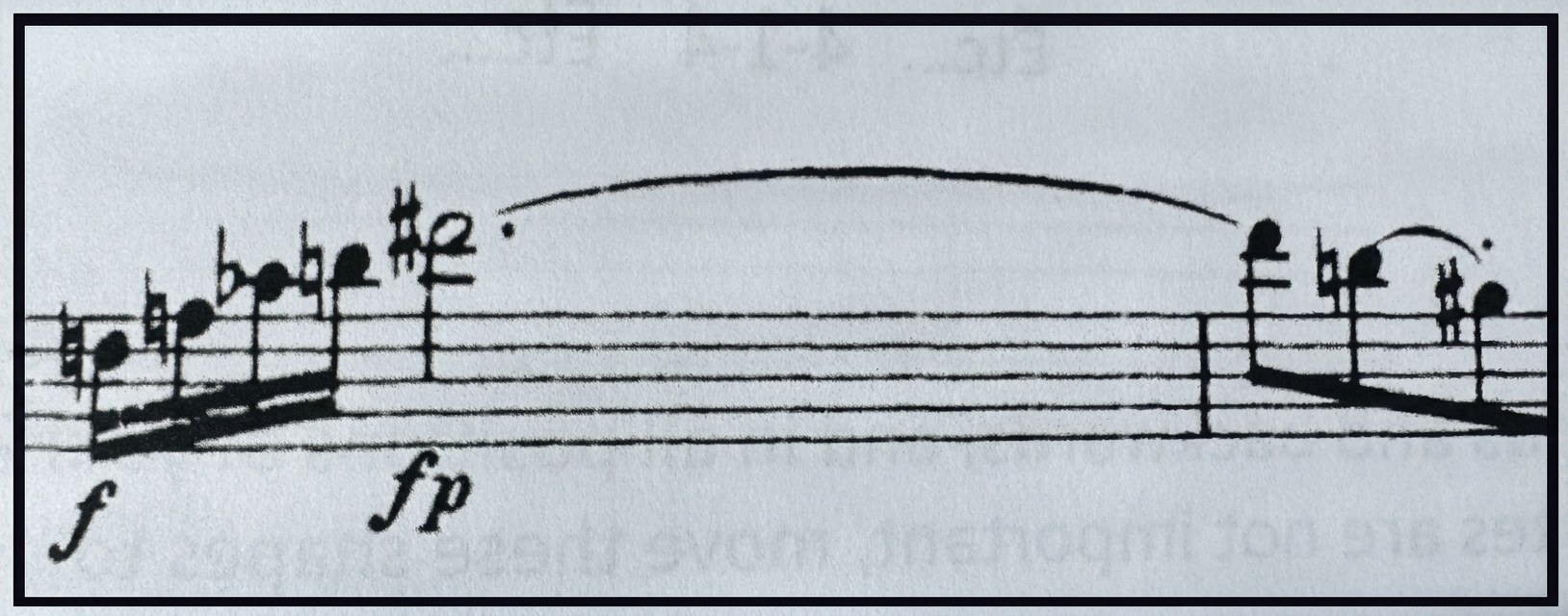
Finally, we have interval pairs 3-4
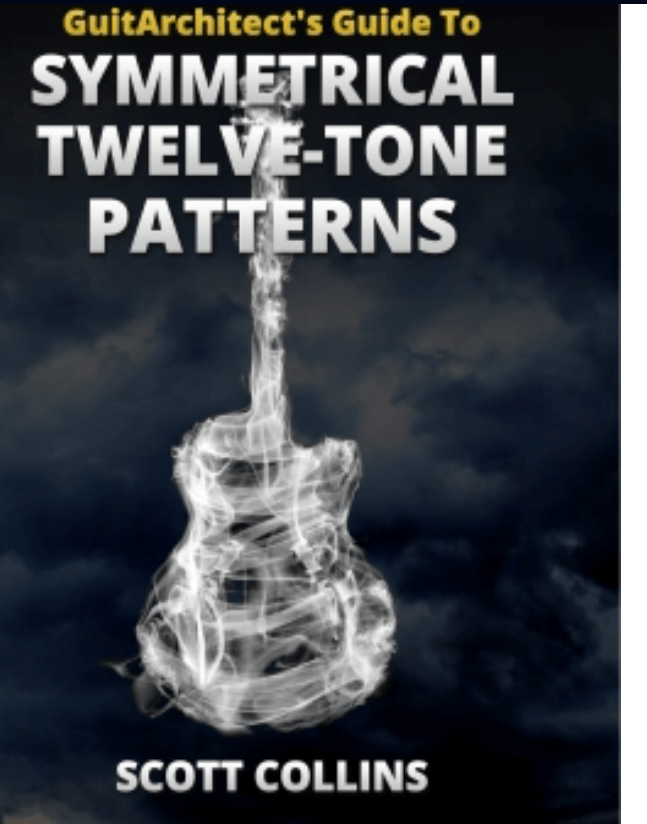
12 Tone Pattern: Scott Collins Guitar Line:

Hi Guys,

Today, a quick look at a Scott Collins 12 tone guitar pattern and applying it to alternate picking guitar technique as an exercise in descending intervallic movement.

First of all, let’s look at the pattern.

I am thinking of these motifs as 3 note “Tri-chords” [as in John ‘O” Gallagher’s book 12 tone improvisation].

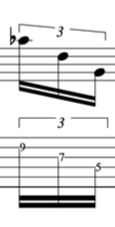
Here, are the first 3 pitches as a tri-chord.

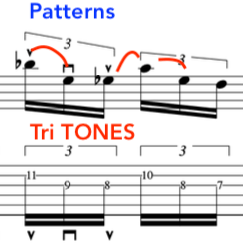
What makes this line interesting is that the “Tri- Chords” move in “Tri-Tones”.

You could view this from a diminished perspective but from a picking perspective it is more like tritones and semitones. This gives it that unique angular sound.

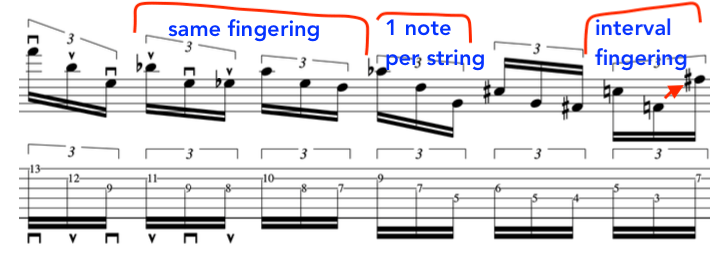
If we look at the example below we can see a classic example of a tri-chord pattern/sequence with the same guitar fingering.

scott-collins-12-tone-symmetrical-guitar-patterns

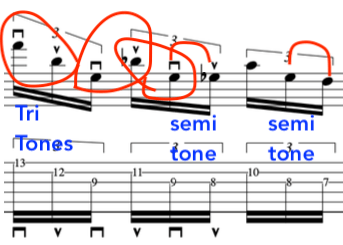
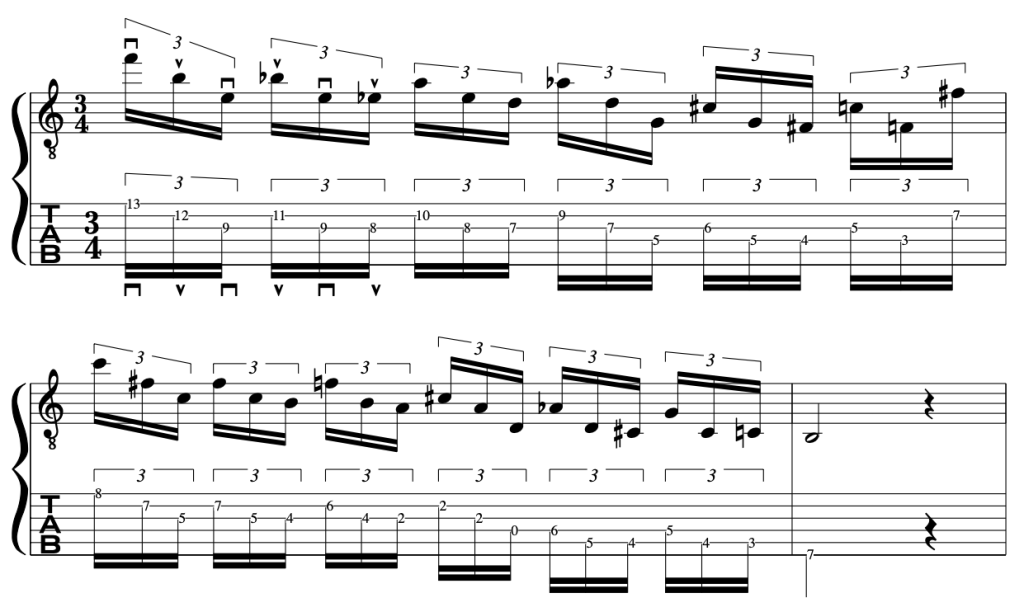
In the next example, we can see the tri-chords, the tritones and the semitone movement.

scott-collins-12-tone-symmetrical-guitar-patterns

I am using strict alternate picking guitar technique for this exercise starting this on a “Downstroke”.

I am counting in groups of three note triplets, although, you could count in sextuplets.

There is a lot of one note per string and two notes per string picking. So, remember when you pluck down to pluck back up equally. This very much Robert Fripp style picking and hence you need to be aligned with the string you wish to pluck.

scott-collins-12-tone-symmetrical-guitar-patterns

scott-collins-12-tone-symmetrical-guitar-patterns

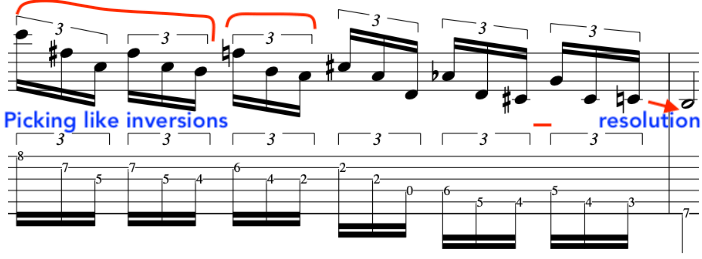
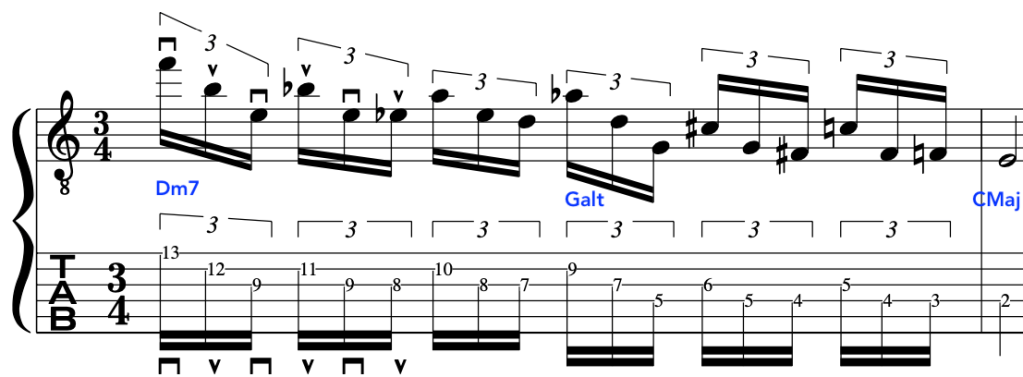
Lastly, we will use half of the patten and play it over a traditional ii V7 I

scott-collins-12-tone-symmetrical-guitar-patterns

scott-collins-12-tone-symmetrical-guitar-patterns

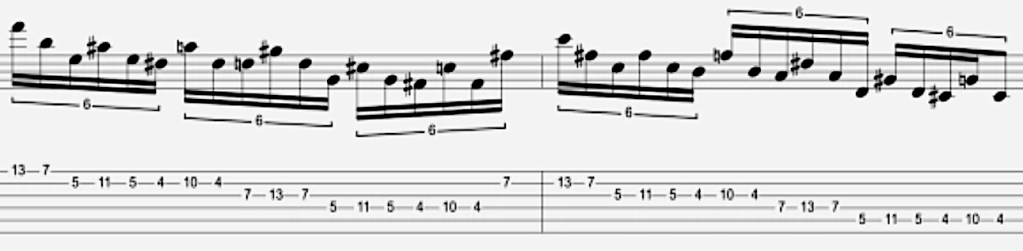
Below, is the original line I took this from. As, you can see from the fingering, this was more of a symmetrical pattern with tapping.

scott-collins-12-tone-guitar-pattern

scott-collins-12-tone-guitar-pattern-book