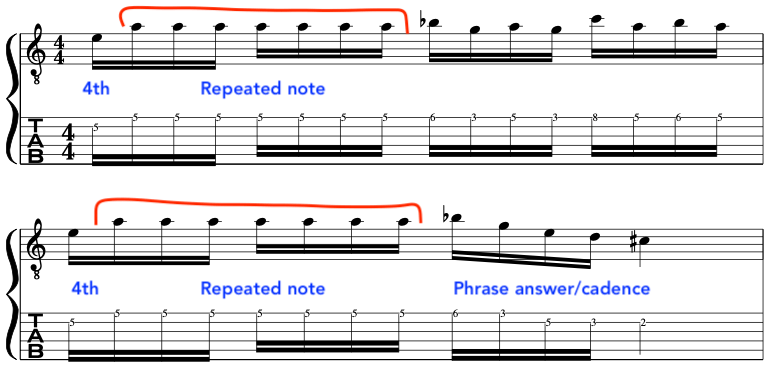
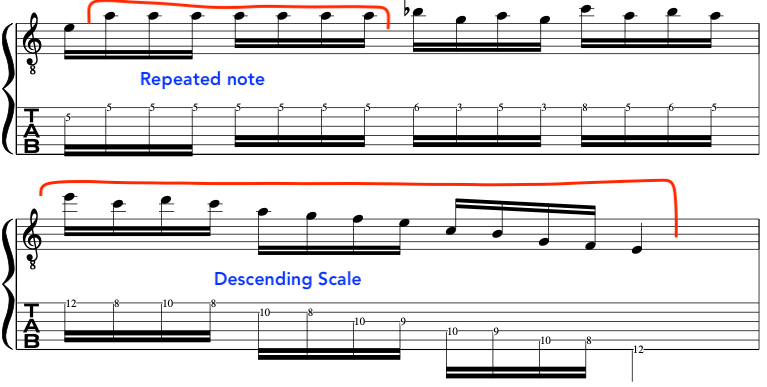
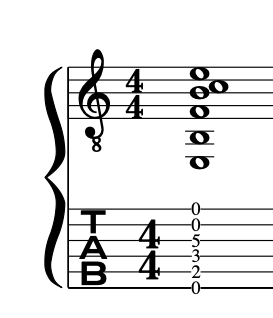
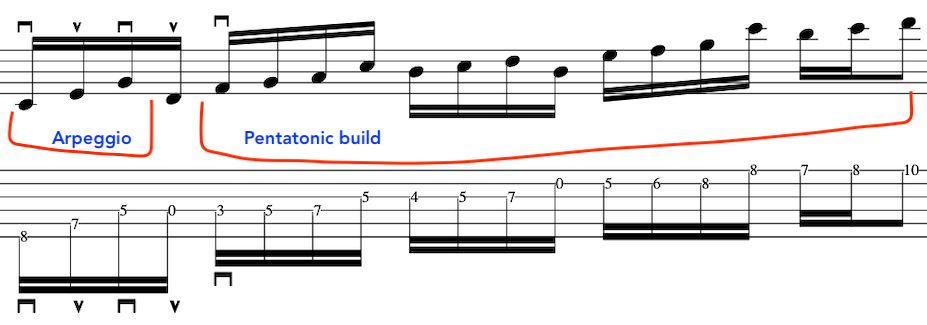
Please watch video above for detailed information:
Hi Guys,
Today, a quick blog on using octaves and open strings on the guitar to create Raga style compositions.
This is not “Classical” Indian” music but a means of adding an implication and fusing western guitar strumming with the Indian scale sound.
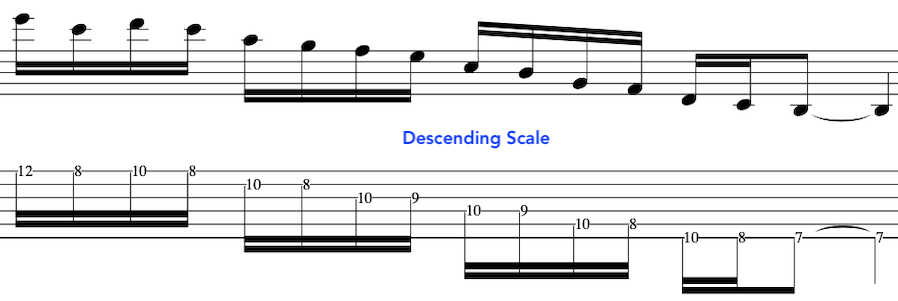
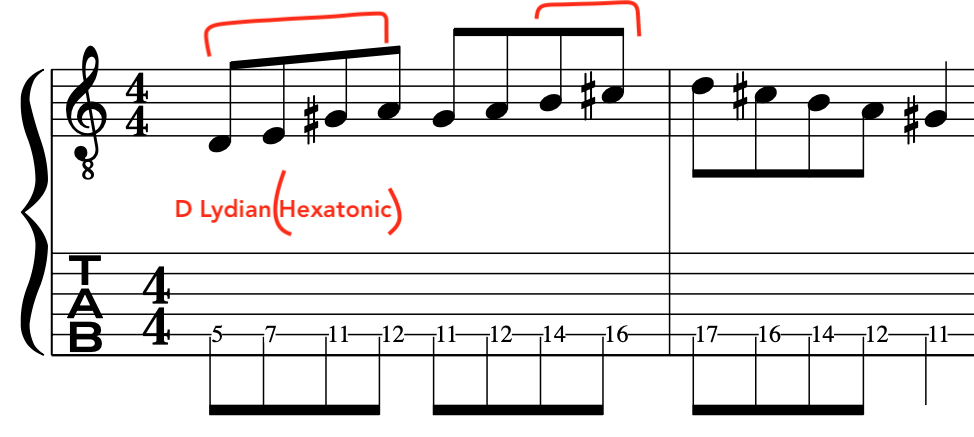
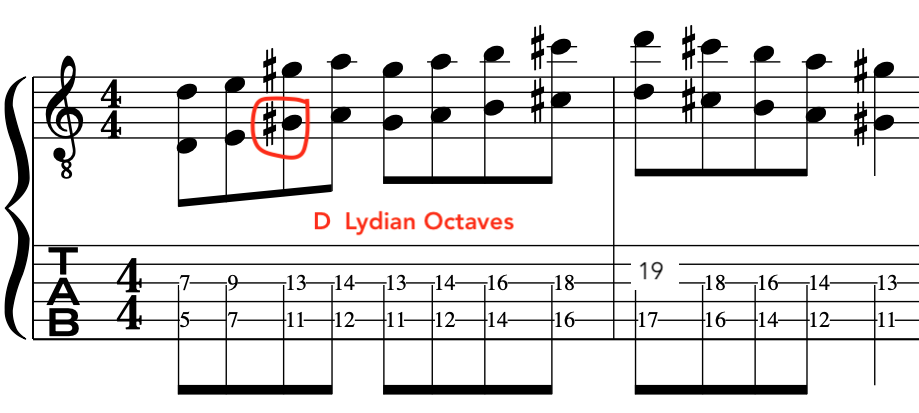
Below, we can see the scale we will employ. This is the Lydian mode. Here we have D lydian in a Hexatonic format.
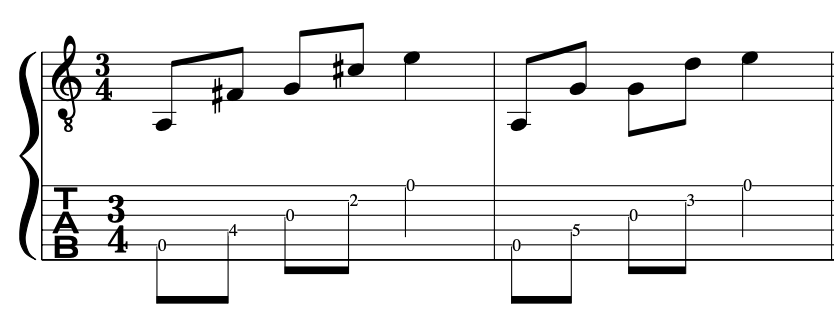
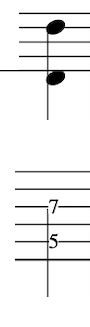
Now, instead of using single notes we will double them creating octaves.
Adding to this we will employ the open strings of the guitar as we strum to create interesting rhythms. [See video above].
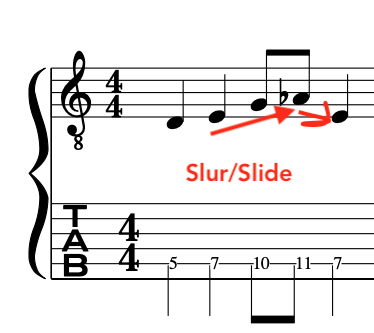
We can also use quick slurs and slides to create a dynamic Indian-esque effect
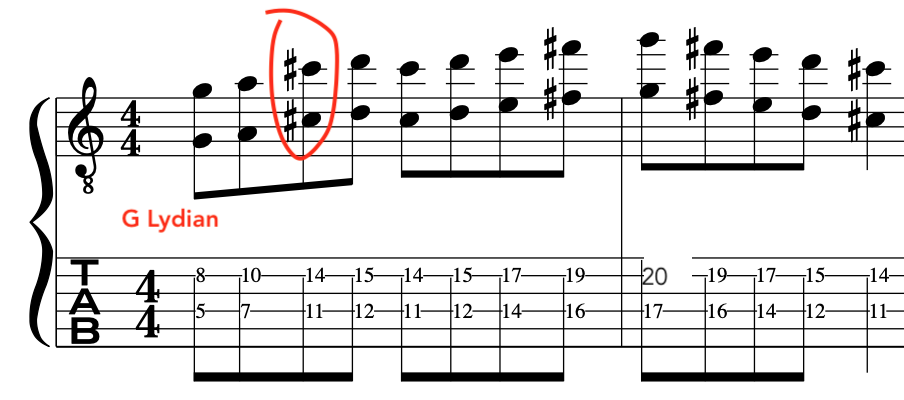
Now, let’s move over to the 4th and 2nd strings and do the same thing with the lydian octaves and open guitar strings. [see video above]
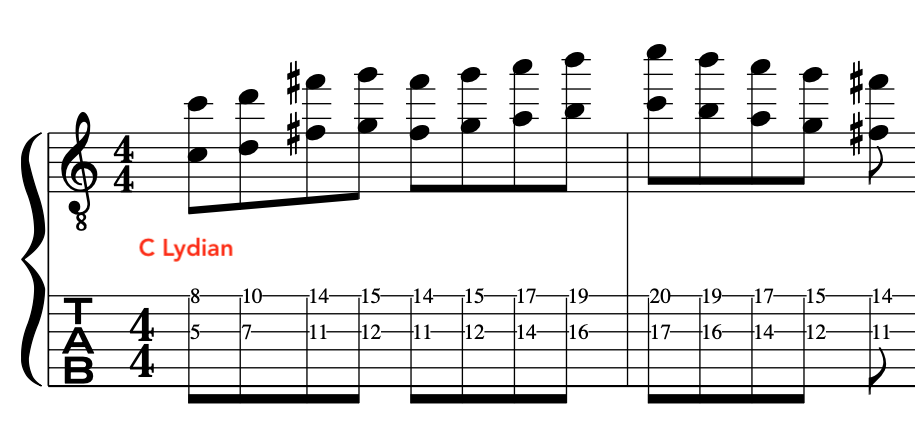
Finally, we will move over to the 3rd and 1st guitar strings and do the same thing. This time creating the C lydian mode.
Due to the guitars tuning you will notice that we are moving up in 4ths or down in 5ths.
This works well for composing becasue it creates a strong pull in terms of movement and power that can then be manipulated by percussive rhythmic strumming on the guitar.
The good thing with alternate picking and the reason great players and improvisers employ it is because it offers the keys to performing rhythmically complex and fast tempo music. This is especially true with Jazz, Fusion and World Music.
Applying Indian Konokol or even Western Classical Tradition we can change the alternate picking patterns/groupings into rhythms for musical phrasing.
But, before we break these rhythms up though we need to get the basic idea and fundamentals down. This way we can nail any chords changes especially ambiguous ones.
PART 1:
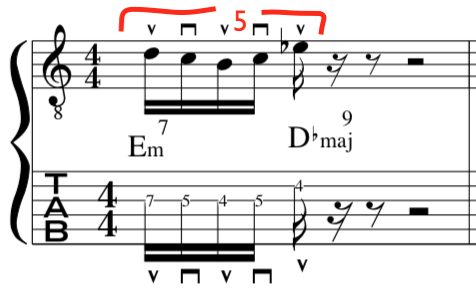
This simple “Rhythmic Unit” of a group of 5 notes can be broken up. This gives clarity when nailing the changes at a very fast tempo.
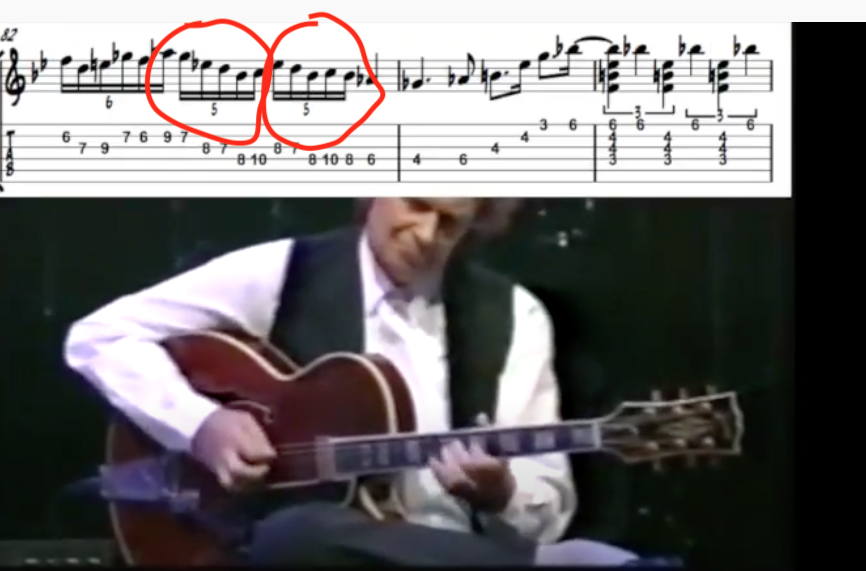
Alternate Picking 5’s John Mclaughlin 180 bpm jazz improv “Nailing the Changes”
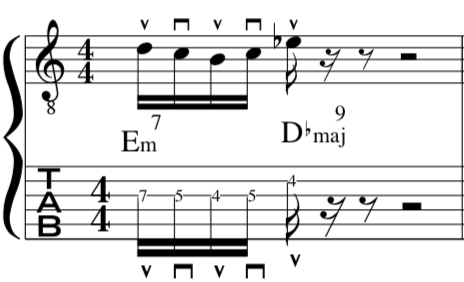
The Group of 5 now becomes one “Tetrachord” and the 5th note becomes the first note of the next chord [DbMaj9]. This way the changes are “Nailed” by the rhythm which has become 4+1
Alternate Picking 5’s John Mclaughlin 180 bpm jazz improv “Nailing the Changes”
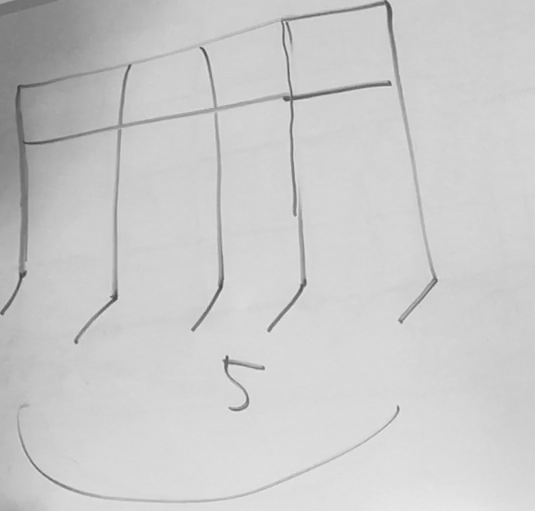
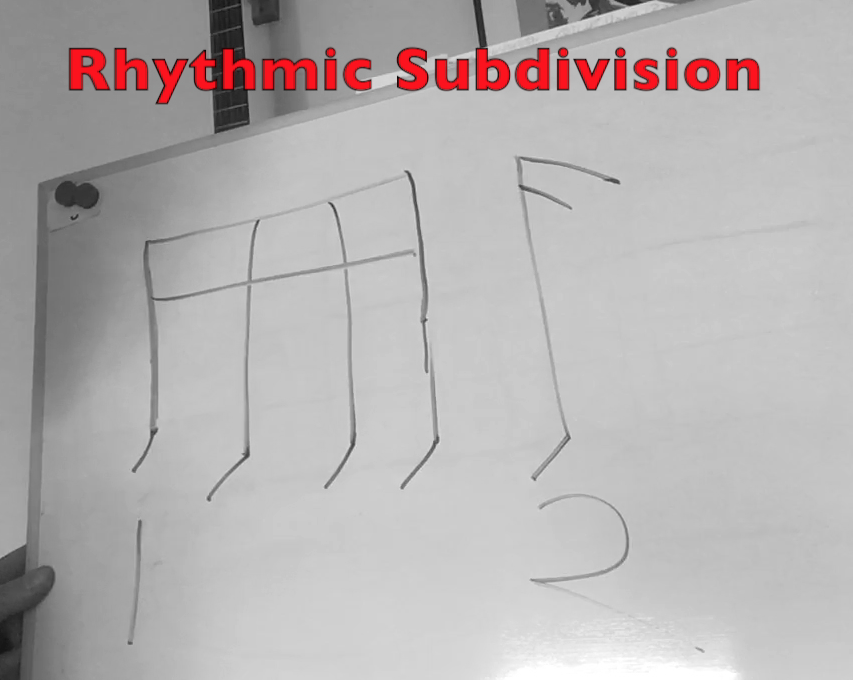
So, as we can see the Ta Ka Di Me Thom or 1 2 3 4 5
Alternate Picking Fives Rhythmic Subdivision
Becomes 1 e and a2
or Ta ka di mi Ta
For anybody having problems with their alternate picking at fast tempos whilst nailing the changes this will really help you because you will automatically land on the first note of the next chord.
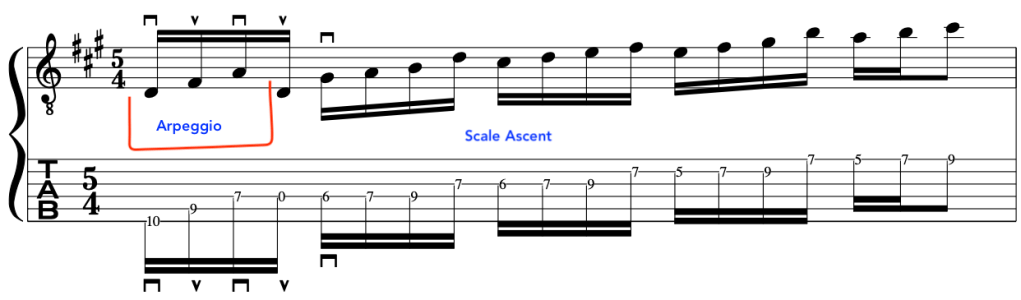
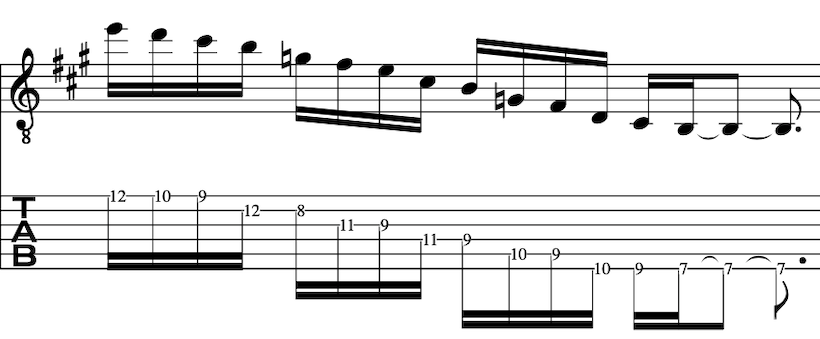
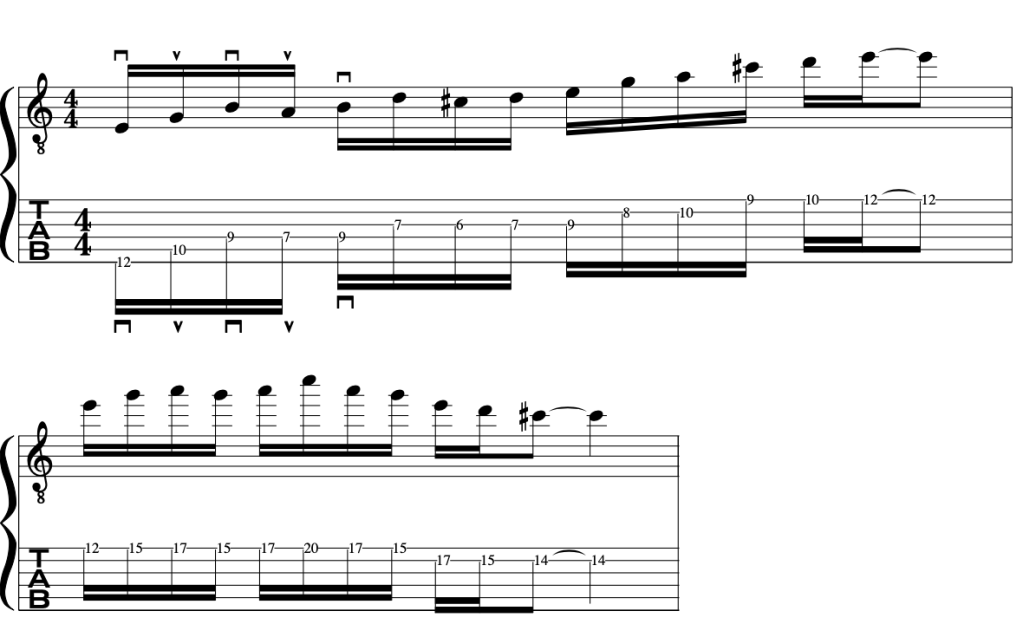
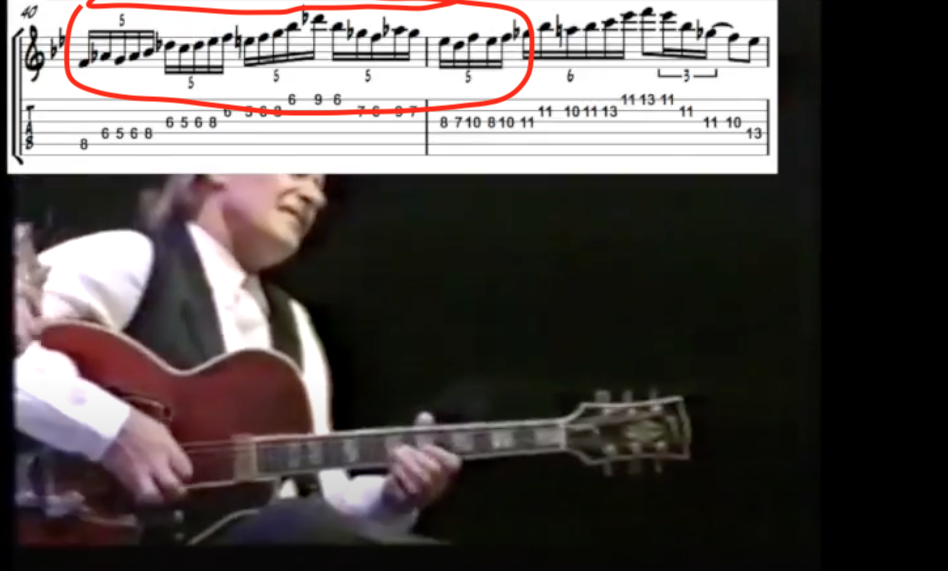
Below we can see a few examples with John Mclaughlin employing 5’s.
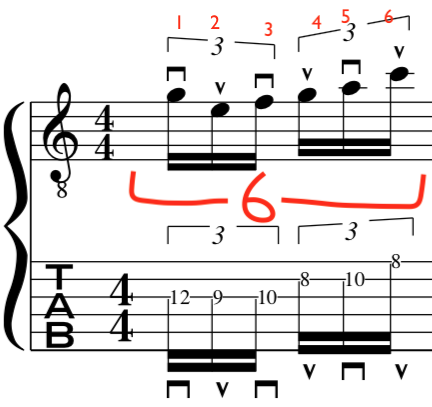
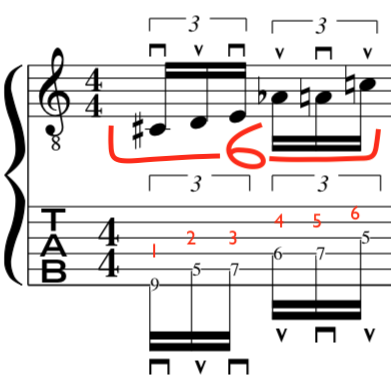
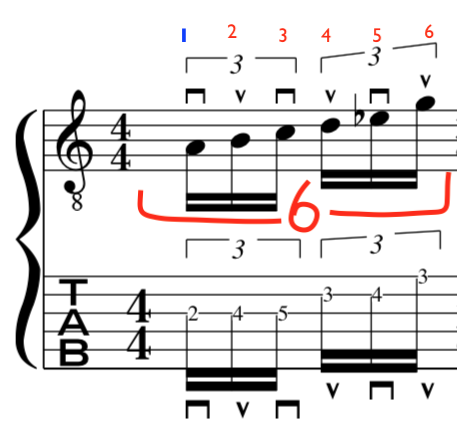
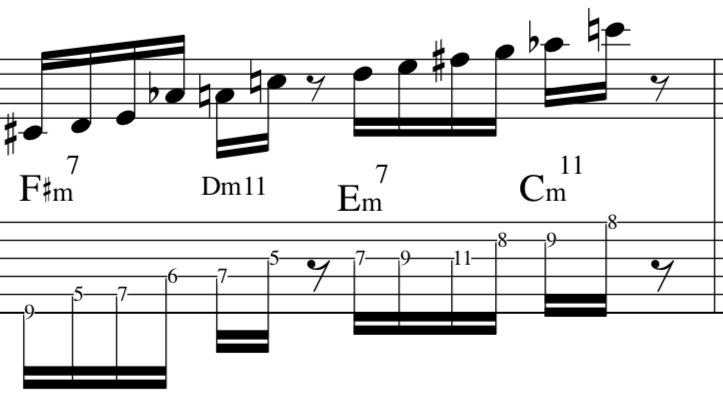
This time we will take a group of six notes [Sextuplets] and make a tetrachord and a half from it.
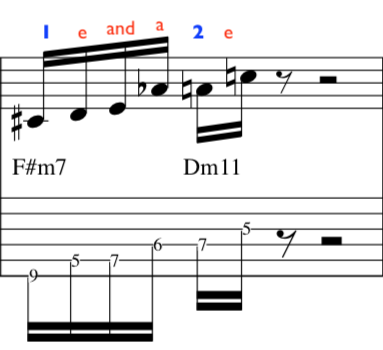
This will make 4+ 2 which will make us nail the changes with 4 notes on the first chord and 2 notes on the second chord with a short rest to reset our fretting hand to repeat the pattern again on the next two chords.
Alternate picking exercise warm up in Sextuplets/Triplets
Sextuplets John Mclaughlin guitar style into 4+2 Alternate Picking
1 2 3 4 5 6 or 1 trip let 2 trip let
or Ta ki ta Ta ki ta or Ta ka Ta ka di me
INTO:
1 e and a 2 e
Or Ta ka di me Ta ka
The first pattern for playing through the changes in Sextuplets
Sextuplets John Mclaughlin guitar style into 4+2 Alternate Picking
The first pattern is now changed into 16ths. From 1 2 3 4 5 6 into 1 e and a 2 e
or Ta ka di me Ta ka
Sextuplets John Mclaughlin guitar style into 4+2 Alternate Picking
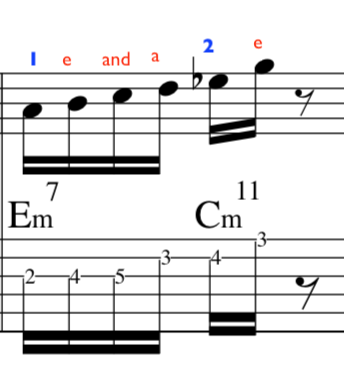
The second part of the chord sequence in sextuplets
Sextuplets John Mclaughlin guitar style into 4+2 Alternate Picking
The second pattern is now changed into 16ths. From 1 2 3 4 5 6 into 1 e and a 2 e
or Ta ka di me Ta ka
Sextuplets John Mclaughlin guitar style into 4+2 Alternate Picking
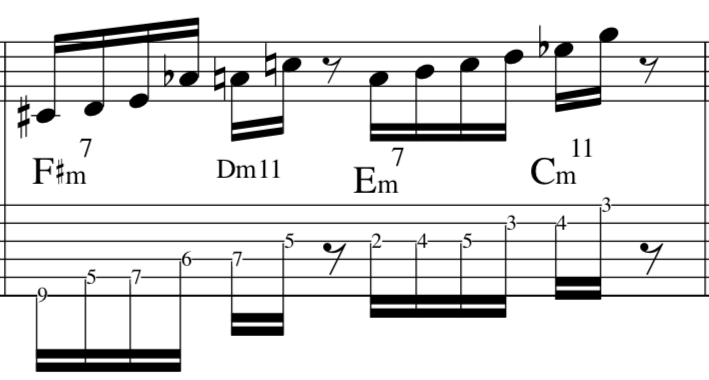
Finally, the full one bar alternate picking chord sequence nailing the changes
Sextuplets John Mclaughlin guitar style into 4+2 Alternate Picking
VARIATION:
Sextuplets John Mclaughlin guitar style into 4+2 Alternate Picking
IF THIS LESSON WAS OF VALUE TO YOU THEN PLEASE SUBSCRIBE TO US ON YOUTUBE BELOW, THANKS!