Alternate Picking from Ascending 5’s

Hi Guys,

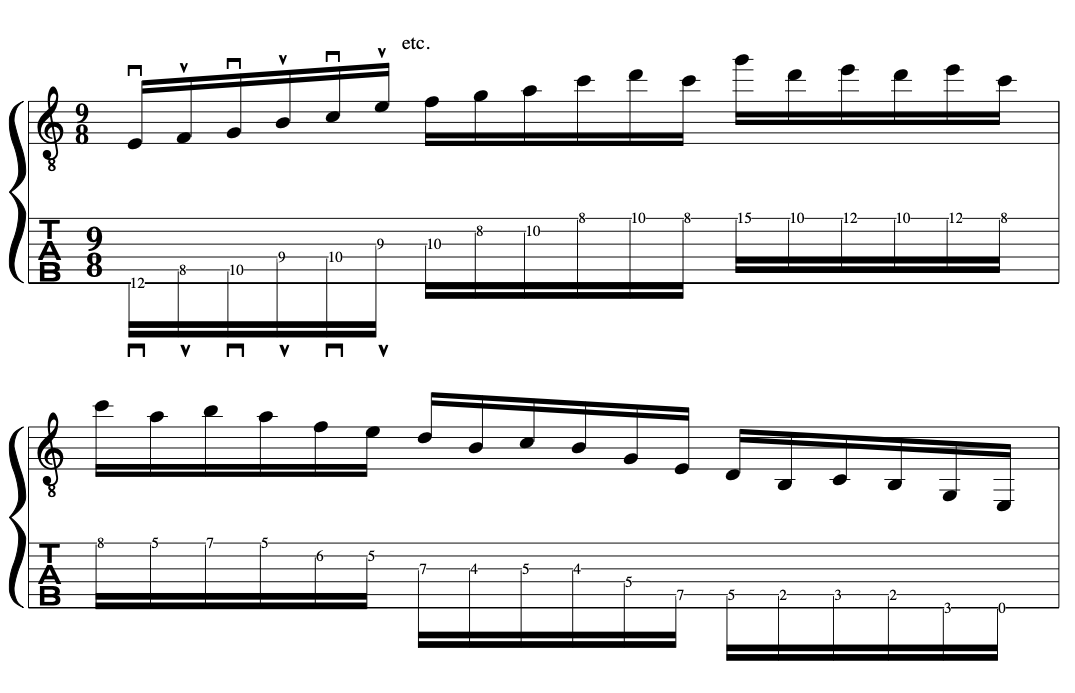
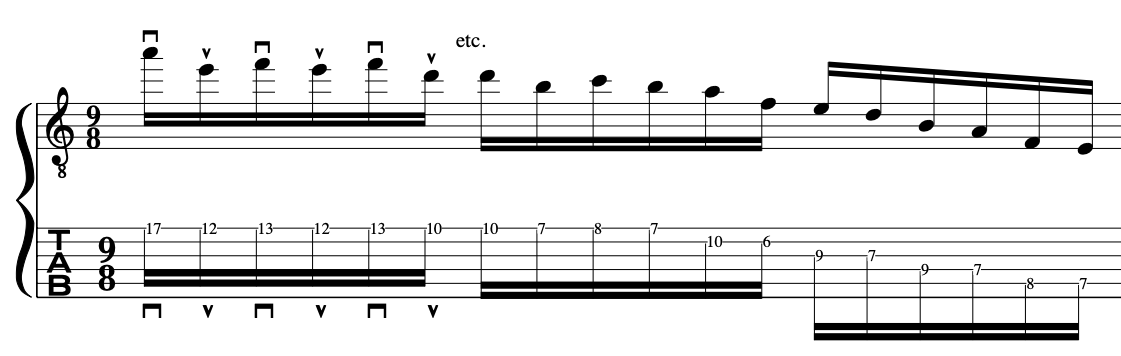
Today, a quick look at building from the “Ascending group of 5” with alternate picking guitar technique.

This group of 5 exploits the “Up” stroke. It works well as a tool for building longer and longer lines/phrases.

This is NOT shred and is really only for jazz, fusion and world-esque music like John McLaughlin’s super creative outlet Shakti. It is an improvisers tool.

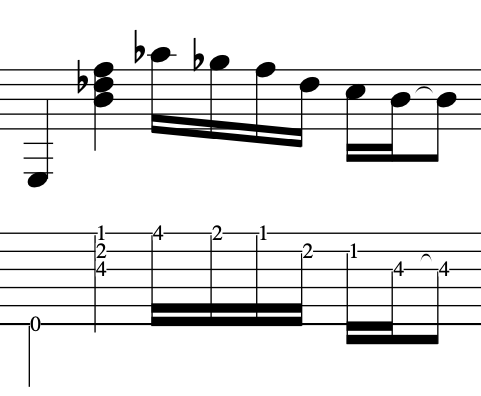
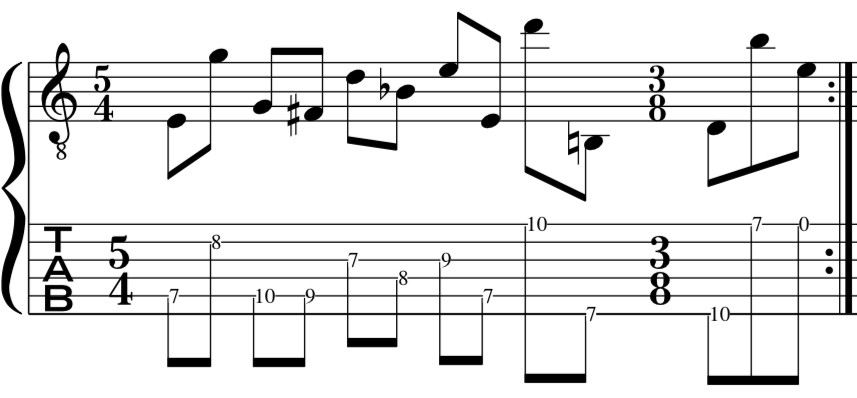
Here is an example of the 5 figure. It consists of an open string and starts on an upstroke.

This 4 note + 1 sets up the upstroke for the string cross.

alternate_picking_guitar_technique_example

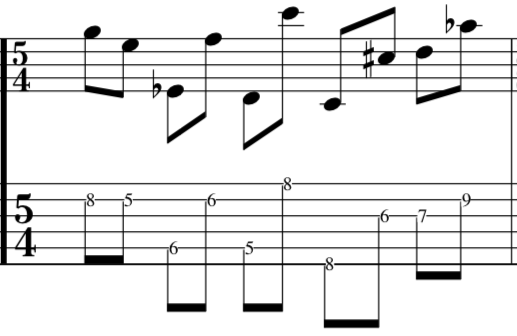
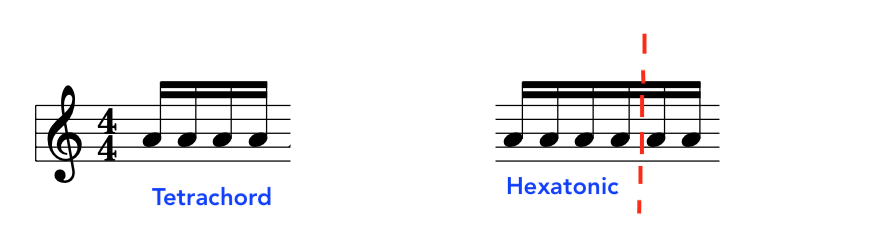
Here’s how it would be as a tetrachord to the next beat. [As opposed to a quintuplet or Ta ka di mi Thom.

alternate_picking_guitar_technique_example

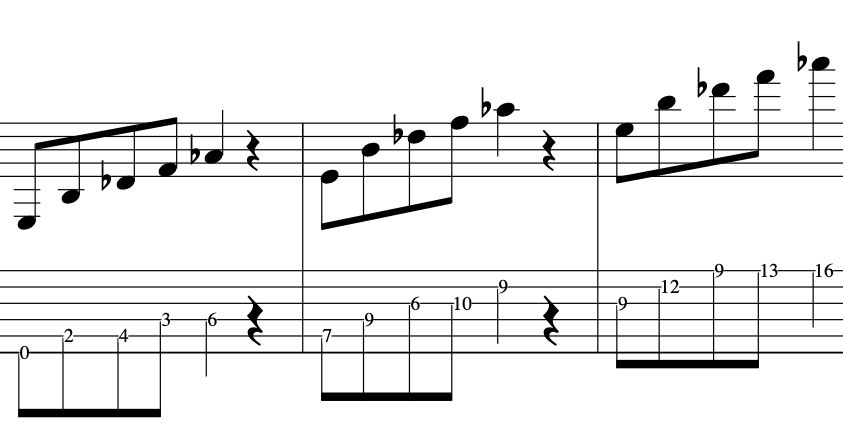
Let’s now build off of the ascending 5 figure.

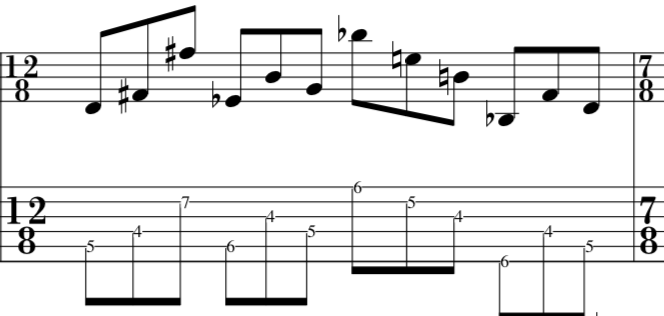
In the example below, we can clearly see the extension from the 5’s to 7’s to two groups of 4 note tetrachords.

alternate_picking_guitar_technique_example

From here, we will add a Dom7th chord to the scale/phrase.

alternate_picking_guitar_technique_example

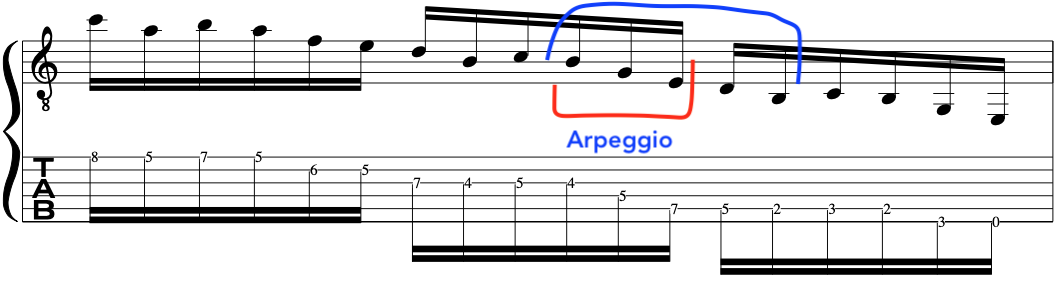
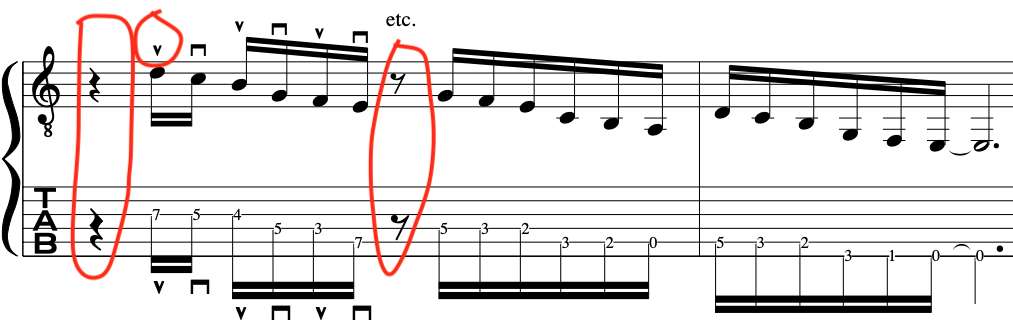
This sets us up nicely to descend smoothly starting on the upstroke.

alternate_picking_guitar_technique_example

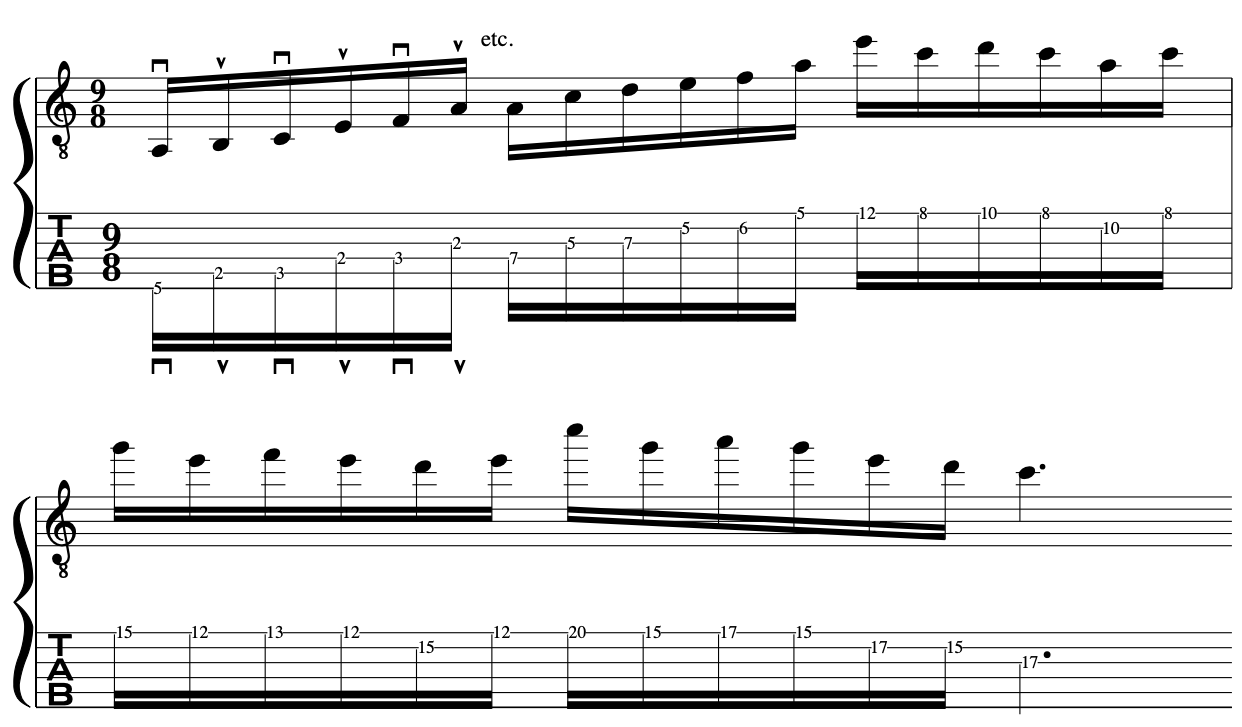
Here, we will do exactly the same thing, except that this time we are moving from G7 to C Major. [Notice the open string and 5 figure extended].

alternate_picking_guitar_technique_example

Once again, the descent is on the upstroke.

alternate_picking_guitar_technique_example

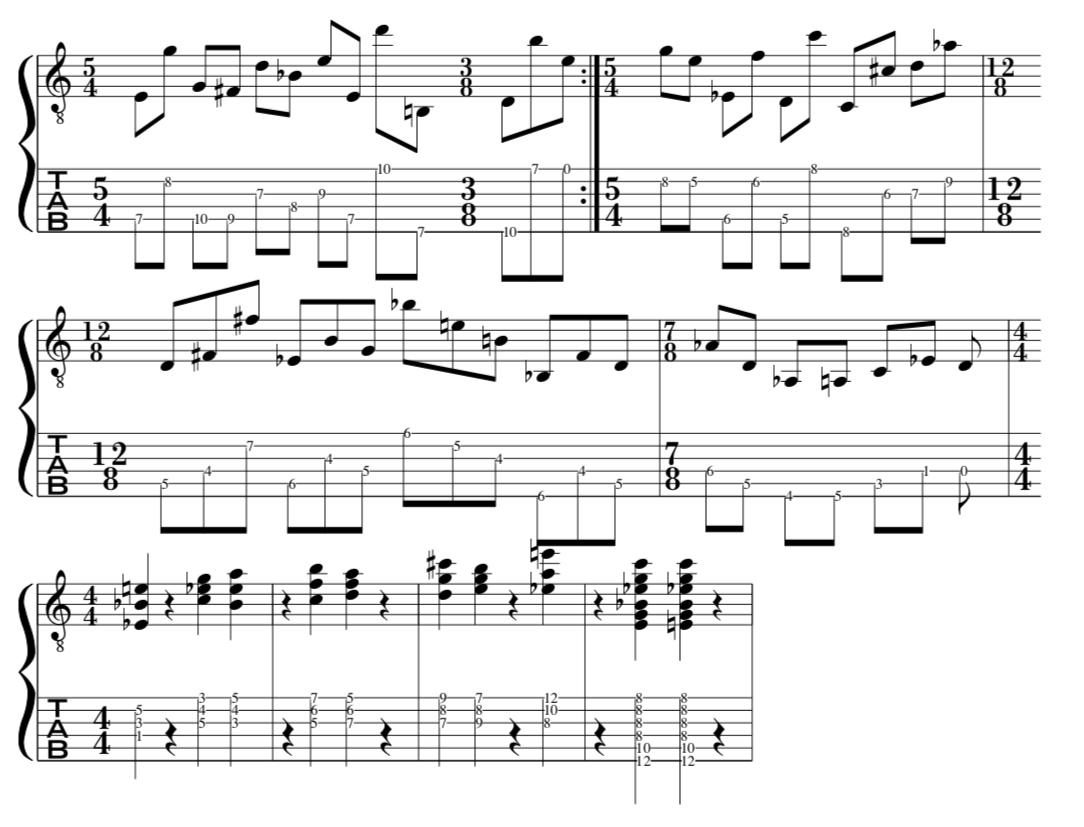
FULL EXAMPLE:

alternate_picking_guitar_technique_example

Here, we see the process in action again. The line building from the 5 figure.

alternate_picking_guitar_technique_example

The descent starts on the upstroke as before, but, this time leads to a perfect V I cadence:

alternate_picking_guitar_technique_example

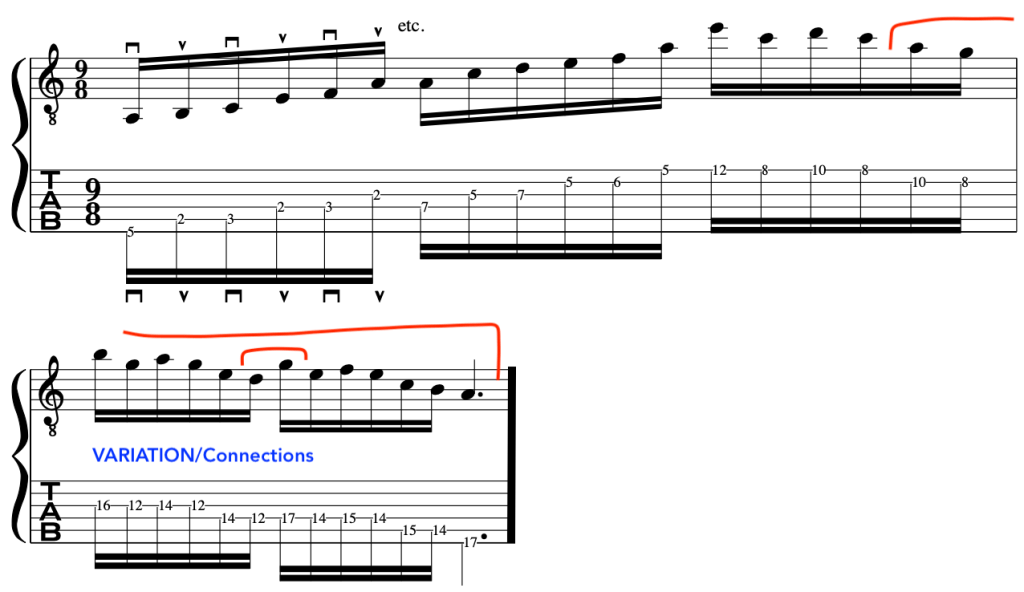
Here is a variation, but, this time in the key of A Major.

alternate_picking_guitar_technique_example

The same form of descent is employed that once again ends in a V I cadence.

alternate_picking_guitar_technique_example

Exploring John McLaughlin’s Unique Guitar Chordal Harmony

Hi Guys,

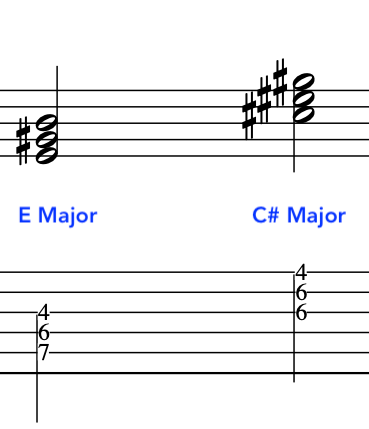
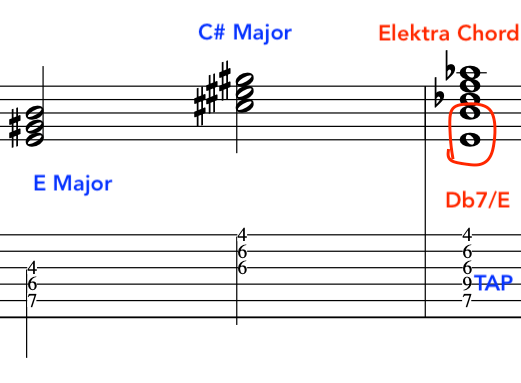
Today, a quick look at some of John McLaughlin’s amazing altered, slash and ambiguous guitar chords.

Johns harmony is a very rich palette indeed.

In the little example above in the video, I play about with some of Johns harmonic movement and colour.

Although, I could employ diminished harmony, I am instead aiming at “Implication”….Why?…This is in order to bring out the big “Rich” resonance of the guitar.

john_mclaughlin_guitar_chord_example_lesson

It is an ethereal sound where the natural harmonics and overtones can ring out of the guitars sound hole harmoniously.

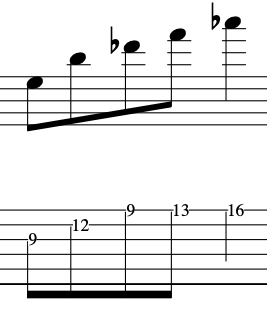
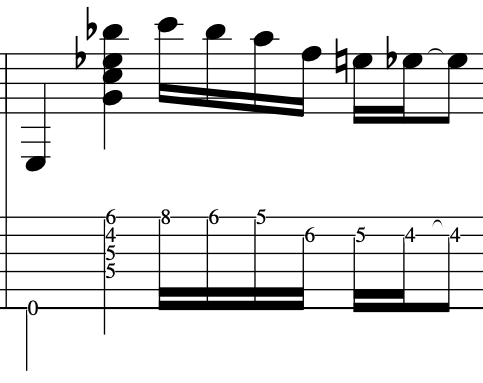
Next, we employ a Bb Major run with a few chromatic notes. These being, the B natural and the E natural chordal tones.

john_mclaughlin_guitar_chord_example_lesson

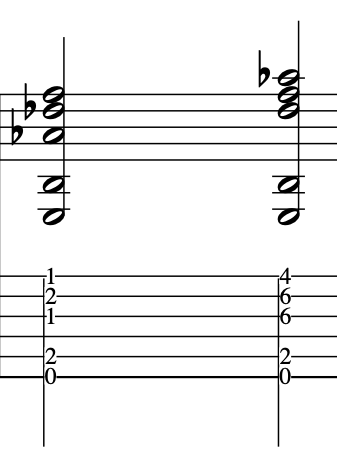
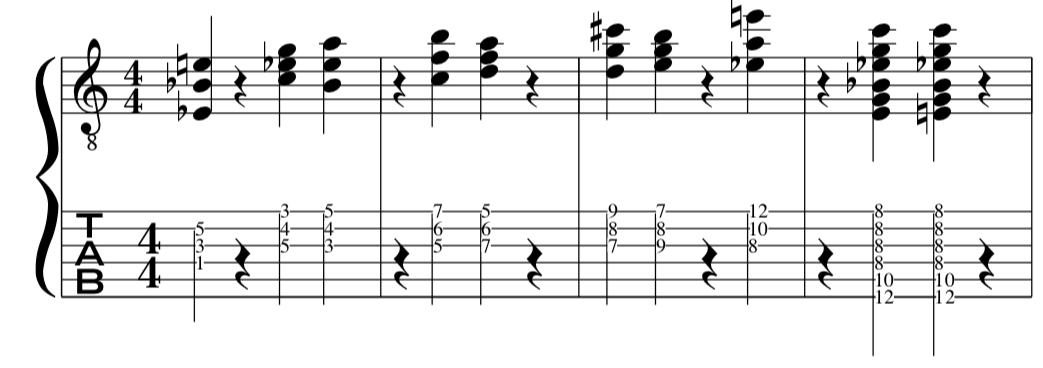
Now, let’s add two more resonant chords,

john_mclaughlin_guitar_chord_example_lesson

We will now connect to the next part together.

This will be with an arpeggio of Ebm mostly [or D#m] implying BMaj7. [Although there is an implied resolution to B7 also].

This juxtaposition, creates another ambiguous move that opens up a fresh and unique sounding harmony.

john_mclaughlin_guitar_arpeggio_example_lesson

From here, we can manipulate and resolve into the Bb minor full barre harmony:

john_mclaughlin_guitar_chord_example_lesson

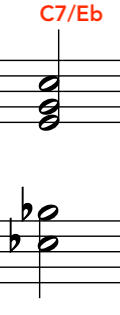
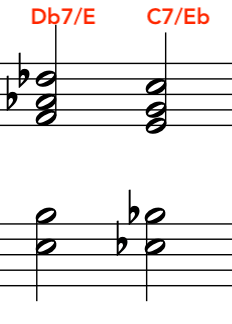
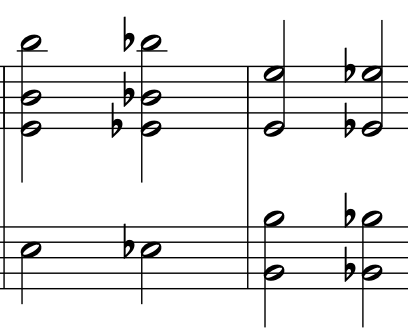
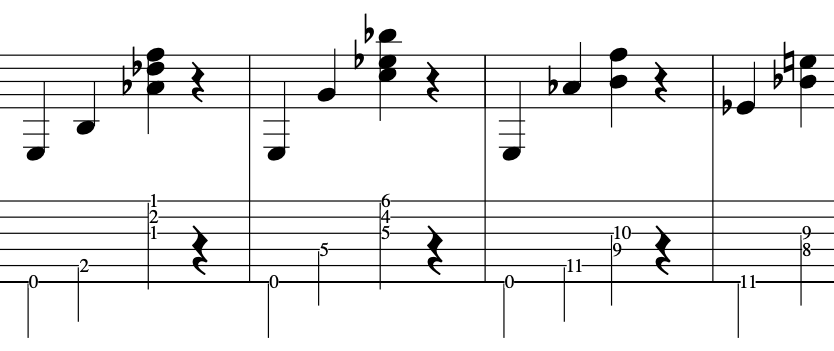
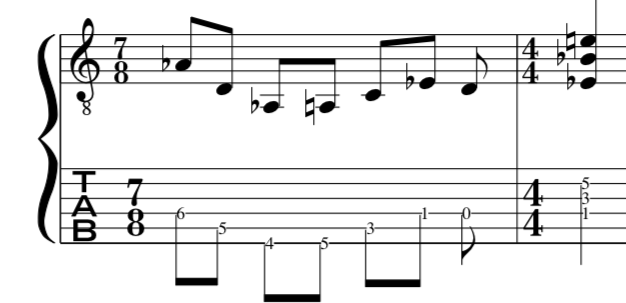
Now, let’s create a sequence. This will be, C#7sus4 to C7 with a sharpened 4th and a Maj7th.

Notice, the chromatic movement in the bass as we sequence this.

john_mclaughlin_guitar_chord_example_lesson

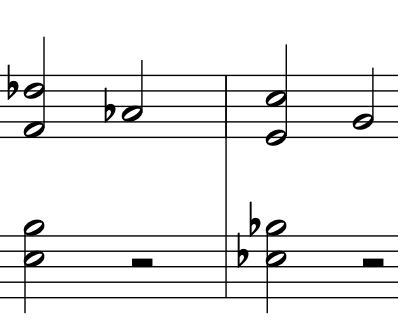
Finally, this resolves from CMaj7#11 to CMaj7 with open string guitar chords.

john_mclaughlin_guitar_chord_example_lesson

In conclusion, this was just a quick look at Johns unique take on harmony and how to apply some scale and arpeggio movement to connect it all together.

John’s harmony is a lovely combination of ambiguity and resonance with a sense of calm.

The magical ethereal tone opens doors to really interesting solo applications that exploit implied harmonies and dissonances. These I find are met with with lingering resolutions that are never quite met.

It’s a sort of pairing of opposites that you can’t quite put your finger on that give it that alluring yet elusive quality.

Counting Rhythms for Alternate Picking Guitar “Right Hand” Technique:

Hi Guys,

Here are a few of the Rhythms that I like to count and/or practice when alternate picking:

These are based around Indian Konokol: But: I am using them to INTERNALISE patterns. This could be Ta ka di mi but felt/internalised as du du du du

These, I find help me enormously with the right hand picking, as I can connect phrases together from the internalised beats/syllables.

These are NOT cast in stone and are only a few ideas that I use personally, and are not aiming at strict Indian classical music technique, but, are employed as reference points/patterns/beats in the way that they are enunciated.

1] Ta ka di mi [1 2 3 4]

2] Ta ki ta Ta [more as 123 1]

1] Ta ka di mi thom [1 2 3 4 5]

2] Ta ka di mi Ta [1 2 3 4+1]

3] Ta ki ta Ta ka [1 2 3 1 2]

1] Ta ka di mi Ta ki ta [4+3]

2] Ta ka di mi thom Ta ka [5+3]

1] Ta ka di mi Ta ka di mi [4+4]

1] Ta ki ta Ta ki ta Ta ki ta [3×3]

2] Ta ka di mi Ta ka di mi Ta [4+4+1]

1] Ta ka di mi Ta ka di mi Ta ki ta [4+4+3]

1] Ta ka di mi Ta ka di mi Ta ka di mi Ta [4+4+4+1]

1] Ta ka di mi Ta ka di mi Ta ka di mi Ta ka di mi [4×4]

These are only ideas that I personally find useful, and, as I say they are not for strict Indian classical music. But, they do function well as reference points and a way of enunciating beats for the picking hand to pluck at a fast [alternate picking] tempo.