Hi Guys,
Today, a look at how jazz guitar legend John McLaughlin makes cool and original sounding jazz lines from the diminished scale when improvising.
PART 1: CHORDAL SUBSTITUTIONS:
First of all, let’s apply a couple of Dim7 substitutions for the Dom7b9 chord.
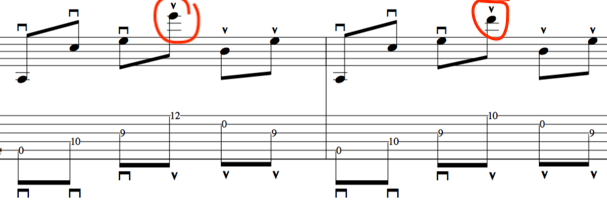
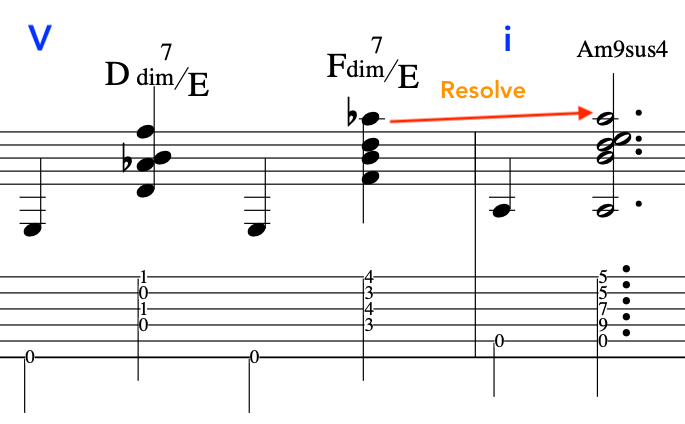
In the example below, for the E7b9 chord we will employ Ddim7, Fdim7 chords over an E bass for a V to i cadence.
EXAMPLE 1:
Notice that the top line resolves:
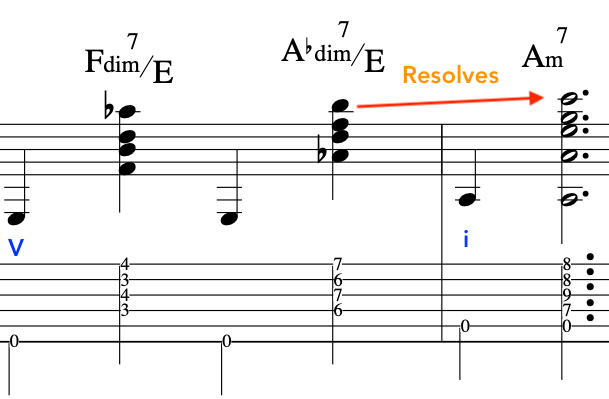
EXAMPLE 2: Shifting the diminished 7th shape up to resolve for V to i cadence
Once again, the top line has a smooth half step resolution:
CHORD APPLICATION PART 2:
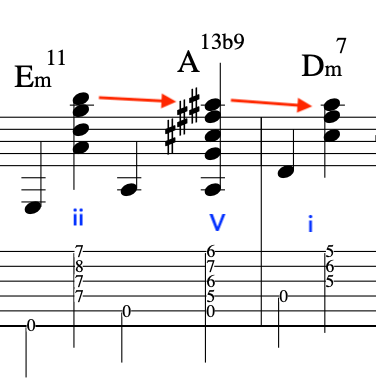
This time, we will employ the Dom13b9 chord in a full ii V i cadence.
As, in our previous examples, acknowledge the descending chromatic movement– resolving in the top line.
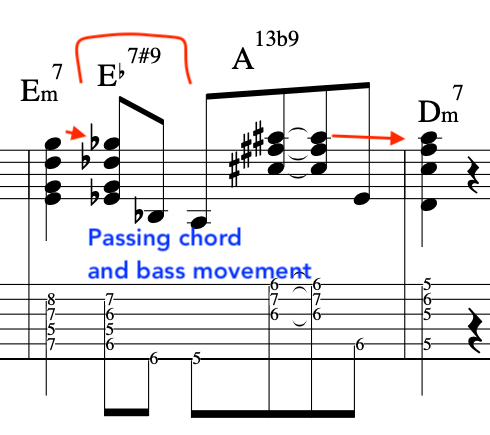
PASSING CHORD:
This time, we will add a passing chord. This will be Eb7#9. This falls smoothly from the Em7 chord.
We will also add a little bit of bass movement.
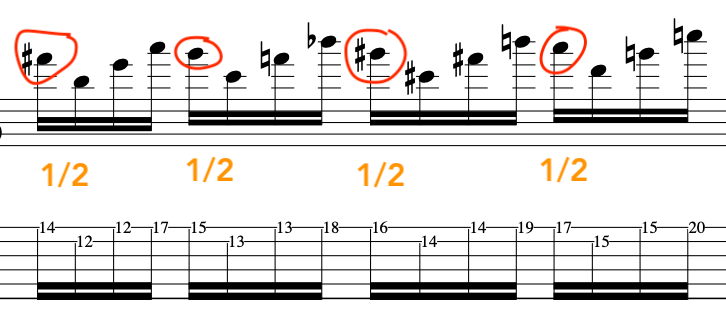
Also, in this example, we have two 1/2 step resolutions in the top line.
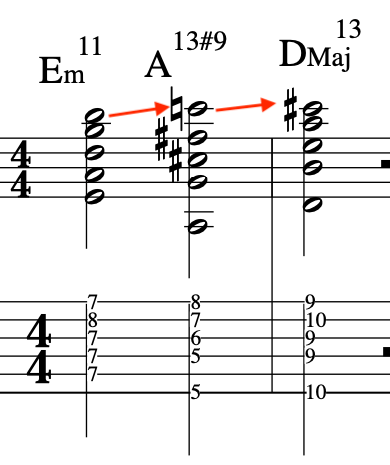
Finally, we will exploit a Dom13#9 chord as part of the ii V I cadence. [Once again, notice the chromatic moment on the 1st string/top line as we ascend this time].
EXPLOITING THE SOLO LINE:
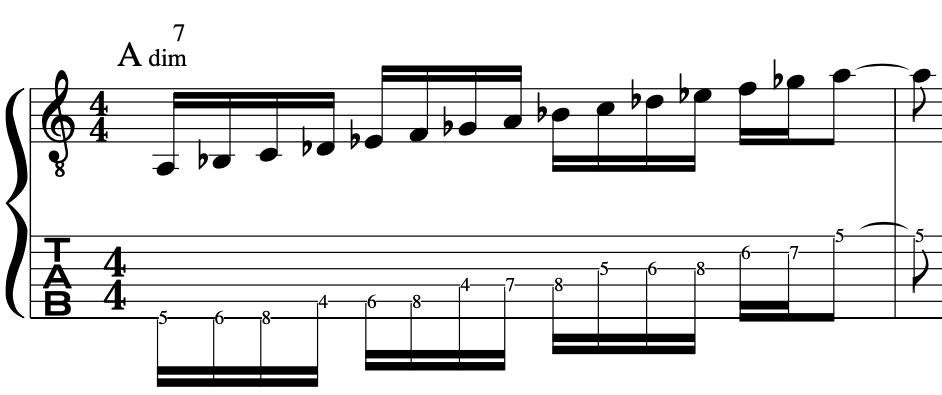
Another interesting concept that John employs, is to use the “Ultra Locrian” mode or the 7th mode of the harmonic minor scale when dealing with diminished chords.
Here is the scale/mode over an Adim7 chord.
AVOIDING THE DIMINISHED CLICHE!
What puts John in a league of his own, is his avoidance of the usual tired diminished cliches .
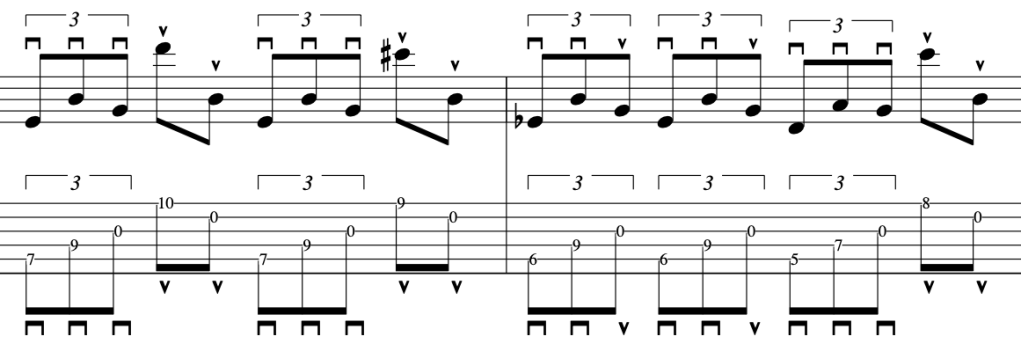
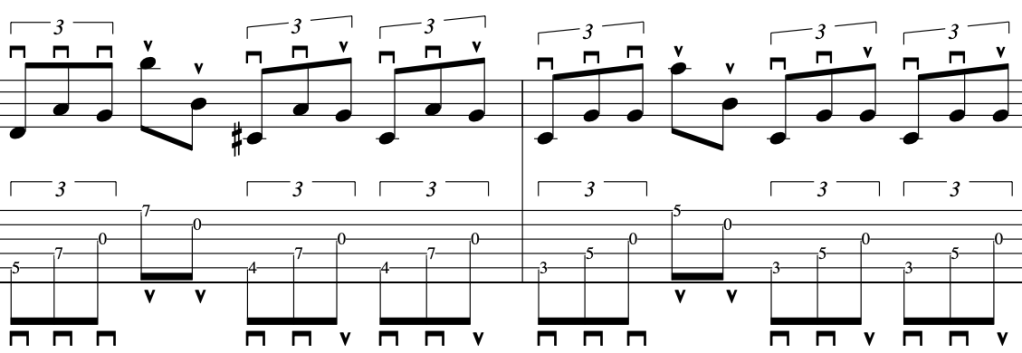
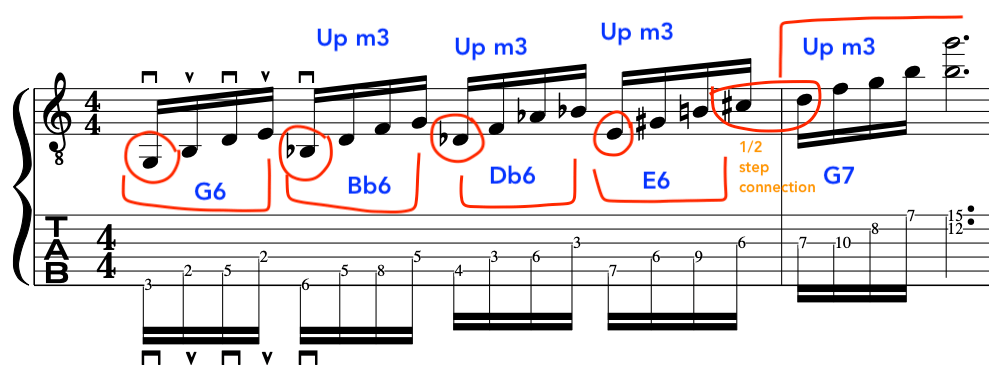
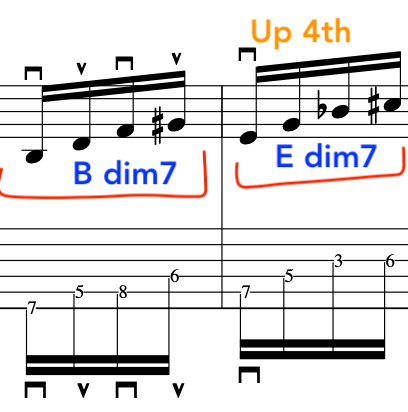
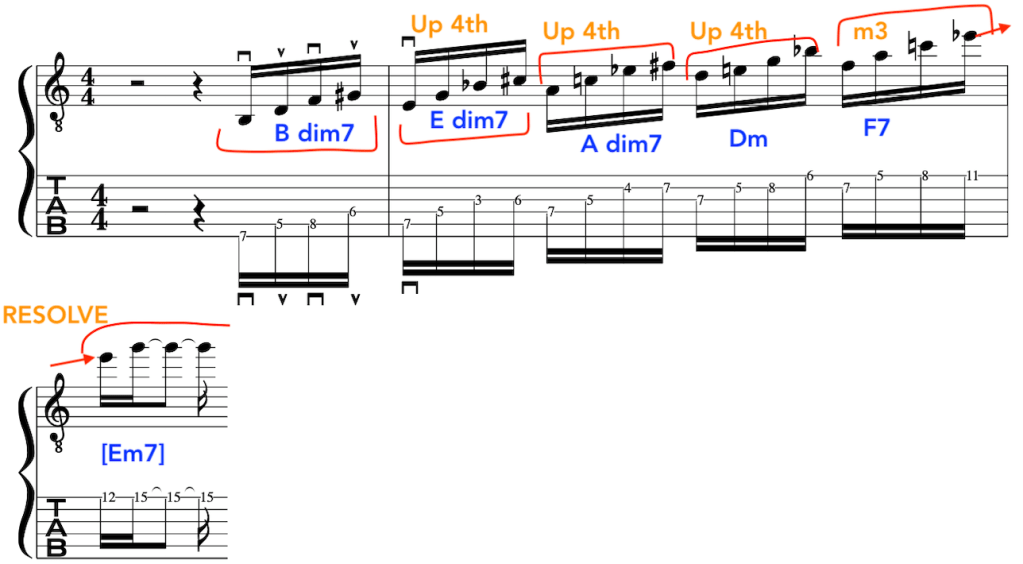
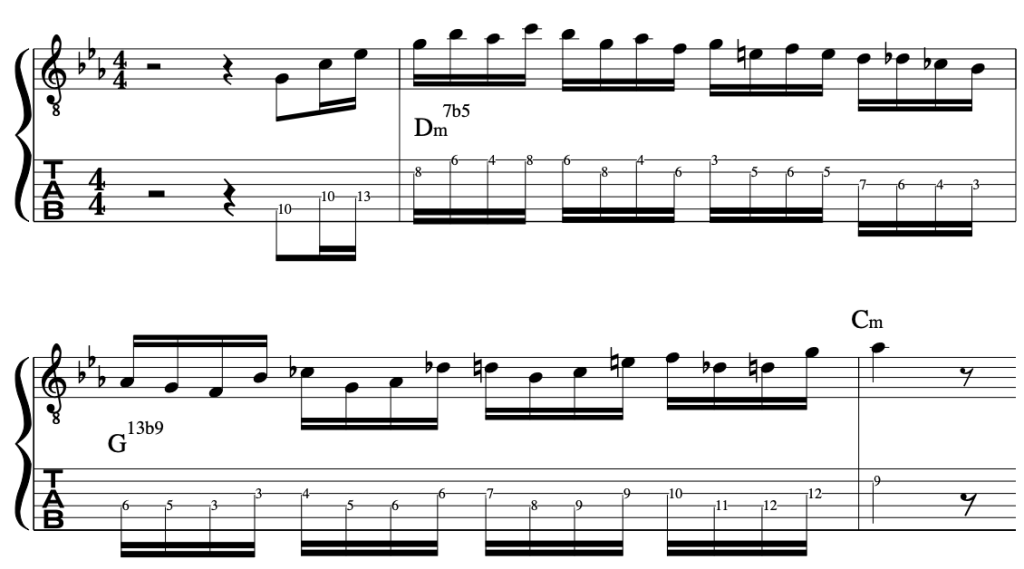
Here, is an excellent example where John sequences in minor thirds. This though is an original, fresh and highly unique way of approaching diminished harmony and hence breaks the chain of cliches.
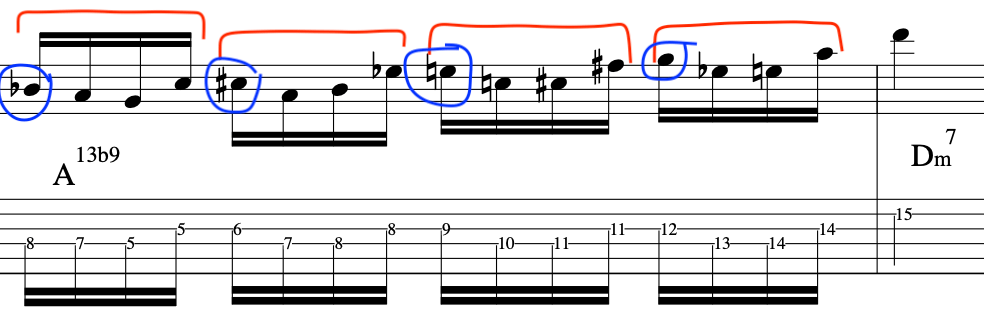
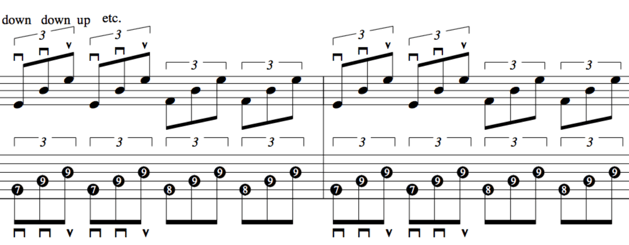
These 4 note groupings of tetrachords work great for sequencing with quick alternate picking guitar technique. [Starting on a down stroke]
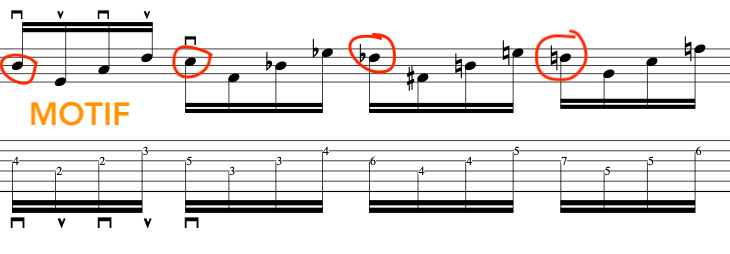
THE INTERVALS: Key to creative lines
Looking at our example more closely we can clearly see the manipulation of intervals within the diminished scale/harmony.
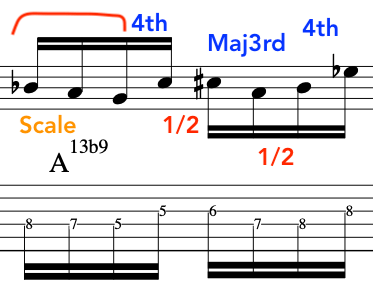
This is what sets the great improvisers apart.
In this disguised manner the ascent in minor 3rds has a fresh interest to the ear due to the creative use of these intervals.
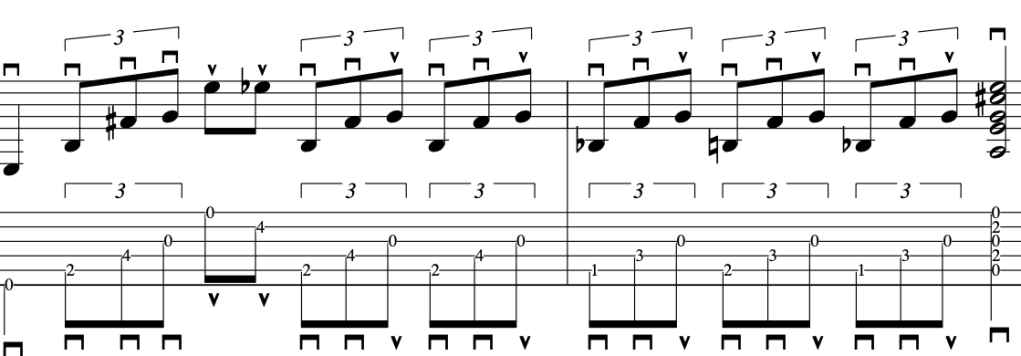
FULL ii V7 I Line
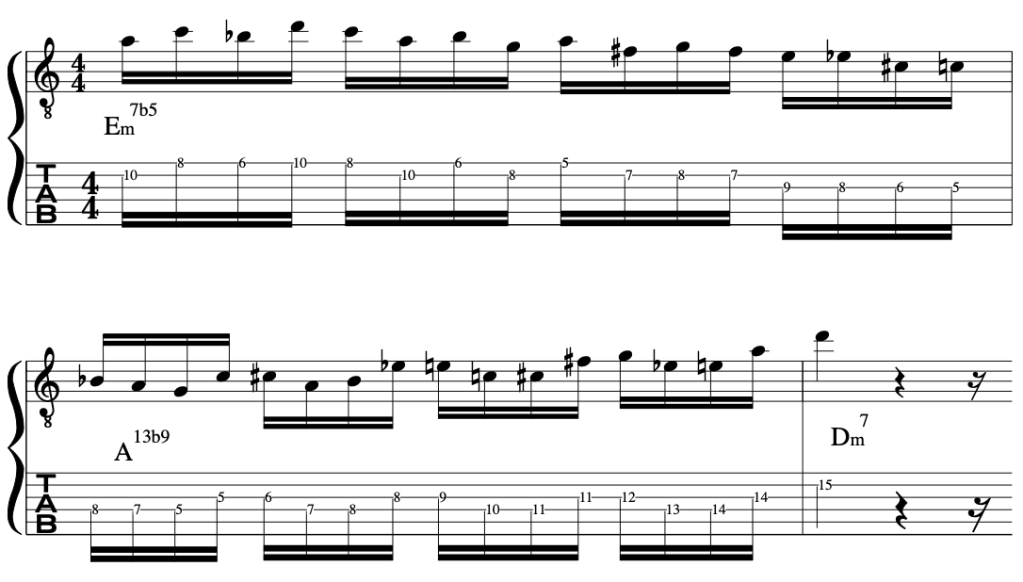
EXAMPLE 2
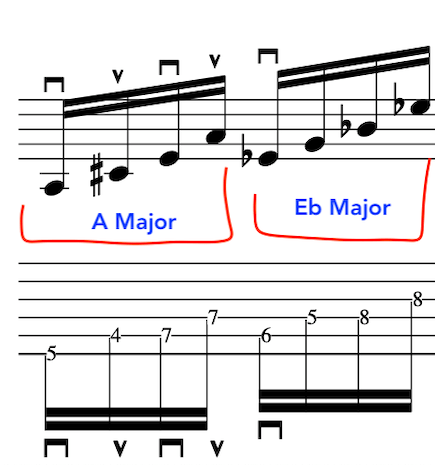
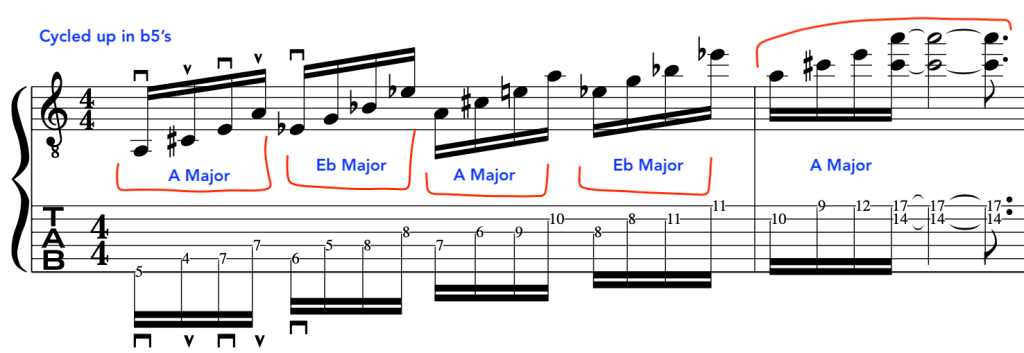
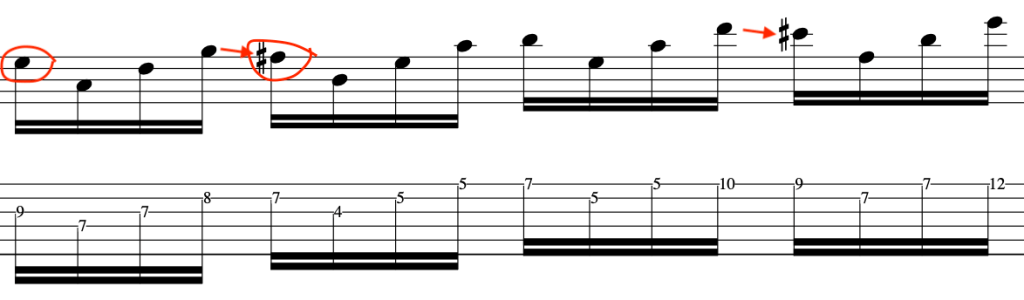
Here, we have the same thing in a different key:
Once again, acknowledge the use of intervals and tetrachords for rapid ascending movement with the picking hand.
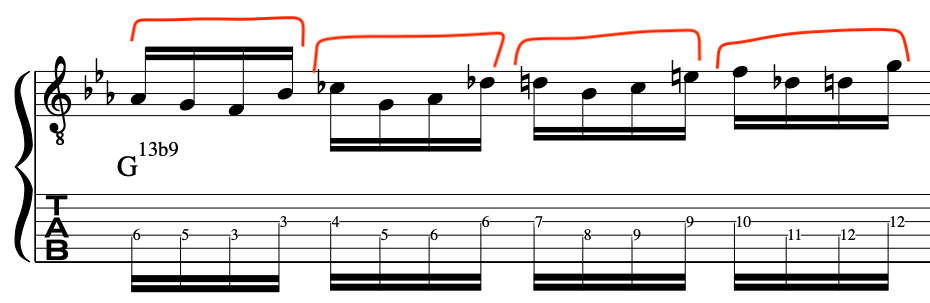
Full Line:
IN CONCLUSION
This was just a quick look at how John McLaughlin exploits the diminished scale in interesting and unique ways that work extremely well not only for jazz, but, also specifically for the guitar.
John’s sequencing by exploiting 4ths, 3rds, triads and semitones creates an inspirational path, because it demonstrates that fresh life can be brought out from the diminished scale. This in turn makes the worn out cliches very easy to avoid.
FREE DOWNLOAD:
If this lesson was of use to you then please SUBSCRIBE to us on YOUTUBE below, Thanks!