Lessons from Jazz/World to 20 Century Classical Music Harmony Rhythm and Theory
Category: Jazz fusion guitar music theory lessons, guitar technique and improvisation.
How to improvise over altered dominant chords. How to employ chromatic jazz and fusion harmony. Apply twentieth century classical composition techniques to modern jazz music and improv. How to exploit modes of the major. minor and diminished scales. Lesson in alternate picking guitar techniques as used by John Mclaughlin and Al di Meola. How to do metal rock and all styles of alternate picking on the guitar. Plectrum pick technique for electric and acoustic guitarists. alternate guitar style of picking lessons.
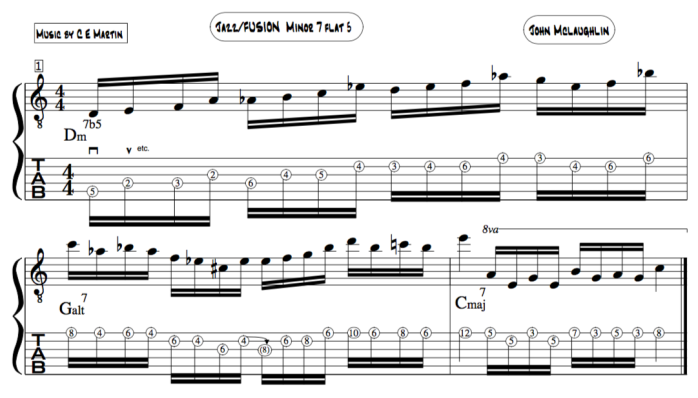
Today we will look at a John Mclaughlin alternate picking Jazz/Fusion improvisation cadence employing the altered dominant chord! Please watch the video below and then try it out yourself.
As you will see this cadence employs the Altered scale. It is a 2 [minor 7 flat 5] going to 5 [ “Altered Dominant”] 1 [major 7th]. This being Dm7 flat 5 G7 altered resolving to C major7.
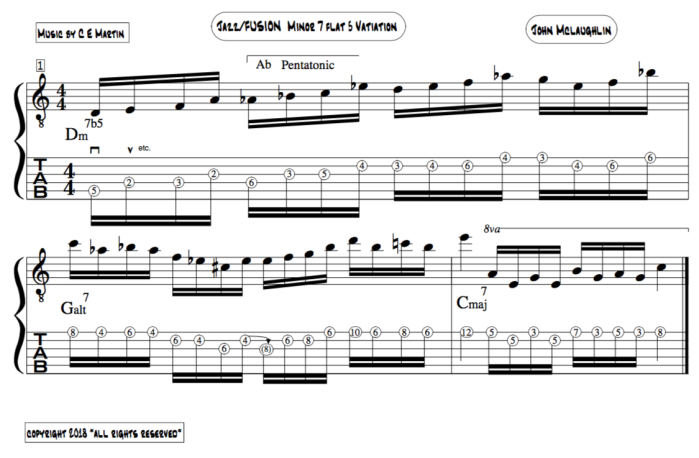
I also employ a flat 5 substitution on the Dm7 flat 5. All of this resolves though and slips nicely into the altered dominant 5 chord. I also use pentatonics within the altered scale for rhythmic flow. Please look at the TAB/MUSIC below and play through it yourself to see and feel how it all “Naturally” unfolds. I employ alternate picking the same as John Mclaughlin.
John Mclaughlin alternate picking altered scale line Music/Tab
VARIATION With an A flat Pentatonic shape replacing A flat minor/Major Arpeggio for the flat 5 substitution.
Going back to our negative harmony web page CLICK we had a scale extension of Ionian and Phrygian.
Employing our old friends “Tetrachords” we can build complete 2 octave scales when the octave [or repeated starting note] is missed. In this case the whole tone scale and its transposition builds the scale extension.
TETRACHORD SCALE
We can also build 2 octave scales by joining together two “One octave” scales.
Many composer like Tcherepnin, Messiaen, Boulez along with more modern improviser/composers like Keith Emerson and Allan Holdsworth have applied this for its rich polytonality, modal expansion and textural counterpoint.
This idea along with Negative/Mirror harmony is really well suited to the piano both in terms of improvisation and composition. If you are looking for originality then there is a whole new world waiting here to be discovered and applied.
Many people learn modes and scales and arpeggios and copious amounts of music theory. They are then confronted with the biggest problem of all. How to make music out it!
The key to all of this is to look at the rhythm. Rhythm is the key to fluid professional sounding lines. But, how to we do this from a beginners perspective?
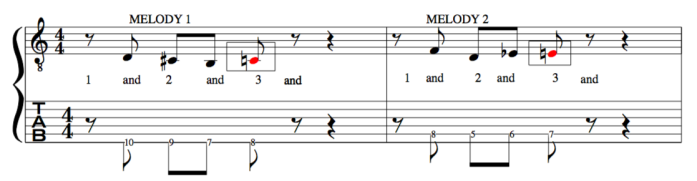
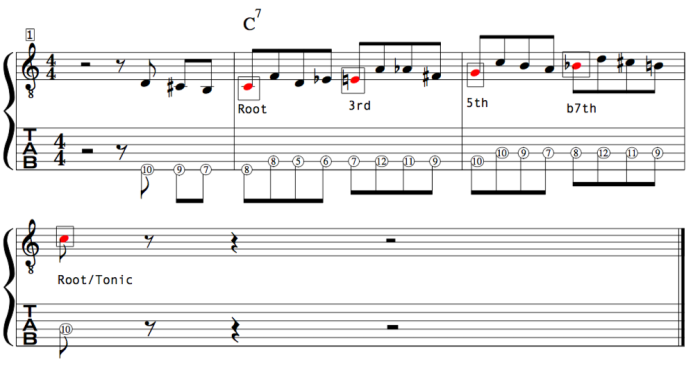
Firstly: The most important thing to do is outline the chord tones that are “On” the beat. This way the ear can follow. Because the chromatics on the “Off beat” will then sound correct, interesting and colourful.
The 2 little chromatic set ups/melodies below detail this.
Play through the exercise below and you will hear and see the C7 arpeggio outlined on beats 1 and 3 in all bars. Also, notice the “Up beat”. This sets up the rhythm by targeting the “On beat” chord tone.
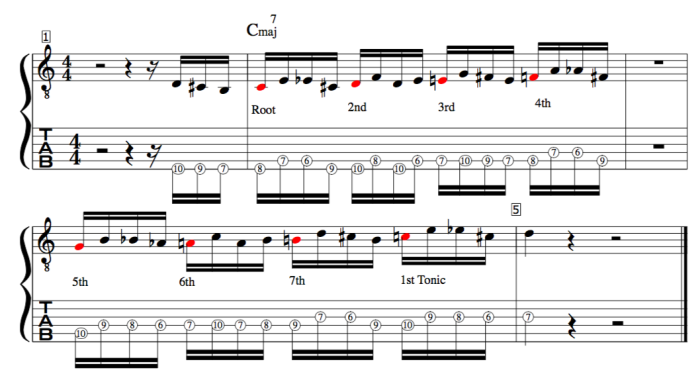
Here is another example in double time. Notice that this time the complete C major scale is played on each 1/4 note beat of the bar. Again we have the upbeat to create forward motion.
This doesn’t mean that we do this every time but it shows how to create and then develop really hip lines that are “Musical”. From here on in you can manipulate it.
Jazz/Fusion Line: Don Mock classic “Anacrusis”
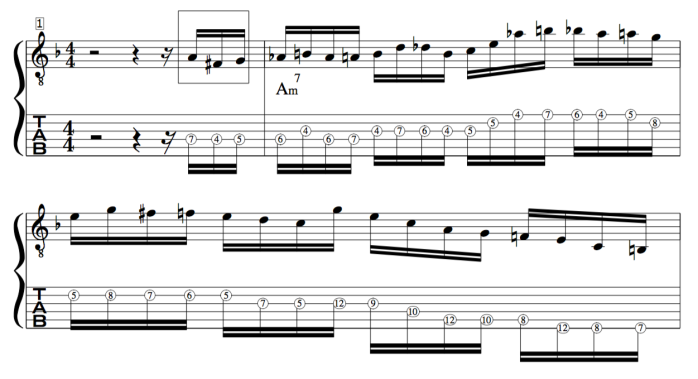
John Mclaughlin Classic beginning “In the bar”
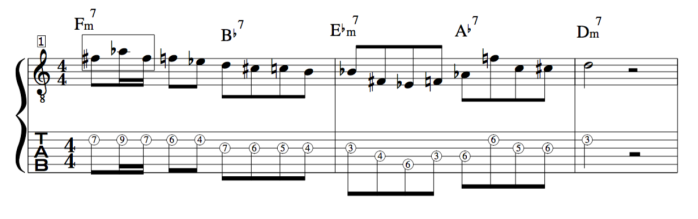
Below is a variation using a John Mclaughlin phrase. Notice how Mclaughlin starts on the second semiquaver [off beat] of the second beat of the bar.
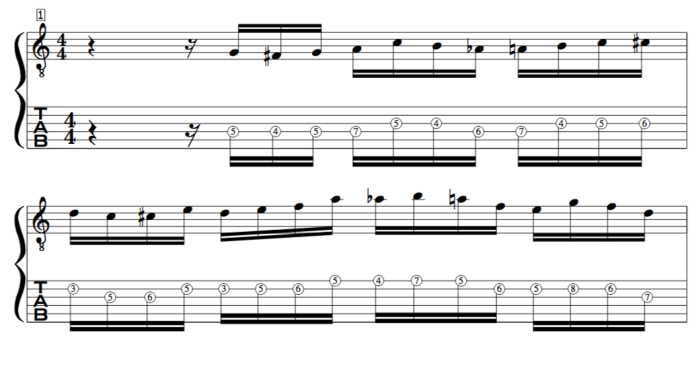
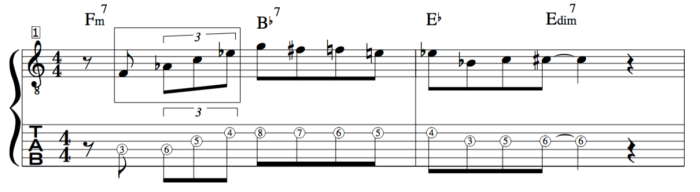
Here are a couple of other rhythmic set ups to try out,
Notice the off beat to triplet arpeggio. This is a very common rhythm but it always sounds good and works well.
This line starts “On the beat” but the rhythm gets pushed.
This is just a taster of what makes Jazz sound like jazz. Looking and learning about rhythm is "Everything" because without understanding where the "On' and "Off "beat are it is impossible to syncopate and anticipate musically. All the theory in the world won't help without good forward moving rhythm.

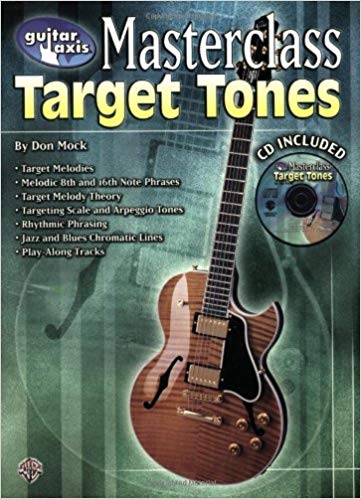
The best book that I have ever read and studied on the subject of enclosure/approach notes/rhythmic set up is,

"Target" Tones by Don Mock.LINK DON MOCK
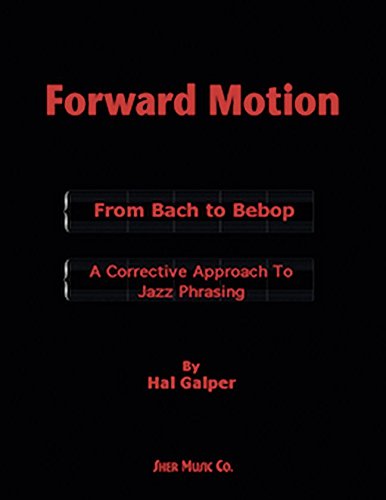
For a deeper and intellectual look there is a book called "Forward Motion" by pianist Hal Galper. This book is for someone really wanting to go deeper into the rhythm of jazz.LINK HAL GALPER
 CLICK SUBSCRIBE!