Alternate Picking Groups of 6 notes for Jazz/fusion guitar

CLICK SUBSCRIBE!

Alternate Picking Groups of 6 notes for Jazz/Fusion Guitar

Hi Guys,

Today, a quick look at using groups of 6 notes for double timing in Jazz/Fusion.

Although these are sextuplets I am using them as a double timing musical tool and hence thinking of them slightly differently. This is because I am using a tempo marking of 100Bpm.

Why would I do this?

The reason being – Around this tempo demisemiquavers or 32nd notes might be too quick to play and offset the rhythm too much:
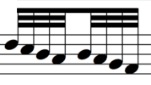
Alternate-Picking-Groups-6 notes-fusion-guitar

and 16th notes [tetrachords] may be too draggy and not pushy enough.
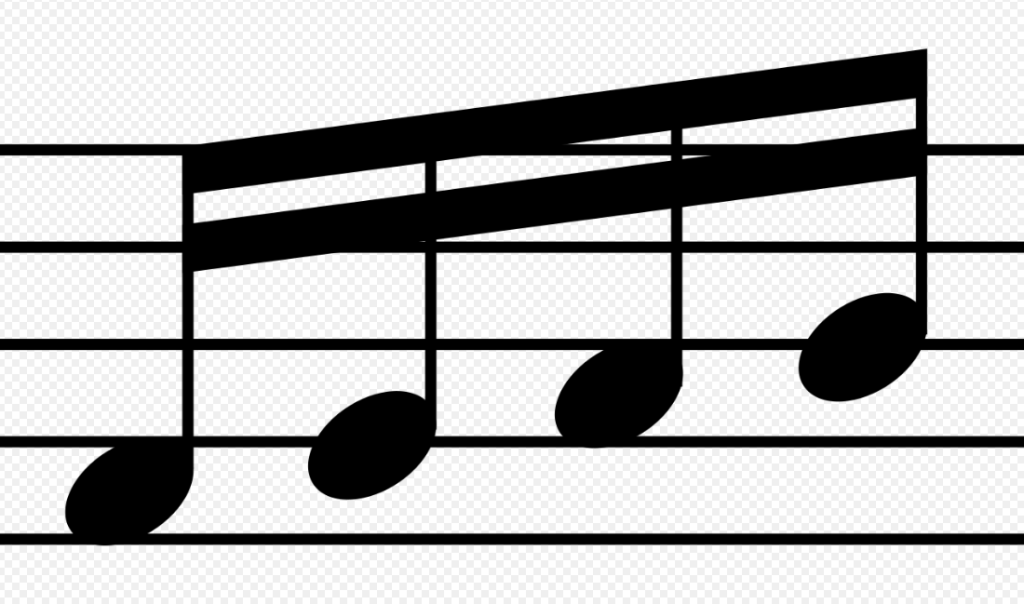
Alternate-Picking-Groups-6 notes-fusion-guitar

So, grouping 6 notes together over [1 crotchet] or 1 quarter note works really well rhythmically for clear cut phrasing. This is the sort of thing Al Di Meola or John McLaughlin would do.
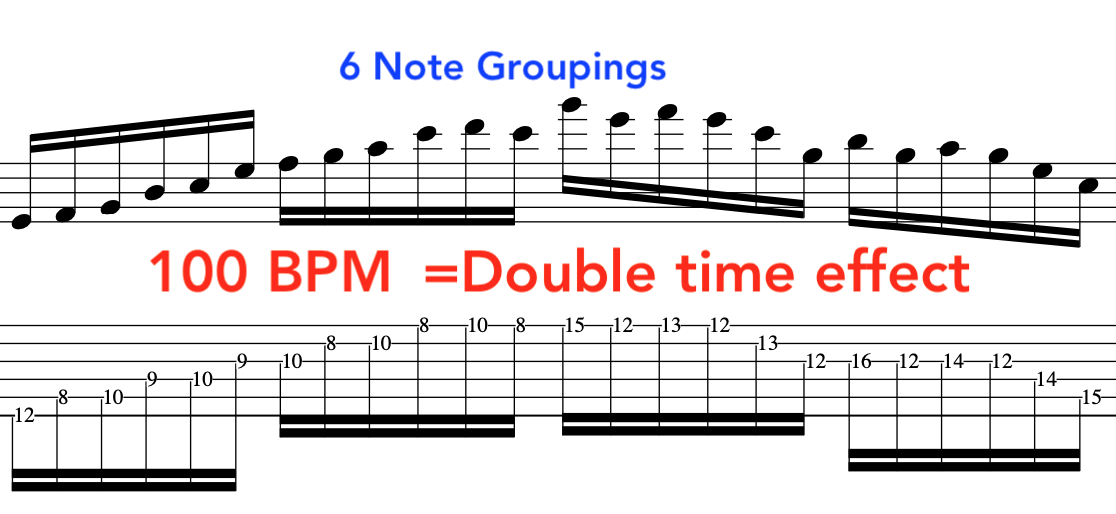
Alternate-Picking-Groups-6 notes-fusion-guitar

You can count this how you want. Below are some common examples.
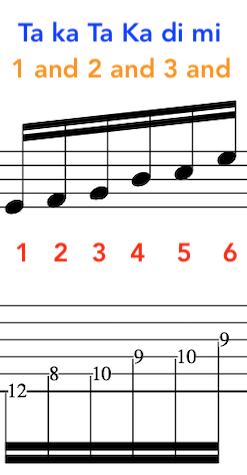
Alternate-Picking-Groups-6 notes-fusion-guitar-counting-time

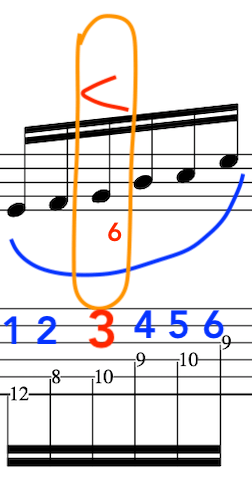
In order to get forward momentum and shift the grouping along it is a really good idea to “Accent” the third note in each six note grouping: This also gives you a reference point and avoids muddying the groupings of notes.
Alternate-Picking-Groups-6 notes-accents-accenting

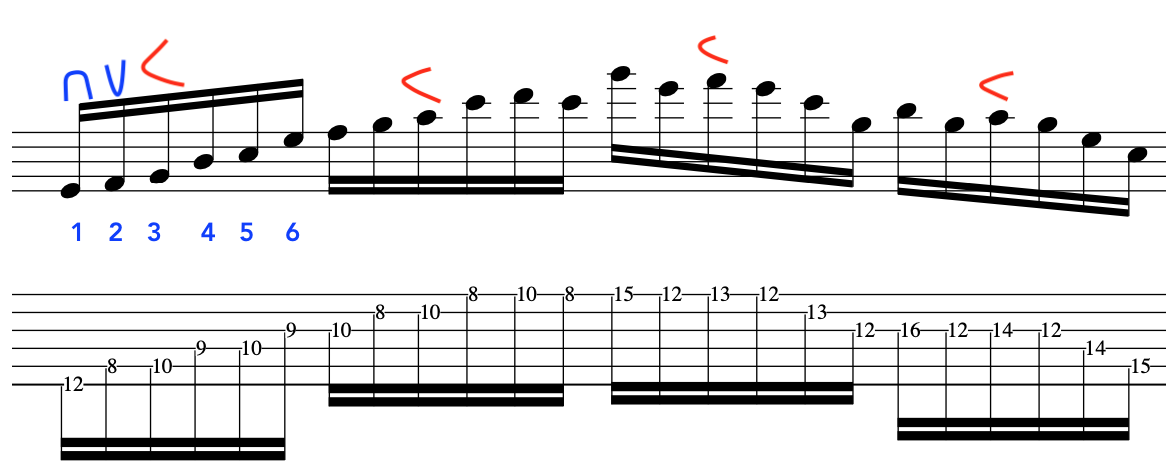
Here is the first exercise starting on a down stroke with strict alternate picking:
Alternate-Picking-Groups-6 notes-fusion-guitar-exercise

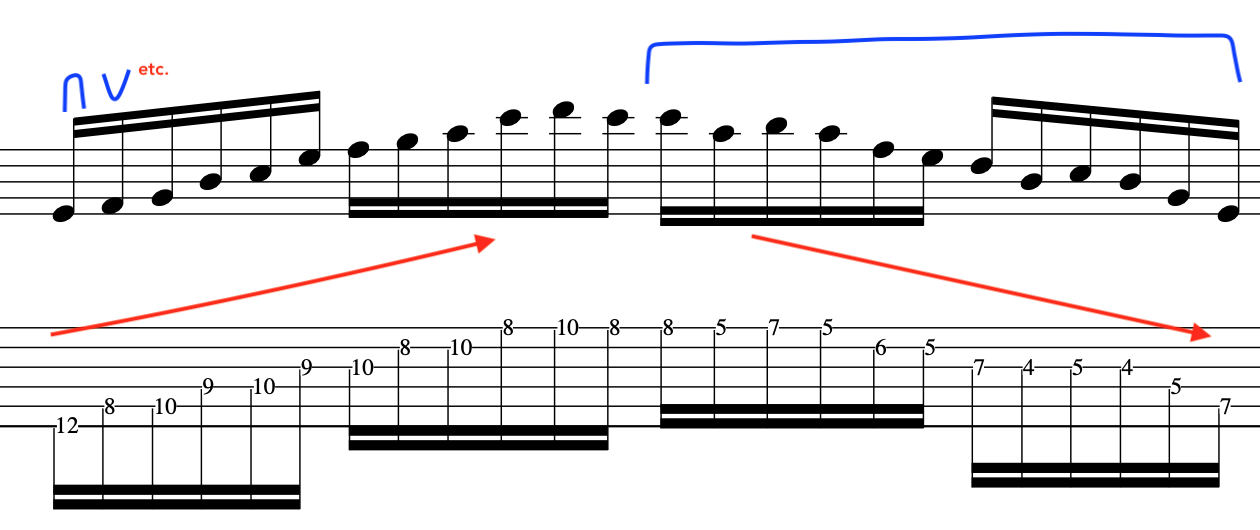
In the next exercise the second part goes the other way on the guitar fingerboard.
Alternate-Picking-Groups-6 notes-fusion-guitar-exercise

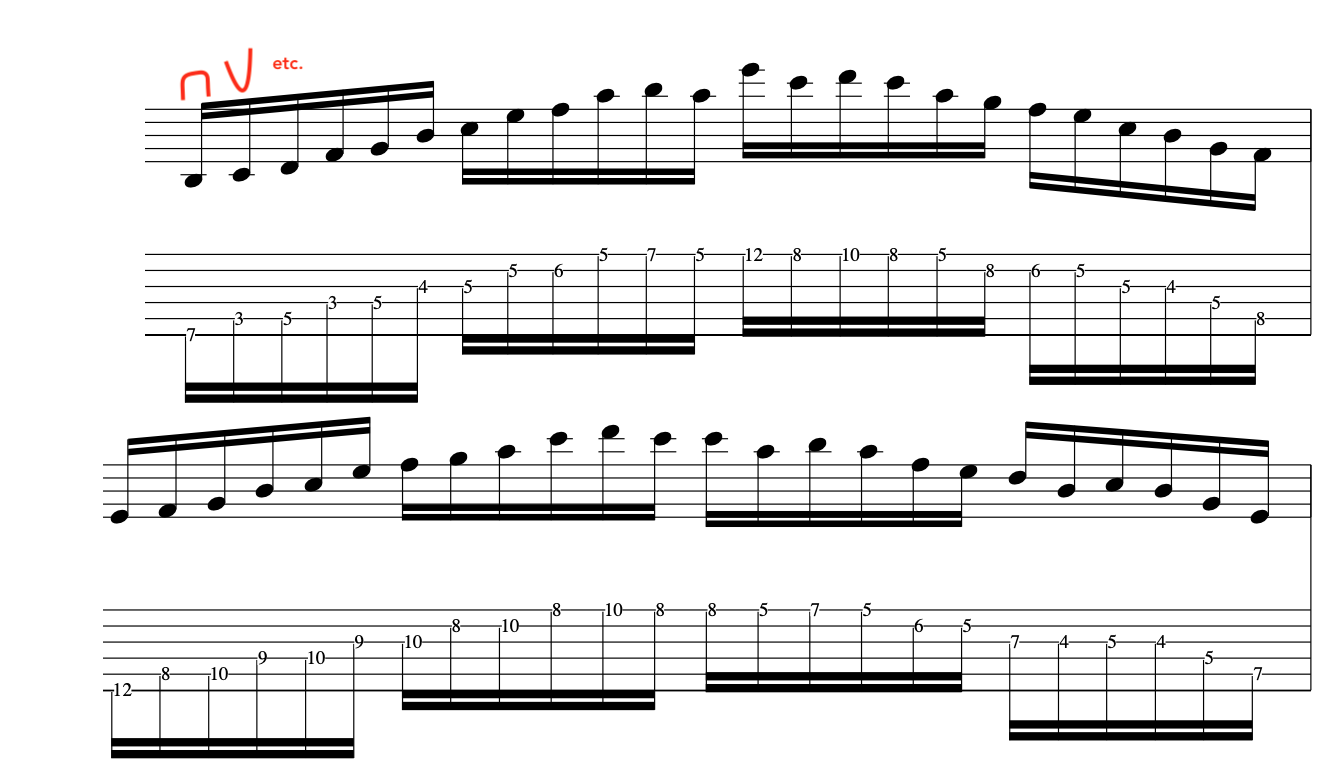
This is an extended exercise with strict alternate picking : Remember to count the groupings as you play to begin with so that you internalise them.
Alternate-Picking-Groups-6 notes-fusion-guitar-exercise

PDF DOWNLOAD:

Alternate Picking Guitar Technique: The Plectrum/Pick Grip

CLICK SUBSCRIBE!

Alternate Picking: Essential Grip for fast articulated picking

IMPORTANT: Please watch video above for detailed info:

Hi Guys,

Today, a quick look at alternate picking plectrum/pick grip.

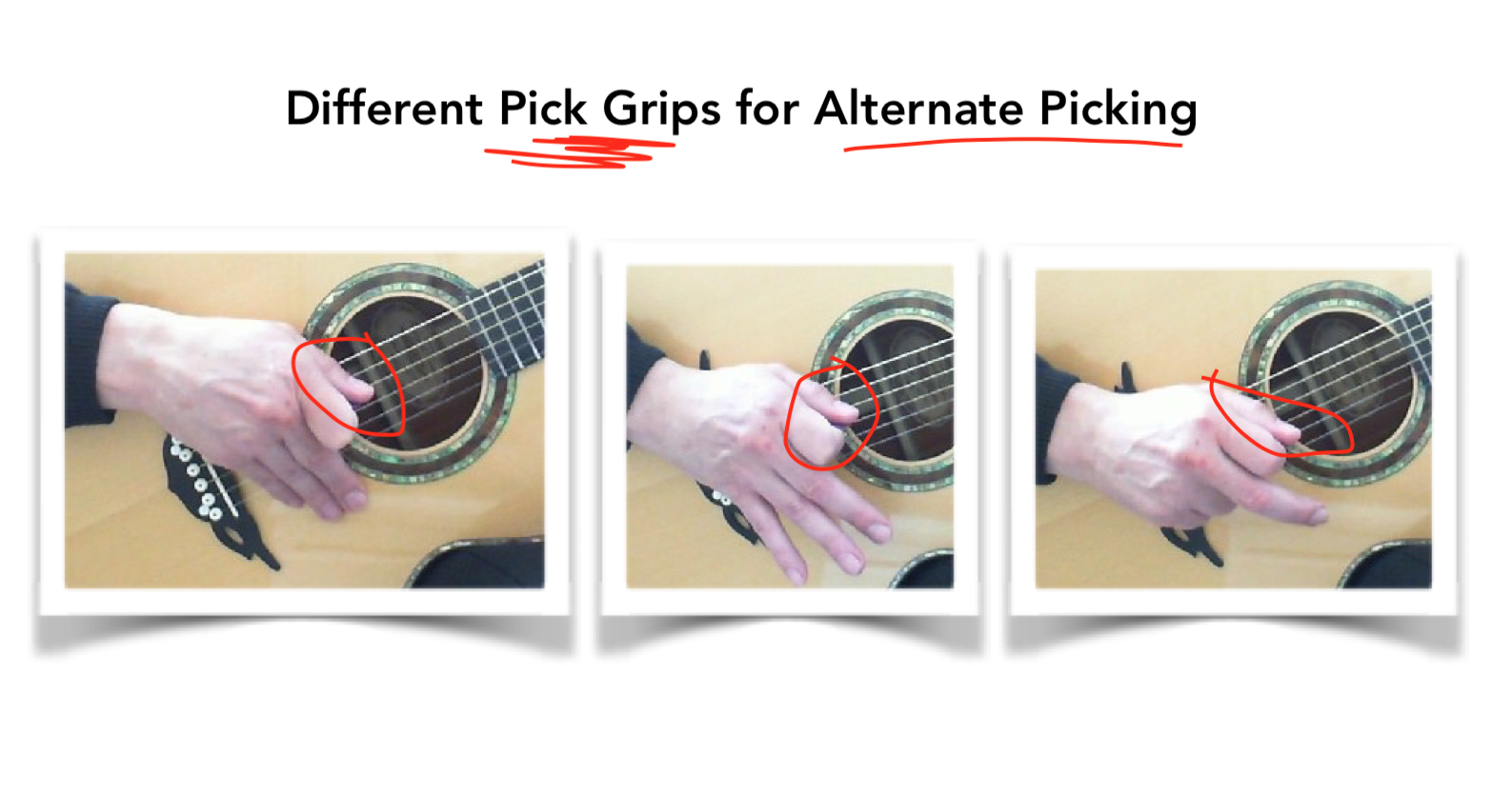
It’s not so important how you hold the pick or what finger you use. But, it is essential not to have a wobbly thumb and/or finger .

alternate-picking-guitar-techniques

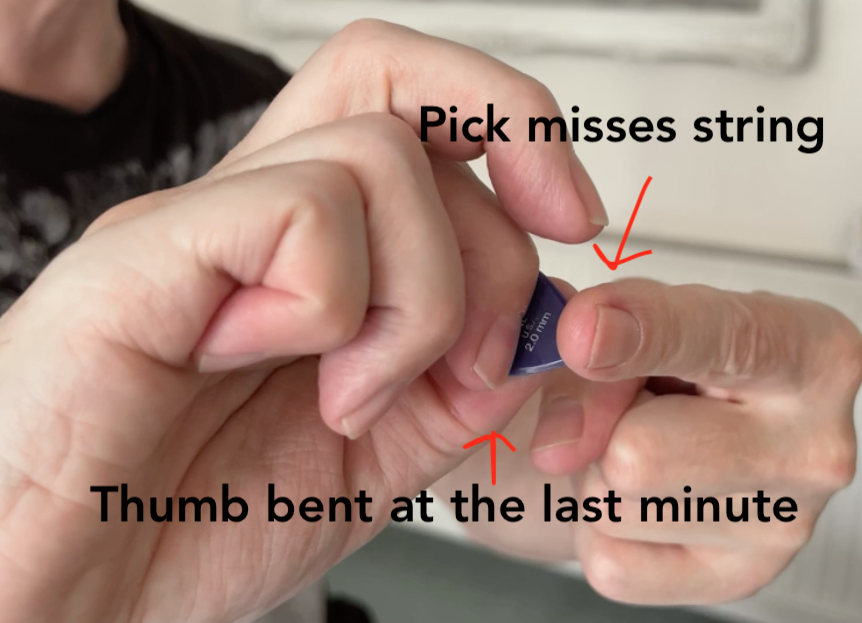
A lot of guitar players when they start out with alternate picking often change the grip just as they are about the pluck the string! This makes it impossible to gauge distance.

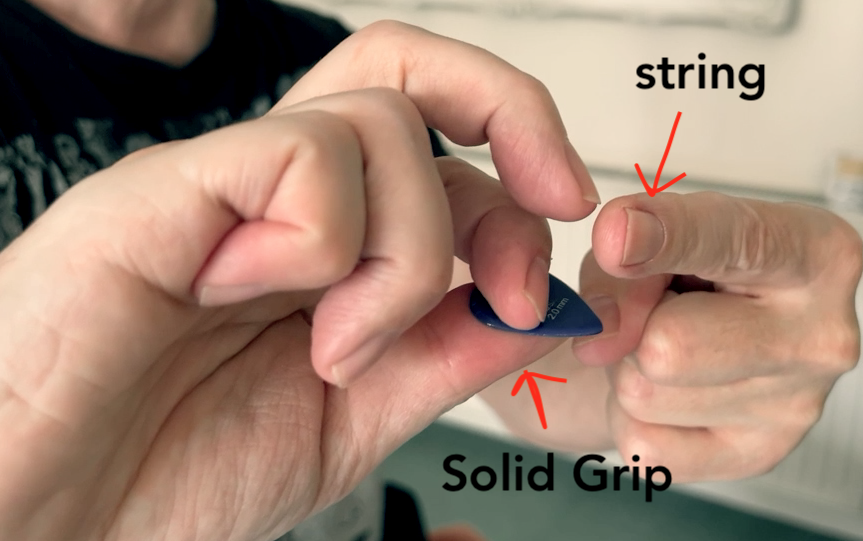
When the thumb is rigid and the grip is solid, distance, articulation and timing fall into place automatically.

Pic 1: Good solid grip

alternate-picking-guitar-techniques

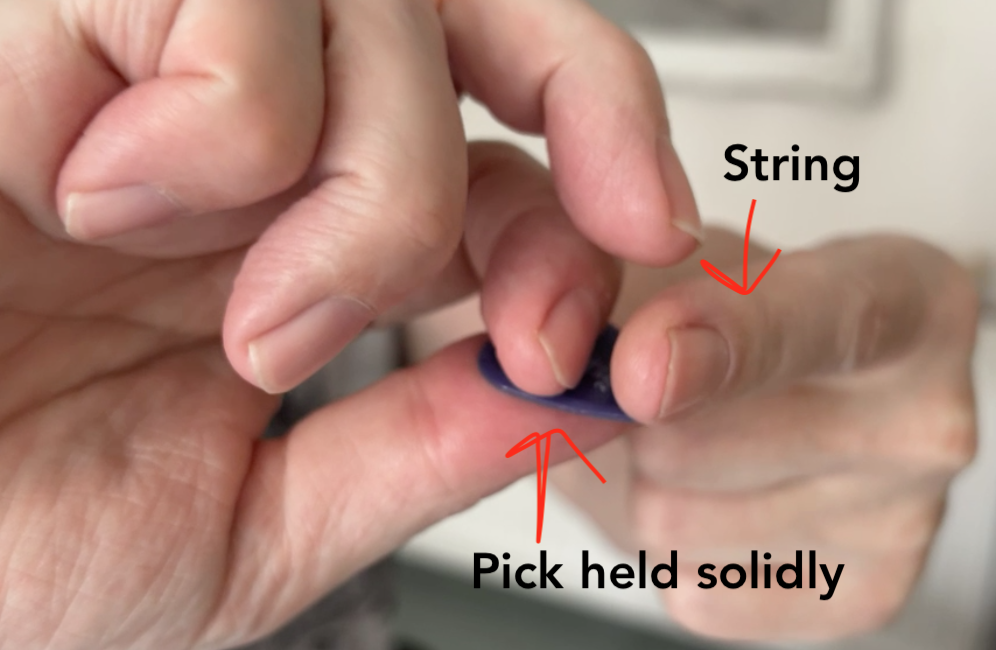
Pic 2: Pick confidently plucks string

alternate-picking-guitar-techniques

Below [Pic 3]: BAD! At the last moment the pick is turned as it is about to pluck the string and the thumb and finger wobble/collapse:

alternate-picking-guitar-techniques

2 BASIC EXERCISES:

Here are a couple of exercises for practicing whilst getting the feel of gripping the pick firmly.

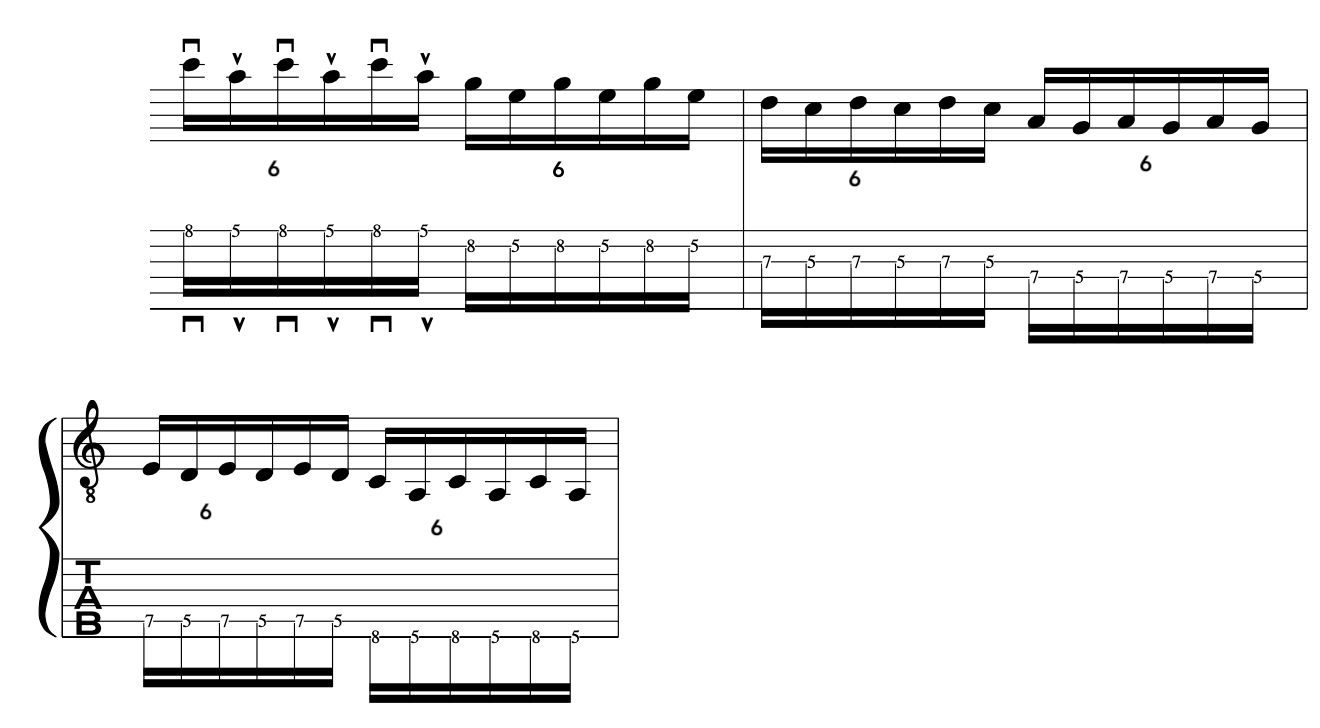
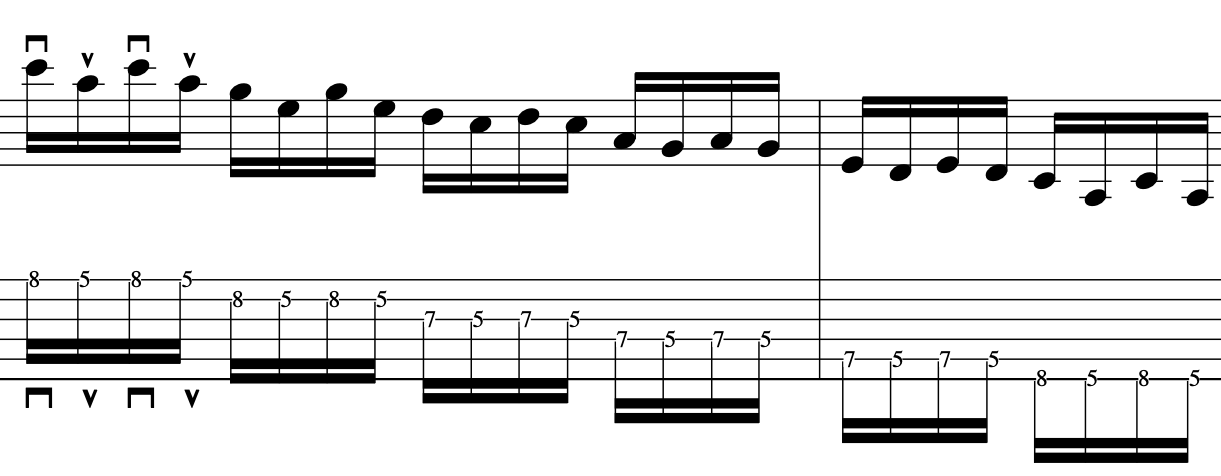
The first is a simple A minor Pentatonic scale in sextuplets. Counting basic 1 2 3 4 5 6

This starts on a down stroke:

alternate-picking-guitar-techniques-exercise

Next we have the same thing but in groups of four 16th notes.

alternate-picking-guitar-techniques-exercise

It’s a good idea to play around with these two exercises by mixing the groups of 4 and 6 together and create little phrases out of them.

PDF DOWNLOAD:

THANKS FOR VIEWING!…IF THIS LESSON WAS OF USE TO YOU THEN PLEASE SUBSCRIBE TO US BELOW ON YOUTUBE, THANKS!
String Skipping/Intervallic Guitar Part 3-HARMONY

yt_logo_rgb_light

CLICK SUBSCRIBE!

String Skipping/Intervallic Guitar Part 2-HARMONY

PLEASE WATCH VIDEO ABOVE FOR DETAILED ANALYSIS:

Hi Guys,

Today, one last look at “Intervallic string skipping” for a contrapuntal-esque picking style.

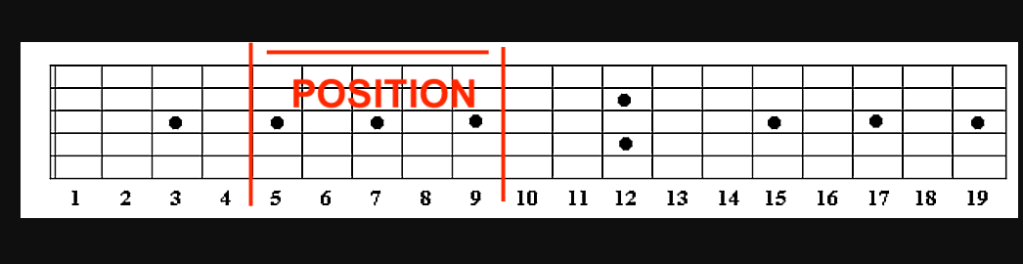
The first thing to do is take one position on the guitar fingerboard and find the “Harmony” embedded within that position.

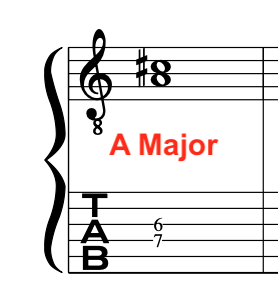
I have taken the A Major position [F#m Relative]

al-di-meola-cycle-of-4ths

Now, let’s make an A Major basic arpeggio from the 1st string and the 6th string.

al-di-meola-string-skipping

Straight away, you will notice that the notes on the 1st string and the notes on 6th string are the same but in different octaves. This gives us an easy and excellent way to exploit the High to Low or Low to High counterpoint effect.

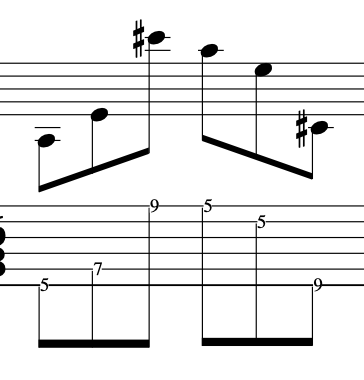
Now let’s do the same with a piece of scale: [Starting on an “Upstroke”]

al-di-meola-string-skipping-scales

Again, the octave makes this flow and connect easily from the low to high.

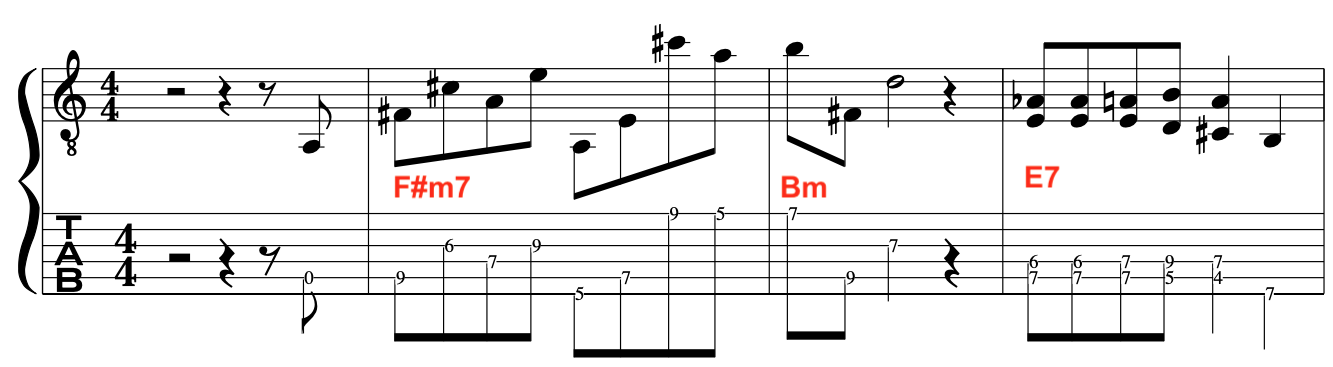
The next point is to take a chord sequence and use this “String skipping/intervallic” effect: Here we have Vi ii V7 I

al-di-meola-string-skipping

HARMONY

Th next essential point is to acknowledge the harmony in this position:

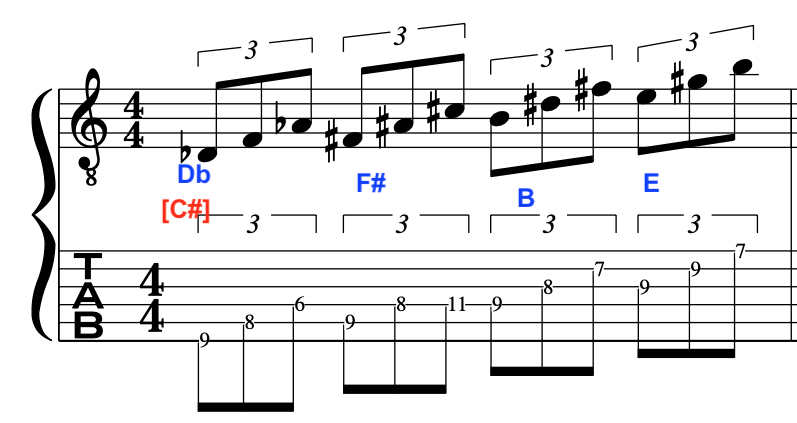
We will do this by exploiting the Cycle of 4ths in this simple 5 fret position.

al-di-meola-cycle-of-4ths

Here you can see that we have a huge amount of harmony available to us right under our fingertips. These chords don’t have to be Major, they can be minor, diminished, augmented etc. This gives us even more material to work with.

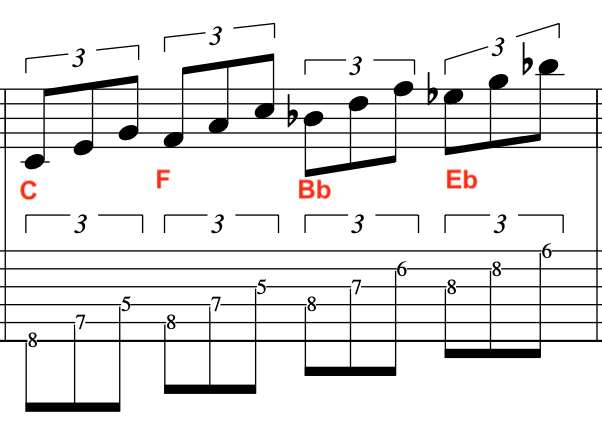
If we move down a fret [Semitone] then we have another set of harmony in 4ths awaiting us.

al-di-meola-cycle-of-4ths

Along, with this we have chord inversions and all of the inversions of A Major:

So, as you can see there is a huge amount of harmony right in front of us even in this one position that we can exploit and create lots of music from.

Lastly, let’s create another “String skipping intervallic” example:

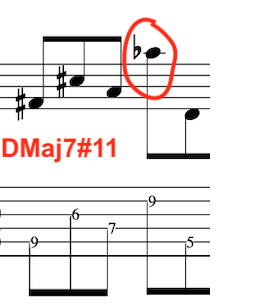
I’m going to create a phrase outlining a D Maj#11 chord.

al-di-meola-string-skipping

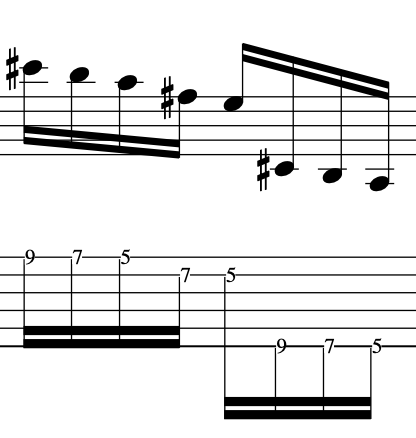
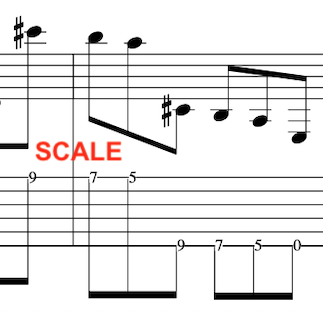
To make this sequence quite quick I am going to add some scale from high to low:

al-di-meola-string-skipping-scales

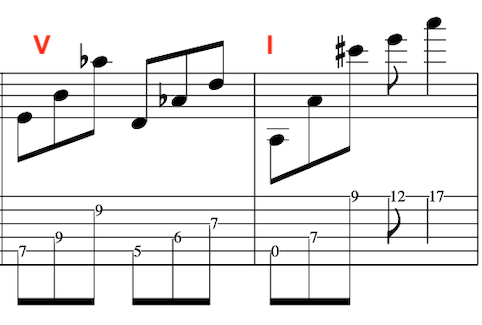
Now we will add a V -I cadence

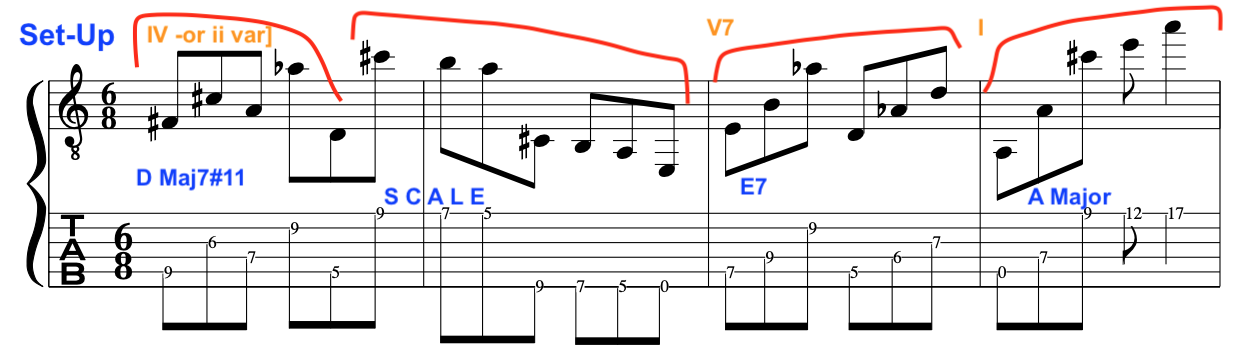
Now, let’s view the whole line:

al-di-meola-string-skipping

PDF DOWNLOAD:

PDF DOWNLOAD 2:

IF THIS LESSON WAS OF USE TO YOU THEN PLEASE SUBSCRIBE TO US BELOW ON YOUTUBE, THANKS!