Easy Ways to Harmonise the Diminished Scale

How to Easily Harmonise the Diminished Scale Lesson

Hi Guys,

Today, a quick look at an easy way to harmonise the diminished scale.

To begin our study, let’s take the diminished scale and play it on the 1st [E] string of the guitar.

Notice, the half steps and whole steps of the scale.
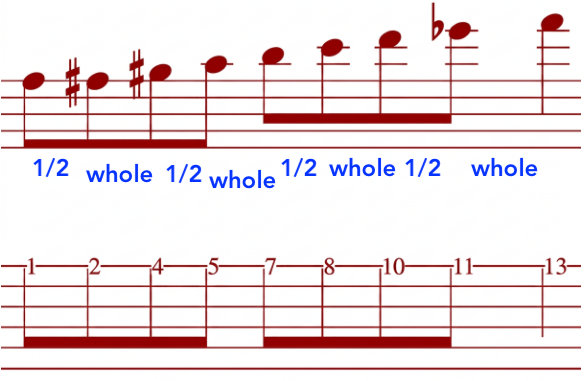
This scale can now be harmonised with diminished seventh chords.

What’s equally amazing is that with this form we have a separate diminished scale starting on each note of the chord itself.

This in turn gives us four part harmony.

Soprano, Alto, Tenor, Bass. or S.A.T.B
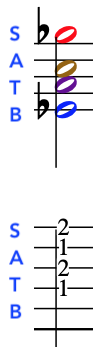
image displaying how to easily harmonise the diminished scale with 4 part harmony like composer Bach.

The other interesting point, is that the first two chords of the scale incorporate all 8 notes of the scale:
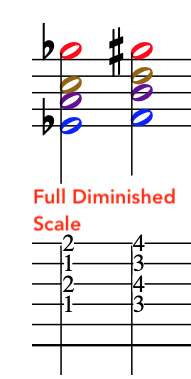
image of music notation and guitar tab displaying how to easily harmonise the diminished scale with diminished 7th chords.

So, now let’s harmonise the scale fully with the diminished 7th chord shape ascending:
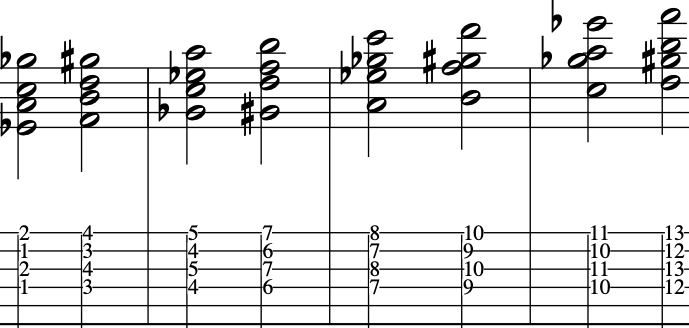
image of music notation and guitar tab displaying how to easily harmonise the diminished scale with 4 part harmony.

The key from here, is to accentuate an inner or outer voice.

In this case we will accentuate the Soprano [or top line] scale ascending:
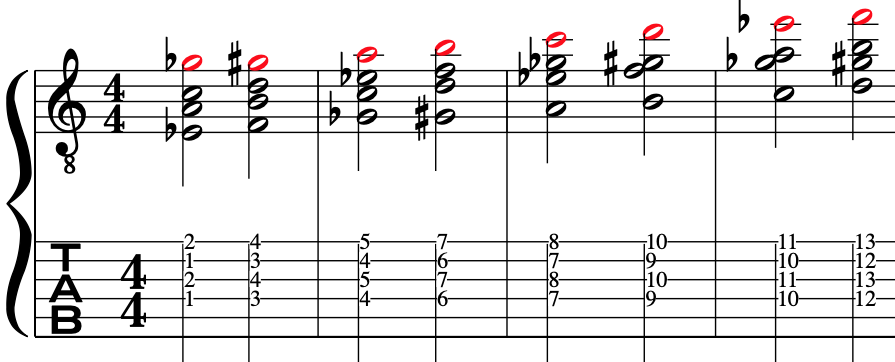
image of music notation and guitar tab displaying how to easily harmonise the diminished scale with 4 part harmony all playing the scale

To continue our investigation, we will now accentuate the scale in the Bass.
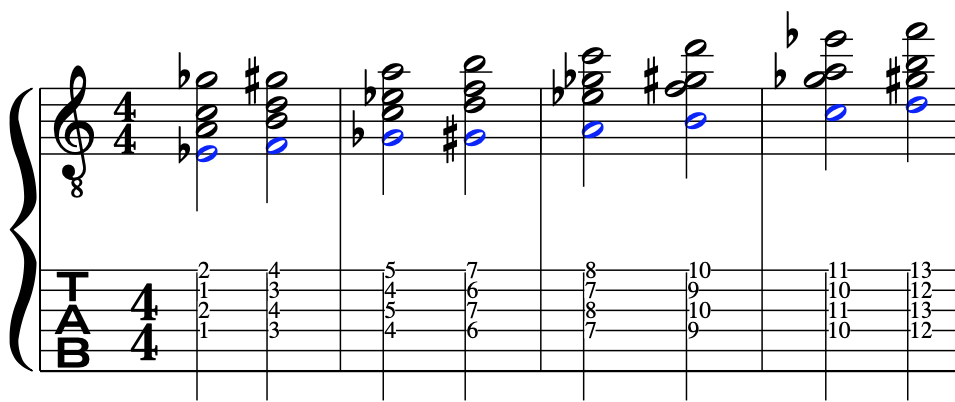
image of music notation and guitar tab displaying how to easily harmonise the diminished scale

Now, as we look at the chord and scale within the S. A. T. B. we can see the full realm at our fingertips.

The ascending scale of each voice is in full view:
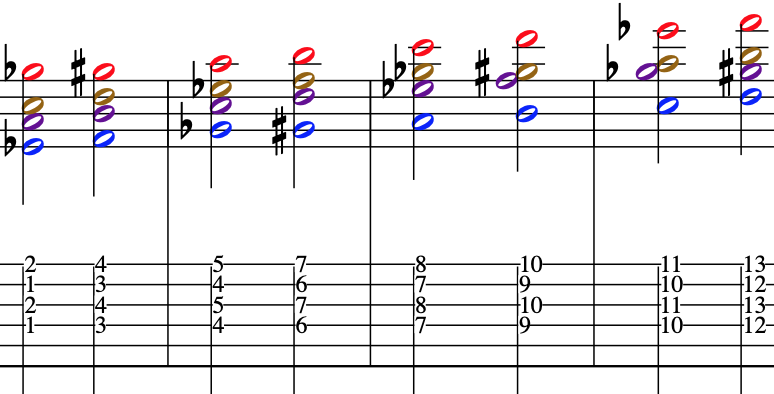
image of music notation and guitar tab displaying how to easily harmonise the diminished scale with 4 part harmony all playing the scale

Another useful device for harmonising the diminished scale is to employ the use of slash chords:

These, will be moving in minor 3rds with the scale on the top.

Below, we have a triad of F Major played over a Gb bass. This is then followed by a D Major triad played over an Eb Bass.
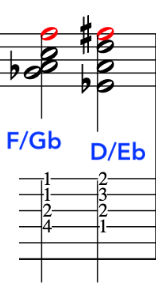
These chords, are now sequenced: Moving up in minor thirds whilst carrying the scale on top.
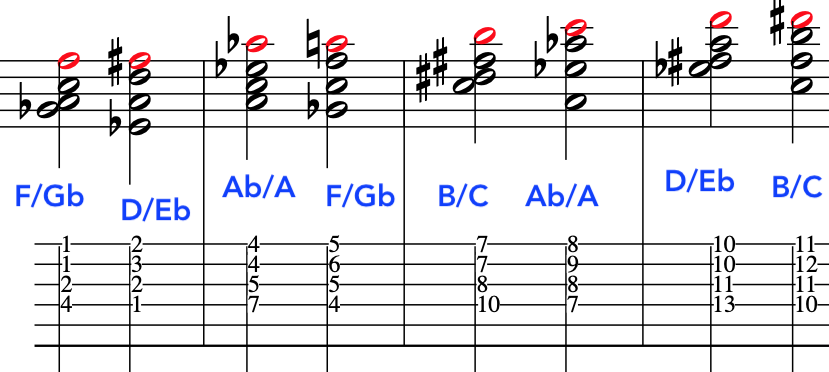
Music notation and guitar tablature showing how to harmonise the diminished scale with slash chords easily.

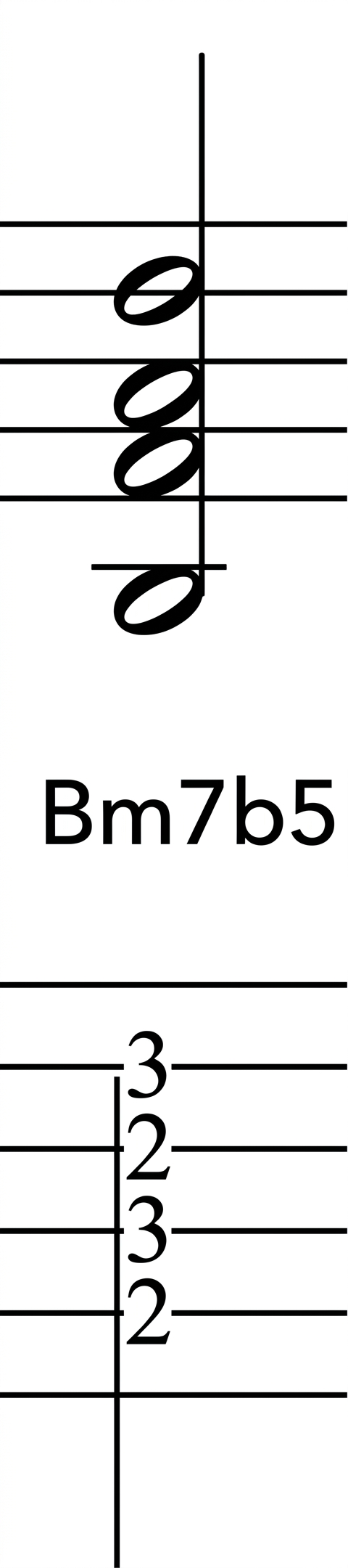
In the next example, we will use another diminished favourite:

The minor7b5: Or Half diminished:
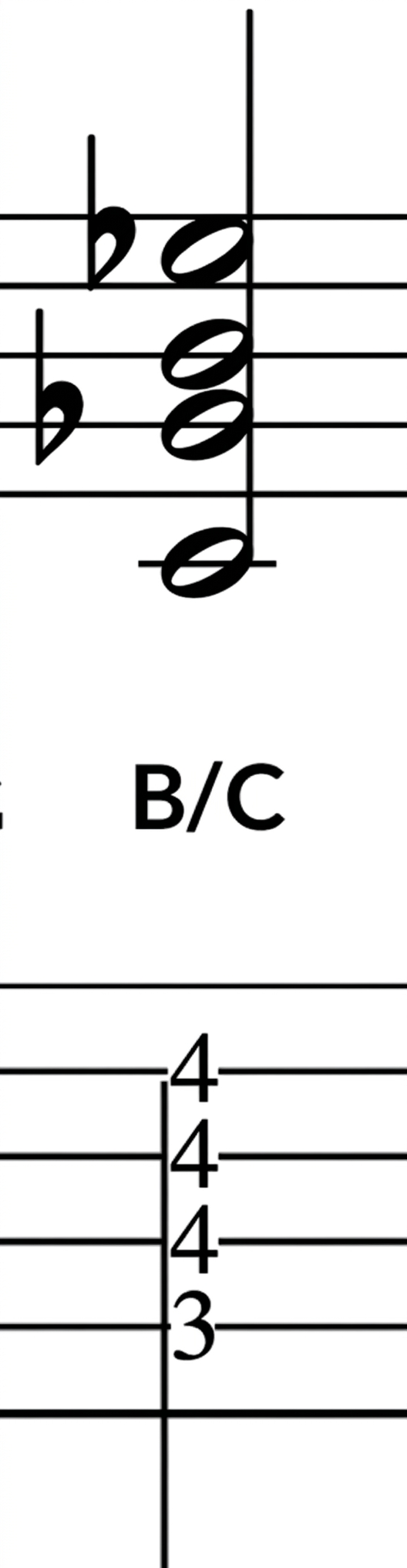
We, will follow this with our B/C slash chord form our lesson a little while back:
Now, let’s view the full chord scale:

Be amazed!…..Yes, this works out in all 4 parts once again:
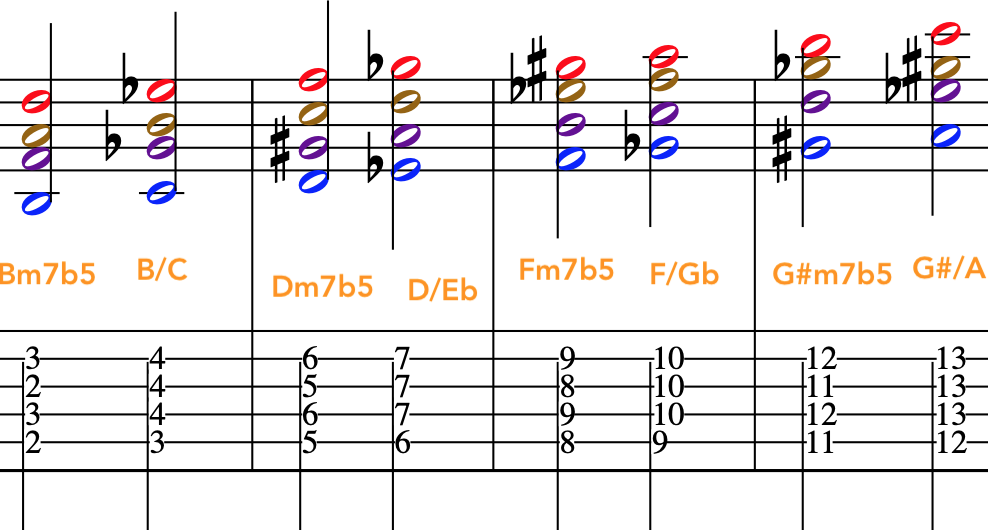
Music notation and guitar tab showing how to harmonise the diminished scale with slash chords

To complete this, here are the two most common chord movements in minor 3rds for our scale.

This is NOT harmonised, but still essential to look at as it really displays the minor 3rd movement in both major and minor tonality within this scale.

This was just a quick look at how to harmonise the diminished scale.

These concepts are quite basic in many regards but contain a wealth of power for both on the spot Re-harmonisation and 4 part voicing for composition.

Traditional harmony and as we can see in this blog/lesson contemporary harmony both work well for the task.

John McLaughlin’s Alternate Picking Techniques for Guitar

Hi Guys,

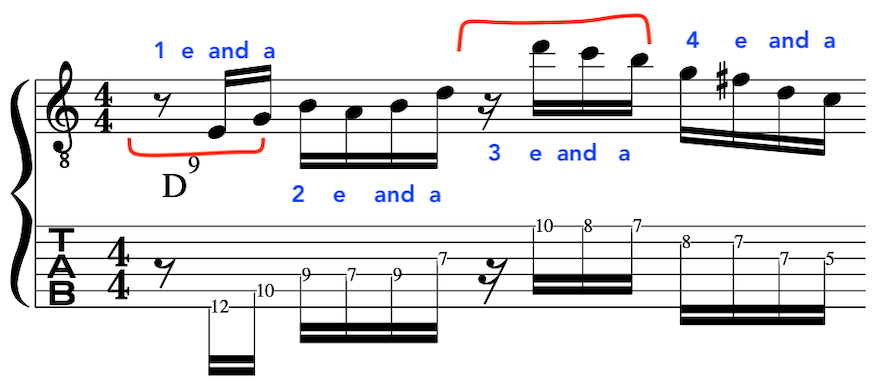
Today, two exercises for building jazz fusion 16th note double timed improvised guitar lines.

This is applied in the way that guitar great John McLaughlin exploits his alternate picking guitar technique.

This is a “Line builder” that builds through connecting key concepts together and at the same time creating familiarity with them as you do so.

For Example:

The key is to connect them together in a melodic single note manner that is musical and at the same time logical for the alternate picking.

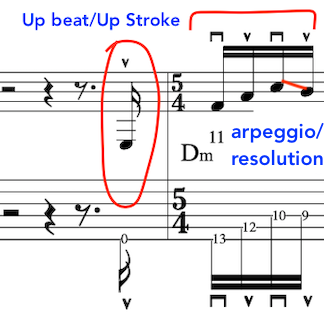
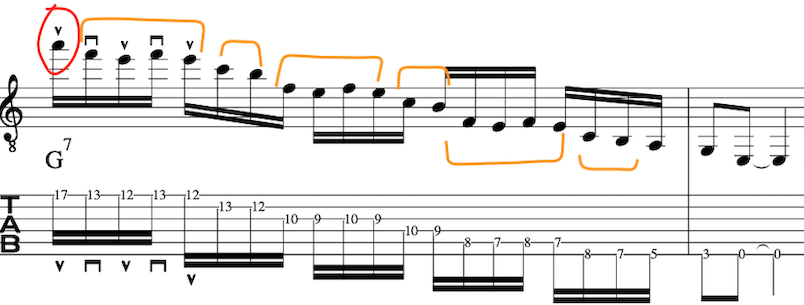
This exercise starts with an upstroke with an open E string on an “Up beat” [anacrusis].

This then employs an F Major arpeggio with a C to B note resolution.

john-mclaughlin-alternate-picking-guitar-lesson

Straight away, it’s easy to hear the melodic content of the wider intervals of an arpeggio and the resolution.

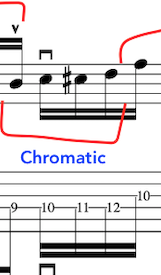
From here we will now add some chromatic colour.

john-mclaughlin-alternate-picking-guitar-lesson

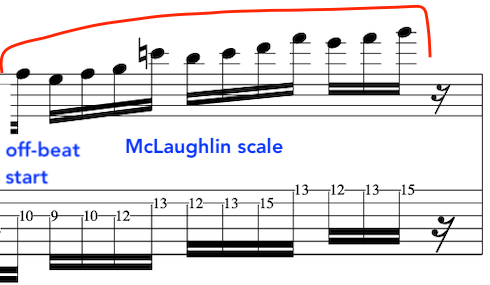
To complete this phrase we will add the John McLaughlin scale. This slots in nicely to the chromatic scale that we’ve just applied.

It’s smooth, quick and creates that very fluid liquid line sound: Also, notice the offset of the rhythm.

john-mclaughlin-alternate-picking-guitar-lesson

To descend, we will exploit the use of the semitone interval. This is easy for the fretting hand to sequence as it employs repetitive fingering and so is easy to cross the strings with. [The semitones are in the orange marker].

2nd part “Descending”

john-mclaughlin-alternate-picking-guitar-lesson

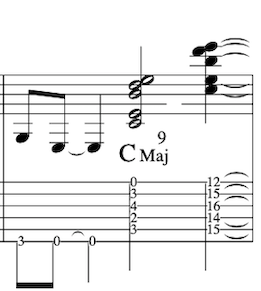
Finally, we finished with a CMaj9 chord that is then shifted up.

john-mclaughlin-alternate-picking-guitar-lesson-chords

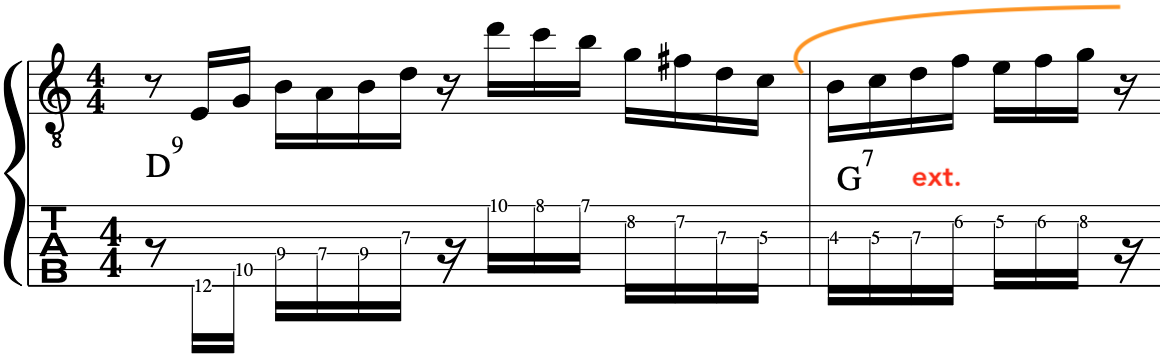
This exercise is similar to the one above, but, in a different key and different chords.

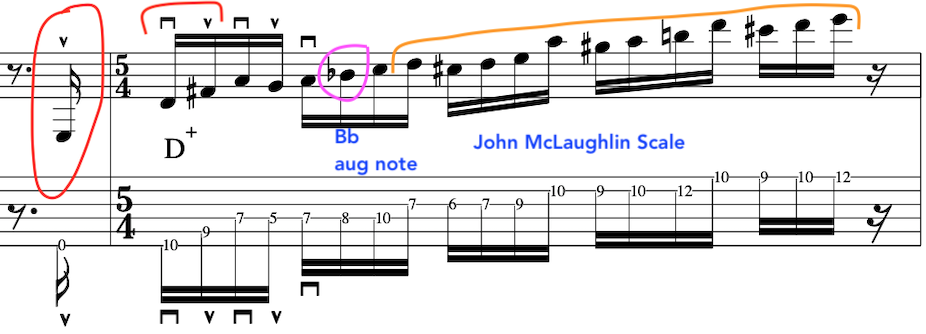
As before, we start on an up beat with an upstroke. We employ the arpeggio, but, this time it is a suspended fourth with the A note moving down to the G note.

From here, we ascend and exploit the Bb note to emphasise the D Augmented chord. This is then rounded off by slotting in a fragment of our old friend the John McLaughlin scale once more .

john-mclaughlin-alternate-picking-guitar-lesson

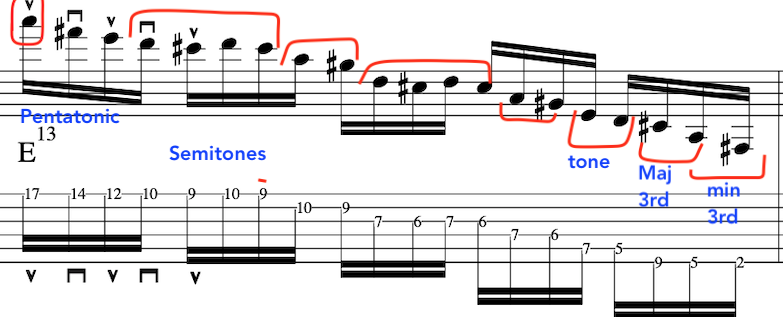
We descend with a pentatonic fragment this time and once again exploit the interval of a semitone and sequence it. But, this time with the last 5 notes we also have the intervals of a tone a major 3rd and a minor 3rd.

john-mclaughlin-alternate-picking-guitar-lesson

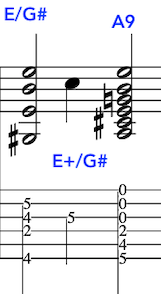
Finally, we cadence with the chords of E/G# [or E 1st inversion] that then raises the 5th to make it augmented. This then resolves to a hanging A9 chord.

john-mclaughlin-chords-guitar-lesson

IN CONCLUSION:

These are only exercises, but, they do show the melodic/musical nature of the improvised line in regards to alternate picking.

In the jazz fusion style, motifs, melodic content, chromatics, pentatonic’s, rhythmic offset, etc, all work to great effect as they all slot together creating sophisticated double time lines.

FREE PDF DOWNLOADS:

DOWNLOAD #2:

was of use to you then please SUBSCRIBE to us below on YOUTUBE, Thanks!

Alternate Picking Guitar Tetrachords Part 2

Modern Jazz Fusion Chords part 2. Steely Dan, Dan Chord and Slash Chords

CLICK SUBSCRIBE!

alternate-picking-jazz-guitar-tetrachords-example

Hi Guys,

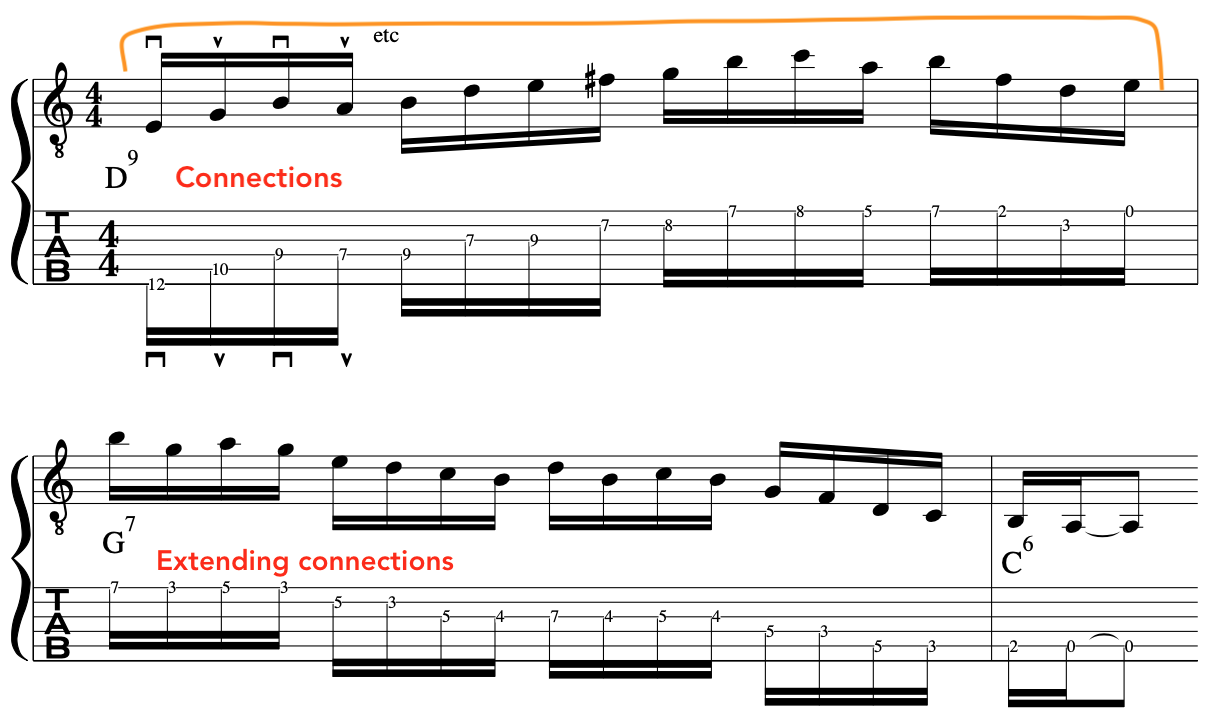
This is a response video to the previous video/blog. This is to explain and demonstrate the application of “Tetrachords” a bit further.

Here, I will add the video examples in Tab/Notation:

RECAP= What are Tetrachords:

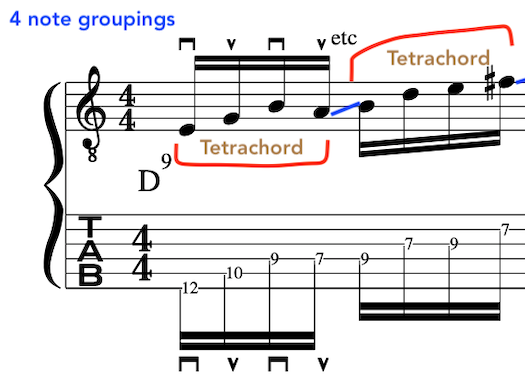
“Tetrachords” are 4 note groupings to connect harmony/lines together for improvisation [and composition]

alternate-picking-jazz-guitar-tetrachords-example

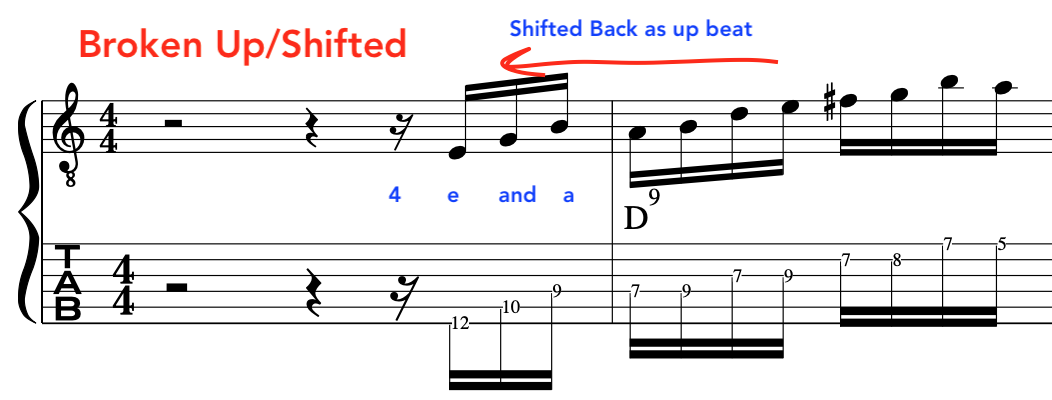
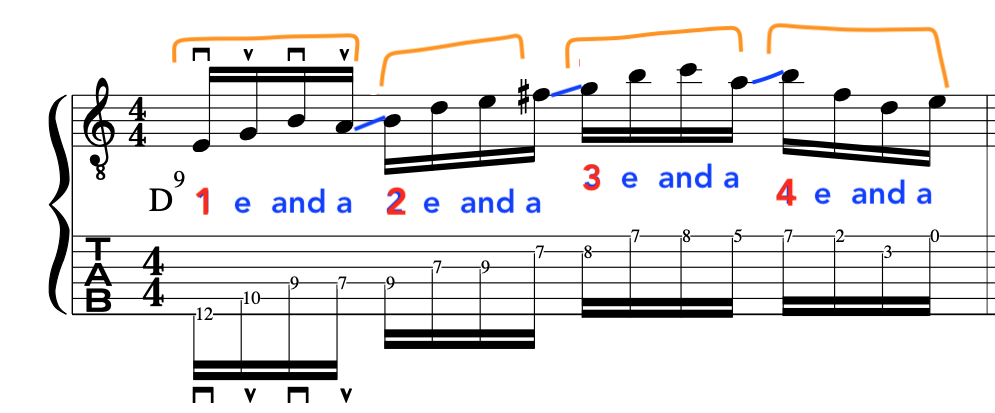
When mastered they can be broken up into musical phrasing/punctuation:

Broken up/Shifted: Thus creating an upbeat

alternate-picking-jazz-guitar-tetrachords-example

Notes chopped off in the bar: Creating space and rhythmic interest.

alternate-picking-jazz-guitar-tetrachords-example

Breaking up the tetrachords like this helps to create smooth syncopations, anticipations or go the other way and play on the beat:

Now, let’s follow this through to a short extension of the phrase

tetrachords-guitar-improvising-lesson

As always it’s essential to count the time when doing this so that you know where you are in the phrase.

alternate-picking-jazz-guitar-tetrachords-example

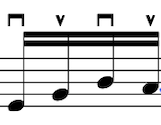
In this video and for these examples I am employing strict alternate picking starting on a “Down Stroke”. Down Up Down Up etc.

alternate-picking-jazz-guitar-tetrachords-example

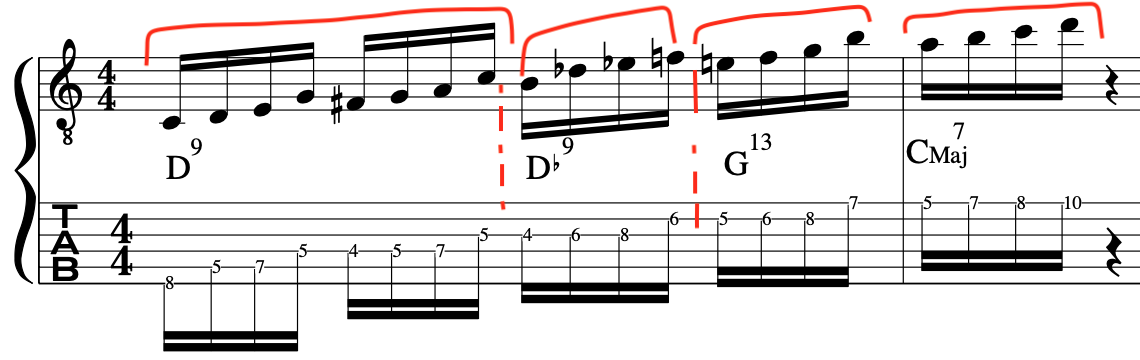
Practicing ii V7 I’s and iii Vi ii V7 I’s in various guises will really help you connect and nail the changes with your alternate picking: Below is an example with II V7 I:

alternate-picking-jazz-guitar-tetrachords-example

Now, let’s connect the harmony/chords together via tetrachords: This first example is in the style of John McLaughlin.

alternate-picking-jazz-guitar-tetrachords-improvisation-example

Notice, how smoothly the pentatonic 4 note groupings connect together

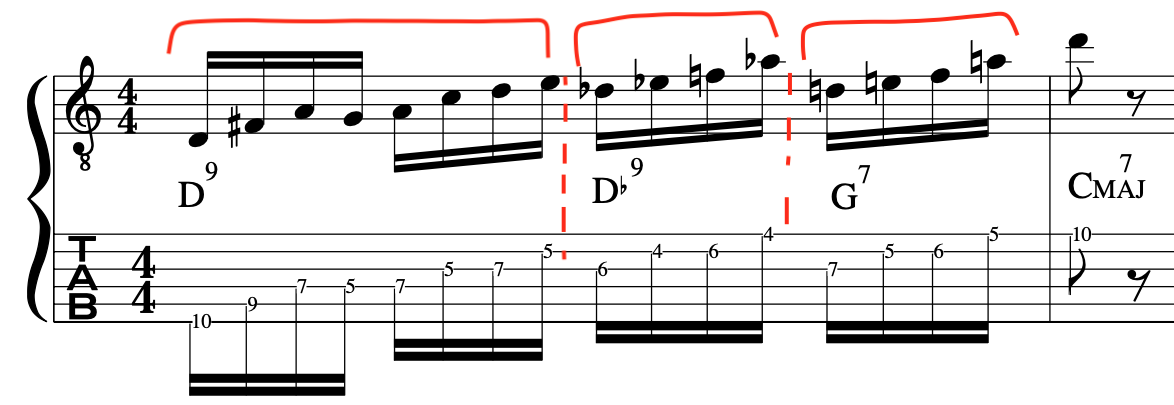
This time we will take a more basic approach with very simple fretting/fingering:

alternate-picking-jazz-guitar-tetrachords-improvisation-example

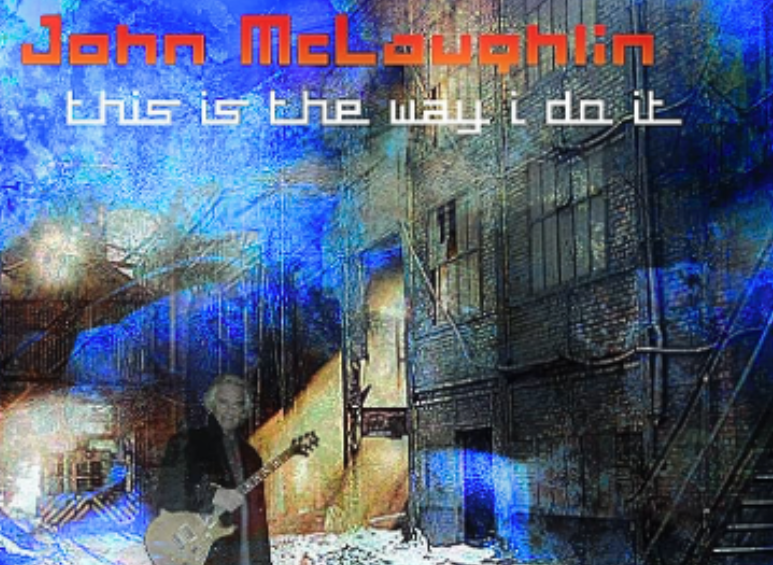
So, even through these basic examples it’s easy to see how to exploit these 4 note groupings to nail the changes and then break them up into musical phrasing/punctuation: As a further resource I would recommend John McLaughlin excellent DVD called “This is the way I do it”

PDF DOWNLOAD:

Modern Jazz Fusion Chords part 2. Steely Dan, Dan Chord and Slash Chords