Mastering String Skipping: Fripp/Martino-Style Guitar Techniques

Hi Guys!

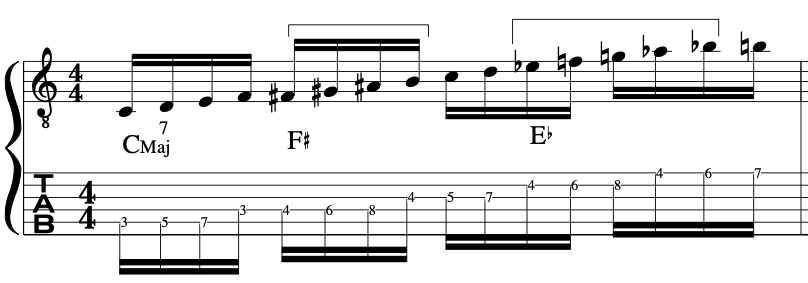
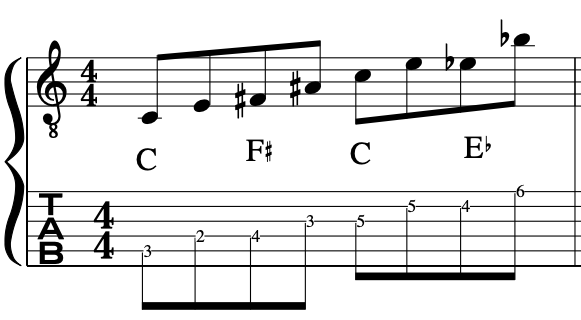
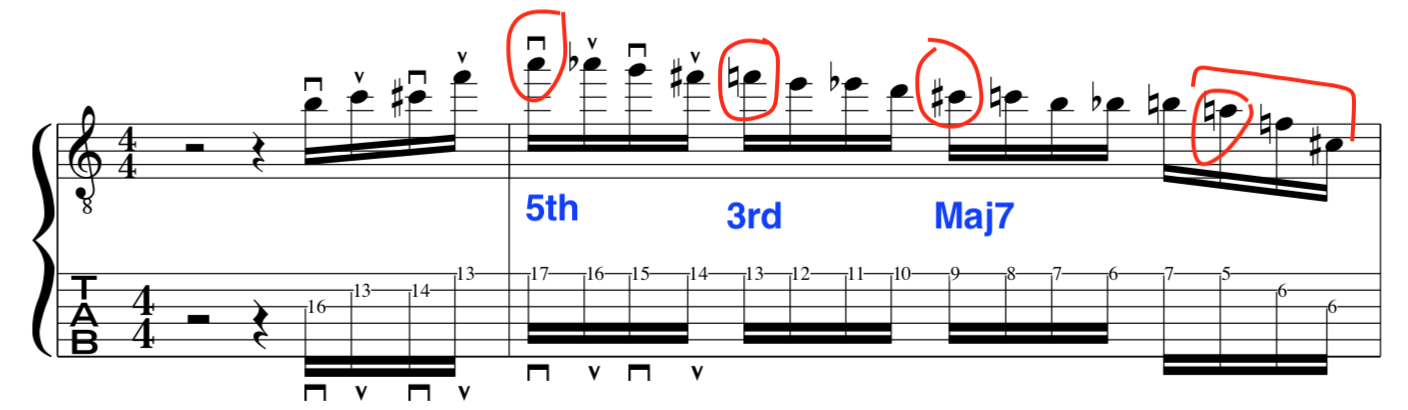
Here is the TAB/Notation for the “String Skipping” exercise in the style of guitar great Robert Fripp.

This 12 tone concept was taken from the brilliant 12 chromatic forms of jazz great Pat Martino.

string-skipping-guitar-lesson-example

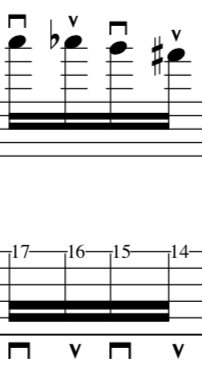
I am staring this little etude/exercise on an “Up” stroke with alternate picking guitar technique.

string-skipping-guitar-lesson-example

As an example here is the first part:

string-skipping-guitar-lesson-example

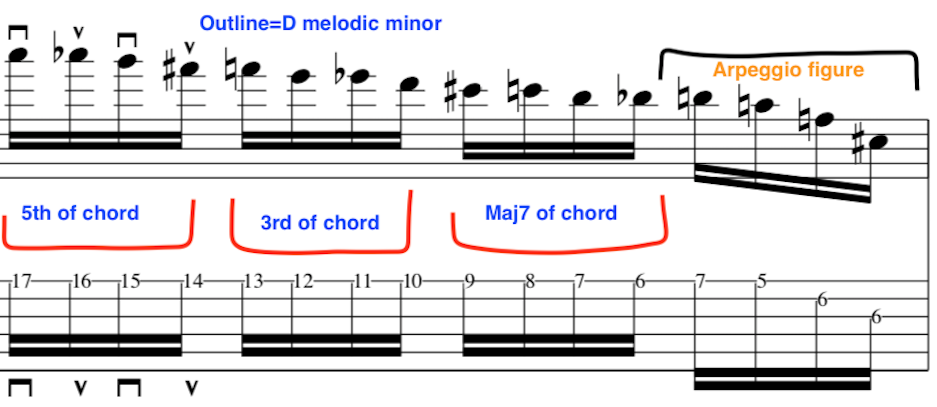
The key to be aware of, is the exploitation of “Octave displacement”. This creates unique harmonies and S.A.T [B] style lines.

string-skipping-guitar-lesson-example

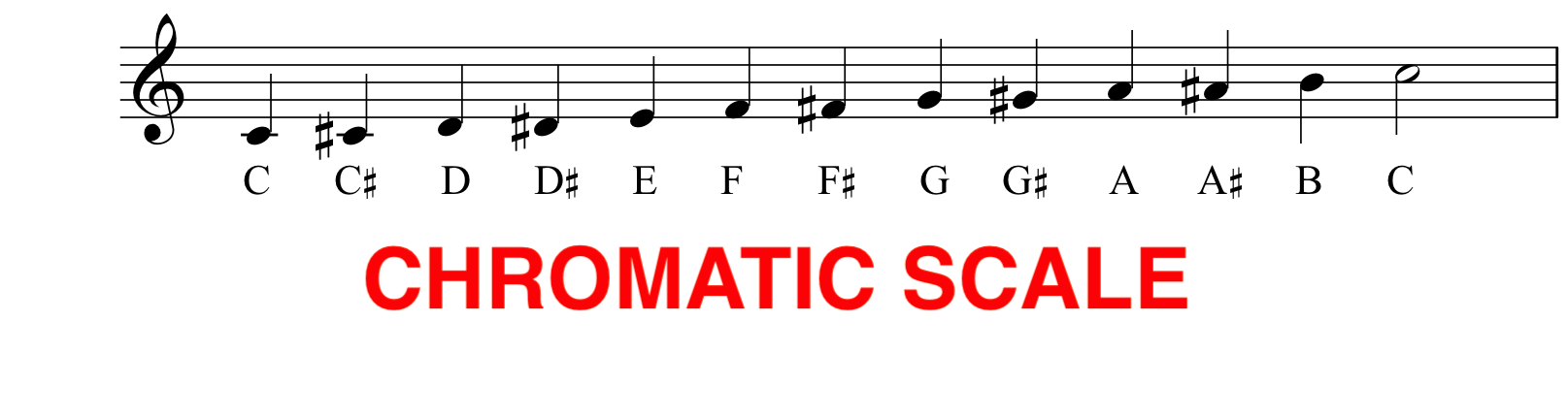
As you can see, in the diagram above this is just the chromatic scale, but, moving/resolving through the different registers.

This octave displacement technique, offers us a way to create/extract interesting colourful music from the chromatic scale, whilst, keeping us far away from one string banality.

Although, there is octave displacement, there is also some basic scale parts to link it all together:

I am starting both of these scale fragments on an“Up” stroke with strict alternate picking once again:

fripp-guitar-scales-exercise-alternate-picking-guitar-technique

Also, the last part descends back into the chromatic scale to tie the [Composition] etude back together and give clarity to the ear, and let it know that we are still in an atonal chromatic form.

string-skipping-guitar-lesson-example
fripp-guitar-scales-exercise-alternate-picking-guitar-technique

Dennis Sandole Polytonal Guitar Scales: Lesson:

Hi Guys,

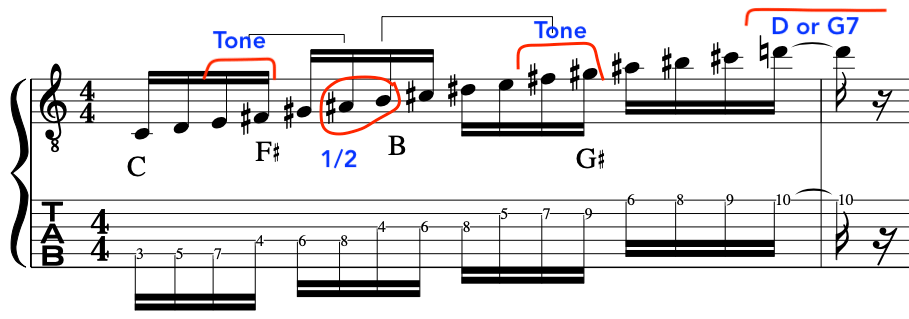
Today, a look at the unique scale formations/superimpositions of Dennis Sandole.
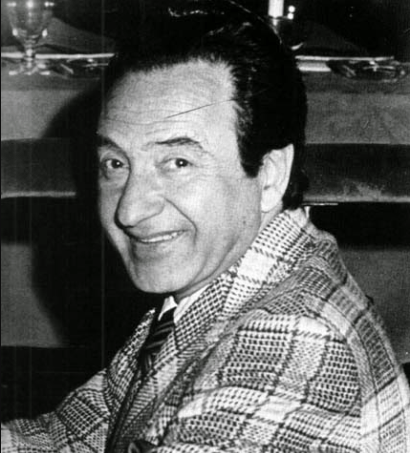
We will take three examples from a handwritten page of polytonal scales by Dennis Sandole and apply them to the guitar:
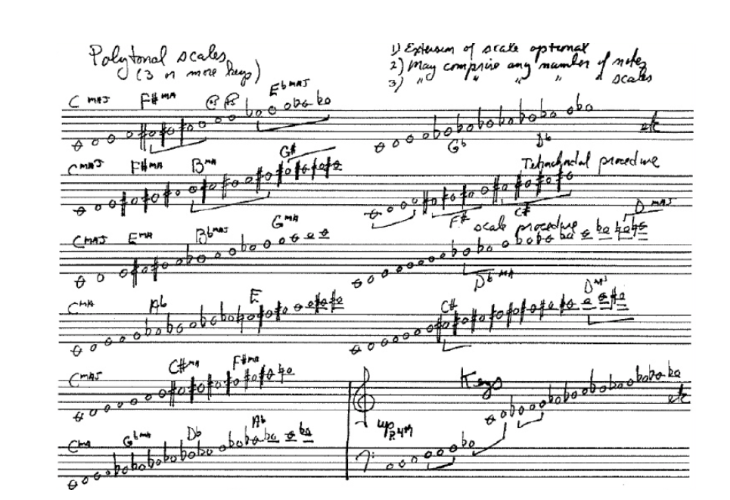
Dennis Sandole’s Handwritten Polytonal Scale:
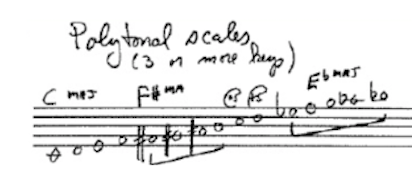
dennis-sandole-polytoanl-scales-blog

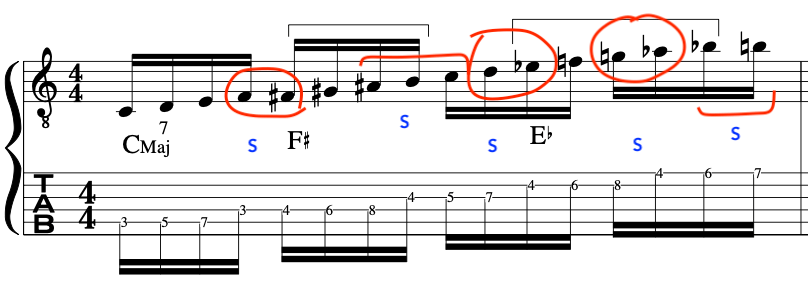
Same scale applied to the Guitar:

dennis-sandole-polytonal-guitar-scales-blog

In this example notice how the different major scales connect via semitones creating a unique chromatic connection.
dennis-sandole-polytonal-guitar-scales-blog

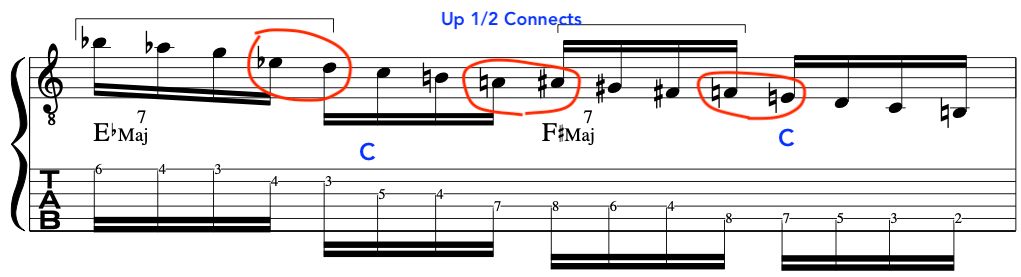
Now, let’s apply a descending version with a more pentatonic/fingering guitar format:

Again, notice the half step chromatic connections that make this run smoothly.
dennis-sandole-polytonal-guitar-scales-blog

Dennis Sandole’s Handwritten Polytonal Scale:
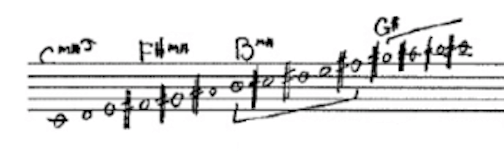
dennis-sandole-polytonal-guitar-scales-blog

Same scale applied to the Guitar:

dennis-sandole-polytonal-guitar-scales-blog

Here, we have whole tone connections as well as half step connections creating a colourful set of sounds:

Let’s now create a descending version:
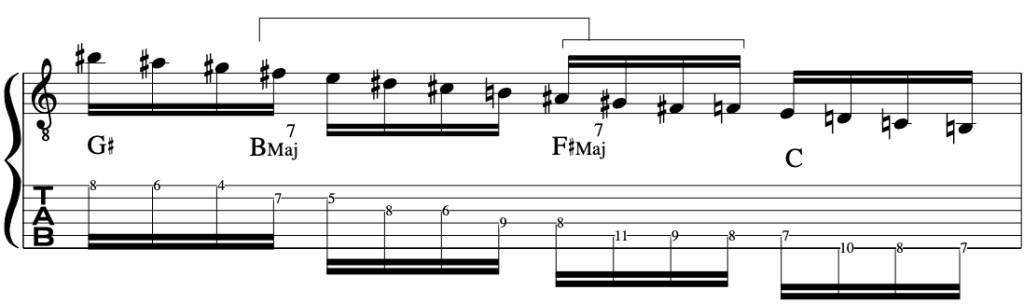
dennis-sandole-polytonal-guitar-scales-blog

Dennis Sandole’s Handwritten Polytonal Scale:
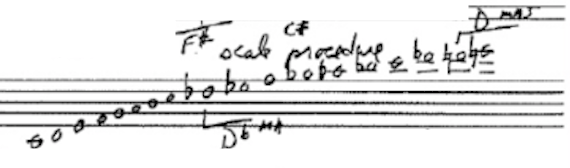
dennis-sandole-polytonal-guitar-scales-blog

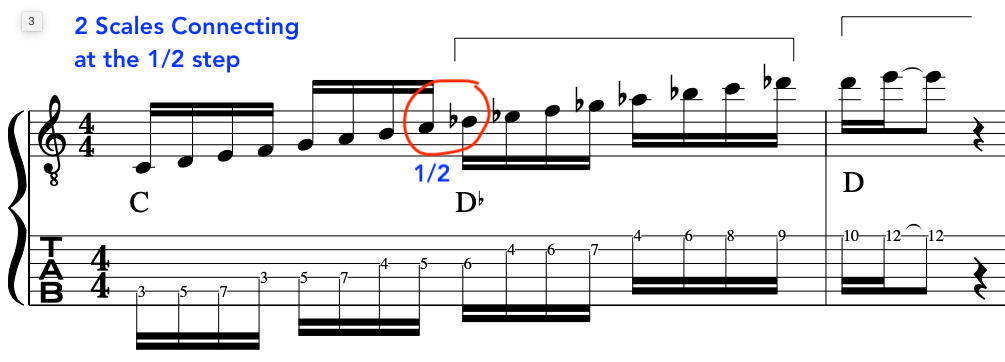
Same scale applied to the Guitar:

dennis-sandole-polytonal-guitar-scales-blog

In this example we have a full C major scale connecting to a full Db major scale via the halfstep of C to Db. And finally, up another half step to the note D.

Finally, let’s descend:
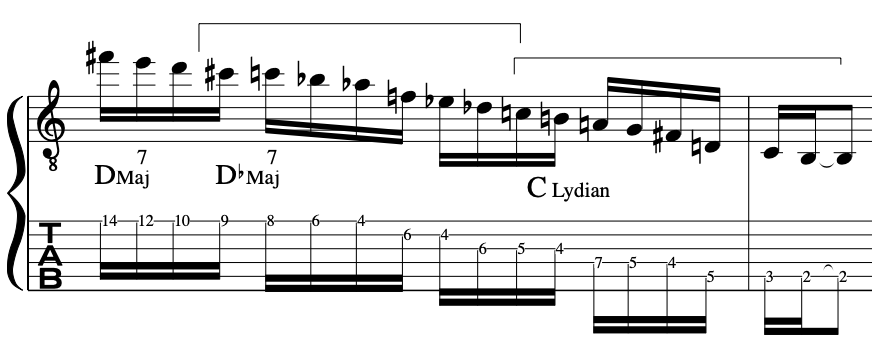
dennis-sandole-polytonal-guitar-scales-blog

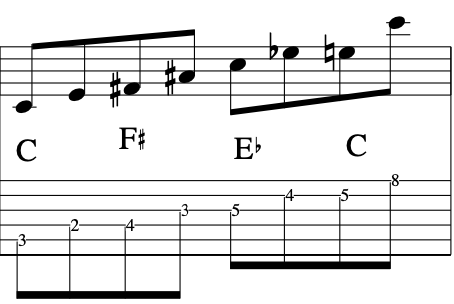
There are also many concepts that you can make out of these polytonal scales:

For instance, we can imply triads/arpeggios with dyads and create little licks, motifs and hook lines.

dennis-sandole-polytonal-guitar-scales-blog

dennis-sandole-polytonal-guitar-scales-blog

This was just a very brief look at Dennis Sandole’s concept of polytonal scales.

In terms of the guitar these are very useful for creating a mixed harmonic palette and creating seamless lines where any scale can connect to any other scale regardless of non diatonicism and ambiguity.

McLaughlin-esque ii V7 I Alt Guitar Line [140 Bpm]

CLICK SUBSCRIBE!

John McLaughlin-esque ii V7 I Alt Guitar Line [140 Bpm]

Please watch video above for detailed info:

Hi Guys,

Today, a quick ii V7 I McLaughlin-esque lick

This is at 140 Bpm with an altered approach to harmony with strict alternate picking guitar technique.

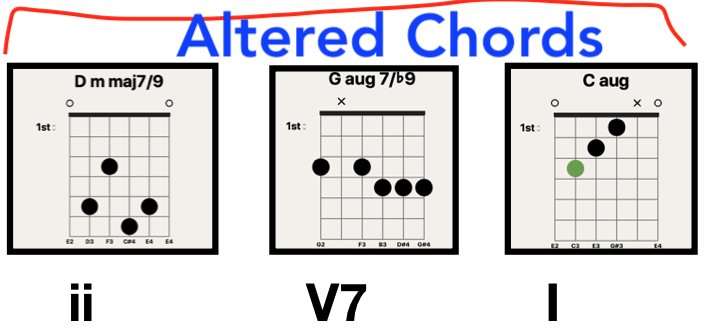
The chords are as follows.

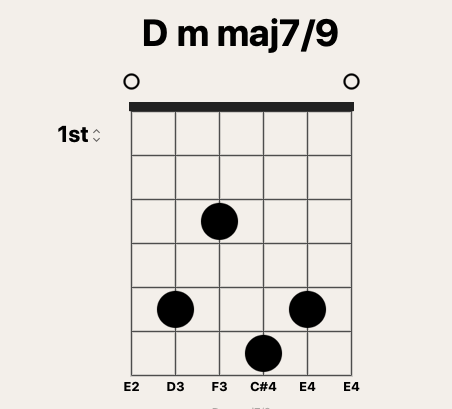
For the ii minor chord I employ a minor chord with a Major 7th and an added 9th.

mclaughlin-altered-harmony-guitar-theory

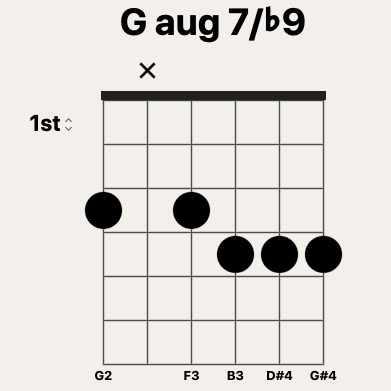
For the V7 chord I raise the 5th [#5] and add a flattened 9th note.

mclaughlin-altered-harmony-guitar-theory

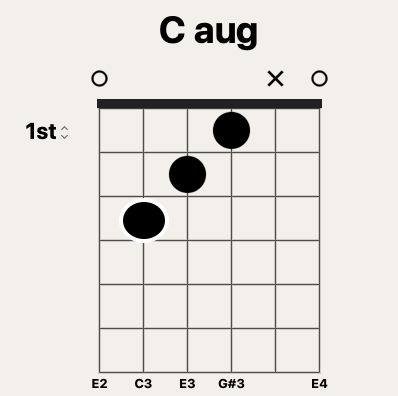
And for the I chord I make this augmented by raising the 5th.

So, the ii V7 I becomes harmonically altered and creates an interesting sound

john-mclaughlin-altered-harmony-guitar-theory

Guitar Line

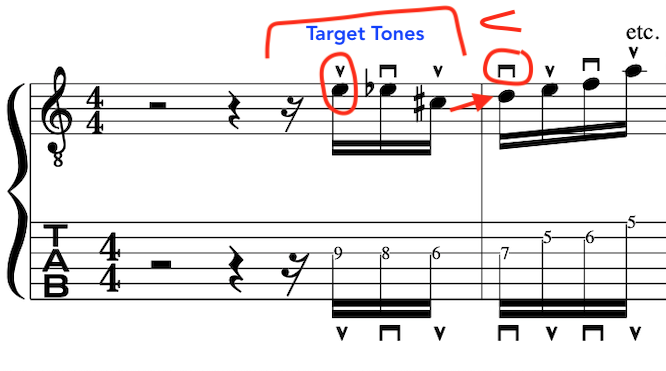
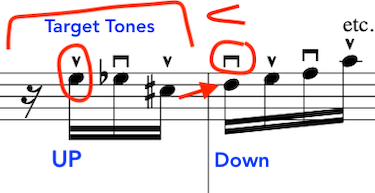
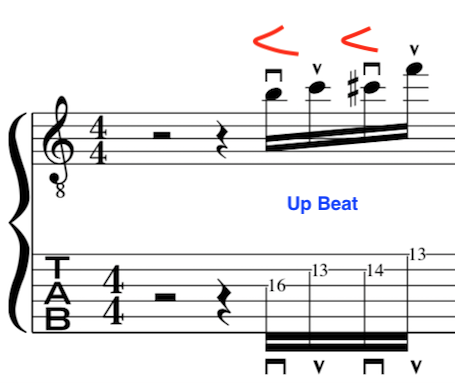
The line starts on an upbeat with 3 target tones that deliberately set up the 1st note of bar one. This adds forward momentum and adds a colourful chromatic set-up.

mclaughlin-altered-harmony-guitar-chromatics-lesson

The target tones start on an “Up stroke” so that on the first beat of bar one you will land and start a “Down stroke”

mclaughlin-alternate-picking-guitar-how-to

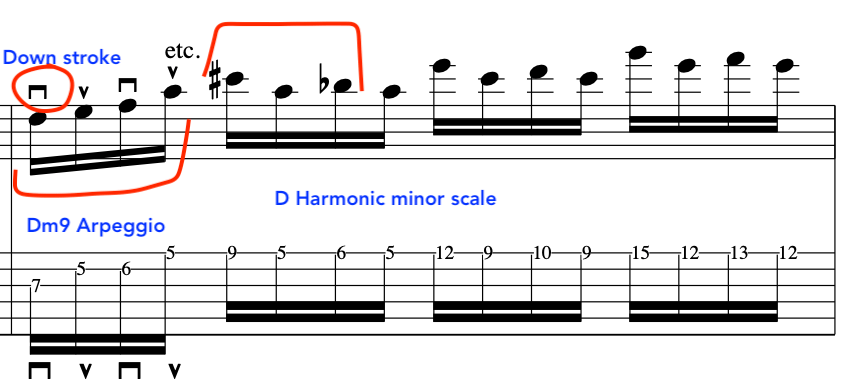
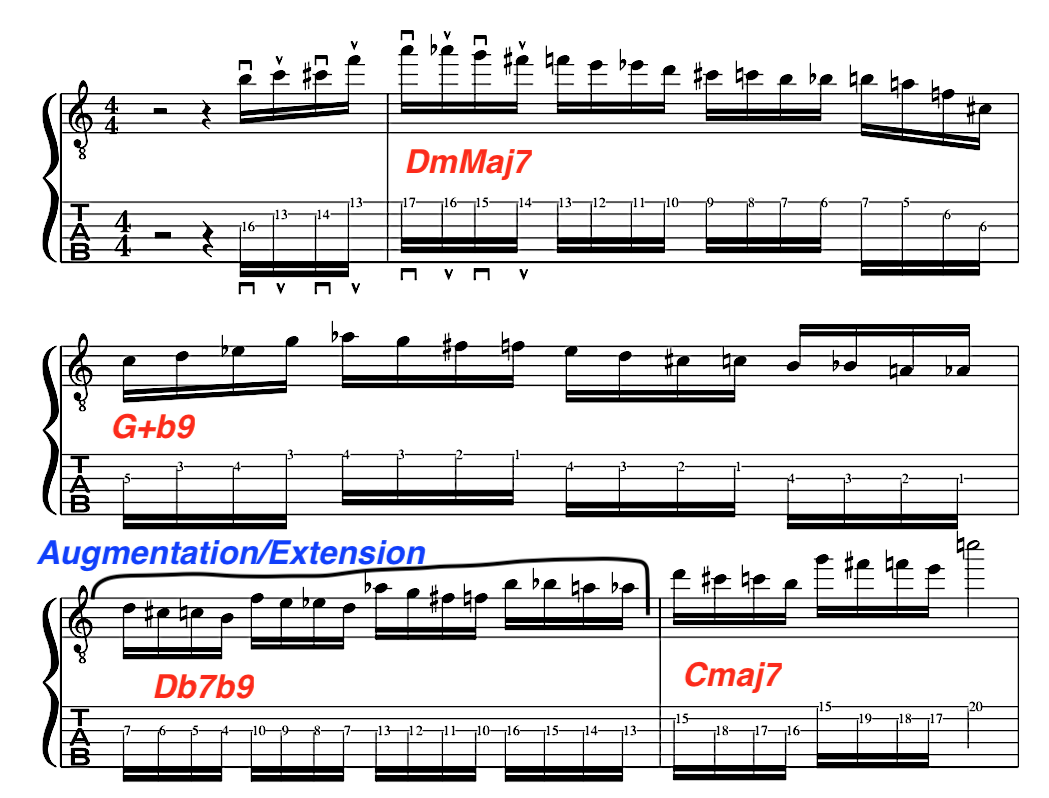
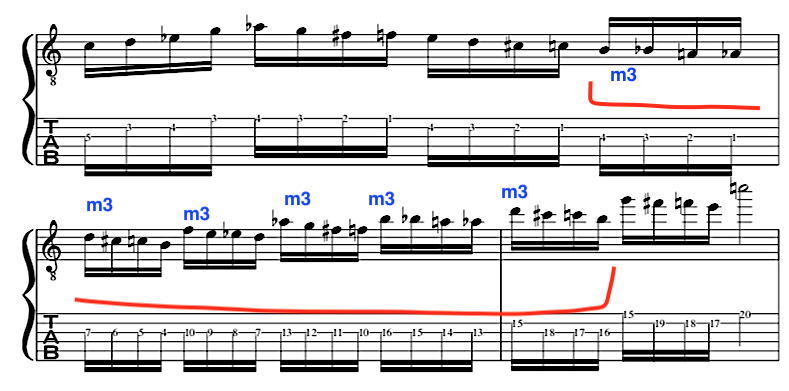
Over the DmMaj7/9 chord I start with a Dm9 arpeggio and then exploit the D Harmonic minor scale by ascending in fragments.

mclaughlin-altered-harmony-guitar-improvisation-theory

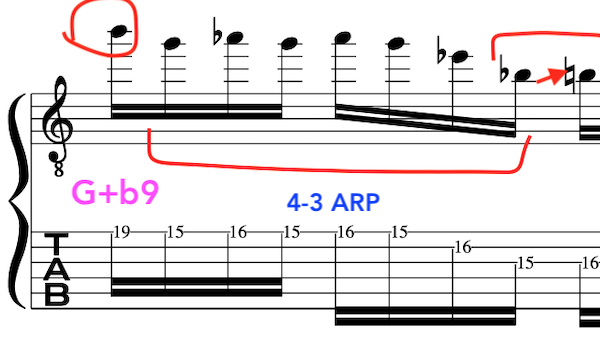
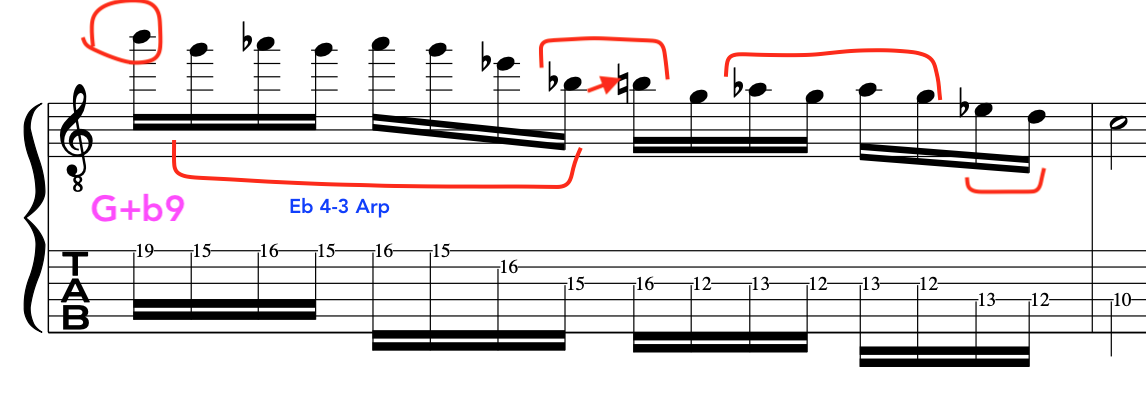
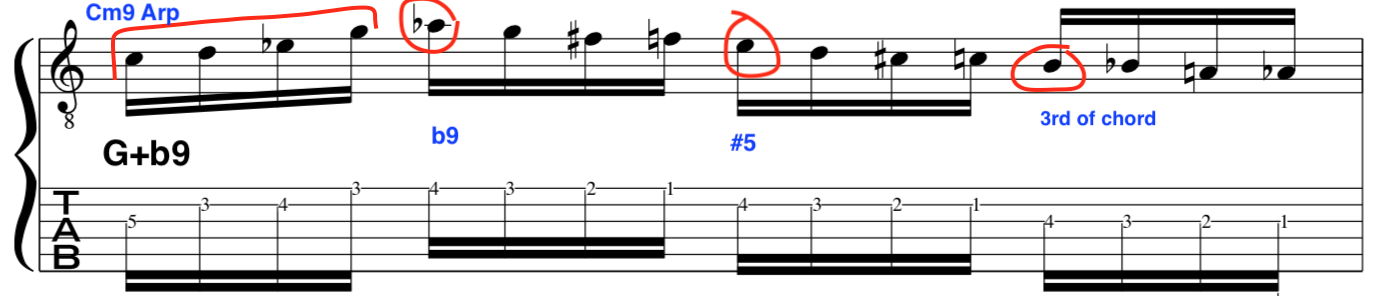
Over the G+b9 chord I start on the third note B and then play an Eb 4-3 arpeggio.

mclaughlin-guitar-music-theory-improvisation

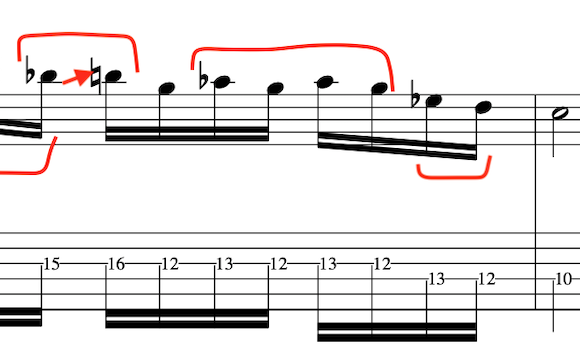
The Bb from this arpeggio then moves up to the B natural and then I play the b9 to tonic and #5 to5 which then finally moves down to the note C for the tonic of the next chord C+.

mclaughlin-guitar-music-theory-improvisation

Whole Bar:

John-mclaughlin-altered-dominant-guitar-improvisation-theory

PDF DOWNLOAD:

IF THIS LESSON WAS OF USE TO YOU THEN PLEASE SUBSCRIBE TO US BELOW ON YOUTUBE, THANKS!