Guitar Counterpoint Techniques Using Plectrum/Pick

Hi Guys,

Today, a look at using the guitar pick/plectrum to create contrapuntal/counterpoint ideas.

In this first part, [This lesson] we will look at treble to bass and bass to treble and how to make the non consecutive 3rds, 5ths and octaves and harmony work.

In the next part [next lesson] we will look at how to create “Resonance”, especially in regards to scales.

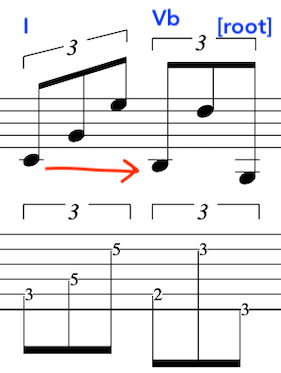
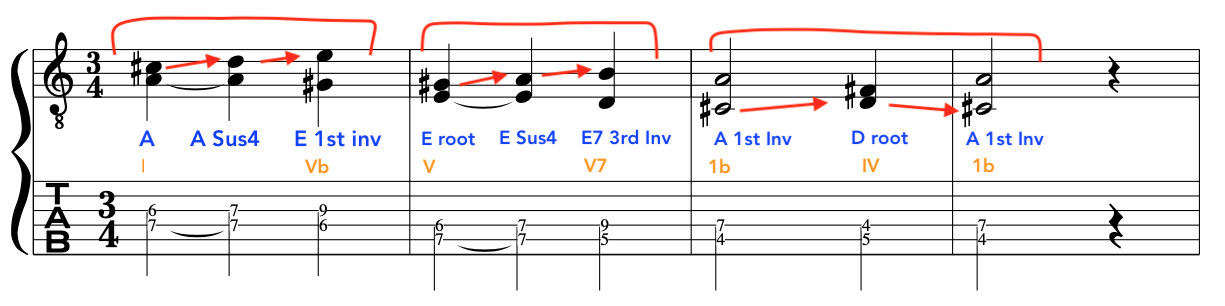
Musical notation showing chords I and Vb with an arrow indicating movement from I to the root of Vb for counterpoint guitar picking techique.
Musical notation for plectrum guitar illustrating the progression from chord I to Vb, emphasizing harmonic structure.
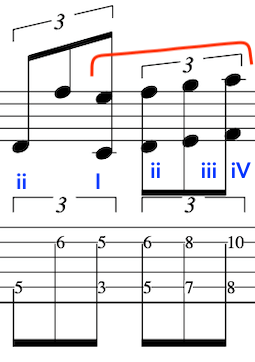
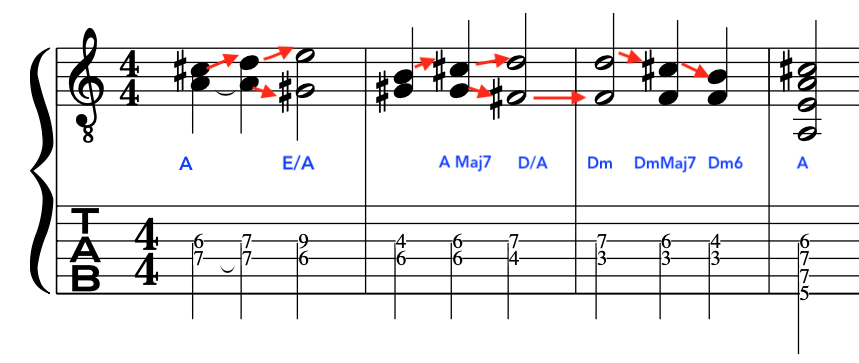
Sheet music displaying musical notation for guitar, featuring chord notations 'ii', 'I', 'ii', 'iii', and 'iv' along with corresponding tabs.

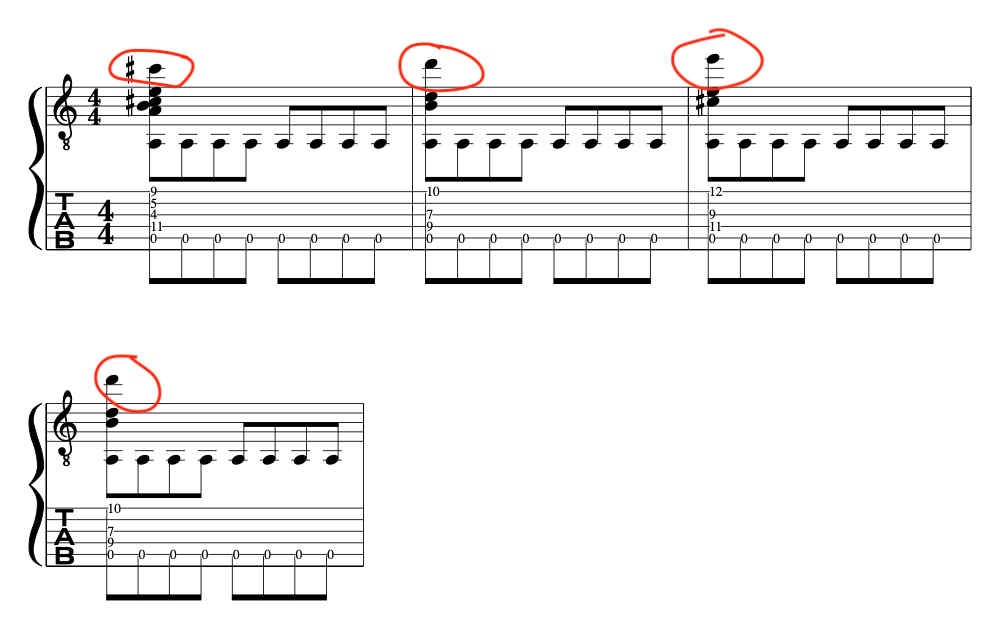
In order to keep the harmony ascending with clear movement, we will now take the F natural up a semitone to F# and create a secondary dominant first inversion-II7b

This chord ii [Dm] is now, made Major with the added seventh [D7].

This in turn, resolves up another semitone to G for the dominant chord of G Major.
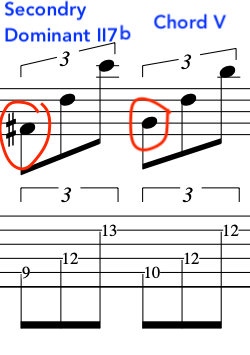
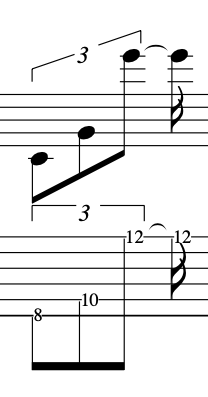
A musical score showing a 'Secondary Dominant II7b' and 'Chord V', with annotations highlighting specific notes.
Musical notation depicting the secondary dominant II7b and chord V for guitar pick practice.

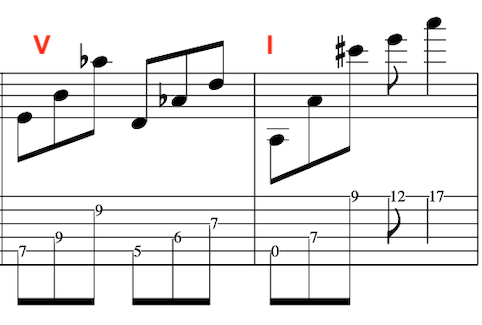
We will now, exploit a perfect cadence of I V I to complete this section of the composition:
Musical sheet displaying notes and indicators for guitar playing, including directional arrows for phrasing and finger placement.
Musical notation showing guitar tablature and standard notation, with notes and rests for a melody in guitar counterpoint.

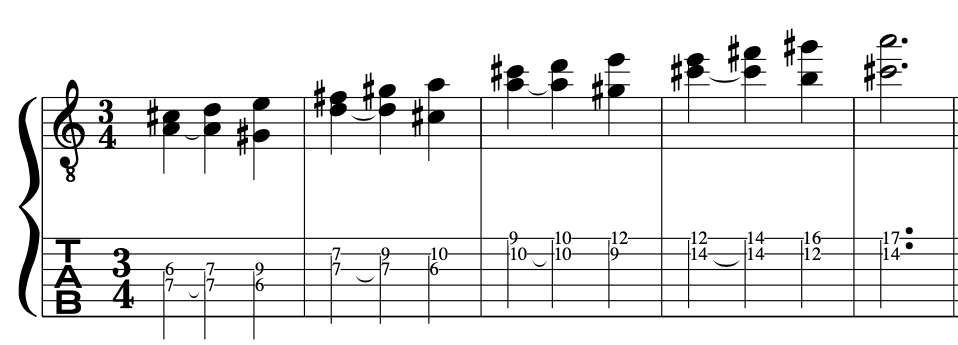
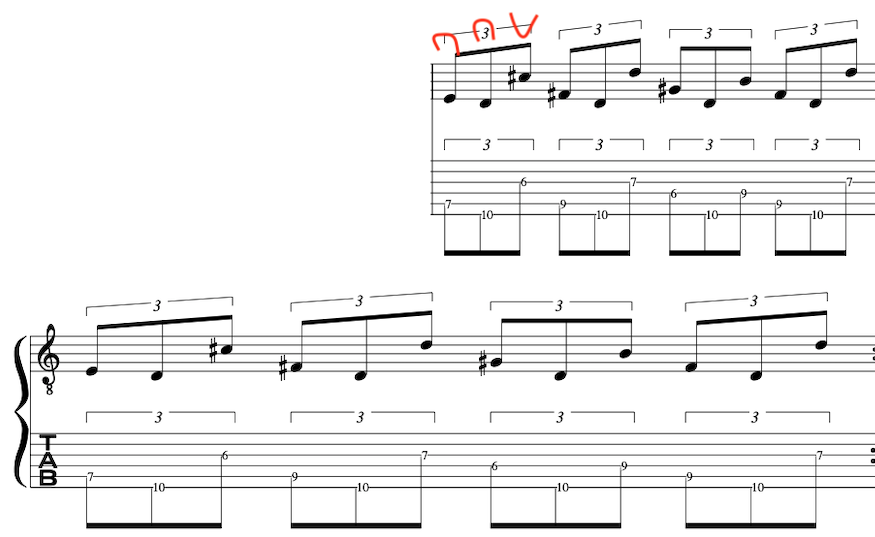
Now, to create contrast, we will employ scale movement, double stops and imitation:
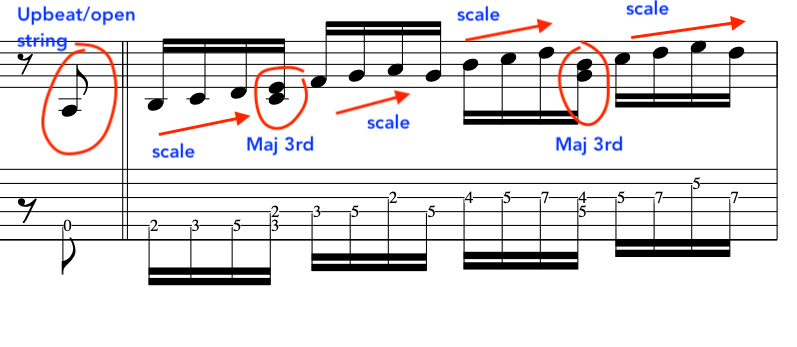
Musical notation showing an upbeat/open string along with notes indicating scale movements and major thirds, highlighted for instructional purposes.

The technique to keep this ascending is “Imitation”, using and implying what we have already played up an octave.
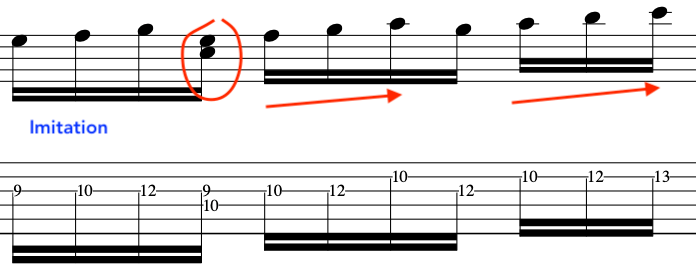
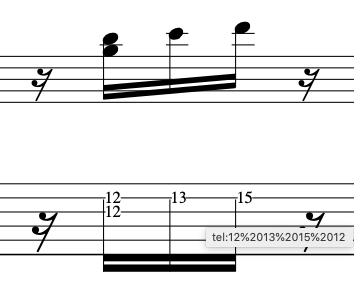
Musical notation showing imitation technique for guitar picking counterpoint with labeled sections and highlighted notes.

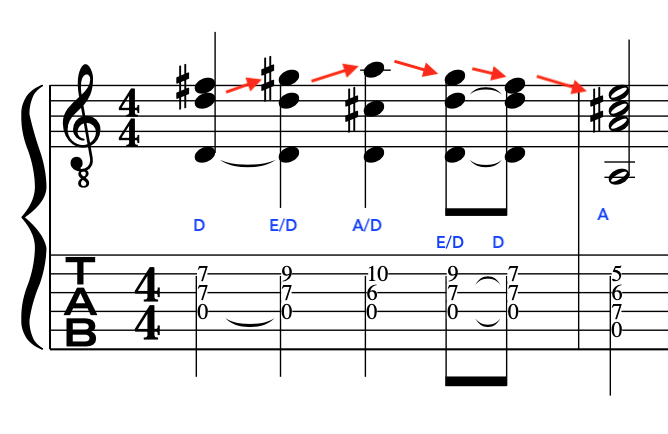
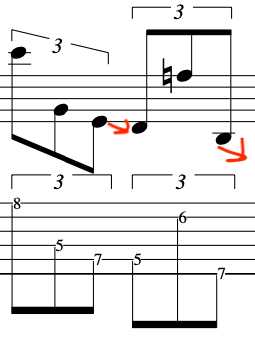
Finally, the cadence is created with “Contrary Motion” technique. And, once again we will imitate this, but, an octave lower this time, to complete the cadence.
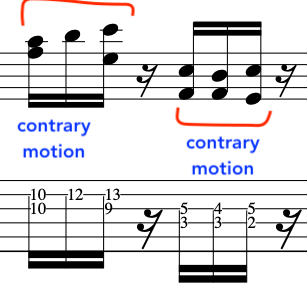
Musical sheet music displaying notes in contrary motion, with labeled sections indicating 'contrary motion' technique for guitar pciking counterpoint
Musical notation illustrating the technique of contrary motion, highlighting specific notes and finger positions and imitation.

In the coming part, we will exploit much string skipping and intervallic movement.

This technique is great for Low High Low with the Bass to Treble or Treble to bass.

This is an amazing way, to perform a contrapuntal effect and map out and perform crystalline clear harmony that resonates beautifully when fretted on the guitar. [See Video Above].
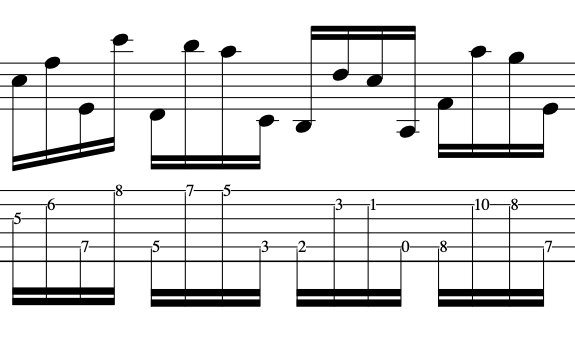
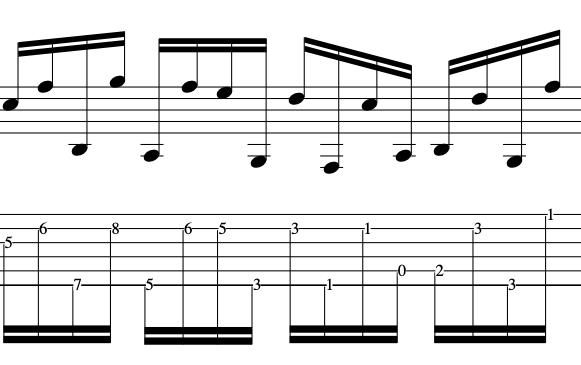
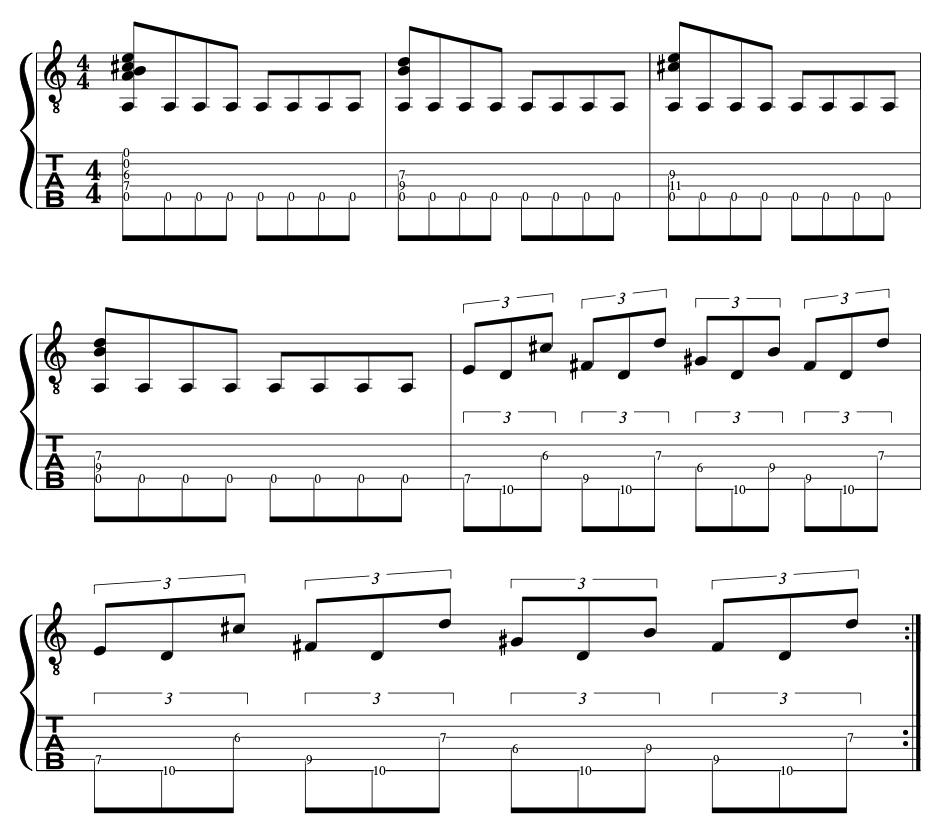
Musical notation displaying a contrpuntal sequence for guitar picking, featuring treble and bass clefs and tab with notes and measures.
Sheet music illustrating plectrum techniques and contrapuntal ideas for guitar.

Second Part:

Sheet music showing a series of notes and a guitar tablature for a prelude, illustrating counterpoint ideas for the plectrum guitar picking techniques
Musical notation showing notes and finger placements for contrapuntal guitar picking.

The last part employs our original little tune, but will change key at the finale.
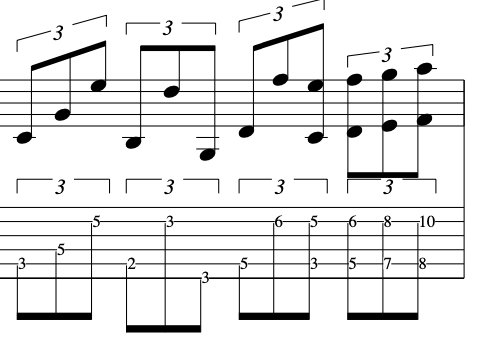
Musical notation for a guitar piece featuring notes and tablature, illustrating a series of musical ideas and chord progressions for plectrum guitar techniques.

In order to change the key and “Uplift” the end, we will exploit two secondary dominants: The first being chord ii as II7b [D7 to G].

And the second being Chord iii. So, we have III7b [E7 to A Major]
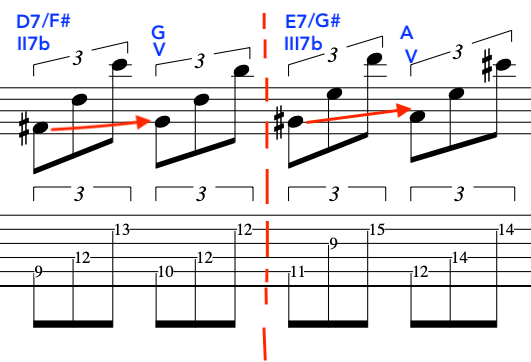
Musical notation featuring chords D7/F#, II7b, G, V, E7/G#, III7b, A, and V, with arrows indicating movement between notes.
Musical notation illustrating the progression from D7/F# G to E7/G# A, highlighting the transitions in chord structure and secondary dominants for guitar.

This, means that we now have to cadence with D Major as the new tonic key.
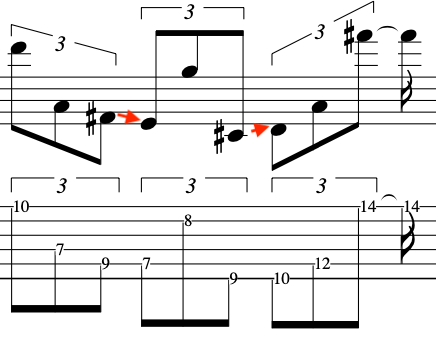
A sheet of music notation featuring musical notes, symbols, and markings that indicate rhythm and pitch for a guitar piece.

To wind down the composition we will outline a D Major [13/sus4] arpeggio and cadence with some simple contrary motion emphasising the new key and chord of D Major.
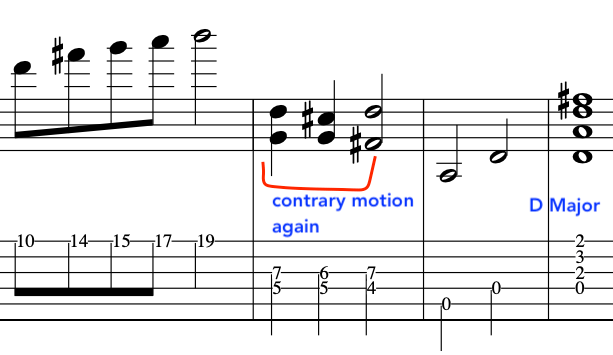
Musical notation showing a piece in D Major for guitar with a highlighted section indicating 'contrary motion again'.

This, was just a quick look at the fretting side of plectrum contrapuntal guitar writing and playing.

This style, encompasses the no consecutive 3rds, 5ths and octaves approach, taken from the Bach’s chorales.

In the next part, we will look at how to create resonance and a much bigger sound with more colourful plectrum techniques.

2 Part Counterpoint Guitar Strumming

Modern Jazz Fusion Chords part 2. Steely Dan, Dan Chord and Slash Chords

CLICK SUBSCRIBE!

2 Part Counterpoint Guitar Strumming: songwriting guitar style lesson

Hi Guys,

Today, a quick look at contrapuntal 2 part guitar strumming. This involves employing contrary motion technique where 2 parts move in different directions

This is not traditional Bach counterpoint but using and exploiting what works naturally on the guitar’s traditional tuning EADGBE.

In the first exercise we will just pluck some simple 2 part voicing’s leading to a plagal cadence.

counterpoint-songwriting-guitar-lesson-example

In the next exercise we will brings out the inner voicing’s whilst strumming rhythms on all the guitar strings.

counterpoint-songwriting-guitar-lesson-example

Now, we will move up to the next three strings and strum some more patterns.

counterpoint-songwriting-guitar-lesson-example

In the following exercise you will see how easy it is to create contrary motion through the different registers with the plectrum as [simple dyads or] 2 note voicing’s.

counterpoint-songwriting-guitar-lesson-example

Now, we will move up to the first and second strings,

counterpoint-songwriting-guitar-lesson-example

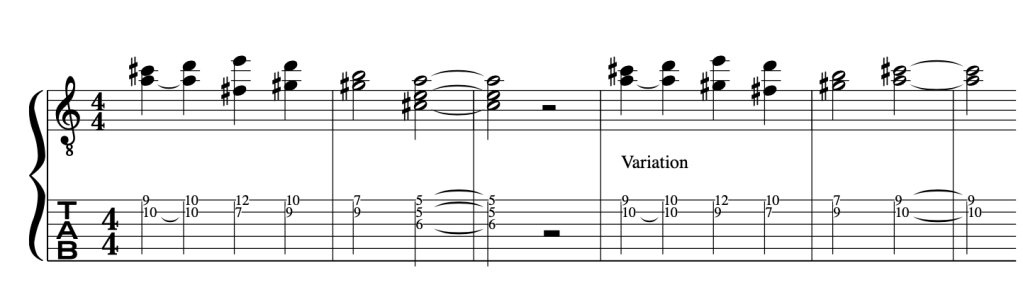
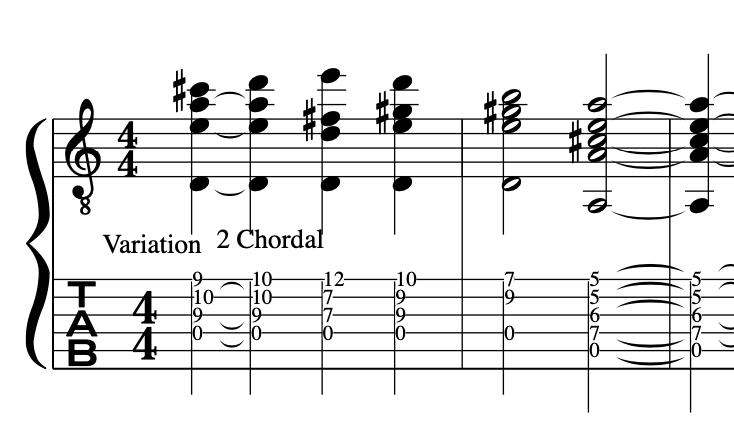
Here is a chordal variation with an added pedal note:

counterpoint-songwriting-guitar-lesson-example

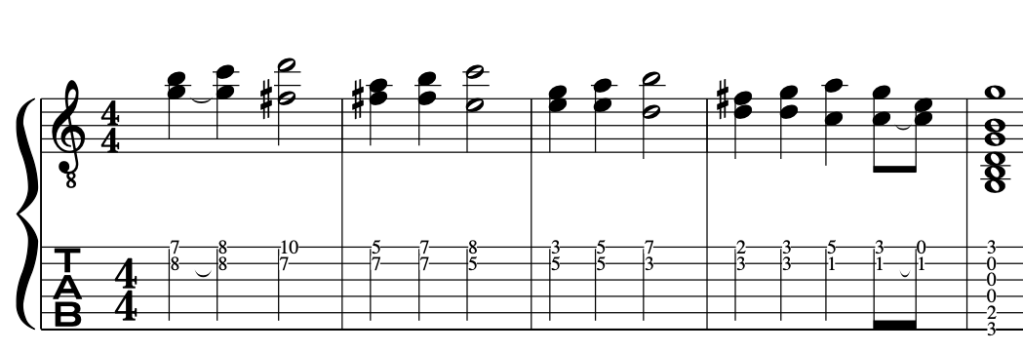
The next example is in G major and produces a really lovely sound that resonates on the first two strings.

counterpoint-songwriting-guitar-lesson-example

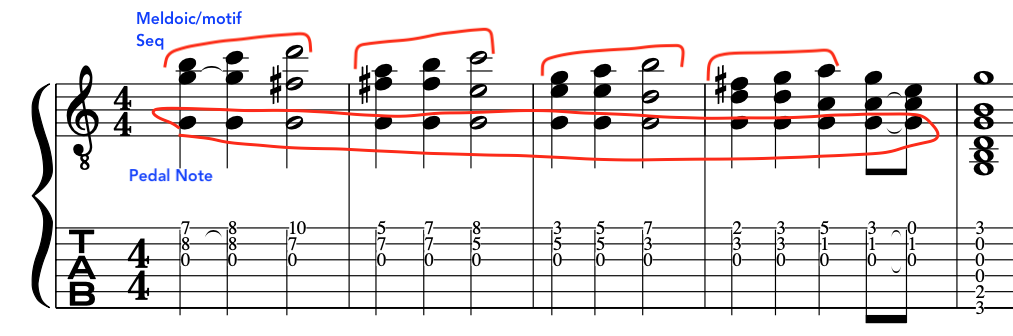
Let’s now add a G pedal: Notice the ascending [but falling] scale motifs:

counterpoint-songwriting-guitar-lesson-example

Finally, we can employ another useful technique by using a pedal note with a chord. This is not contrapuntal, but it is useful for creating a clear sense of harmony with rhythmic drive.

pedal-strumming-guitar-lesson

Here we will add a little a “Down Down Up” plucked triplet motif to break it up.

al-di-meola-triplets-arpeggio-lesson

Full Exercise:

pedal-strumming-guitar-lesson

Modern Jazz Fusion Chords part 2. Steely Dan, Dan Chord and Slash Chords

String Skipping/Intervallic Guitar Part 3-HARMONY

yt_logo_rgb_light

CLICK SUBSCRIBE!

String Skipping/Intervallic Guitar Part 2-HARMONY

PLEASE WATCH VIDEO ABOVE FOR DETAILED ANALYSIS:

Hi Guys,

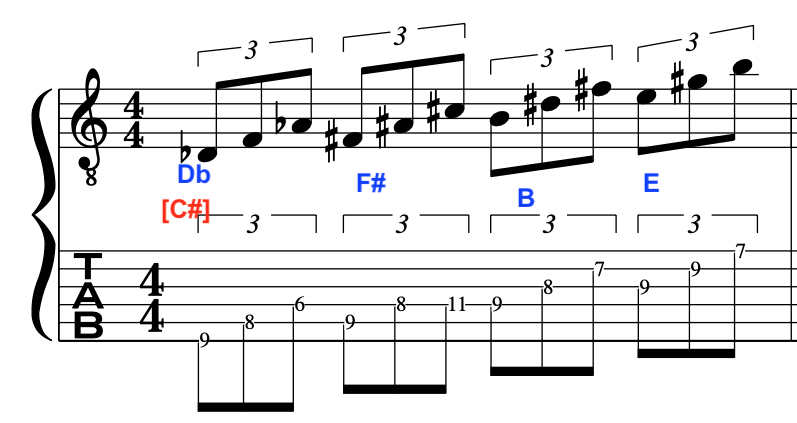
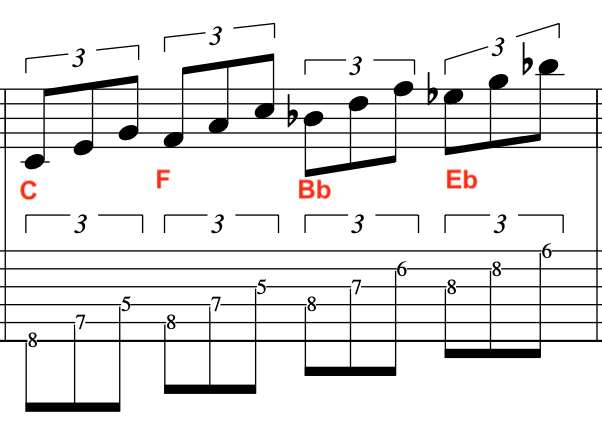
Today, one last look at “Intervallic string skipping” for a contrapuntal-esque picking style.

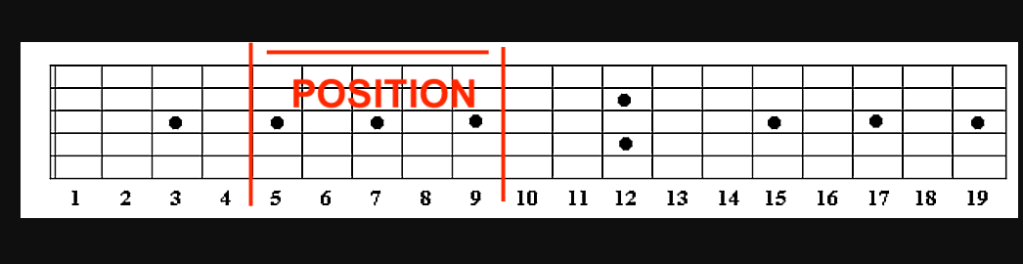
The first thing to do is take one position on the guitar fingerboard and find the “Harmony” embedded within that position.

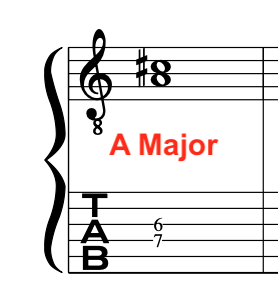
I have taken the A Major position [F#m Relative]

al-di-meola-cycle-of-4ths

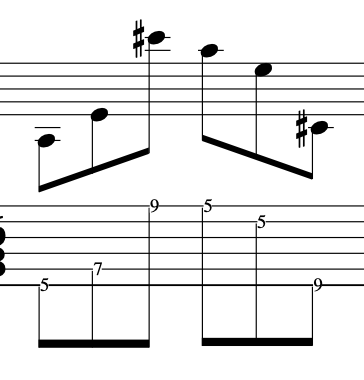
Now, let’s make an A Major basic arpeggio from the 1st string and the 6th string.

al-di-meola-string-skipping

Straight away, you will notice that the notes on the 1st string and the notes on 6th string are the same but in different octaves. This gives us an easy and excellent way to exploit the High to Low or Low to High counterpoint effect.

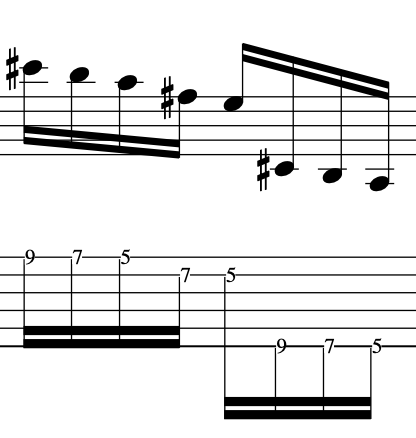
Now let’s do the same with a piece of scale: [Starting on an “Upstroke”]

al-di-meola-string-skipping-scales

Again, the octave makes this flow and connect easily from the low to high.

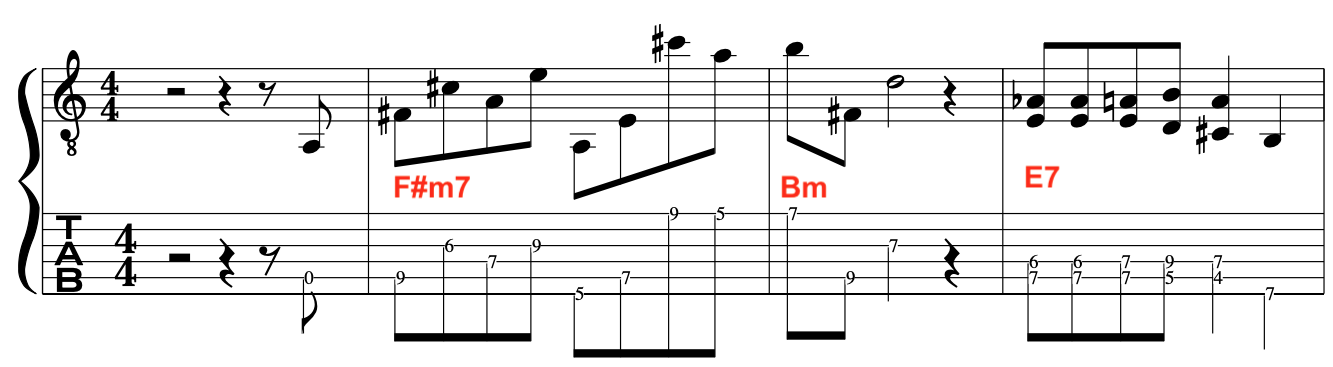
The next point is to take a chord sequence and use this “String skipping/intervallic” effect: Here we have Vi ii V7 I

al-di-meola-string-skipping

HARMONY

Th next essential point is to acknowledge the harmony in this position:

We will do this by exploiting the Cycle of 4ths in this simple 5 fret position.

al-di-meola-cycle-of-4ths

Here you can see that we have a huge amount of harmony available to us right under our fingertips. These chords don’t have to be Major, they can be minor, diminished, augmented etc. This gives us even more material to work with.

If we move down a fret [Semitone] then we have another set of harmony in 4ths awaiting us.

al-di-meola-cycle-of-4ths

Along, with this we have chord inversions and all of the inversions of A Major:

So, as you can see there is a huge amount of harmony right in front of us even in this one position that we can exploit and create lots of music from.

Lastly, let’s create another “String skipping intervallic” example:

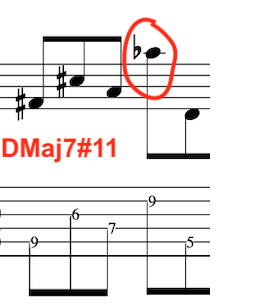
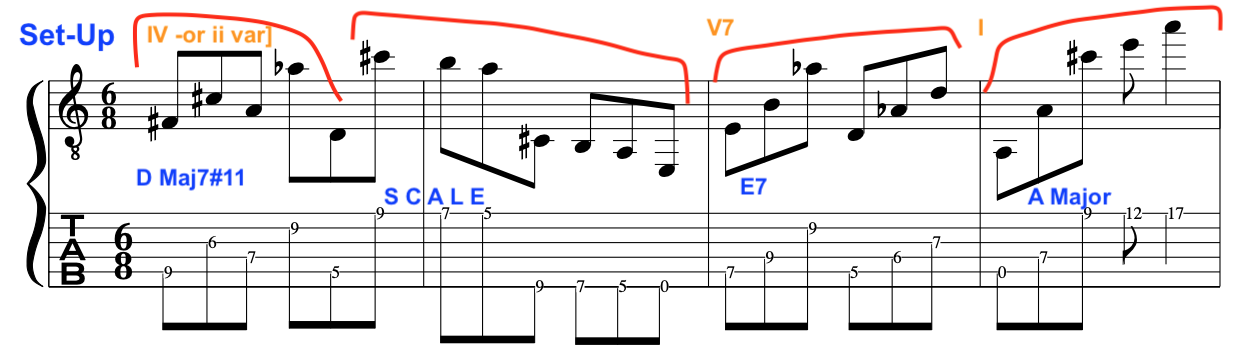
I’m going to create a phrase outlining a D Maj#11 chord.

al-di-meola-string-skipping

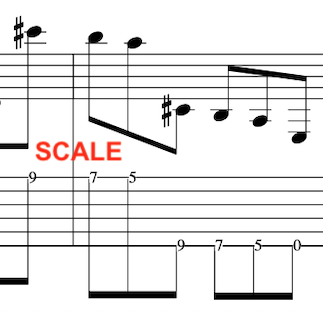
To make this sequence quite quick I am going to add some scale from high to low:

al-di-meola-string-skipping-scales

Now we will add a V -I cadence

Now, let’s view the whole line:

al-di-meola-string-skipping

PDF DOWNLOAD:

PDF DOWNLOAD 2:

IF THIS LESSON WAS OF USE TO YOU THEN PLEASE SUBSCRIBE TO US BELOW ON YOUTUBE, THANKS!