Mastering String Skipping: Fripp/Martino-Style Guitar Techniques

Hi Guys!

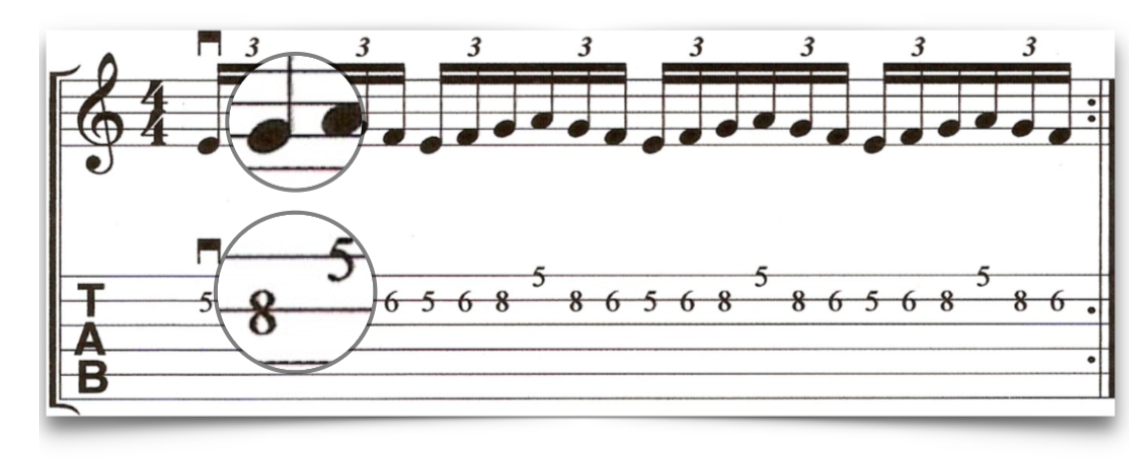
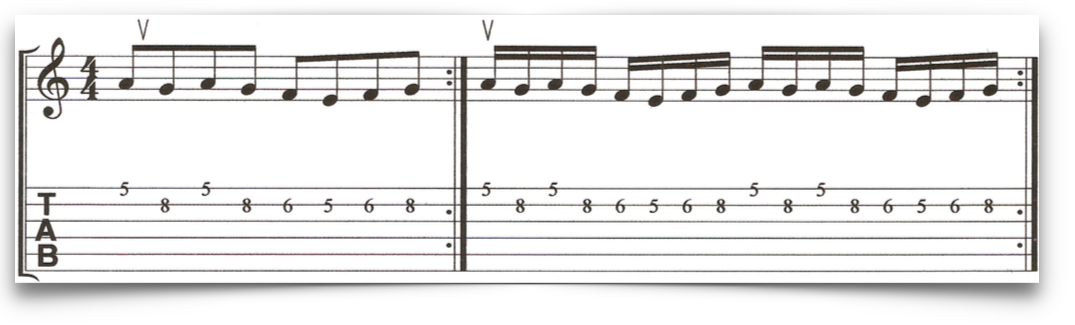
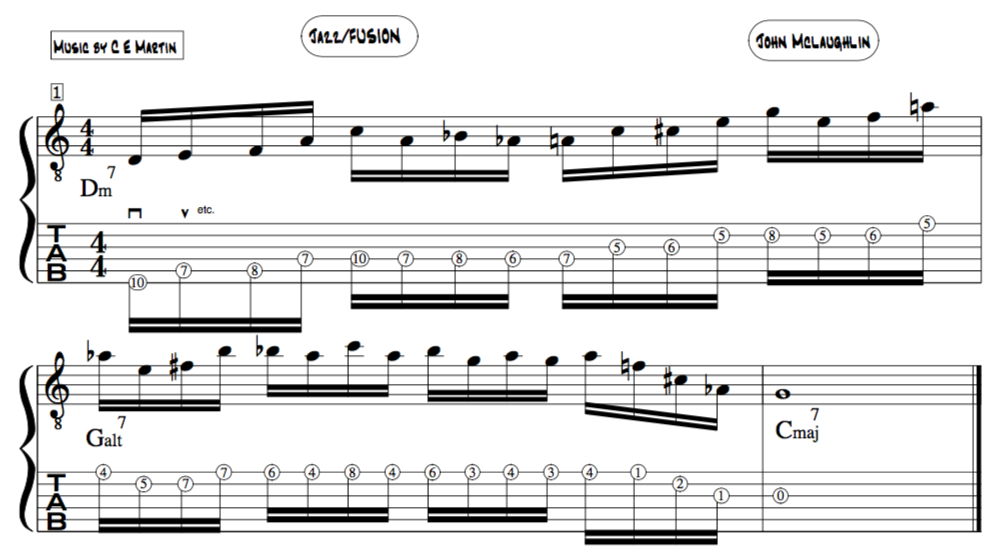
Here is the TAB/Notation for the “String Skipping” exercise in the style of guitar great Robert Fripp.

This 12 tone concept was taken from the brilliant 12 chromatic forms of jazz great Pat Martino.

string-skipping-guitar-lesson-example

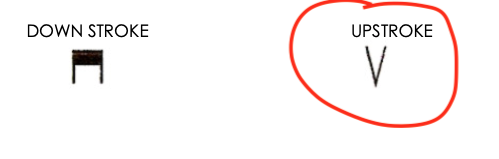
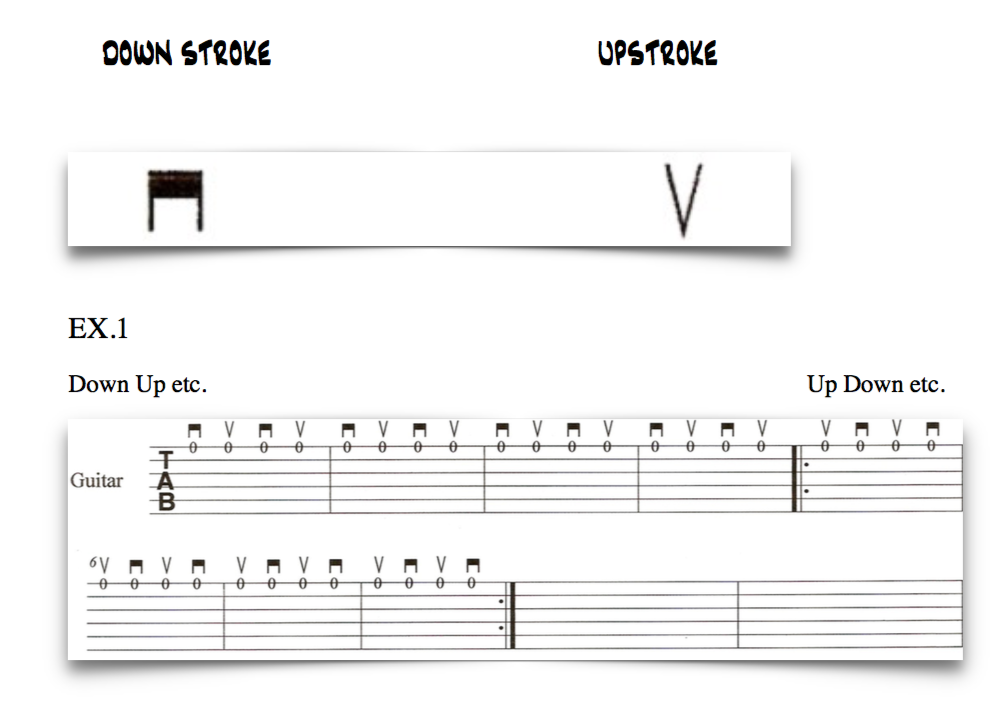
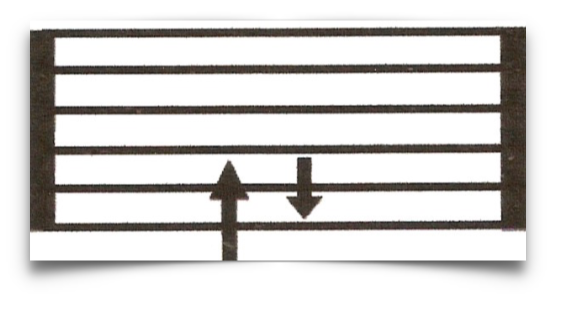
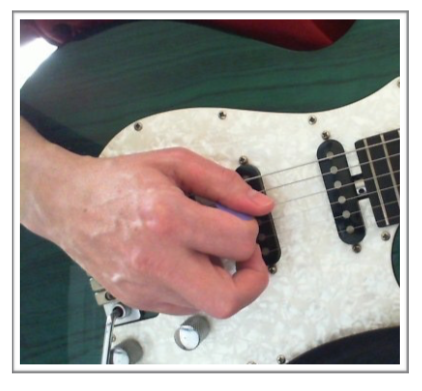
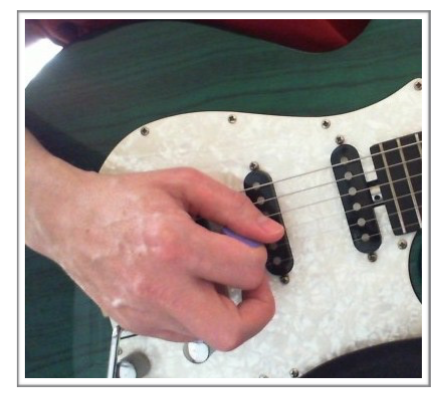
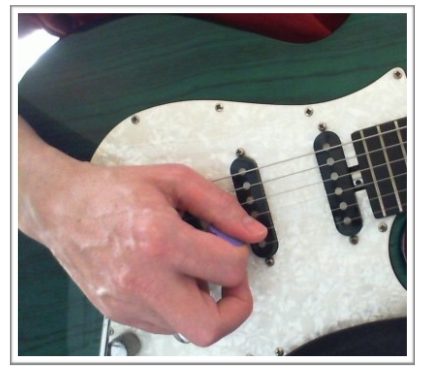
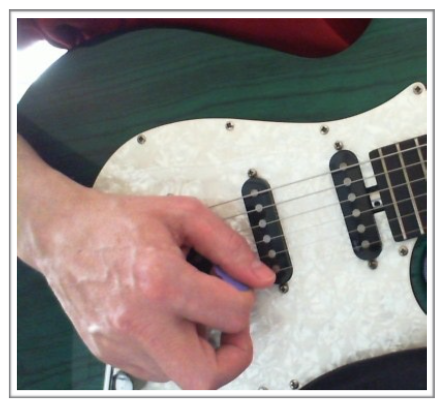
I am staring this little etude/exercise on an “Up” stroke with alternate picking guitar technique.

string-skipping-guitar-lesson-example

As an example here is the first part:

string-skipping-guitar-lesson-example

The key to be aware of, is the exploitation of “Octave displacement”. This creates unique harmonies and S.A.T [B] style lines.

string-skipping-guitar-lesson-example

As you can see, in the diagram above this is just the chromatic scale, but, moving/resolving through the different registers.

This octave displacement technique, offers us a way to create/extract interesting colourful music from the chromatic scale, whilst, keeping us far away from one string banality.

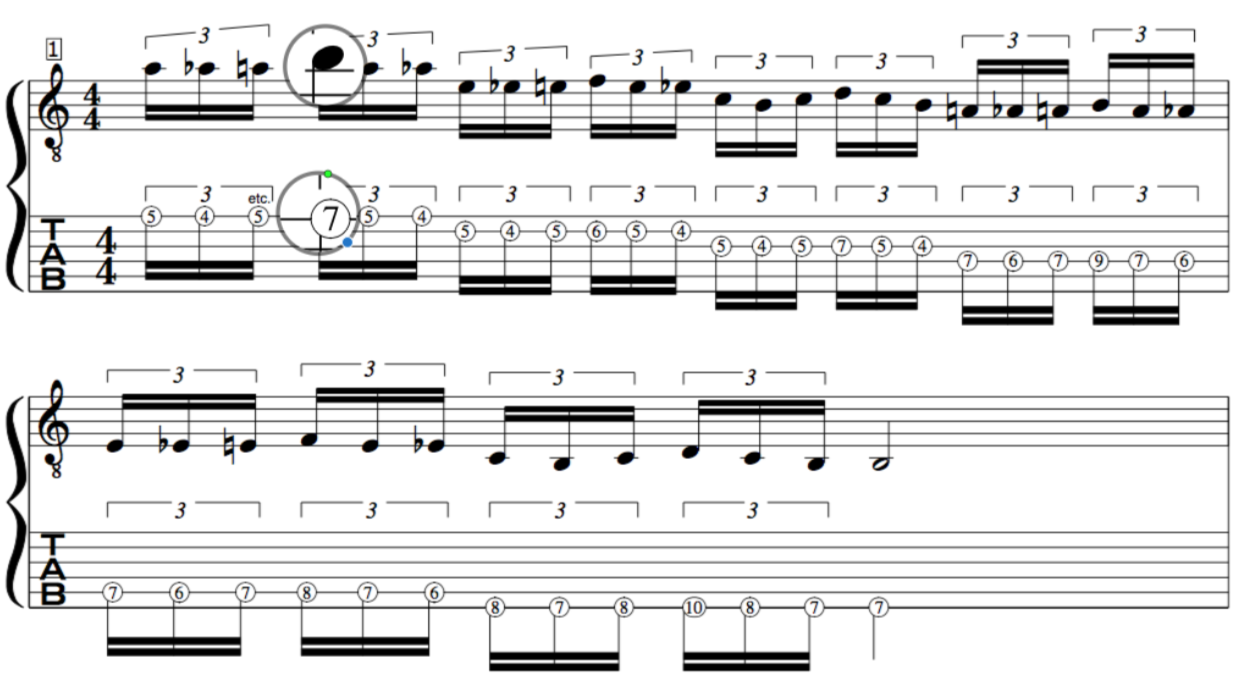
Although, there is octave displacement, there is also some basic scale parts to link it all together:

I am starting both of these scale fragments on an“Up” stroke with strict alternate picking once again:

fripp-guitar-scales-exercise-alternate-picking-guitar-technique

Also, the last part descends back into the chromatic scale to tie the [Composition] etude back together and give clarity to the ear, and let it know that we are still in an atonal chromatic form.

string-skipping-guitar-lesson-example
fripp-guitar-scales-exercise-alternate-picking-guitar-technique

McLaughlin “Belo/Music spoken here” Style Guitar Chord/Scale Techniques

Hi Guys,

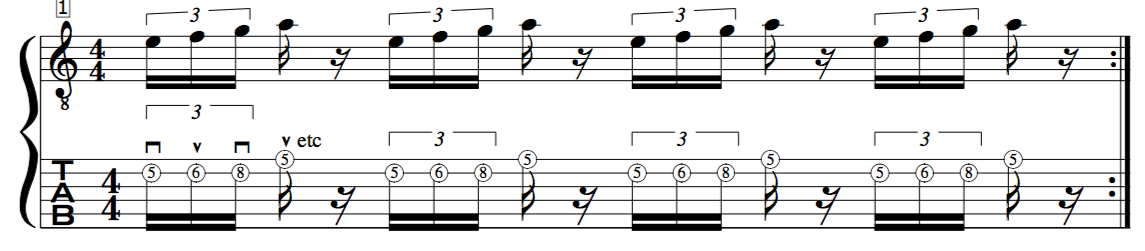
Today, a quick look at how John McLaughlin moves from chord to scale or scale to chord on the nylon string guitar.

In this lick we can see John exploit the 3/4 time signature with rapid fire alternate picked tetrachords!

This is classic “Music spoken here” style in regards to the application of pentatonic scale fingerings and melodic arpeggio shapes that connect together to create a fluid improvised line.
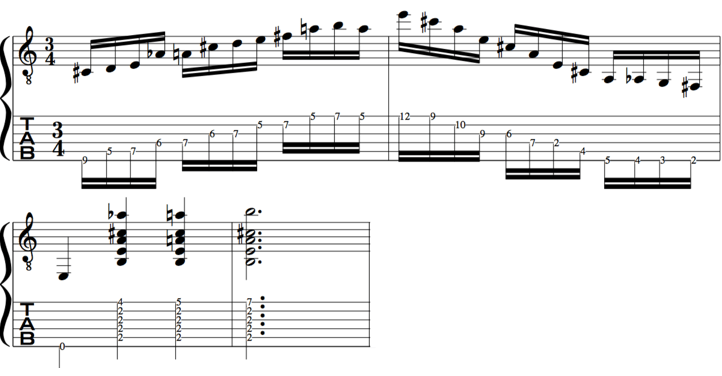
john_mclaughlin_acoustic_guitar_techniques_lesson

Here, we can view the exploitation of a quick pentatonic fingering that ascends,
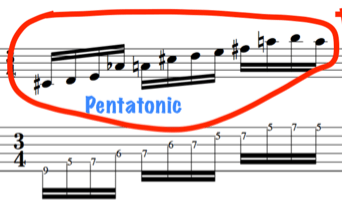
john_mclaughlin_acoustic_guitar_techniques_lesson

Now, we go the opposite way and answer the phrase with a descent. This employs the A Major Arpeggio shape/fingering:
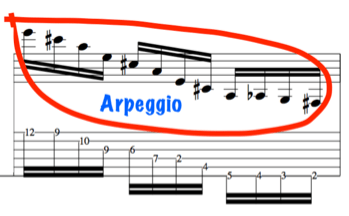
john_mclaughlin_acoustic_guitar_techniques_lesson

Finally, we have a little melodic rise in the top line over a barred static chord. [Mind the stretch!]
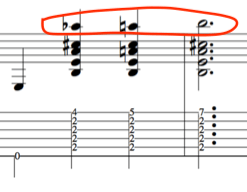
john_mclaughlin_acoustic_guitar_techniques_lesson

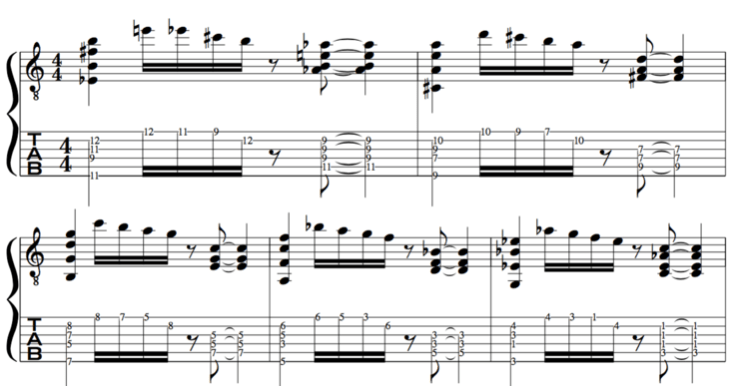
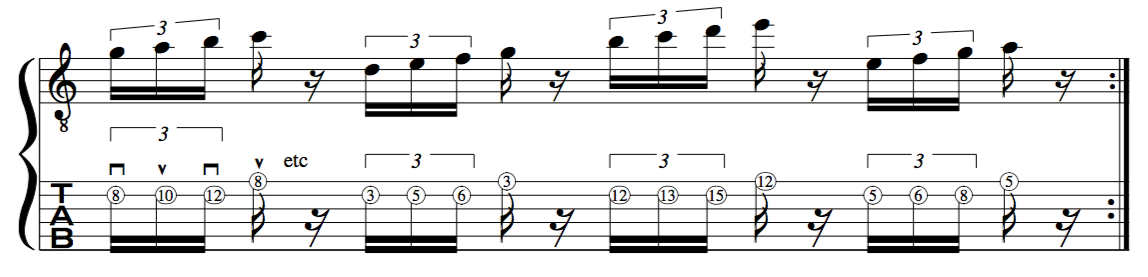
In the next example, we will apply the concept of a chord to scale fragment that anticipates to the next chord in 4/4 time.

Technically, I am playing the chords on a downstroke and the scale on an upstroke. [This employs alternate picking guitar technique once more].
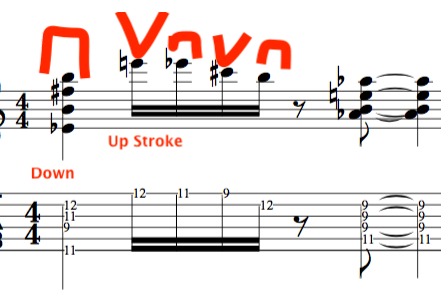
john_mclaughlin_acoustic_guitar_techniques_lesson

What makes it work so well on the guitar is that this concept employs 1st Inversion chord voicing’s- E,g B/D# to E/G# to A/C# to D/F# etc

Also, as a compositional device, this works brilliantly because it employs the cycle of Vb to Ib.

john_mclaughlin_acoustic_guitar_techniques_lesson

Notice: this is the same, but, this time we are ascending with the same concept.
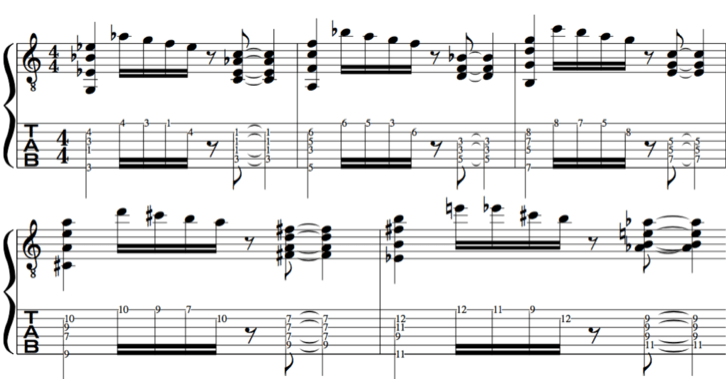
Musical notation and tablature sheet depicting a guitar lesson focusing on chord to scale transitions and alternate picking techniques from John McLaughlin's Belo Herozonte Album.
Musical notation illustrating a John McLaughlin chord to scale technique, demonstrating ascending and descending patterns.

UP-STROKE Alternate Picking Concepts

CLICK SUBSCRIBE!
UP-STROKE Alternate Picking Guitar Concepts

Hi Guys,

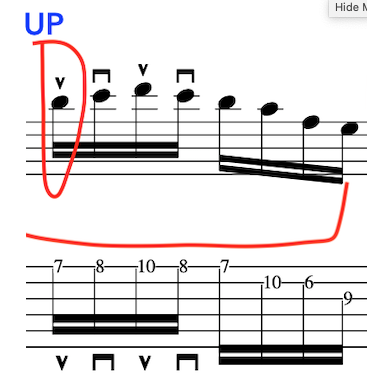
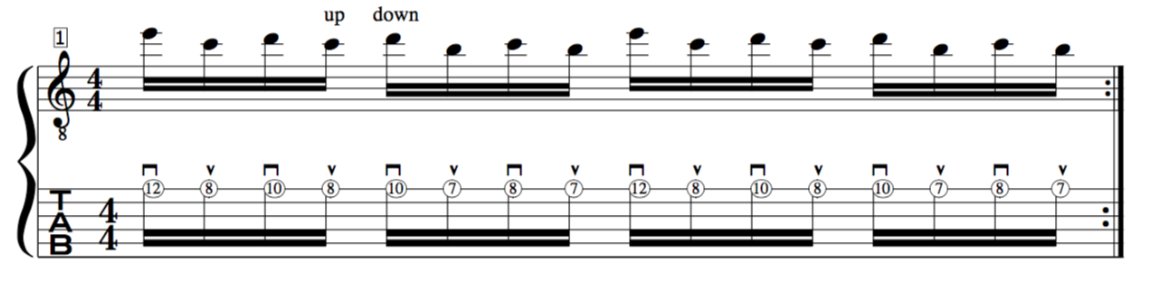
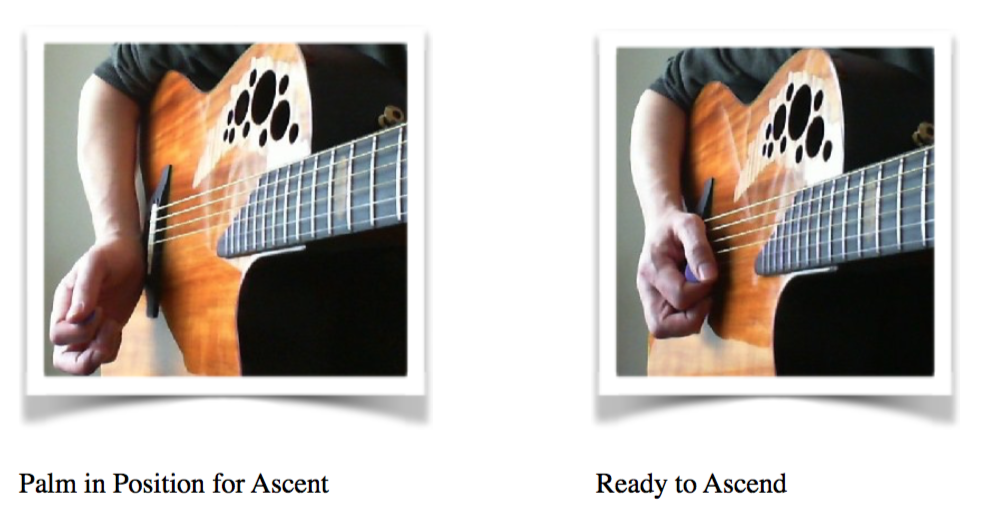
Today, a quick look at starting alternate picking runs on an upstroke.

upstroke, alternate, picking, guitar, technique, example

Starting on an upstroke can be useful when playing stepwise scalic patterns/runs. This can be modal, pentatonic or major/minor.

Here, is the first little exercise/idea: [Note that this starts on an upstroke and finishes on a downstroke]

upstroke, alternate, picking, guitar, technique, example

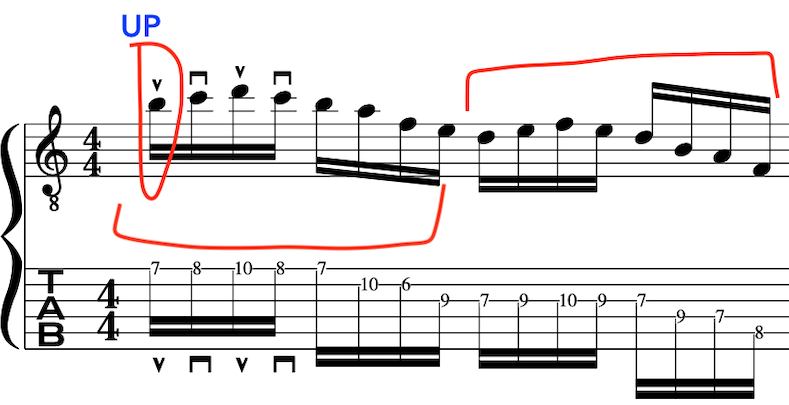
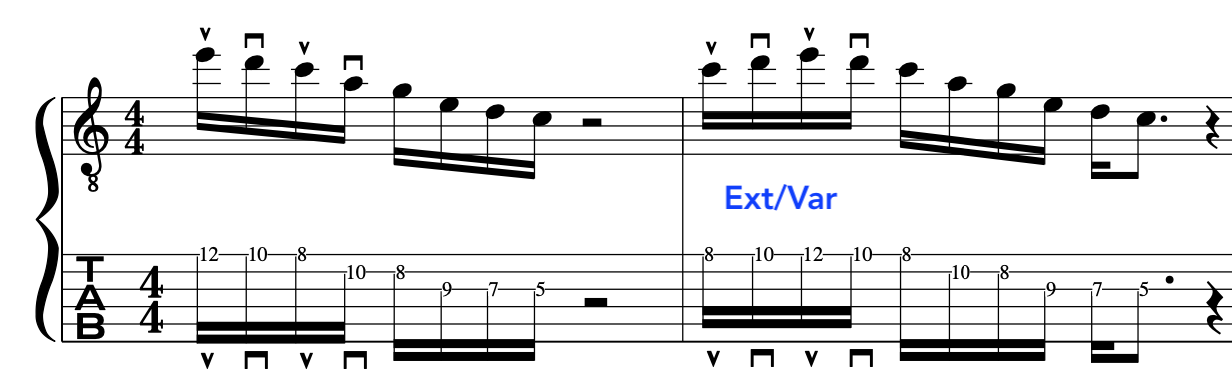
We, will now extend this and complete the bar.

upstroke, alternate, picking, guitar, technique, example

As you can see when starting on an upstroke it is easy to connect together fragments of scale and create extended fluid lines.

Here is another example of extending and varying by employing simple scalic movement starting on the up stroke.

upstroke, alternate, picking, guitar, technique, example

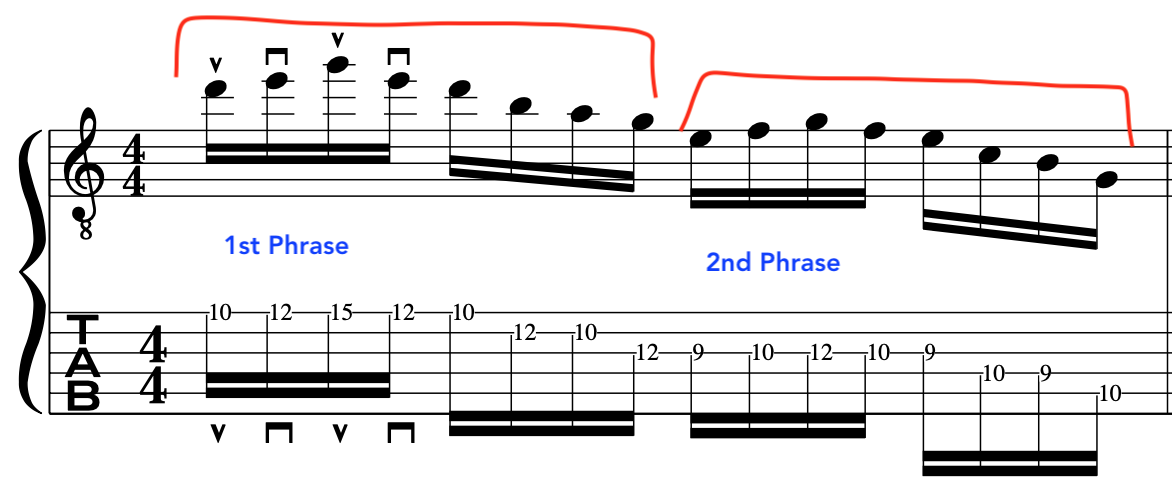
Connecting scale fragments is a bit like taking the first half of the bar and imitating it into 2 phrases.

upstroke, alternate, picking, guitar, technique, example

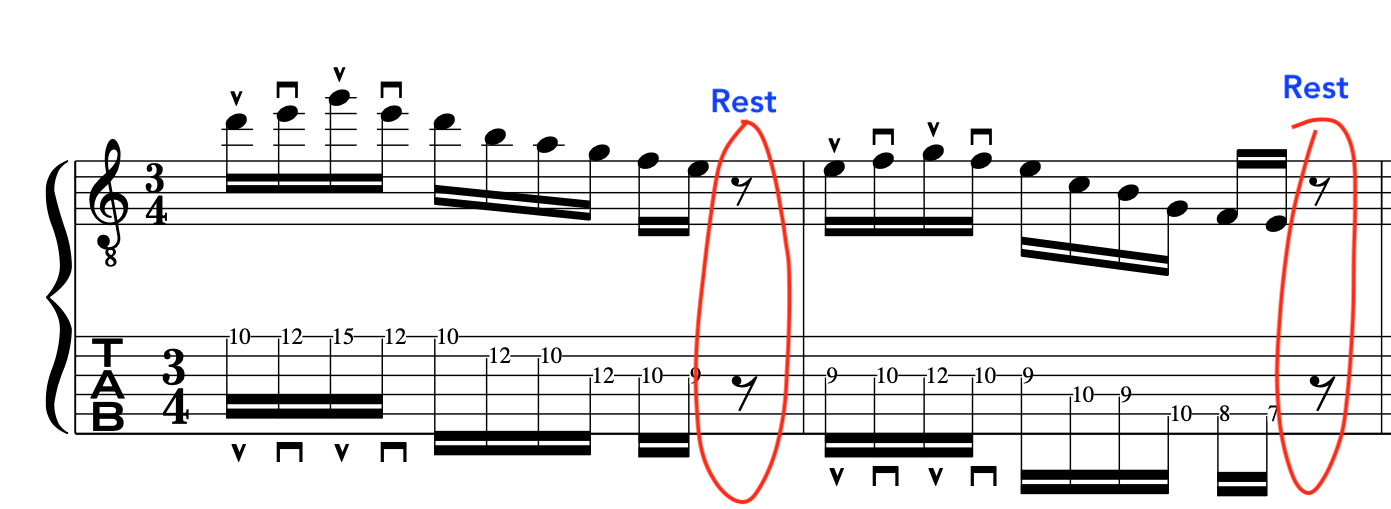
In this next example we have rests. These are useful as they give you a split second to get your fretting hand into position.

upstroke, alternate, picking, guitar, technique, example

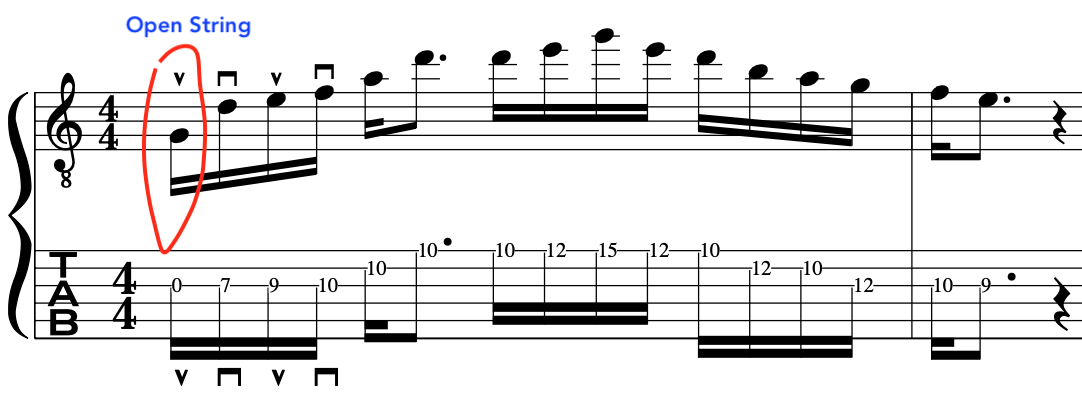
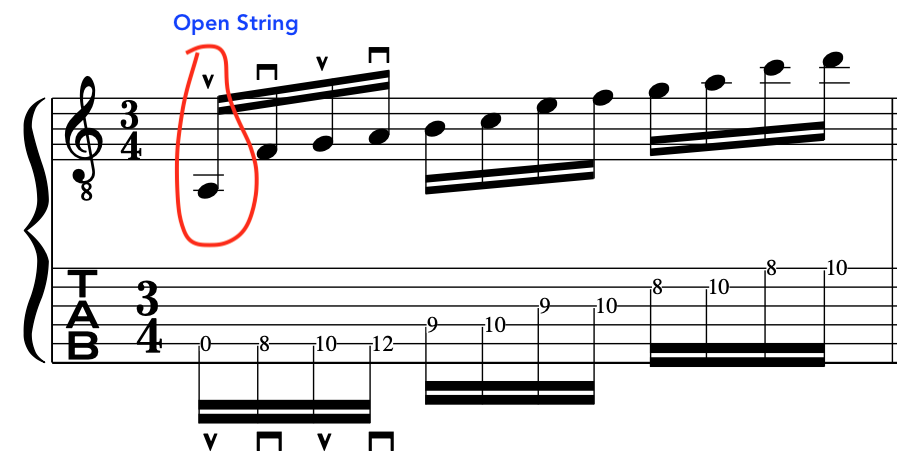
This time we will employ the open string to create an even pattern to an odd pattern to set up the upstroke for the next phrase.

upstroke, alternate, picking, guitar, technique, example

This time we will use the same concept to ascend with a simple piece of pentatonic/scale:

upstroke, alternate, picking, guitar, technique, example

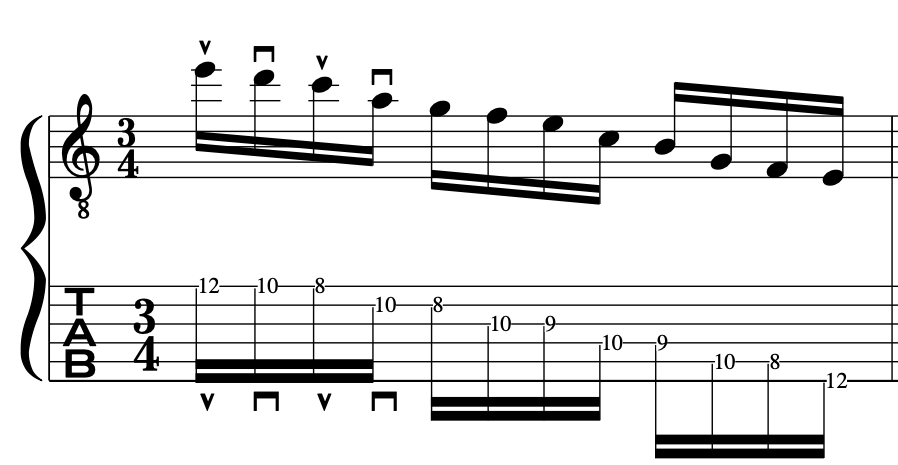
Now we will descend starting on the up-stroke [no open string]:

upstroke, alternate, picking, guitar, technique, example

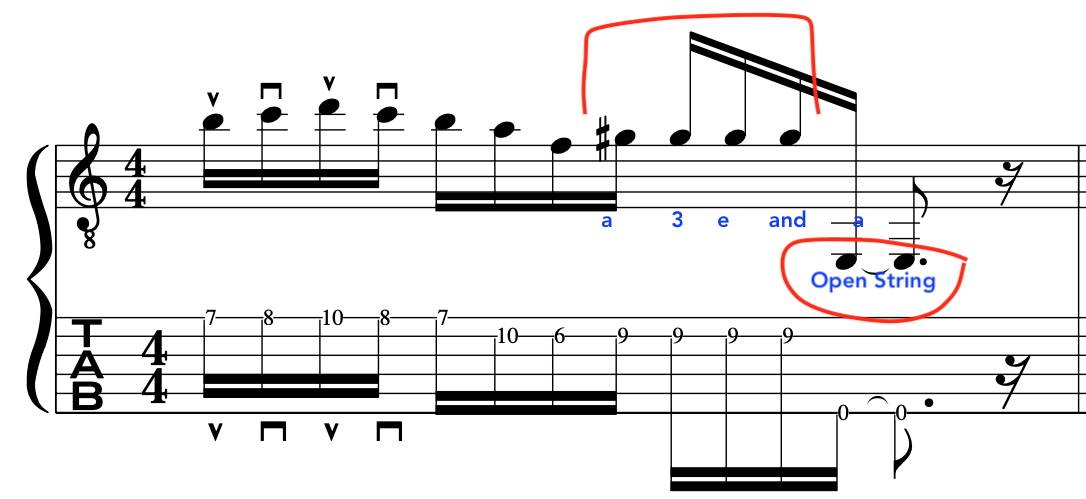
Finally, we will employ a repeated note with some scale and open string distance.

upstroke, alternate, picking, guitar, technique, example

Notice that the repeated note and the open string are on the off beat:

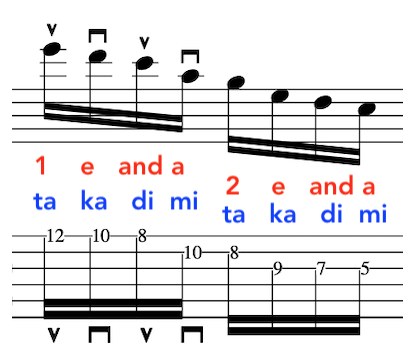
One last thing: When doing these and any exercises it is essential to count time. Below is an example:

upstroke, alternate, picking, guitar, technique, example