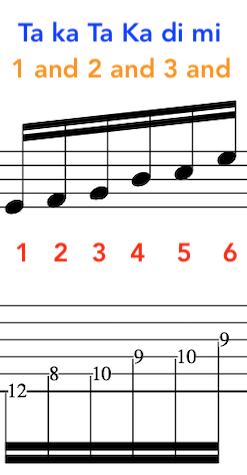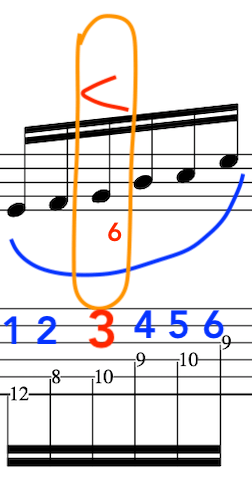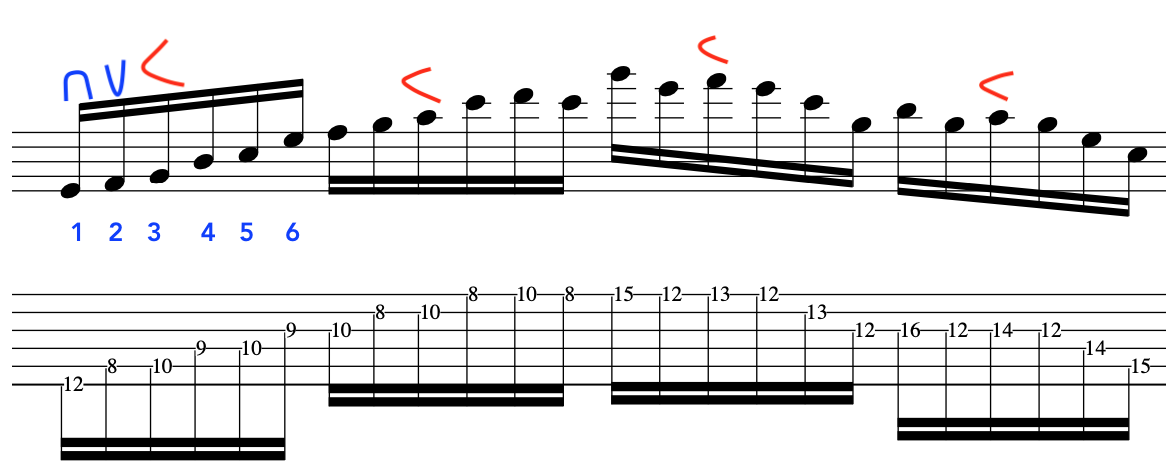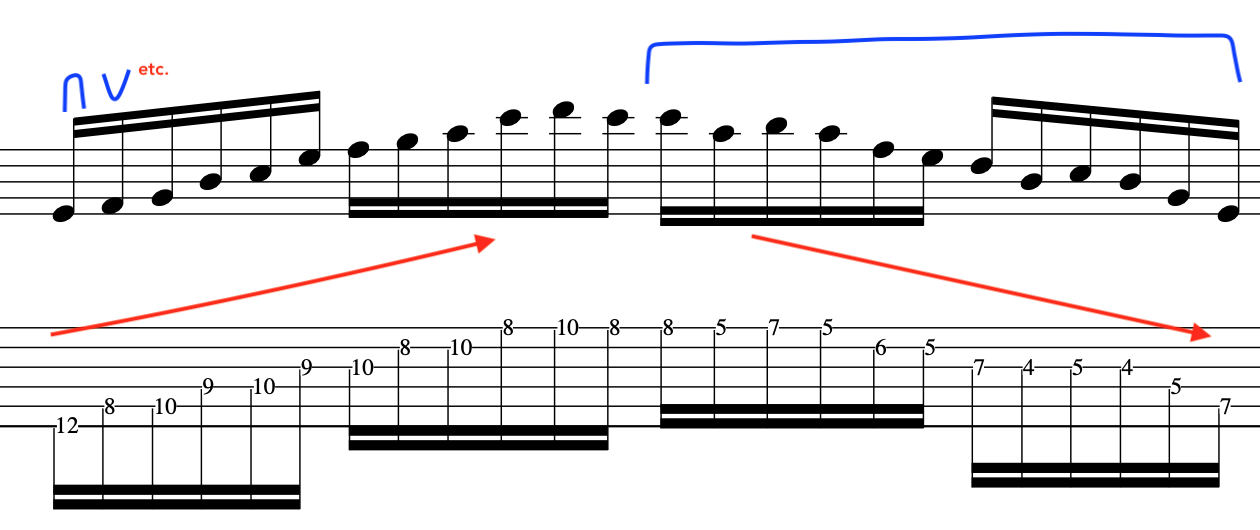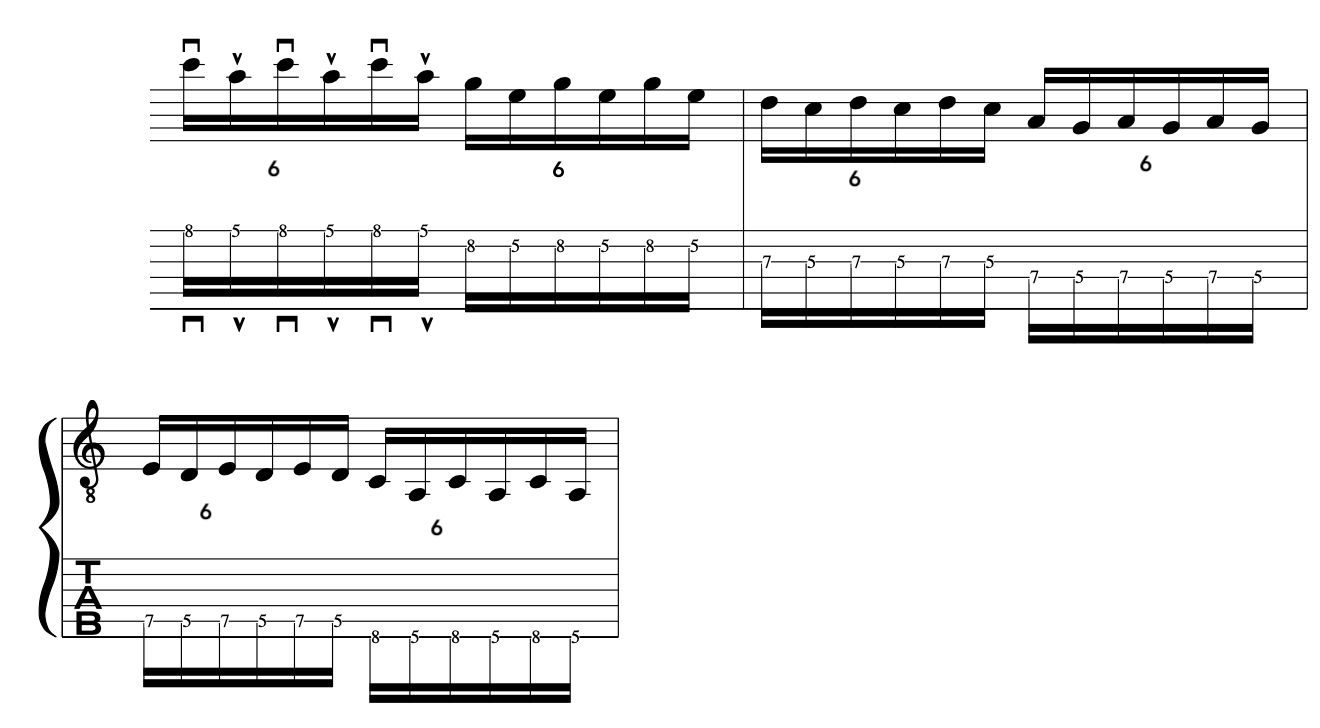
Alternate Picking John Mclaughlin Style v7 1 EXERCISE.

yt_logo_rgb_light

CLICK SUBSCRIBE!

Alternate Picking John Mclaughlin Style

PLEASE WATCH VIDEO ABOVE FOR DETAILED ANALYSIS:

Hi Guys,

Today we will look at a ii V7 extension in the improvisational style of jazz/fusion guitarist John McLaughlin.

HARMONY/CHORD SEQ

This is a cadential ii V7 I, but before the chord I resolution there is an added chord. This is chord Vii as a Dominant 7th. In this case this is B7:

john-mclaughlin-guitar-improvisation-technique

So, this is the chord sequence/cadence that we will improvise over.

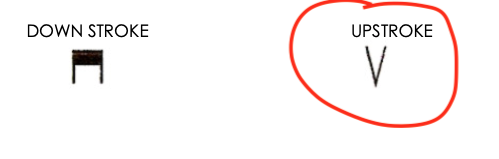
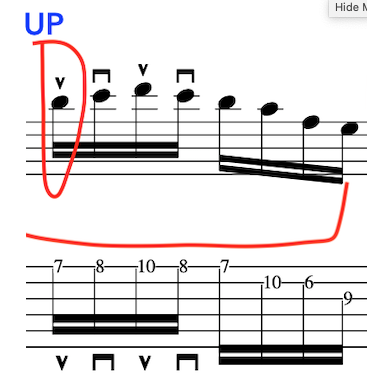
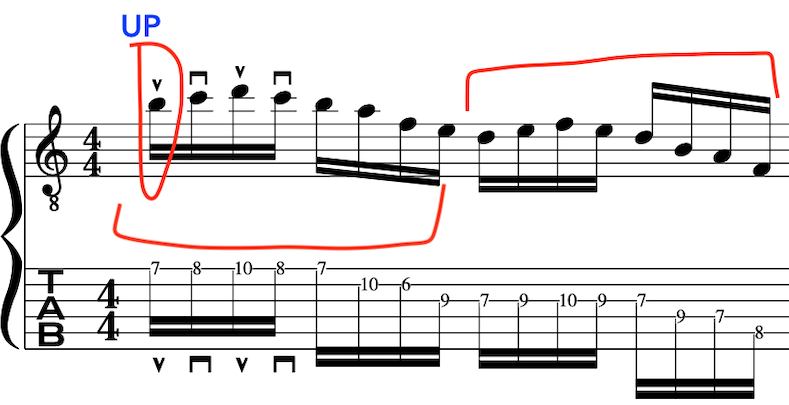
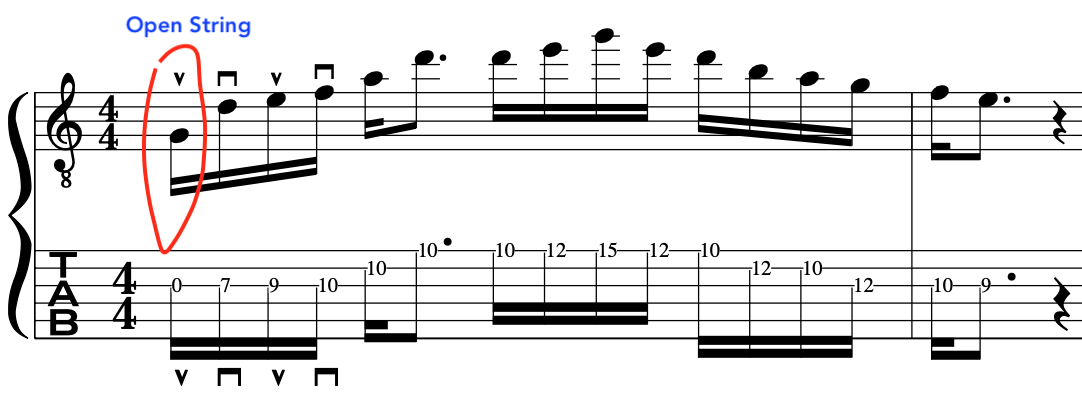
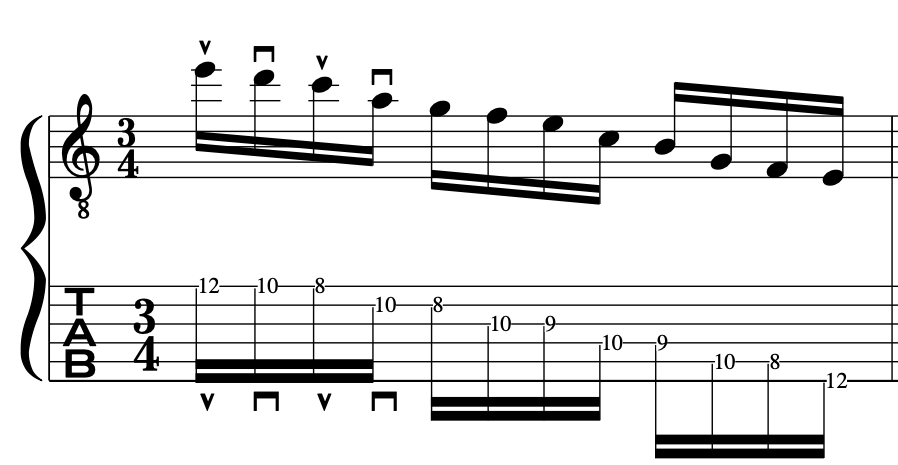
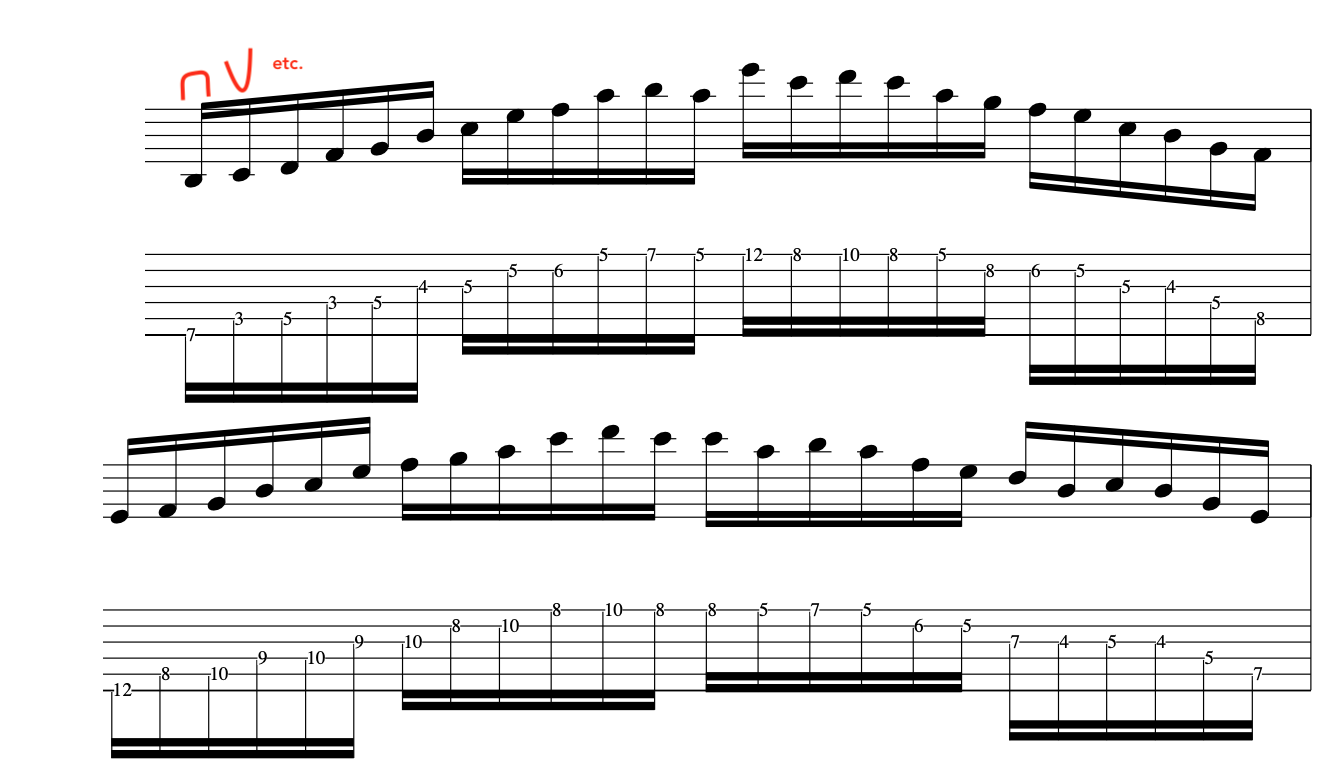
I start this with an up-beat employing strict alternate picking.

I start the phrase on an “Upstroke” so that when I start on the 1st beat of the 1st bar I can start on a “Downstroke”for familiarity.

john-mclaughlin-guitar-improvisation-technique

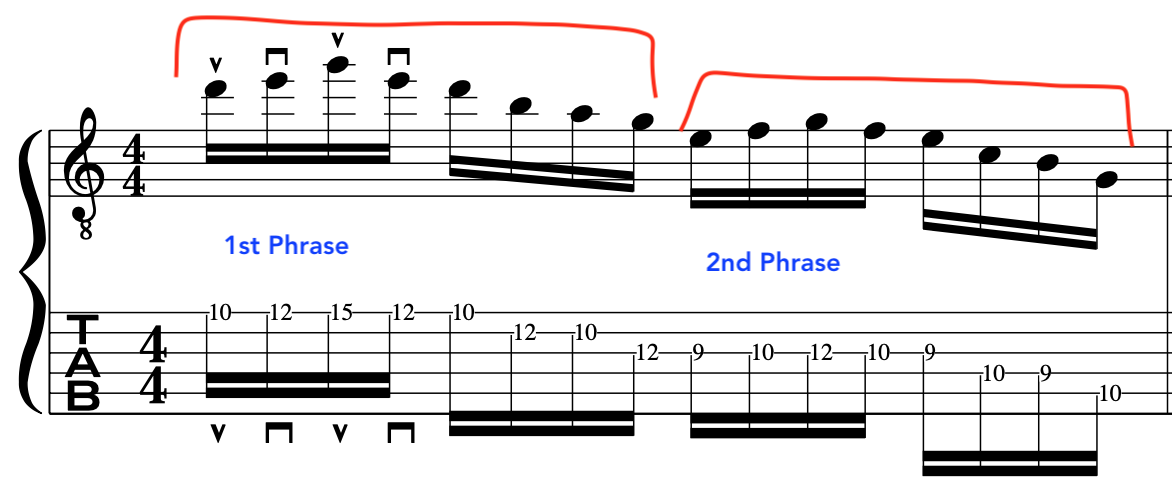
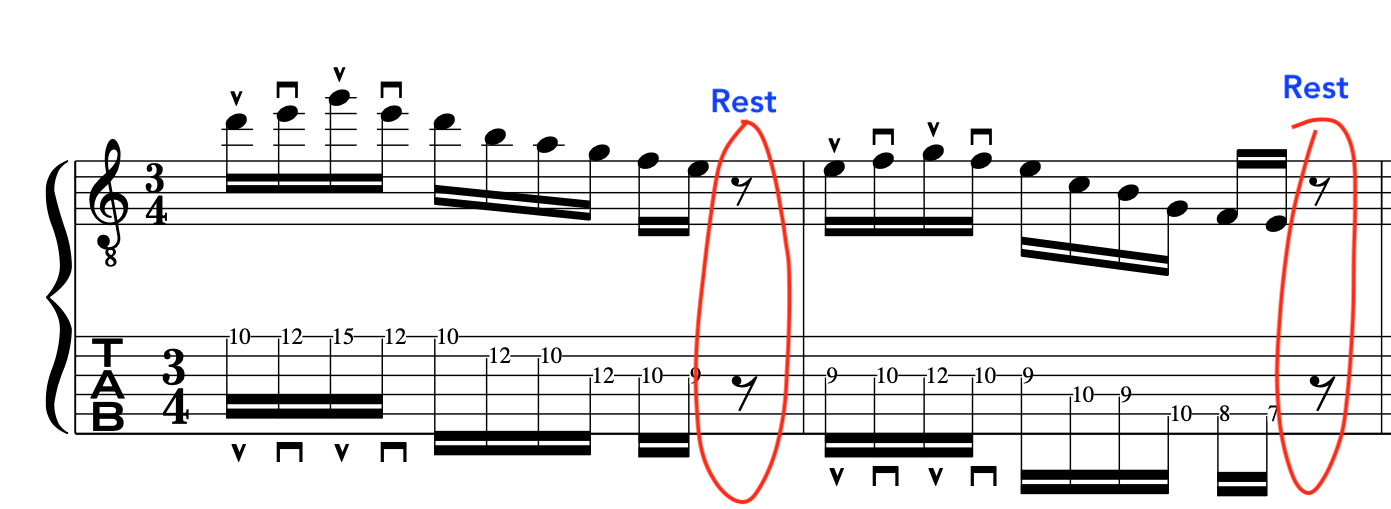
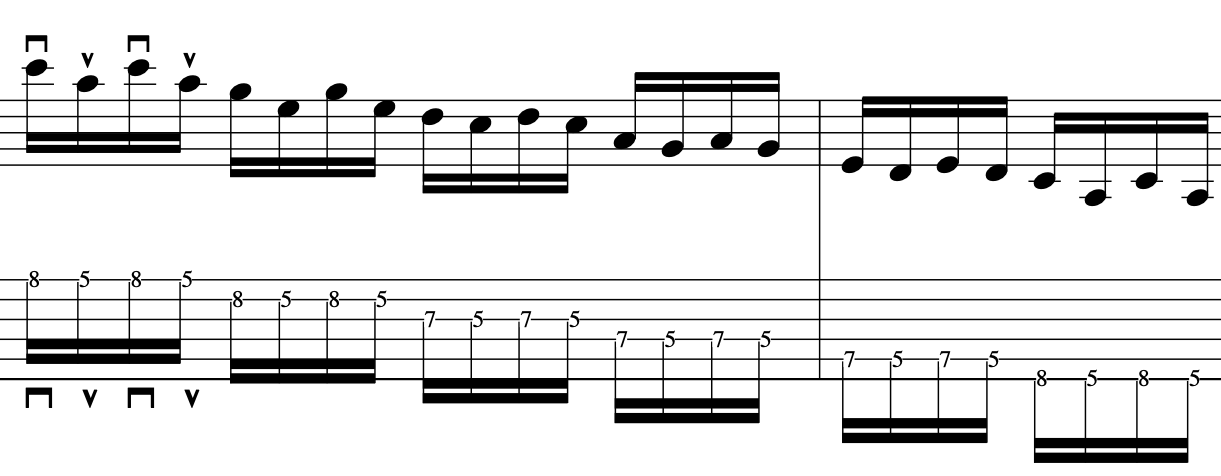
The first bar is basic pentatonic scale movement. But, notice that the 2nd half of the bar encapsulates the classic McLaughlin guitar fingering signature phrase.

john-mclaughlin-guitar-improvisation-technique

The next part employs pentatonic movement again. The key is in shifting positions in the second half of the bar.

john-mclaughlin-guitar-jazz-improvisation-technique

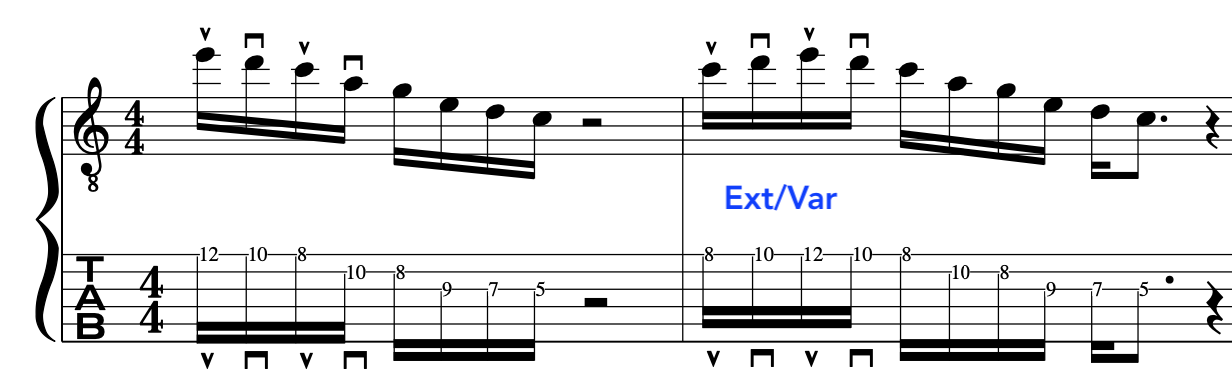
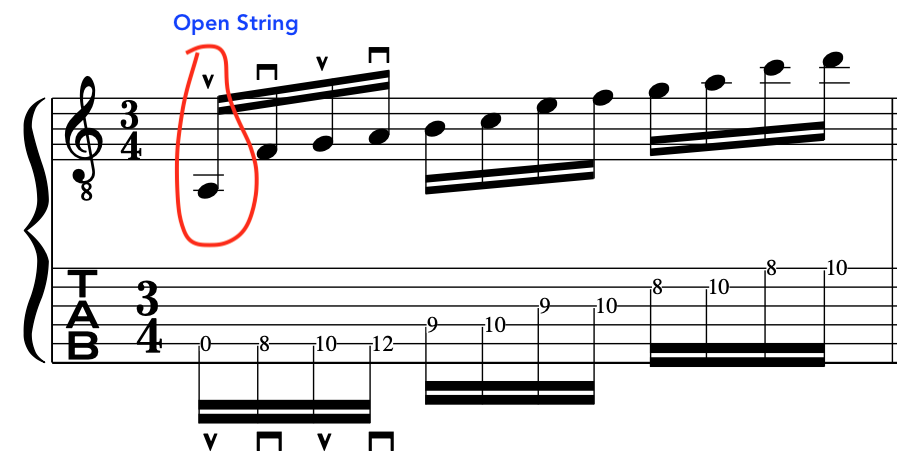
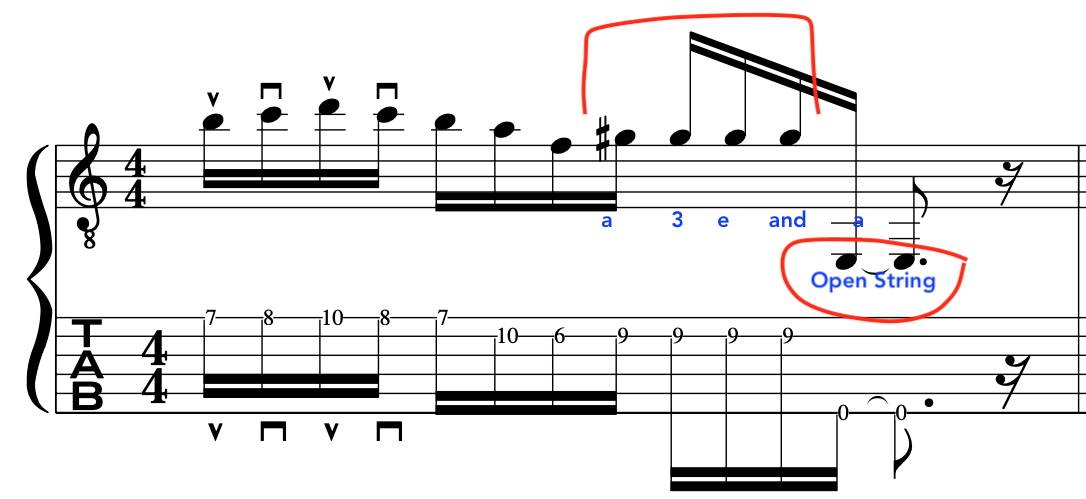
Lastly, we have the B7 chord. We start with a second inversion F#9 outline and then we establish the 7th with the A natural. We finally cadence by landing on the note G natural the 5th of CMaj7.

john-mclaughlin-guitar-jazz-improvisation-technique

FULL LICK:

john-mclaughlin-guitar-jazz-improvisation-technique

PDF DOWNLOAD:

IF THIS LESSON WAS OF USE TO YOU THEN PLEASE SUBSCRIBE TO US BELOW ON YOUTUBE, THANKS!
Scale Application for Guitar Improvisation

yt_logo_rgb_light

CLICK SUBSCRIBE!

Guitar scales made easy!

Please watch video above for detailed analysis

Hi Guys,

Many players ask, “How do I apply scales”?????

Many people get shred guitar mixed up with improvisational styles especially in regards to alternate picking.

Then, when improvisational chord changes appear the scalic structure, guitar fingering, rhythm and phrasing go out of the window. Because, the clumpy classical fingering impedes the rhythmic flow needed to weave in and out of rapid chord changes.

So what to do?

The key is to make simple fingerings with pentatonics, triad pairs, arpeggios, and chromatic passing notes and target tone set ups.

In the example for this blog/video we will go to the absolute basics and create a very simple scale. [please watch video above for more detail]

So, let’s look at the example of a simplified scale built from the basic major scale. [This could be seen as Phrygian but it is just exploiting a simple fingering]

This Ascends and Descends starting on a “Downstroke” with strict alternate picking.

guitar-scales-simplified-tab-example

For most players the most awkward part is descending on the last 2 strings the A and the E string.

Here is the same scale but with an even easier final 4 notes on the E and A strings:

guitar-scales-simplified-tab-example

Next we will apply this concept of breaking up scales and apply it to a bit of John Coltrane’s “Countdown”.

Notice the “Tetrachords” and 2 beat phrases through the rapid changes of harmony.

countdown-guitar-tab-improvisation-example

With the chords moving so quickly and the harmony changing in this manner you can easily hear, see and feel how important it is to be able to improvise with simple broken up scales that inevitably result in simple fluid fingering.

PDF: DOWNLOAD:

“Countdown” Example: PDF DOWNLOAD:

IF THIS LESSON WAS OF USE TO YOU THEN PLEASE SUBSCRIBE TO US BELOW ON YOUTUBE, THANKS!
Al Di Meola/John McLaughlin-Strumming Guitar Lesson

yt_logo_rgb_light

CLICK SUBSCRIBE!

Al Di Meola/John McLaughlin-Strumming Guitar Lesson

Please watch video above for a detailed analysis:

Hi Guys,

The key to learning percussive guitar strumming is to be able to shift through the rhythmic gears. When you can do this then you can double the time and add percussive flourishes [al la Al di Meola] to your right hand strumming.

Meola-McLaughlin-rhythm-guitar

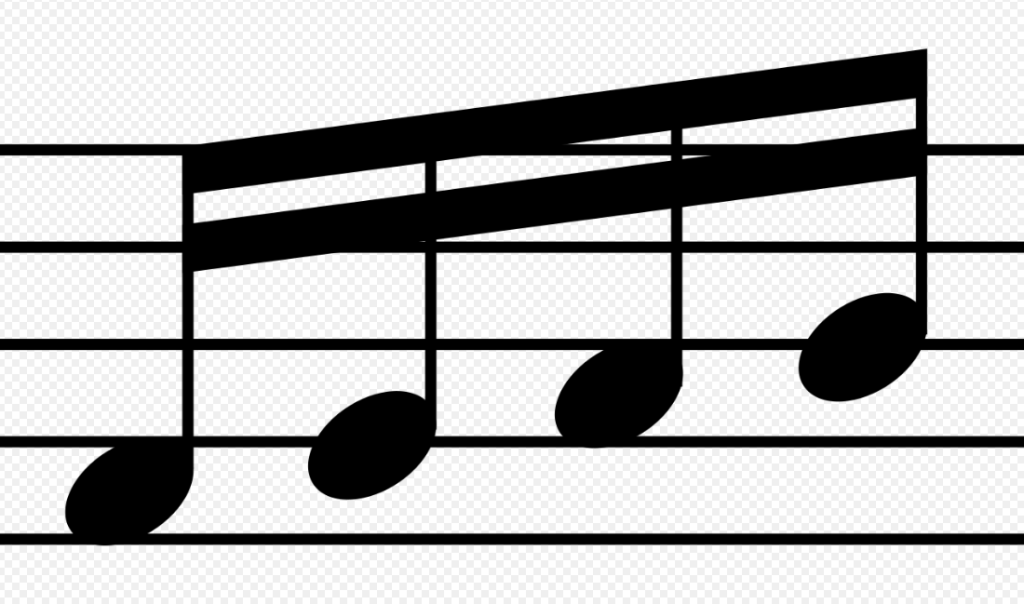
Start by counting the quarter note and then move to the eighth note and then up to the 16th note.

SEXTUPLETS:

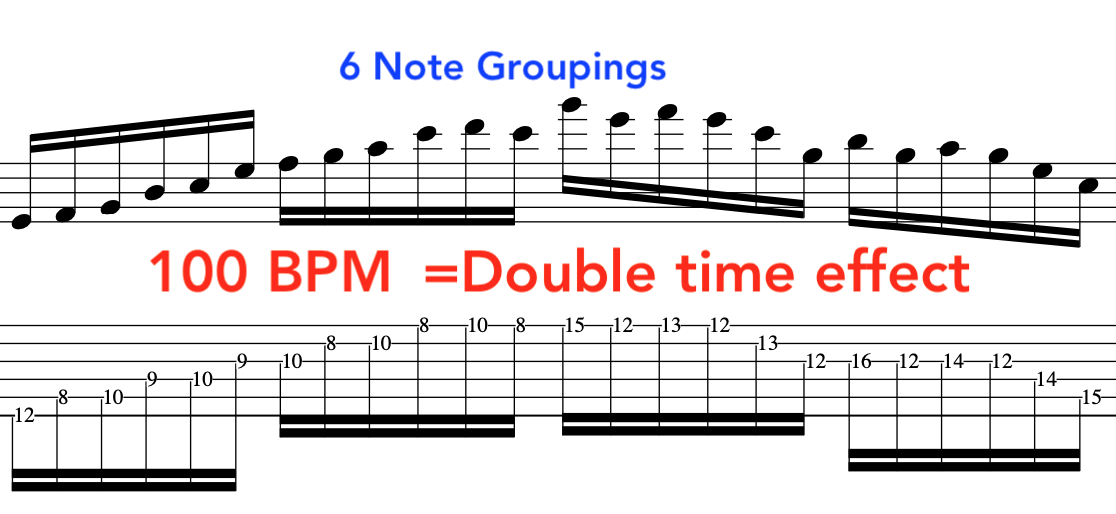
The next grouping to contend with is the group of 6 notes called sextuplets.

Meola-McLaughlin-rhythm-guitar

You can count 1 2 3 4 5 6

or you could break it up into 16th’s as in,

Meola-McLaughlin-rhythm-guitar

I prefer to employ Konokol and use this as my count for the rhythm. This is because it is easy to say quickly and will register with my brain and produce lightning reflexes with my right strumming hand

Meola-McLaughlin-rhythm-guitar

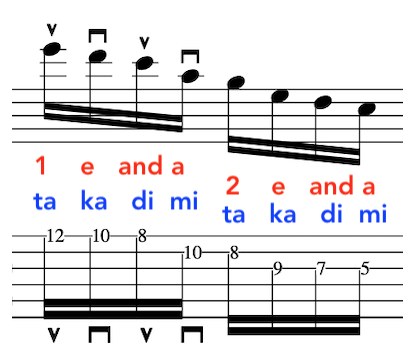
In order to get 16th notes in quick succession it is essential to count them as:

1 e and a 2 e and a 3 e and a 4 e and a

Meola-McLaughlin-rhythm-guitar

Mixing Rhythmic values:

The next concept is where it all falls into place. This consists of mixing up the rhythms and creating double timing patterns for percussive effect.

Example 1:

Meola-McLaughlin-rhythm-guitar

Example 2:

Meola-McLaughlin-rhythm-guitar

Example 3:

Meola-McLaughlin-rhythm-guitar

IF THIS LESSON WAS OF USE TO YOU THEN PLEASE SUBSCRIBE TO US BELOW ON YOUTUBE, THANKS