Easy Ways to Harmonise the Diminished Scale

How to Easily Harmonise the Diminished Scale Lesson

Hi Guys,

Today, a quick look at an easy way to harmonise the diminished scale.

To begin our study, let’s take the diminished scale and play it on the 1st [E] string of the guitar.

Notice, the half steps and whole steps of the scale.
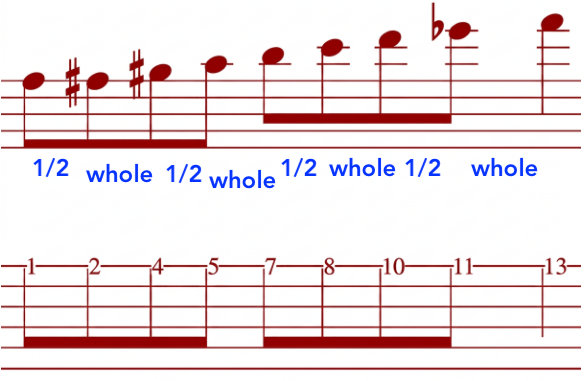
This scale can now be harmonised with diminished seventh chords.

What’s equally amazing is that with this form we have a separate diminished scale starting on each note of the chord itself.

This in turn gives us four part harmony.

Soprano, Alto, Tenor, Bass. or S.A.T.B
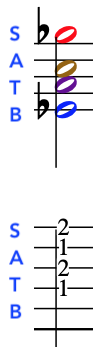
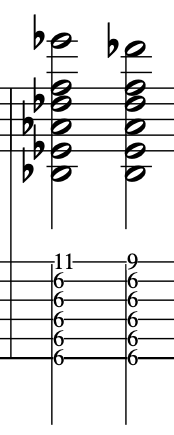
image displaying how to easily harmonise the diminished scale with 4 part harmony like composer Bach.

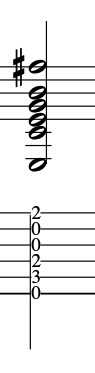
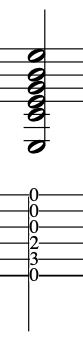
The other interesting point, is that the first two chords of the scale incorporate all 8 notes of the scale:
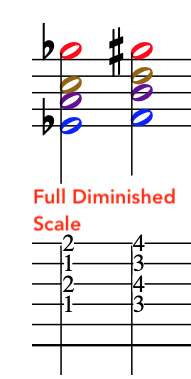
image of music notation and guitar tab displaying how to easily harmonise the diminished scale with diminished 7th chords.

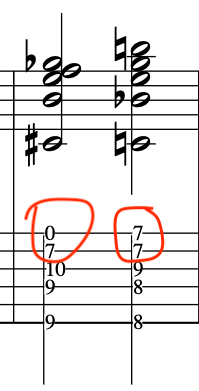
So, now let’s harmonise the scale fully with the diminished 7th chord shape ascending:
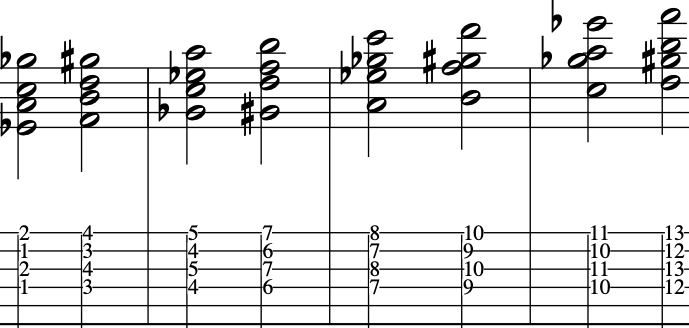
image of music notation and guitar tab displaying how to easily harmonise the diminished scale with 4 part harmony.

The key from here, is to accentuate an inner or outer voice.

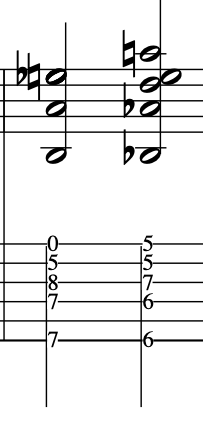
In this case we will accentuate the Soprano [or top line] scale ascending:
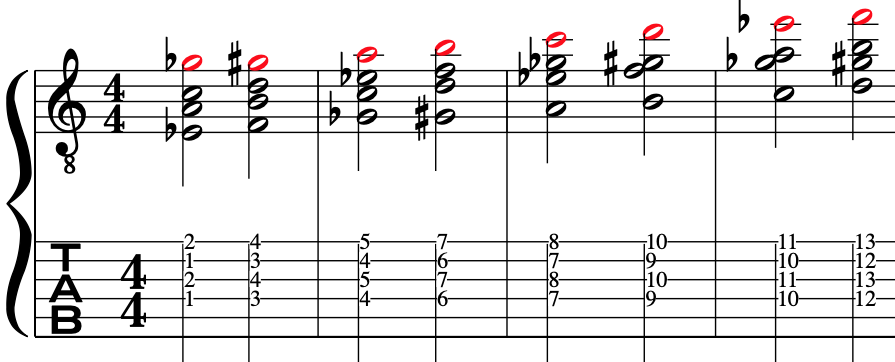
image of music notation and guitar tab displaying how to easily harmonise the diminished scale with 4 part harmony all playing the scale

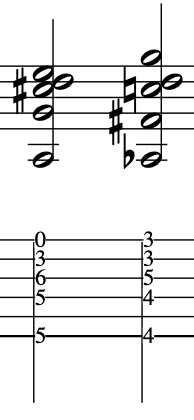
To continue our investigation, we will now accentuate the scale in the Bass.
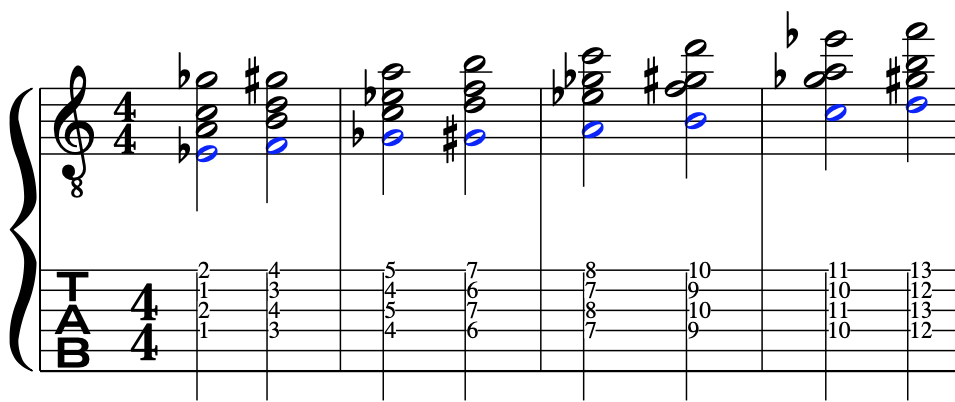
image of music notation and guitar tab displaying how to easily harmonise the diminished scale

Now, as we look at the chord and scale within the S. A. T. B. we can see the full realm at our fingertips.

The ascending scale of each voice is in full view:
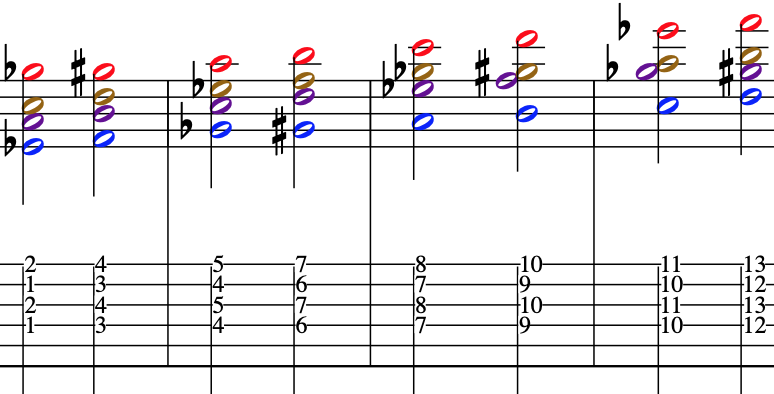
image of music notation and guitar tab displaying how to easily harmonise the diminished scale with 4 part harmony all playing the scale

Another useful device for harmonising the diminished scale is to employ the use of slash chords:

These, will be moving in minor 3rds with the scale on the top.

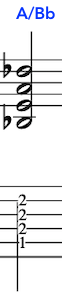
Below, we have a triad of F Major played over a Gb bass. This is then followed by a D Major triad played over an Eb Bass.
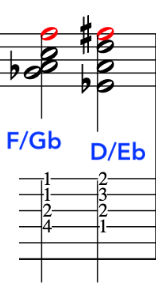
These chords, are now sequenced: Moving up in minor thirds whilst carrying the scale on top.
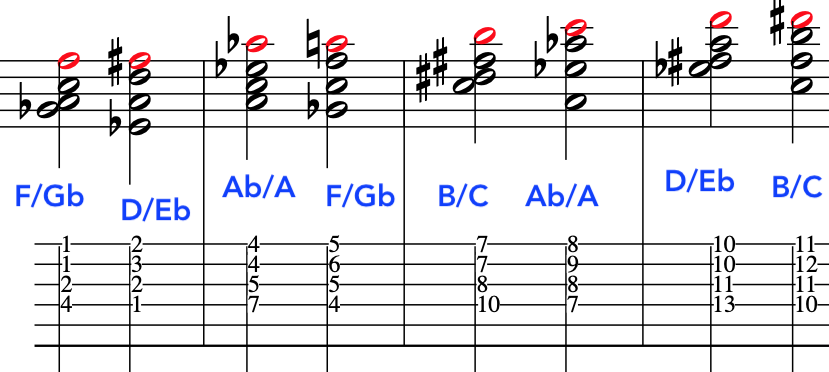
Music notation and guitar tablature showing how to harmonise the diminished scale with slash chords easily.

In the next example, we will use another diminished favourite:

The minor7b5: Or Half diminished:
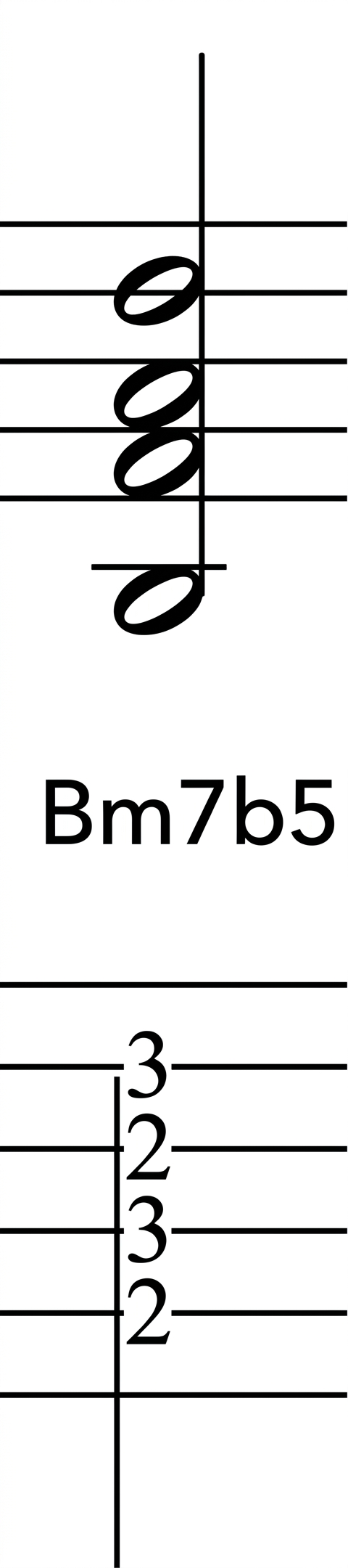
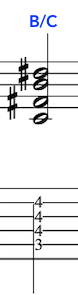
We, will follow this with our B/C slash chord form our lesson a little while back:
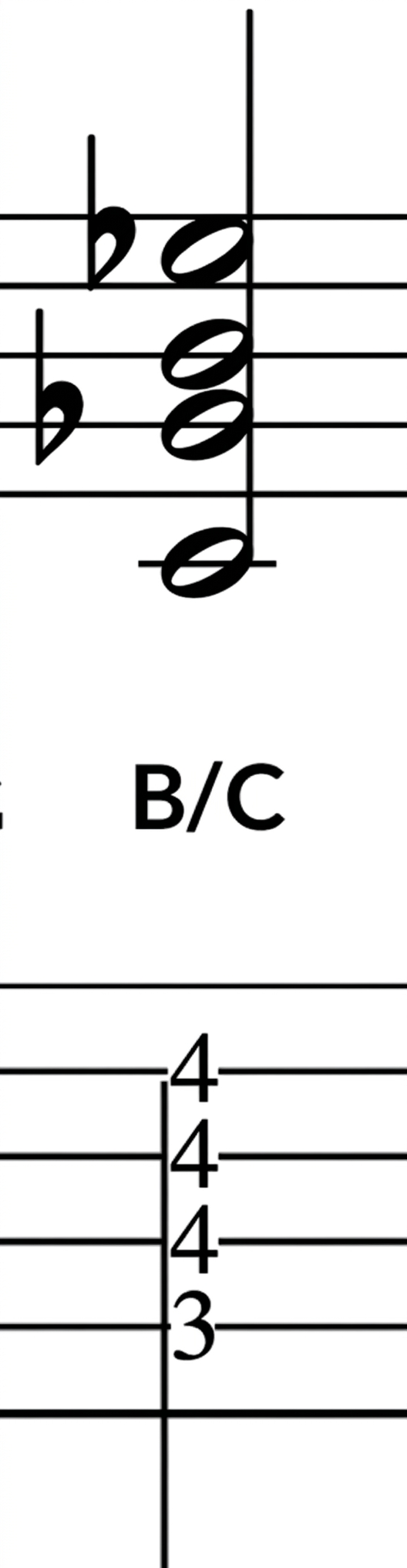
Now, let’s view the full chord scale:

Be amazed!…..Yes, this works out in all 4 parts once again:
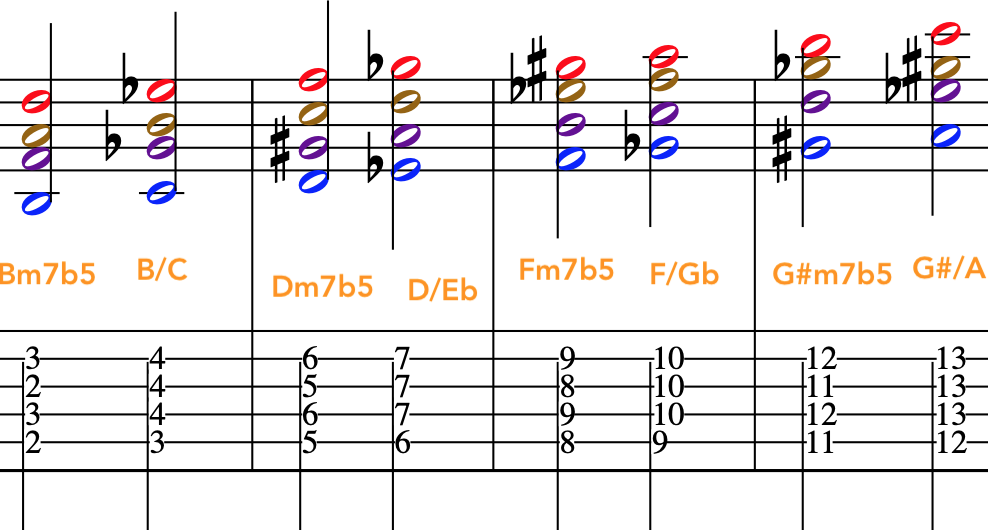
Music notation and guitar tab showing how to harmonise the diminished scale with slash chords

To complete this, here are the two most common chord movements in minor 3rds for our scale.

This is NOT harmonised, but still essential to look at as it really displays the minor 3rd movement in both major and minor tonality within this scale.

This was just a quick look at how to harmonise the diminished scale.

These concepts are quite basic in many regards but contain a wealth of power for both on the spot Re-harmonisation and 4 part voicing for composition.

Traditional harmony and as we can see in this blog/lesson contemporary harmony both work well for the task.

Stravinsky “Rite of Spring” Chord: Analysis/Harmony and Application

Hi Guys,

Today, a look at the amazing orchestral chord from “The Rite of Spring” [“Augurs of Spring ” – Les augures printaniers] by composer Igor Stravinsky.

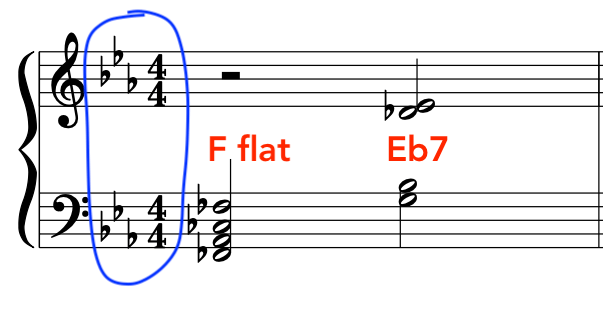
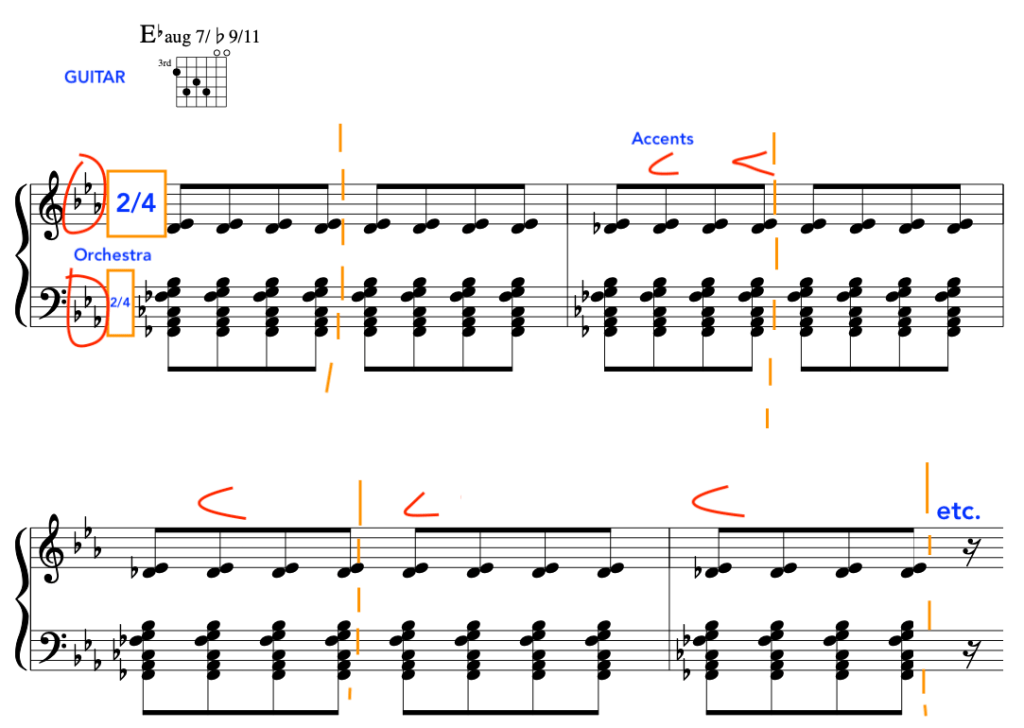
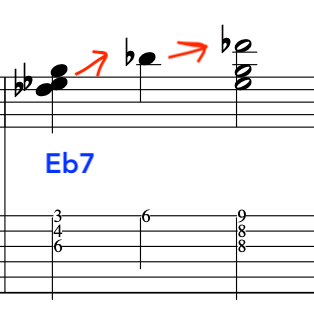
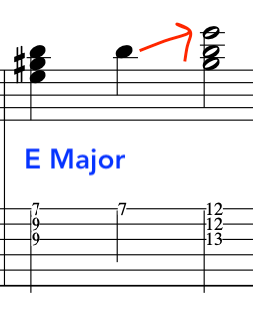
This is a Bi-Tonal chord consisting of two parts or two different tonalities. In the Bass we have a chord of F flat Major and in the treble we have a chord of Eb7

Musical notation displaying the F flat Major and Eb7 chords, highlighting Stravinsky's "Rite of Spring" chord   [augurs of spring chord]
Musical notation illustrating the bi-tonal chord of F flat Major and Eb7 from Stravinsky’s ‘The Rite of Spring.’

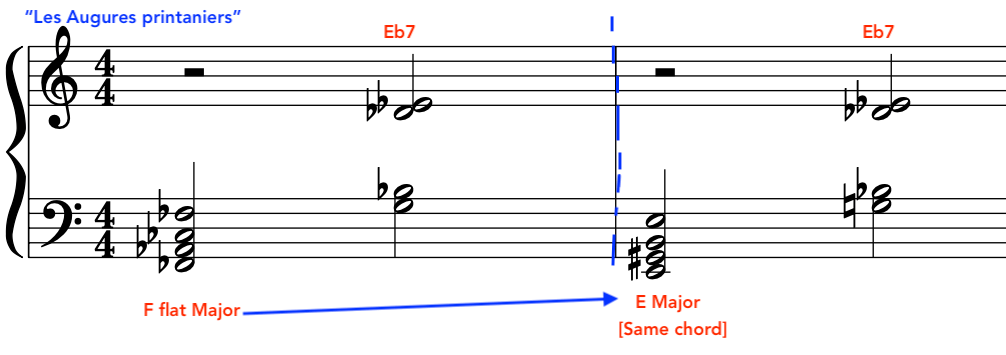
Stravinsky calls this F flat Major as opposed to its enharmonic [E Major] because, he employs an Eb Major key signature making it easier to read and follow, whilst removing any # accidentals that could create messiness. [The extra flats make it legible].

stravinsky_rite_of_spring_chord_augurs_of_spring

In our modern analysis we can think of it this way,

"Les Augures printaniers" sheet music displaying F flat Major and Eb7  Stravinsky chords with annotations.

Here, is how the rite of spring chord sounds in an orchestral context:

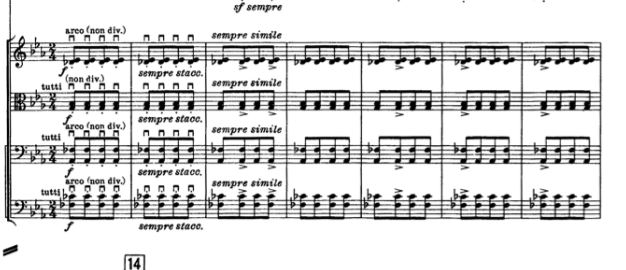
From Stravinsky’s score: Here, we can see Stravinsky’s mastery, displayed by his execution of rhythmic brilliance.

stravinsky_rite_of_spring_chord_augurs_of_spring

Below, is how it sounds as a pad on an modern keyboard

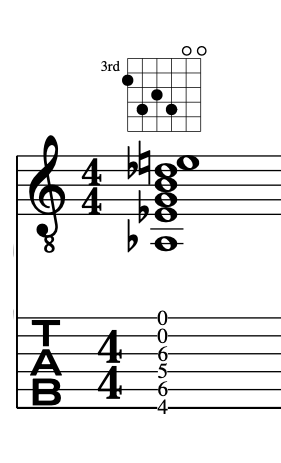
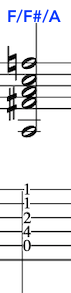
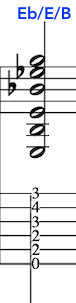
Due, to the nature of the guitar we really need an extra finger and an extra string to do this unique chord justice.

But, here are two guitar voicing’s for harmony, strumming and chordal picking:

Musical notation diagram illustrating a bi-tonal "Rite of Spring" chord with tablature for guitar, depicting an F flat Major and Eb7 chord by Stravinsky.
Guitar voicing example for the Bi-Tonal chord from Stravinsky’s ‘Rite of Spring.’
stravinsky_rite_of_spring_chord_guitar-lesson-voicing

In the example below, we can see the amazing way Stravinsky’s “Rite of Spring” chord resolves and how the structure of the harmony moves.

stravinsky_rite_of_spring_chord_augurs_of_spring_analysis
stravinsky_rite_of_spring_chord_augurs_of_spring_harmony
stravinsky_rite_of_spring_chord_augurs_of_spring

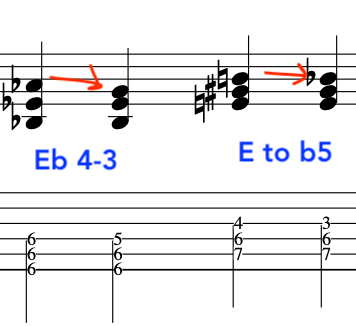
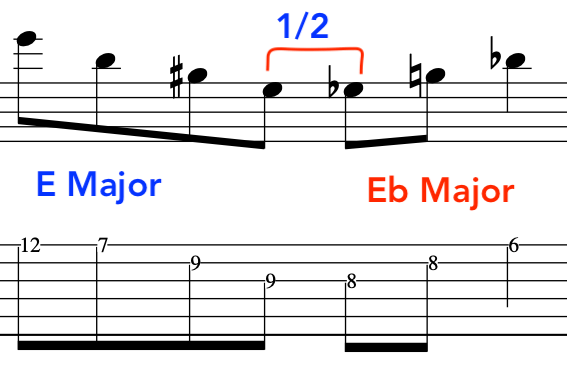
Due to the nature of the two chords being a semitone apart we can create some interesting chord pairs lines/licks from this:

stravinsky_rite_of_spring_chord_augurs_of_spring_bi_tonality

Okay, now let’s develop this a bit,

stravinsky_rite_of_spring_chord_augurs_of_spring_bi_tonal_lesson

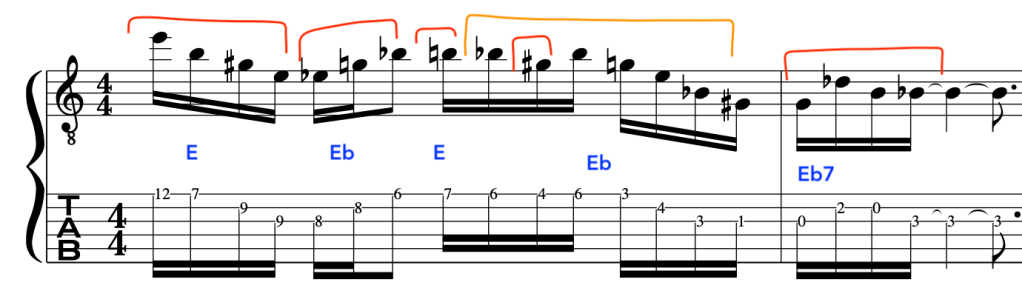
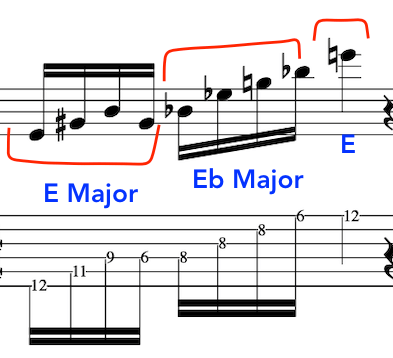
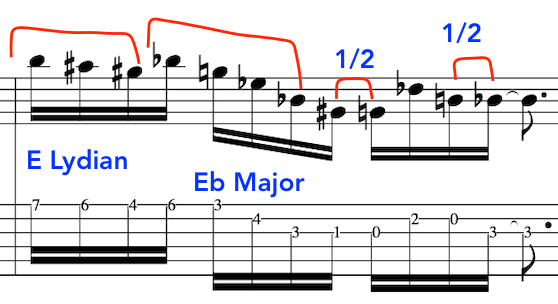
We, can also build on this concept and create some interesting guitar or solo instrument lines with this approach:

Here is a lick/line example:

A music score highlighting E Major and Eb Major sections improvised Stravinsky "Rite of Spring" chord
Musical notation highlighting the transition between E Major and Eb Major chords in Stravinsky’s ‘Rite of Spring.’
Musical score displaying E Lydian and Eb Major sections, with annotated rhythmic divisions for Stravinsky's "Rite of Spring" chord
Musical notation illustrating the E Lydian and Eb Major scales, highlighting the rhythmic structure and chord pairs from Stravinsky’s ‘Rite of Spring’.

This was just a quick look at the potential of just one chord!

This Bi-tonal and Polytonal approach opens up so much in terms of inspirational ideas, originality and fresh harmonic perspectives.

In this way, cliches can be rung of banality and forged into something interesting and unique and thoroughly challenging.

“Les Augures Printaniers/The Rite of Spring” is such a great example of this, possessing a little world within itself. Add, to this Stravinsky’s brilliant exploitation of rhythm and we have a [Bi-tonal]chord that’s an all time classic!

Exploring John McLaughlin’s Unique Guitar Chordal Harmony

Hi Guys,

Today, a quick look at some of John McLaughlin’s amazing altered, slash and ambiguous guitar chords.

Johns harmony is a very rich palette indeed.

In the little example above in the video, I play about with some of Johns harmonic movement and colour.

Although, I could employ diminished harmony, I am instead aiming at “Implication”….Why?…This is in order to bring out the big “Rich” resonance of the guitar.

john_mclaughlin_guitar_chord_example_lesson

It is an ethereal sound where the natural harmonics and overtones can ring out of the guitars sound hole harmoniously.

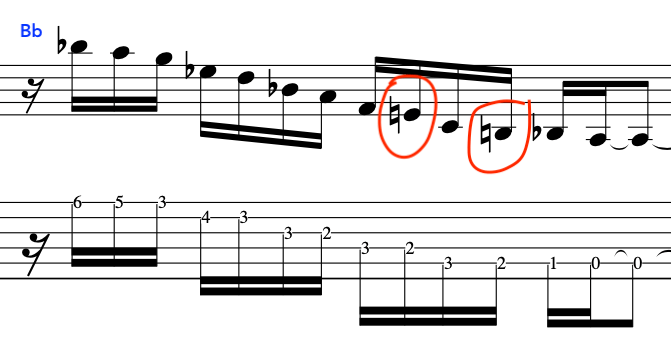
Next, we employ a Bb Major run with a few chromatic notes. These being, the B natural and the E natural chordal tones.

john_mclaughlin_guitar_chord_example_lesson

Now, let’s add two more resonant chords,

john_mclaughlin_guitar_chord_example_lesson

We will now connect to the next part together.

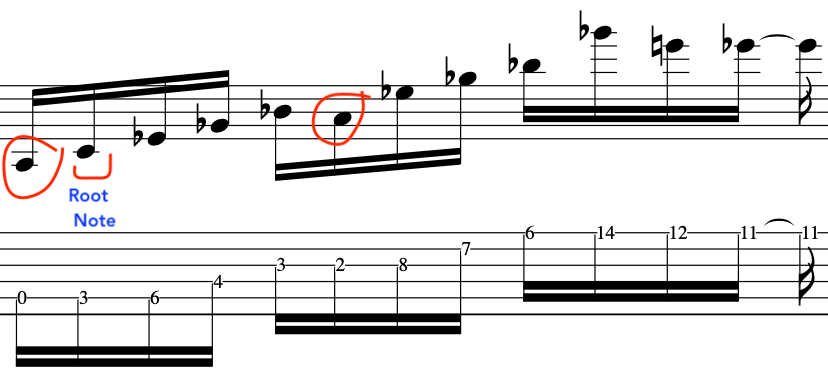
This will be with an arpeggio of Ebm mostly [or D#m] implying BMaj7. [Although there is an implied resolution to B7 also].

This juxtaposition, creates another ambiguous move that opens up a fresh and unique sounding harmony.

john_mclaughlin_guitar_arpeggio_example_lesson

From here, we can manipulate and resolve into the Bb minor full barre harmony:

john_mclaughlin_guitar_chord_example_lesson

Now, let’s create a sequence. This will be, C#7sus4 to C7 with a sharpened 4th and a Maj7th.

Notice, the chromatic movement in the bass as we sequence this.

john_mclaughlin_guitar_chord_example_lesson

Finally, this resolves from CMaj7#11 to CMaj7 with open string guitar chords.

john_mclaughlin_guitar_chord_example_lesson

In conclusion, this was just a quick look at Johns unique take on harmony and how to apply some scale and arpeggio movement to connect it all together.

John’s harmony is a lovely combination of ambiguity and resonance with a sense of calm.

The magical ethereal tone opens doors to really interesting solo applications that exploit implied harmonies and dissonances. These I find are met with with lingering resolutions that are never quite met.

It’s a sort of pairing of opposites that you can’t quite put your finger on that give it that alluring yet elusive quality.