Easy Ways to Harmonise the Diminished Scale

How to Easily Harmonise the Diminished Scale Lesson

Hi Guys,

Today, a quick look at an easy way to harmonise the diminished scale.

To begin our study, let’s take the diminished scale and play it on the 1st [E] string of the guitar.

Notice, the half steps and whole steps of the scale.
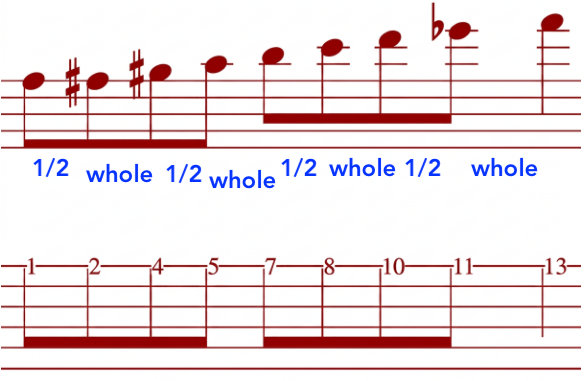
This scale can now be harmonised with diminished seventh chords.

What’s equally amazing is that with this form we have a separate diminished scale starting on each note of the chord itself.

This in turn gives us four part harmony.

Soprano, Alto, Tenor, Bass. or S.A.T.B
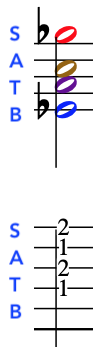
image displaying how to easily harmonise the diminished scale with 4 part harmony like composer Bach.

The other interesting point, is that the first two chords of the scale incorporate all 8 notes of the scale:
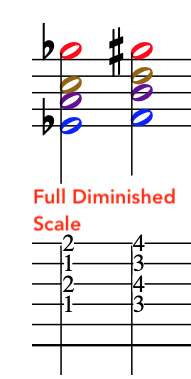
image of music notation and guitar tab displaying how to easily harmonise the diminished scale with diminished 7th chords.

So, now let’s harmonise the scale fully with the diminished 7th chord shape ascending:
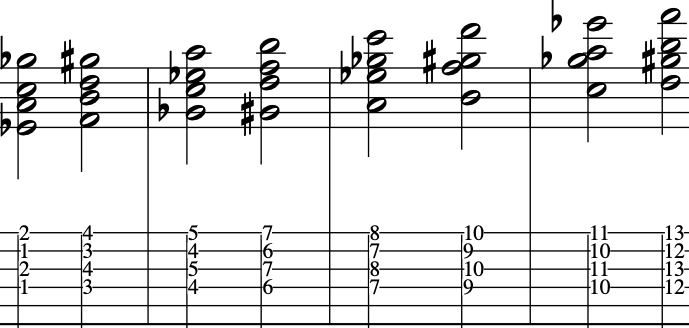
image of music notation and guitar tab displaying how to easily harmonise the diminished scale with 4 part harmony.

The key from here, is to accentuate an inner or outer voice.

In this case we will accentuate the Soprano [or top line] scale ascending:
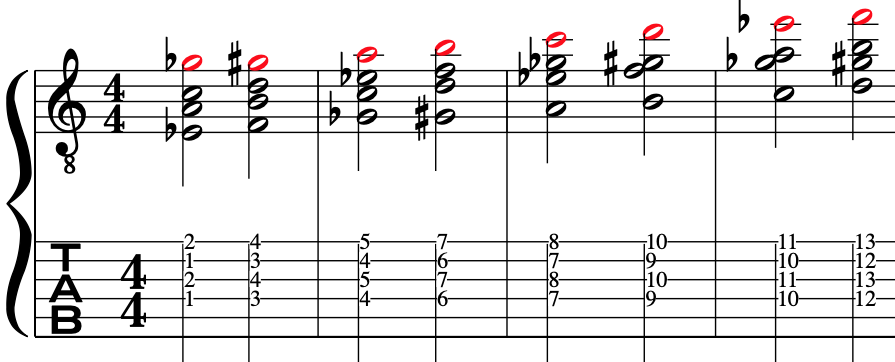
image of music notation and guitar tab displaying how to easily harmonise the diminished scale with 4 part harmony all playing the scale

To continue our investigation, we will now accentuate the scale in the Bass.
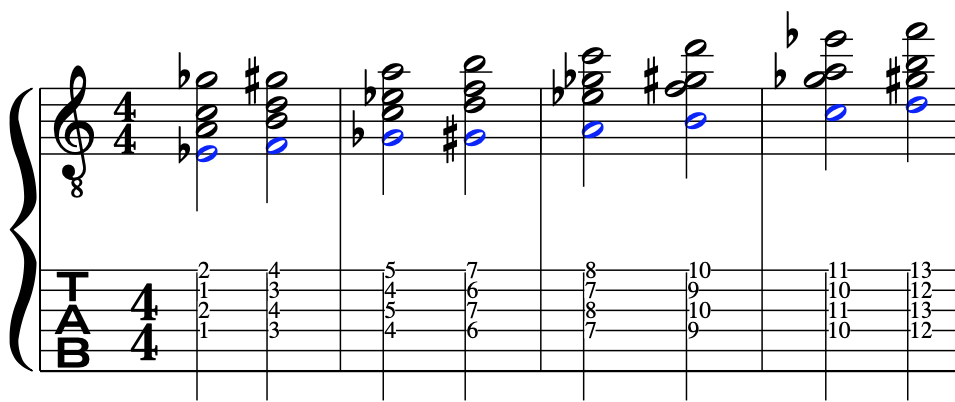
image of music notation and guitar tab displaying how to easily harmonise the diminished scale

Now, as we look at the chord and scale within the S. A. T. B. we can see the full realm at our fingertips.

The ascending scale of each voice is in full view:
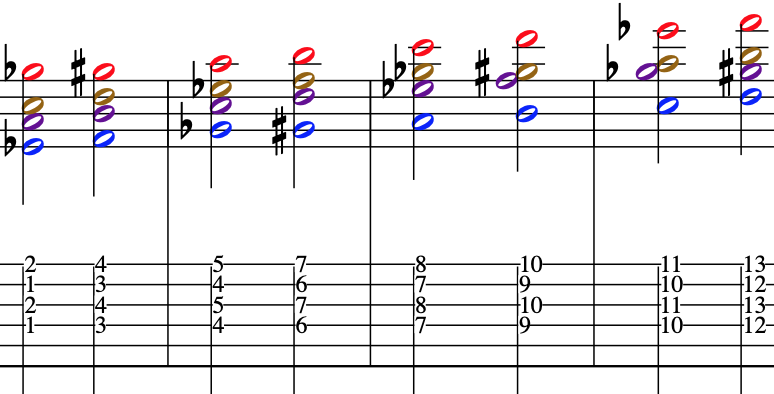
image of music notation and guitar tab displaying how to easily harmonise the diminished scale with 4 part harmony all playing the scale

Another useful device for harmonising the diminished scale is to employ the use of slash chords:

These, will be moving in minor 3rds with the scale on the top.

Below, we have a triad of F Major played over a Gb bass. This is then followed by a D Major triad played over an Eb Bass.
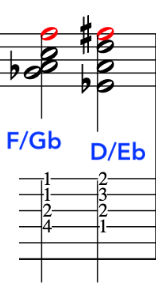
These chords, are now sequenced: Moving up in minor thirds whilst carrying the scale on top.
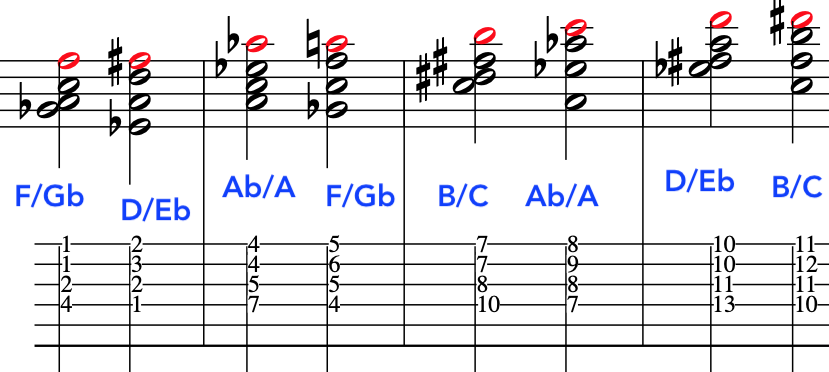
Music notation and guitar tablature showing how to harmonise the diminished scale with slash chords easily.

In the next example, we will use another diminished favourite:

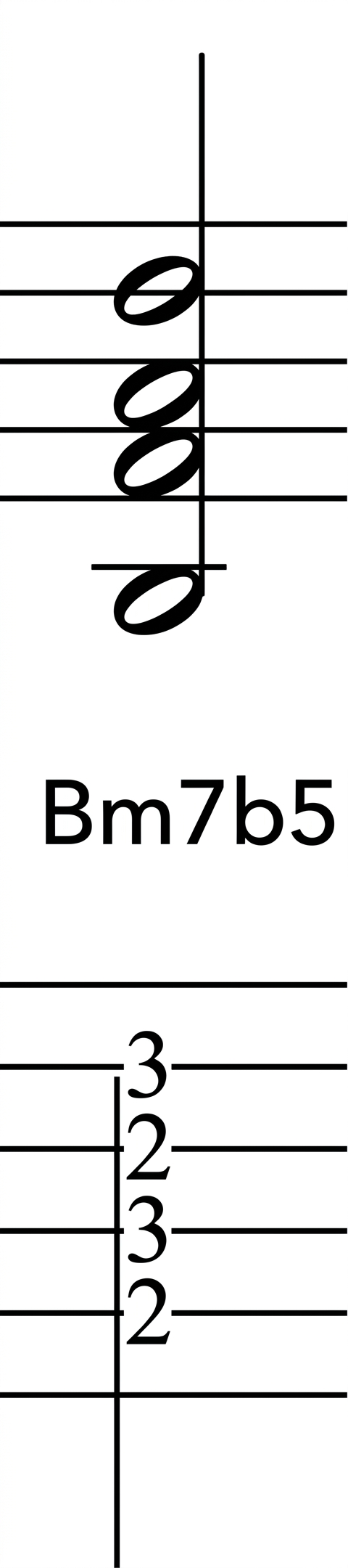
The minor7b5: Or Half diminished:
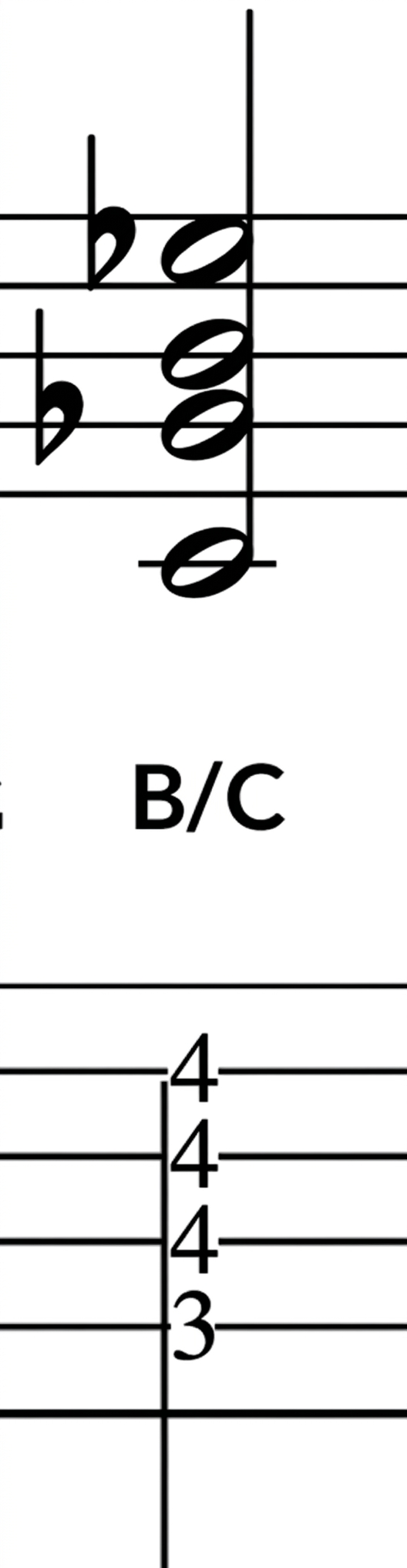
We, will follow this with our B/C slash chord form our lesson a little while back:
Now, let’s view the full chord scale:

Be amazed!…..Yes, this works out in all 4 parts once again:
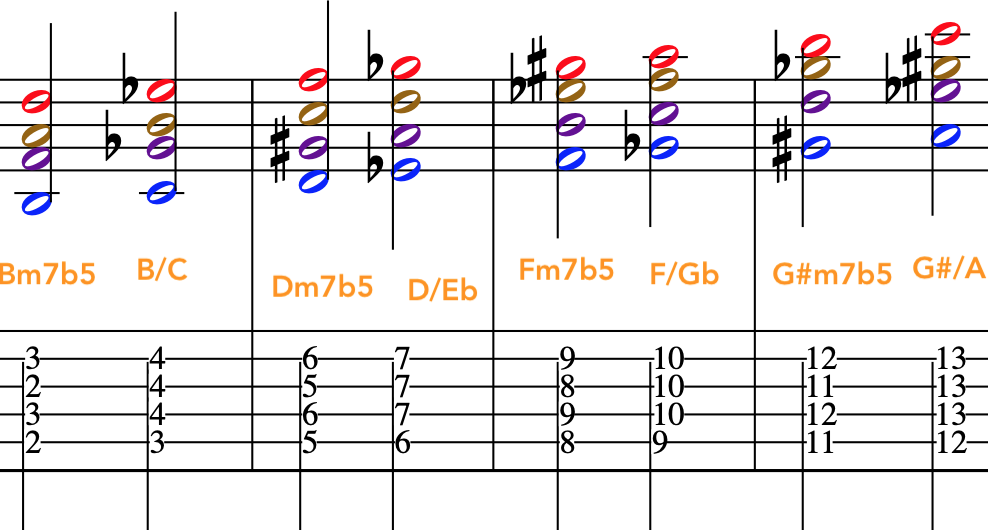
Music notation and guitar tab showing how to harmonise the diminished scale with slash chords

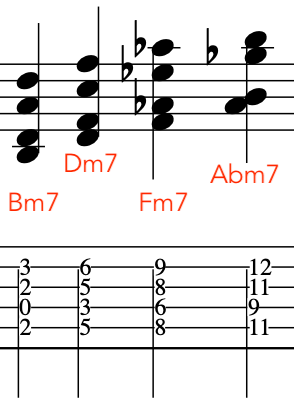
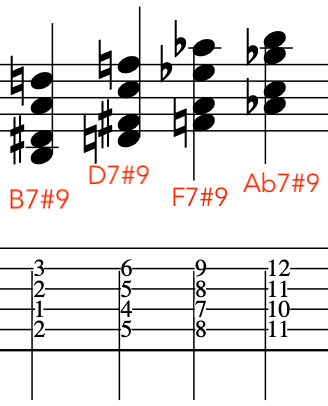
To complete this, here are the two most common chord movements in minor 3rds for our scale.

This is NOT harmonised, but still essential to look at as it really displays the minor 3rd movement in both major and minor tonality within this scale.

This was just a quick look at how to harmonise the diminished scale.

These concepts are quite basic in many regards but contain a wealth of power for both on the spot Re-harmonisation and 4 part voicing for composition.

Traditional harmony and as we can see in this blog/lesson contemporary harmony both work well for the task.

Mastering John McLaughlin’s Unique 13th Chord Voicing

Hi Guys,

Today, a quick look at the unique 13th chord Voicing of guitar maestro John mcLaughlin.

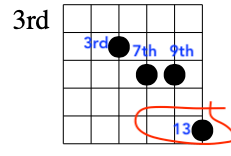
This unique voicing possesses a 7th a 9th with the 13th ringing out on top. It has a lovely sonorous tone :

Diagram showing a guitar chord with labeled notes: 3rd, 7th, 9th, and 13th. John McLaughlin 13 chord voicing.
Diagram of a 13th chord voicing showing the 3rd, 7th, 9th, and 13th notes, highlighting the unique structure.

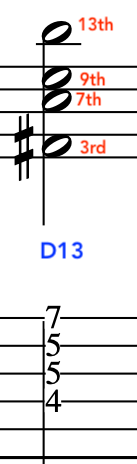
This chord works really well because it’s a 1st inversion, and, without a root it gives us that slightly ethereal painted sound:

Diagram of a D13 chord showing the 13th, 9th, 7th, and 3rd notes labeled.
Diagram illustrating the D13 chord voicing with 7th, 9th, and 13th notes labeled.

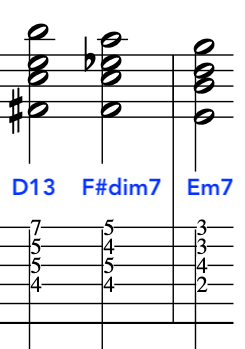
The sonorous nature of this chord makes it shine when moving to a diminished 7th chord for a resolution:

Sheet music showing chord voicings labeled D13, F#dim7, and Em7. John McLaughlin guitar chord examples.
Chord diagram showcasing the D13, F#dim7, and Em7 voicings, essential for understanding the unique textures in John McLaughlin’s 13th chord progression.

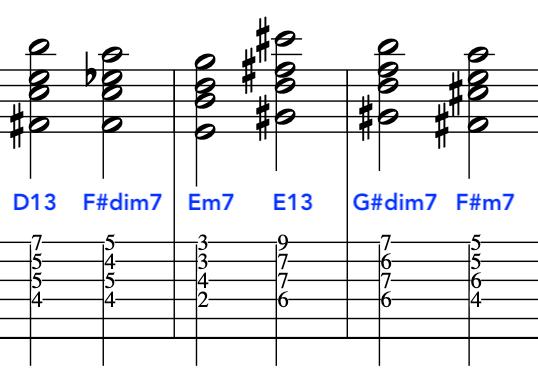
This in turn rewards us with fantastic melodic sequences:

Chord chart showing musical notation for D13, F#dim7, Em7, E13, G#dim7, and F#m7 chords. John McLaughlin guitar harmony lesson.
Chord progression illustrating John McLaughlin’s unique 13th chord voicing with associated diminished and major chords.
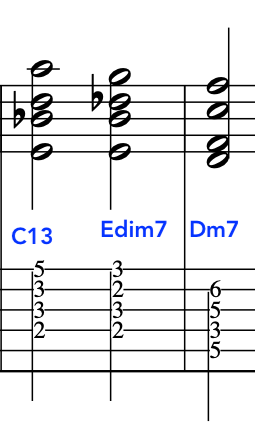
Guitar chord diagram showing C13, Edim7, and Dm7 voicings.
Chord diagram illustrating the C13, Edim7, and Dm7 voicings, highlighting their unique structures and relations.

Now, let’s make a sequence by employing strong Major 9th chords that move to John’s brilliant voicing.

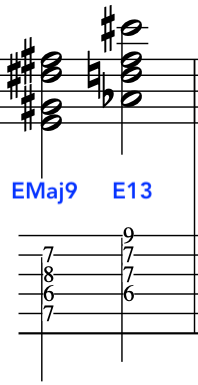
If we play the example below we can hear the resonant nature of the two chords.

Musical notation displaying EMaj9 and E13 chords, indicating finger placements on the guitar fretboard.
Chord diagram illustrating E Major 9 and E13 chord voicings in a musical lesson.

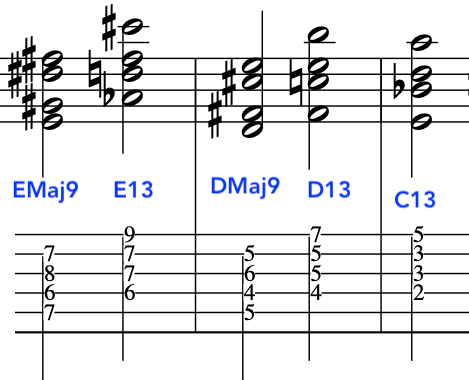
Now, let’s create a little chord sequence with them:

Sheet music showing chord voicings for EMaj9, E13, DMaj9, D13, and C13 with annotations and finger positioning in John McLaughlin's guitar style.
John McLaughlin Chord sequence illustration featuring E13, D13, and C13 voicings.

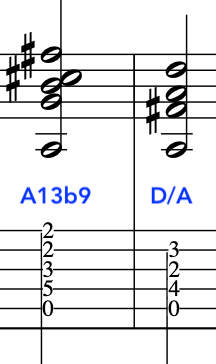
To complete the sequence, we will cadence with a13b9 chord back to the tonic D

Musical notation showing the John McLaughlin A13b9 chord and D/A chord with finger placements for guitar.
Chord diagram for A13b9 and D/A used in the sequence demonstrating John McLaughlin’s 13th chord voicing.

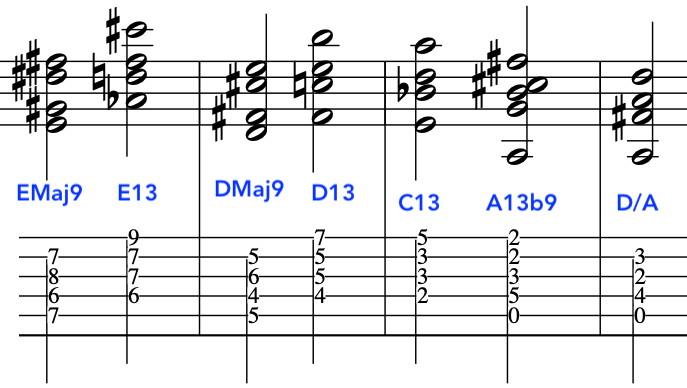
Here, is the full sequence:

Musical notation chart displaying John McLaughlin's various chord voicings including EMaj9, E13, DMaj9, D13, C13, A13b9, and D/A.
Chord sequence illustrating John McLaughlin’s unique 13th chord voicing alongside related Major 9th chords.

PART 4:

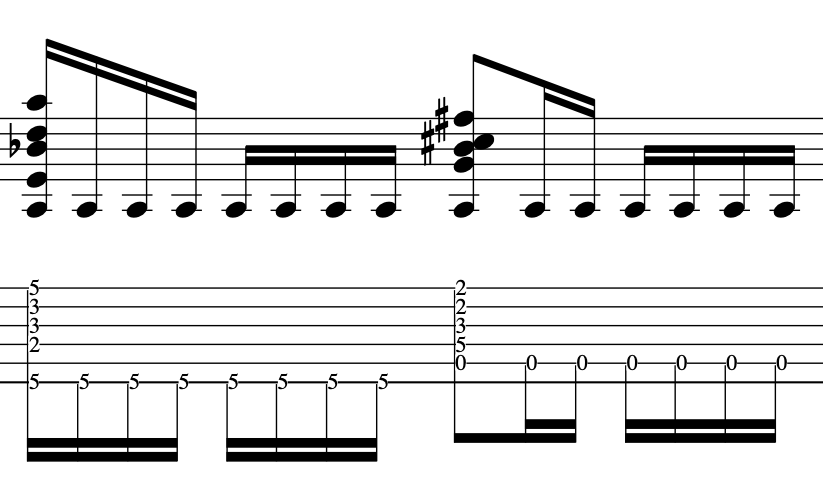
John, also makes good dramatic use of this chord by exploiting a pedal note in the bass for rhythmic drive.

Musical notation for a John McLaughlin guitar pedal riff, showing measures with notes and tablature.
John McLaughlin use of pedal note in chord riff.