IMPORTANT: Please watch video above for Guitar Lick:
Hi Guys
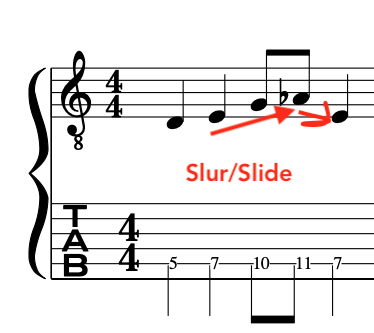
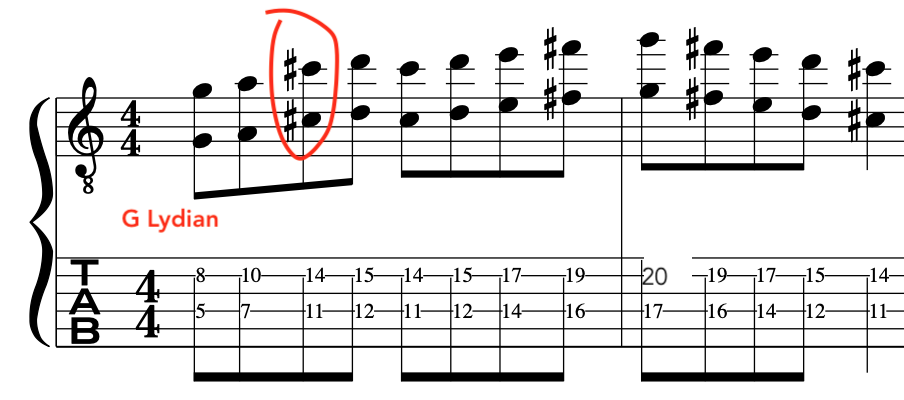
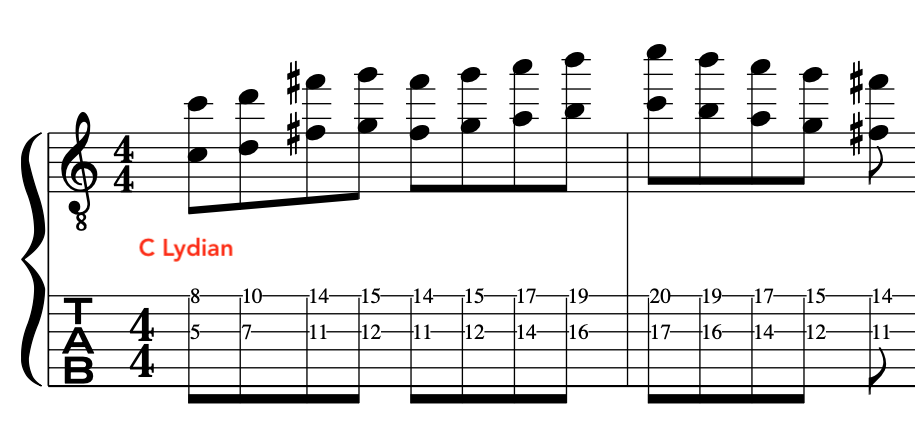
Just a short John Mclaughlin jazz fusion acoustic guitar lick from my youtube shorts. This, as per usual, employs strict alternate picking starting on a “Down stroke”.
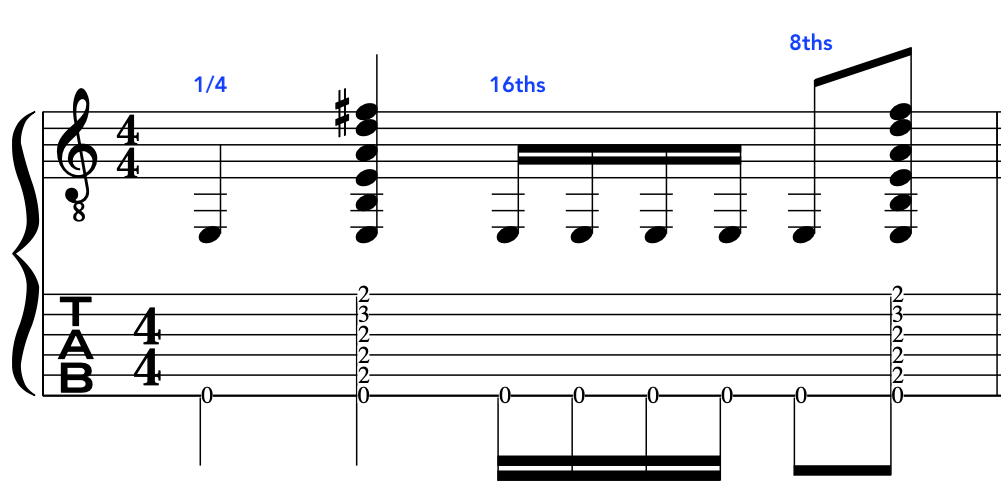
Also notice that the phrase starts in the bar with an anacrusis:
The Dominant chord G7 has been altered and resolves nicely to the tonic chord via the notes Eb to E natural.
Full Lick:
John Mclaughlin Altered style ii V7 I alternate picking guitar lick
IMPORTANT: Please watch video above for detailed info:
Hi Guys,
Welcome to part 2 of the John McLaughlin Modern Jazz Chords series.
First we will have a look at making chords from the whole step half step diminished scale:
The Diminished Scale
Diminished scale starting on the note C
Within this scale are lots of Triads: [for instance]
From these Triads we can add different Bass Notes and produce “Slash chords“
Okay, let’s take three triads with different bass notes and join them together:
It’s important to realise that because we are employing chords form the diminished scale we have minor 3rd movement.
So, let’s add a little melody within the chords: This is the way that John McLaughlin gets that lovely Bluesy feel within the harmony. Again, this is due to the way that the minor 3rd’s work within diminshed scale harmony.
Now let’s create a Blues Composition from this diminished scale.
For the last 4 bars we will make the Harmonic Rhythm Quicker by adding a new chord sequence that employs minor7 flat 5’s with slash chords.
JOING CHORDS WITH SCALIC FRAGMENTS
It’s a good idea to join chords together with fragments of the diminished scale: This is also extremely useful when creating composition;
2x scale to chords:
All 12 Major Triads over One Note [C]
Here is an excellent exercise for hearing how all 12 major triads sound over the same single note;
Lastly, here are some misellaneous John McLaughlin guitar chords:
Shakti Chord:
Harmonic minor scale chords:
E/A
E/C
Lastly, From the Whole Tone scale [Notice: 1 tone movement]
IMPORTANT: Please watch video above for detailed info:
Hi Guys,
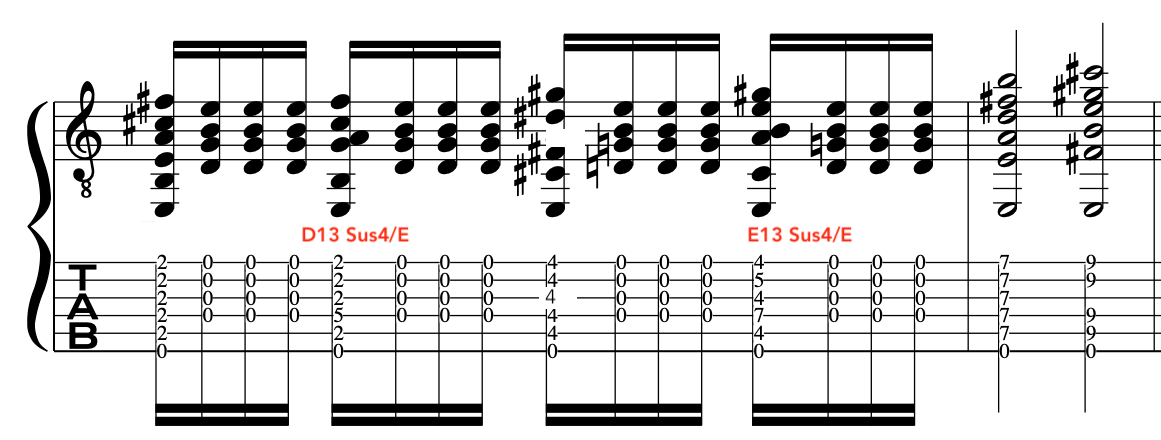
Today we will look at Modern Jazz Fusion Chords. These are mainly based around a Triad over a different bass note commonly called “Slash” chords.
Here are the main common slash chords employed in reharmonisation.
The fist chord is C/F# and creates a colurful tri-tone timbre. This is a triad of C Major over an F# bass note.
Next we have the most common slash chord type. Here it is C/D or a 7 Sus 4 chord. This type of chord is heard a lot in pop songwriting, but is also highly prominent and best known in Herbie Hancocks composition “Maiden Voyage”.
[These chords can also function as substitutions for a dominant, e,g F/Gto CMaj]
The next chord is a Dominant 7th 3rd inversion. In this case it is D/C. Generally in Fusion these chords do not resolve and/or are played in succession.
Here we have one of John McLaughlin’s favourite Slash Chords. This is an Eb triad over an E [up 1/2 step] bass. [This is also known as a13b9 that works well with the diminished scale].
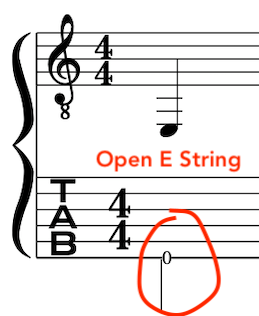
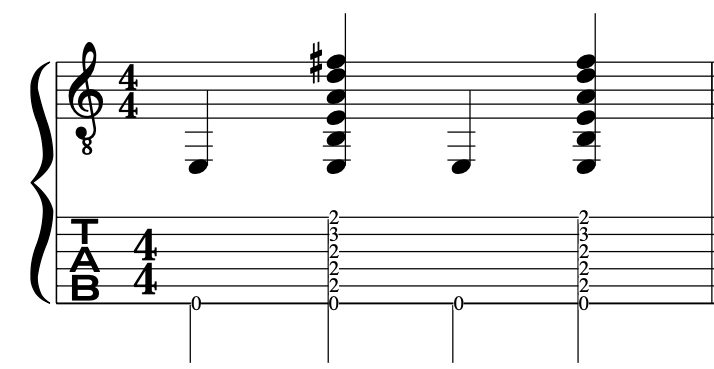
This next chord is a favourite of the late great jazz guitarist Pat Martino. With the open E note resonating in the bass this produces an extremely beautiful set of tone colours in one chord.
Here we have another John Mclaughlin voicing. This is a B Major triad over a C Bass. This also works well with the open E string ringing out.
Lastly another tri-tone voicing:
Okay, you might ask. What do we do with these chords? How to we compose with them? Re- harmonise with them? Actually use them?
Firstly, lets take a chord sequence: This will be,
iii Vi ii V7 I
For the first chord we will employ a C6/9 but just use the E A D G tones to create a “Quartal” sound.
Next we will move a tri-tone away from Am7 chord and employ Eb. In the bass we will use the 5th note of Am7, the note E.
For the chord ii [Dm7] we will have a C triad over an F bass note acting as a First inversion Dm7 chord. [You could also think of this as having an added 9th and 11th]
The dominant chord will have the dominant root in the bass with a Db Major triad, a flat 5th [tri-tone] away in the treble.
Finally this returns to the CMaj 6/9 tonic chord
Below is another example:
Notice, the reharmonisation and how the basic chords are exploited with colourful slash chords.
THE BLUES
To complete this look at slash chords let’s put them into a blues 12 bar structure [turn around] so that you can clearly see how to create composition from them:
From the above chart notice that the first 4 bars are more of a long drawn out affair in the tonic key. Next, this is repeated in a similar fashion [or a variation] with chord IV of the key.
But, now we have the last four bars of the blues and this is where the harmonic rhythm picks up.
Firstly, with 1 chord per bar for two bars and then 2 chords per bar for two bars.
Lastly, notice the “Reharmonisation” of the blues turn around. This is where you employ all of those slash chords that you’ve learnt.
BLUES CHART: Example,
IF THIS LESSON WAS OF USE TO YOU THEN PLEASE SUBSCRIBE TO US BELOW ON YOUTUBE, THANKS!