Please watch video above for detailed information:
Hi Guys,
Today, a quick blog on using octaves and open strings on the guitar to create Raga style compositions.
This is not “Classical” Indian” music but a means of adding an implication and fusing western guitar strumming with the Indian scale sound.
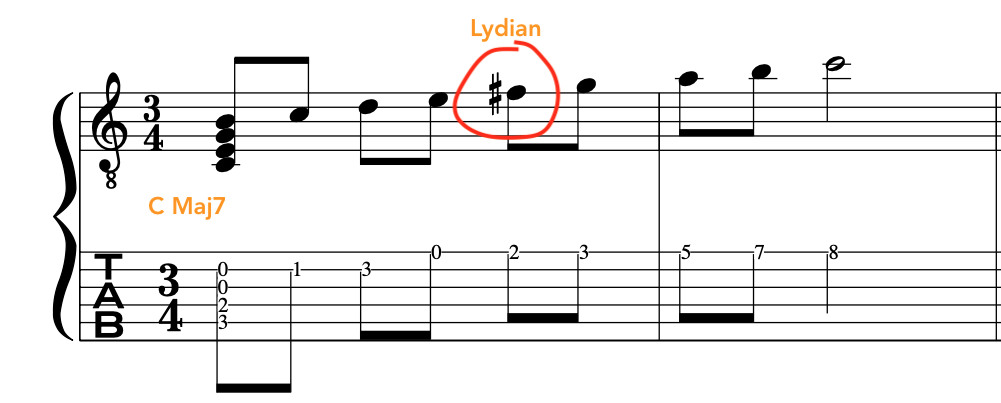
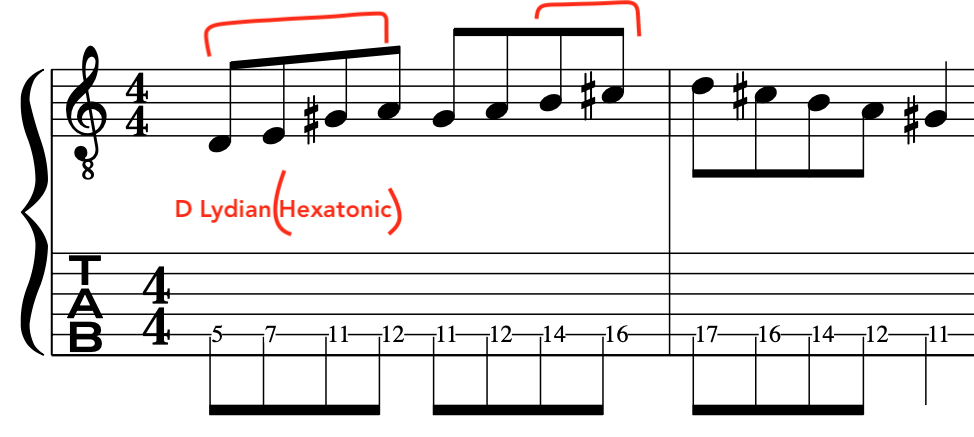
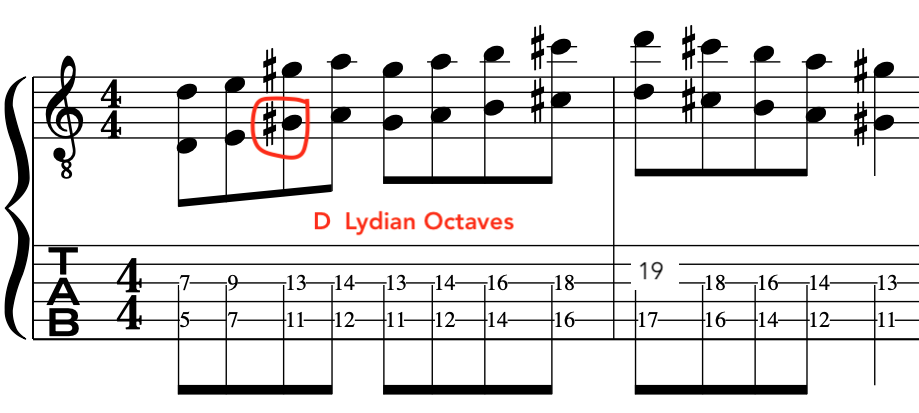
Below, we can see the scale we will employ. This is the Lydian mode. Here we have D lydian in a Hexatonic format.
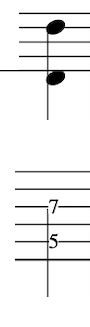
Now, instead of using single notes we will double them creating octaves.
Adding to this we will employ the open strings of the guitar as we strum to create interesting rhythms. [See video above].
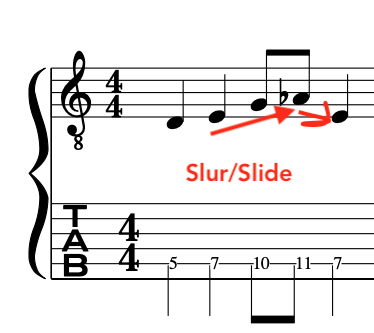
We can also use quick slurs and slides to create a dynamic Indian-esque effect
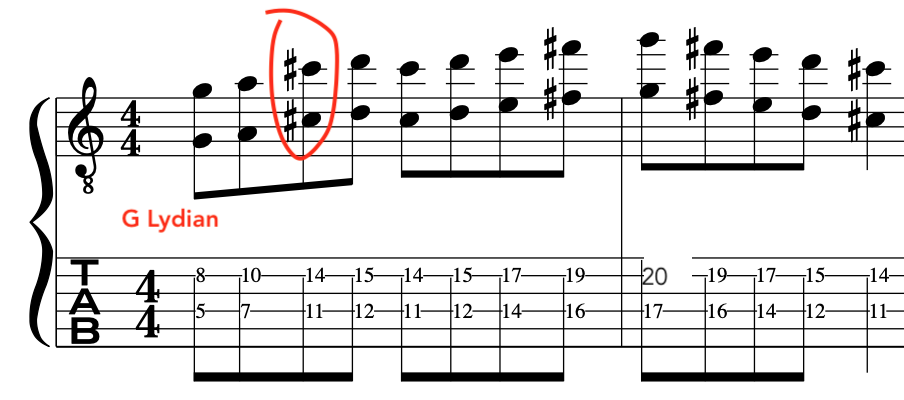
Now, let’s move over to the 4th and 2nd strings and do the same thing with the lydian octaves and open guitar strings. [see video above]
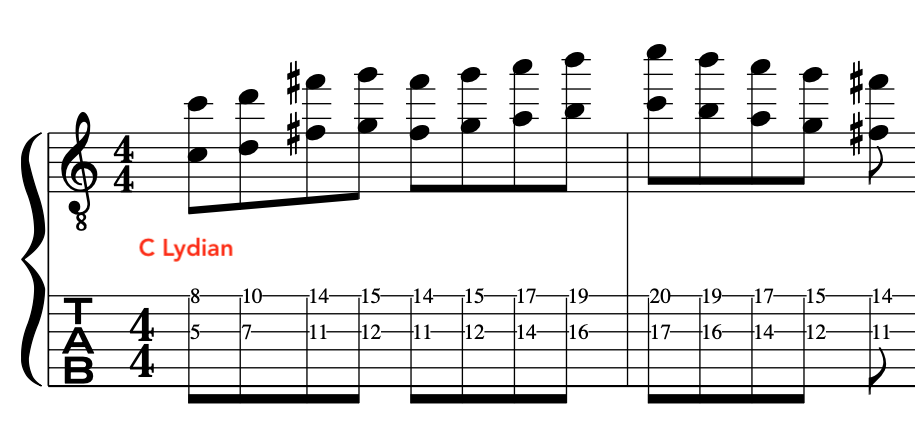
Finally, we will move over to the 3rd and 1st guitar strings and do the same thing. This time creating the C lydian mode.
Due to the guitars tuning you will notice that we are moving up in 4ths or down in 5ths.
This works well for composing becasue it creates a strong pull in terms of movement and power that can then be manipulated by percussive rhythmic strumming on the guitar.
How to Create “SHAKTI” John Mclaughlin Indian/Western Guitar Lines
Please watch above video for detailed analysis:
Hi Guys,
Today we will look at how to develop “Shakti” John McLaughlin-esqe Indian raga lines with alternate picking guitar technique.
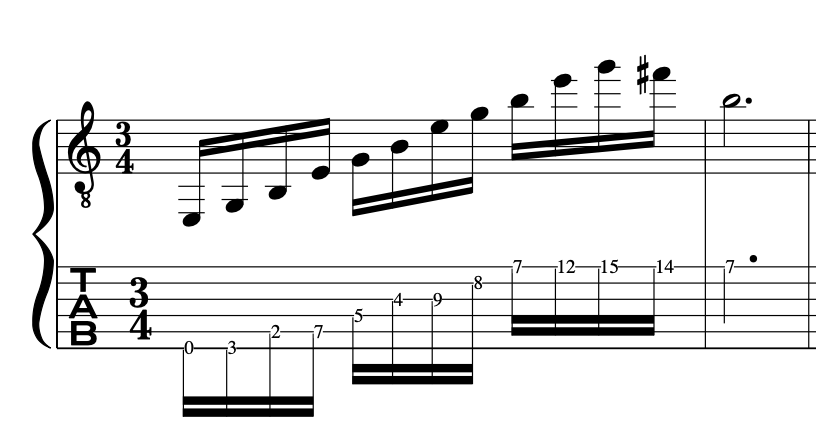
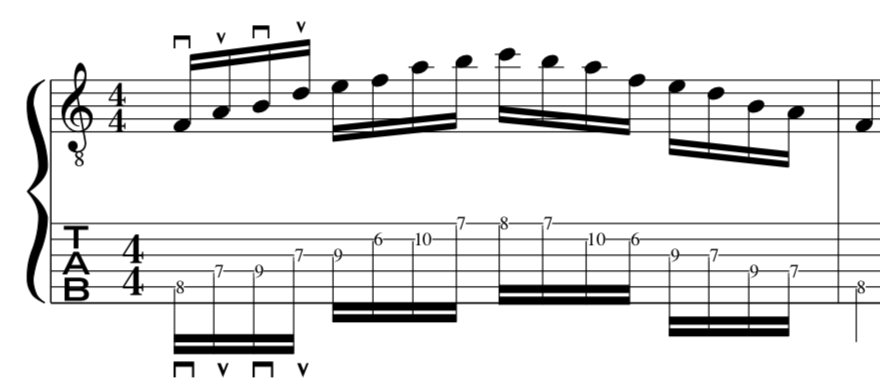
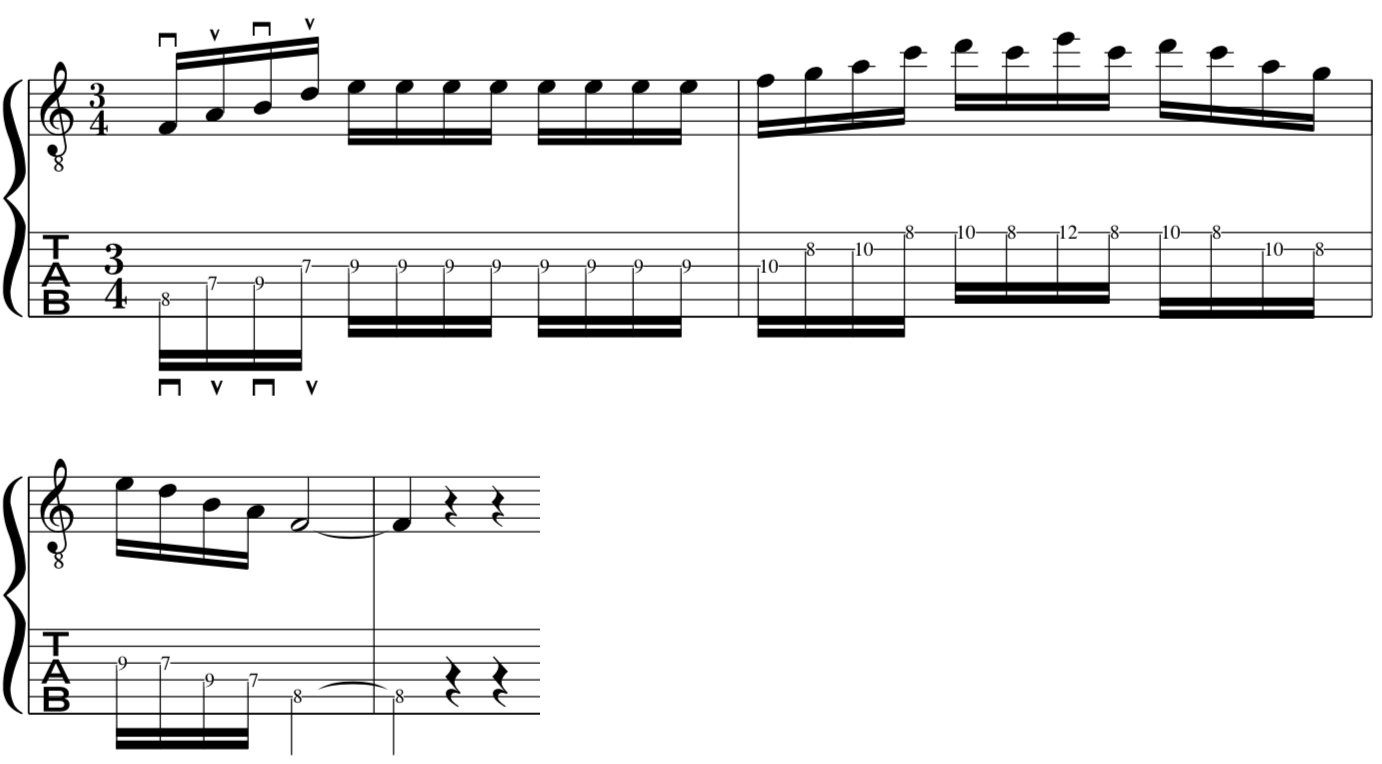
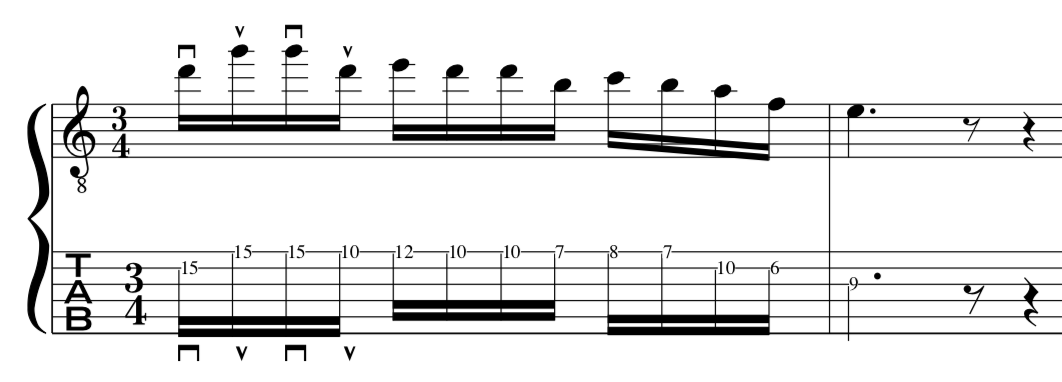
To begin with we will take this Scale as our Raga Base: [This starts on a “Down” stroke for alternate picking]:
This base is a sort of Lydian sound with the tonic note as F and the B natural as the #11
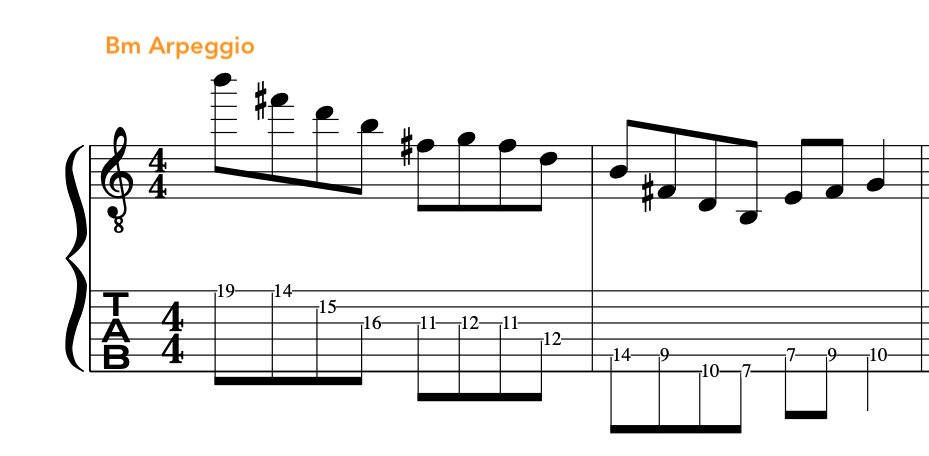
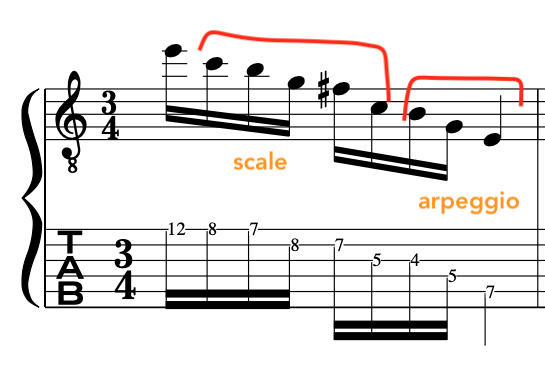
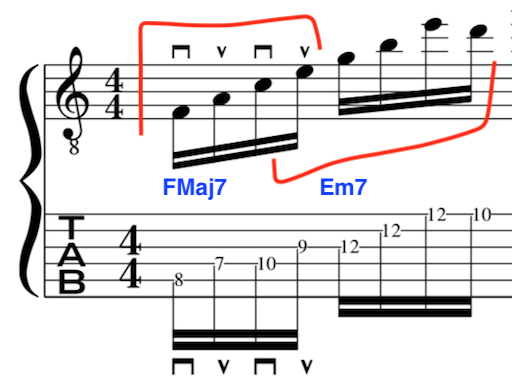
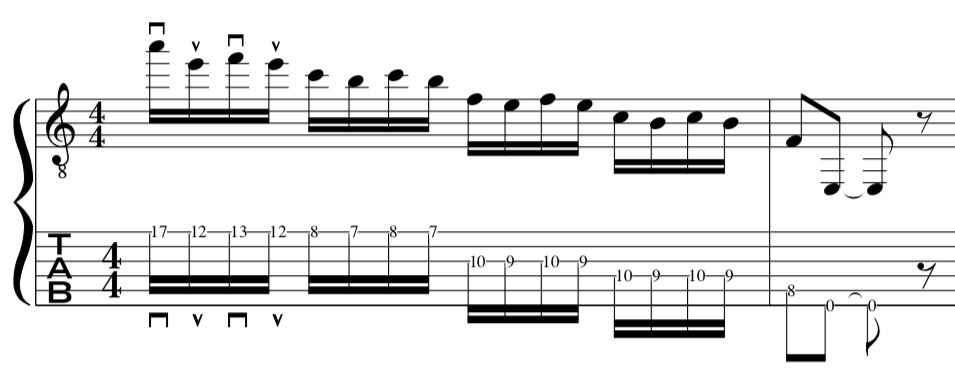
In this first example we will employ arpeggios to create a chord pair effect:
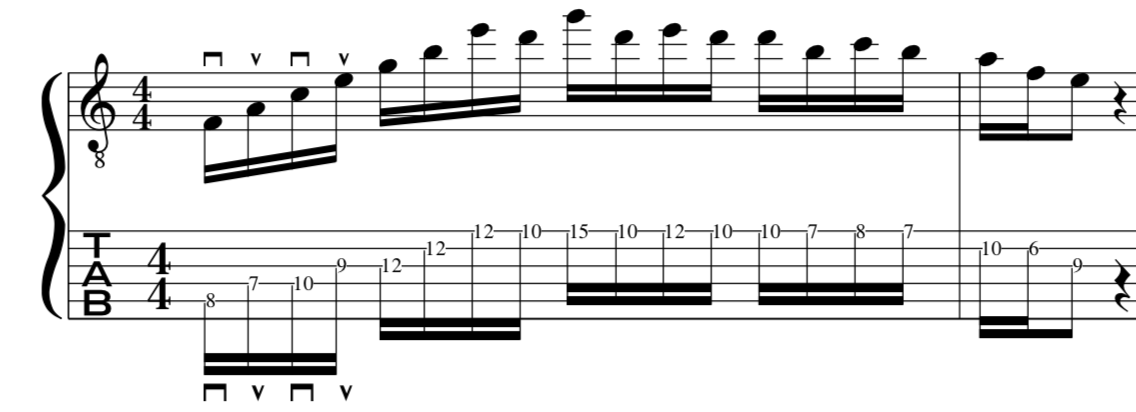
Here is the full line: Notice how we go from a “Western” concept of chord pairing to a more non diatonic scalic raga answering phrase
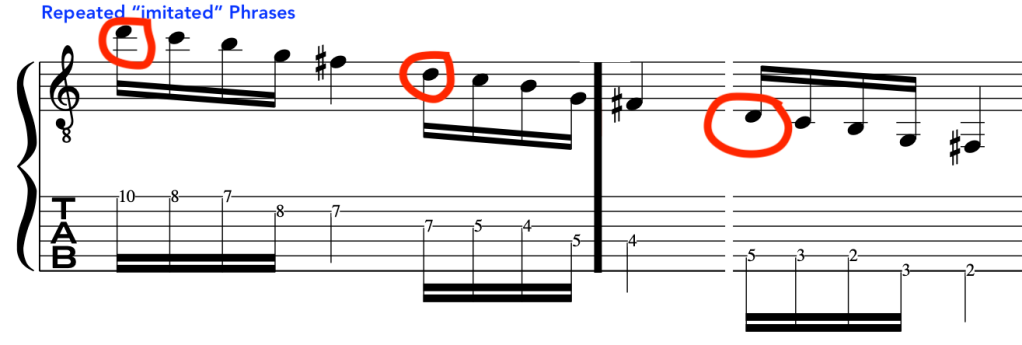
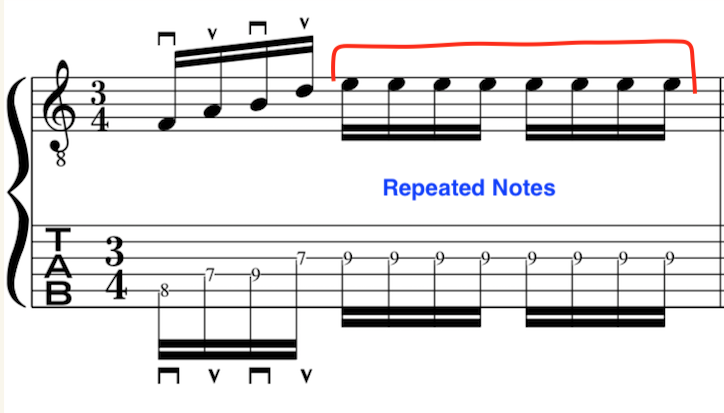
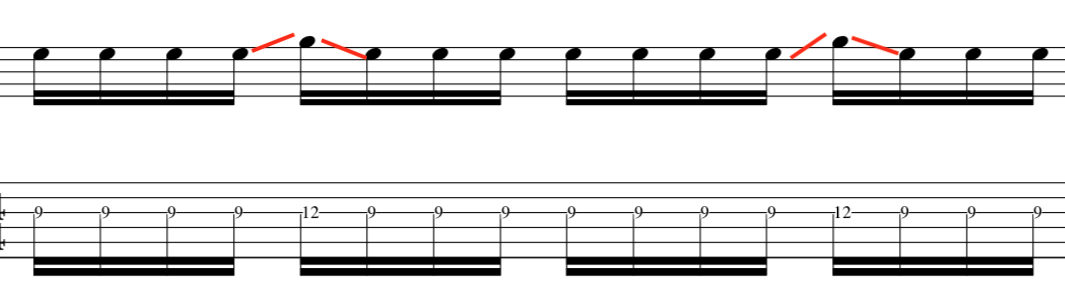
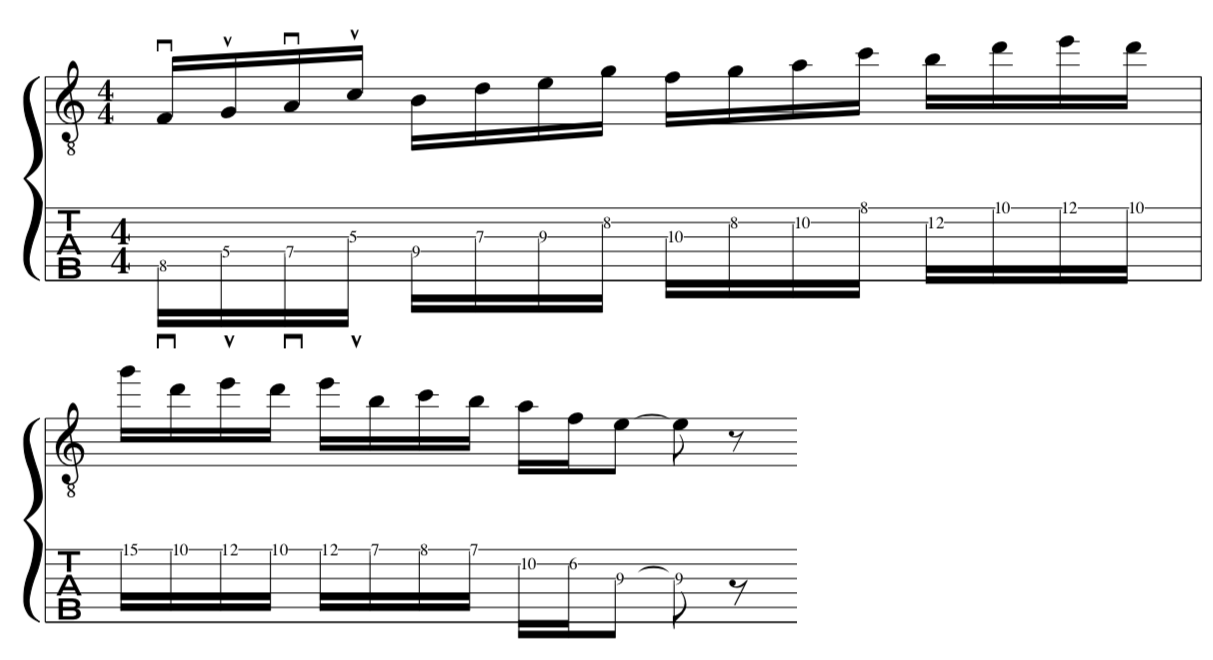
The next concept exploits repetition: This is common in raga’s and is very good when alternate picking to get the tempo and rhythmic groove into your right hand picking so that the following phrase will be rhythmical!
Here is the full Phrase:
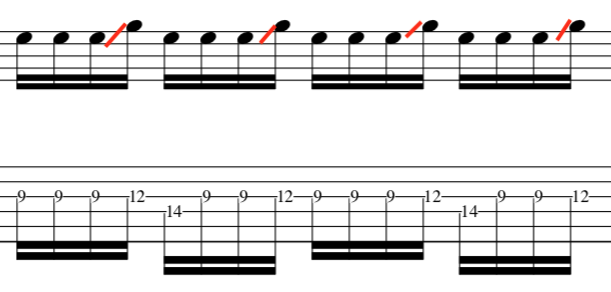
We can now add slurs and slides: “On” the beat:
“Off” the beat:
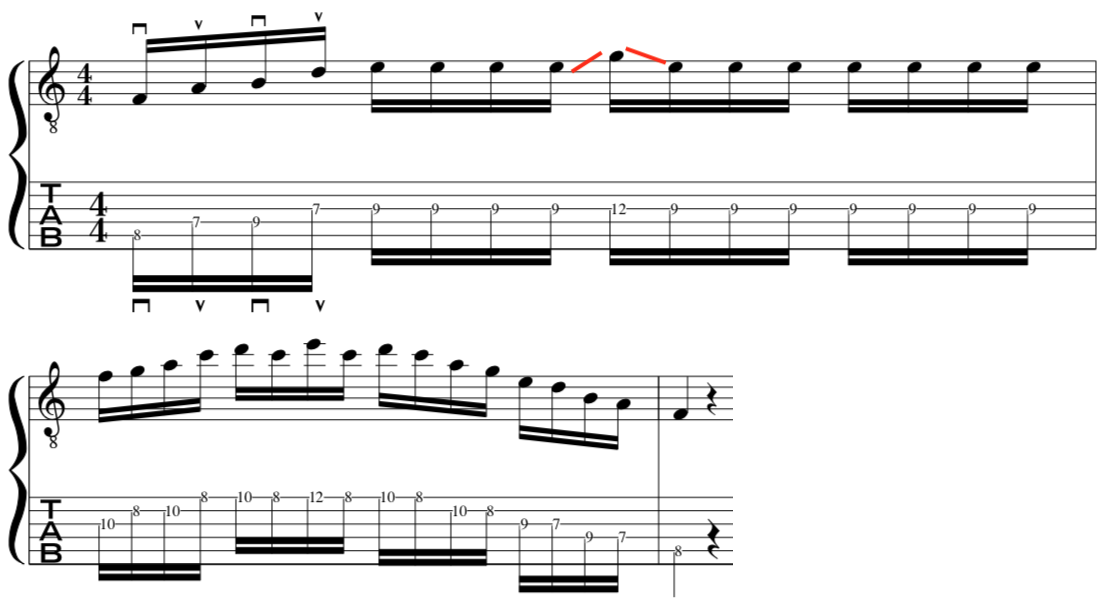
Full line/phrase with “Slide”:
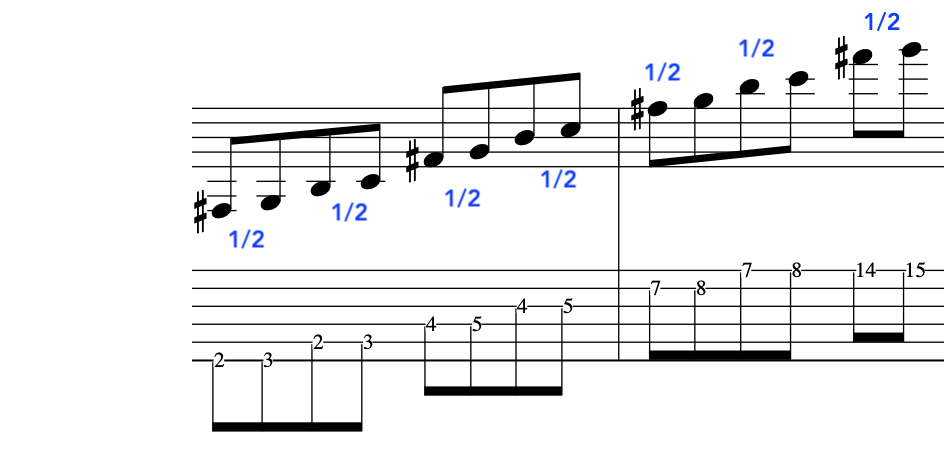
Another useful concept is to repeat the semitones in the scale and create a phrase/lick:
PENTATONIC POWER!
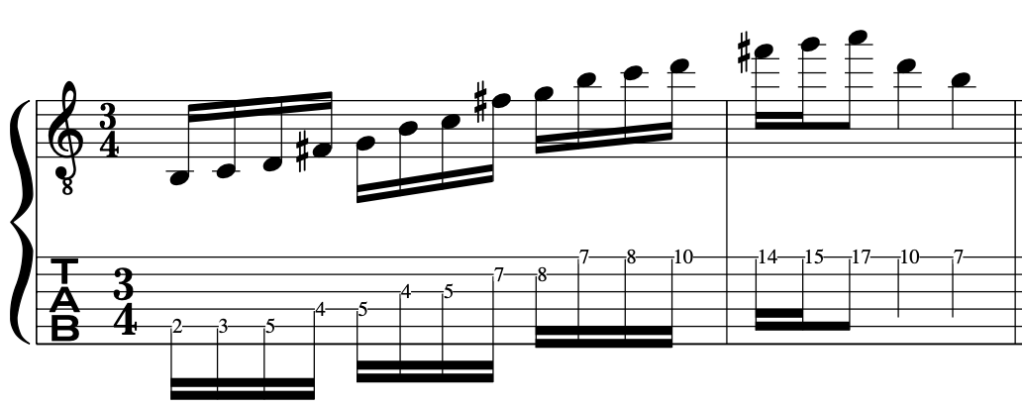
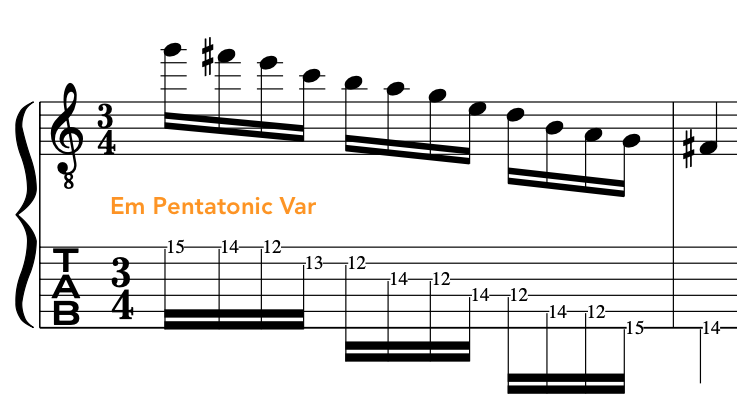
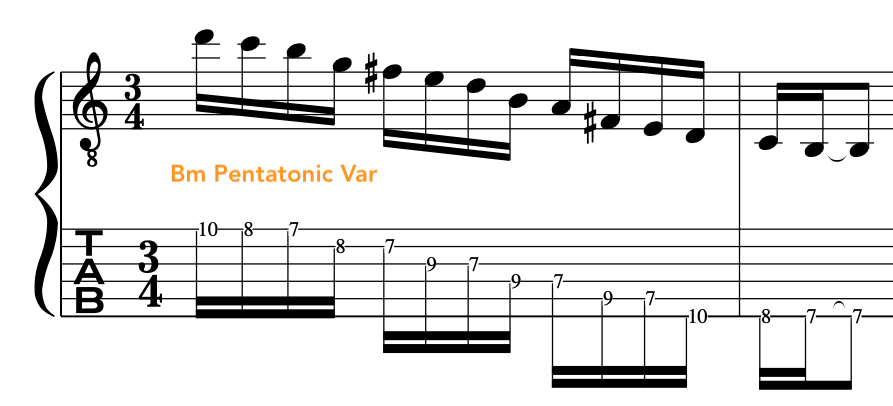
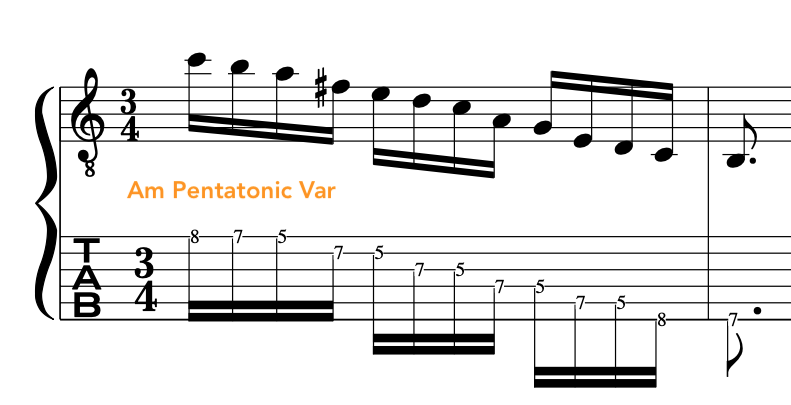
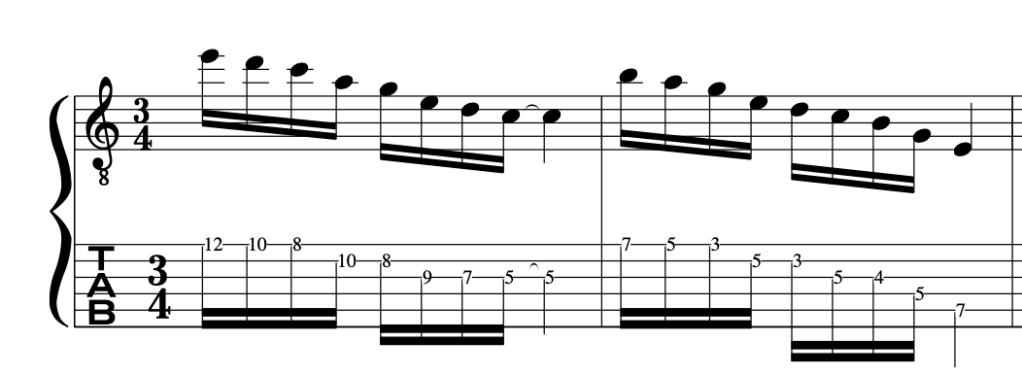
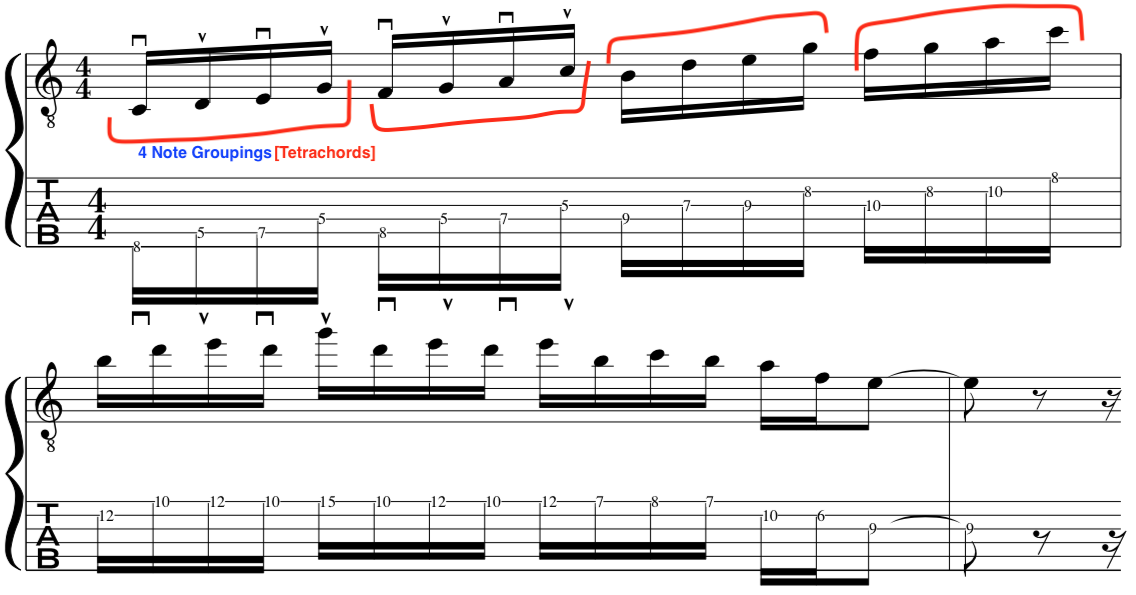
The most common thing found in creating “Raga’s” from a western point of view is the employment of pentatonic scales. In this example we will build up a pentatonic line:
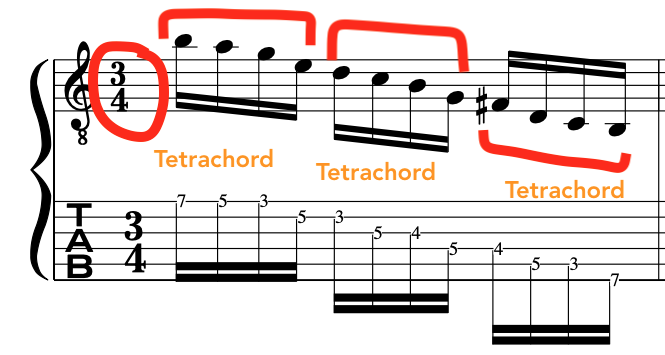
This time we will start on the 6th guitar string: Notice, the 4 note groupings of 16 notes [Tetrachords]
INTERVALS:
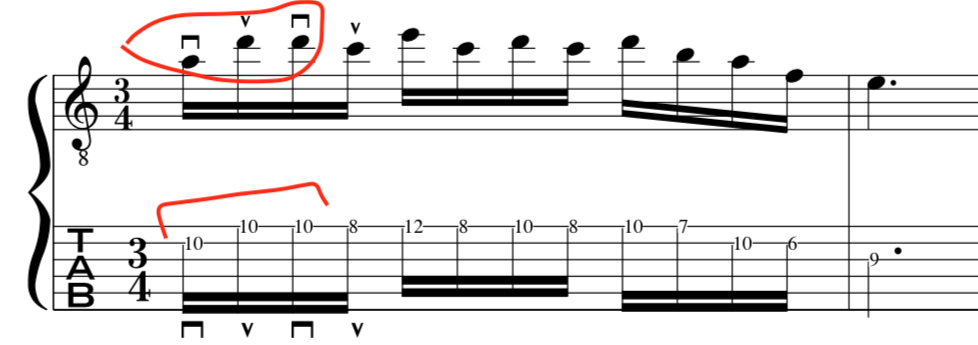
In the next example we will start a phrase with the interval of a 4th and a bit of repetition. Again, this is useful in order to set the tempo and prepare the fretting hand fingers to get in position to play a fast phrase rhythmically.
Here is another example:
GROUPS OF 5:
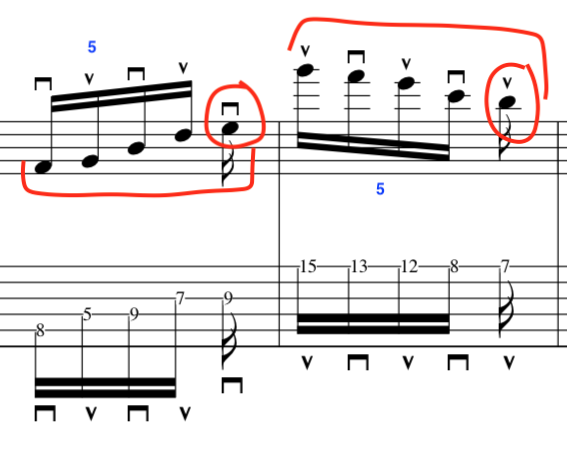
Groups of 5 notes create “Odd” patterns when alternate picking. But, 2 groups of 5 will go back to an even pattern, meaning that you will be starting on a down stroke again and back to familiar alternate picking territory.
This exercise works easily because the second group of 5 starts on an upstroke on the first string:
GROUPS OF SIX [Sextuplets]:
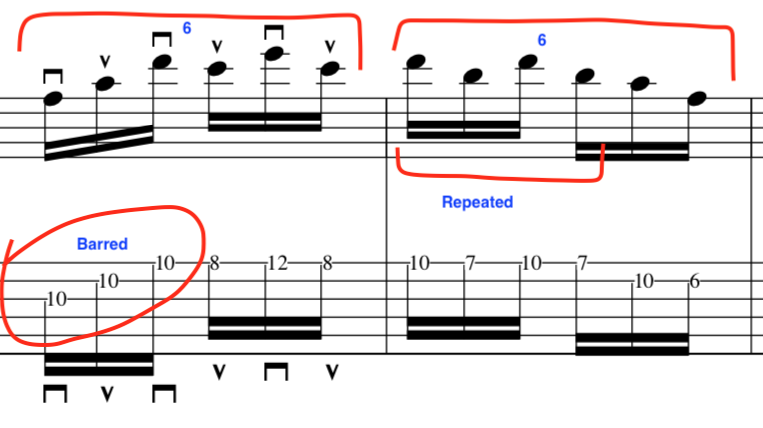
It’s a good idea to barre a chord or an interval group [if possible] when playing 6’s [Sextuplets] as they will be very fast when picking and you will need to be in control of the rhythm. It’s also a good idea to repeat any notes or phrases that are at hand :
Example:
Classic John mcLaughlin Improvisation Tool:
This next concept uses an arpeggio and 4ths. This crops up in lots of Johns improvisations:
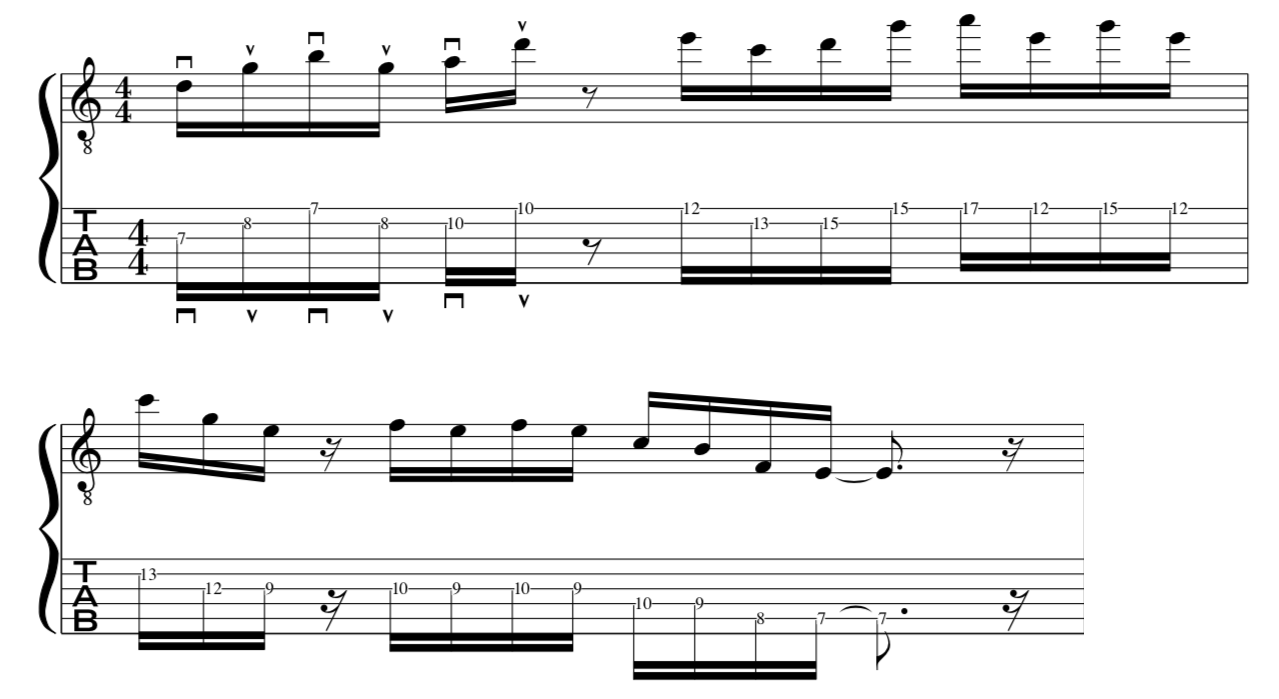
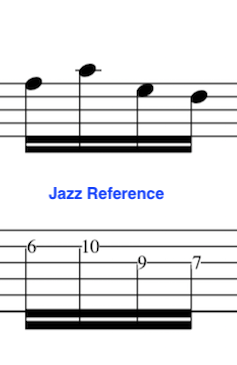
One last concept is that of quoting another melody, phrase, or famous lick into the Raga. Here we will use the old jazz favourite as a reference:
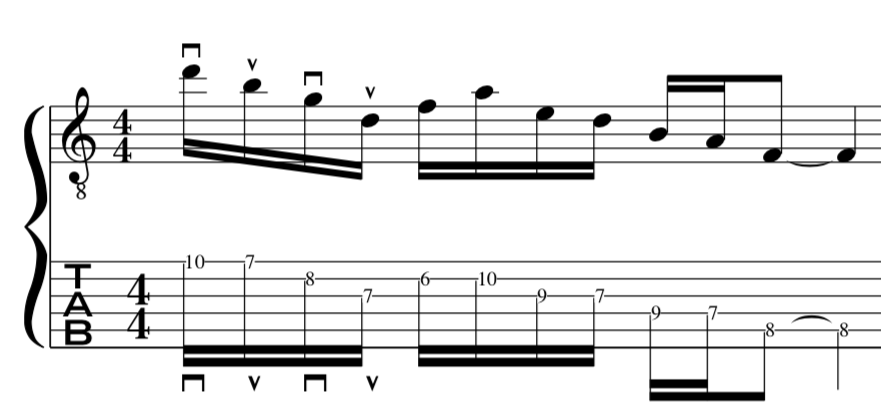
Notice how this weaves back into the Raga:
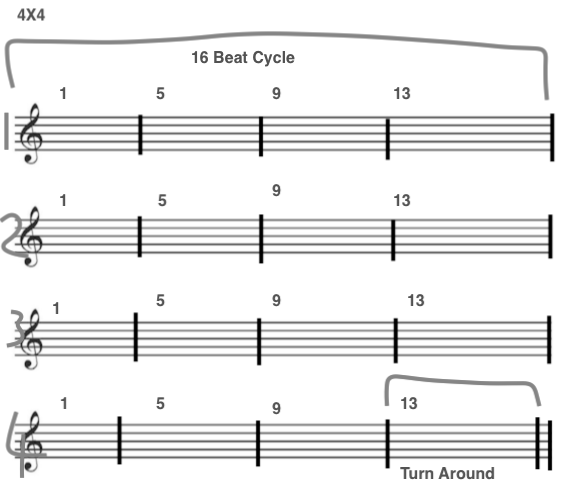
Finally, in order to create your own raga it’s a good idea to take a form:
In this case we could take a 16 beat cycle and times it by 4 to create a 16 Bar Structure:
Notice the turn around in bar 16: At this point everyone will know where they are in the composition/raga so it can start back to the beginning and repeat itself for improvisation:
IF THIS LESSON WAS OF VALUE TO YOU THEN PLEASE SUBSCRIBE TO US ON YOUTUBE BELOW, THANKS!