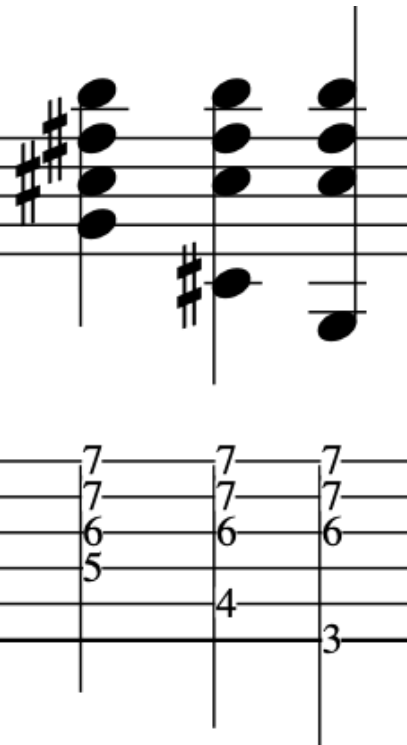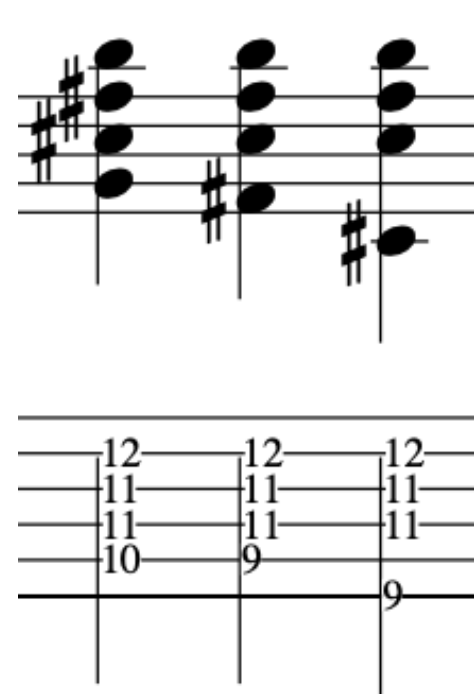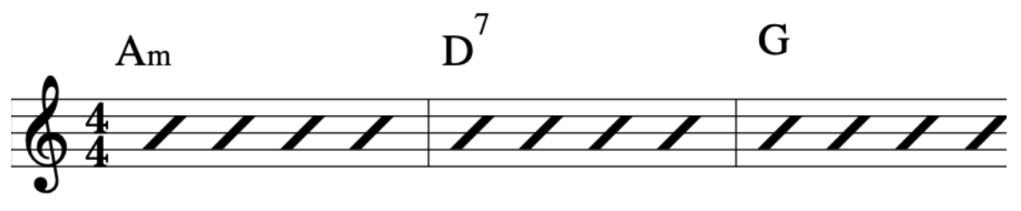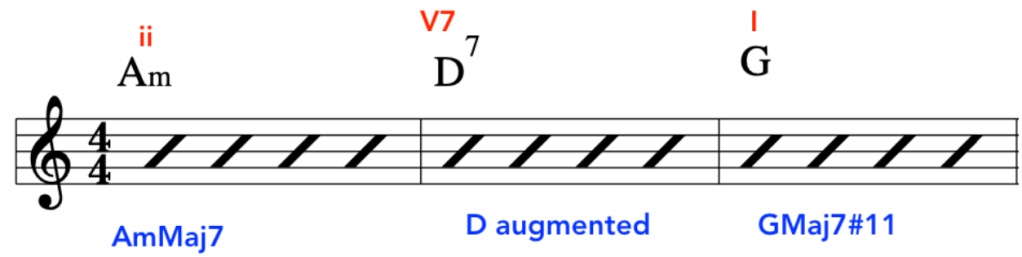
McLaughlin “Belo/Music spoken here” Style Guitar Chord/Scale Techniques

Hi Guys,

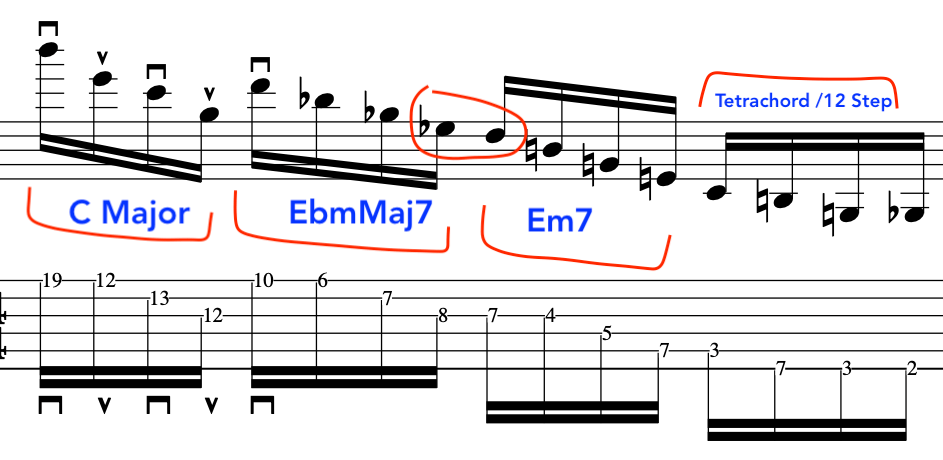
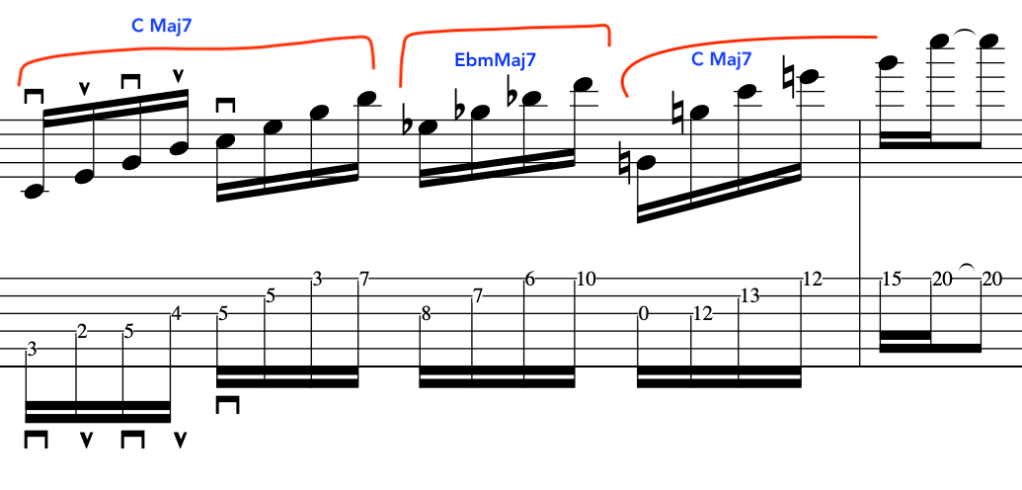
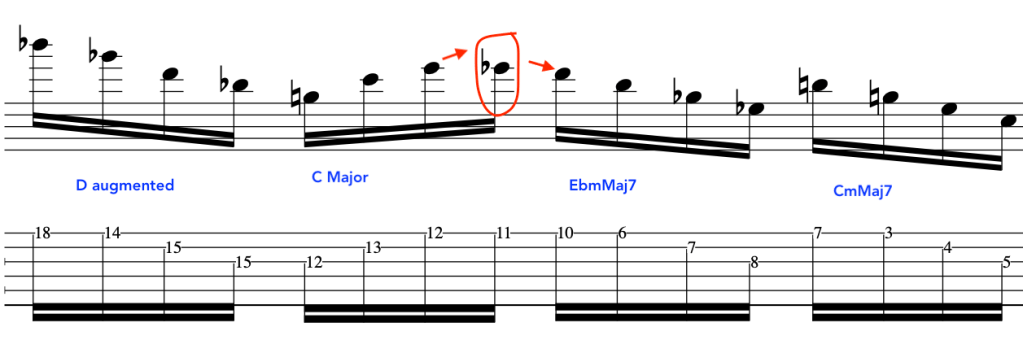
Today, a quick look at how John McLaughlin moves from chord to scale or scale to chord on the nylon string guitar.

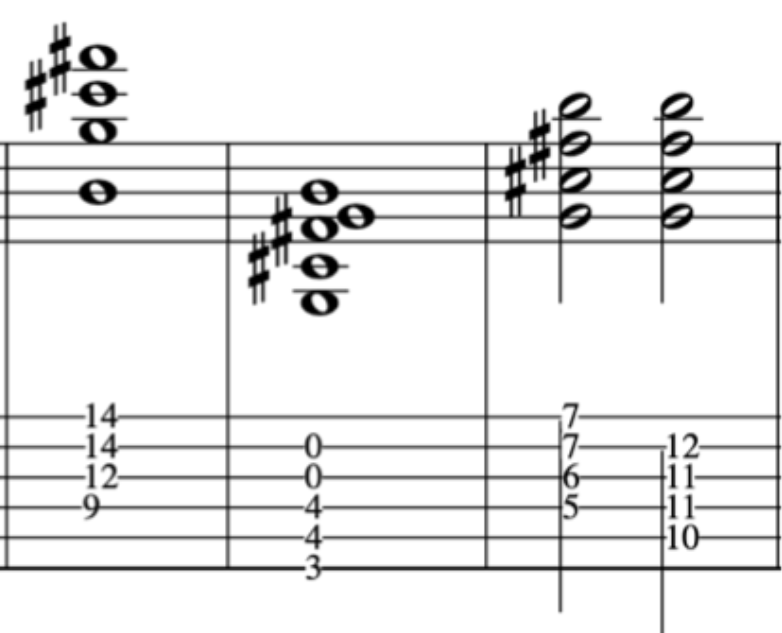
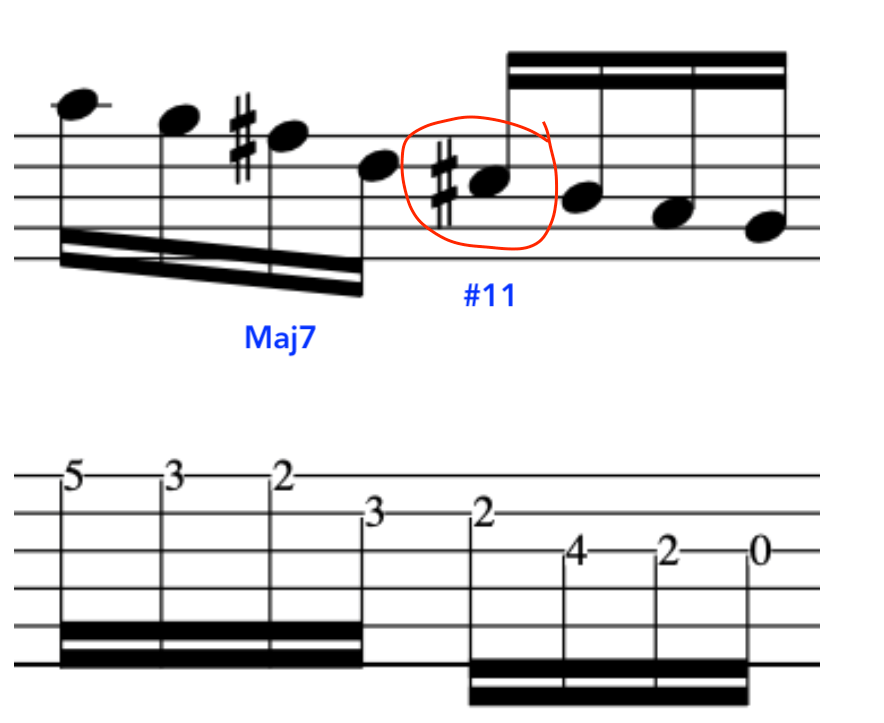
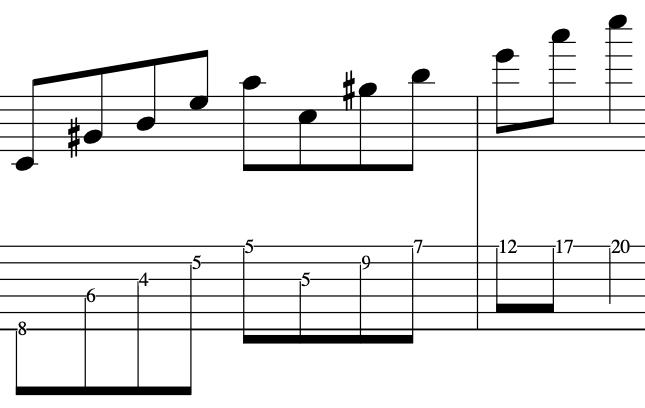
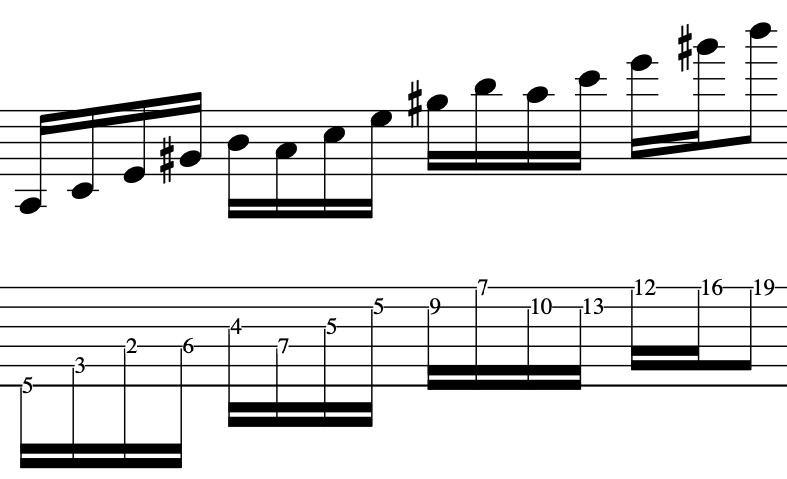
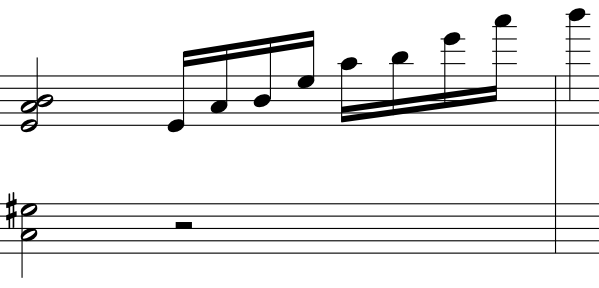
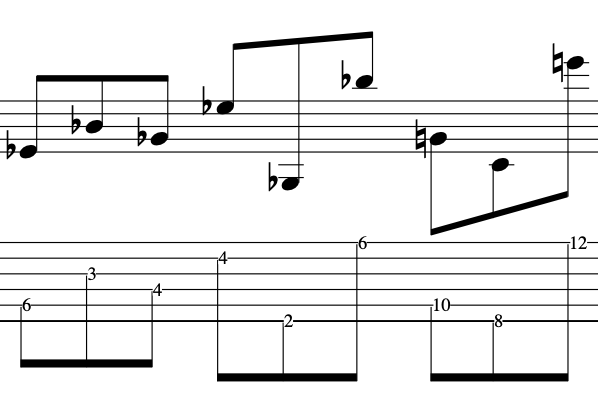
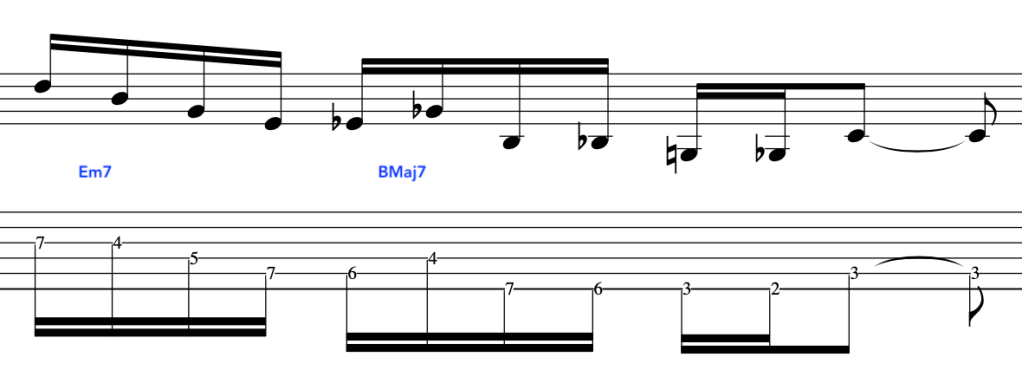
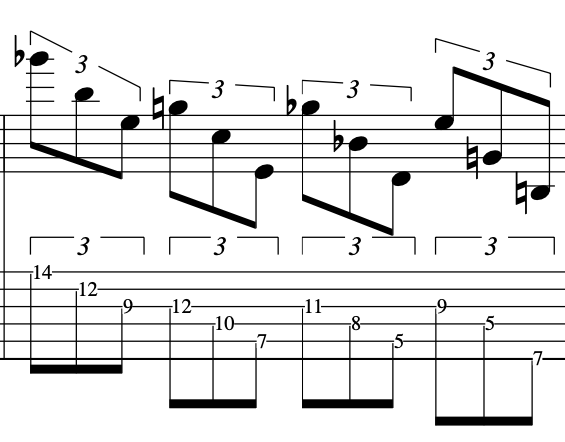
In this lick we can see John exploit the 3/4 time signature with rapid fire alternate picked tetrachords!

This is classic “Music spoken here” style in regards to the application of pentatonic scale fingerings and melodic arpeggio shapes that connect together to create a fluid improvised line.

john_mclaughlin_acoustic_guitar_techniques_lesson

Here, we can view the exploitation of a quick pentatonic fingering that ascends,

john_mclaughlin_acoustic_guitar_techniques_lesson

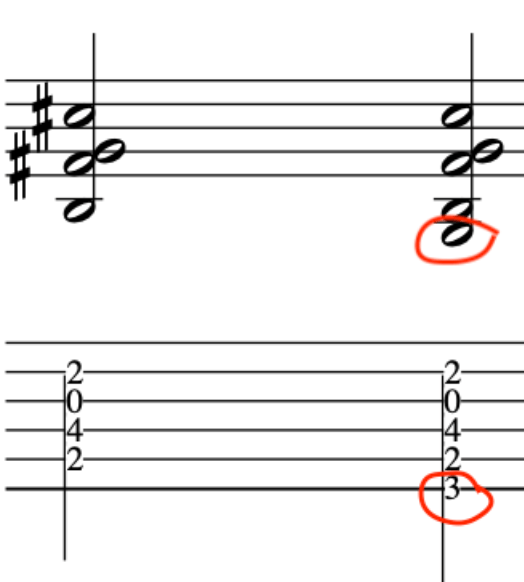
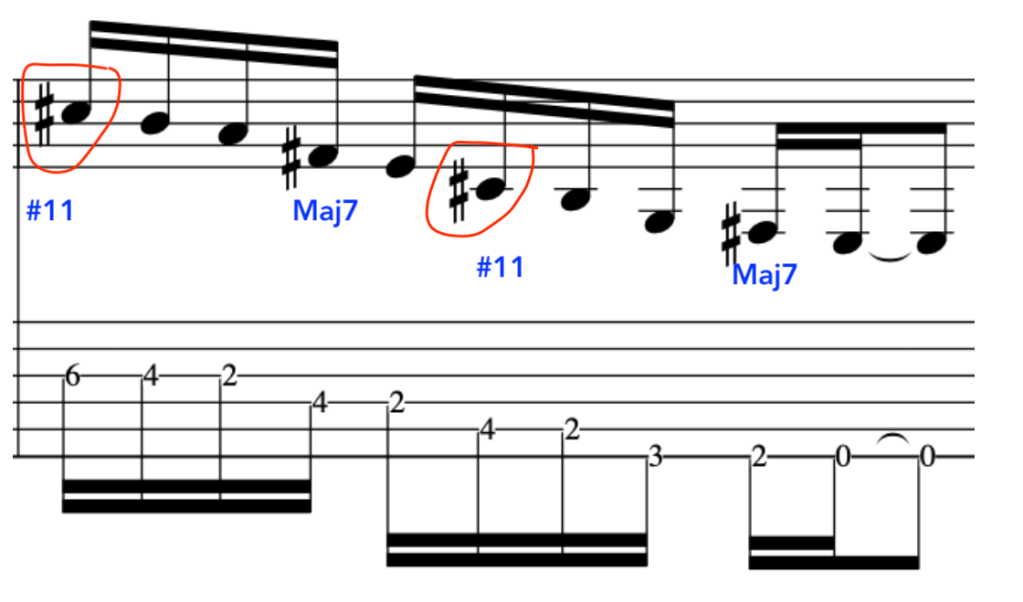
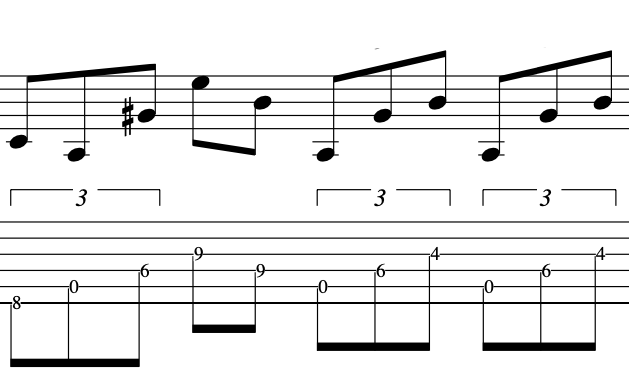
Now, we go the opposite way and answer the phrase with a descent. This employs the A Major Arpeggio shape/fingering:

john_mclaughlin_acoustic_guitar_techniques_lesson

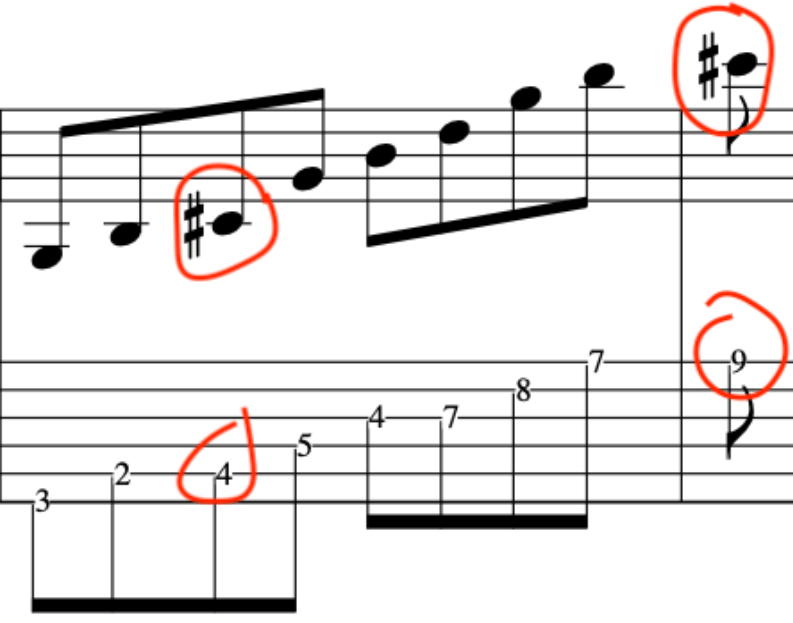
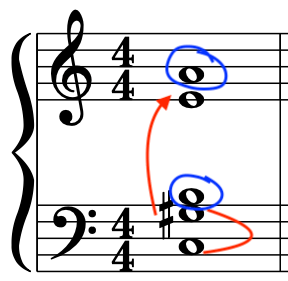
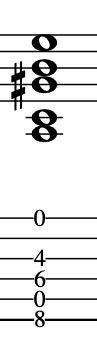
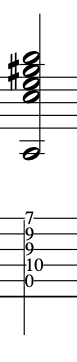
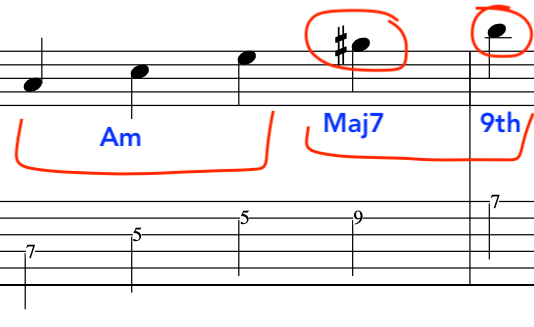
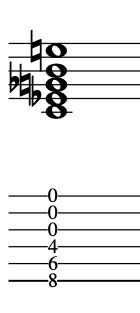
Finally, we have a little melodic rise in the top line over a barred static chord. [Mind the stretch!]

john_mclaughlin_acoustic_guitar_techniques_lesson

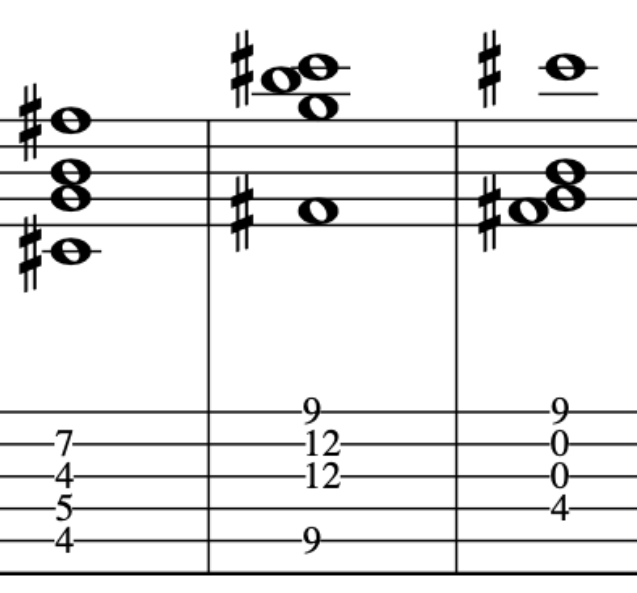
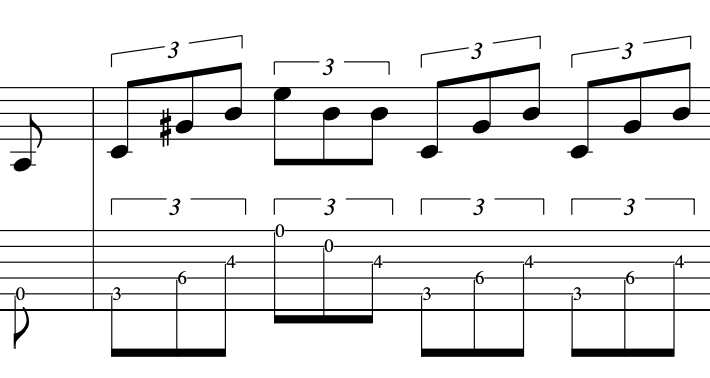
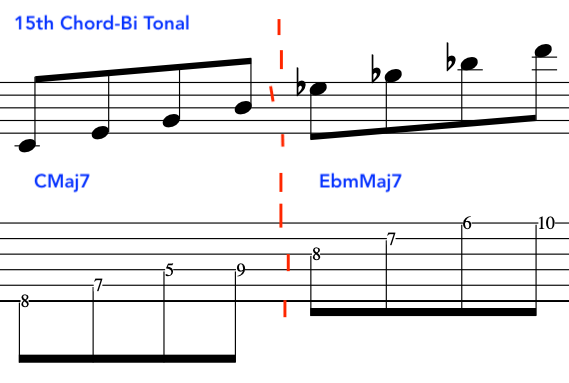
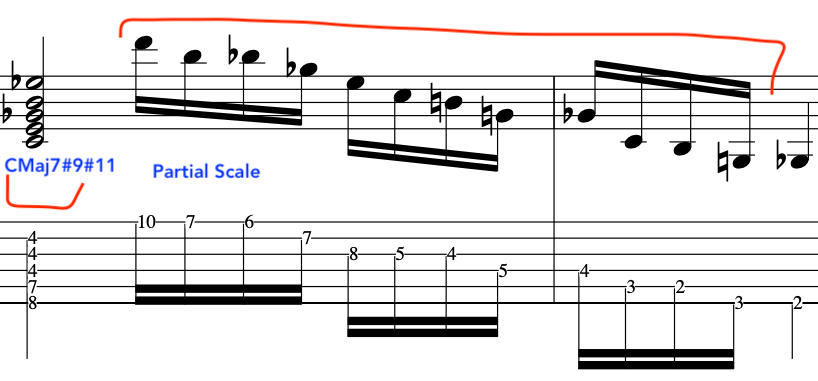
In the next example, we will apply the concept of a chord to scale fragment that anticipates to the next chord in 4/4 time.

Technically, I am playing the chords on a downstroke and the scale on an upstroke. [This employs alternate picking guitar technique once more].

john_mclaughlin_acoustic_guitar_techniques_lesson

What makes it work so well on the guitar is that this concept employs 1st Inversion chord voicing’s- E,g B/D# to E/G# to A/C# to D/F# etc

Also, as a compositional device, this works brilliantly because it employs the cycle of Vb to Ib.

john_mclaughlin_acoustic_guitar_techniques_lesson

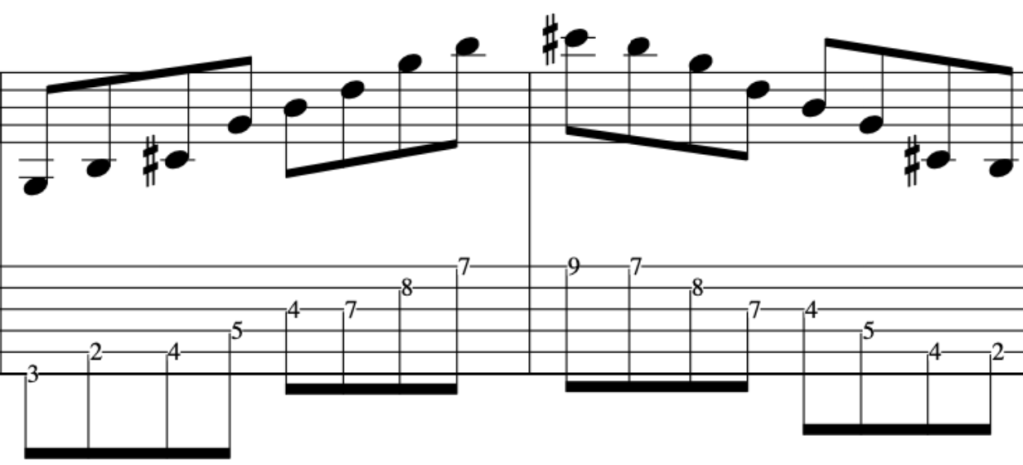
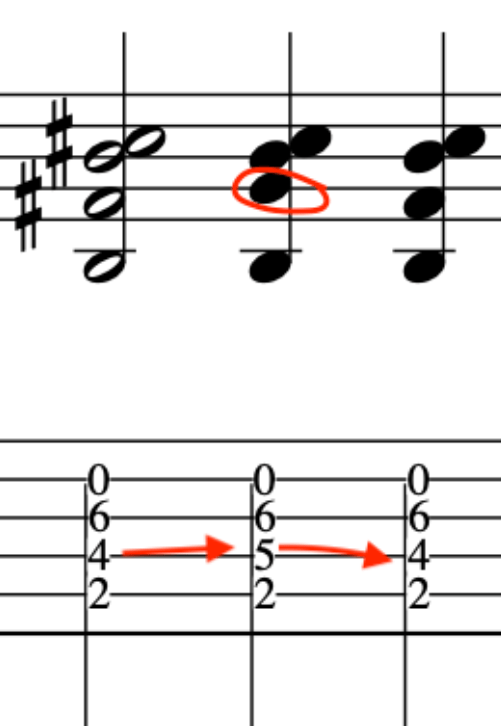
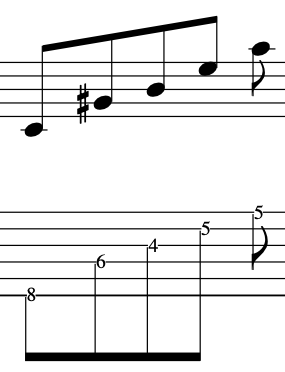
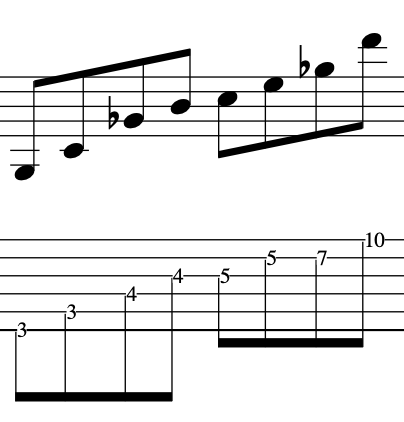
Notice: this is the same, but, this time we are ascending with the same concept.

Musical notation and tablature sheet depicting a guitar lesson focusing on chord to scale transitions and alternate picking techniques from John McLaughlin's Belo Herozonte Album.
Musical notation illustrating a John McLaughlin chord to scale technique, demonstrating ascending and descending patterns.

Earl Klugh Style Guitar Composing

Modern Jazz Fusion Chords part 2. Steely Dan, Dan Chord and Slash Chords

Hi Guys,

Today, a quick look at the unique compositional and playing style of guitar maestro Earl Klugh.

In the first example we will take a basic I IV V I [C to F to G to C] chord sequence and employ “Inversions”.

The employment of simple chord inversions are the key to getting creative in this beautiful, skeletal and spacious guitar style, along with the compositional process.

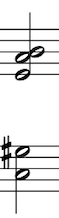
Let’s begin with a simple C root position chord that then moves up into its 1st inversion with a melody note of B natural, which, will resolve down to the note A for chord IV [F Major].

earl_klugh_guitar_lesson

From here we will employ a root position chord of G Major.

earl_klugh_guitar_lesson

Now, we need to create a cadence.

In this case we could make this V7d or G/F or employ a simple F Major chord that resolves back to C/E or C 1st inversion.

earl_klugh_guitar_lesson

Here, is the whole little structure that we can embellish in the next part.

earl_klugh_guitar_lesson

Now, that we have a base, a little melody and a structure to work from, we can start to fill it out and colour it in.

First, we will add some simple melodic slides: These, are outlining – C Dm and C/E – and create percussive/melodic movement.

earl_klugh_guitar_lesson

Next, we will exploit chord iii and make it Major and a Dominant 7th: From here, we will use this to modulate to chord Vi [A minor] the relative minor of C Major.

This gives a new emotional colour and pull as it moves away from the Major key.

earl_klugh_guitar_lesson

Finally, we need to cadence. We will employ a ii V chord sequence to get us back to chord I [C Major].

earl_klugh_guitar_lesson

To create a climax to the cadence, we will add colour with 6ths as melodic and rhythmic embellishments that push us to resolve to the tonic chord of C Major.

earl_klugh_guitar_lesson

earl_klugh_guitar_lesson

This was just a brief look at this amazing style that is employed by the likes of Earl Klugh and Pat Metheny.

The use of chord inversions and basic harmony creates a very melodic and rhythmic world where composition presents itself naturally, within the movement of the chords themselves.

This is because, the melodies or melodic inflections result from the way that the chord inversion connect and resolve, thus, making the compositional process a natural and fluid one, resulting in spacious, rich melodic sounds that compliment the guitars resonance and fingerboard shapes.

Modern Jazz Fusion Chords part 2. Steely Dan, Dan Chord and Slash Chords

Modal Chords For Guitar: Slash Chords and Substitution Voicing’s

CLICK SUBSCRIBE!

Hi Guys,

Today, a quick look at modal chords.

The chords are from the backing track [below in this page] and they are “Transposed” with C as the root note.

These are exploited in the 12 bar form of a fusion blues.

modal_chords_guitar_lesson_explained_easily

To begin with, we will take the first chord for the basic Ionian/Major sound. Here we have a chord/triad of G Major over the bass note C as a substitution for Cmaj7:

modal_chords_guitar_lesson_explained_easily

Next, we have a C Dorian tonality. For this I am employing a 7sus4 chord with a triad of Bb over a C bass once again

modal_chords_guitar_lesson_explained_easily

From here, we will create a C Lydian sound. We will do this by employing a triad of D Major over a C Bass.

modal_chords_guitar_lesson_explained_easily

Now, we will move back to Ionian with another 7sus4 chord. This time it’s a triad of C Major over a D Bass.

modal_chords_guitar_lesson_explained_easily

To create interest, we will now make this tonality minor by adding a triad of Eb Major over a C Bass [a la C minor 7th]. [Aeolian/Dorian]

modal_chords_guitar_lesson_explained_easily

For, the Phrygian/Aeolian sound, we will employ a 1st inversion triad of Ab Major over a C bass.

modal_chords_guitar_lesson_explained_easily

To create some dissonance, and a more ethereal sound it’s a good idea to add a Locrian chord. In this instance, I am employing a triad of Db Major over the C Bass.

modal_chords_guitar_lesson_explained_easily

For the mixolydian sound I am employing a simple C7 chord. [You could also add a 4-3 suspension]

Now, let’s add a couple of Dorian chords.

These will be another 7sus4 chord of an Eb triad over an F bass.

modal_chords_guitar_lesson_explained_easily

And, a Major 9 [or sus2] no 3rd chord. For this we will add a triad of F major over a Bb bass.

modal_chords_guitar_lesson_explained_easily

For the penultimate Mixolydian chord, we will create a 3rd inversion [Dominant]. This will be a C Major triad over a [the 7th] Bb bass.

modal_chords_guitar_lesson_explained_easily

And finally, an Aeolian sound with an Fm6 chord over a G bass.

modal_chords_guitar_lesson_explained_easily

Modes Backing Track Transposed in C Major with Chart and Scale Suggestions.
modal_chords_guitar_lesson_explained_easily

modal_chords_guitar_lesson_explained_easily

IF THIS LESSON WAS OF USE TO YOU THEN PLEASE SUBSCRIBE TO US BELOW ON YOUTUBE, THANKS!