12 Tone Pattern: Scott Collins Guitar Line:

Hi Guys,

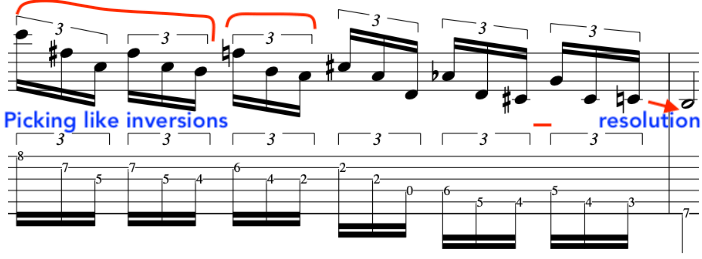
Today, a quick look at a Scott Collins 12 tone guitar pattern and applying it to alternate picking guitar technique as an exercise in descending intervallic movement.

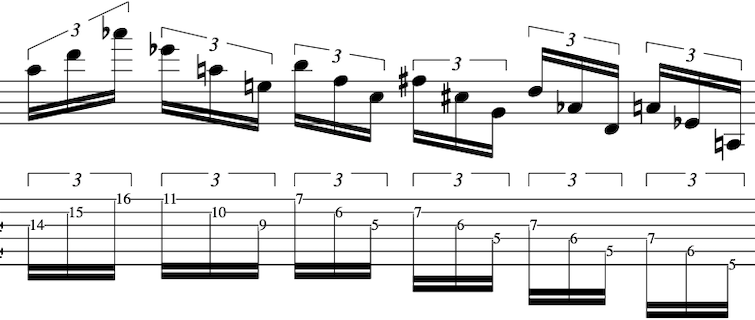
First of all, let’s look at the pattern.

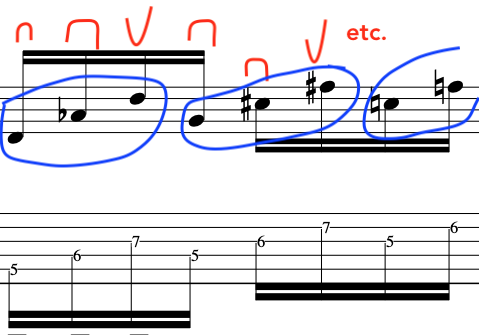
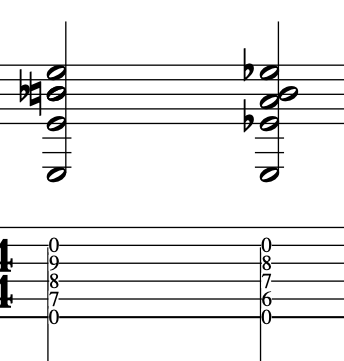
I am thinking of these motifs as 3 note “Tri-chords” [as in John ‘O” Gallagher’s book 12 tone improvisation].

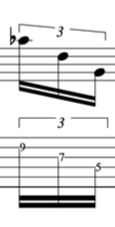
Here, are the first 3 pitches as a tri-chord.

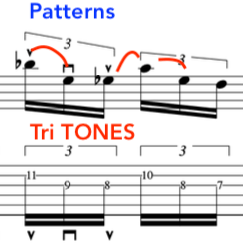
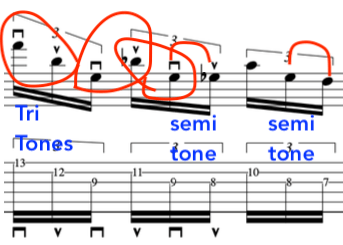
What makes this line interesting is that the “Tri- Chords” move in “Tri-Tones”.

You could view this from a diminished perspective but from a picking perspective it is more like tritones and semitones. This gives it that unique angular sound.

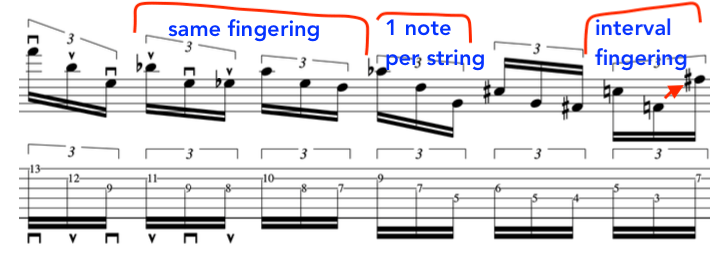
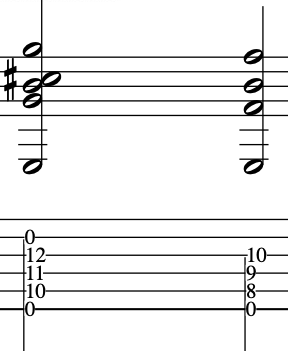
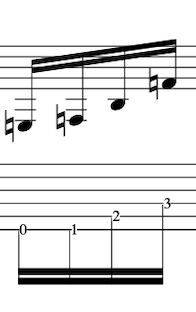
If we look at the example below we can see a classic example of a tri-chord pattern/sequence with the same guitar fingering.

scott-collins-12-tone-symmetrical-guitar-patterns

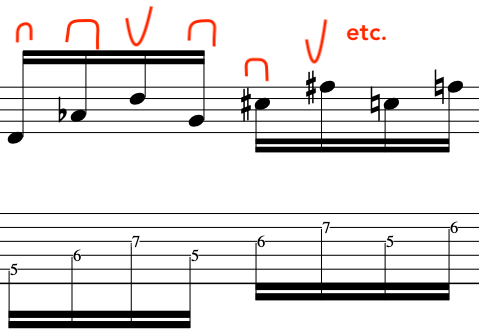
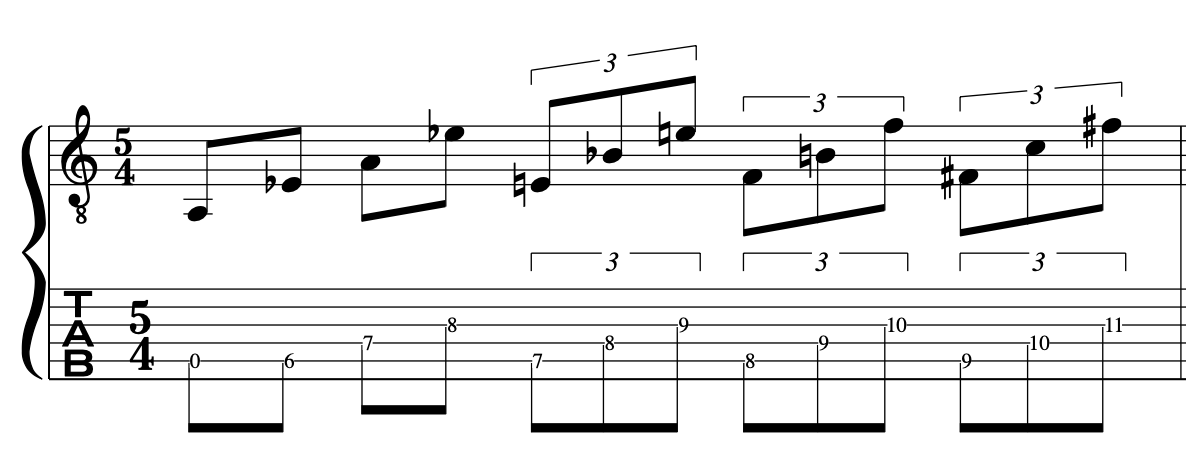
In the next example, we can see the tri-chords, the tritones and the semitone movement.

scott-collins-12-tone-symmetrical-guitar-patterns

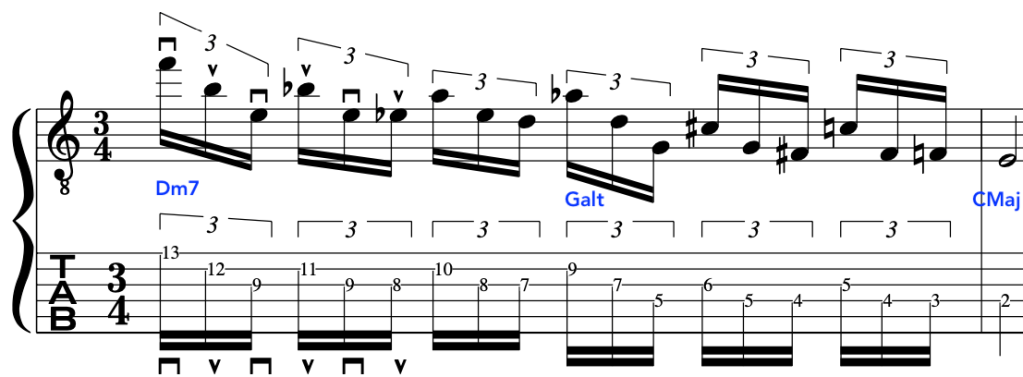
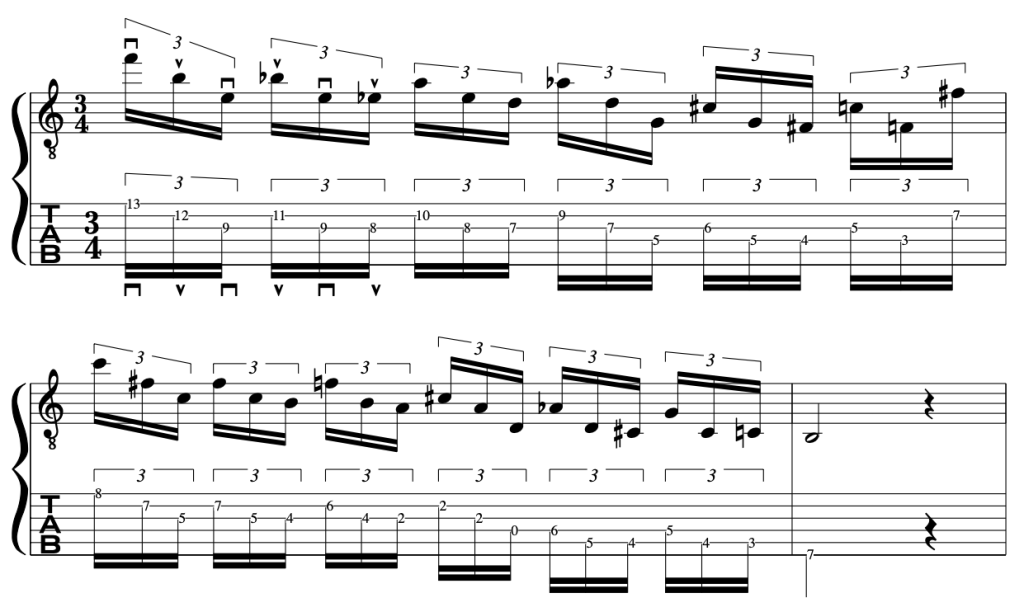
I am using strict alternate picking guitar technique for this exercise starting this on a “Downstroke”.

I am counting in groups of three note triplets, although, you could count in sextuplets.

There is a lot of one note per string and two notes per string picking. So, remember when you pluck down to pluck back up equally. This very much Robert Fripp style picking and hence you need to be aligned with the string you wish to pluck.

scott-collins-12-tone-symmetrical-guitar-patterns

scott-collins-12-tone-symmetrical-guitar-patterns

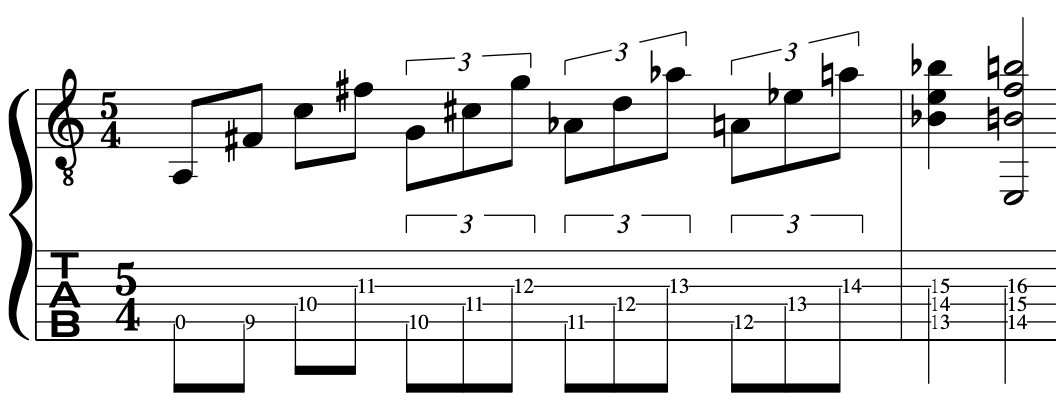
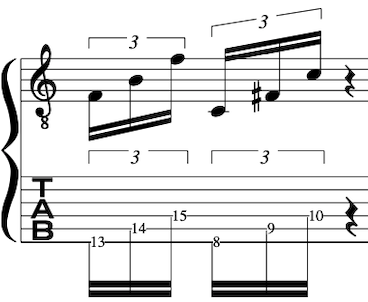
Lastly, we will use half of the patten and play it over a traditional ii V7 I

scott-collins-12-tone-symmetrical-guitar-patterns

scott-collins-12-tone-symmetrical-guitar-patterns

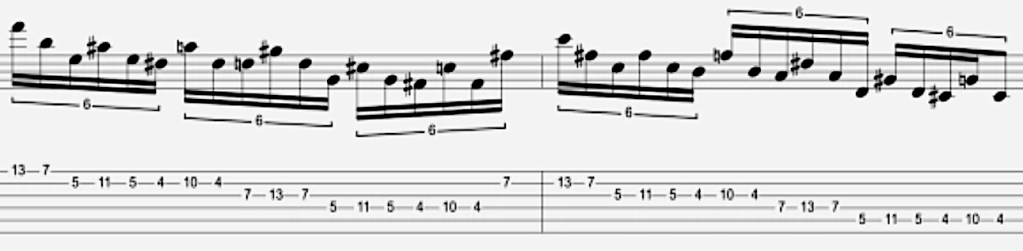
Below, is the original line I took this from. As, you can see from the fingering, this was more of a symmetrical pattern with tapping.

scott-collins-12-tone-guitar-pattern

scott-collins-12-tone-guitar-pattern-book

Robert Fripp Flat 5th “Tri-tone” Guitar Technique: Exercise 1

Hi Guys,

Today, a look at the Robert Fripp flattened 5th [tri-tone] guitar shape and its right hand picking patterns, rhythmic concepts and single note lines and chordal applications.

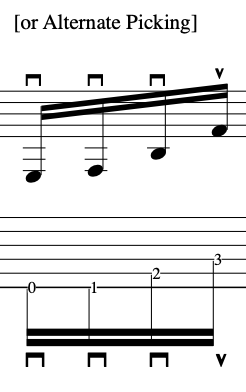
In the first part we can employ, “Down down down up” or plain alternate picking:

fripp-guitar-technique

From here we can either exploit the “Down Down up” pattern or once again employ our old friend alternate picking:

fripp-guitar-technique

Also, notice how the rhythm is working. It’s a bit like triad pairs in the way it is counted, set up and felt. [It also creates a 1 2 3 effect]

fripp-guitar-technique

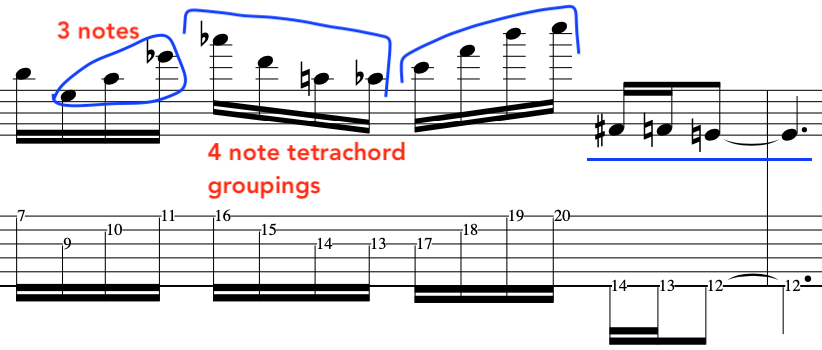
We now carry this on and break it up with two 4 note groupings. [Finishing with 3 notes in the bass]

fripp-guitar-technique

This shape can also be employed brilliantly for chords and chordal picking.

Here, we play all 6 strings on the guitar and leave the open E and B strings to resonate around the flat 5 shape.

fripp-guitar-technique

This, then gives way for a quick fire ascension of the b5 shape:

fripp-guitar-technique

We now shift the shape up higher and imitate the process:

fripp-guitar-technique

And, move the figure up also,

fripp-king-crimson-guitar-technique

To complete the phrase we will descend the b5 figure with strict alternate picking starting on a “Down” stroke:

fripp-king-crimson-guitar-technique

From here, we will break it up with a group of 4 notes employing Down Down Down Up to 3 notes with Down Down Up:

fripp-king-crimson-guitar-technique

To:

fripp-king-crimson-guitar-technique

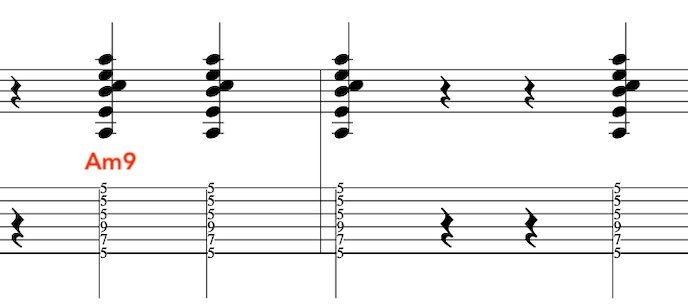
And finally, finishing with four Am9 chords:

This example/exercise was just to exploit the b5 shape and show what is possible both rhythmically and in terms of the right hand picking techniques.

The key though is to employ and develop it sparingly. This way it can cause surprise and rhythmic interest.

It’s a really useful guitar tool for composition and creating a unique and individual voice for the serious creative guitarist.