Al Di Meola Arpeggio Inversions on Guitar: Techniques and Variations

Al Di Meola Arpeggio inversions: Right hand guitar technique lesson

Hi Guys,

Today, a look at picking arpeggio inversions on the guitar. This is in the more recent style of Al Di Meola’s nylon string guitar playing/composing.

The main guitar picking pattern is “Down Down Up” and the variations of this naturally occur form the music itself.

al-di-meola-arpeggio-inversions-on-guitar-techniques-variations

This simple “Down Down Up” patten means that the final upstroke makes it easy to pluck the next downstroke on the lower strings.

To begin with lets play a simple F Major arpeggio in the root, 1st inversion and 2nd inversion:

al-di-meola-arpeggio-inversions-on-guitar-techniques-variations

As you can see and hear the “Down Down Up” works smoothly with the basic F major arpeggio inversions.

Now, let’s pick a chord sequence and vary the picking set up and pattern:

Basic Down Down Up: F root, E7 1st inversion, Am root:

al-di-meola-arpeggio-inversions-on-guitar-techniques-variations

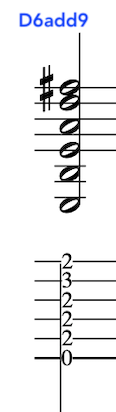
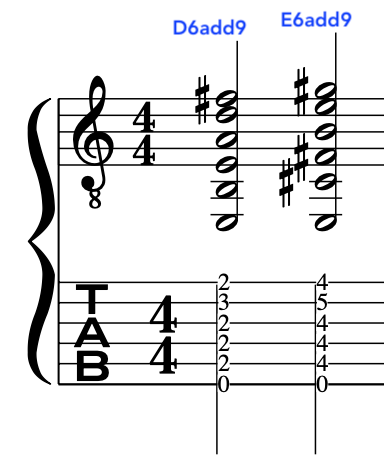
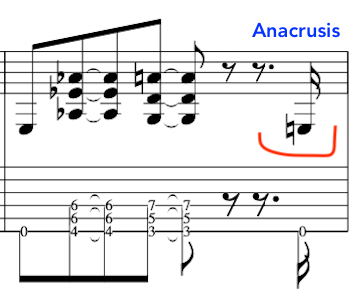
Now, we will add an open E string for a syncopated rhythmic off beat set up,

al-di-meola-arpeggio-inversions-on-guitar-techniques-variations

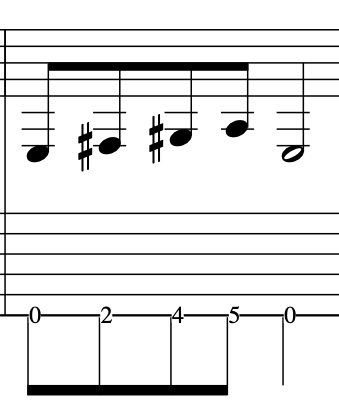
You will also notice the two upstrokes on the high B and C notes. This makes it easy to descend with the pick/pattern whilst anticipating the next chord:

al-di-meola-arpeggio-inversions-on-guitar-techniques-variations

This time we will employ the 1st open E string and do the same thing:

al-di-meola-arpeggio-inversions-on-guitar-techniques-variations

We will now extend this chord sequence with more arpeggio inversions to outline the chord sequence.

al-di-meola-arpeggio-inversions-on-guitar-techniques-variations

Let’s extend this some more.

We now have

al-di-meola-arpeggio-inversions-on-guitar-techniques-variations

Here is the Full Sequence:

al-di-meola-arpeggio-inversions-on-guitar-techniques-variations

With Open Strings added:

al-di-meola-arpeggio-inversions-on-guitar-techniques-variations

This example makes use of triple upstroke picked to create beautiful melodic movement:

al-di-meola-arpeggio-inversions-on-guitar-techniques-variations

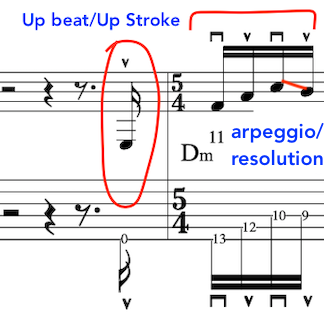
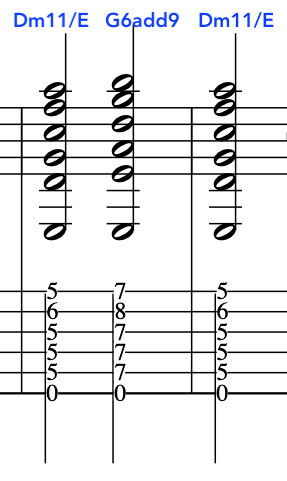
Finally, we will exploit A augmented 1st inversion going to D minor root: Also, notice the single note melodic rise of the high notes.

al-di-meola-arpeggio-inversions-on-guitar-techniques-variations

In conclusion, these are just a few examples of the beauty and fluidity of following arpeggio inversions for melodic composing and performing at the guitar.

This way of playing smoothly through the inversions works really well with the guitar pick, and as you can see in the examples the inversions can be manipulated rhythmically with anticipation/syncopation.

FREE PDF DOWNLOAD:

Jazz Fusion Alternate Picking Guitar Exercise Analysis

Hi Guys

As requested, here are the two youtube shorts [uploaded horizontal] with the Tab/Notation. [Sorry, some notation is a bit messy]

Alternate Picking guitar exercise. Jazz Fusion music mid tempo. Lesson/How to:

PLEASE NOTE: These are only exercises to connect and get familiar with the jazz tools of improvisation in regards to alternate picking:

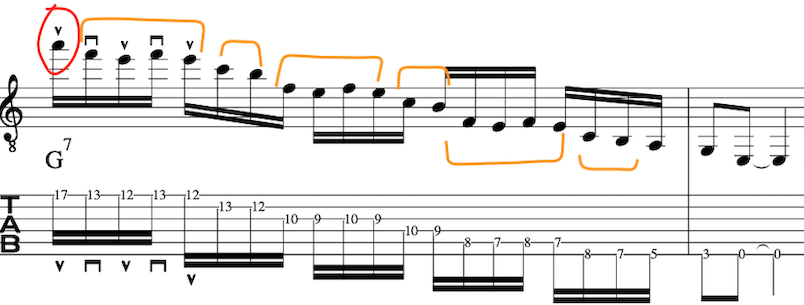
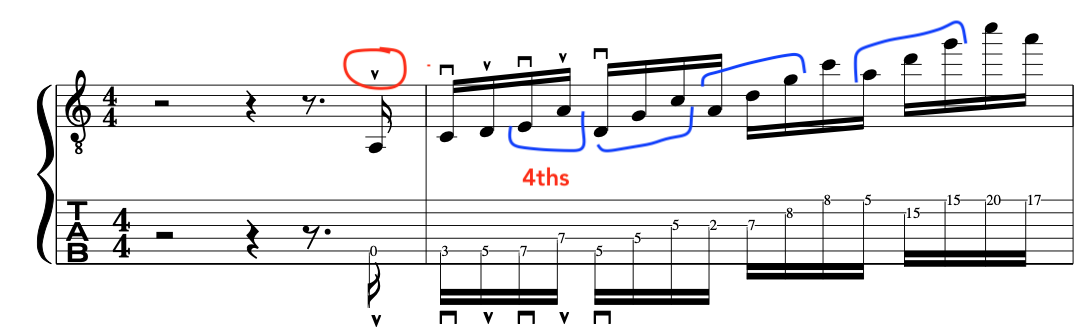
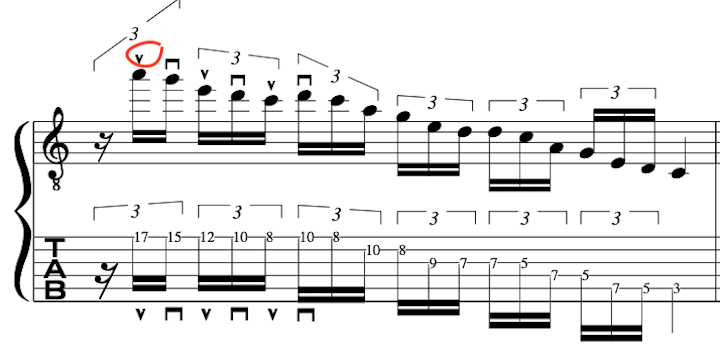
This exercise starts on a down stroke with strict alternate picking around 130-140 Bpm:

The point of the exercise is to “Connect” lots of jazz improvisation concepts together.

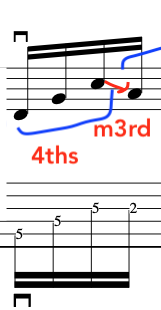
The first being barring 4ths and 3rds with the little finger [or pinkie]. This breaks up the monotony of the scale sound and creates a melodic inflection. It also makes it easy to play quickly as two notes are fretted with the same finger.

alternate-picking-guitar-jazz-fusion-lesson

This exercise is also good for exploiting phrasing on one string:

alternate-picking-guitar-jazz-fusion-lesson

It’s also good for triad implications or sus 4-3 to lengthen the line.

alternate-picking-guitar-jazz-fusion-lesson

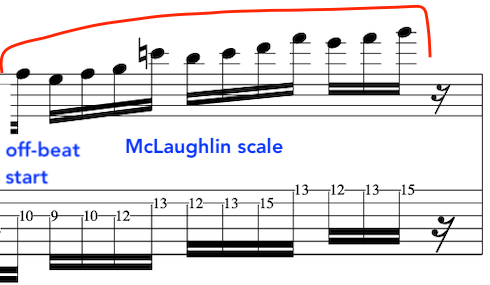
Lastly, another tool that works really well for both the alternate picking right hand and the sound of the phrase is to employ an arpeggio. In this exercise we have also manipulated the open string to set up the next fragment of scale on the same string.

alternate-picking-guitar-jazz-fusion-lesson

alternate-picking-guitar-jazz-fusion-lesson

Alternate Picking mid tempo guitar exercise

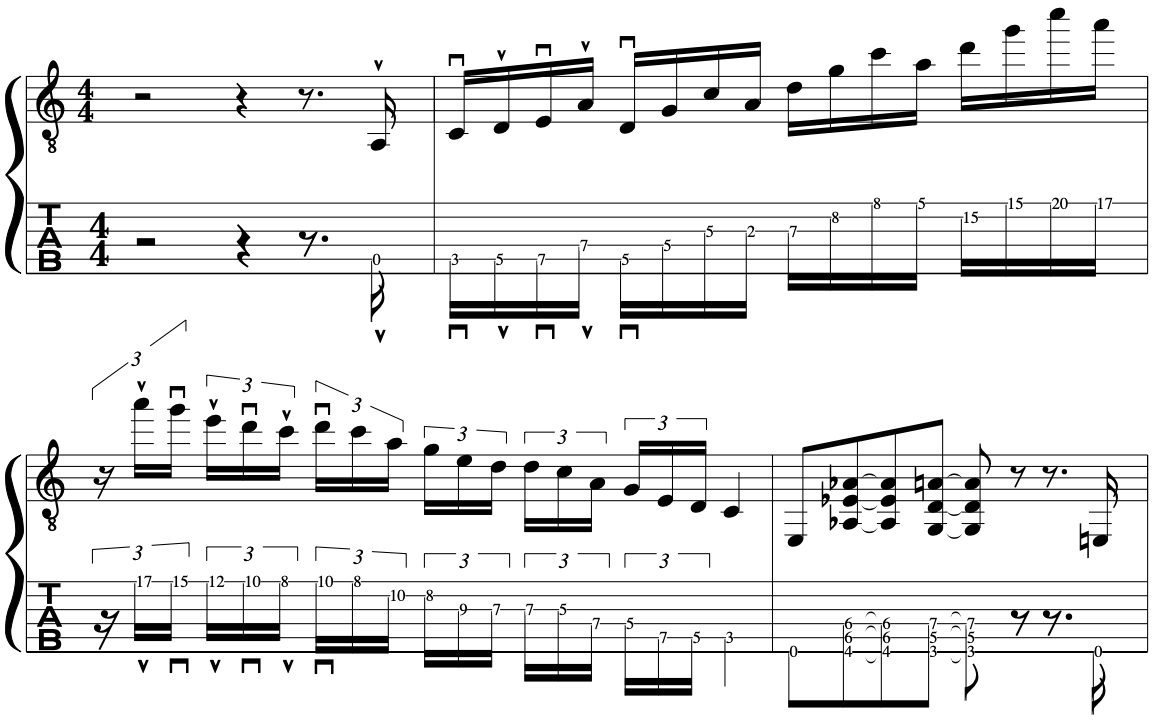
This exercise starts on a downstroke once again, but, this time we descend:

The same improvisational tools are applied.

We start the line with some 4ths barred with the little finger into a bit of broken scale.

alternate-picking-guitar-jazz-fusion-lesson

This leads us nicely into the employment of two arpeggios. These arpeggios create melodic colour over the A7 Dominant chord.

alternate-picking-guitar-jazz-fusion-lesson

Next we exploit the alternate picking on the same string for two beats over the D Major 7 chord:

alternate-picking-guitar-jazz-fusion-lesson

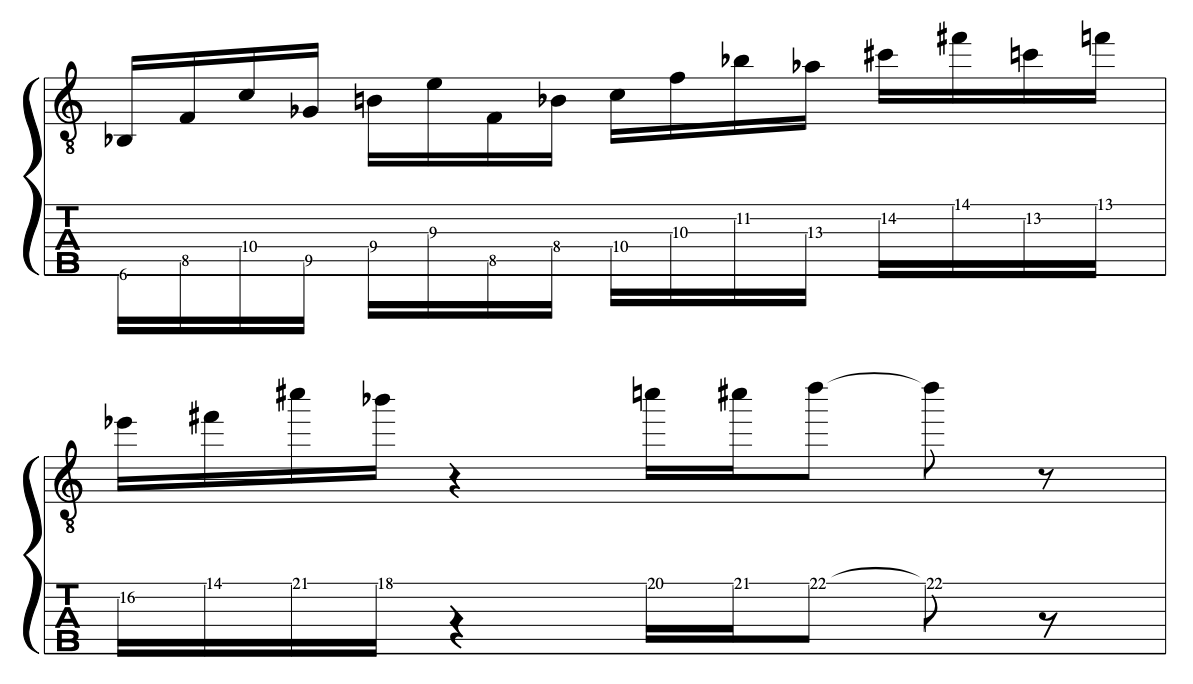
As with the previous exercise we exploit the Major 3rd and perfect 4th intervals, which means that we can alternate pick two notes quickly without having to change our fretting fingers.

alternate-picking-guitar-jazz-fusion-lesson

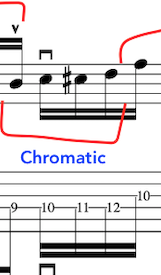
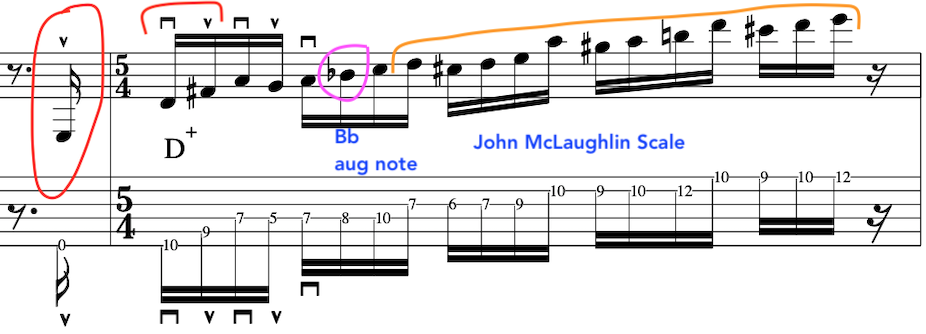
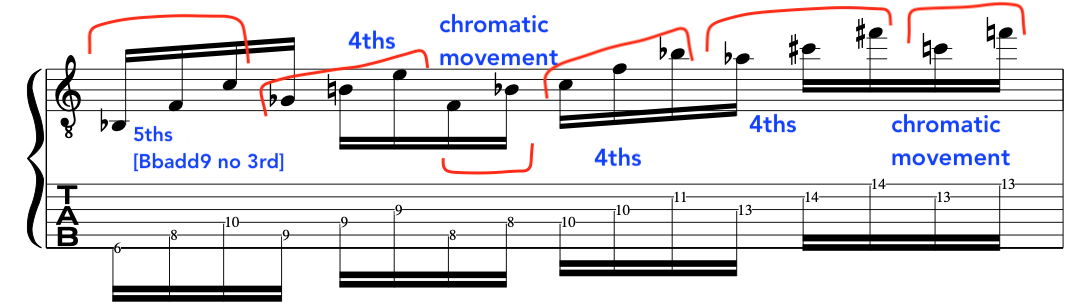
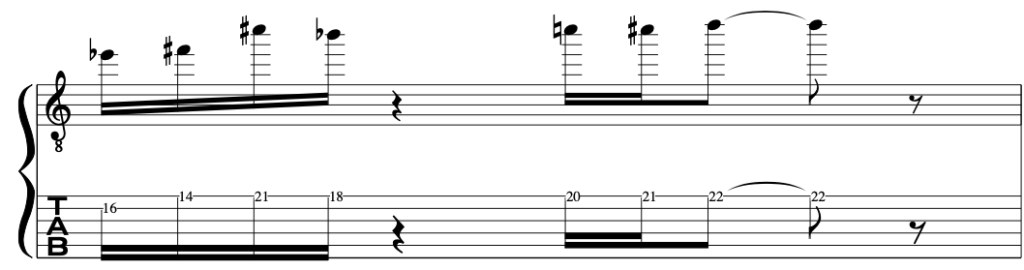
Finally, we employ the chromatic scale starting on the #5 [Bb] of D7augmented chord:

alternate-picking-guitar-jazz-fusion-lesson

In conclusion it’s through exploiting these improvisational devices that we can alternate pick and create long quick fluid lines lines that make improvisational sense.

In terms of jazz fusion this means that we can play smoothly through ambiguous harmony as well as standard chord changes at a quick tempo.

FREE PDF DOWNLOAD:

Don Mock: Target Tones Book and C.D Review:

Don Mock “Target Tones” Bok and C.D Review

Hi Guys,

Some of you have asked me if there is a good resource for mastering target tones or jazz chromatics on the guitar.

The good news is yes there is!…

But, it is out of print

Although, You might find a Pdf or cheap copy on the internet, Amazon or Ebay.

Okay, so what resource is this?

Well, this resource is a book with C.D written and performed by brilliant jazz guitarist and teacher supreme Don Mock.

don-mock-target-tones-book-CD-review

The difference between this book and most other books on jazz and chromaticism is that Don shows the “Theory”. This makes it easy to understand.

The key is this: The first three notes set up and target the chord tone that is on the beat:

Here, it is on beat 3 in red.

don-mock-target-tones-book-CD-review

Here, is a second target melody: Again, we see the same set up:

Despite the chromaticism/target tones you can clearly see the outline of the arpeggio in red.

The arpeggio tones are “On” the beat: That is beats 1 and 3.

Lastly, notice the upbeat/target melody in bar 1 that sets this process in motion:

As a final example, [and also where this book is in a league of its own] is in the manipulation of double timed 16th note phrases.

This time the target melody or target tones outline the C Major scale:

Again, the notes of the scale are in red and are played “On” the beat and this time there are 4 scale tones per bar.

Again, notice the set up in bar 1:

When you have this down then you can start to manipulate the target melodies and try placing them in different parts of the bar.

Also, when you are fluent you can start to break the rhythm up and exploit the rhythmic phrasing.

This was just a brief look at Don Mocks excellent book/C.D “Target Tones”. I am not promoting this book or in any way involved with it, but, as I am always asked for a great resource to learn jazz chromatics on the guitar I felt that this would be of great help to anyone confused or trying to understand the theory behind it.

FREE PDF DOWNLOAD: