Schoenberg’s chord of the 15th-Music Examples and Analysis

Hi Guys,

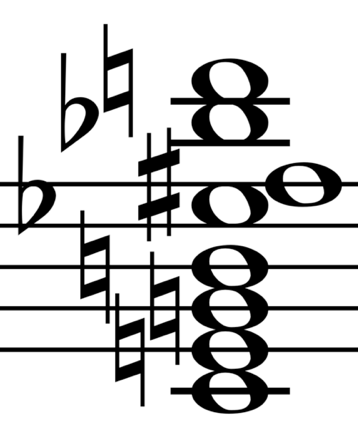
Today, a look at the final chord of Arnold Schoenberg’s “Sechs Kleine Klavierstucke” 2nd movement.  In thirds this reads as: C–E–G–B–D♯–F♯–A♯–Cx.

schoenberg_chord_music_analysis_extended_15th_in_music

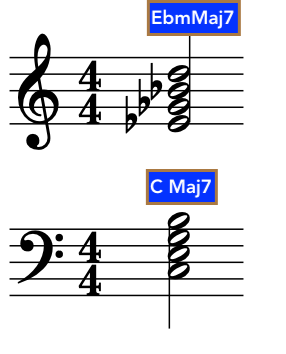
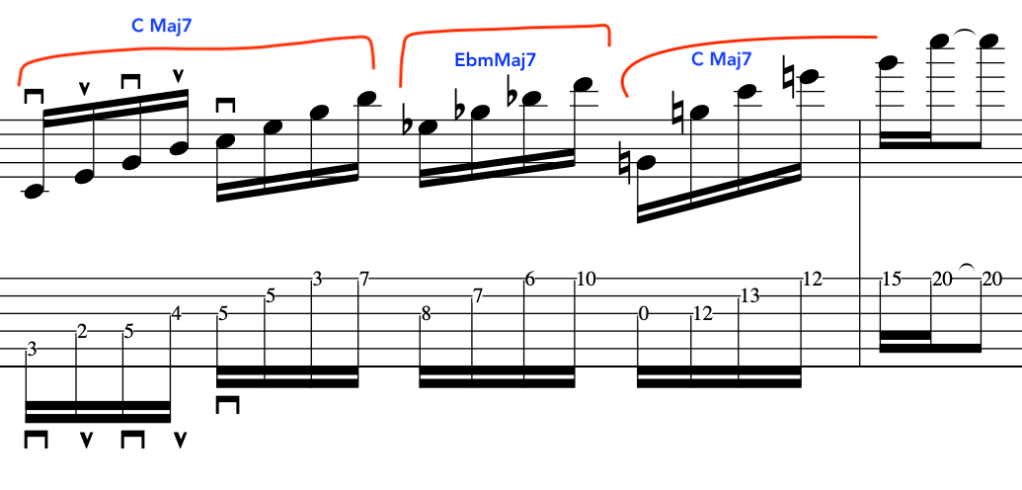
This extended chord of a 15th, can also be viewed and heard as a bi-tonal construction of C Major 7th with Eb minorMajor 7th superimposed on top

schoenberg_chord_music_analysis_extended_15th_in_music

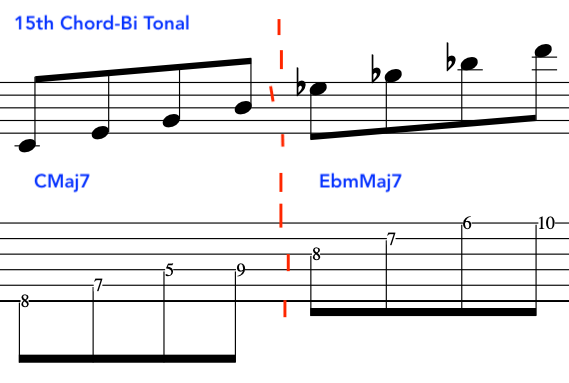
This can also, be thought of [especially in terms of the guitar] as an arpeggio of CMaj7 and an Arpeggio of EbmMaj7.

schoenberg_chord_music_analysis_explained_15th_in_music

Due, to the nature of its sound and collection of notes, it can produce some interesting counterpoint. Especially, as the Eb to E natural resolution creates colour and drama. [view video at top of page].

schoenberg_chord_music_analysis_extended_15th_in_music_guitar

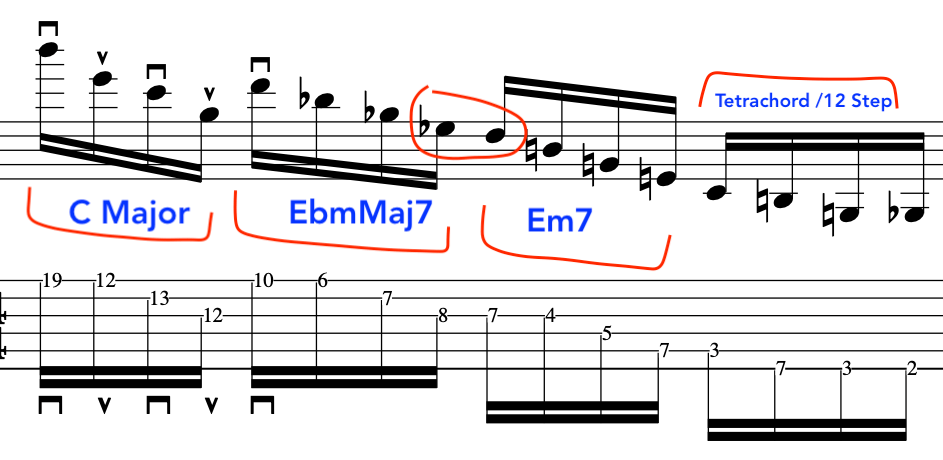
Being, a Bi-Tonal chord it is useful as it gives us triad pairs.

schoenberg_chord_music_analysis_extended_15th_in_music_guitar

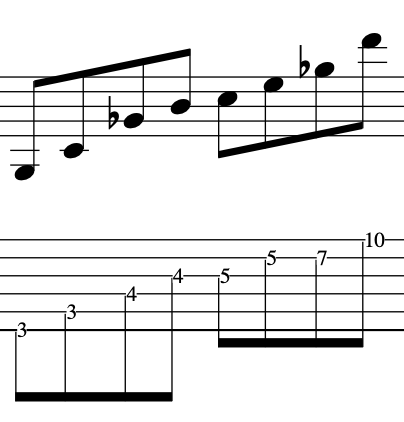
Ascending Line:

schoenberg_chord_music_analysis_chord_pairs_guitar

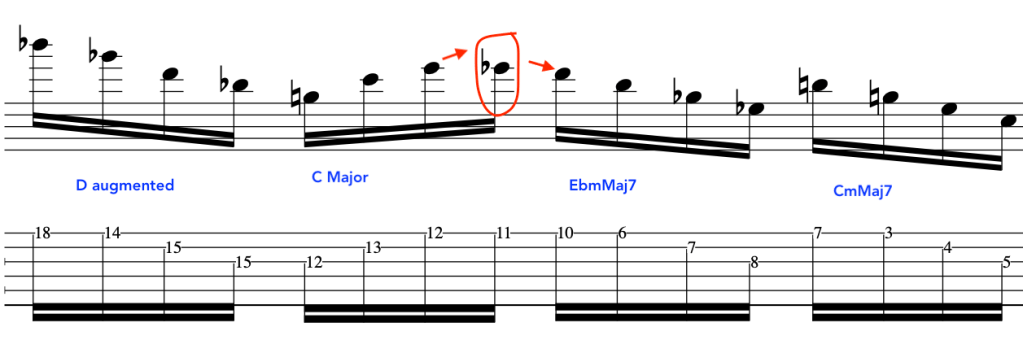
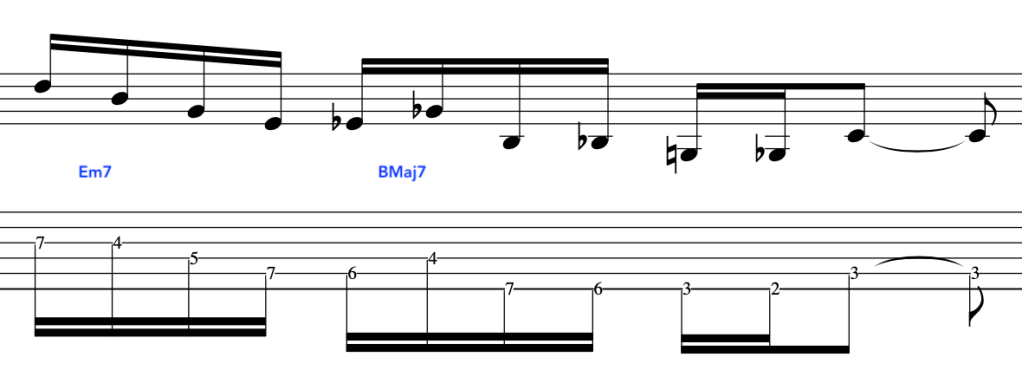
Now, we will take this a stage further by adding more chords/triads available.

D+ to C to EbmMaj7 to CmMaj7 to Em7 to Bmaj7

schoenberg_chord_music_analysis_chord_pairs

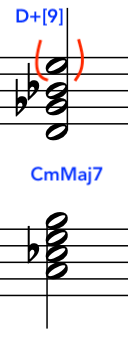
Let’s now, re voice the chord. Here we will make the chord of C a minMaj7 and add D Augmented [9th] on top.

schoenberg_chord_music_analysis_extended_15th_in_music

In the video/audio [a quick demo I created] below, we can hear the dramatic sound of this voicing in the orchestra.

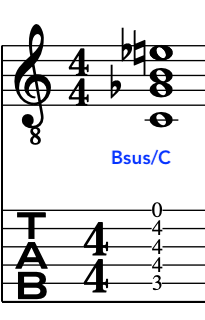
Next, we have two guitar voicing’s. Firstly we have a Bsus/C [or plain B/C] as a typical McLaughlin guitar voicing.

schoenberg_chord_music_analysis_extended_15th_in_music_mclaughlin_guitar

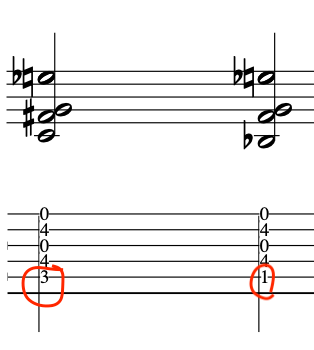
Secondly, we have the same voicing but with a changing bass.

schoenberg_chord_music_analysis_extended_15th_in_music_guitar

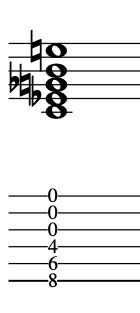
Lastly, another guitar voicing that is useful for chordal picking:

schoenberg_chord_music_analysis_extended_15th_in_music_guitar

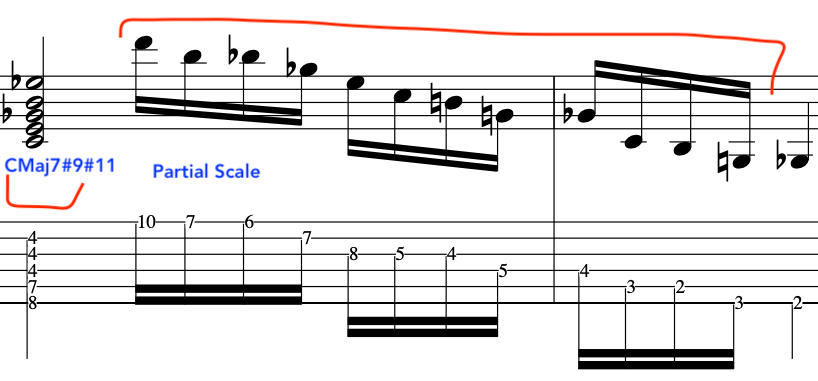
From here, we will add a partial scale descending that is formed from the chord: This chord voicing has a flattened 5th and a sharpened 9th.

schoenberg_chord_music_analysis_extended_15th_in_music_guitar

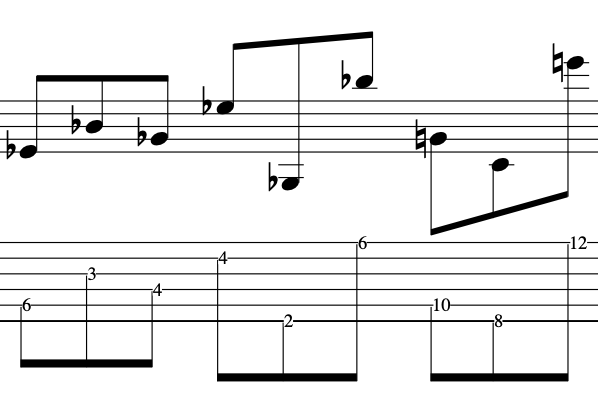
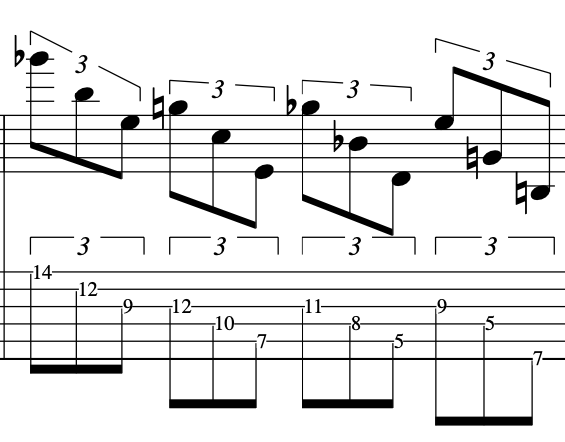
Lastly, we can create some interesting and colourful passages by exploiting the intervals inherent within this 15th chord.

schoenberg_chord_music_analysis_extended_15th_in_music_intervals

Arnold_Schoenberg's_chord-of-the 15th_analysis_music_theory

Exploring Modal Chord Progressions in C Major

CLICK SUBSCRIBE!

Hi Guys,

Today, a quick look at modal chords.

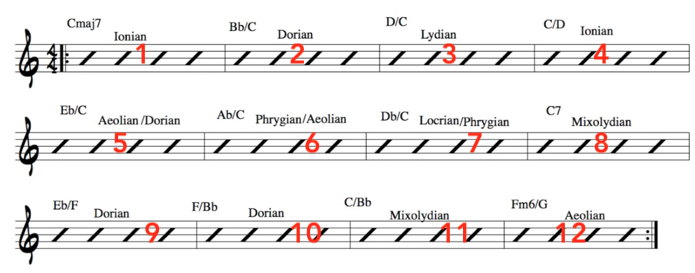
The chords are from the backing track [below in this page] and they are “Transposed” with C as the root note.

These are exploited in the 12 bar form of a fusion blues.

modal_chords_guitar_lesson_explained_easily

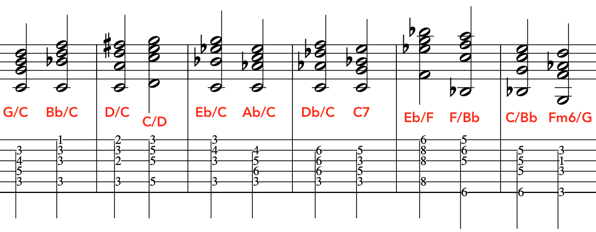
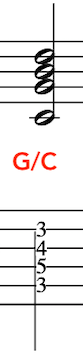
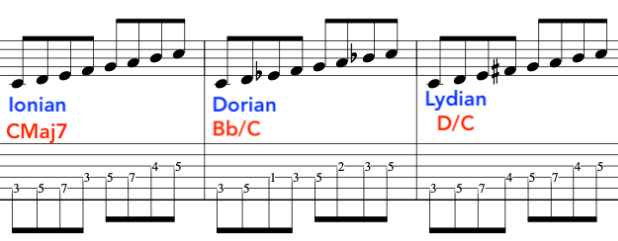
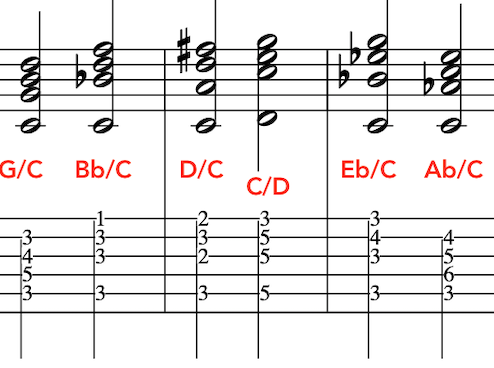
To begin with, we will take the first chord for the basic Ionian/Major sound. Here we have a chord/triad of G Major over the bass note C as a substitution for Cmaj7:

modal_chords_guitar_lesson_explained_easily

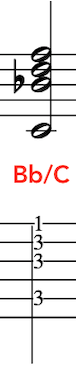
Next, we have a C Dorian tonality. For this I am employing a 7sus4 chord with a triad of Bb over a C bass once again

modal_chords_guitar_lesson_explained_easily

From here, we will create a C Lydian sound. We will do this by employing a triad of D Major over a C Bass.

modal_chords_guitar_lesson_explained_easily

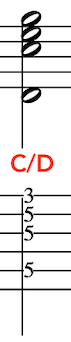
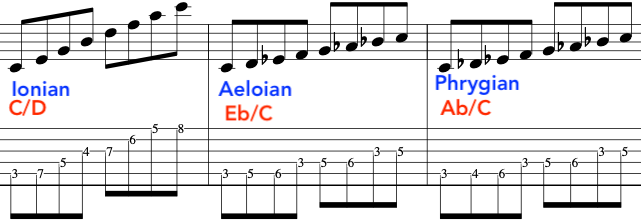
Now, we will move back to Ionian with another 7sus4 chord. This time it’s a triad of C Major over a D Bass.

modal_chords_guitar_lesson_explained_easily

To create interest, we will now make this tonality minor by adding a triad of Eb Major over a C Bass [a la C minor 7th]. [Aeolian/Dorian]

modal_chords_guitar_lesson_explained_easily

For, the Phrygian/Aeolian sound, we will employ a 1st inversion triad of Ab Major over a C bass.

modal_chords_guitar_lesson_explained_easily

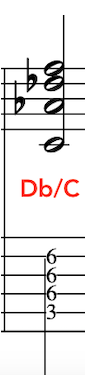
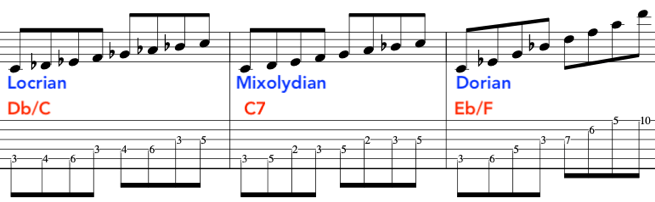
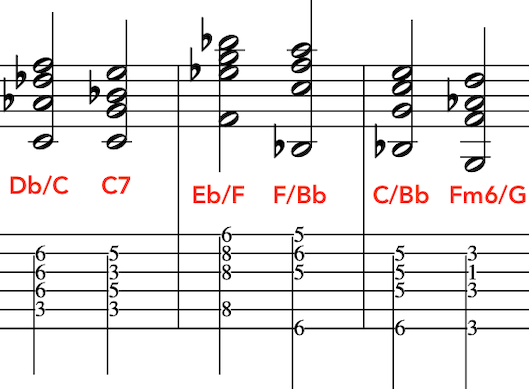
To create some dissonance, and a more ethereal sound it’s a good idea to add a Locrian chord. In this instance, I am employing a triad of Db Major over the C Bass.

modal_chords_guitar_lesson_explained_easily

For the mixolydian sound I am employing a simple C7 chord. [You could also add a 4-3 suspension]

Now, let’s add a couple of Dorian chords.

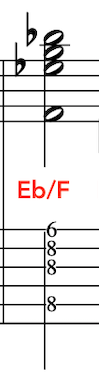
These will be another 7sus4 chord of an Eb triad over an F bass.

modal_chords_guitar_lesson_explained_easily

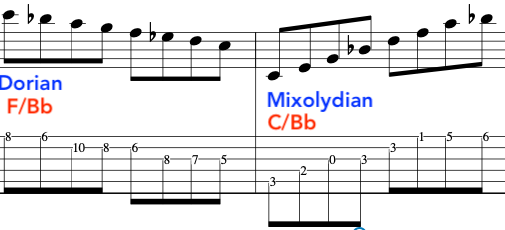
And, a Major 9 [or sus2] no 3rd chord. For this we will add a triad of F major over a Bb bass.

modal_chords_guitar_lesson_explained_easily

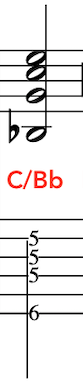
For the penultimate Mixolydian chord, we will create a 3rd inversion [Dominant]. This will be a C Major triad over a [the 7th] Bb bass.

modal_chords_guitar_lesson_explained_easily

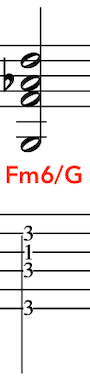
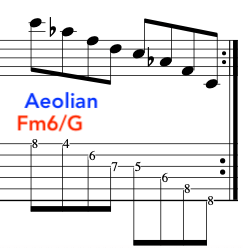
And finally, an Aeolian sound with an Fm6 chord over a G bass.

modal_chords_guitar_lesson_explained_easily

Modes Backing Track Transposed in C Major with Chart and Scale Suggestions.
modal_chords_guitar_lesson_explained_easily

modal_chords_guitar_lesson_explained_easily

IF THIS LESSON WAS OF USE TO YOU THEN PLEASE SUBSCRIBE TO US BELOW ON YOUTUBE, THANKS!

Stravinsky “Rite of Spring” Chord: Analysis/Harmony and Application

Hi Guys,

Today, a look at the amazing orchestral chord from “The Rite of Spring” [“Augurs of Spring ” – Les augures printaniers] by composer Igor Stravinsky.

This is a Bi-Tonal chord consisting of two parts or two different tonalities. In the Bass we have a chord of F flat Major and in the treble we have a chord of Eb7

Musical notation displaying the F flat Major and Eb7 chords, highlighting Stravinsky's "Rite of Spring" chord   [augurs of spring chord]
Musical notation illustrating the bi-tonal chord of F flat Major and Eb7 from Stravinsky’s ‘The Rite of Spring.’

Stravinsky calls this F flat Major as opposed to its enharmonic [E Major] because, he employs an Eb Major key signature making it easier to read and follow, whilst removing any # accidentals that could create messiness. [The extra flats make it legible].

stravinsky_rite_of_spring_chord_augurs_of_spring

In our modern analysis we can think of it this way,

"Les Augures printaniers" sheet music displaying F flat Major and Eb7  Stravinsky chords with annotations.

Here, is how the rite of spring chord sounds in an orchestral context:

From Stravinsky’s score: Here, we can see Stravinsky’s mastery, displayed by his execution of rhythmic brilliance.

stravinsky_rite_of_spring_chord_augurs_of_spring

Below, is how it sounds as a pad on an modern keyboard

Due, to the nature of the guitar we really need an extra finger and an extra string to do this unique chord justice.

But, here are two guitar voicing’s for harmony, strumming and chordal picking:

Musical notation diagram illustrating a bi-tonal "Rite of Spring" chord with tablature for guitar, depicting an F flat Major and Eb7 chord by Stravinsky.
Guitar voicing example for the Bi-Tonal chord from Stravinsky’s ‘Rite of Spring.’
stravinsky_rite_of_spring_chord_guitar-lesson-voicing

In the example below, we can see the amazing way Stravinsky’s “Rite of Spring” chord resolves and how the structure of the harmony moves.

stravinsky_rite_of_spring_chord_augurs_of_spring_analysis
stravinsky_rite_of_spring_chord_augurs_of_spring_harmony
stravinsky_rite_of_spring_chord_augurs_of_spring

Due to the nature of the two chords being a semitone apart we can create some interesting chord pairs lines/licks from this:

stravinsky_rite_of_spring_chord_augurs_of_spring_bi_tonality

Okay, now let’s develop this a bit,

stravinsky_rite_of_spring_chord_augurs_of_spring_bi_tonal_lesson

We, can also build on this concept and create some interesting guitar or solo instrument lines with this approach:

Here is a lick/line example:

A music score highlighting E Major and Eb Major sections improvised Stravinsky "Rite of Spring" chord
Musical notation highlighting the transition between E Major and Eb Major chords in Stravinsky’s ‘Rite of Spring.’
Musical score displaying E Lydian and Eb Major sections, with annotated rhythmic divisions for Stravinsky's "Rite of Spring" chord
Musical notation illustrating the E Lydian and Eb Major scales, highlighting the rhythmic structure and chord pairs from Stravinsky’s ‘Rite of Spring’.

This was just a quick look at the potential of just one chord!

This Bi-tonal and Polytonal approach opens up so much in terms of inspirational ideas, originality and fresh harmonic perspectives.

In this way, cliches can be rung of banality and forged into something interesting and unique and thoroughly challenging.

“Les Augures Printaniers/The Rite of Spring” is such a great example of this, possessing a little world within itself. Add, to this Stravinsky’s brilliant exploitation of rhythm and we have a [Bi-tonal]chord that’s an all time classic!