Robert Fripp Guitar Picking Exercise for Unique Phrases and Patterns

Robert Fripp Guitar Picking Lesson and Exercises

Hi Guys,

Today, a Robert Fripp style Guitar Picking exercise that incorporates various Fripp/King Crimson guitar picking patterns.

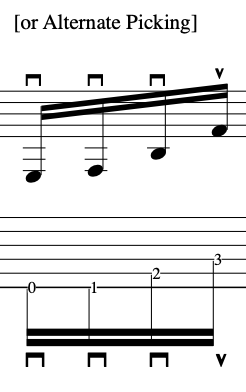
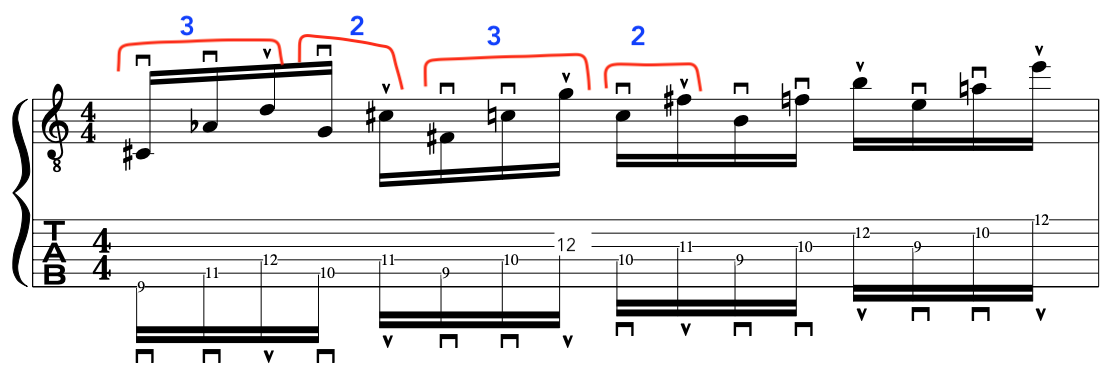
These are angular, string skipping and awkward intervals that can be picked with either strict alternate picking or “Down Down up”. I employ alternate picking mostly, but, there are parts where I exploit the “Down Down Up” pattern purely because some string skipping intervals are too wide and awkward for alternate picking alone.

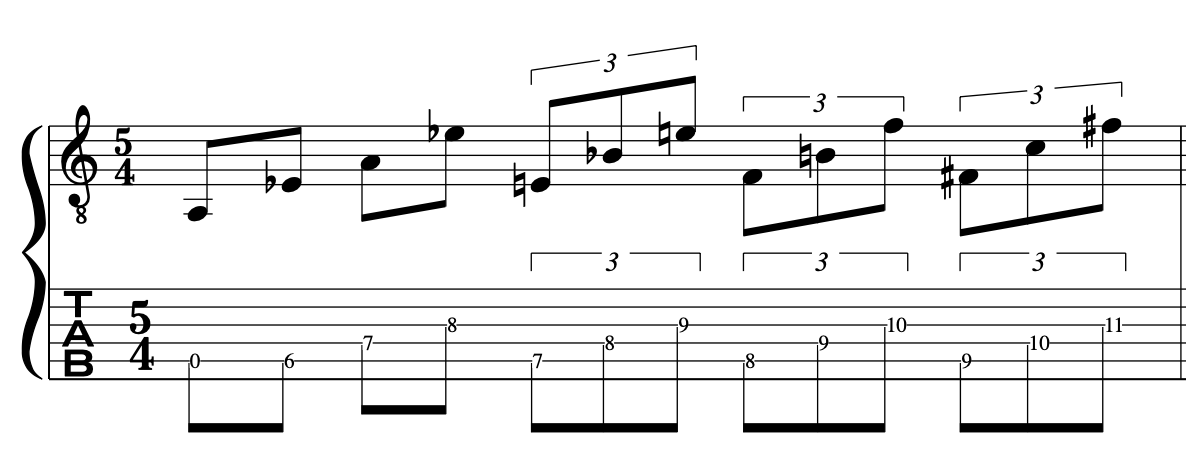
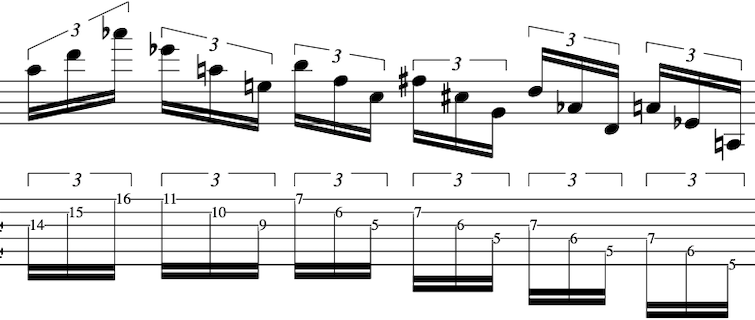
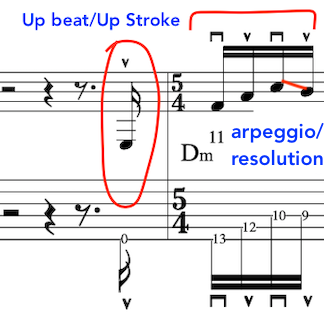
The first bar is quite awkward and so I “Float” with my right picking hand. This way I am not stuck in any one position and I can freely pluck the passage without any intrusions.

king-crimson-fripp-guitar-picking-lesson-example

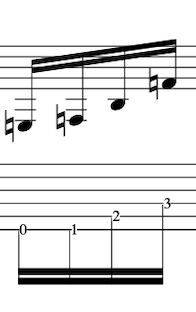
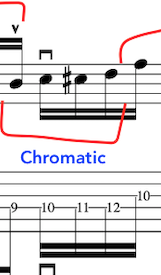
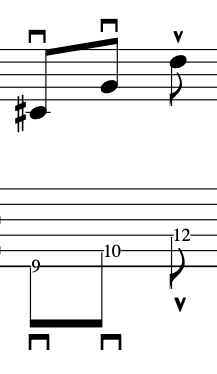
At this part of the bar you will notice the awkward string skipping part between the C and C# down to the E note. You will need to pivot with the fretting hand for this. [Please see video above for detailed info].

fripp-guitar-picking-lesson-example-intervallic

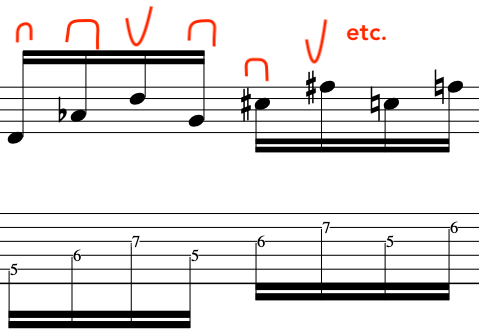
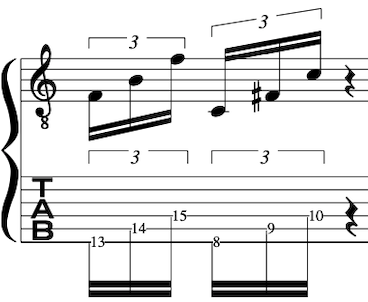
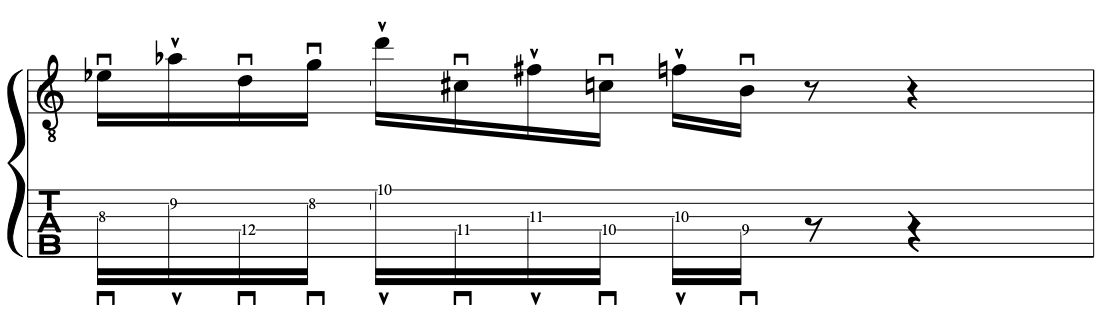
The next bar is starting on an “Upstroke” with strict alternate picking:

fripp-guitar-picking-lesson-example

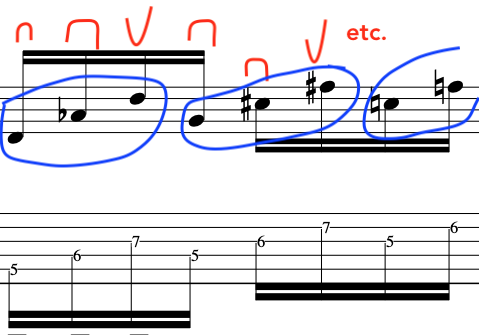
The next Phrase is reminiscent of “Larks Tongues in Aspic III” by Fripp. Notice the C note to the open E string to the C# note. This connects the phrase nicely by breaking the chromaticism up and at the same time making it fluid.

robert-fripp-guitar-picking-lesson-example

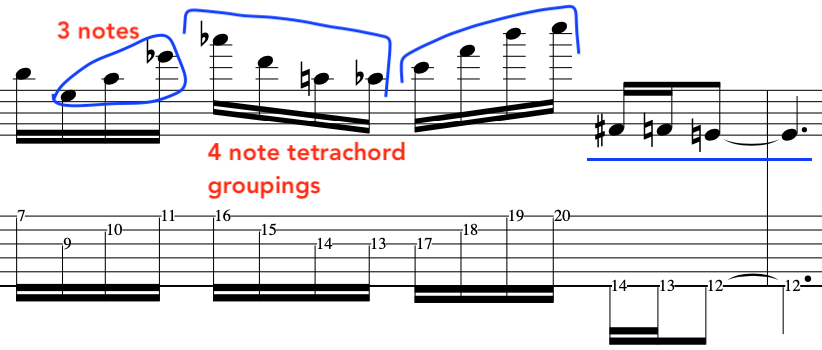
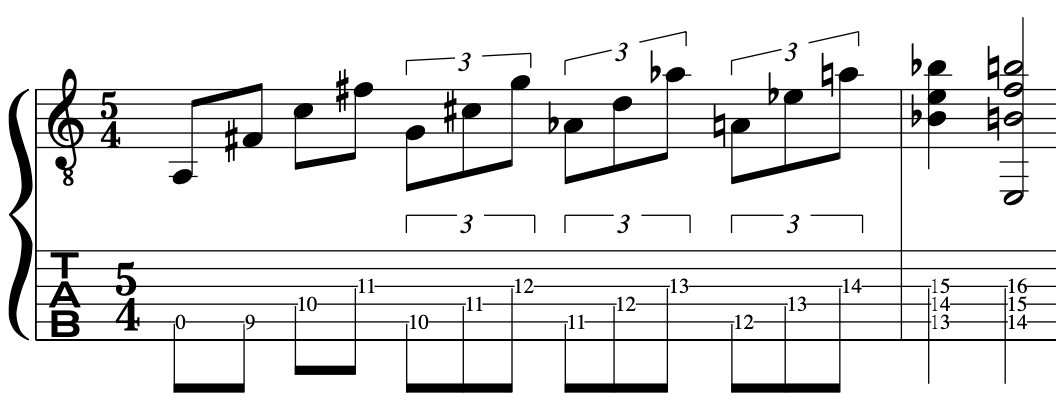
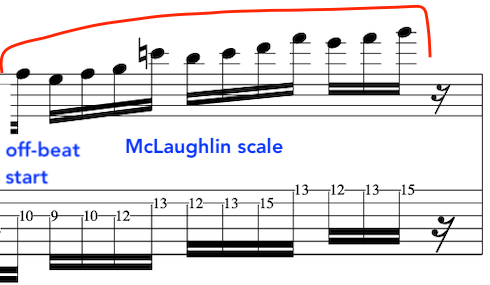
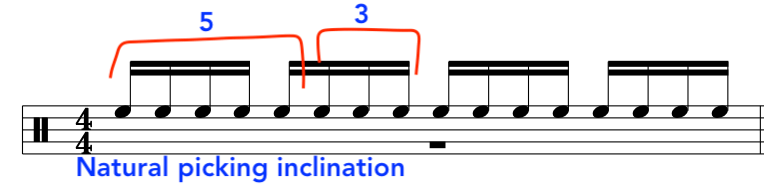
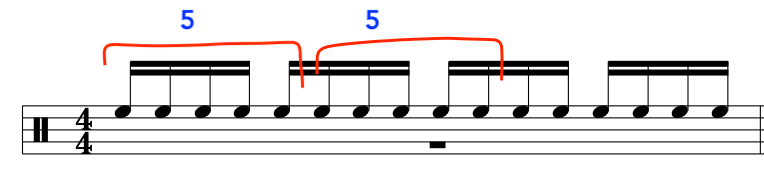
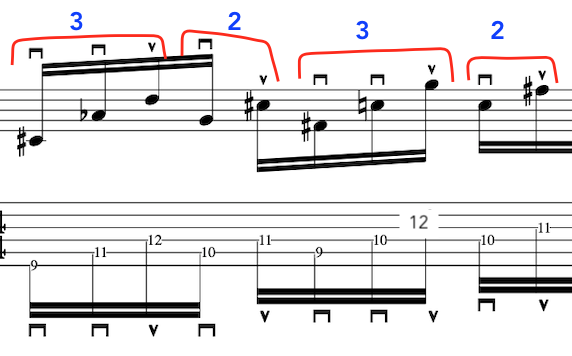
In the next part we can see how phrases might be counted or felt as groups of 5 or 3. [See video above]

crimson-fripp-guitar-picking-lesson-example

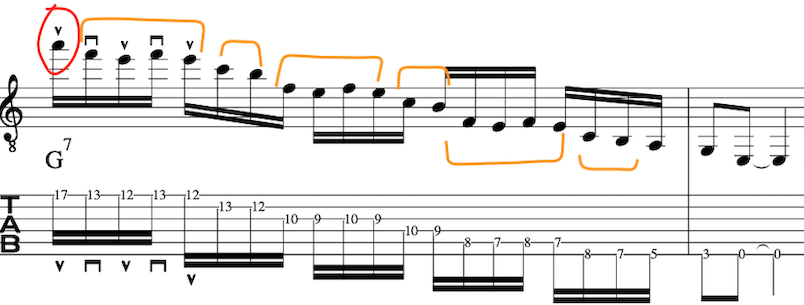
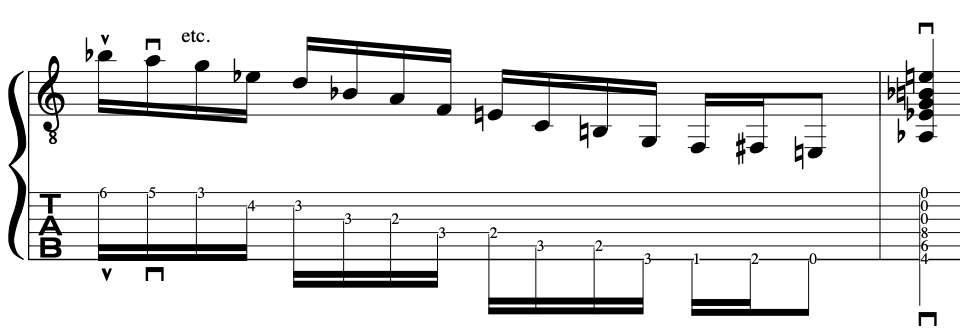
To round the phrase off I employ a descending Eb Dominant pentatonic scale: This employs alternate picking starting on an upstroke. [I finished on the note F# purely becasue I like the sound].

fripp-guitar-picking-lesson-example

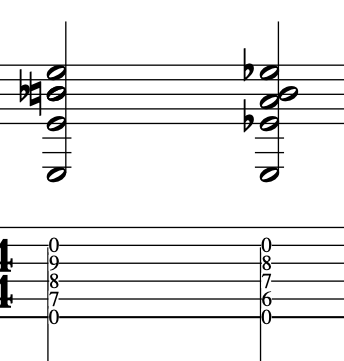
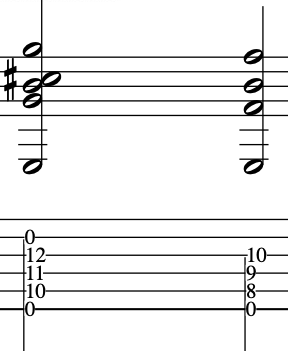
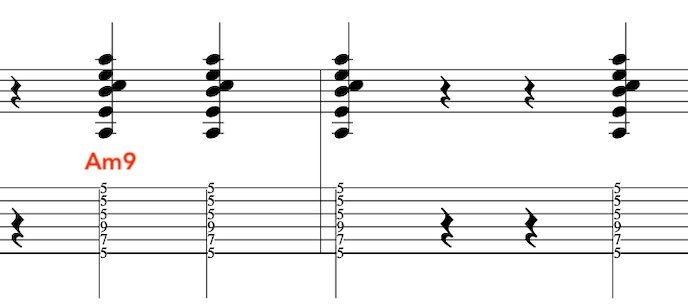
The final part employs a 5/8 chordal picking vamp:

The picking pattern I use is : “Down down down up up” and “Down down up down up” with the plectrum.

fripp-guitar-picking-lesson-example

This was just an exercise/example by taking some King Crimson, Robert Fripp signature licks, patterns and phrases and making a little etude from them. This in turn creates some familiarity with the right hand picking in order to create patterns of our own.

Making your own patterns and coming up with your own original and unique phrases is the key rather than to just copy.

There are so many variations to exploit, which gives any player a mountain of material to work with. So, anyone can make some really original, colourful and interesting music from this.

Fripp-guitar-lesson

Jazz Fusion Alternate Picking Guitar Exercise Analysis

Hi Guys

As requested, here are the two youtube shorts [uploaded horizontal] with the Tab/Notation. [Sorry, some notation is a bit messy]

Alternate Picking guitar exercise. Jazz Fusion music mid tempo. Lesson/How to:

PLEASE NOTE: These are only exercises to connect and get familiar with the jazz tools of improvisation in regards to alternate picking:

This exercise starts on a down stroke with strict alternate picking around 130-140 Bpm:

The point of the exercise is to “Connect” lots of jazz improvisation concepts together.

The first being barring 4ths and 3rds with the little finger [or pinkie]. This breaks up the monotony of the scale sound and creates a melodic inflection. It also makes it easy to play quickly as two notes are fretted with the same finger.

alternate-picking-guitar-jazz-fusion-lesson

This exercise is also good for exploiting phrasing on one string:

alternate-picking-guitar-jazz-fusion-lesson

It’s also good for triad implications or sus 4-3 to lengthen the line.

alternate-picking-guitar-jazz-fusion-lesson

Lastly, another tool that works really well for both the alternate picking right hand and the sound of the phrase is to employ an arpeggio. In this exercise we have also manipulated the open string to set up the next fragment of scale on the same string.

alternate-picking-guitar-jazz-fusion-lesson

alternate-picking-guitar-jazz-fusion-lesson

Alternate Picking mid tempo guitar exercise

This exercise starts on a downstroke once again, but, this time we descend:

The same improvisational tools are applied.

We start the line with some 4ths barred with the little finger into a bit of broken scale.

alternate-picking-guitar-jazz-fusion-lesson

This leads us nicely into the employment of two arpeggios. These arpeggios create melodic colour over the A7 Dominant chord.

alternate-picking-guitar-jazz-fusion-lesson

Next we exploit the alternate picking on the same string for two beats over the D Major 7 chord:

alternate-picking-guitar-jazz-fusion-lesson

As with the previous exercise we exploit the Major 3rd and perfect 4th intervals, which means that we can alternate pick two notes quickly without having to change our fretting fingers.

alternate-picking-guitar-jazz-fusion-lesson

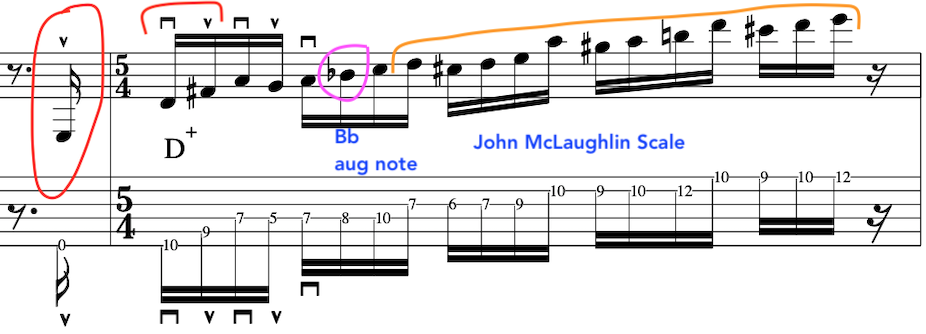
Finally, we employ the chromatic scale starting on the #5 [Bb] of D7augmented chord:

alternate-picking-guitar-jazz-fusion-lesson

In conclusion it’s through exploiting these improvisational devices that we can alternate pick and create long quick fluid lines lines that make improvisational sense.

In terms of jazz fusion this means that we can play smoothly through ambiguous harmony as well as standard chord changes at a quick tempo.

FREE PDF DOWNLOAD:

Pat Martino Intervallic Studies: Un-Published Book Lesson

Pat Martino Intervallic Studies: Un-Published Book Lesson

Hi Guys!

Guitarist Mark Koch one of Pat’s students kindly sent me a copy of Pat’s un-published book on “Intervallic studies“.

pat-martino-intervallic-studies-umpinlished-book

It’s a fascinating look at the imaginative thought process and creative concepts that Pat was investigating for the development of the improvising guitarist.

pat-martino-intervallic-studies-unpublished-book

In this first example we will look at the “Whole Tone Scale” Study:

pat-martino-intervallic-studies-unpublished-book

From a music theory perspective if we take away the intervallic approach and place the notes in order we will get a whole tone scale ascending followed by a whole tone scale descending:

pat-martino-intervallic-studies-unpublished-book

Now, we will put them back into the “Disguised” form with the clever approach of the intervallic design:

pat-martino-intervallic-guitar-studies

The key to playing these studies on the guitar is to decide on a methodical fingering and stick to it. [Below=Pat’s Fingering]

pat-martino's-unpublished-book-intervallic-guitar-studies

pat-martino-intervallic-studies-unpublished-book

I am employing strict alternate picking for this study starting on an upstroke:

pat-martino-intervallic-studies-unpublished-book

pat-martino-intervallic-studies-unpublished-book

Same Study: From Pat’s book with fingering examples:

pat-martino-intervallic-studies-unpublished-book-whole-tone-scale

Now we will look at how Pat breathes life into the pentatonic scale:

pat-martino-intervallic-studies-unpublished-book

As before we will take this from a music theory perspective and remove the intervallic approach:

pat-martino-pentatonic-scale-guitar-lesson

Now, let’s disguise this with the use of intervallic exploitation and alternate picking starting on a “Downstroke”:

pat-martino-intervallic-studies-unpublished-book

Same Study from Pat’s unpublished book:

pat-martino-intervallic-studies-unpublished-book

Finally, we will employ these intervallic concepts through a iim7b5 V7 i cadence.

Once again, we see the intervallic set up:

pat-martino-intervallic-improvisation-example

Now, let’s employ our music theory and place the intervallic notes in order. Here we find that we have the exploitation of the chromatic scale.

pat-martinochromatic-scale-guitar-lesson

This clever approach is really effective because in the second bar beats 2 and 3 we have a literal chromatic scale that then anticipates the coming minor tonic chord of Em with an Em arpeggio.

pat-martino-intervallic-improvisation-example

Full Example:

pat-martino-intervallic-improvisation-example

This was just a quick look at the creative thought process and unique approach of Pat Martino, resulting in the application of this material into a minor iim7b5 V7 i improvised line to hear how they work and sound.

This approach to scales and improvising [and composing] with them is highly original and extremely useful when there is a need to bust out of cliches and seek colour and creativity in our playing.