Pat Martino Unpublished Book: Intervallic Studies: NEW PAGES:

Hi Guys,

Many of you have asked me to publish more pages from the unpublished book on intervallic studies by jazz guitar legend Pat Martino:

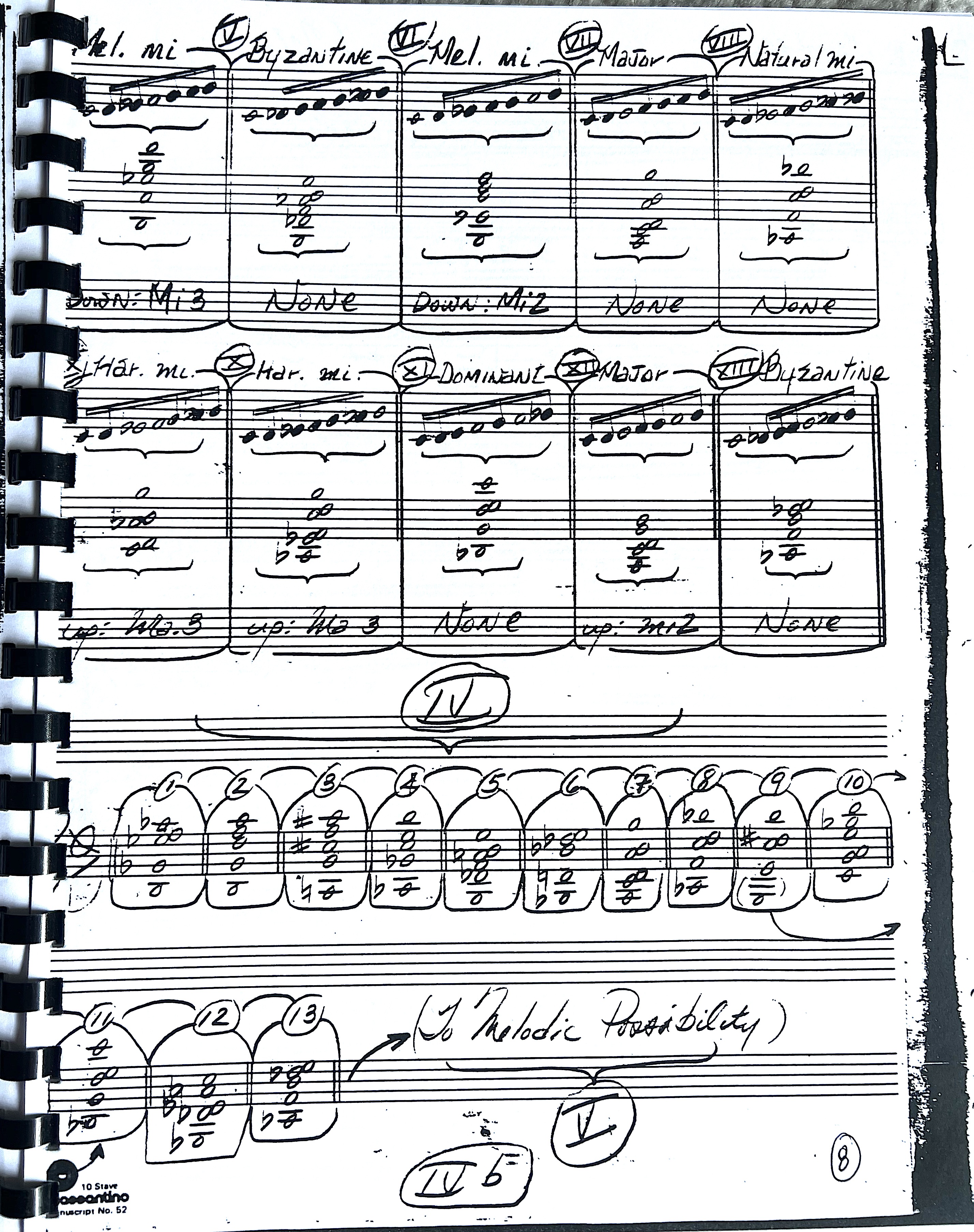
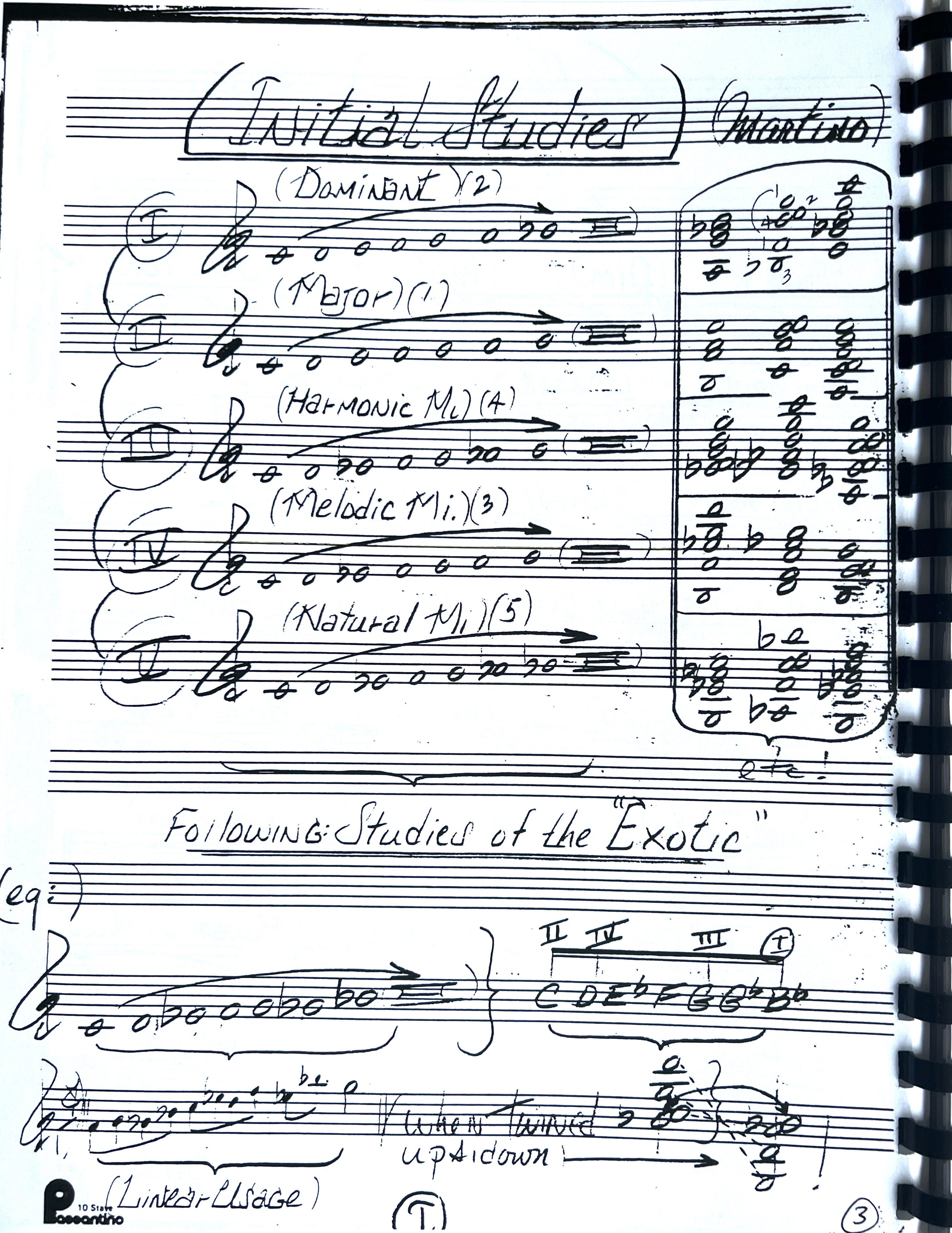
Firstly, we see Pats thoughts on the many scales available to create his intervallic studies: [He seems to have had an impressive encyclopaedic knowledge of scales].
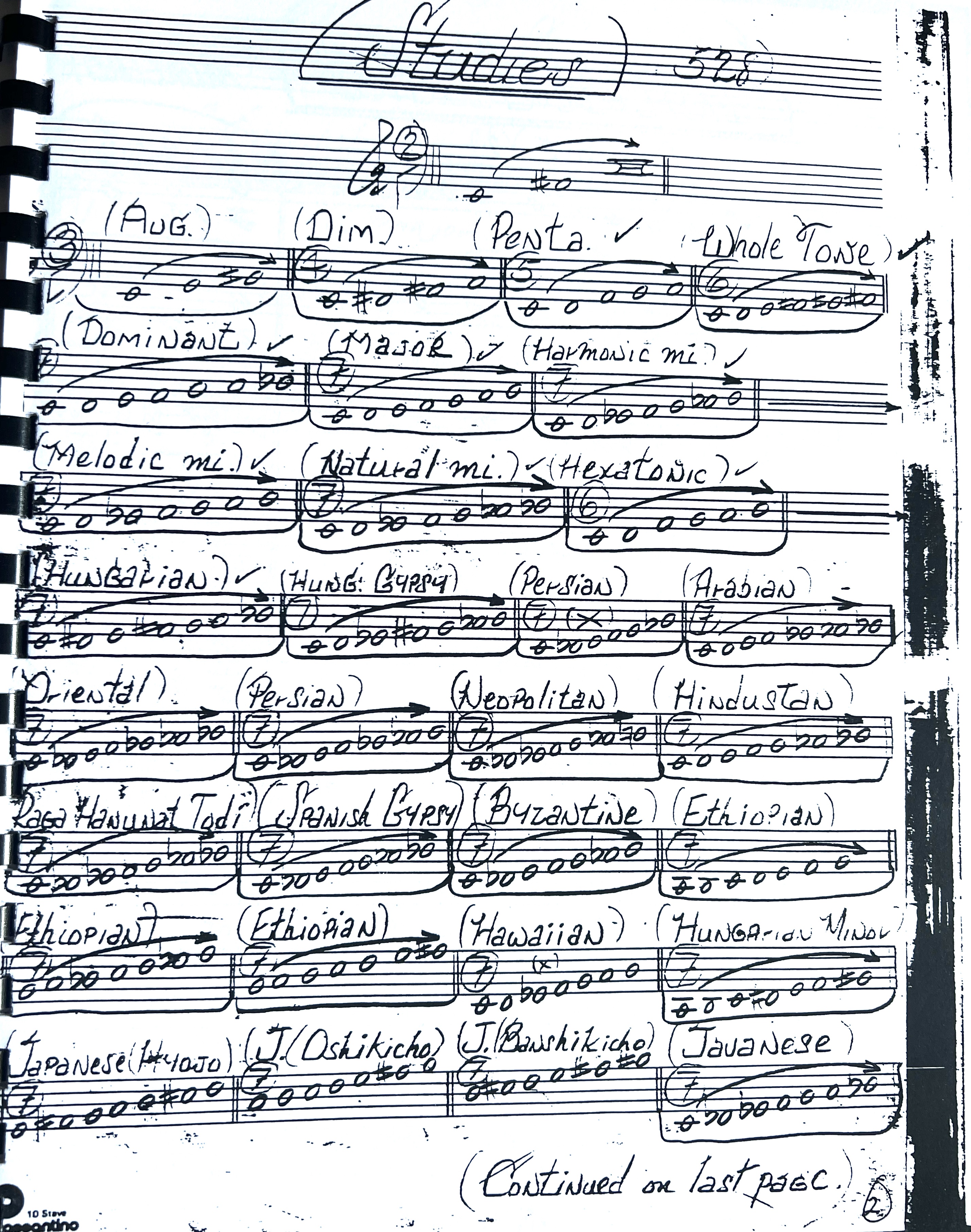
pat-martino-intervallic-studies-jazz-guitar-book

Here, Pat lays out the main/commonly used scales to his preferred/choice of harmony [inversions/voicing’s]
pat-martino-intervallic-studies-jazz-guitar-book

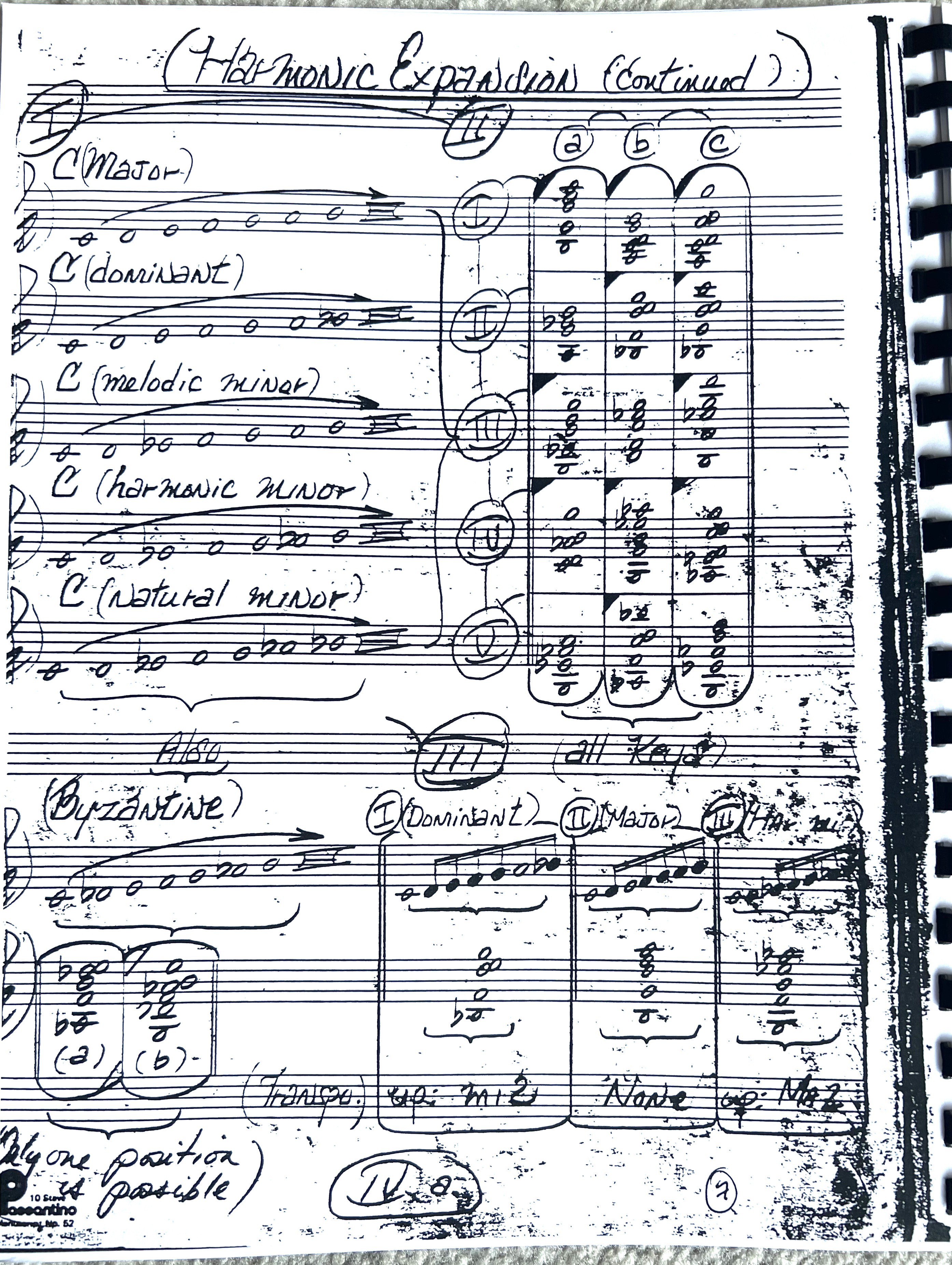
Here, his harmonic expansion is continued: Again, scale to harmony [chord voicing’s].
pat-martino-intervallic-studies-jazz-guitar-book

This page demonstrates once again, scales and harmony with possibilities and personal choices. It’s interesting to see Pats chord voicing’s available for development with his unique intervallic concept:

pat-martino-intervallic-studies-jazz-guitar-book

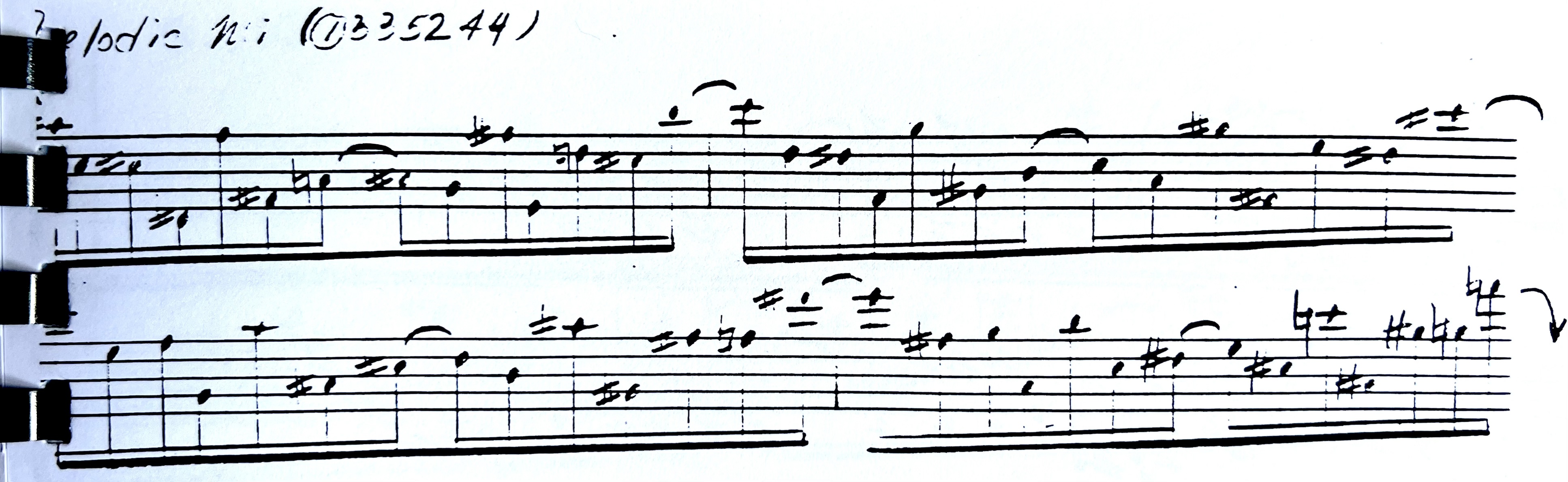
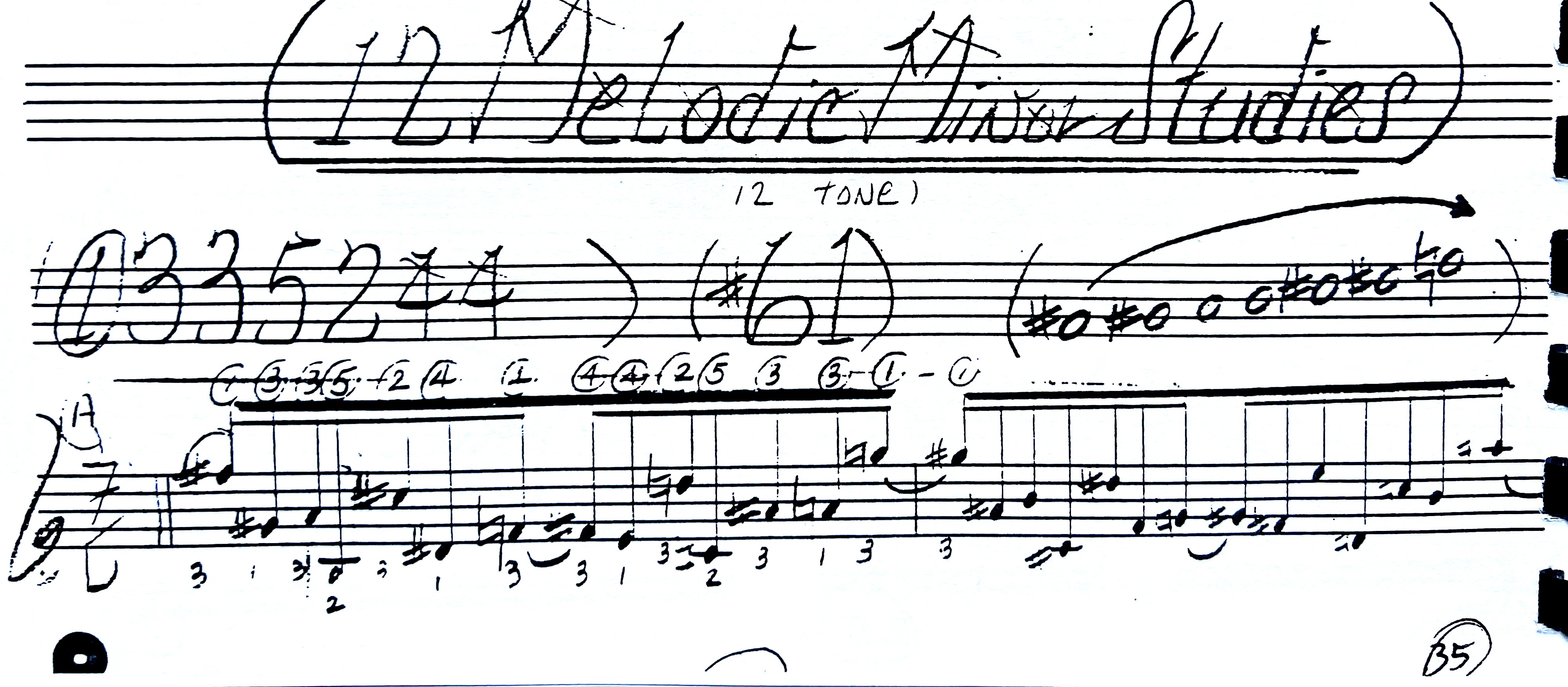
Now, let’s take a complete study. Here is the first one of the melodic minor set :
pat-martino-intervallic-studies-jazz-guitar-book-melodic-minor
pat-martino-intervallic-studies-jazz-guitar-book-melodic-minor-scale

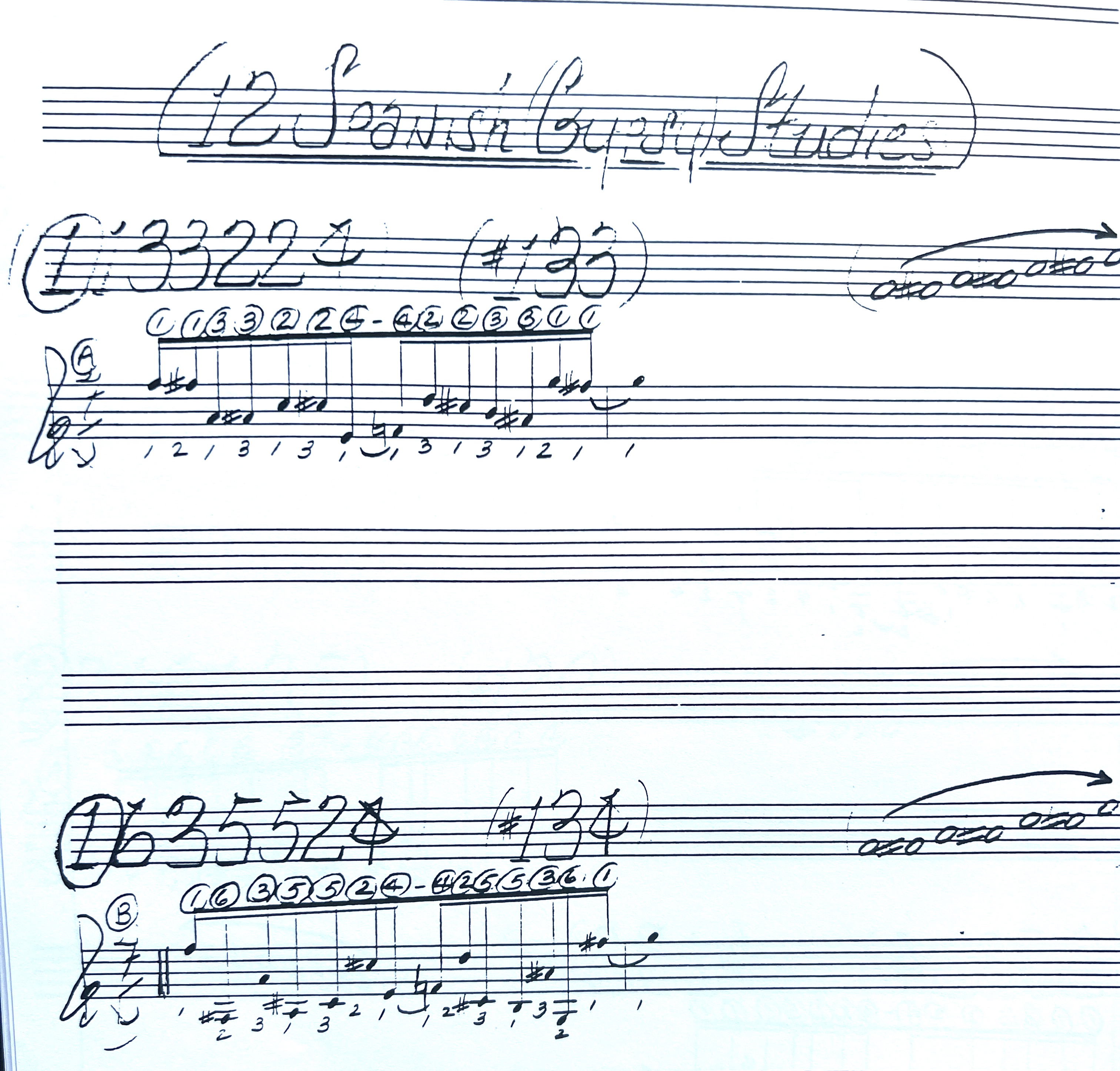
Towards the end of the book we find that Pat was either still working on the book or he didn’t have time to complete [in all 12 keys] everything that was in his mind.

Although incomplete, here we see Pat preparing studies for the Spanish Gypsy scale, with the key points of string order and correct guitar fingering:
pat-martino-intervallic-studies-jazz-guitar-book

Lastly, we have a full study with the Hungarian minor scale: Once again notice the string order and Pat’s choice/recommended guitar fingering.
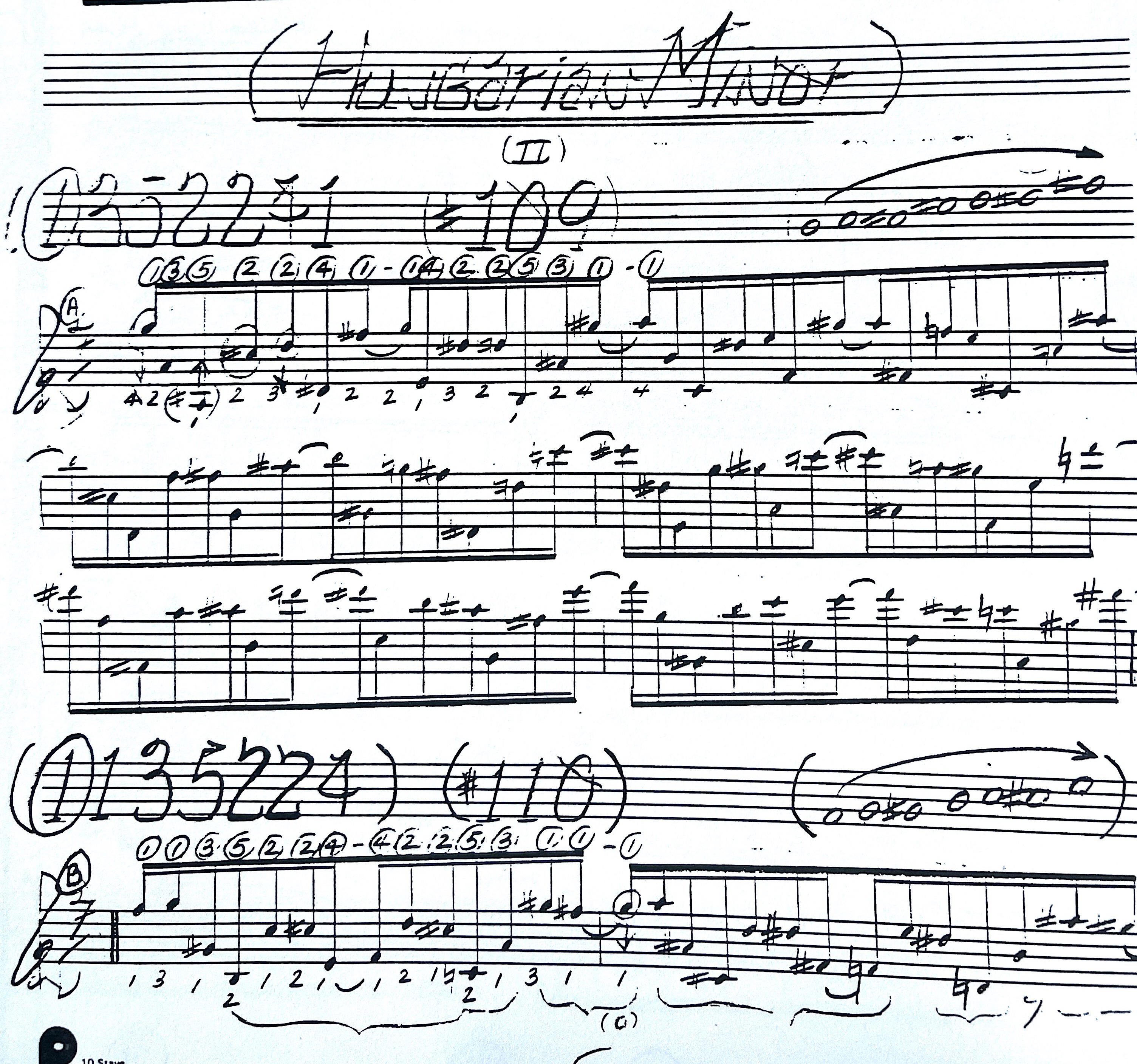
pat-martino-intervallic-studies-jazz-guitar-book

In conclusion, these are some of the important pages of the book, although there are lots more studies of interest and some more interesting pages [chords/scales] that I will publish in a later blog. But, this is the main core for those interested.

Judging by this book, although, Pat was an amazing jazz guitarist/composer and improviser he also seems to have been a great theoretician and super creative individual with a vast knowledge of music and not just jazz:

Finally, I would like to say a big thanks to Mark Koch for sending me the book and making all of this possible.

PDF DOWNLOAD:

Pat Martino’s Minor Conversion Jazz Technique: Chromatic Devices and Examples

Pat Martino’s Minor Conversion Jazz Technique: Chromatic Devices and Examples

Hi Guys,

Some of you have said “How do we make Pat Martino’s minor conversion technique actually sound jazzy?”

Okay, let’s take a closer look!

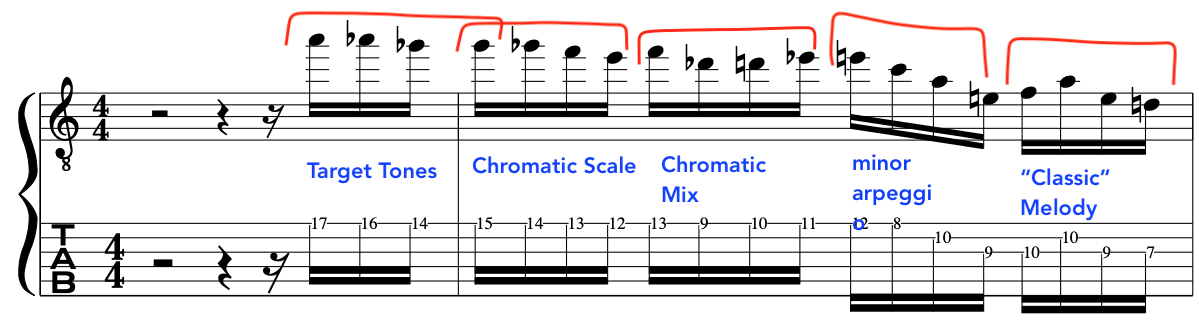
There are 5 essential devices to employ for this:

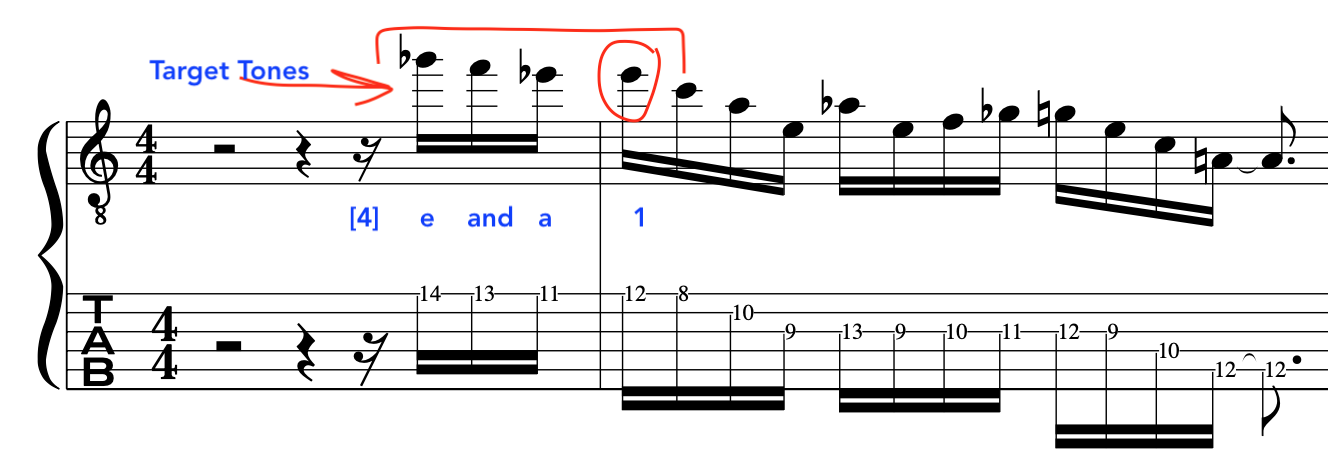
These are employed to target a specific note. In this case E the 5th note of Am.

The use of an anacrusis/upbeat works best with target tones as this also sets up the jazz phrasing.

pat-martino-minor-conversion-jazz-guitar-lesson-target-tones

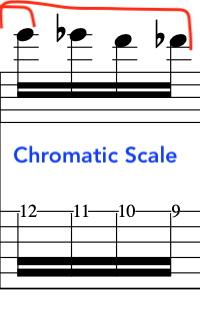
This is usually delivered in fragments:

pat-martino-minor-conversion-chromatic-jazz-guitar-lesson

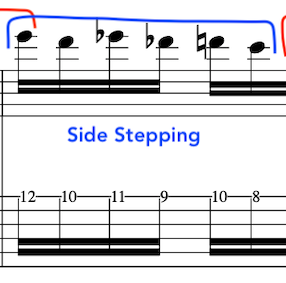
In this case we are moving the interval of a tone down a semitone:

pat-martino-minor-conversion-side-stepping

This is heard a lot in Charlie Paker’s playing as well as Pat’s improvisations.

pat-martino-minor-conversion-jazz-guitar-lesson

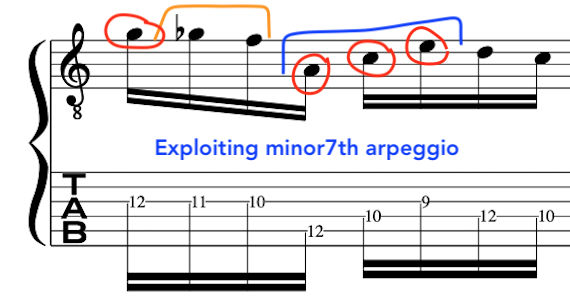
This is really useful and simple melodic tool for improvisational manipulation:

pat-martino-minor-conversion-minor7th-arpeggio

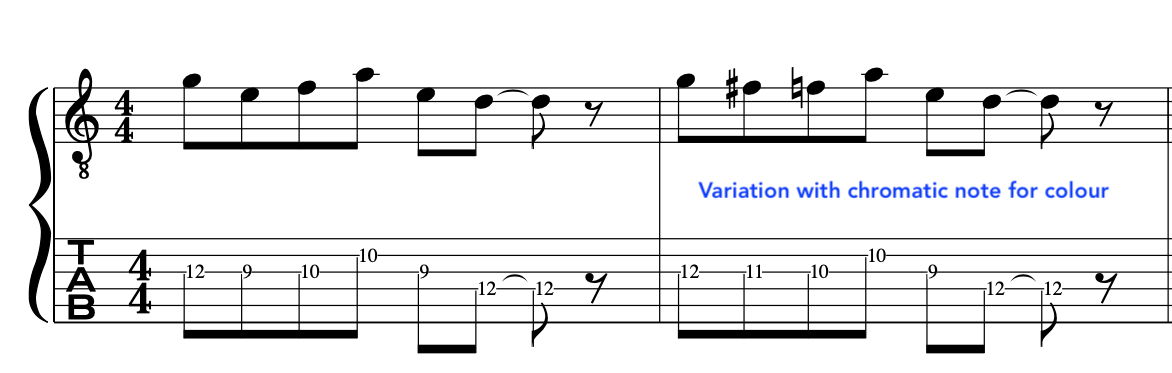
In this example we can clearly see Pat’s exploitation of chromatics and how fluid they are in creating a long phrase.

pat-martino-minor-conversion-jazz-guitar-lesson

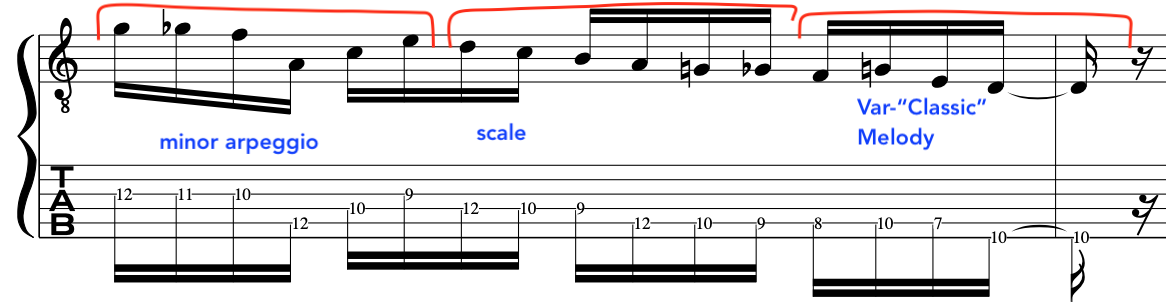
We can see the target tone set up with an upbeat. Next we can see the manipulation of the chromatic scale, also, with a chromatic mix of scale and target tones. The minor arpeggio descends easily whilst the classic jazz motif/melody comes into play to round the phrase off .

To complete this ii V7 I minor conversion we will exploit the minor7 arpeggio. From this, notice, the use of simple scale movement that finishes with a variation of the “Classic” jazz melody/motif:

pat-martino-minor-conversion-jazz-chromatics-guitar-lesson

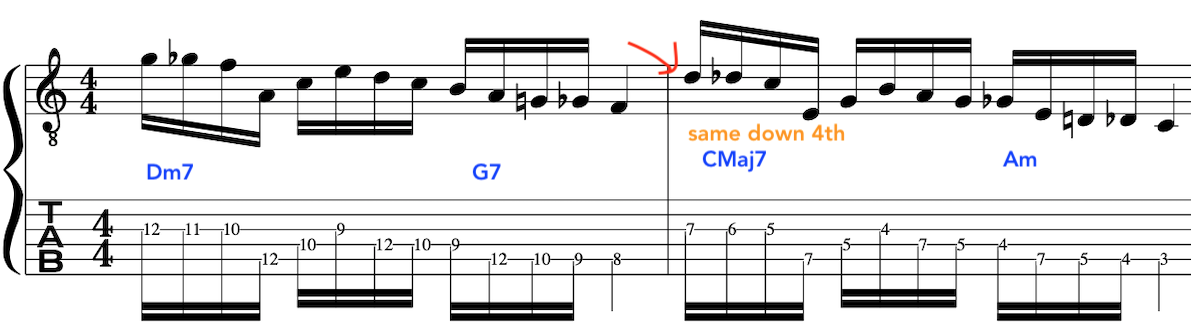
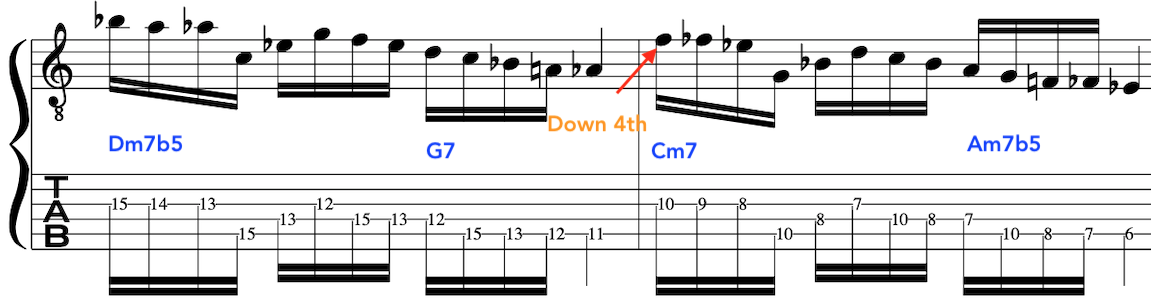
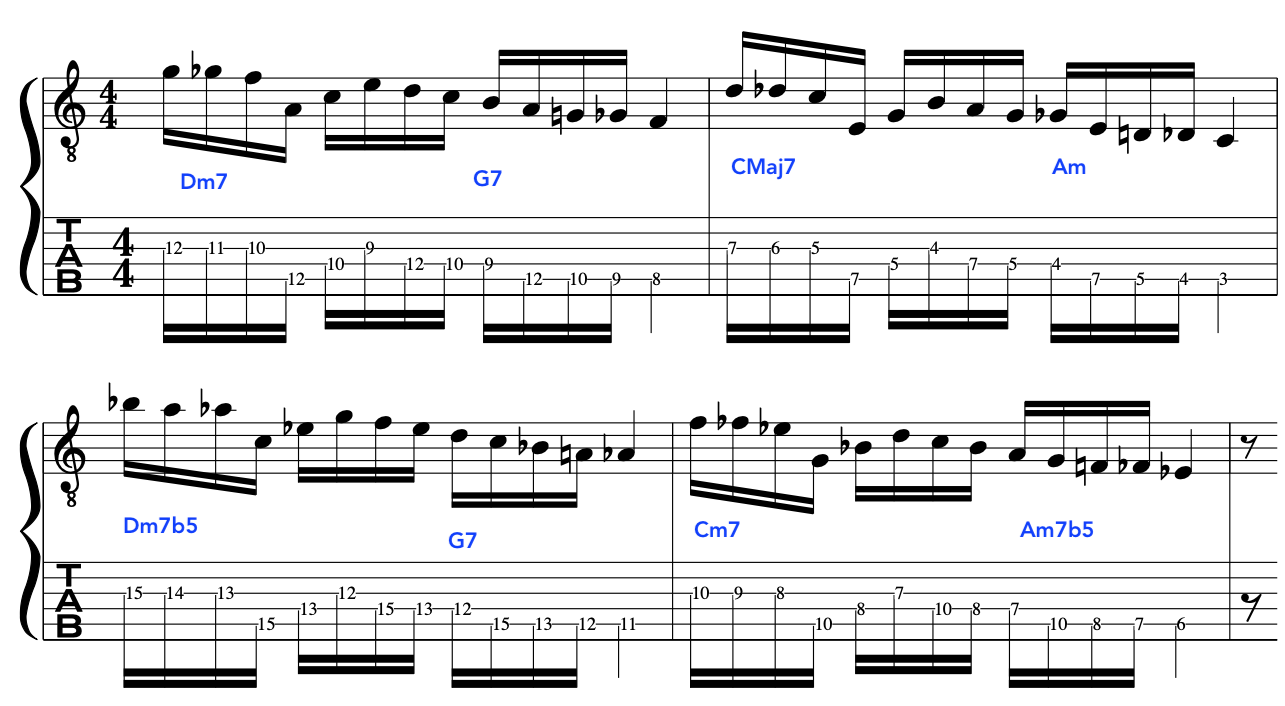
As an exercise to display the brilliance of Pat Martino’s minor conversion jazz technique we will take the minor 7th arpeggio from the previous bar in the previous example and sequence/juxtapose this to play through both major and minor ii V I’s

1] Example 1: “MAJOR”– the same line moves down a fourth to play a ii V7 I Vi

pat-martino-minor-conversion-jazz-guitar-lesson

2] Example 1: “MINOR”– the same line moves down a fourth to play a ii V7 i Vim7b5

pat-martino-minor-conversion-jazz-sequence-guitar-lesson

pat-martino-minor-conversion-jazz-guitar-lesson

This was a look at the essential devices any jazz guitar improviser needs to know and use for creative improvisation with the minor conversion, or minorisation technique.

As, I stated in the previous blog this simple method can save you 20 years of hard slog! Why? Because, Pat Matino’s minor conversion technique can be applied immediately!….

With these 5 musical improvisation tools anyone can create confident musical lines with strong and fluid jazz guitar phrasing.

FREE PDF DOWNLOAD:

Scriabin’s ‘Prometheus’ Mystic Chord Analysis and examples for Guitar, Orchestra and Piano

The “Prometheus” Chord-Scriabin’s “Mystic” Chord Analysis

Hi Guy’s,

Today, we will take a look at Alexander Scriabin’s “Prometheus” or mystic chord.

The “Prometheus chord,” introduced by Alexander Scriabin, is a fascinating and innovative harmonic structure that reflects the composer’s mystical and philosophical inclinations. Officially known as the “mystic chord, this six-note chord (C, F#, Bb, E, A, D) forms the foundation of Scriabin’s “Prometheus: The Poem of Fire,” Op. 60.

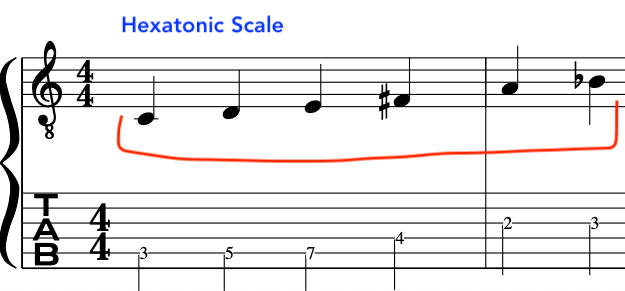
Okay, let’s take the scale notes in order [Hexatonic 6 notes]

Now, let’s arrange the pitches by intervals,

root
major second
major sixth
major third
minor seventh
augmented fourth
root

This results in the “Promethus/Mystic” Chord:

Analysis-of-Scriabin's-Prometheus-chord

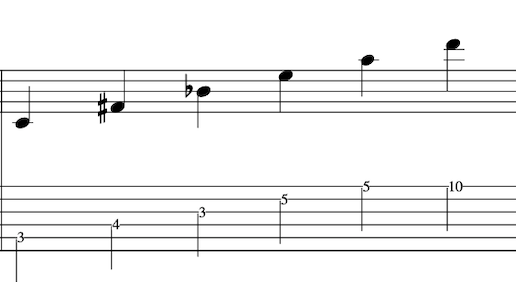
Here is the outline of the chord in single notes:

Analysis-of-Scriabin's-Prometheus-chord

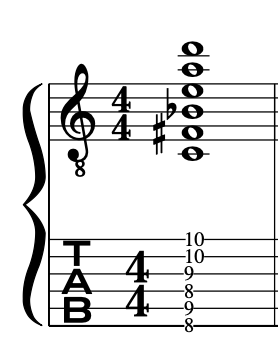
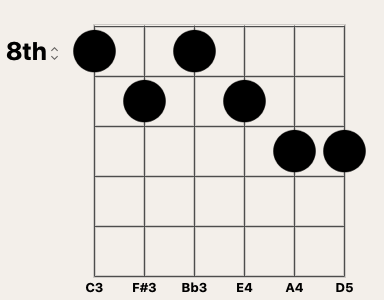
Now, let’s apply it as a guitar fingering:

Analysis-of-Scriabin's-Prometheus-chord

Here is a Barre Guitar chord shape/voicing:

Guitar-voicing-bar-chord-Scriabin-Prometheus-chord

From here, we can now play around with this unique sound and create some interesting musical ideas from it.

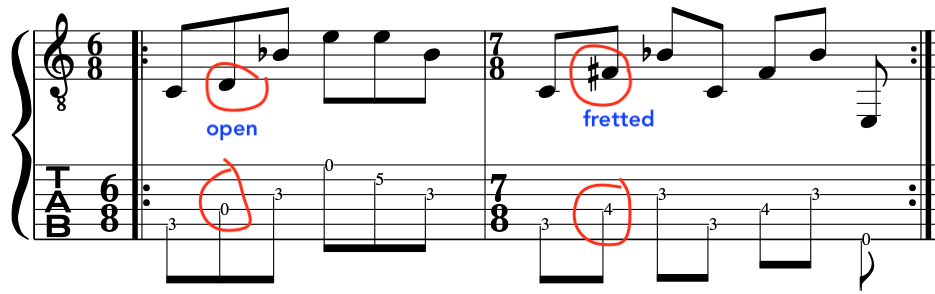
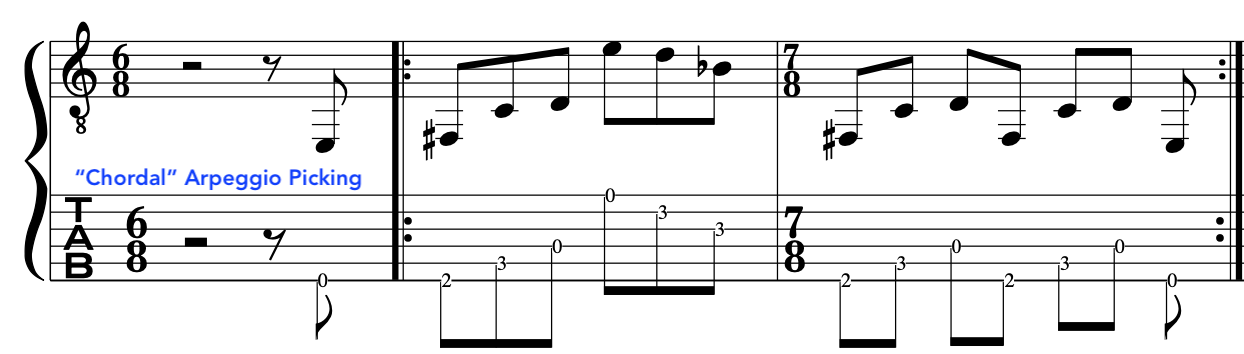
Here are two “Chordal picking” guitar arpeggio vamps:

In the first example the key is to make sure not to dampen the open D string in the first bar even though this same string is fretted in the second bar.

Example 1:

composing-with-Scriabin's-Prometheus-chord

In the next example [below] the key to execution is the same by remembering not to dampen any open strings with the fretting hand.

EXAMPLE 2:

composing-with-Scriabin's-Prometheus-chord

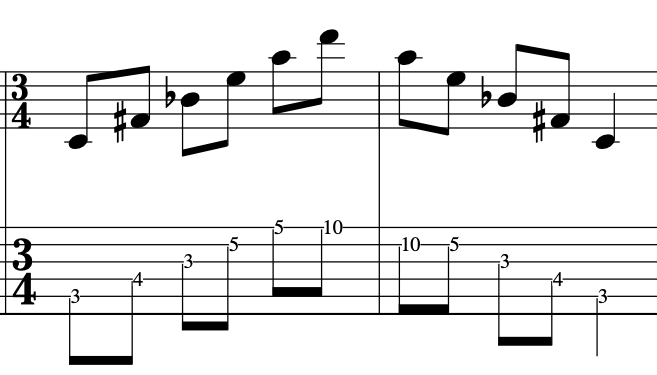
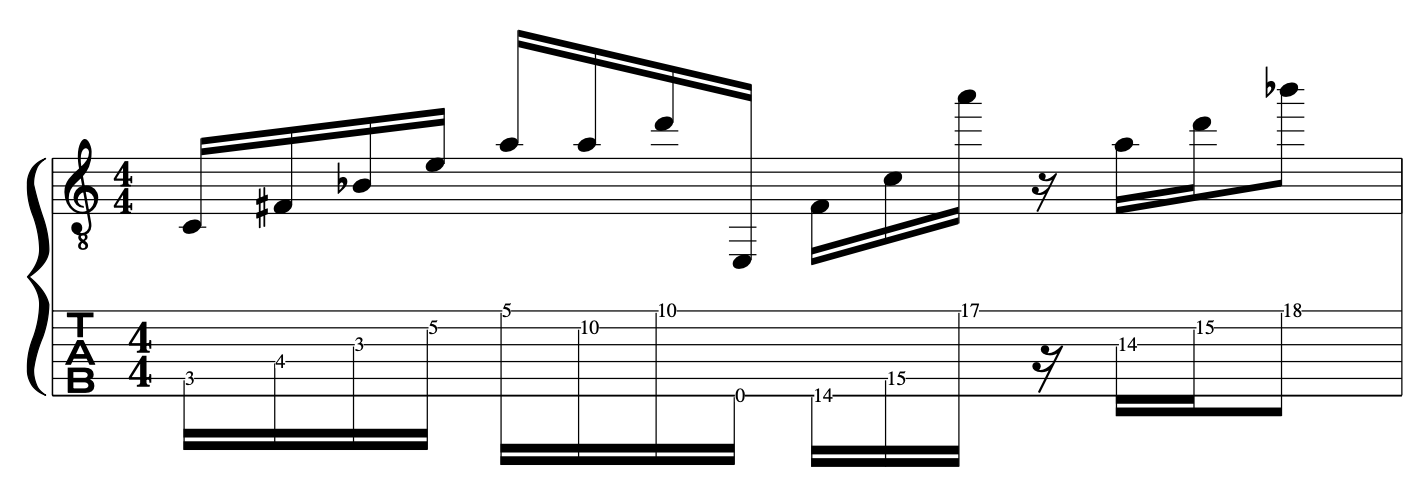
Here is an example of a longer line built from this chord/scale concept:

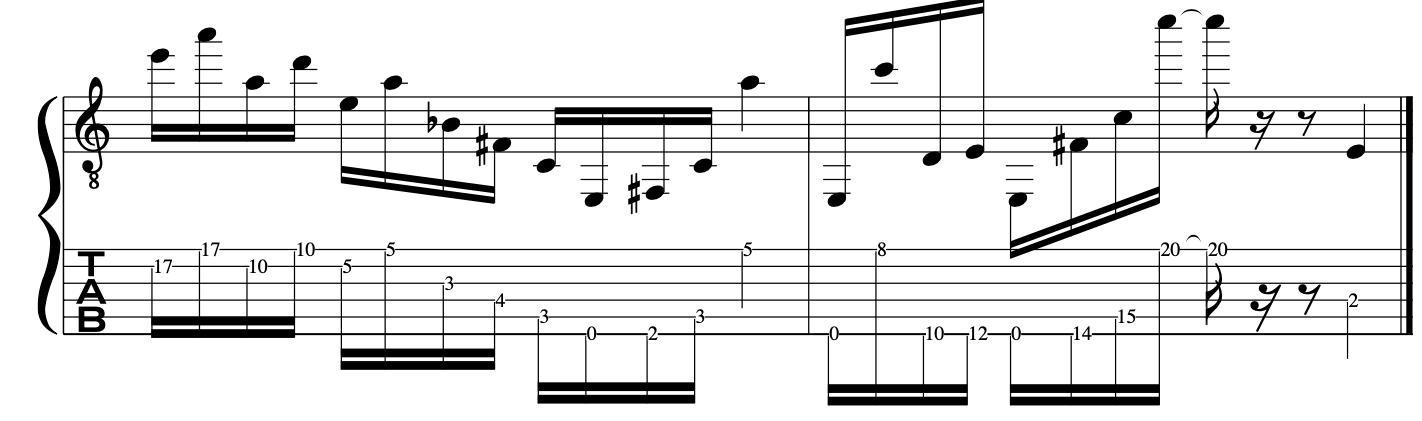
improvising-with-Scriabin's-Prometheus-chord

This little phrase exploits the chord/scale outline with some string skipping/intervallic picking to create interest and to make it more compositional in its approach.

This chord/scale is employed a lot in modern and old Film and T.V music:

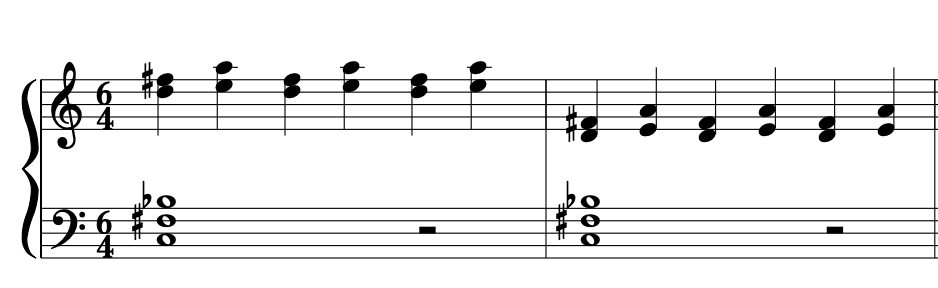
Example 1: Old 70’s detective shows like “Columbo”

composing-with-Scriabin's-Prometheus-chord

Example 2: Mystery/Drama from the late 30’s early 40’s Film.

composing-with-Scriabin's-Prometheus-chord

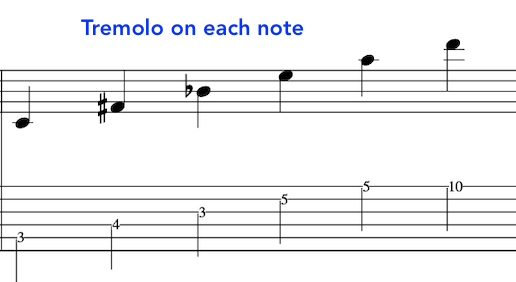
Example 3: Tremolo Build up for suspenseful crescendo.

composing-with-Scriabin's-Prometheus-chord

In conclusion this was just a quick look at the amazing “Prometheus” chord and it’s use and function in music.

It’s a very useful tool becasue it can be employed for lovely guitar vamps, solo lines and improvisation. It’s also excellent for orchestration where drama and suspense is required.

This chord departs from traditional harmonic conventions, creating a sonorous, otherworldly soundscape that evokes transcendence and spiritual awakening. The chord’s ambiguous tonal center and unconventional intervallic relationships challenge listeners’ expectations and epitomize Scriabin’s quest to explore new harmonic realms. This daring musical innovation was part of Scriabin’s broader artistic vision, intertwining music with his synesthetic experiences and esoteric beliefs, aiming to elevate human consciousness through art.