Robert Fripp Flat 5th “Tri-tone” Guitar Technique: Exercise 1

Hi Guys,

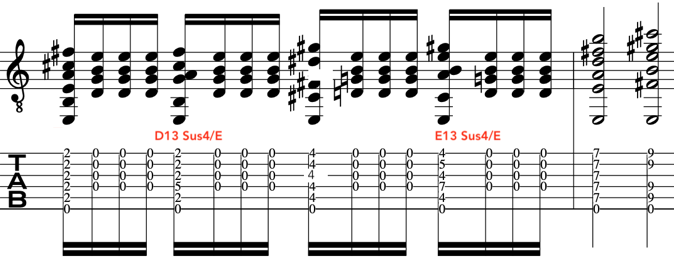
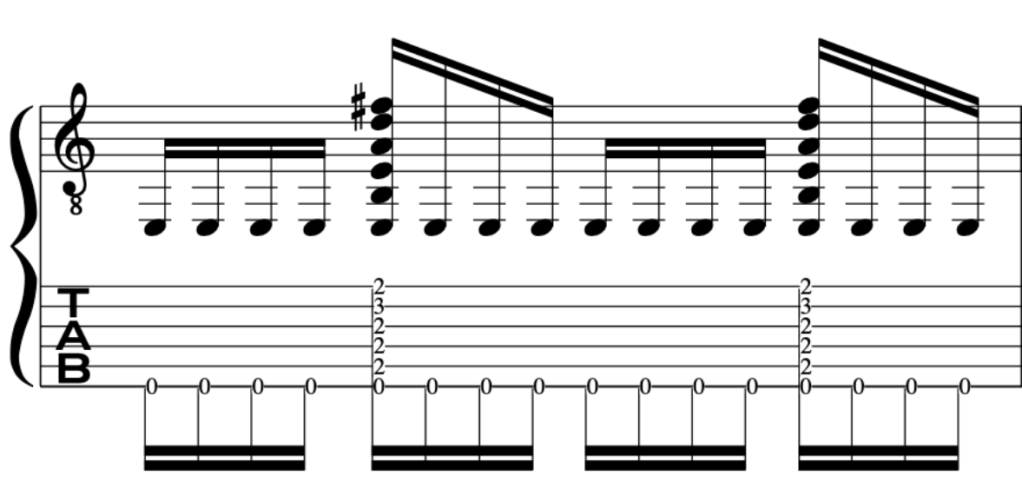
Today, a look at the Robert Fripp flattened 5th [tri-tone] guitar shape and its right hand picking patterns, rhythmic concepts and single note lines and chordal applications.

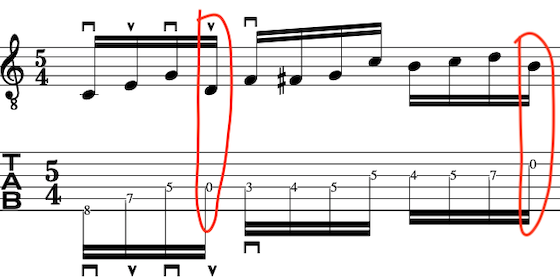
In the first part we can employ, “Down down down up” or plain alternate picking:

fripp-guitar-technique

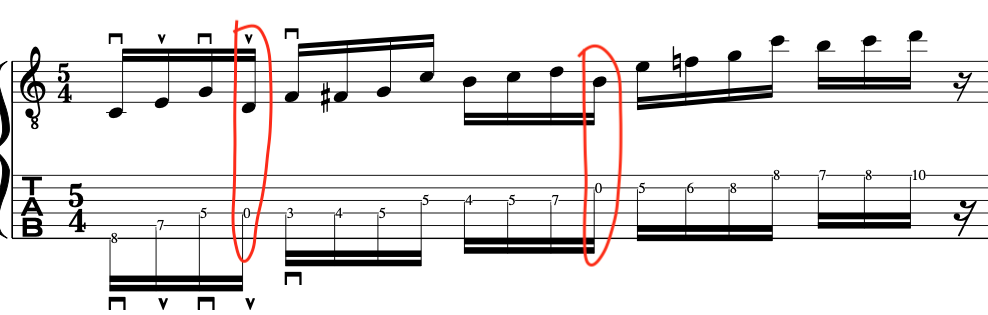
From here we can either exploit the “Down Down up” pattern or once again employ our old friend alternate picking:

fripp-guitar-technique

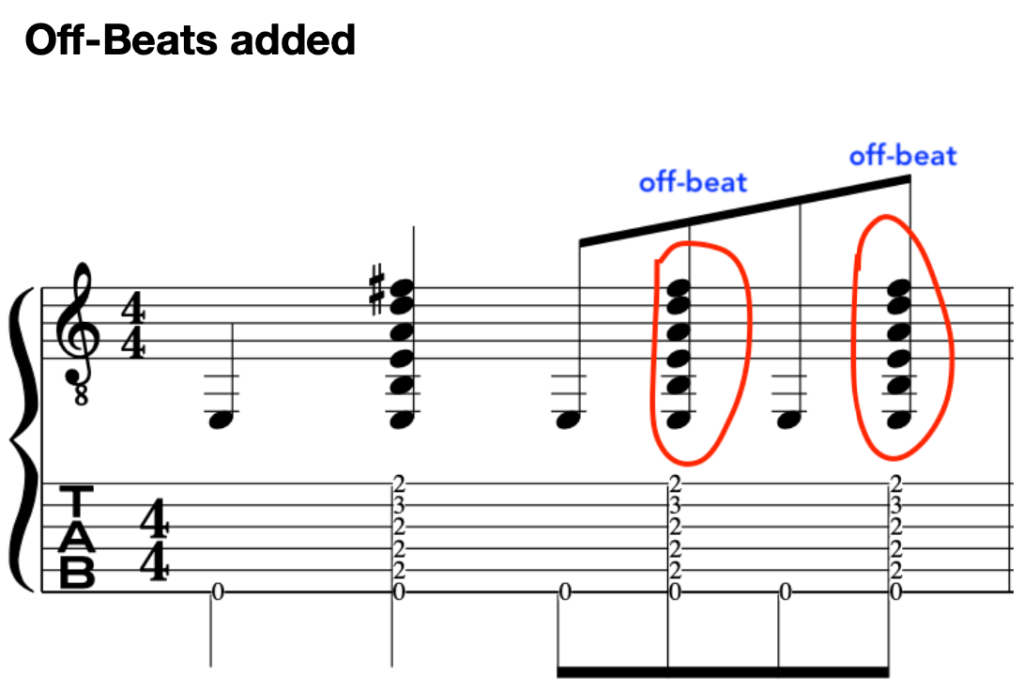
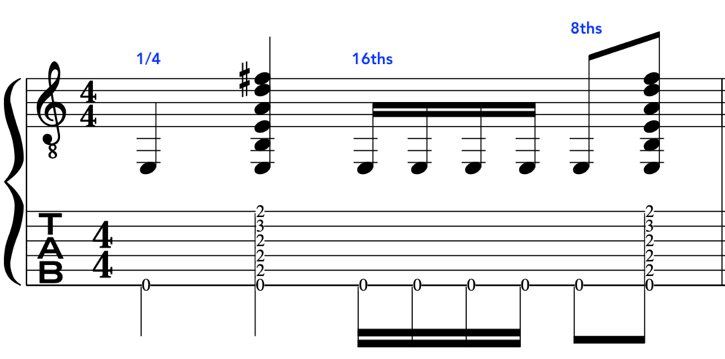
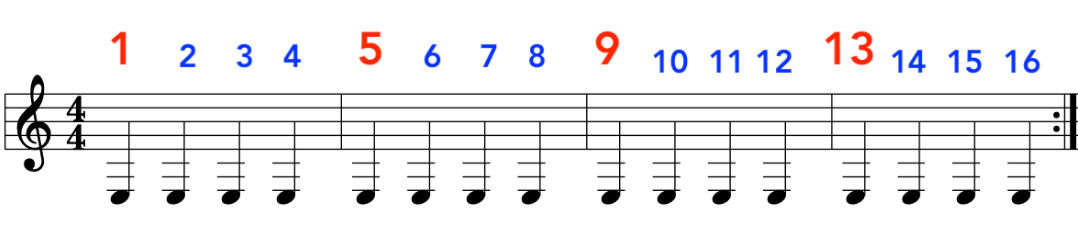
Also, notice how the rhythm is working. It’s a bit like triad pairs in the way it is counted, set up and felt. [It also creates a 1 2 3 effect]

fripp-guitar-technique

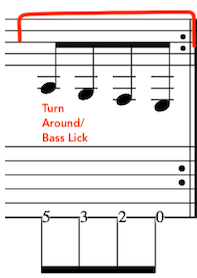
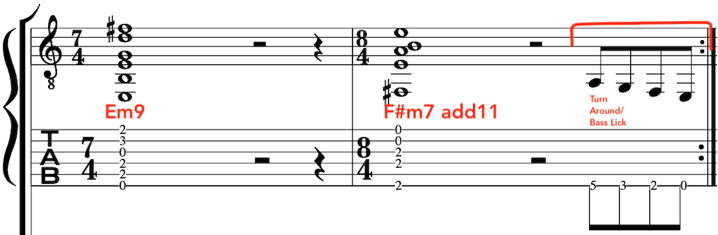
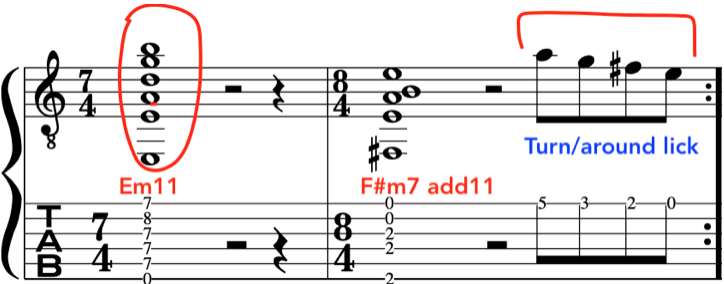
We now carry this on and break it up with two 4 note groupings. [Finishing with 3 notes in the bass]

fripp-guitar-technique

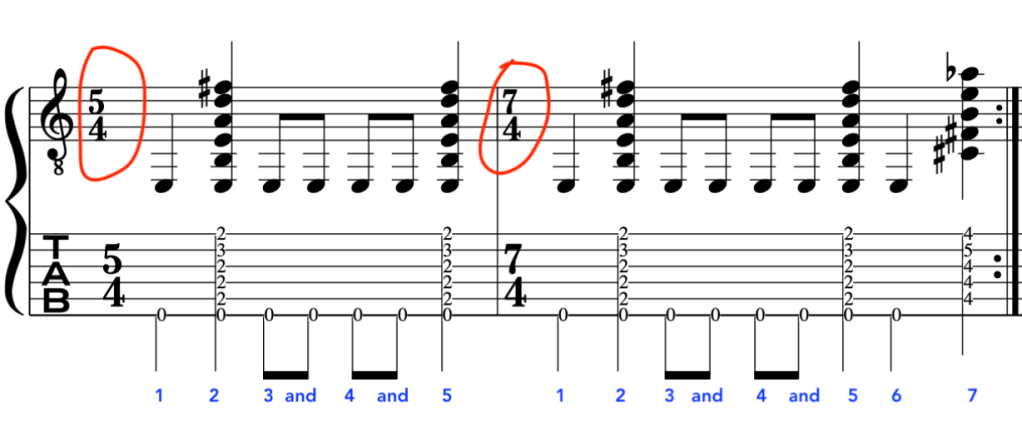
This shape can also be employed brilliantly for chords and chordal picking.

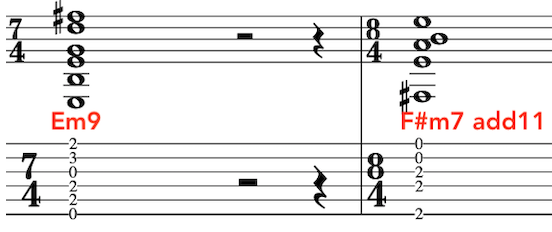
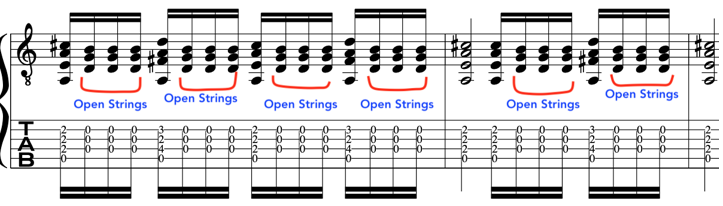
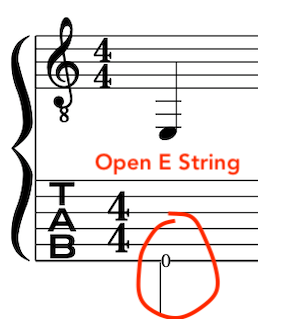
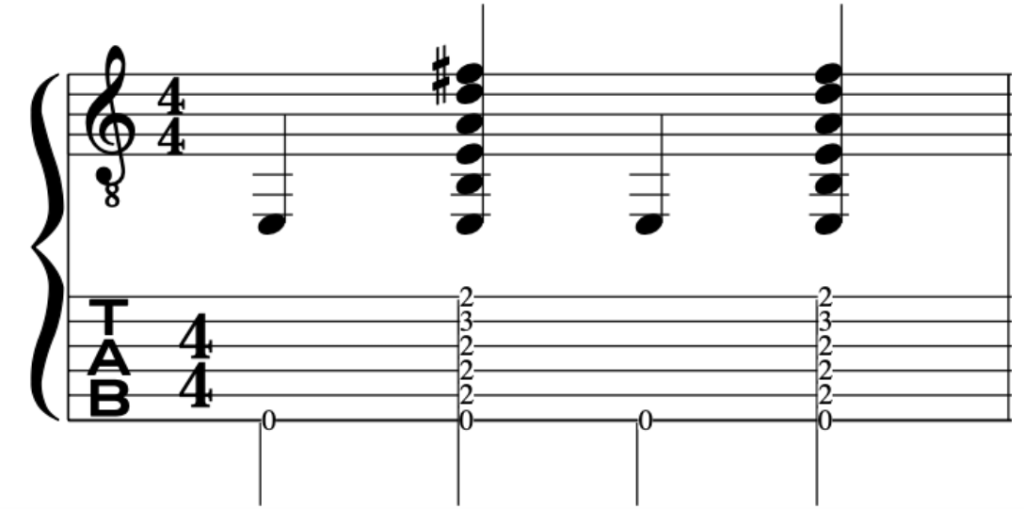
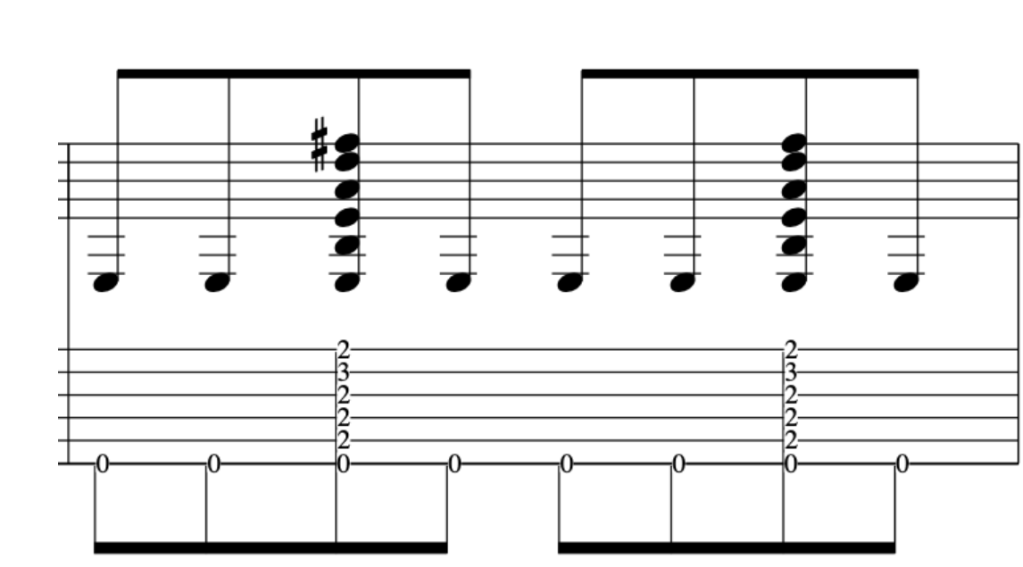
Here, we play all 6 strings on the guitar and leave the open E and B strings to resonate around the flat 5 shape.

fripp-guitar-technique

This, then gives way for a quick fire ascension of the b5 shape:

fripp-guitar-technique

We now shift the shape up higher and imitate the process:

fripp-guitar-technique

And, move the figure up also,

fripp-king-crimson-guitar-technique

To complete the phrase we will descend the b5 figure with strict alternate picking starting on a “Down” stroke:

fripp-king-crimson-guitar-technique

From here, we will break it up with a group of 4 notes employing Down Down Down Up to 3 notes with Down Down Up:

fripp-king-crimson-guitar-technique

To:

fripp-king-crimson-guitar-technique

And finally, finishing with four Am9 chords:

This example/exercise was just to exploit the b5 shape and show what is possible both rhythmically and in terms of the right hand picking techniques.

The key though is to employ and develop it sparingly. This way it can cause surprise and rhythmic interest.

It’s a really useful guitar tool for composition and creating a unique and individual voice for the serious creative guitarist.

John McLaughlin’s Alternate Picking Techniques for Guitar

Hi Guys,

Today, two exercises for building jazz fusion 16th note double timed improvised guitar lines.

This is applied in the way that guitar great John McLaughlin exploits his alternate picking guitar technique.

This is a “Line builder” that builds through connecting key concepts together and at the same time creating familiarity with them as you do so.

For Example:

The key is to connect them together in a melodic single note manner that is musical and at the same time logical for the alternate picking.

This exercise starts with an upstroke with an open E string on an “Up beat” [anacrusis].

This then employs an F Major arpeggio with a C to B note resolution.

john-mclaughlin-alternate-picking-guitar-lesson

Straight away, it’s easy to hear the melodic content of the wider intervals of an arpeggio and the resolution.

From here we will now add some chromatic colour.

john-mclaughlin-alternate-picking-guitar-lesson

To complete this phrase we will add the John McLaughlin scale. This slots in nicely to the chromatic scale that we’ve just applied.

It’s smooth, quick and creates that very fluid liquid line sound: Also, notice the offset of the rhythm.

john-mclaughlin-alternate-picking-guitar-lesson

To descend, we will exploit the use of the semitone interval. This is easy for the fretting hand to sequence as it employs repetitive fingering and so is easy to cross the strings with. [The semitones are in the orange marker].

2nd part “Descending”

john-mclaughlin-alternate-picking-guitar-lesson

Finally, we finished with a CMaj9 chord that is then shifted up.

john-mclaughlin-alternate-picking-guitar-lesson-chords

This exercise is similar to the one above, but, in a different key and different chords.

As before, we start on an up beat with an upstroke. We employ the arpeggio, but, this time it is a suspended fourth with the A note moving down to the G note.

From here, we ascend and exploit the Bb note to emphasise the D Augmented chord. This is then rounded off by slotting in a fragment of our old friend the John McLaughlin scale once more .

john-mclaughlin-alternate-picking-guitar-lesson

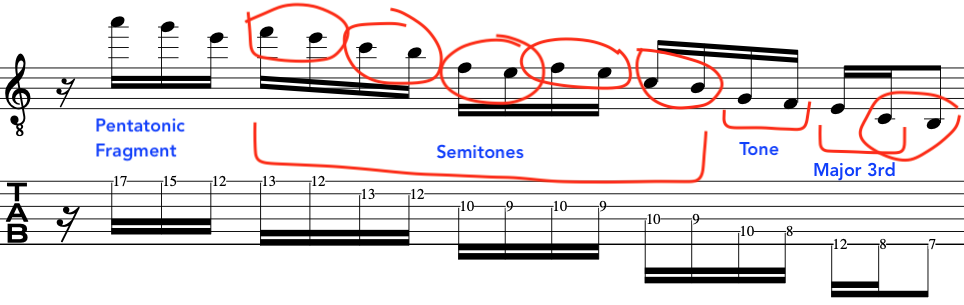
We descend with a pentatonic fragment this time and once again exploit the interval of a semitone and sequence it. But, this time with the last 5 notes we also have the intervals of a tone a major 3rd and a minor 3rd.

john-mclaughlin-alternate-picking-guitar-lesson

Finally, we cadence with the chords of E/G# [or E 1st inversion] that then raises the 5th to make it augmented. This then resolves to a hanging A9 chord.

john-mclaughlin-chords-guitar-lesson

IN CONCLUSION:

These are only exercises, but, they do show the melodic/musical nature of the improvised line in regards to alternate picking.

In the jazz fusion style, motifs, melodic content, chromatics, pentatonic’s, rhythmic offset, etc, all work to great effect as they all slot together creating sophisticated double time lines.

FREE PDF DOWNLOADS:

DOWNLOAD #2:

was of use to you then please SUBSCRIBE to us below on YOUTUBE, Thanks!

Fripp Intervallic Guitar Alternate Picking Exercise: Right Hand Technique

Fripp Intervallic Guitar Alternate Picking Exercise: Right Hand Technique

Hi Guys,

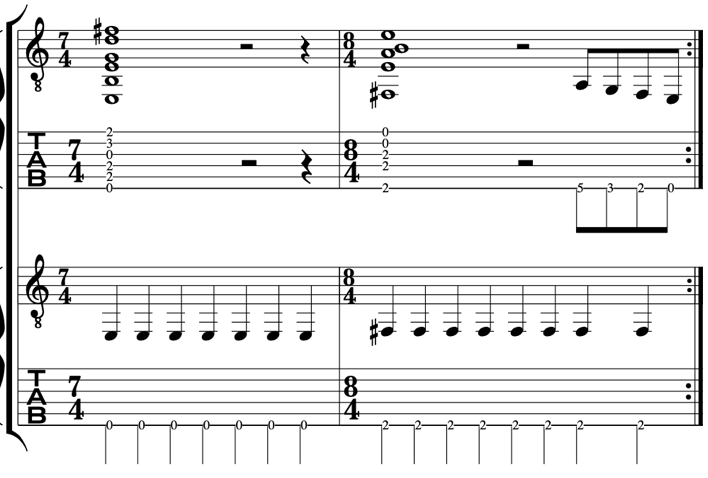
Today, a look at some Fripp style “Intervallic” guitar alternate picking exercise/vamps.

First, we will employ 8th notes and then extend this by adding a double timed bar moving from 8th notes to 16th notes.

In the first exercise we will perform a repetitive loop or vamp. This will start on a “Downstroke” with strict alternate picking throughout.

In regards to the fretting hand, be aware of the necessary“Pivoting” when string skipping to the F# note. It is only a small movement but it makes all the difference for a clean execution of the exercise. [see video above]

robert-fripp-king-crimson-guitar-lesson

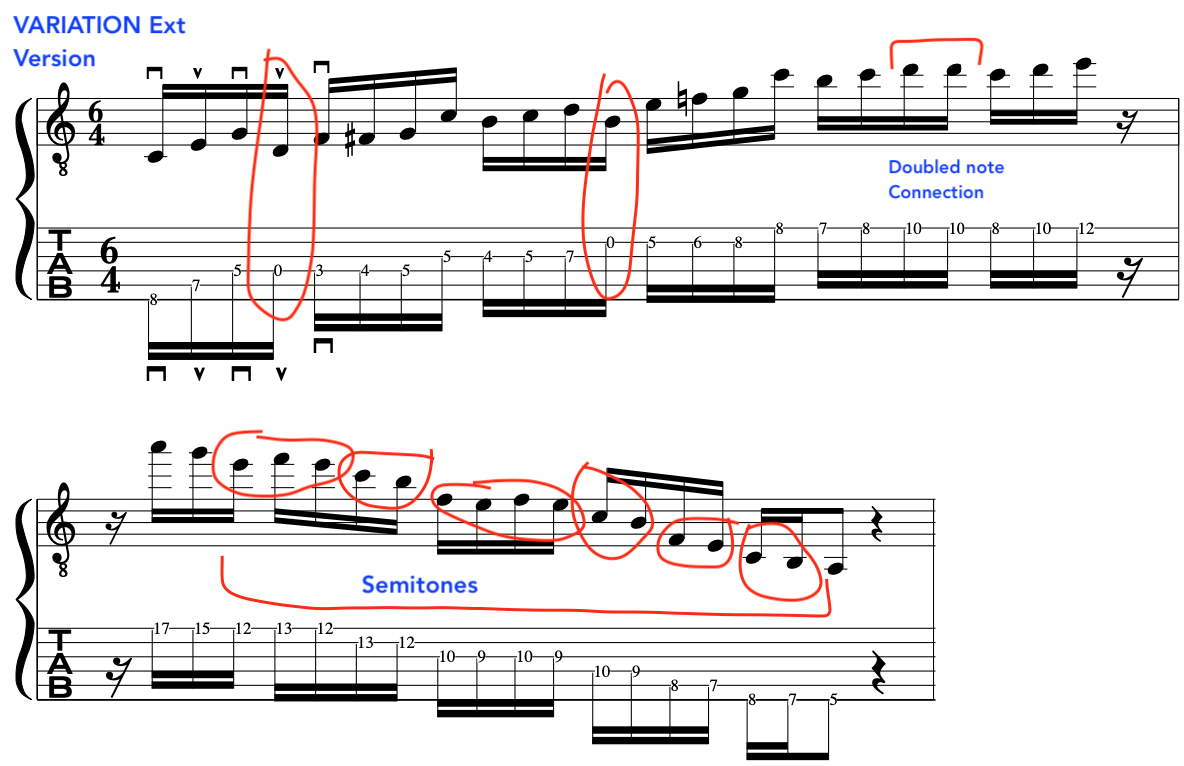
Here we have 2 bars of music. Notice the double/repeated note B natural. This is good for control of your right hand plucking/picking technique.

robert-fripp-king-crimson-guitar-lesson

This loop/vamp is great to train alternate picking repetition of notes and right and left hand synchronisation and consistency: [See video above].

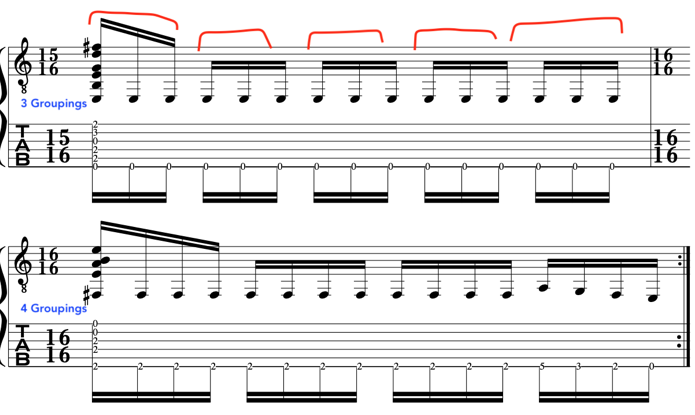
This time we will add 16th notes to double the time and create rhythmic interst and melodic movement. This is also reminiscent of guitarist Al Di Meola’s picking technique.

robert-fripp-king-crimson-guitar-lesson

In this example we move from 2 bars of 8th notes to 1 bar of 16th notes.

robert-fripp-king-crimson-guitar-lesson

robert-fripp-king-crimson-guitar-lesson

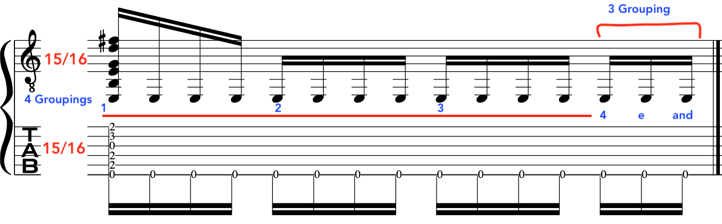
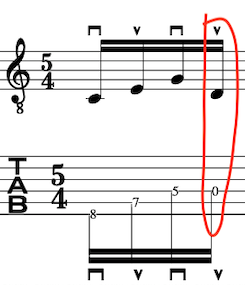
If we look at the above diagram we will see that the strings are being crossed and alternate picked along a “Straight” line.

This ensures that we are always “Aligned” with the string/note that we wish to pluck.

It is not guess work but a relaxed right hand that knows where to pick along that line and hence we can pick complex patterns regardless of time and intervallic distance with confidence and clarity.

These exercises are very good at revealing the right hand picking to the left hand fretting and creating an awareness of “Alignment” and synchronisation.

Following the straight line is so helpful as it means that we can get on with the playing of the music and not concern ourselves with anything outside of that, like “Will I play the correct note”, or “Here is the awkward bit”, etc.

Just align with the string along the straight line, pivot with the fretting hand if needed and just play.

FREE PDF DOWNLOAD: