John McLaughlin Hexatonic Harmonic minor Guitar Scales Lesson and Explanation
Hi Guys,
Today, a quick look at creating a 6 note Hexatonic scale from the harmonic minor scale.
This works really well on the guitar as the harmonic minor scale is generally a clumpy and awkward affair in regards to the fingering.
So, if we take a look at the Harmonic minor scale in its classic, stock form, we have:
But, for effective guitar fingering, especially on a clean guitar or acoustic guitar this is not the most fluid way for the fretting hand.
So, what to do?
Well, the key is to break it up in the most Shakti way possible:
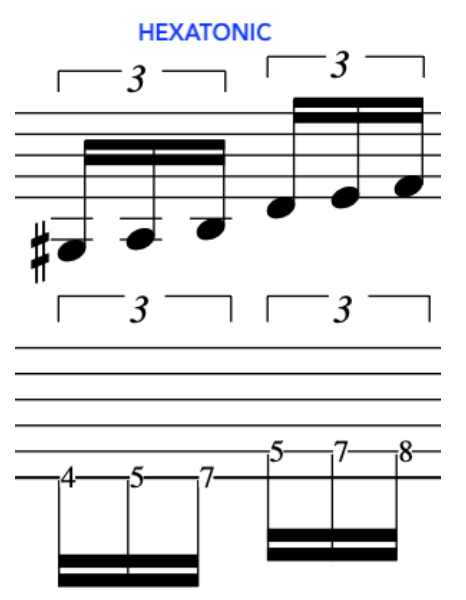
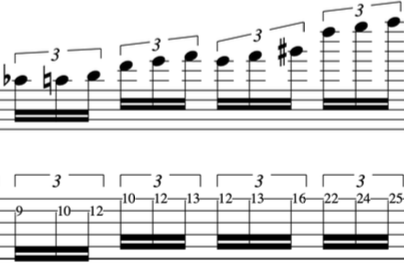
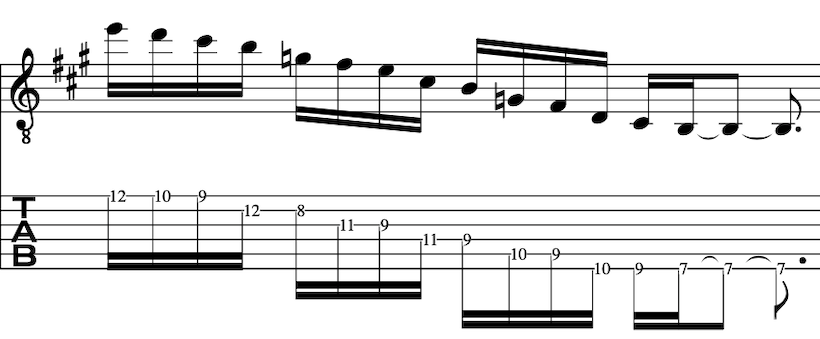
Here’s what we will do: We will employ 6 notes only of the scale. These will be: G# A B D E F
Hexatonic scale diagram with notation showing finger placements for guitar.
This simple 6 note Hexatonic scale gives us an easy 3 notes per string repetitive figure/pattern to alternate pick.
We can now play this across all 6 strings and create a nice line/phrase/scale that is easy to execute, pick and fret.
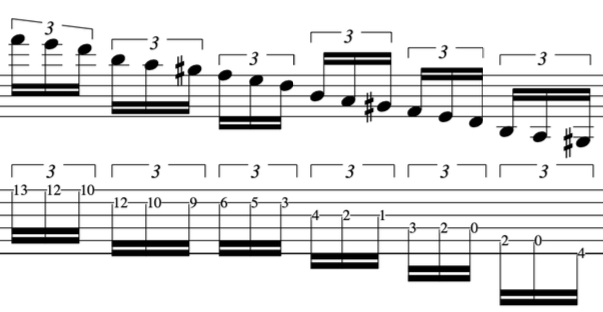
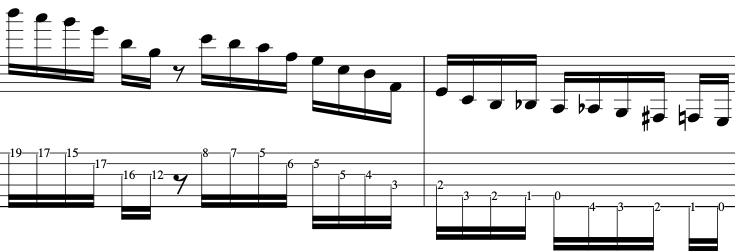
ASCENDING:
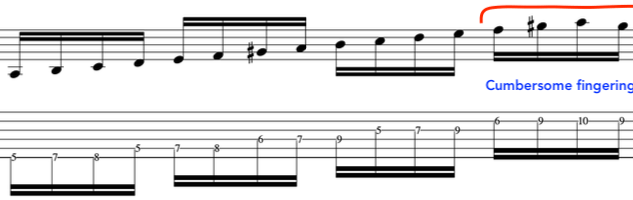
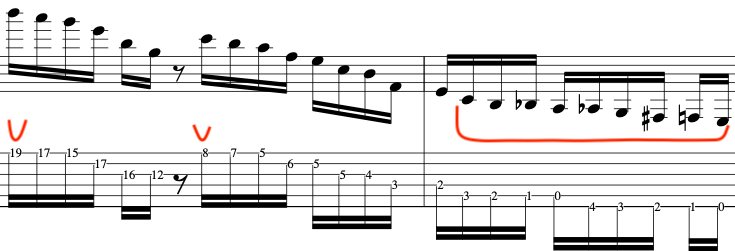
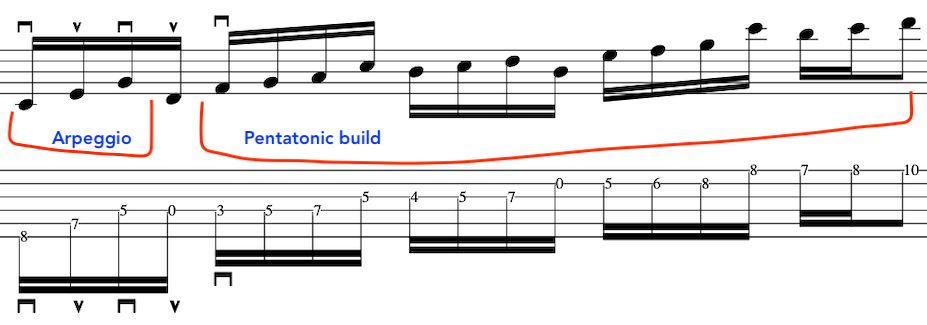
Notated example of ascending and descending patterns for the Hexatonic scale on guitar.Hexatonic scale notation for guitar, showcasing ascending and descending patterns.
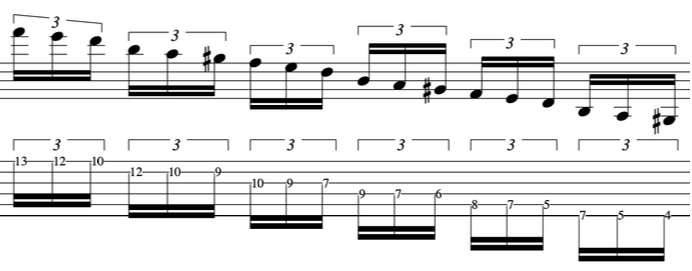
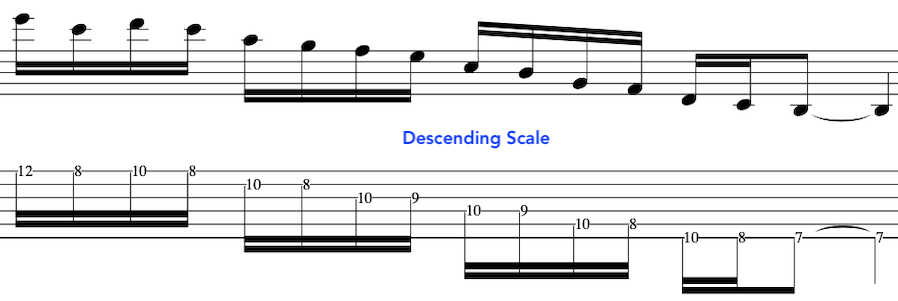
DESCENDING:
Way 1:
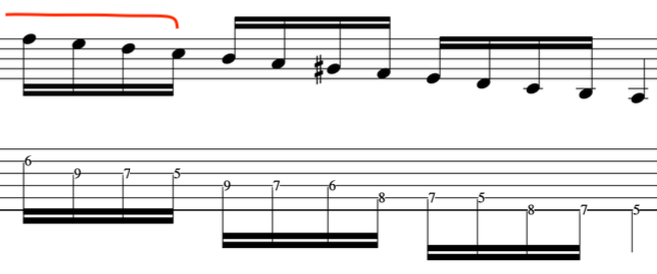
Musical notation illustrating the descending pattern for the Hexatonic scale in harmonic minor.
WAY 2:
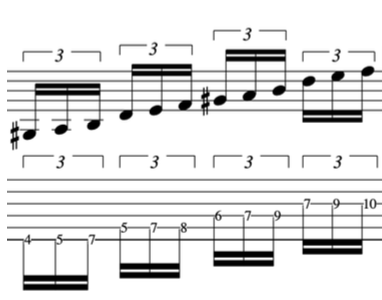
Notation for the Hexatonic scale, illustrating finger placement and notes on guitar.
In Part 2 we will look at composition and improvisational techniques with the Hexatonic.
Today, a quick look at applying octave displacement into your alternate picking guitar technique.
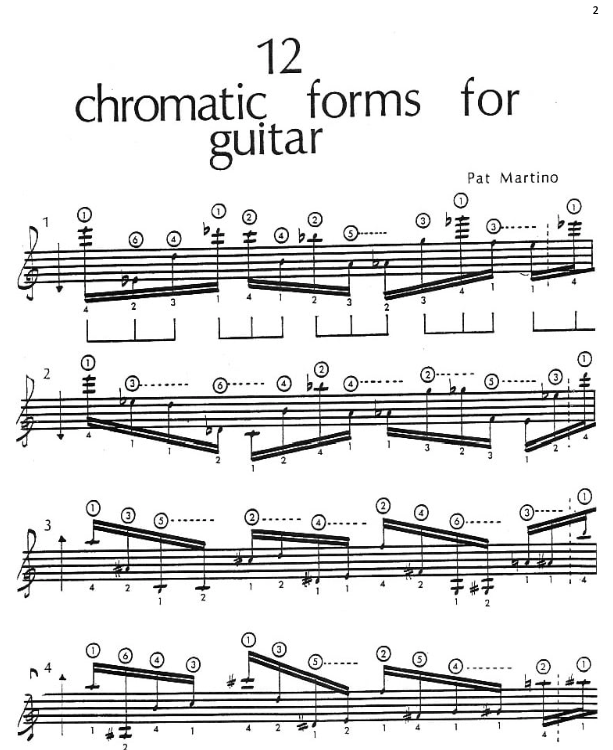
This [12 tone] concept was originally taken from the brilliant 12 chromatic forms by jazz guitar great Pat Martino and then re-developed into a more 20c classical picking Fripp-esque guitar etude.
Sheet music for Pat Martino’s 12 chromatic forms for guitar, illustrating the String Skipping exercise.
PART 1– Octave Displacement:
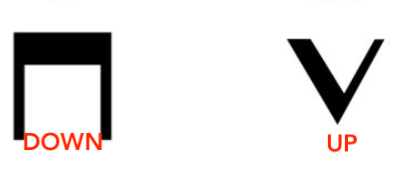
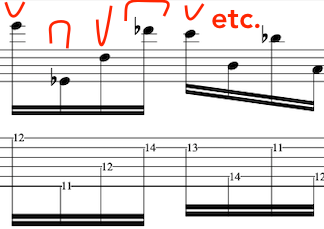
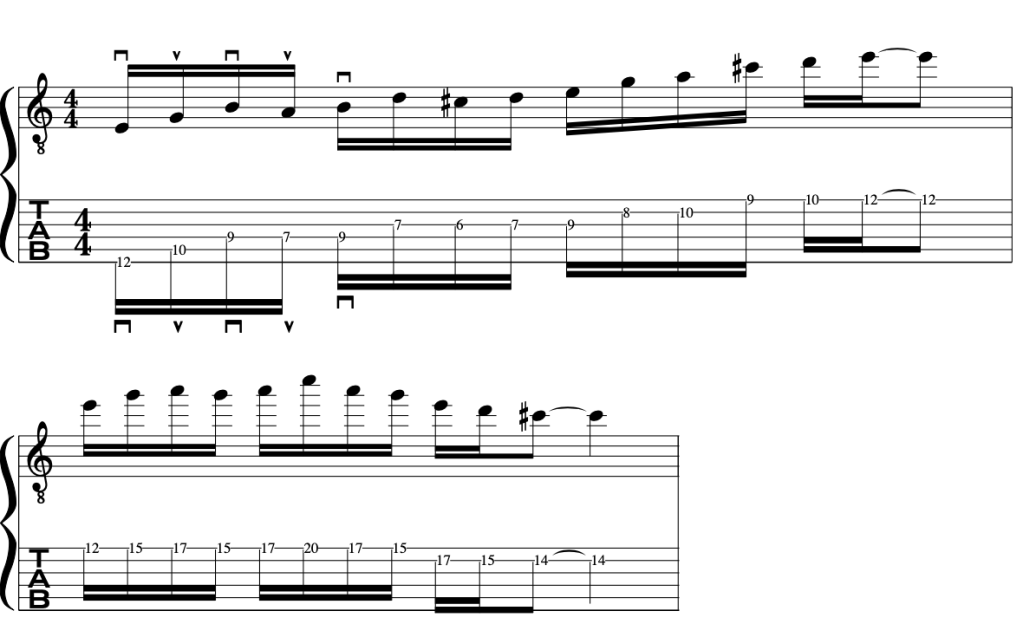
I am starting this little etude/exercise on an “Up” stroke with alternate picking guitar technique. [You may prefer to start on a downstroke]
As an example here is the first part:
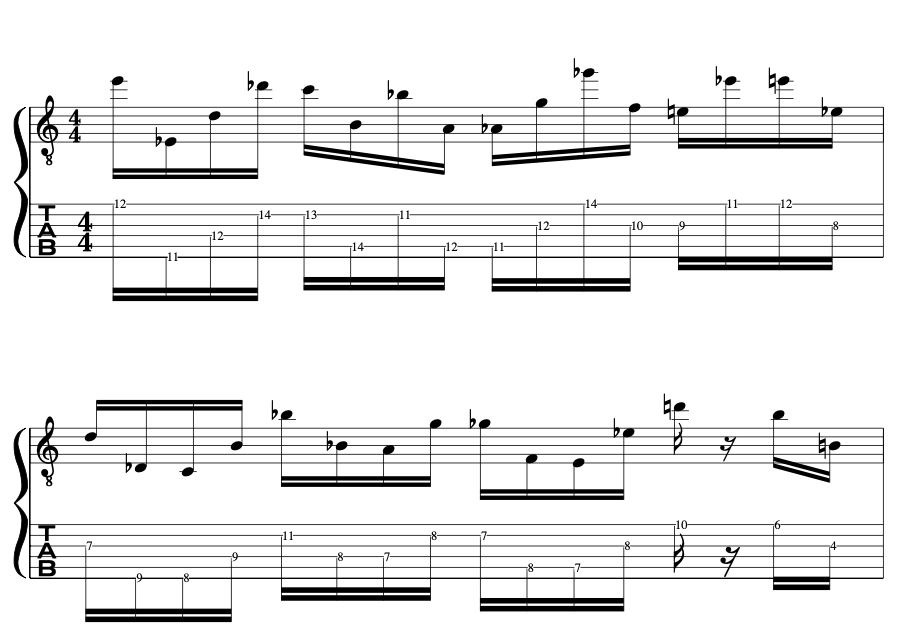
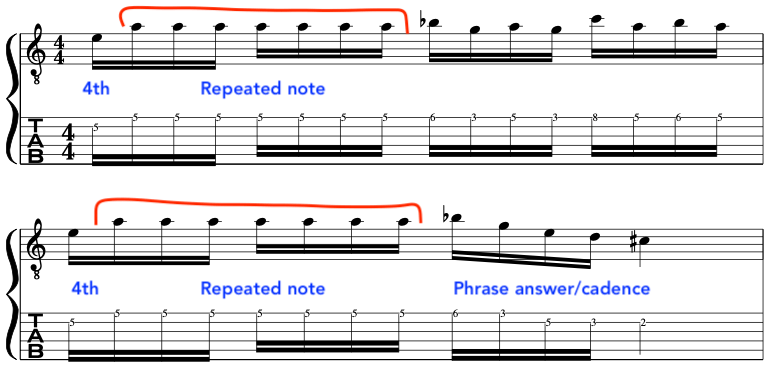
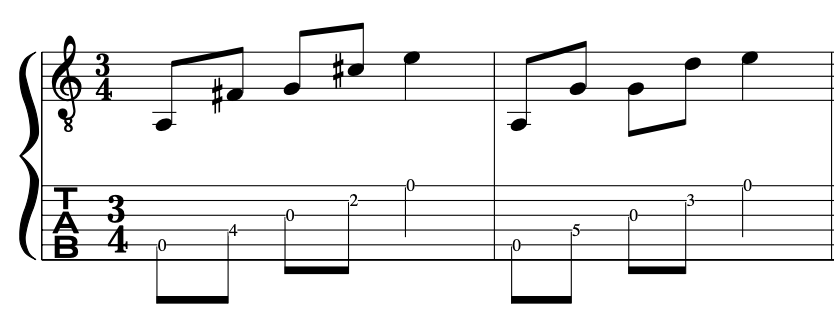
Notation for the ‘String Skipping’ guitar exercise exploring octave displacement.
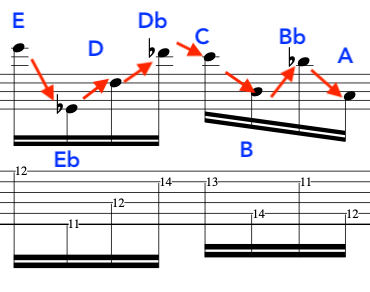
The key to be aware of = The exploitation of “Octave displacement”. This creates unique harmonies and S.A.T [B] style 12 tone lines.
Diagram illustrating octave displacement and the chromatic scale in guitar playing.
As you can see in the diagram above, this is just the chromatic scale, but, moving/resolving through the different registers.
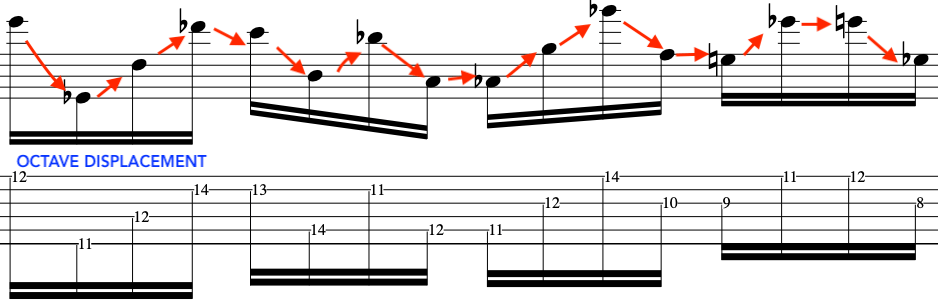
This octave displacement technique, offers us a way to create/extract interesting colourful music from the chromatic scale [12 tone], whilst, complimenting our instrument through the high low high or low high low resonances.
Musical notation for the ‘String Skipping’ exercise, highlighting octave displacement techniques in guitar playing.
PART 2: Scale Employment:
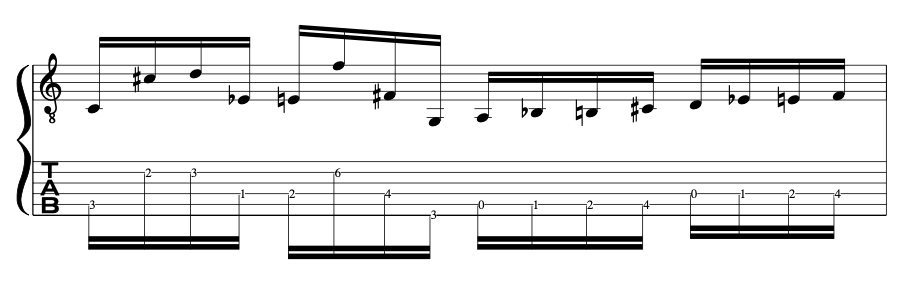
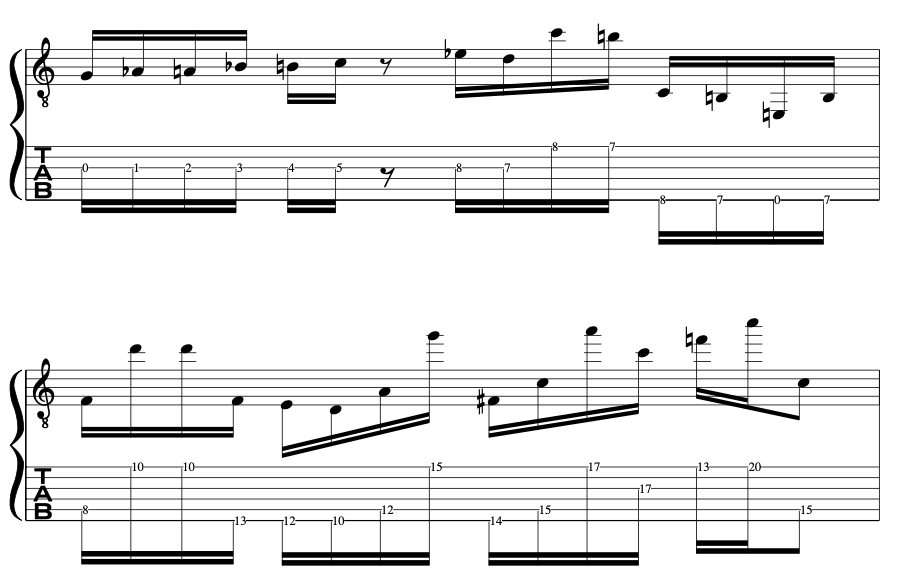
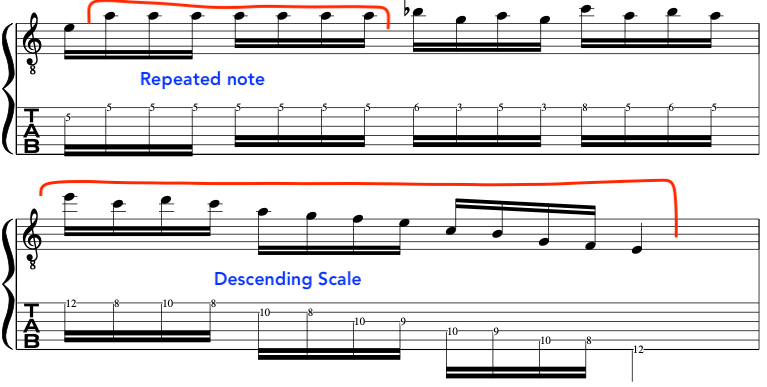
Although, [for this etude] I have employed octave displacement, I have also incorporated some basic scale parts to link it all together and avoid intervallic monotony.
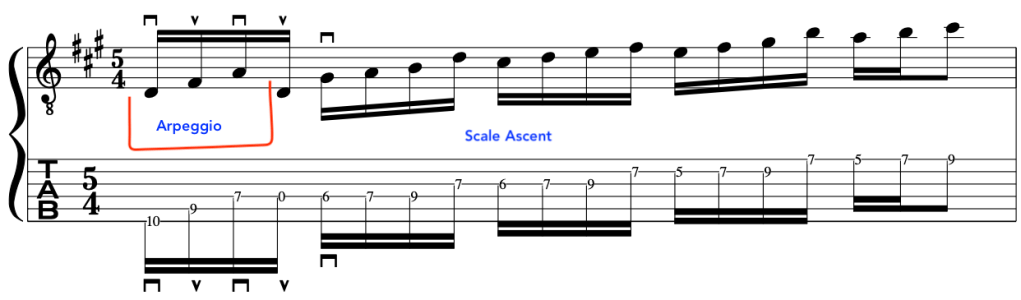
I am starting both of these scale fragments on an“Up” stroke with strict alternate picking once again:
Tab notation for the ‘String Skipping’ exercise inspired by guitarists Robert Fripp and Pat Martino.Guitar tablature for the ‘String Skipping’ exercise inspired by Robert Fripp, illustrating techniques of alternate picking and octave displacement.Musical notation for the ‘String Skipping’ exercise inspired by Robert Fripp, illustrating alternate picking techniques and octave displacement.